

We are in pre-revolutionary America, Massachusetts to be precise, and it is 1768. Five years earlier, the Seven Years War between Great Britain and France had ended with The Treaty of Paris, and much of France’s former possessions in North America now lay in British hands. Despite the ending of formal hostilities, the French are still meddling in the affairs of the colony, and their mischief-making further stirs a political situation which is, day by day, becoming more unsettled. The citizens of Massachusetts are becoming more dissatisfied with rule from London and with King George’s redcoats are an ever-more ominous presence.

It is against this restless background that we meet Duncan McCallum, an exiled Scotsman with medical training who is bondsman to Sarah Ramsey, the widow of a nobleman. They are, as they say these days, ‘an item’ but, in terms of the narrative, very coyly so.
When the Arcturus, a ship from London, blows up in Boston harbour, McCallum is summoned to view the consequences, and they are stomach churning. Body parts of the crew are washed up on the beach, chomped by marauding sharks and pecked by gulls. Even men whose bodies remain more or less intact are denied dignity in death as their shrouds comprise drifts of seaweed and predatory crabs.
 As McCallum investigates the tragedy, it becomes clear that the ship was sabotaged. But what was within its cargo that made someone think it imperative that it should never reach its destination? A party of British soldiers are on hand determined to guard the scene of the wreck from inquisitive eyes, but who is the man named Beck who is pretending to be an army officer, but is so obviously not a military man?
We learn that the whole sorry affair is connected to documents vital to the plans of a mysterious group known as The Sons of Liberty, a group of powerful men whose ultimate aim is to fight for the independence of the American colonies from Great Britain. We meet, fleetingly, Samuel Adams and John Hancock, who went on to become prominent Patriots in The Revolutionary War which was to begin in earnest with “the shot heard ’round the world.” at Lexington in 1776.
Agent Beck makes it know that McCallum is responsible for the Boston deaths, and a warrant is issued for his arrest. McCallum has no option but to head north to evade the bounty hunters and soldiers who will not rest until he is swinging from a gibbet. As he moves through the wild countryside, accompanied by an electic collection of Native Americans, an evangelical priest, a traveling conjurer – and a monkey – McCallum knows he will never be safe until he finds the truth about the events in Boston until he finds the instigators of that fatal conspiracy.
 If your knowledge of that period of American history is sketchy, than fret ye not. Pattison (right) provides a wealth of detail about real life events which were taking place during McCallum’s fictional quest to clear his name. I use the word ‘quest” advisedly, as the novel has a distinct Lord of The Rings feeling – “Roads go ever on”.
There is some genuine detective work – and some very graphic violence – wrapped up in the period detail, and Pattison is clearly a man who has charted the catastrophic decline and subjugation of the Native Americans, their culture, their awareness and their sensitivity to landscape. It may be of little consolation to us modern readers, but Pattison shows that the European assault on this vibrant and diverse society did not just happen on our watch.
Savage Liberty is the fifth installment of the Duncan McCallum series which began with Bone Rattler in 2009. It will be published by Counterpoint on 7th June.You can read a review of an earlier Eliot Pattison novel Skeleton God, set in contemporary Tibet, by clicking the blue link.


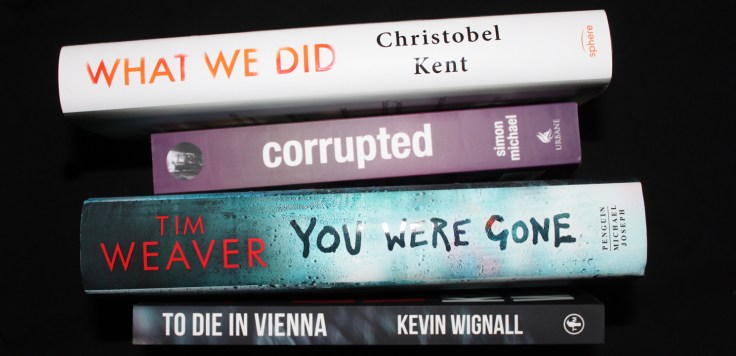
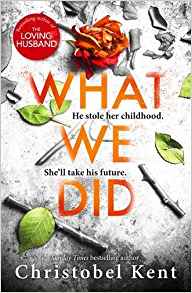 Teachers taking advantage of their unique position of trust is nothing if not topical, and few teachers can become so connected to their pupils’ progress and personality as music teachers. In Christobel Kent’s latest domestic thriller we meet Anthony Carmichael, one such person. The student he abused has now grown up and married. Bridget has a loving husband, a delightful son, and a business that demands her full attention. When Carmichael reappears, the fences protecting her comfortable life are torn down, and events take a sinister turn. Published by Sphere, What We Did is out on
  Charles Holborne is a brilliant and successful barrister specialising in criminal cases, and his work brings him into contact with the most corrupt and manipulative people in 1960s London. It will be no surprise to learn that these characters are not all associates of the notorious Kray twins, but men and women who are normally seen on the other side of the justice system. The deeply psychotic Ronnie Kray has already had a terrifying influence on Holborne’s life, and if the barrister thought that the episode was over, he is very much mistaken as he becomes involved in a sex scandal that threatens the very government of the country itself. Corrupted is published by
 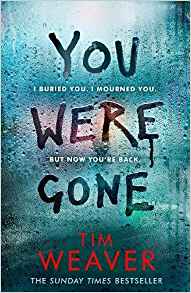 Tim Weaver’s investigator David Raker is now a well established member of fictional PI royalty in British fiction, and he is just that little bit different. His speciality is finding people – whether they wish to be found or not. This is the ninth in the series and, with existing fans well aware that Weaver is a master of plot surprises, readers new to the series are presented with another audacious premise. Raker’s late wife – repeat late wife – reappears and accuses him of faking her disappearance and death. With the police suspecting him of the crime, Raker is faced with a baffling conundrum which will ruin him if he fails to find the answers? Is this woman a clever and convincing opportunist, or does the solution lie in a breakdown of his own sanity? I have been a fan of the Tim Weaver/David Raker partnership for a good while – read why by checking out my review of
  It seems there is nowhere quite like Vienna for mystery, intrigue and international back stabbing – both literal and figurative. For so long the major crossroads between East and West, the Austrian city once again is the backdrop to a dangerous game of bluff and counter bluff and deception. Freddie Makin is a surveillance expert who is paid to watch ‘people of interest’ and report back to his paymasters. His problem is that this a risky profession; powerful people are likely to feel threatened, and when their discomposure reaches a certain level, they will lash out. After following a suspected Chinese intelligence agent, Makin is now the hunted man. Who is trying to kill him? What has he learned that has pushed his name to the top of the kill list? Thomas and Mercer are publishing


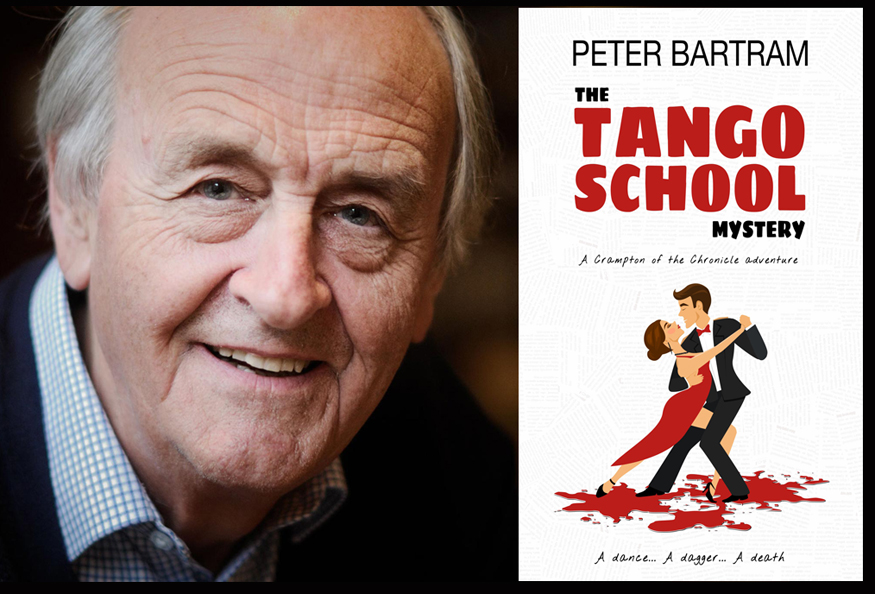
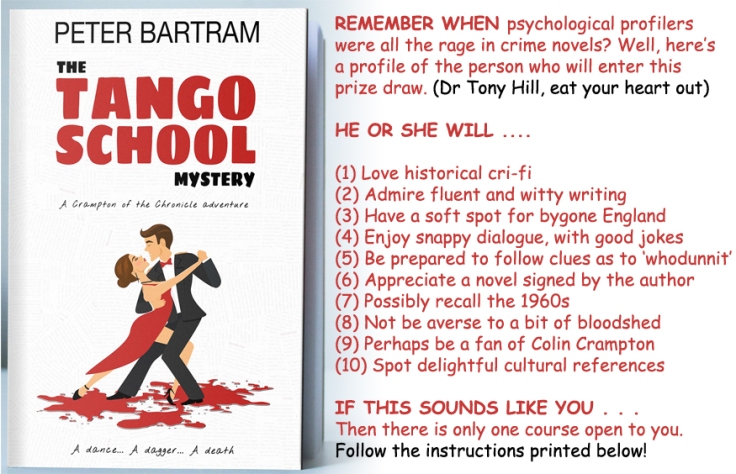
 Colin’s day has already been bad enough. He has been summoned to the office of Frank Figgis, the News Editor, and given a daunting task. The newspaper’s Editor, Pope by name (dubbed “His Holiness”, naturally) has a brother called Gervaise. Gervaise is in trouble. He has been mixing with some rather unsavoury characters, namely the adherents of Sir Oscar Maundsley, the aristocratic former fascist leader. Interned by Churchill during the war, he now dreams of Making Britain Great Again.


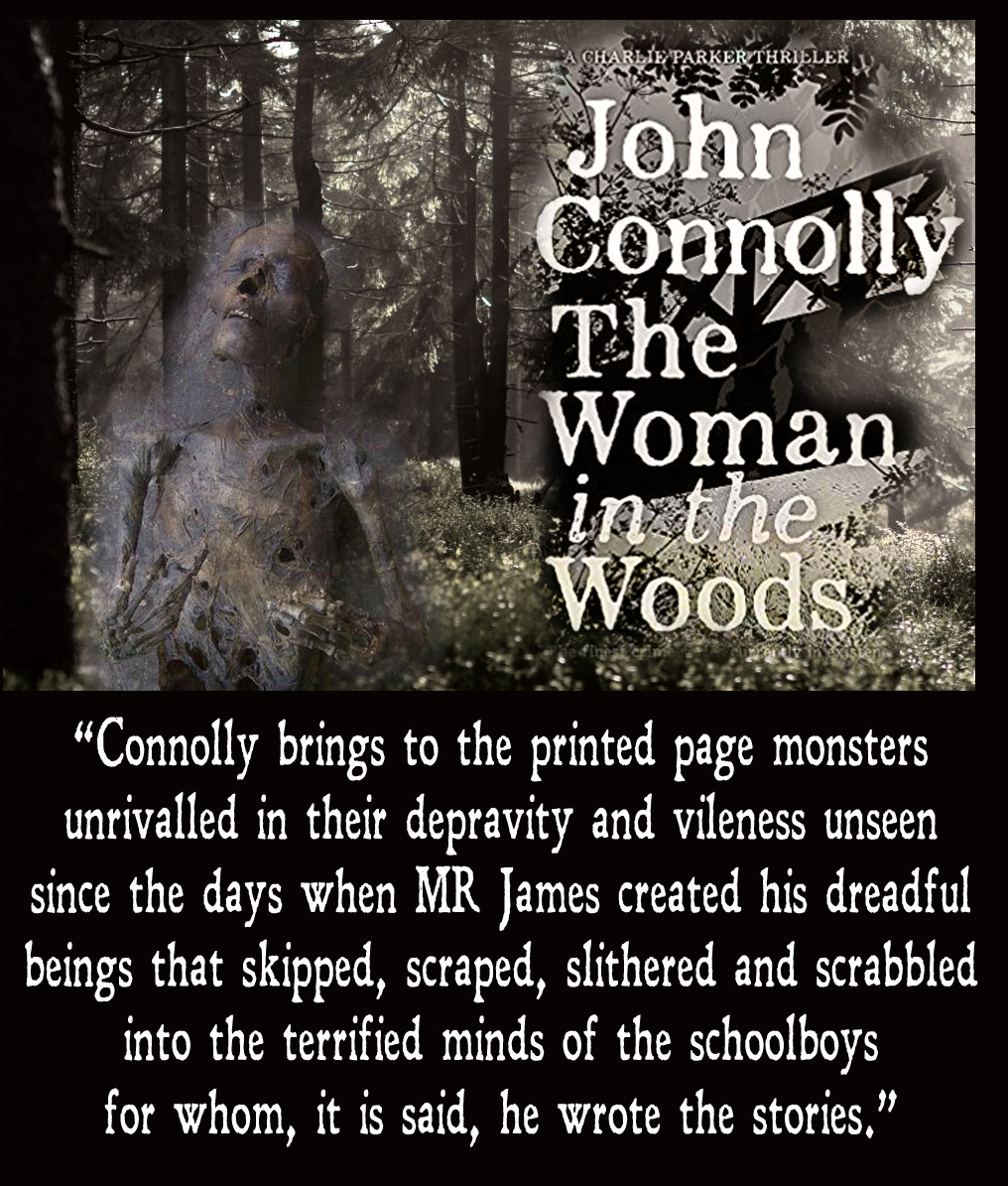

 In the dark woods of Maine a tree gives up the ghost and topples to the ground. As its roots spring free of the cold earth a makeshift tomb is revealed. The occupant was a young woman. When the girl – for she was little more than that – is discovered, the police and the medical services enact their time-honoured rituals and discover that she died of natural causes not long after giving birth. But where is the child she bore? And why was a Star of David carved on the trunk of an adjacent tree? Portland lawyer Moxie Castin is not a particularly devout Jew, but he fears that the ancient symbol may signify something damaging, and he hires PI Charlie Parker to shadow the police enquiry and investigate the carving – and the melancholy discovery beneath it.
 In another life John Connolly would have been a poet. His prose is sonorous and powerful, and his insights into the world of Charie Parker – both the everyday things he sees with his waking eyes and the dark landscape of his dreams – are vivid and sometimes painful. Connolly’s villains – and there have been many during the course of the Charlie Parker series – are not just bad guys. They do dreadful things, certainly, but they even smell of the decaying depths of hell, and they often have powers that even a gunshot to the head from a .38 Special can hardly dent.
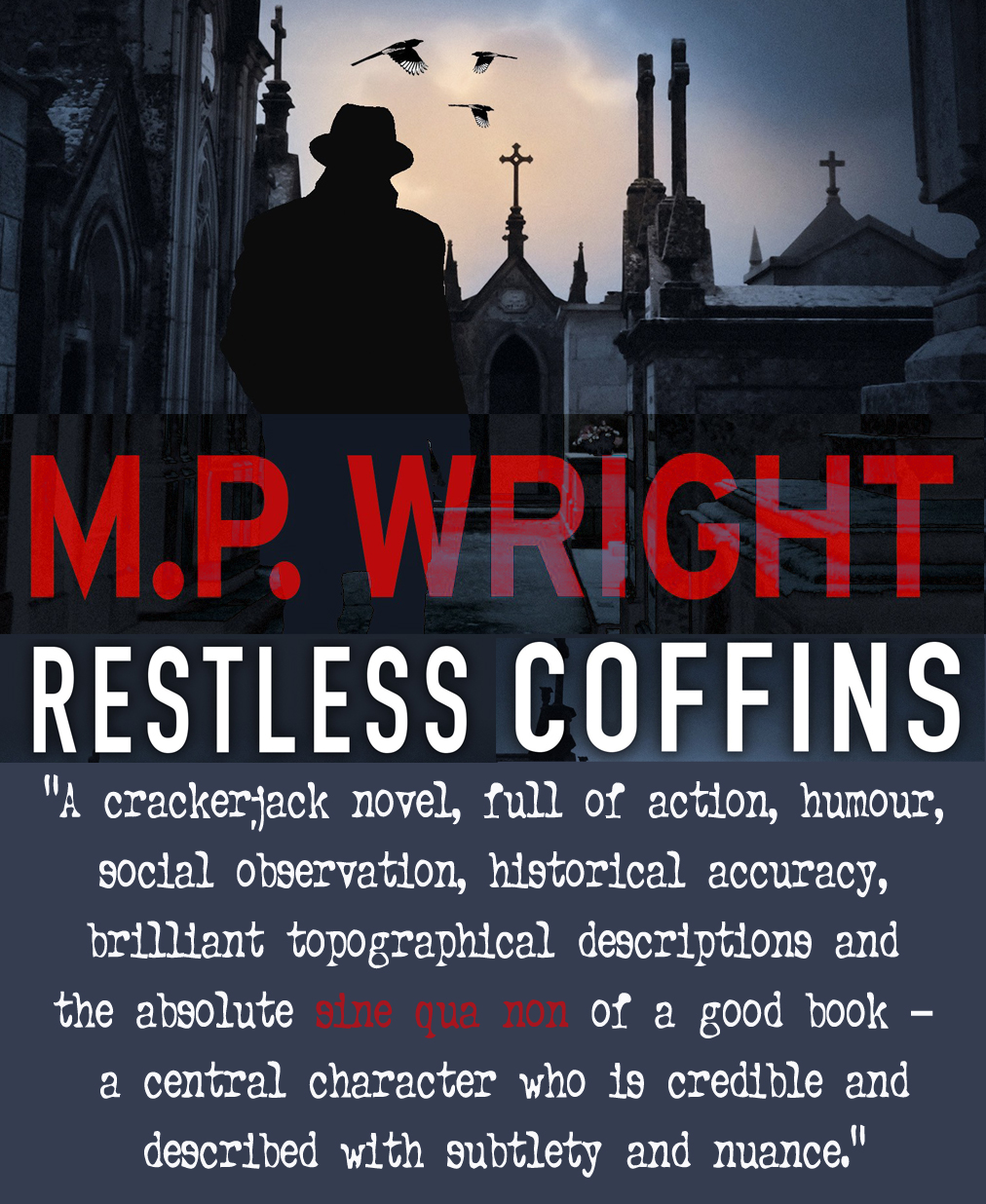
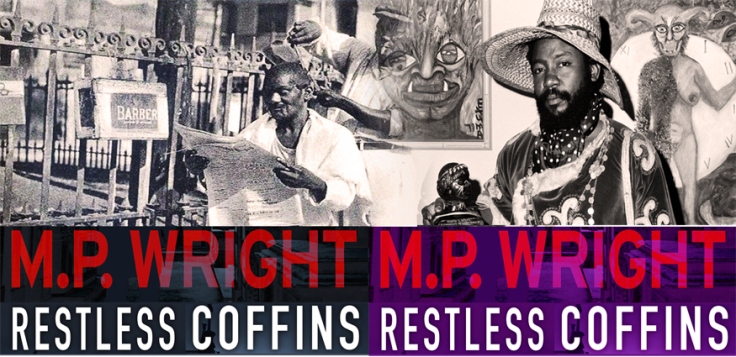
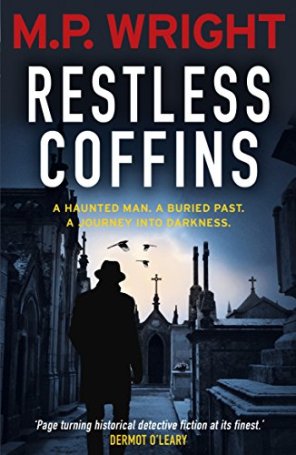 Ellington, broke and broken-hearted has ended up in 1960s Bristol, where he uses his police training to eke out a living as a private investigator. When he receives the news that his only sister, Bernice, has died in Barbados, he is compelled to return home to wind up her affairs. Hovering in the background, however, is Ellington’s violent criminal cousin Victor, who has reappeared after rumours of his tumbling to his death on the rocky slopes of Bristol’s Clifton Gorge prove to be greatly exaggerated. When Ellington arrives in New York after the first leg of his journey home, he rapidly realises that ‘born-again’ Vic is involved in something much more dangerous – and potentially lethal – than his previous mildly illegal entrepreneurship within the West Indian community in Bristol.
 Wright has made the decision to phonetically transcribe all the dialogue between the main characters in his books. I have to admit that in Heartman it was a source of irritation to me, but such is the pace and vigour of the action in Restless Coffins that it didn’t seem to matter as much this time around. The new ‘crime’ of Cultural Appropriation seems to me to be one of the most pointless, misguided and irrelevant of fashionable 21st century dogmas, so you will hear no complaint from me about a white Englishman writing a novel with an almost entirely black cast, complete with speech patterns, vocabulary and inflections.
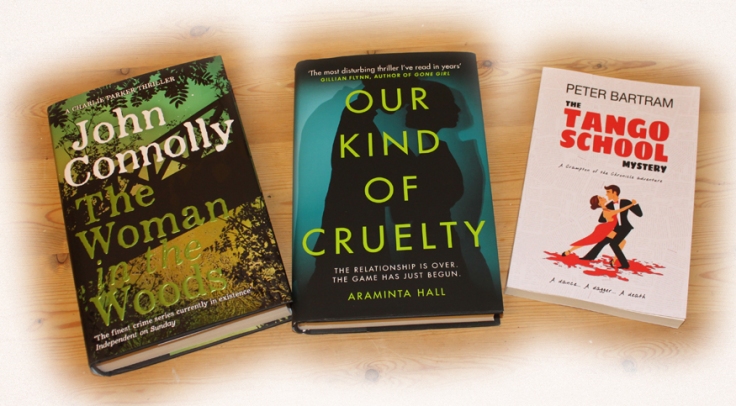
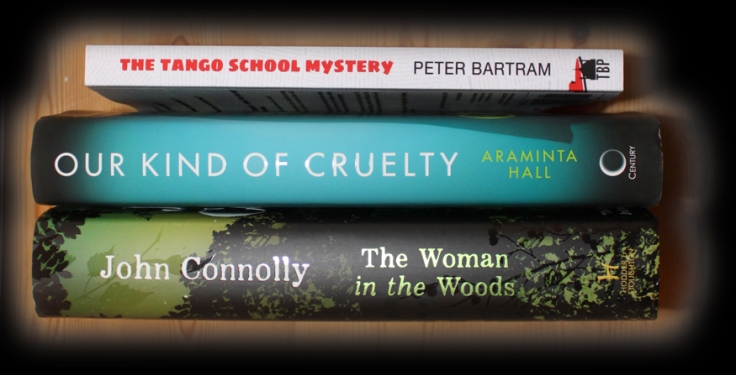
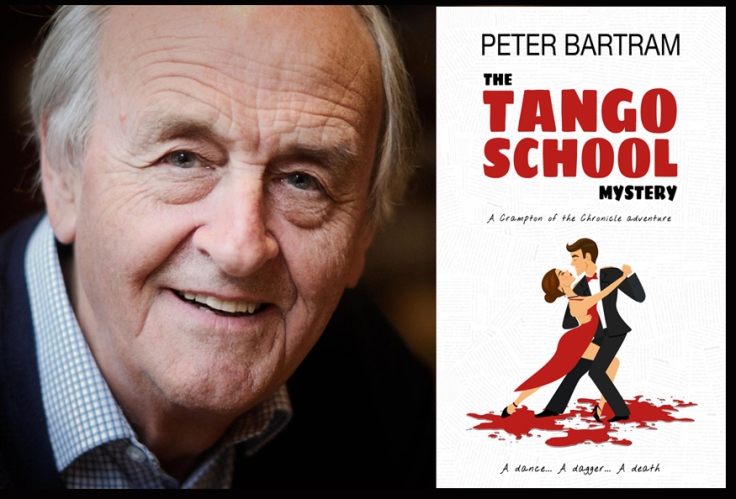
 Welcome to Brighton, England – where they do like to murder beside the seaside…Want to know what it’s like when a quiet romantic dinner ends in murder? Ace reporter Colin Crampton and his feisty girlfriend Shirley Goldsmith are tucking into their meal when Shirley discovers more blood on her rare steak than she’d expected.
 Charlie Parker – crime fiction’s most haunted private investigator – is back. As fans of the Portland, Maine detective know, death isn’t just part of the his natural human life cycle – it often assumes corporal form and walks alongside the living. The remains of a young woman are uncovered when a tree is uprooted, and when the body is examined, it is discovered that she had given birth shortly before her death. A Star of David has been carved in the bark of a tree, and Parker is hired by a Jewish lawyer to learn if the death has any anti-semitic overtones.
 Obsession, deception, emotional perversion, sexual mania, psychological sadism…? Yes, indeed. Araminta Hall ticks all of those toxic boxes in her eagerly awaited new thriller, which tells the tale of Mike and Verity. At the very heart of their unusual relationship is a game of seduction and danger, but with Verity’s impending marriage, the game has to end. At least it would in any normal relationship, but of all the adjectives that could be applied to what Mike and Verity get up to, the word ‘normal’ comes way, way, way down the list. So, what happens? Death is what has to happen, but the Grim Reaper seldom walks alone.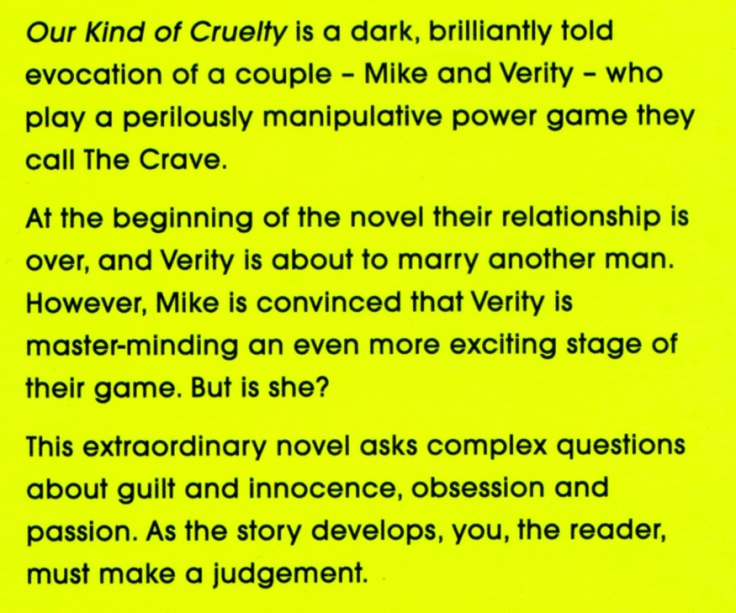


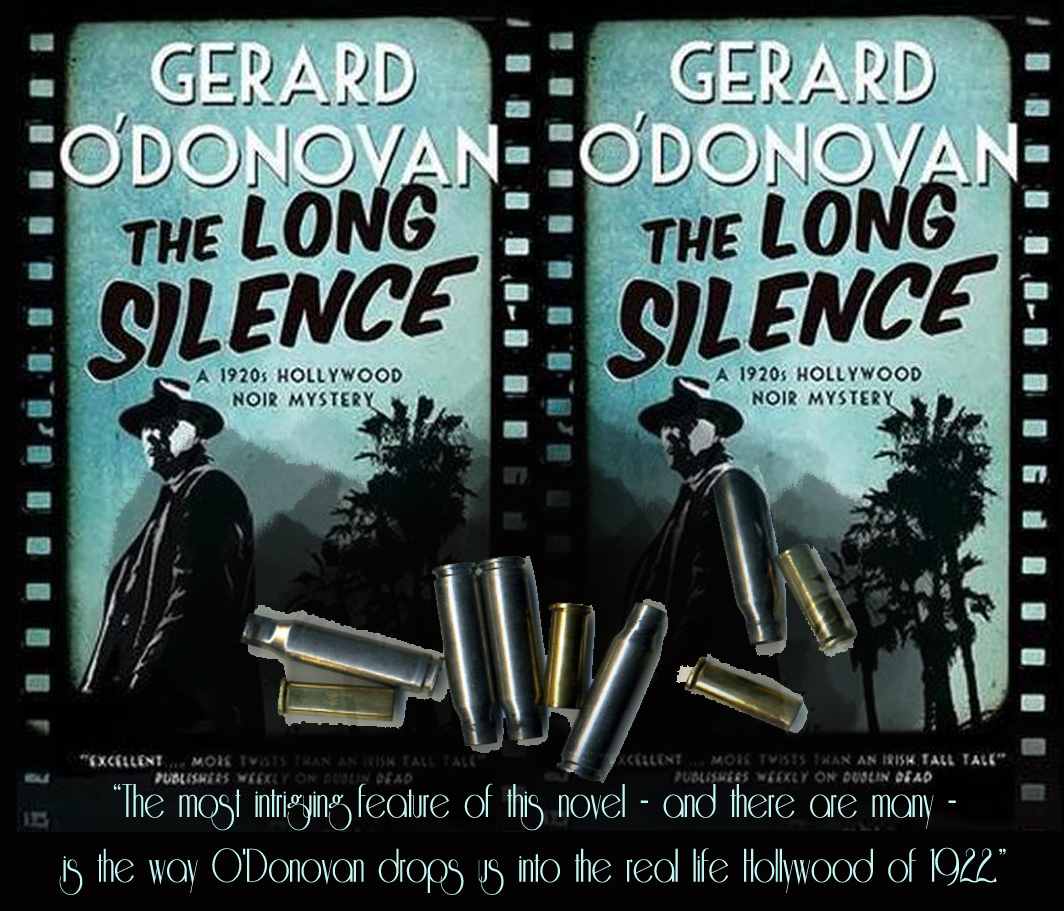
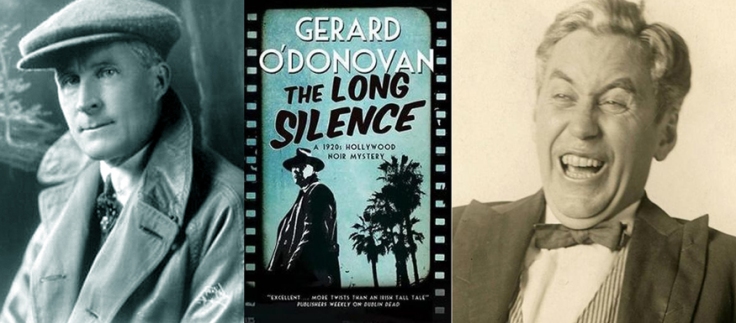
 The most intriguing feature of this novel – and there are many – is the way O’Donovan drops us into the real life Hollywood of 1922. I knew something about the demise of Roscoe ‘Fatty’ Arbuckle, was aware of Mack Sennett and, of course, the names Douglas Fairbanks and Mary Pickford resonate with people of my generation who are reasonably well-read. But I had neither heard of – nor seen pictures of – Mabel Normand and, thanks to the wonders of Google, I could see instantly how she was able to mesmerise a generation of movie goers and readers of magazines. Those eyes! Tom Collins tells us about them quite early in the book.
 This is a cracker of a book. To the casual observer, looking on from the safe distance of the best part of a century, Hollywood in the 1920s appears innocent and other-worldly. We might smile at the fluttering eyelashes and coy gestures of the female stars, and the black-and-white (both figuratively and literally) lack of ambiguity of the male heroes and villains but in reality the movie world was just as venal, corrupt and hard nosed as it is today. Gerard O’Donovan (right) lifts the stone from the ground and we see all manner of unpleasant – and deadly – creatures scurrying around in the unwelcome light. The first pages of the book might suggest that Tom Collins has told us all that he has to say, but I hope this is not the case. The Long Silence is published by Severn House, is available now in hardback and will be


 fullybooked2017