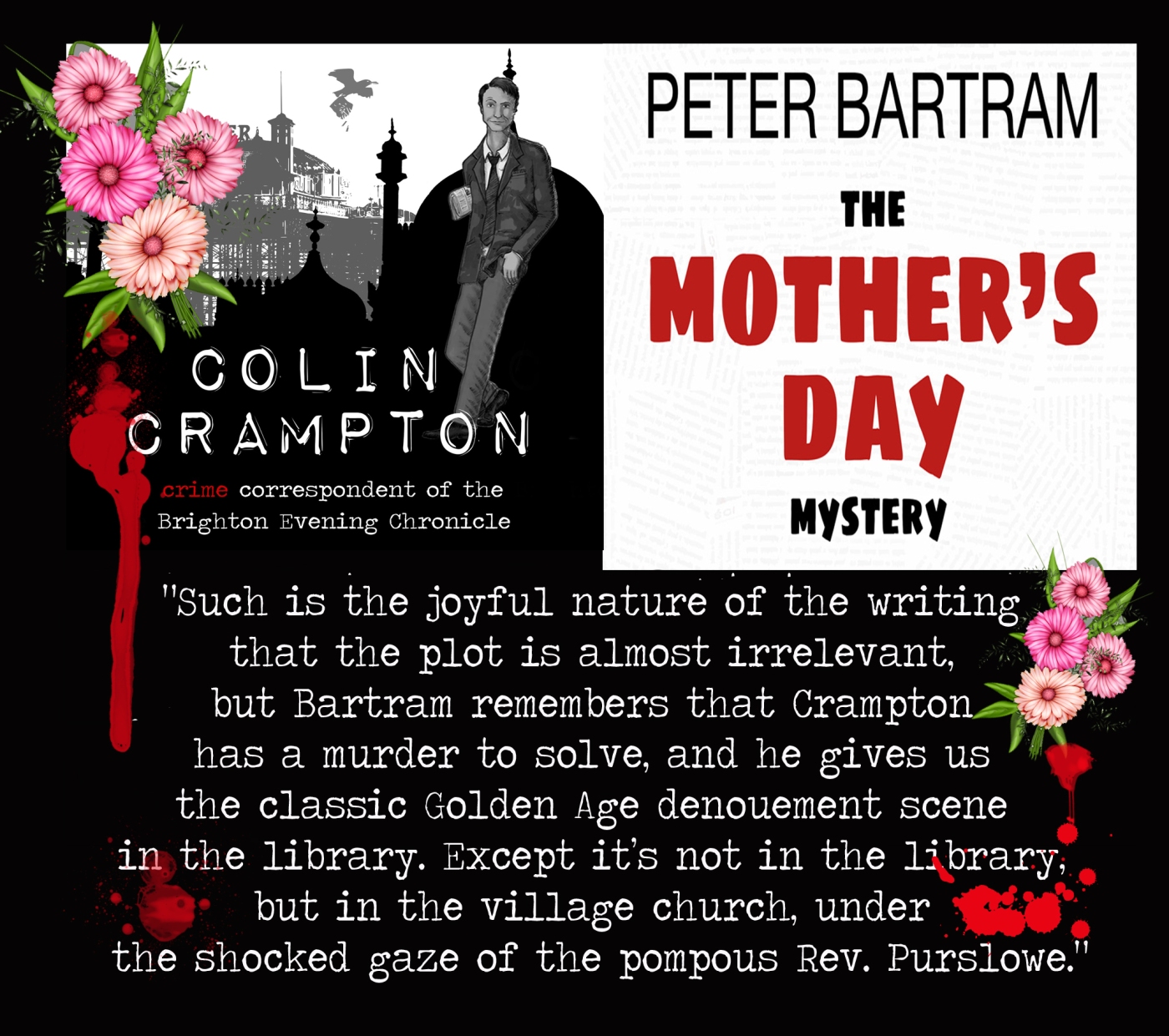
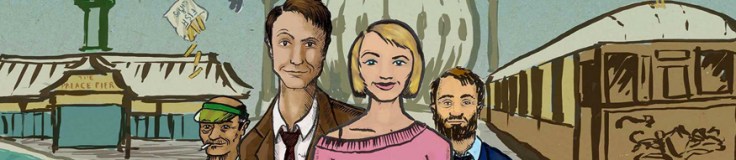
Robin Williams, Paul Krassner, Pete Townshend, Grace Slick, Timothy Leary, and many others have been credited with the saying, “If you can remember the 1960s, you weren’t really there.” Fortunately for us, Peter Bartram can and was. His lifetime of working as a journalist has produced an alter ego, an enterprising young journalist called Colin Crampton who works for The Brighton Evening Chronicle. He has a gorgeous Australian girlfriend called Shirley, a pantomime landlady by the name of Mrs Gribble, a chain-smoking news editor called Frank Figgis, an amazing habit of getting involved in murder mysteries – and he drives an MGB.
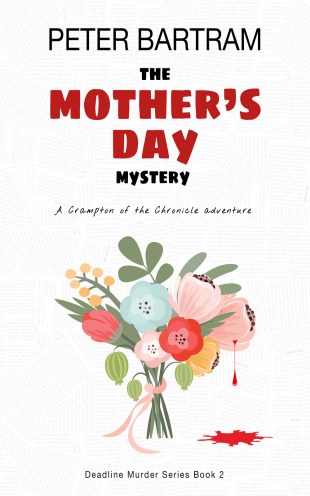 In The Mother’s Day Mystery, Crampton discovers the body of a schoolboy who has evidently been knocked off his bike and fatally injured. What on earth was Spencer Hooke doing away from his dormitory in Steyning Grammar School at the dead of night, cycling along a lonely and windswept clifftop road? In pursuing this conundrum, Crampton whisks us into a world of stage vicars, seedy pub landlords, archetypal leather-elbowed schoolmasters and impecunious toffs. There are jokes a-plenty, and Bartram indulges himself – and those of us who are, similarly, in the autumn of our years – with many a knowing cultural reference that might puzzle younger readers. He takes us into a wonderful sweet shop, the kind which can nowadays only be found in museum recreations:
“I stepped into a small room with a wooden counter topped with a glass-fronted case. To the side of the case was a set of balance scales with its weight tokens. Behind the couter were shelves loaded with jars of sweets. There were chocolate drops and sherbert lemons and liquorice allsorts. There were humbugs and fruit gums. There was barley sugar which glowed yellow like it was radioactive.
The air was loaded with a sickly scent like it had been sprinkled with sugar dust. If you breathed in deeply, you felt you were dancing.”
There is an unashamed sense of the risqué seaside postcard about much of the humour:
‘She was pouring coffee into a mug.
I ambled over and said, “Mine’s white but strong.”
Susan said: “So I’d heard. But how about your coffee, honeybunch?”
She guffawed at her joke and made her chins wobble.’
The wisecracks are not all end-of-the-pier stuff, however. When Crampton meets the owner of the gorgeous sweet shop, he is almost Chandleresque:
“She had a figure that would get Brigitte Bardot demanding a recount …. little laugh lines crinkled around her mouth as her full lips parted in the kind of welcome smile I felt I could pay into the bank.”
 Anyone who is a student of English humour will soon see that Bartram is part of a long and distinguished tradition of comic writers who find meat and drink in the absurdities of English life and social structures. In the world of crime fiction, however, comedy does not always sit well with murder and bloodshed. The great and sadly under-appreciated Colin Watson did the job beautifully in his Flaxborough novels, while modern writers such as MJ Trow and Christopher Fowler perform the balancing act with similar verve. I am happy to put Peter Bartram (right) up there on the podium with those past and present masters. Incidentally, and quite appropriately for a Sussex man, Bartram knows and loves his Kipling, and manages to quote the great man on a number of occasions
Such is the joyful nature of the writing that the plot is almost irrelevant, but Bartram remembers that Crampton has a murder to solve, and he gives us the classic Golden Age denouement scene in the library. Except it’s not in the library, but in the village church, under the shocked gaze of the pompous Rev. Purslowe. Before the riddle of Spencer Hooke’s death is solved (with an “I’m Spartacus” moment) we get the best joke in the book.
“Georgina had caused a stir when she’d walked into the church. She was wearing a low-cut blouse and a mini-skirt which ended a couple of inches below the Book of Revelations.”
The Mother’s Day Mystery is published by The Bartram Partnership, and is out now. Watch the Fully Booked Twitter feed for a chance to win this novel.
Follow the links to check out other features and novels by Peter Bartram.
The News Editor, The Woodbines, and a Eureka Moment
Switched On: The Story of 1960s TV Game Shows
I Do Like To Be Beside The Seaside …
Peter Bartram also has an excellent website where you can Meet The Characters
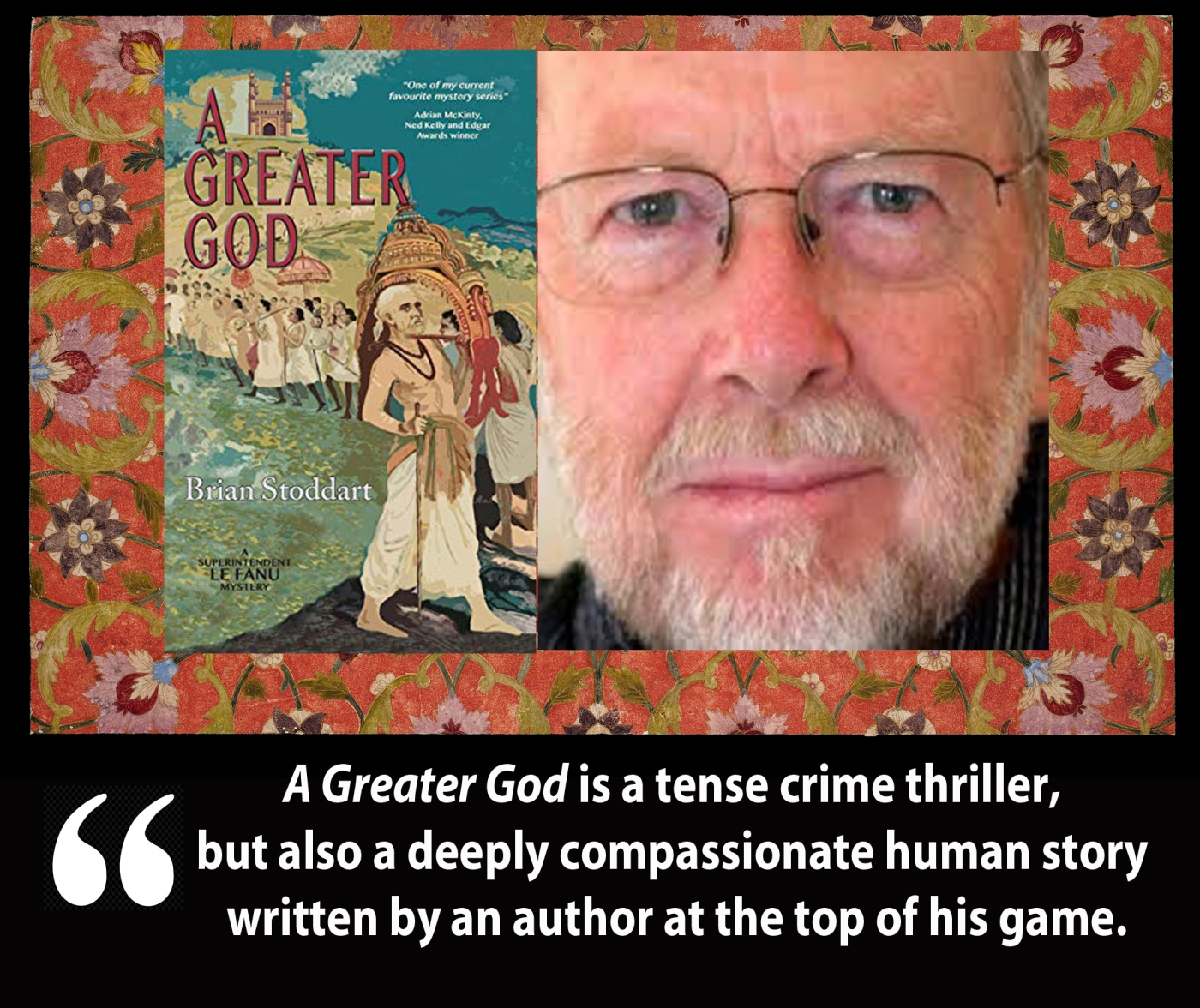

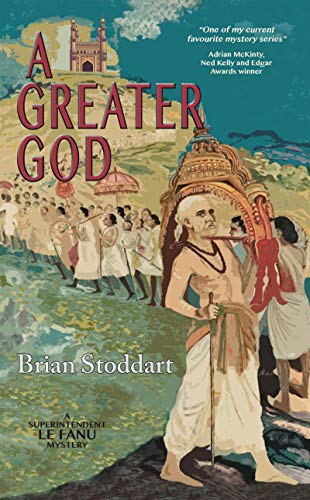 Superintendent Christian Le Fanu makes a welcome return in A Greater God, the fourth in the excellent series of historical crime novels by Brian Stoddart. The previous novel,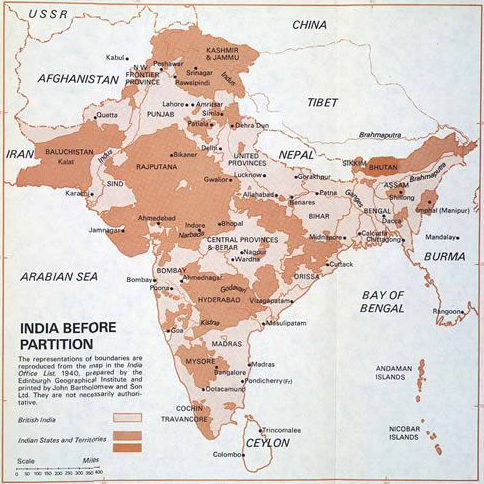

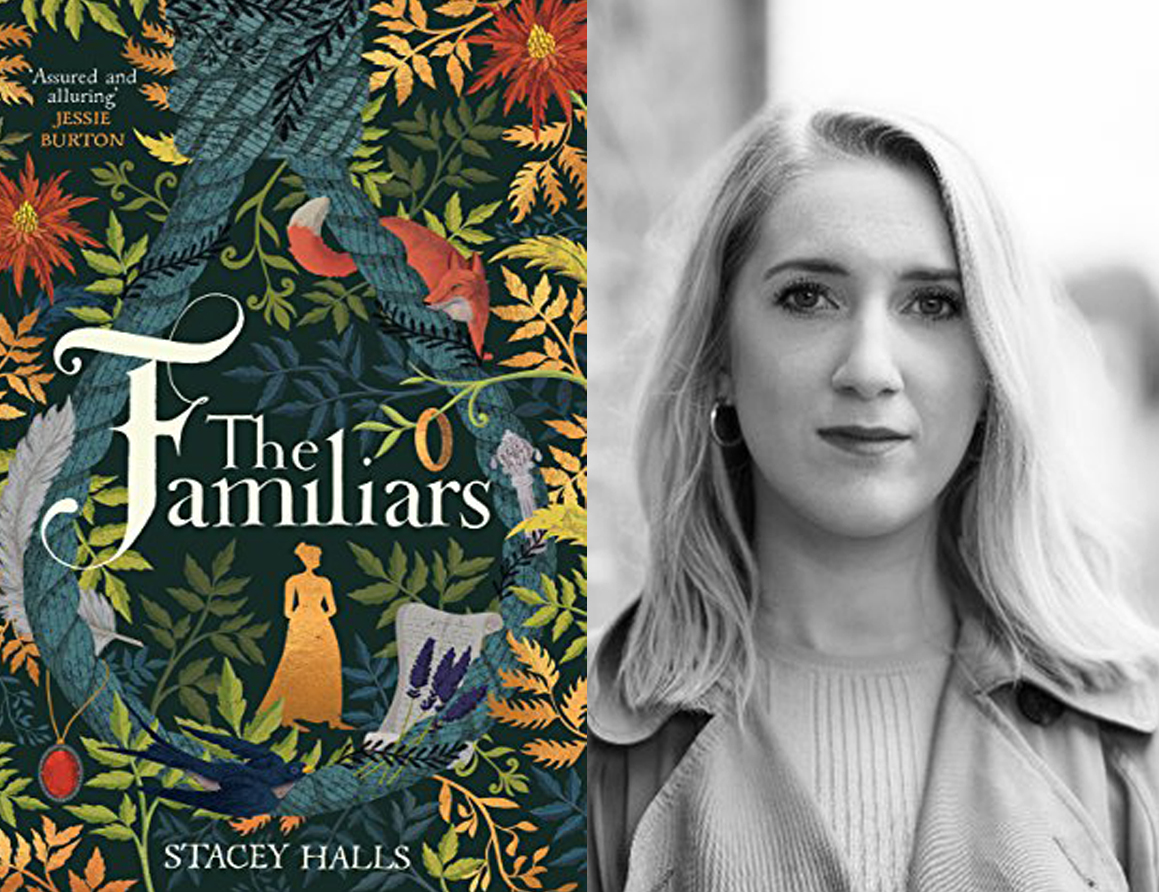
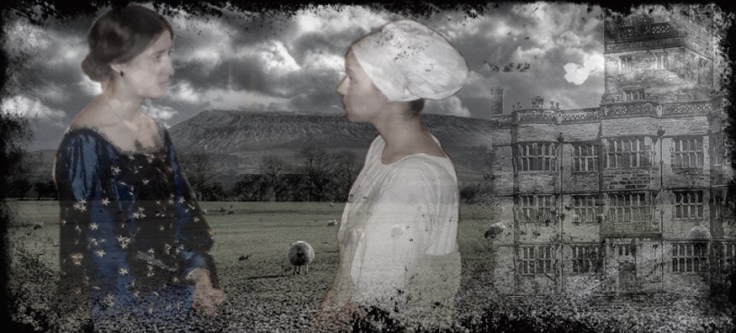
 AT THE APPROPRIATELY NAMED DEAD DOLLS HOUSE in Islington, the inventive folks at publishers Bonnier Zaffre launched Stacy Halls’ novel The Familiars with not so much a flourish as a brilliant visual fanfare.
 witchy tinctures using a potent combination of various precious oils. I went for Frankincense with a dash of Patchouli. I managed to smear it everywhere and such was its potency that my wife was convinced that I had been somewhere less innocent than a book launch.

 Peter Bartram (left) is an old school journalist who has turned his life’s work into an engaging crime series set in 1960s Brighton, featuring the resourceful reporter on the local paper, Colin Crampton. Peter now reveals how he came to invent his alter ego. You can read reviews of three Crampton of The Chronicle novels by clicking the title links below.
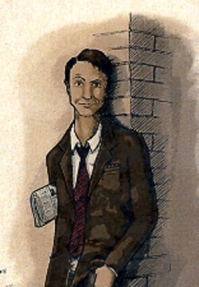 And that was when I remembered my first news editor. I never saw him without a Woodbine hanging off his lower lip. And so Frank Figgis, news editor of the Evening Chronicle, was born. Of course, there was still lots to think about – especially more regular characters. But with Colin (right) and Frank I felt I was on my way. Both of them have big roles to play – along with other regulars, especially Colin’s girlfriend Shirley Goldsmith – in the latest tale The Mother’s Day Mystery.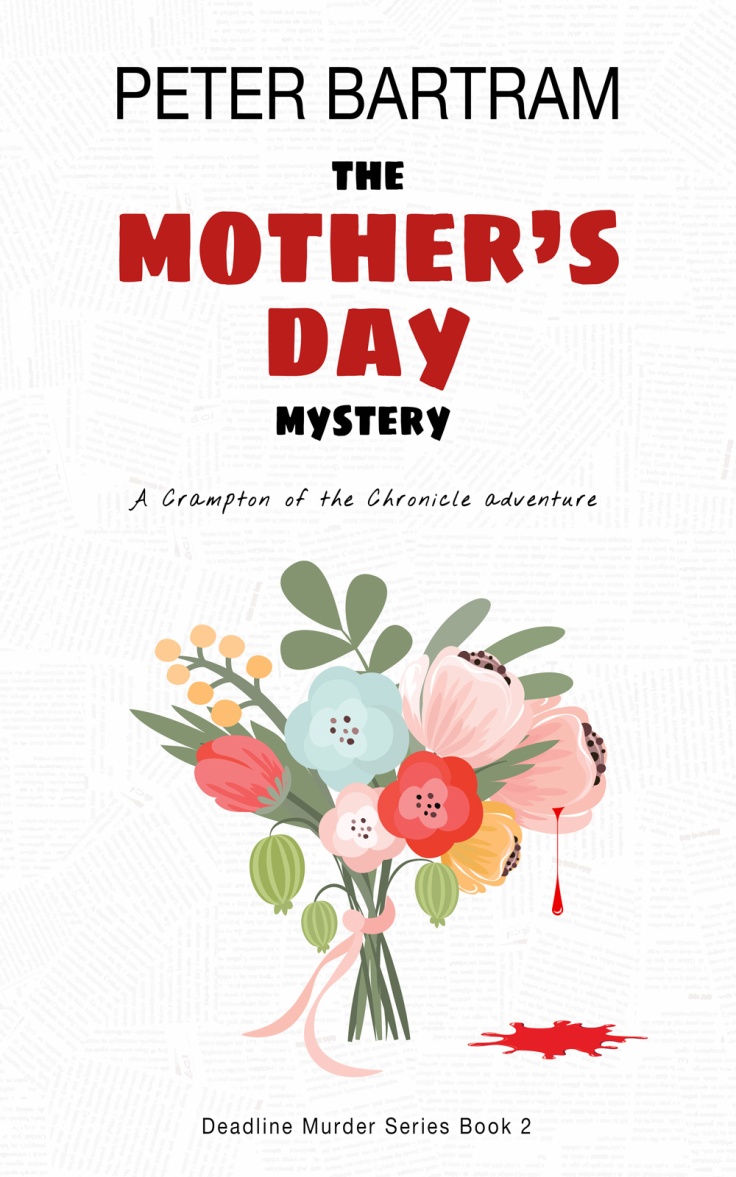

 For those of you who are unfamiliar with the first book in this series, The Word Is Murder (and you can read my review
  The abundance of questions will give away the fact that this is a tremendous whodunnit. Horowitz (right) tugs his forelock in the direction of the great masters of the genre and, while we don’t quite have the denouement in the library, we have a bewildering trail of red herrings before the dazzling final exposition. But there is more. Much, much more. Horowitz’s portrayal of himself is beautifully done. I have only once brushed shoulders with the gentleman at a publisher’s bash, so I don’t know if the self-effacing tone is accurate, but it is warm and convincing. More than once he finds himself the earnest but dull Watson to Hawthorne’s ridiculously clever Holmes.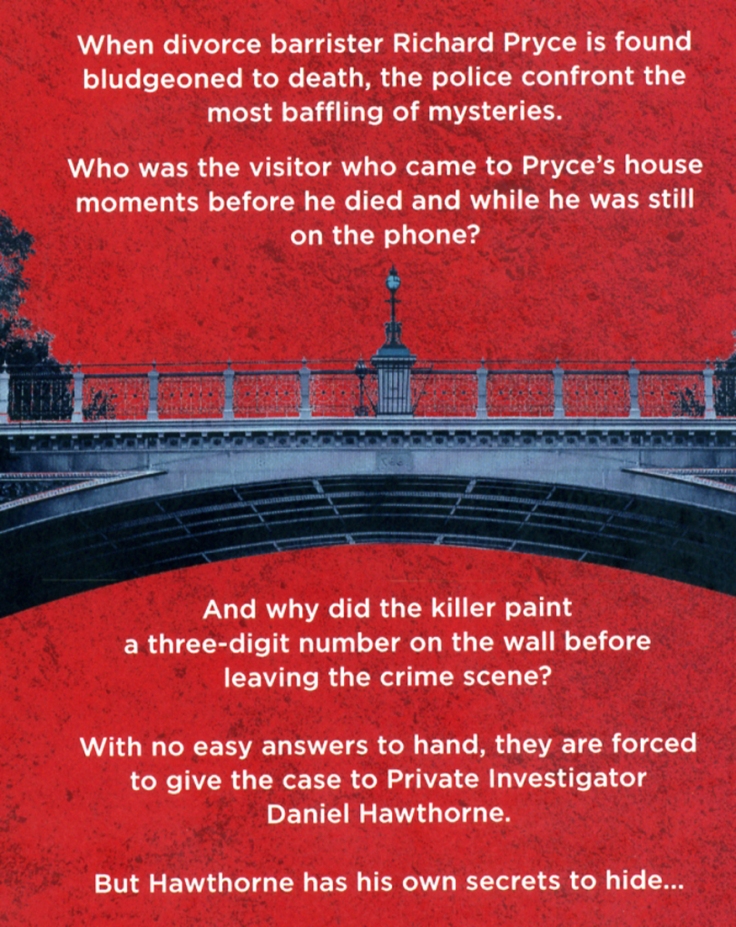
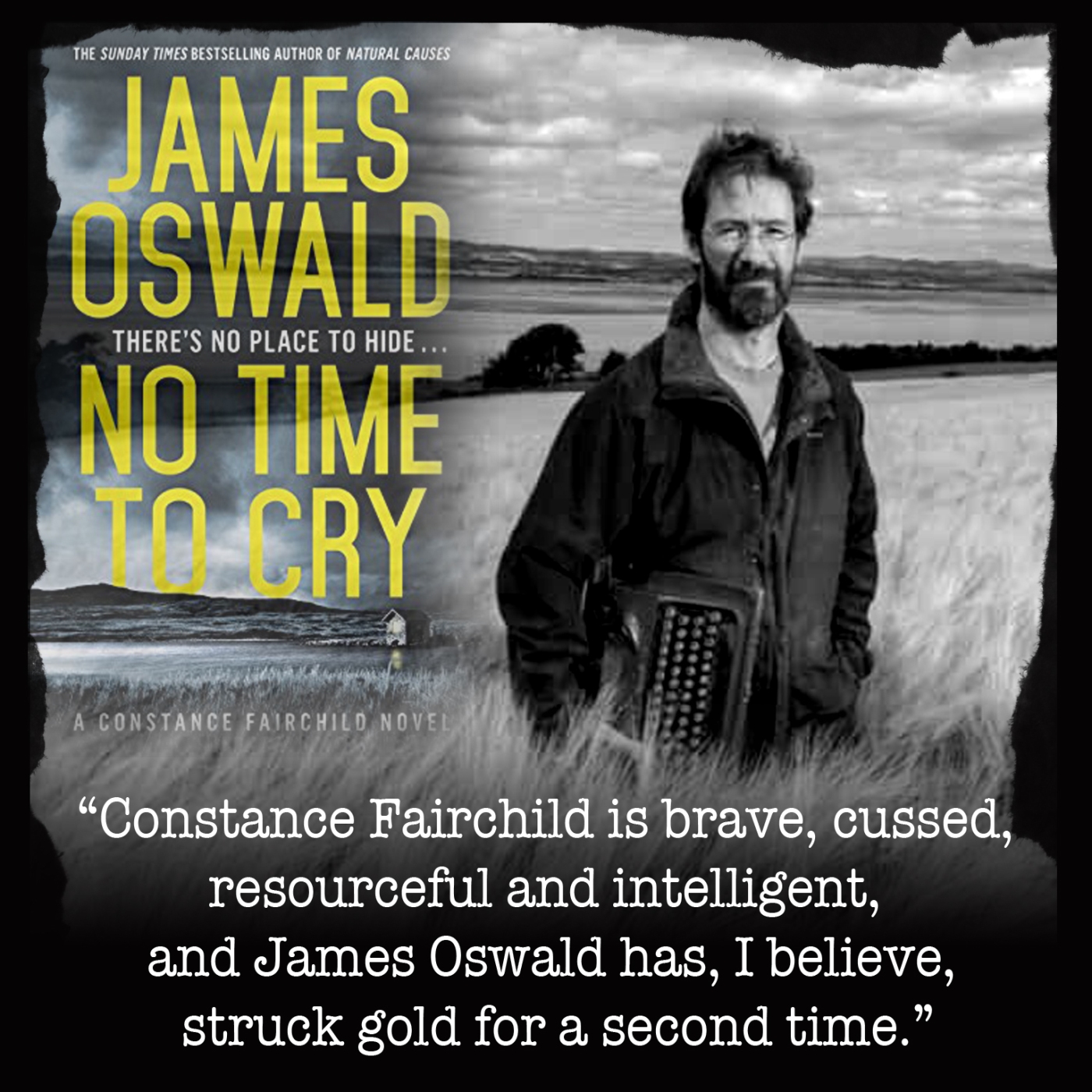

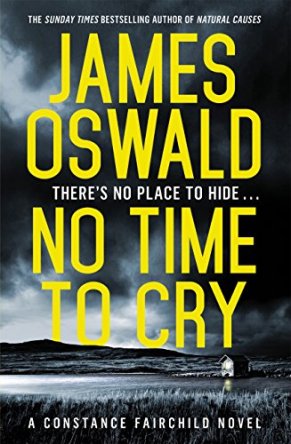 James Oswald’s Tony McLean has not met with a Reichenbach Falls accident, but at the end of
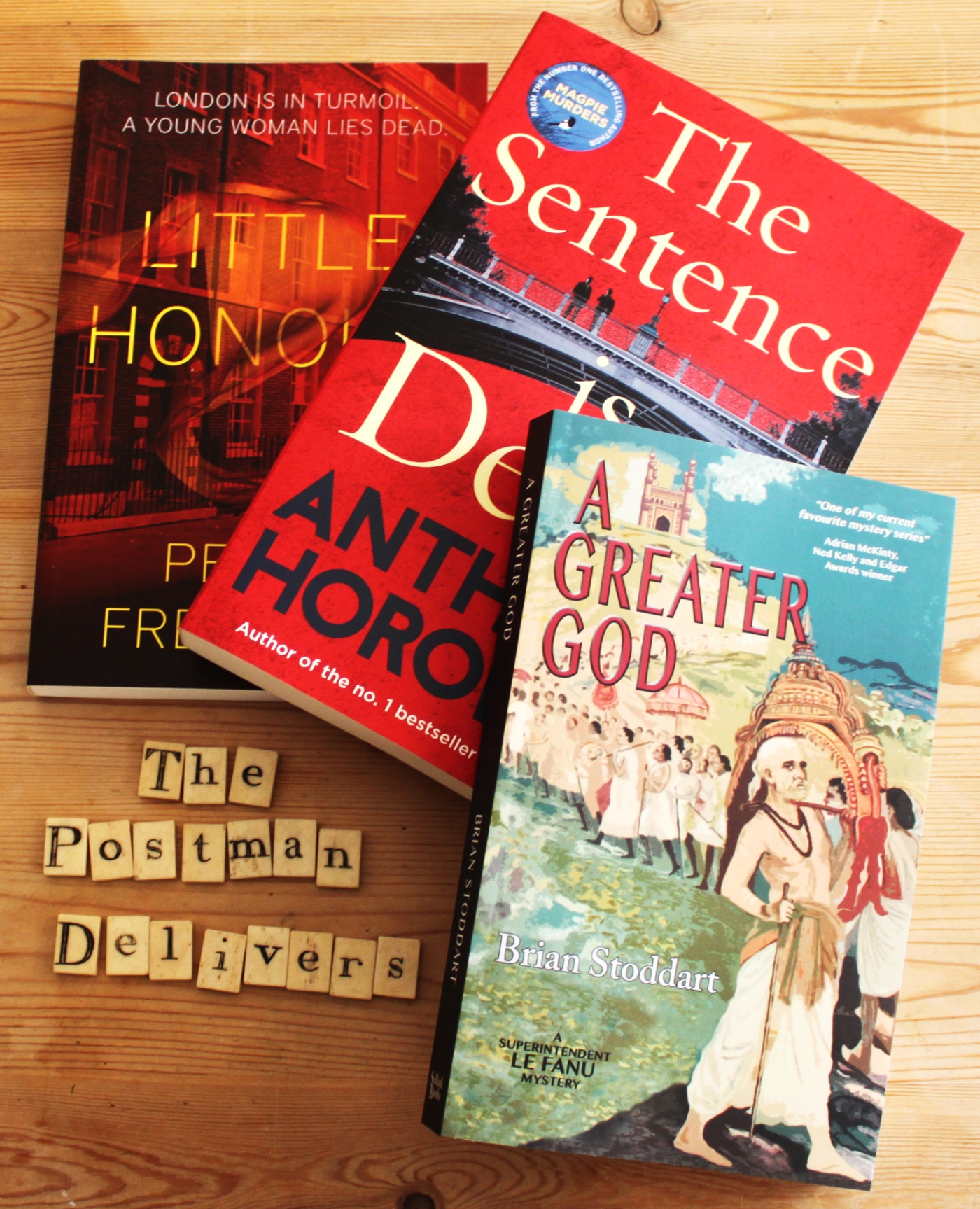

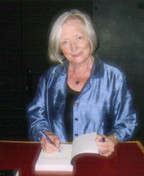 Penny Freedman (left) has been many things; a teacher, theatre critic, actor, director, counsellor and mother, but she also writes intriguing crime fiction. Her heroine Gina Gray has appeared in previous novels including Weep A While Longer and Drown My Books, but now we learn more about her granddaughter Freda, in a murder mystery which encompasses hate crime in a post-referendum London, the arcane world of legal chambers in Grey’s Inn and – for good measure – a missing dog. Available now, Little Honour is published by
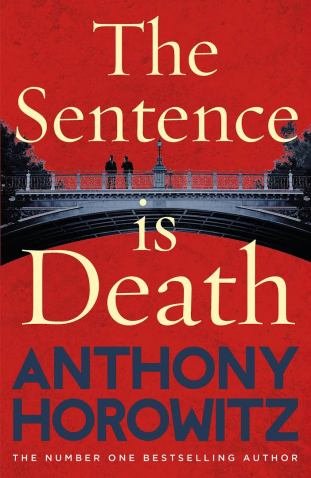
  Anthony Horowitz has a glittering array of successes on his CV, including reincarnations of both Sherlock Holmes and James Bond , Foyle’s War, and the Alex Rider series. This is the latest book in a more recent series centred on a London private investigator, Daniel Hawthorne. When a high profile lawyer best-known for handling celebrity divorces is found dead in his luxury home overlooking Hampstead Heath, the police investigation gets nowhere, and they reluctantly bring in former copper Hawthorne. Hawthorne’s usual cool detachment from the case is disturbed when he becomes personally involved, with his own life very much on the line. The Sentence Is Death will be on the shelves on 1st November and is
  One of my favourite historical policemen returns in the latest episode in the eventful life of Superintendent Chris Le Fanu. We are in Madras (Chennai) in the 1920s, and while the British grip on India is becoming weaker and weaker, there is still police work to be done. The city is blighted by a wave of violent clashes between Muslims, revolutionaries, and the blundering attempts by Le Fanu’s boss to restore order. Expect a brilliant narrative, impeccable historical background and authentic dialogue. A Greater God is published by Selkirk Books and will be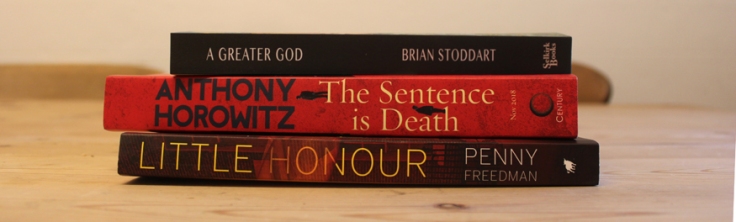

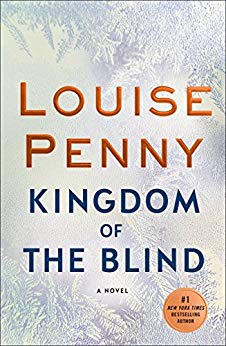 Chief Inspector Armand Gamache
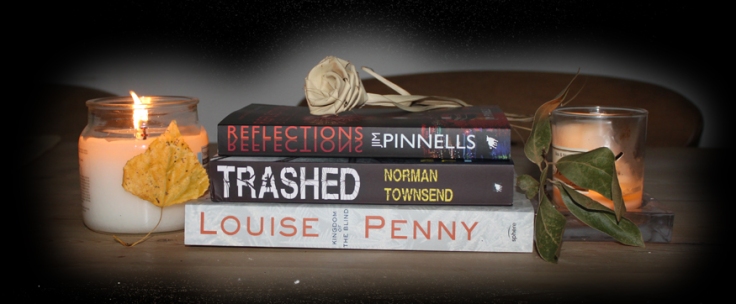
 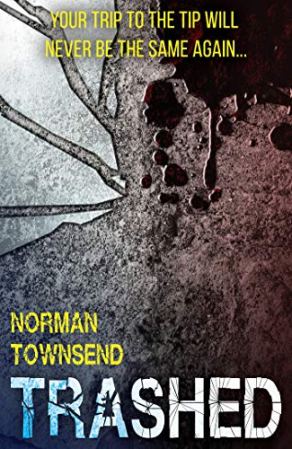 Some ex-military men find that civilian life is hard to deal with, but Paul Stafford is coping well. He has used his retirement pot to start a small recycling business and everything in the scrapyard seems to be rosy, until he wins a lucrative contract to run a further five sites. What should be a business triumph turns into a nightmare for Stafford when he realises that his new sites have been previously used by a powerful criminal organisation, and the bad guys do not take kindly to their work being interrupted. Murder and violence come as second nature to them, and when his own employees begin to feel the full clout of the gangsters, Stafford must stand and fight – both for them and his own integrity.
 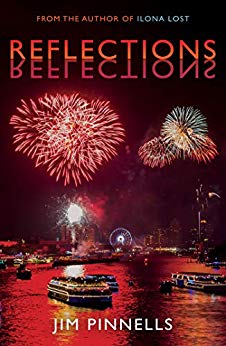 Jim Pinnells is an international project manager who has worked in such diverse concerns as the oil industry, military hardware, renewable technology and national security. His knowledge of Thailand stems from a spell there working for the UN, and Reflections is set in Bangkok, where a poignant human drama is played out against a backdrop of one of the world’s most secretive criminal enterprises – the trade in human blood. Ed and Diana seem to have it all – beauty, talent and love for each other – but when their first child is born irreparably brain damaged, their world fall apart. Ed pursues the heartbroken to Diana to Thailand but a case of mistaken identity plunges him into a nightmare world of violence, kidnap and espionage. Reflections is published by Troubador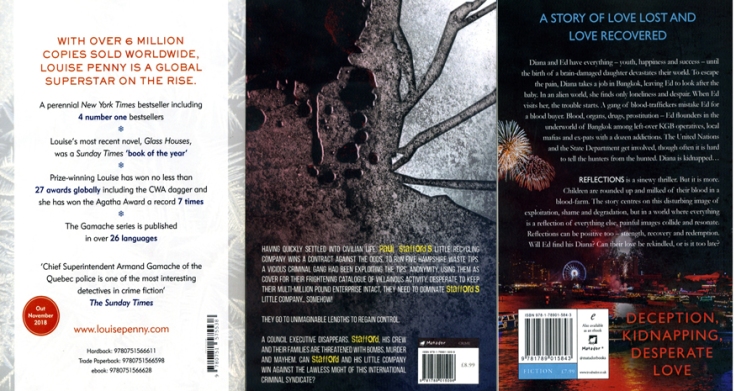


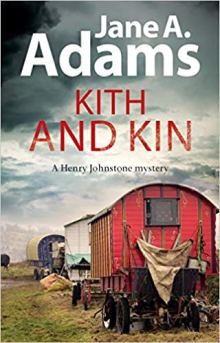 Coming across a very, very good book by an author one has never encountered before and then realising that she has been around for a while is a shock to the system, and if the downside is that the experience further highlights one’s own ignorance, then the blessing is that as a reviewer and blogger, there is something new to shout about. Jane A Adams made her debut with The Greenway back in 1995, and has been writing crime fiction ever since, notably with four-well established mystery series featuring Mike Croft, Ray Flowers, Naomi Blake and Rina Martin. She began the saga of London coppers Henry Johnstone and Micky Hitchens in 2016, with The Murder Book. Their latest case is Kith and Kin.
 The period is set to perfection, and Adams (right) skilfully combines past, present and future. The past? There can scarcely have been a man, woman or child who escaped the malign effects of what politicians swore would be the war to end wars. The present? 1928 saw devastating flooding on the banks of the River Thames, a book called Decline And Fall was published, and in Beckenham, not a million miles away from where this novel plays out, Robert ‘Bob’ Monkhouse was born. The future? Johnstone’s sister, who has married into money, has a head on her shoulders, and senses that in the financial world, a dam is about to break – with devastating effects.