

Honest broker that I am, and the modern equivalent of Robespierre in my sea-green incorruptibility, I must declare an interest here. I am an unashamed and avid fan of anything written by Chris Nickson. I hope that if he did write a duff book – or chapter – or page – or sentence – I would say so. Happily, that dilemma is one that I have yet to face.
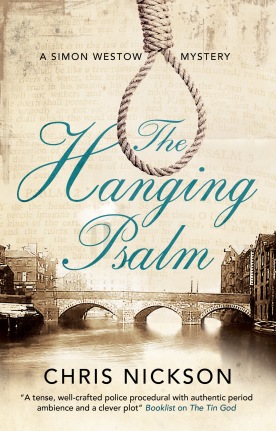 Nickson’s latest book introduces a new character, Simon Westow, who walks familiar streets – those of Leeds – but our man is living in Georgian times. England in 1820 was a kingdom of uncertainty. Poor, mad King George was dead, succeeded by his fat and feckless son, the fourth George. Veterans of the war against Napoleon, like many others in later years, found that their homeland was not a land fit for heroes. The Cato Street conspirators, having failed to assassinate the Cabinet, were executed.
Simon Westow is a thief-taker. These days, he might be a bounty hunter or a PI. There is no established official police force, merely a Constable who is neither use nor ornament.
“The constable. It was a name rather than a job. A position. All the ceremony and the money that went with the post, but none of the work. Cecil Freeman had been part of the council long enough to earn the sop, a nest to gild his retirement. He supervised the watch, old men who covered the different wards of Leeds and hobbled a mile rather than risk a fight.”
Westow is a tradesman, just like a plumber. He is paid by results, and when he is tasked with finding the kidnapped daughter of a prominent mill owner, it poses no major problem and the young woman is soon found and returned to her family. But – and it is a huge ‘but’ – Westow and his ally, a wraith-like and embittered girl of the streets called Jane, learn that there is much more to the kidnapping than meets the eye. Their nemesis is a vengeful and resourceful man called Julius White, who has returned from a seven year transportation sentence to settle scores with those who put him on the prison ship sailing to Australia.
Samuel Johnson said, “When a man is tired of London, he is tired of life,” but Nickson has eyes and ears only for Leeds. I am always drawn to writers who make a vivid sense of place a major character in their novels, hence my fascination with the London of Christopher Fowler, Jim Kelly’s Fenland and the brooding hills of the Welsh Marches as portrayed by Phil Rickman. Nickson, and his Leeds across the generations, is up there with the best. Think of the subtleties of a Rembrandt portrait, every line and wrinkle faithfully reproduced, but also think of that great painter’s warmth and the deep compassion of his vision.
Nickson employs a simple but astonishingly effective plot device, that readers of his novels will recognise. A crime is committed. The perpetrator is either unknown, or a known villain who has gone to ground in the alleys and ginnels of Leeds. The central character, be it Richard Nottingham, Tom Harper, Lottie Armstrong or Dan Armstrong, must then call in favours, walk the streets, mingle with pub low-life or knock on the front doors of posh houses in search of information. This enables Nickson to bring Leeds to life across the centuries, its dark places with poverty so intense that it reeks, and those airy vaulted buildings where men of property and money take their leisure and talk business.
The author is also a highly respected music journalist, and he will be aware that the great Woody Guthrie said something along the lines of, “I only use three chords; maybe four, if I’m trying to impress a girlfriend.” Nickson is equally parsimonious with his prose. There are no flounces, no frills and no flourishes but, maybe because of this economy, there is memorable poetry, albeit bleak, such as when he describes the ‘fallen women’ of Leeds.
“Too many were desperate. All it took was the promise of a meal and a bed. And then enough gin and laudanum to dull the pain of living and the agony men inflicted. If a few died, there was ample room for the burials. Girls without names, without pasts; no one would ever ask questions.”
Westow’s pursuit of Julius White is thrilling stuff. The ex-convict’s desire for revenge has created a fire, and the character forged in its flames emerges as the embodiment of evil. Maybe it’s just me, but this novel casts a more sombre shadow than previous Nickson Leeds novels. Westow certainly carries deep psychological scars from his institutional upbringing, and Jane is a very dark, complex and troubled soul.
The Hanging Psalm is published by Severn House and will be available from 28th September. In case you are puzzled by the price on the Amazon listing, you need to know that the publishers sell mainly to public libraries, so check that your own library has this book on its acquisition list.
If you are new to the books of Chris Nickson, then click the blue link to discover why I am such an admirer.




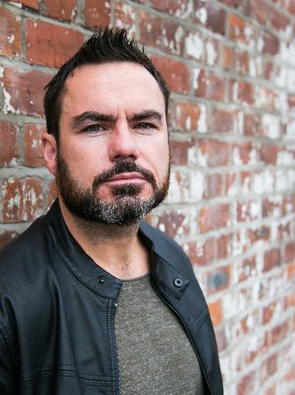 With that grim discovery acting as a starting pistol, debut author Robert Scragg (left) starts a middle-distance race to discover who murdered Natasha Barclay. For she is the person, identified by simply reading the opened mail strewn around the tomb-like flat, and checking rental records, whose hand lies in the freezer drawer.
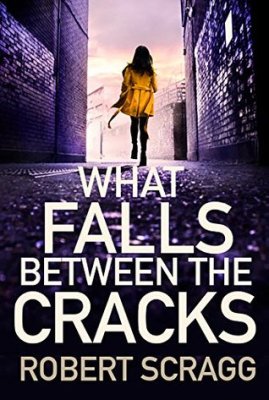 If ever there were an single implausible plot device, it might be the premise that a suburban London flat, complete with a severed hand sitting quietly in a freezer compartment, could remain untouched, unvisited and unnoticed for over thirty years. It is, however, a tribute to Robert Scragg’s skill as a storyteller that this oddity was so easily forgotten. The dialogue, the twists and turns of the plot, and the absolute credibility of the characters swept me along on the ride. Porter and Styles have made an impressive debut, and the author may well have elbowed them into that crowded room full of other fictional police partners. They are all out there; Bryant & May, Zigic & Ferrera, Rizzoli & Isles, Wolfe & Goodwin, Morse & Lewis, Jordan & Hill, Kiszka and Kershaw – watch out, you have company!

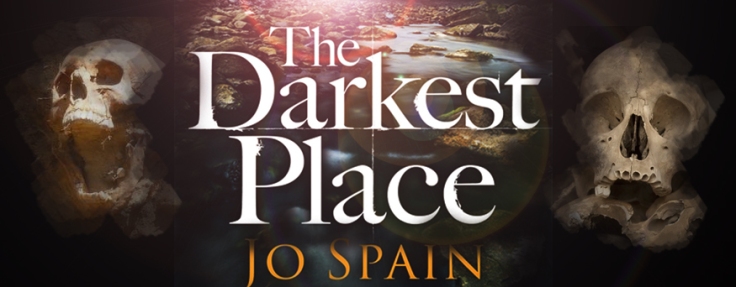
 Dublin copper DI Tom Reynolds is summoned from the dubious delights of his family Christmas to solve a murder. Readers of the previous three Tom Reynolds books might think there is little remarkable about that, but this time the corpse has been in the ground for rather longer than usual. Forty years, in fact. On the island of Oileán na Caillte, the pathologists have been disinterring corpses from a mass grave of the unfortunates who passed away as patients of the long-defunct psychiatric institution, St Christina’s. Those involved in the grim task discover nothing illegal, as all the residents of the burial pit were laid to rest in body bags, tagged and entered onto the hospital records. With one exception. That exception is the corpse of one of St Christina’s medical staff Dr Conrad Howe, who mysteriously disappeared forty Christmases ago. No body bag or tag for Dr Howe, but a rather surreptitious last resting place wedged between two other corpses.
 Other than that dark angel, the cast of suspects includes another former physician, now himself just days away from death, and others whose culpability in the inhuman treatment of St Christina’s patients has left psychological scars, some of which have become dangerously infected. Of course, this being, among other things, a brilliant whodunnit, Jo Spain (right) allows Tom Reynolds – and us readers – to make one major assumption. She then takes great pleasure, the deviously scheming soul that she is, in waiting until the final few pages before turning that assumption not so much on its head as making it do a bloody great cartwheel.
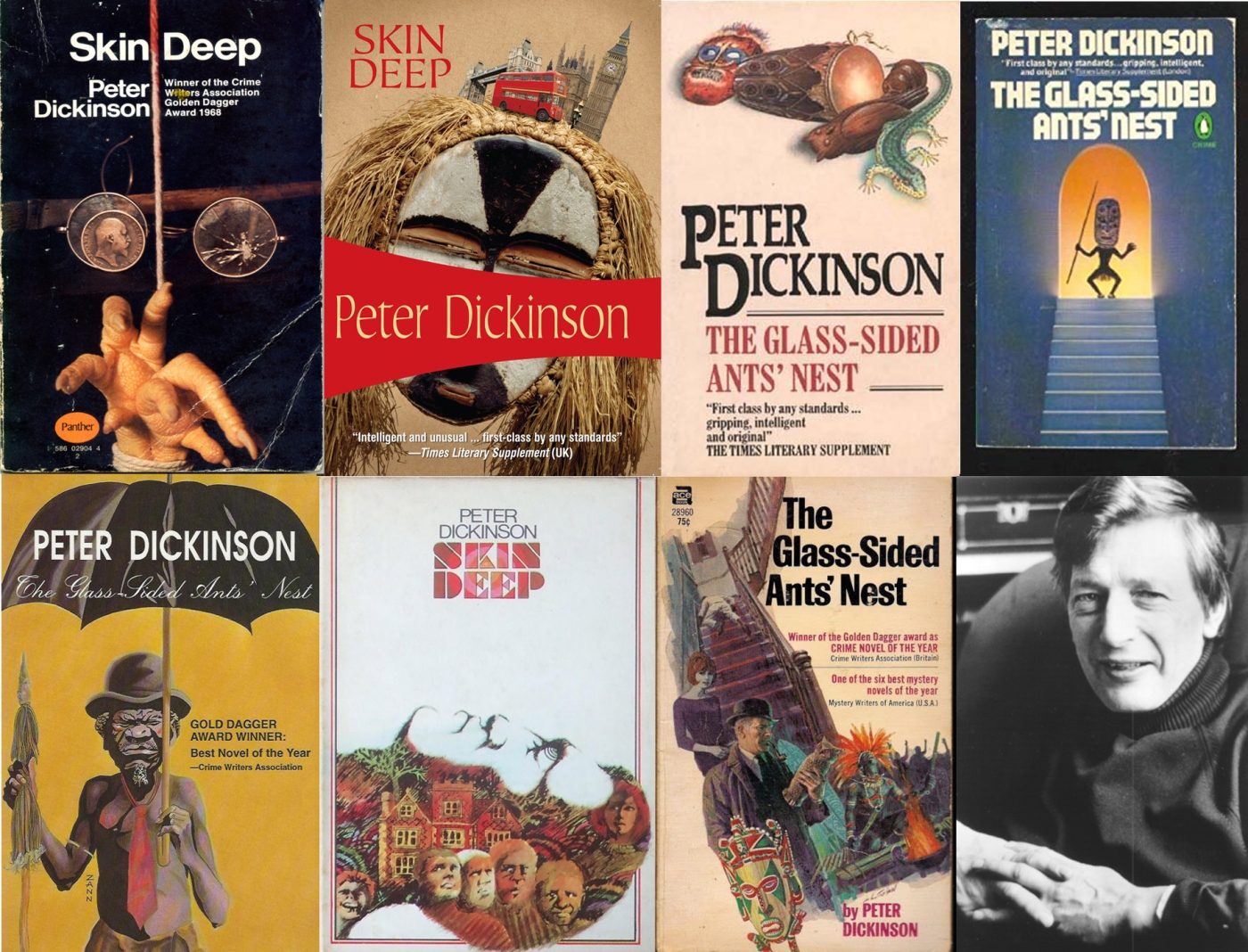
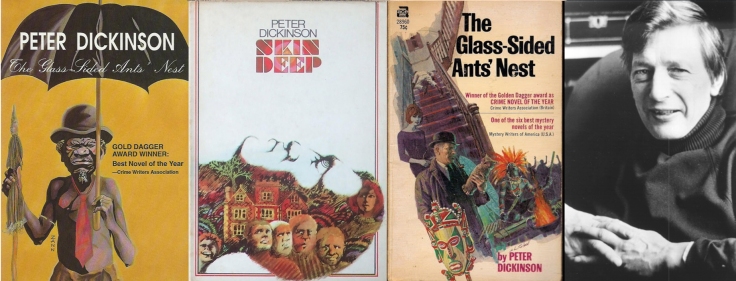
 Incidentally, I don’t think there are many Old Etonian authors around these days, but Dickinson (left) was there from 1941 to 1946, and it is tempting to wonder if he ever rubbed shoulders in those years with another Eton scholar by the name of Robert William Arthur Cook, better known to us as the Godfather of English Noir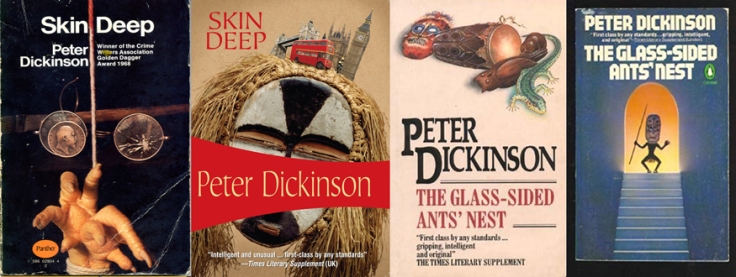
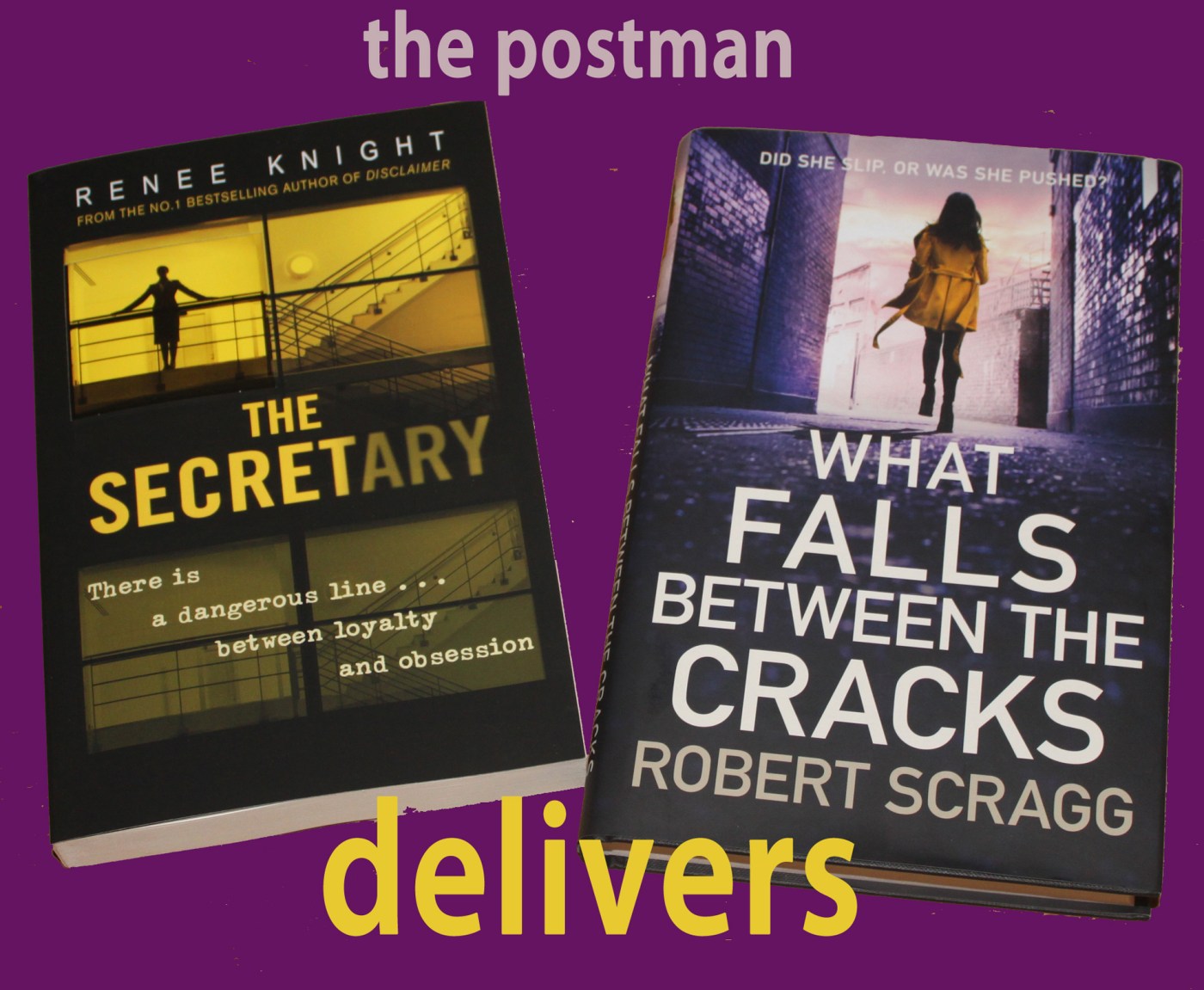

 Renée Knight worked for the BBC directing arts documentaries before beginning her writing career. She has written television and film scripts for the BBC, Channel Four and Capital Films. Her first screenplay, Mother’s Day, made it onto the 2010 Brit List of best unproduced scripts of that year.
 What Falls Between The Cracks is the first published novel from Robert Scragg.He is a northerner born and bred, and has had a random mix of jobs to date, including bookseller, pizza deliverer, Karate instructor, and Football Coach. He originally intended to join the legal profession, but after getting his degree, ended up with a job in Telecoms.

 James Barlow was a Birmingham-born novelist who served as an air gunner with the RAF in WWII. Invalided out of service when he contracted tuberculosis, he faced a long convalescence. He began writing at this time, and after he worked in his native city as, of all things, a water rates inspector, he made the decision to write for a living. His first novel, The Protagonists, was published in 1956, but made little impact. It wasn’t until Term of Trial (1961) that he began to make a decent living from writing, and then more because film director Peter Glenville saw the cinematic potential in the story of an alcoholic school teacher whose career is threatened when he is accused of improper behaviour with a female pupil. The subsequent film had a star-studded cast including Sir Laurence Olivier, Simone Signoret, Sarah Miles, Terence Stamp, Hugh Griffith, Dudley Foster, Thora Hird and Alan Cuthbertson.
 Term of Trial was a powerful and controversial film, but clearly had nothing to do with crime fiction. Barlow’s 1968 novel The Burden of Proof was another matter. By the time it was published, the Kray twins’ days as despotic rulers of London’s gangland were numbered. They were arrested on 8th May in that year and the rest, as they say, is history. The Burden of Proof is centred on a Ronnie Kray-style gangster, Vic Dakin. Dakin is psychotic homosexual, devoted equally to his dear old mum and a succession of pliant boyfriends, while finding time to be at the hub of a violent criminal network.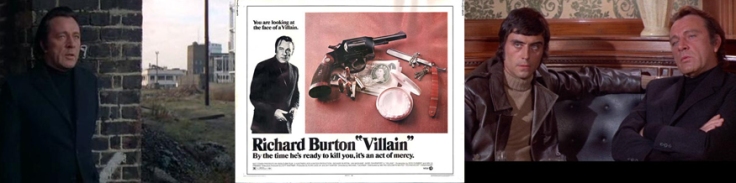
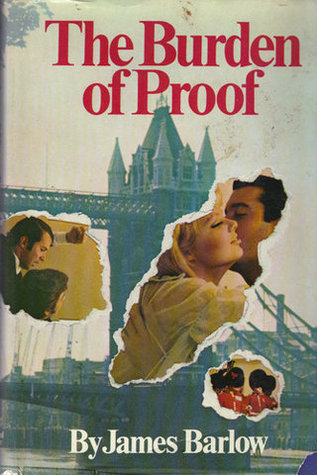 In the city which is portrayed as little more than a moral sewer, we have the vile Dakin and his criminal associates; we have an earnest and incorruptible copper, Bob Matthews who Barlow sets up – along with Bob’s mild-mannered and decent wife Mary – as the apotheosis of what England used to be before the plague took hold. We have Gerald Draycott, a dishonest and manipulative MP who flirts with the dangerous world of gambling clubs, casinos, girls-for-hire and drugs-for-sale, but still dreams of becoming a cabinet minister.
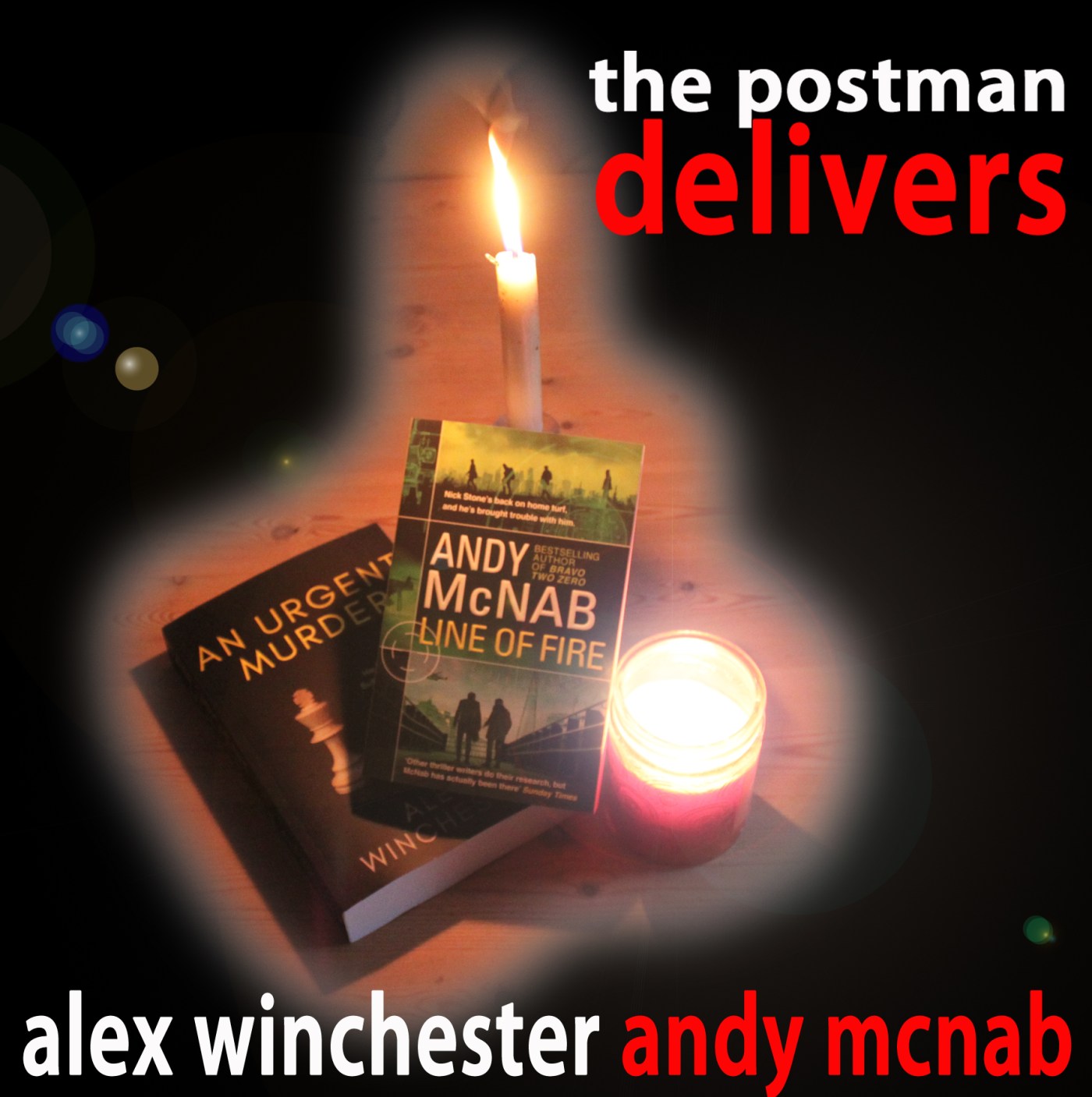

 It is tempting to add the cliché “who needs no introduction” but it won’t hurt to remind potential readers that the man known as Andy McNab is, in real life, a highly decorated soldier. You don’t receive the Distinguished Conduct Medal for services to military administration, nor is the Military Medal awarded for excellence in ceremonial drill. McNab’s most popular fictional hero returns in Line of Fire, and former Special Forces operator Nick Stone is, as usual, up to his eyes in trouble. He has been given the job of taking out an unusual target. One, it’s a woman and, two, she is a hacker so skilled that her clattering keyboard can potentially disrupt commerce, destroy communications and bring down governments. Line of Fire is published by Corgi/Transworld/Penguin Random House and will be available
 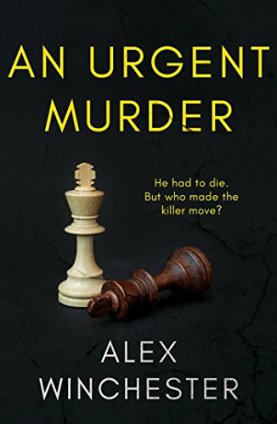 Ex Met-Police detective Winchester says of his debut novel:

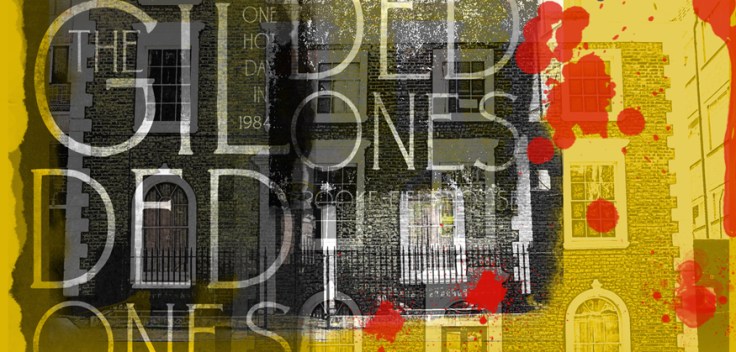
 This is a curious and quite unsettling book which does not fit comfortably into any crime fiction pigeon-hole. I don’t want to burden it with a flattering comparison with which other readers may disagree, but it did remind me of John Fowles’s intriguing and mystifying cult novel from the 1960s, The Magus. I am showing my age here and, OK, The Gilded Ones is about a quarter of the length of The Magus, it’s set in 1980s London rather than a Greek island and the needle on the Hanky Panky Meter barely flickers. However we do have a slightly ingenuous central character who serves a charismatic, powerful and magisterial master and there is a nagging sense that, as readers, we are having the wool pulled over our eyes. There is also an uneasy feeling of dislocated reality and powerful sensory squeezes, particularly of sound and smell. Author Brooke Fieldhouse (left) even gives us female twins who are not, sadly, as desirable as Lily and Rose de Seitas in the Fowles novel.
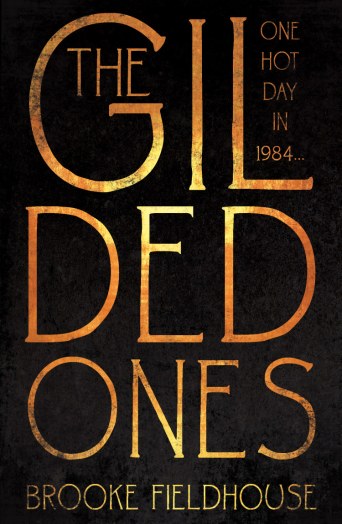 Lloyd Lewis is the Magus-like figure. He is so thumpingly male that you can almost smell him, and he rules those around him, with one exception, with an almost feral ferocity. So who are ‘those around him’? Ever present psychologically, but eternally absent physically, is his late wife Freia, the subject of Pulse’s dream. Martinique is Patrick’s girlfriend, and loitering in the background are his children, step-child and office gofer Lauren. Lauren, who has “thousand-year-old eyes”, is of the English nobility, but quite what she is doing in the Georgian townhouse we only learn at the end of the book. The one person to whom Patrick defers is his Sicilian friend Falco. Equalling the Englishman’s sense of menace, the sinister Falco appears briefly but is, nonetheless, memorable.


