

SPRING IN THE EAST OF ENGLAND has been played rather a nasty trick by the weather Gods. February fooled us with its sunshine, gentle breezes and benign temperatures. March is taking its revenge. Blossom, daffodils and narcissi are nodding gamely but only just about holding their own in the teeth of savage winds. Still, indoors is relatively calm, and with a stack of excellent new books to ponder, I think I will make it through to May. Our four authors are all on Twitter, so just click on the little birdy to see what they are all up to.
THE CONFESSIONS OF FRANNIE LANGTON by Sara Collins

 This sounds as if it could be one of those bawdy recollections of a Victorian courtesan which passed for erotic literature in pre – 50 Shades days. It is, I am glad to say, nothing of the kind. It is, instead, a literary whodunnit set in early 19th century England. Then, as now, the media love an exotic criminal, no matter what crimes they may have committed. The chattering classes in the London of 1826 are, in turn, horrified and luridly curious about the defendant in a murder trial. The accused is a young woman, brought up on a slave plantation in her native Jamaica, and now she stands in the dock of the Old Bailey, charged with the murder of her employers, Mr and Mrs Benham. The indictment is sensational:
“FRANCES LANGTON, also known as Dusky Fran or Ebony Fran, is indicted for the wilful murder of GEORGE BENHAM and MARGUERITE BENHAM in that she on the 27th day of January in the year of Our Lord 1826 did feloniously and with malice aforethought assault GEORGE BENHAM and MARGUERITE BENHAM, subjects of our lord the King, in tat she did strike and stab them until they were dead, both about the upper and middle chest, their bodies having been discovered by EUSTACIA LINUX, housekeeper of Montfort Street, London.”
Frannie Langton tells her story courtesy of Sara Collins who, after a successful career as a lawyer, took a Masters degree in creative writing at Cambridge. This, her debut novel, is published by Viking/Penguin and will be available on 4th April.
THE LONELY HOUR by Christopher Fowler
 I have never written anything more eye-catching or erudite than these book reviews, so I don’t really know what real authors use (apart from sales figures) as ‘performance indicators’ for success. I use the speech marks to show that I would never normally use such examples of Management Speak, so it’s irony, OK? I imagine, though, that when you have created a central character, or in this case a duo, that is is so recognisable that it gets a bigger font than both the book title and the author’s name on the dust jacket, then maybe you have made it. Christopher Fowler’s ageless pair of investigators are, in the nicest possible way, an in-joke before the first page is turned. Fowler is second to none in his ability to use obscure British brand names as he puns and funs his way through what are the most irresistibly English novels of our time, and his two constabulary codgers are, for younger readers, named after a brand of British matches which were first sold in the mid nineteenth century. Their latest adventure begins, as ever, in London, with a mysterious death which may be connected to black magic. The book blurb promises “murder, arson, kidnap, blackmail ….. and bats.” Expect brilliant use of language, an eccentric and bewildering plot with a breathtaking resolution – and many a good joke. The Lonely Hour is out on 21st March and is published by Doubleday. The more perceptive among you might infer that I am a fan of Christopher Fowler. To find out more about his books, click on the gentleman’s image below, and all will be revealed.

BONES OF THE EARTH by Eliot Pattison
Eliot Pattison is an American writer who has written a superb series of novels, of which this the tenth, featuring a Chinese detective, Inspector Shan Tao Yun, who has upset the Communist regime by his honesty and single minded integrity. Managing to escape a state firing squad he has, instead, been exiled to the wilds of Tibet where, or so his masters believe, he can do no harm. The Inspector is forced to witness the execution of a Tibetan for corruption, but he can’t shake the suspicion that he has instead witnessed a murder arranged by conspiring officials. As ever, Shan chooses the hard road, and his investigations bring him into contact with the vengeful father of a murdered American archaeologist who is determined to find justice for his dead son. Shan becomes slap dab in the middle of a deathly struggle between the mystical world of Tibetan gods and the implacable bureacrats back in Beijing. Bones Of The Earth is out on 26th March, and is published by Minotaur Books. I’ve reviewed and recommended earlier novels by Eliot Pattison, so click the image below to find out more.
NO ONE HOME by Tim Weaver
It seems like only the other day that Tim Weaver introduced us to his investigator David Raker, yet No One Home is the tenth novel in the series. Raker has, you might say, a niche talent. He finds missing people. People in whom the police have lost interest, with just their distraught wife, husband, son or daughter left to care. Raker pursues his missing folk to some of the most far-flung parts of the world, but here, the mystery begins close to home. In a baffling disappearance to rival the unsolved mystery of the Marie Celeste, Raker isn’t just chasing one elusive subject – he’s after an entire community. The nine members of a tiny hamlet sit down to eat, drink and have fun on All Hallows Eve. When the grey dawn comes, they are gone. Every single one of them. Is Raker about to unravel a breathtaking conspiracy, or will he just have to settle for corpses? You will have to be patient to read how David Raker tackles this latest challenge, as Michael Joseph will be publishing the book on 16th May. Meanwhile click on the picture below to find out a little more about how Mr R operates.

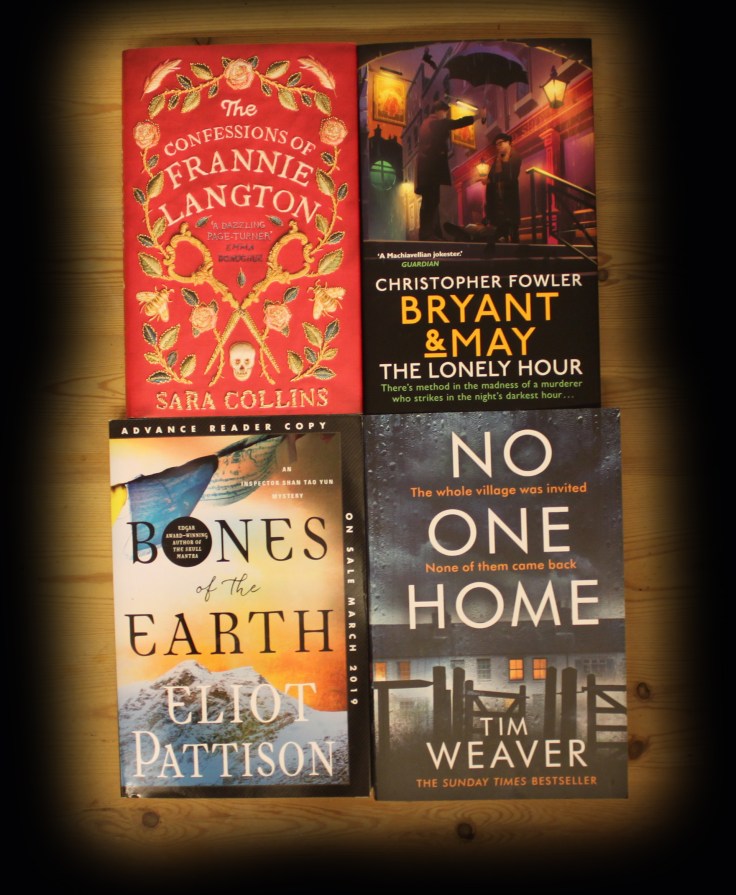
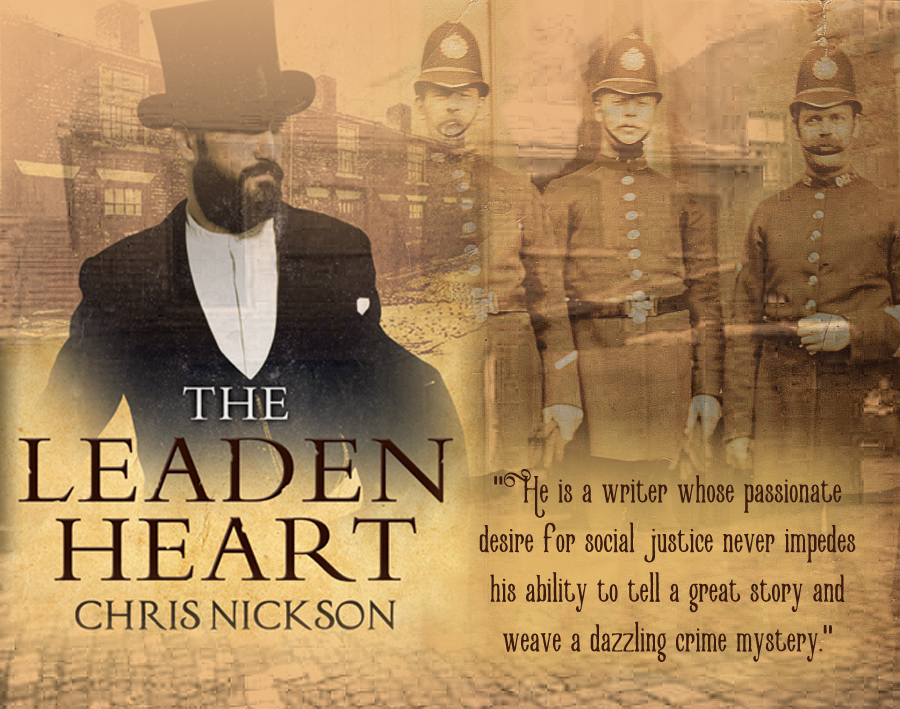
 Harper lives above a city pub, the Victoria. His wife, Annabelle, is the landlady, but she is also a fiercely determined advocate of women’s rights, and she has made waves by being elected to the local Board of Guardians, a largely male-dominated organisation which is tasked with administering what, in the dying years of Queen Victoria’s reign, passed for social care. When the brother of Harper’s one-time colleague, Billy Reed, commits suicide the death is dismissed, albeit sadly, as commonplace, but Reed believes that his brother’s death is due to something more sinister, and he asks Harper to investigate.
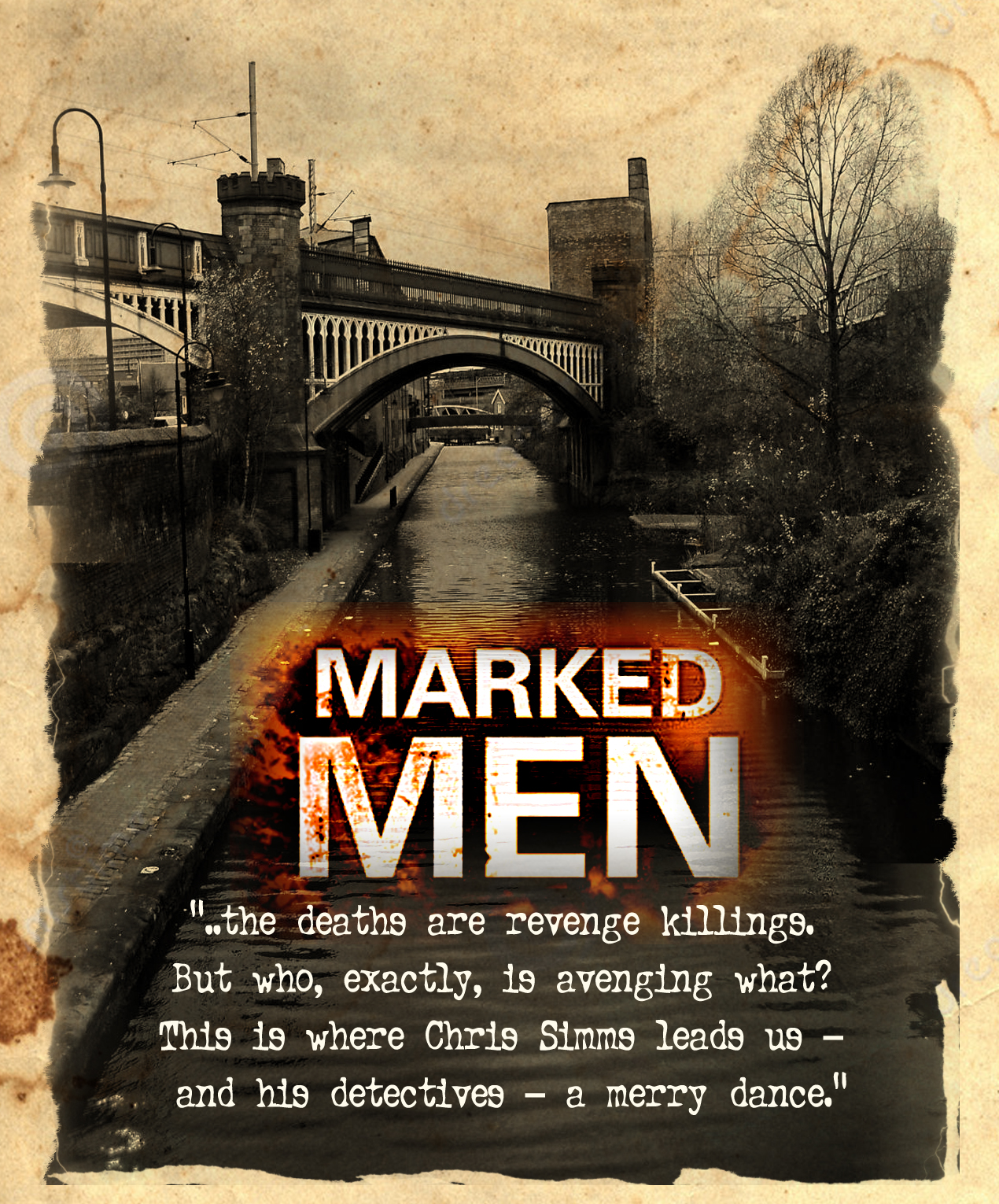
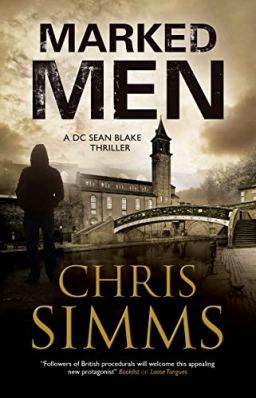 Marked Men begins on an idyllic Spanish beach, but then switches to the less salubrious setting of urban Manchester, and we only learn the significance of the opening much later in the plot. This way of starting a novel has become rather well-worn, but Simms handles it well and times to perfection the revelation of its significance. The Manchester action begins with Blake in waders and hard hat at the bottom of a drained lock on a local canal. There is a body, naturally, with more to follow, and as Blake and his immediate boss, DS Dragomir criss-cross the city trying to make sense of the crime scenes we – like them – are drawn into thinking that the deaths are revenge killings. But who, exactly, is avenging what? This is where Chris Simms leads us – and his detectives – a merry dance. There is a clue, but I have to confess I didn’t get it any quicker than did Blake and Dragomir.





 I would be lying if I said I hadn’t been counting the days until this arrived. Kerry Hood at Hodder & Stoughton is to be commended for showing great patience in the face of my impatience, but it finally arrived. Kerry had mentioned that it might be something special, but then publicists always say that, don’t they? So, ripping off the sturdy cardboard wrapper ….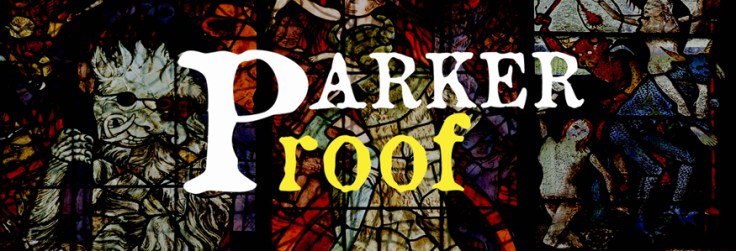
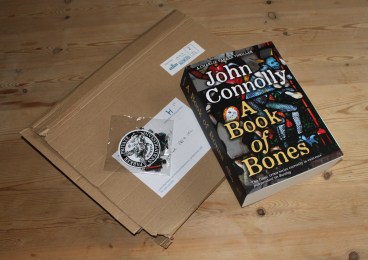 Ta-da! And there it was, the long awaited latest journey into the darkness of men and angels for the Maine PI, Charlie Parker. The adjectives are easy – haunted, conflicted, convincing, troubled, angry, brave … fans of the series can play their own ‘describe Charlie Parker’ game, but most importantly, our man is back.
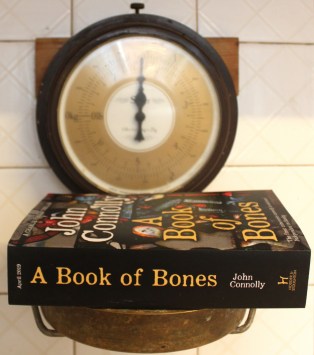 Charlie Parker is back, and how! I was advised that I might want to set aside a fair amount of time to read A Book of Bones but, blimey, Kerry was not wrong. At a little short of 700 pages, and weighing nearly 2lbs in old money, the book is certainly a big ‘un. New readers shouldn’t be daunted, though. John Connolly couldn’t write a dull sentence even if he went off to his Alma Mater, Trinity College Dublin, to do a doctorate in dullness.
 But there was more! Book publicists are an inventive lot, and over the years I’ve had packets of sweets, tiny vials of perfume, books wrapped in funereal paper and black ribbon, facsimiles of detective case files – but never a jigsaw. Wrapped up in a cellophane packet with a lovely Charlie Parker 20 year anniversary graphic were the pieces.
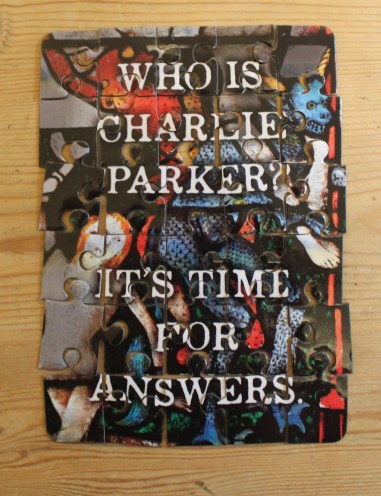 As I was always told to do by my old mum, I isolated the bits with the straight edges first. There was clearly a written message in there, set against the lovely – but sinister – stained glass background. Confession time; although the puzzle didn’t have too many pieces, I got stuck. Fortunately, Mrs P was taking a very rare day off work with a flu bug, and as she is a jigsaw ace, she finished it off for me.
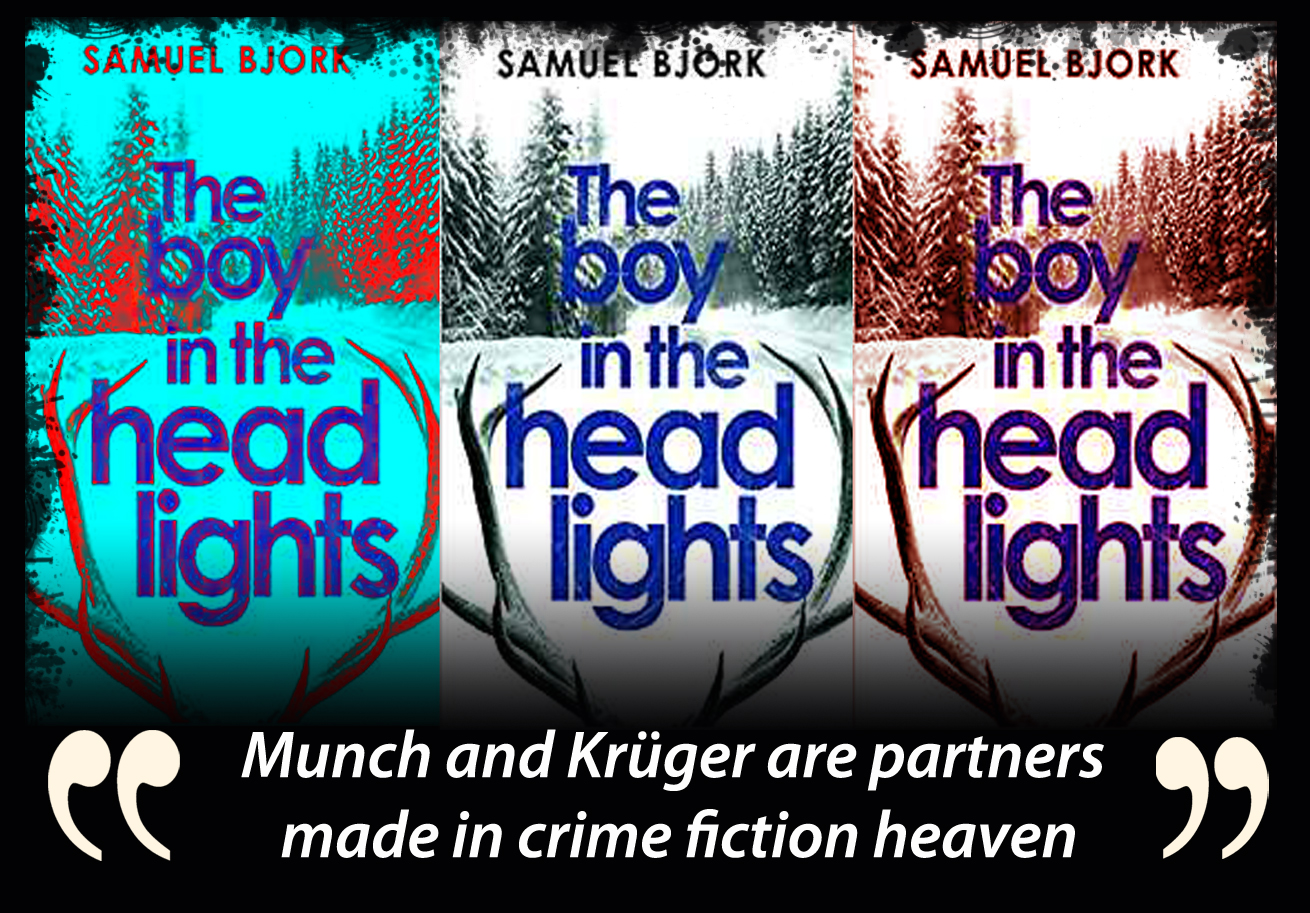

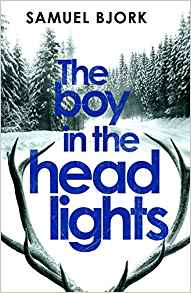 Norway’s Samuel Bjork ticks the boxes with his Olso cops Holger Munch and Mia Krüger. Munch is a bearded bear of a man, overweight and stuffed into his habitual duffel coat like a fat foot into a shoe two sizes too small. His home life is in disarray. Separated from his wife, his daughter Miriam recovering from a serious injury, he seems to treat those people with – at best – edgy tolerance, but his obsession is with the job, and catching criminals. Krüger’s back story makes Munch’s people look like candidates for a TV breakfast cereal advert emphasising warm family values. The story opens with her recovering from – in no particular order – alcoholism, a fatal shoot-out after which she was accused of murder, and the haunting death of her sister, victim of Oslo’s drug scene.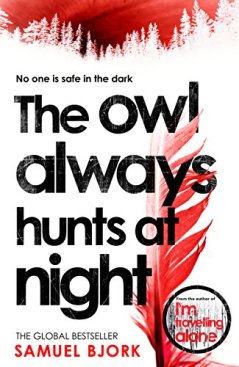






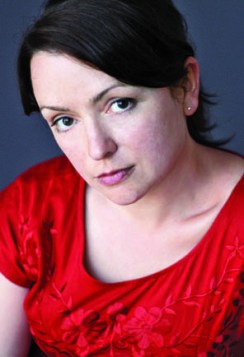 JO BAKER was born and raised in Lancashire, and was educated at Queen Elizabeth School, Kirkby Lonsdale, and Somerville College, Oxford. The Body Lies is her seventh novel, and her best-seller Longbourn is a highly individual reshaping of Pride and Prejudice as seen through the eyes of the “below stairs” staff in the Bennet house. Jo Baker has
 TINA BEATTIE was born in 1955 in Lusaka, Zambia. Her parents were economic migrants from post-war Scotland. She is now Professor of Catholic Studies at the University of Roehampton in London, and has written widely on theology and the Roman Catholic faith. Her writing, particularly with regard to women’s rights and feminism have often brought her into conflict with the more conservative wing of her church. Her Amazon page is
 MP MILES is from a small town in Dorset.

 Forced to play cherchez-la-femme, the detectives stumble down one blind alley after another, but as they do so they learn a few home truths about the fate of the young men who went to fight in the war-to-end-all-wars, and returned home to find that their birthplace was not the ‘land fit for heroes’ glibly promised by politicians. There is a peacetime army with no place for young officers whose courage was welcome in the trenches, but whose humble upbringing is now seen as an embarrassment as the cigars are lit, and the port passed in the correct direction at mess dinners. Such young men, not all heroes, but men nevertheless, are forced to find civilian employment which is neither honest, decent nor lawful.
 Graham Ison is a master story-teller. The Hardcastle books contain no literary flourishes or stylistic tricks – just credible characters, excellent period detail and an engaging plot. Cosy? Perhaps, in the sense that we know how Hardcastle and his officers are going to react to any given situation, and their habits and small prejudices remain unchanged. Comfortable? Only because novels don’t always need to shock or challenge; neither do they always benefit from graphic descriptions of the damage humans can sometimes inflict on one another. Ison (right) credits his readers with having imaginations; he never gilded the lily of English life in the earlier Hardcastle cases which took place during The Great War, and he doesn’t start now, nearly a decade after the final shots were fired. The suffering and trauma of those four terrible years didn’t end at the eleventh hour on that eleventh day; they cast a long and sometimes baleful shadow which frames much of the action of this novel.


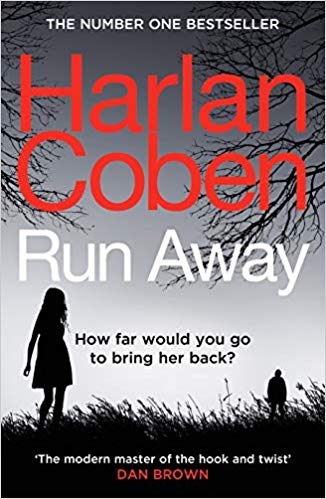 Start a 366 page book like that, and you might be making a rod for your own back, one that will whack you squarely between the shoulder blades if you don’t keep up the poetic intensity. Does Coben manage it? Of course he does – and with the stylish flourishes and narrative élan we have come to expect from one of the great crime writers of out time.
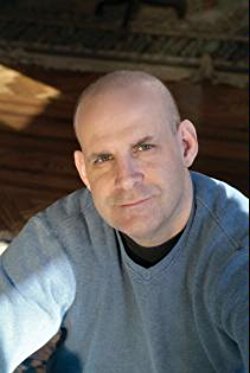 Harlan Coben (right) has thirty or so best selling crime thrillers behind him, but we must never, ever, take him for granted. There is no formula, no template, and no literary flat-pack easy-to-assemble ‘give-the-audience-what-it-wants’ sameness. He takes us to uncomfortable places and introduces us to people who are not stereotype heroes or villains. He is unafraid to give us a rough ride along roads traveled by complicated people who frequently confound our perceptions. Runaway is, quite simply, a brilliant read. It is published by Century and will be out in


