

OK, so Liam Neeson and Luc Besson got their anti-Albanian-gangster campaign in first, but Tony Parsons’ version has a hashtag, and only two citizens of the Adriatic republic bite the dust during DC Max Wolfe’s latest investigation. So, what do we have? Fans of the previous Max Wolfe novels The Murder Bag (2014) The Slaughterman (2015) The Hanging Club (2017) Die Last (2017) Girl On Fire (2018) can look away for a moment during a quick bio of DC Wolfe. He lives in a flat overlooking Smithfield Market. He is a single parent to daughter Scout (as in To Kill A Mockingbird), and has a dog called Stan, to whom he is devoted. Wife Anne is vaguely in the background, but is more concerned with her looks, career and latest boyfriend than she is about her daughter. The Wolfe household is run by a benevolent Irishwoman called Mrs Murphy.
 #Taken kicks off, appropriately enough, when a young ballet dancer, Jessica Lyle, is snatched from her borrowed car just yards from the gated luxury home she shares with another girl. From here, Wolfe and his alcoholic boss DCI Pat Whitestone face a veritable University Challenge of questions. Their starter-for-ten is to decide if Jessica was actually the intended victim. Although her father is a retired copper who may have run up an impressive list of enemies, isn’t it more likely that Jessica was mistaken for her flatmate, Snezia? After all, Snezia is not only a dancer of a different kind from Jessica (think ‘gentlemen’s’ clubs, tiny thong and shiny pole) but she is the mistress of fabled former gang boss Harry Flowers. Jessica was driving Snezia’s car when she was taken. Isn’t this just another example of the stupidity of hired thugs?
As if Wolfe doesn’t have enough on his plate, he is forced to cover for his boss when she gets herself into a whole world of trouble. He is far from being a stupid man, but makes assumptions about the Lyle abduction which lead him down a succession of dark alleys, with Whitestone’s obsession with nailing Harry Flowers adding more heat than light as he gropes for the truth.
Parsons takes us on a white knuckle ride through London’s gangland, a place where unpredictable violence à la Ronnie Kray is a marketable commodity, and luxury homes on the Essex fringes are paid for by dark deeds committed in the shadows cast by mountains of wrecked cars in scrap dealers’ yards. Lovers of London will be entranced by some of the locations, including a ghostly disused underground station and the spectacular mortuary extravagance of Highgate West cemetery.

Amid all the thuggery, armed police raids and visits to some of London’s least-visited curiosities, Parsons (above) finds space and time to deal with Wolfe’s tortuous relationship with his estranged wife. The writing here is full of emotional intelligence, sensitivity, perception, and not without pain. Wolfe’s devotion to his daughter, Scout, could not be more of a stark contrast with Anne’s insouciance, and yet there is still a sense that, to paraphrase Bobby McGee’s un-named companion, he would trade all his tomorrows for a single yesterday. Those who are familiar with Parsons’ best-seller Man and Boy will know that he is writing from the heart.
#Taken is published by Cornerstone/Century and will be out as a Kindle on 1st March, and in April as a hardback. If you click on the image below it will take you to a video of Tony Parsons talking about the book, and reading the first chapter.

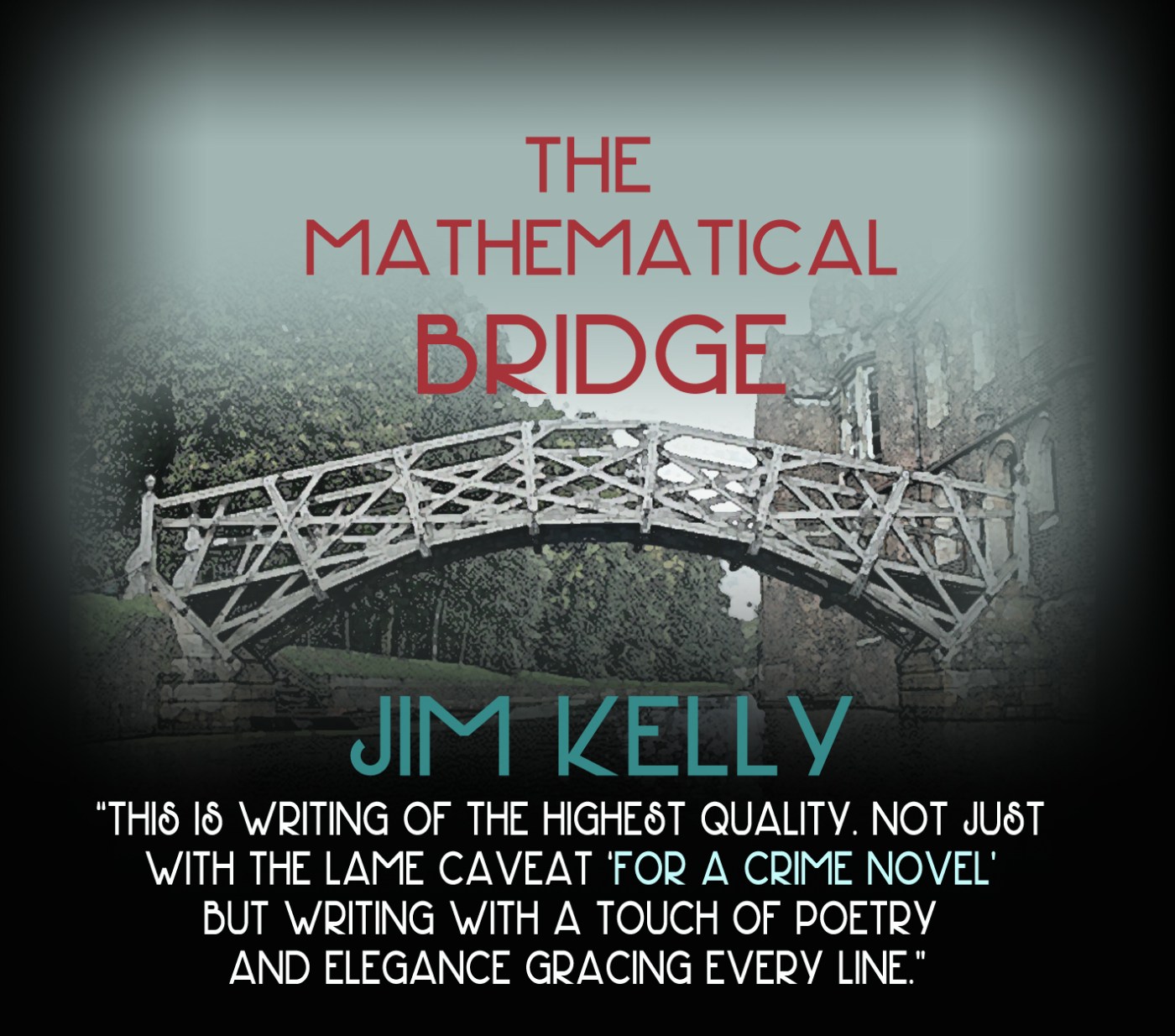
 “Begin as you mean to go on” says the old adage, and Jim Kelly sets himself a hard task with the brilliant and evocative first paragraph of The Mathematical Bridge. The beautiful use of language aside, Kelly’s first 126 words convey a wealth of information. A country at war. Midwinter. A city preparing for an attack from the air. A policeman out and about when honest men are abed.
 This is writing of the highest quality. Not just with the lame caveat ‘for a crime novel’ but writing with a touch of poetry and elegance gracing every line. Even when the crime is solved, the perpetrators are behind bars, and the delightfully complex contradictions of the plot have been explained, Kelly (right) still has the emotional energy to give us a last scene which manages to be poignant but, at the same time, life-affirming.



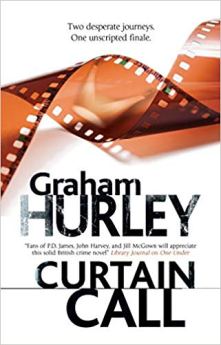 Enora’s reunion with her one-time lover has unintended consequences, particularly in relationship to her son, who turns up in London having fallen out with his father who, in turn is facing bankruptcy after a severe career downturn. There is crime – of a sort – in the novel, most horrifically when Culligan’s Syrian boyfriend is beaten within an inch of his life, but Curtain Call is much more complex and multi-layered. Admirers of the Faraday novels will love the fact that Saucy was a long-time confrère of the ebullient and occasionally unhinged King of the Portsmouth underworld, Bazza Mackenzie, a nemesis who Joe Faraday spent twelve memorable novels trying to put behind bars.

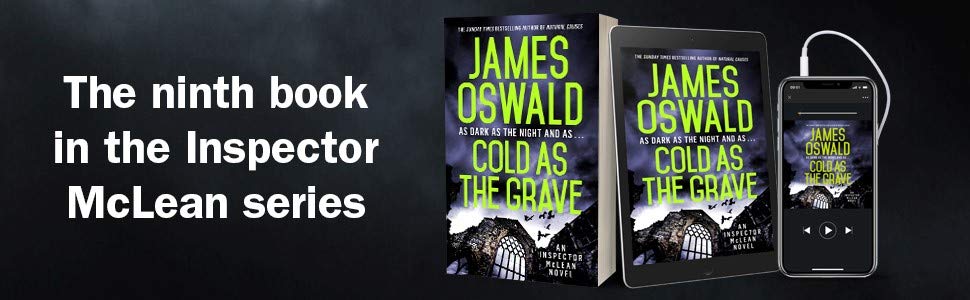
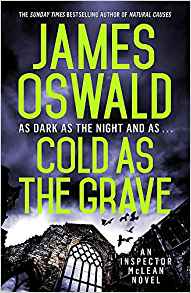 Cold As The Grave is the ninth novel in the Tony McLean series, but fine writers – and Oswald is up there with the very best – make sure that it is never too late to come to the party. For anyone new to the series, McLean is something of an individual. Due to an inheritance, he is exceedingly wealthy, but has a modest lifestyle and chooses to remain a police officer. He has a long-standing ‘significant other’ in Emma Baird, but the previous novel,
 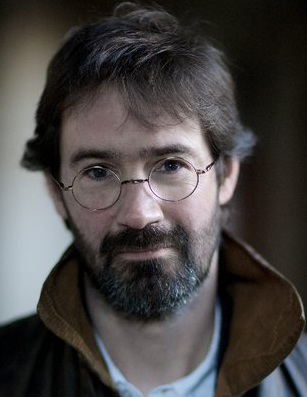 Does McLean follow his head or his heart? The road to the left or the right? Cold As The Grave is a brilliant police procedural, but there is more – so much more – to it. For those who love topographical atmosphere Oswald (right) recreates a wintry Edinburgh that makes you want to turn up the central heating by a couple of notches; for readers drawn by suggestions of the supernatural there is enough here to induce a shiver or three, while making sure the bedroom light remains on while you sleep. The sheer decency and common humanity of Tony McLean – and the finely detailed portraits of the people he works with – will satisfy the reader who demands authentic and credible characterisation.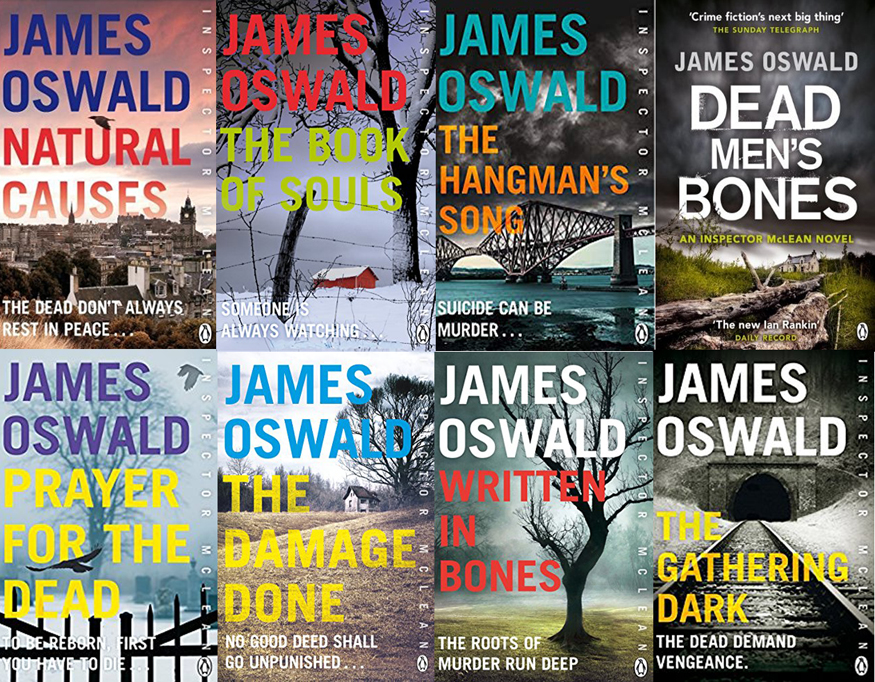




 One of the more reliable tropes in crime fiction, and one that never fails to hit a nerve, is the one about the father whose daughter is taken from him by fate, circumstance or – memorably in the case of Bryan Mills/Liam Neeson – by the bad guys. In this case, however, Simon Greene has lost his daughter to a more complex enemy – drugs, disenchantment and mental instability. Greene’s wife has had enough of the wayward Paige and has shut her out of her life, but Greene never stops looking. And then he finds her. Emaciated, filthy, and addicted. His determination to follow her down into her own private hell and bring her back is a terrifying journey through New York’ dark side, and a stark portrait of human obsession. Century will be publishing
  Natalie Daniels is the pseudonym for screenwriter, author and actress Clara Salaman who starred as DS Claire Stanton in the long running British TV cop show The Bill. Her talent as a writer is on display here in a psychological drama about a woman who wakes up in a secure mental hospital, her hair torn out in clumps, emaciated and with no memory of how she got there. What is the connection between Connie’s present state and the friendly lady she met in the park watching their children play? Can psychiatrist Emma Robinson untangle the twisted knots that make up Connie’s memory, and come anywhere near to rationalising what Connie has done? Transworld Digital brought out Too Close in November 2018 as a Kindle, but people who like to get their hands on the printed page can get a paperback version
  If you are long in the tooth and a bit ‘old school’ like me, you may well share my bafflement at the concept of driverless cars. It will all end in tears, I say, and this entertaining mixture of crime fiction and SciFi may add weight to my argument. Eight driverless cars set off on their separate journeys. The passengers are: a TV star, a pregnant young woman, a disabled war hero, an abused wife fleeing her husband, an illegal immigrant, a husband and wife – and parents of two who are travelling in separate vehicles – and a suicidal man. What could possibly go wrong? Someone hacking into the IT system which controls these vehicles is precisely what goes wrong, with predictably disastrous consequences. Marrs is the author of best sellers The One, The Good Samaritan, When You Disappeared, Welcome to Wherever You Are and Her Last Move. The Passengers will be out in Kindle on 1st April, and there will be a paperback version from Del Rey
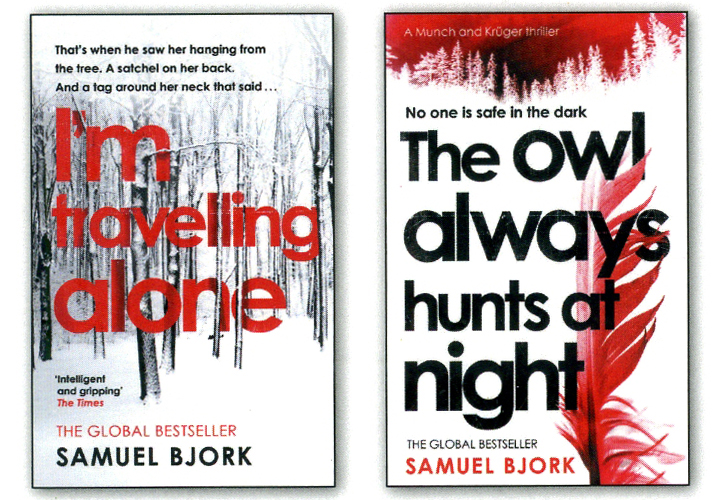
  There are few modern writers who know London as well as Tony Parsons, and his intrepid London copper Max Wolfe gets to explore the many nooks and crannies, foibles, eccentricities – and dark places – of England’s capital in the course of his investigations. When a gangland revenge kidnapping goes spectacularly wrong, Wolfe is drawn into the nightmare world of London’s underbelly, and he is pitted against men for whom power, money, sex and horrific violence are simply tools of their trade. I am a huge fan of Tony Parsons and his Max Wolfe novels, so while you wait for Taken to appear –
  Ellie Enderlin’s life has been blighted by the unsolved murder of her sister. Lila’s death cast its black shadow over her parents, too, but when Ellie finds her sisters notebook what she reads opens up the possibility that Lila’s killer may, at last, be identified. Knowledge, however, rarely comes without a price, and as Ellie reconstructs her sister’s life – and death – she comes to realise that when heavy stones are lifted, there may be unpleasant things scuttling around underneath. Set in San Francisco, this first came out in 2008, and second hand copies can be picked up fairly easily, but this is a brand new paperback reissue,
  This is a futuristic political thriller which takes as its subtext the anxieties many British people share about the rise and rise of Islam in the commercial, educational and social life of the country. Readers will not need subtitles to recognise the real-life palimpsest of this story, where a dazzling English princess bears a child whose father is a wealthy middle-eastern playboy. Karim is that child, and when he returns to England after a Muslim upbringing in Dubai, he becomes involved in a political and social struggle which threatens to engulf the country, and turn his golden dreams into ashes. Karim, King Of England came out late last year and is


 Thus begins another case for Professor Matt Hunter, a university lecturer in religion and belief. He has previously helped the police in cases which involve sacred or supernatural matters (see the end of this review) and he is called in when it becomes clear that the wielder of the axe was none other than the teenage son of the Reverend David East, and that the boy was under the spell of a cult of deviant Christians whose central belief is that God The Father is a brutal tyrant who murdered his only son. They are also convinced that all other humans but them are ‘Hollows’ with evil in their eyes. Consequently, they shun all contact with the outside world, and live in a remote farmhouse, deep in the hills at the end of a rutted farm track.
 One of the most intriguing aspects of the Matt Hunter books is the relationship between the fictional former man of God and the very real and present minister in the Baptist church, the Reverend Peter Laws himself . We get a very vivid and convincing account of how Hunter has lost his faith, but also the many facets of that belief that he has come to see as inconsistent, illogical, or just plain barbaric. It suggests that Laws has identified these doubts in his own mind but, presumably, answered them. In these days of CGI nothing is impossible, so a live debate between Reverend Laws and Professor Hunter would be something to behold.
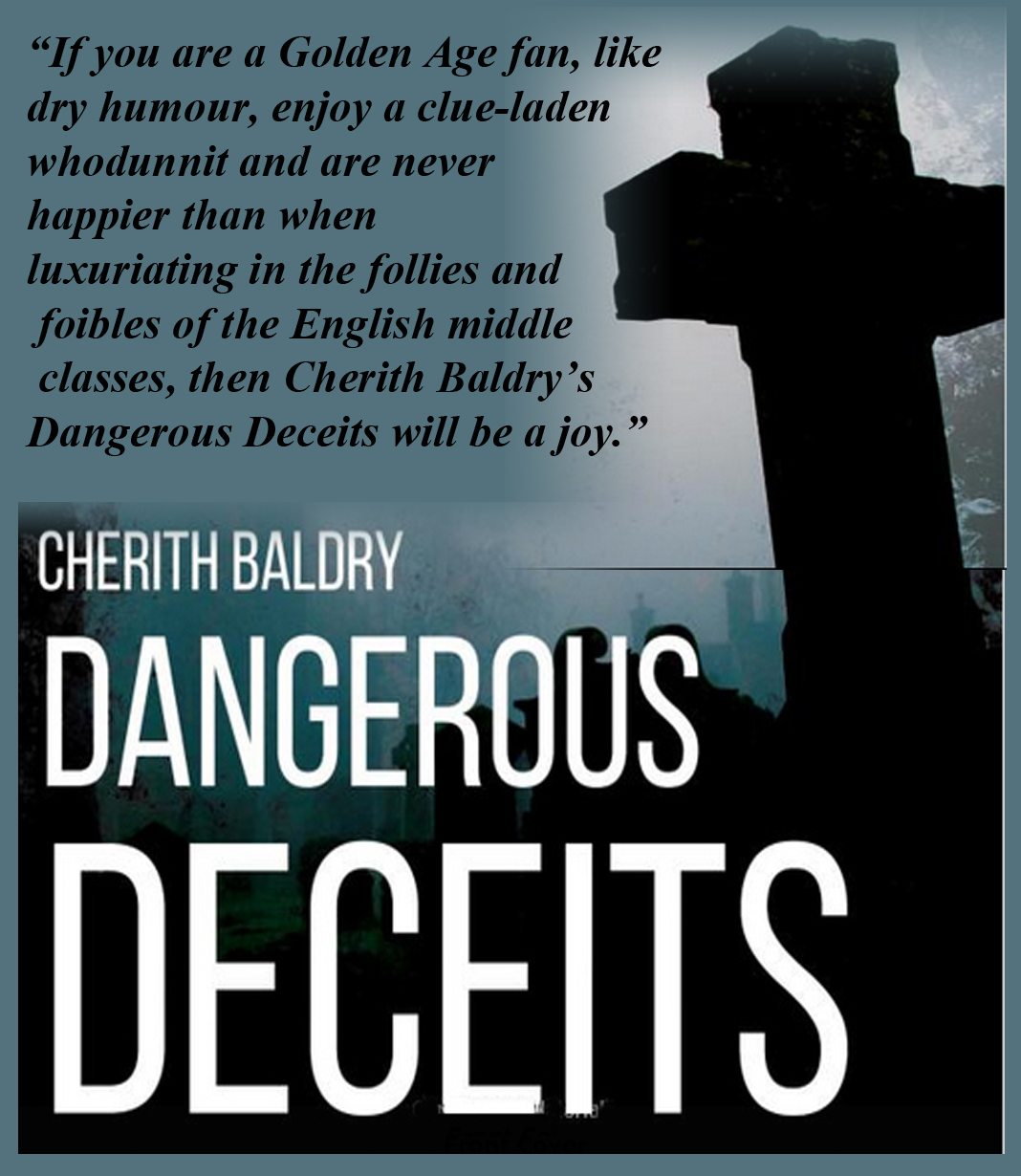
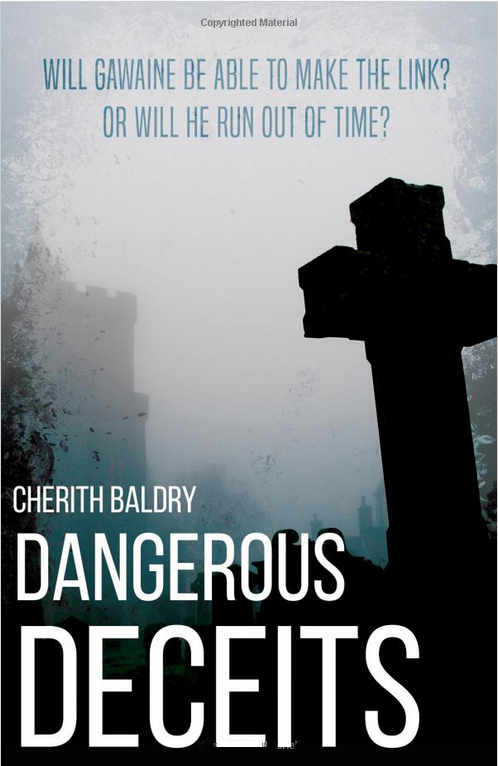 You might guess that a crime novel featuring an amateur detective called Gawaine St Clair is not going to take you down many mean streets; furthermore, were one to Frenchify its chromatic tint, then it would probably be nearer beige than noir. This being said, if you are a Golden Age fan, like dry humour, enjoy a clue-laden whodunnit and are never happier than when luxuriating in the follies and foibles of the English middle classes, then Cherith Baldry’s Dangerous Deceits will be a joy.
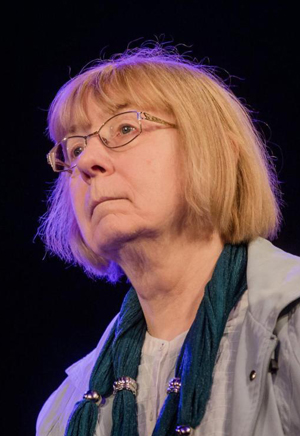 Gawaine may be too arch and precious for some tastes but he fits perfectly into the Home Counties landscape with its manicured village greens and faux Tudor dwellings. I thoroughly enjoyed Dangerous Deceits and Father Tom’s killer is unmasked not amid the dusty shelves of a country house library, but in the altogether more fractious atmosphere of an extraordinary (in the procedural sense) meeting of the Ellingwood PCC. The solution, as in many a whodunnit, rests with everyone – including Gawaine, the local coppers and, in this particular case, me – making a seemingly obvious assumption early in the piece.


