Search

fullybooked2017

BASED ON THE BOOK BY . . .

jim-thompson-primer

In 1952, Jim Thompson published The Killer Inside Me, the novel which was to make his name. The central character is Lou Ford, an apparently mild mannered Texas Deputy Sheriff. Behind the bland mask he is, however, manipulative sexual sadist and a stone cold killer. For a detailed review of the novel, click the image below.

KillerInsideMe02_cvrSUB

The Killer Inside Me is astonishingly frank for 1952, so much so that the implications of sadistic sex, paedophilia and substance abuse would make anyone writing a screenplay tread very warily indeed. The first movie version wasn’t until 1976, and it featured Stacey Keach as Lou Ford. Director Burt Kennedy transposes Central City Texas to Montana. Sometimes this geographical shift is echoed by the storyline, resembling that of the novel in the same way that the mountains of Montana mirror the vast flatlands of the Texas oilfields, but at other times, such as the jail scene between Ford and Johnny (now Hispanic rather than Greek) the dialogue is lifted straight from the novel.

TKIM middle

The novel has Ford speaking from the very first page and we know immediately who and what he is, whereas the film takes a while to reveal to us Ford’s true character. Ford still ends up shot dead by his former colleagues, but his demise comes much quicker and with less ceremony than in the novel. For the complete cast and credits, click here. Keach makes a decent enough fist of the part but in a brilliant cameo as Joyce Lakeland, Susan Tyrell was the stand-out performer, brief though her role was. Her New York Times obituary decribed her ‘talent for playing the downtrodden, outré, and grotesque.

A second adaptation, directed by Michael Winterbottom and starring Casey Affleck as Lou Ford, was released in 2010. Thirty-odd years is a long time in cinema, and while remakes are rarely considered to be as good as the original, in this case Winterbottom gave us a movie which was altogether more thoughtful and complex, partly because it stuck closely to the original story and dialogue. There is an abundance of softcore sex and hardcore violence which made it controversial. Interestingly, while the roles of prostitute Joyce and Ford’s school-ma’am girlfriend Amy remained intact plot-wise, there was something of a reversal in how they were played. Jessica Alba was almost impossibly beautiful and vulnerable as Joyce, while Kate Hudson was often seen slouching around Ford’s house in slutty underwear with a cigarette between her lips.

Ford’s frequent flashbacks to his dark and doomed relationship with Joyce link explicitly to the damage done to him when he was a child. Joyce herself, as in the novel,  did not die from Ford’s beating, and true to Thompson’s plot she gets to appear in the Grand Guignol final scene where Ford is confronted by his accusers before everything literally explodes in flames.

The film is violently stylish with an ironic soundtrack of country schmaltz and gauche 1950s rockabilly, but punctuated with operatic arias, most tellingly at the end, where Caruso sings ‘Una Furtiva Lagrima’ from Donizetti’s L’elisir d’Amore.

For full cast and crew, plus production details, click the image below.

Ford

PAST TIMES – OLD CRIMES . . . The Killer Inside Me

old paper or parchment

James Myers ‘Jim’ Thompson (1906 – 1977) was an outrageously talented novelist, screenwriter – and drunk. When he died in Los Angeles of an alcohol-induced stroke he left a legacy of hard hitting crime novels and brilliant screenplays, perhaps none better than that for Paths Of Glory, Stanley Kubrick’s 1957 film set in the French trenches of The Great War. With a dazzling performance by Kirk Douglas as Colonel Dax, the film has become a classic.

killer_inside_meThompson’s first major success came in 1952 with The Killer Inside Me and it remains grimly innovative. Psychopathic killers have become pretty much mainstream in contemporary crime fiction, but there can be few who chill the blood in quite the same way as Thompson’s West Texas Deputy Sheriff Lou Ford. His menace is all the more compelling because he is the narrator of the novel, and a few hundred words in we are left in no doubt that the dull but amiable law officer, who bores local people stupid with his homespun cod-philosophical clichés, is actually a creature from the darkest reaches of hell.

Ford has homicidal urges which he refers to as the sickness. They date from childhood, and we learn that he was used for sex by his father’s housekeeper and went on to murder a girl – a crime for which his foster brother took the blame.  Ford’s downfall begins with a visit to a beaten up house, outside the city limits;  the resident of the house, Joyce Lakeland, is a prostitute, and Sheriff Bob Maples has given his amiable deputy – renowned for not carrying a gun, and being able to sweet-talk his way out of difficult situations – the task of telling her to move on.

KillerInsideMe01_cvrSUBJoyce is savvy, and world-weary, but when Ford’s “pardon me, Ma’am,” charm strikes the wrong note, she slaps him. He slaps her back and the encounter takes a dark turn when Ford takes off his belt and gives Joyce what used to be known as “a leathering.” She responds to the beating with obvious arousal, and the pair begin a violent sado-sexual affair.

Ford’s involvement with Joyce becomes complicated when he is summoned by Chester Conway, the major employer in the city. Conway’s feckless son Elmer is one of Joyce’s paying customers and Conway senior wants Ford to engineer a meeting where Elmer is to give Joyce a large sum of money on the understanding that she leaves immediately. Ford twists the situation to his own advantage by giving Joyce a near fatal beating, shooting Elmer and setting up the scene to look as if there has been a violent quarrel which has left both participants dead.

His plan seems to have worked, but seeds of doubt have been sown in the minds of some of Ford’s associates, including Joe Rothman, a sceptical union official, and also Bob Maples, who is old, ill and drinking himself away from thoughts that his deputy may be a murderer.

KillerInsideMe02_cvrSUBA key figure in Ford’s life is Amy, his long-time girlfriend. Thompson paints her as physically attractive, but socially constrained. She is a primary school teacher from a good local family who, despite responding to Ford’s violent sexual ways, is determined to marry him. As the dark clouds of suspicion begin to shut the daylight out of Lou Ford’s life, she is the next to die, and Ford’s clumsy attempt to frame someone else for her death is the tipping point. Thereafter his downfall is rapid, and his final moments are as brutal and savage as anything he has inflicted on other people.

We live in a different world now. While violence against women is pretty much standard fare in the scores of serial killer novels which are published every year, The Killer Inside Me is different. Nowadays, if a book is classed (by whom, one could ask) as a literary novel, then almost anything goes. American Psycho attracted all kinds of labels; it was satirical, it was post-modern, it was transgressive, it was New York chic. Firmly rooted in the crime fiction genre, I Was Dora Suarez was horrifically violent, but shot through with author Derek Raymond’s overwhelming compassion and pity. Could, would, should The Killer Inside Me be written and published in 2020? I doubt that a mainstream publisher would handle it, and I am certain that critics would kill it dead, leading to social media vultures hovering over the remains.

For an account of the two movie adaptations of
The Killer Inside Me, click the image below

TKIM footnote

STOP AT NOTHING . . . Between the covers

san025

Tessa Hopwood is a fifty-something mum, a journalist recently ‘let go’ by a top magazine, a serious drink-driving conviction on her CV to accompany a failed marriage and one of two daughters estranged – they haven’t spoken in months. When the younger daughter, Emma, is attacked on her way home, Tessa’s life is turned on its head. Em is shocked and shaken, physically bruised but – most importantly – saved from any sexual assault by the timely intervention of a passer by. When the police organise an ID parade to identify the culprit, neither Em nor witness Frances can identify the ‘right’ man and Tessa, convinced that she knows who Em’s assailant is, decides to do things her own way.

SANPoor Tessa is a mess, actually. Struggling to cope with the physical and psychological effects of the menopause and her self-esteem battered by redundancy, she is prey to all manner of fancies, midnight imaginings and “the thousand natural shocks that flesh is heir to.” Much of Stop At Nothing is pure anxiety porn, as Tessa makes bad judgment after bad judgment, wrong call after wrong call. Readers will see the picture – at least part of it – way, way before she does, and in places the narrative reminded me of the frequent moments in Hammer horror films where the heroine (usually scantily clad) insists on going down into the cellar clutching only a flickering candle. We want to grab Tessa by the arm and say. “Do. Not. Do. This!

TCPersonally, I warmed to Tessa – and her unfailing knack of getting things wrong – much more when her relationship with her elderly parents moved to centre stage. The tragedy of dementia is a natural cruelty that makes even the most devout religious person want to howl with rage at the heavens, and Tammy Cohen (right) handles this poignant mix of frustration and fury with a deft touch.

This is a novel of great subtlety, less a crime novel, more a detailed portrait of obsession and  deception. Tessa Hopwood’s north London life is one that will be uncomfortably familiar to many readers, with its mixture of social angst, financial pressures and the constant urge to “keep up, don’t dawdle – just keep up..

Stop At Nothing is published by Bantam Press and is available now. For a review of another novel by Tammy Cohen, writing this time as Rachel Rhys, click the link to Dangerous Crossing (2017)

san footer026

NINE ELMS . . . Between the covers

NE header

Kate Marshall lectures in criminology at a university in the south west of England, but when she speaks to her students it is not as an academic, making judgments based purely on the research of others; neither does she approach the subject as an outsider, albeit one who is well read and well prepared. Fifteen years earlier, when she was a humble detective constable with London’s Metropolitan Police, she brought to justice one of the country’s most prolific and perverted serial killers. In doing so, she paid a heavy price; only skilled surgeons prevented her death from terrible injuries, but her career – and personal reputation – were both beyond saving.

Nine ElmsFifteen years on, the former police officer dubbed The Nine Elms Cannibal is serving multiple life sentences in a secure mental institution, and Kate Marshall, if not exactly dining out on her experiences, uses her involvement in the case as part of the course she delivers. She lives alone and while not exactly lonely, she is a changed woman from her days as part of London’s police force. She battles alcoholism, but with the support of Alcoholics Anonymous and, in particular, a local AA member called Myra, Kate sips her iced tea and pretends it contains a hefty shot of Jack Daniels.

Kate Marshall has a rather distinctive connection with The Nine Elms Cannibal, aka Peter Conway, but to elaborate further would be to spoil your fun. Suffice it to say that when a series of copycat killings – young women found dead with savage bite marks on their bodies – Kate is drawn into the investigation despite the misgivings of some police officers, who are only too aware of her back-story.

Of course the new killer can’t be Peter Conway – he is held under Hannibal Lecter – style restraints in prison, but what is his mother – author of a best-selling lurid true crime book called No Son Of Mine – up to? Is she acting as malignant go-between, a conduit between her son and an admirer who seems to have studied Conway’s modus operandi, and is proving the old adage that imitation is the sincerest form of flattery?

With her research assistant Tristan Harper, Kate tries to reassemble the pieces of an increasingly complex puzzle, but it is not until events take a spectacular turn that she comes face to face with both the apprentice New Elms Cannibal – and his master – in a fast and furious finale which is not for the faint of heart.

Author Robert Bryndza is British, but lives and works in Slovakia. He has a successful series featuring Detective Erika Foster already under his belt. Nine Elms is published by Sphere, and will be out on 9th January.

I have an unopened hardback copy of Nine Elms up for grabs. Watch the Fully Booked Twitter feed for a prize draw competition – coming soon.

Screen Shot 2019-12-28 at 20.49.01

HOLD YOUR TONGUE . . . Between the covers

hyt spine023

HYT coverDeborah Masson’s police procedural Hold Your Tongue is as gritty as the granite in the Aberdeen where it is set. Fictional Detective Inspectors tend to be brilliant, yet with fatal flaws; perceptive, but incapable of managing calm personal lives; honest and principled, but concealing their own dark secrets. Masson’s Eve Hunter ticks all the boxes, and adds a few of her own. She is returning to work after a catastrophic encounter with a notorious criminal family. After the son of the crime gang’s Capo sustains life changing injuries in a car chase, Johnny MacNeill has exacted brutal revenge resulting in Hunter’s partner DS Nicola Sanders being paralysed from the neck down, while Hunter herself has a permanently damaged leg and intense psychological scarring.

There is no ‘Welcome Back’ party for Hunter. There are former colleagues who blame her impulsive and driven approach to police work for what happened to Nicola Sanders. Her boss doubts she is ready for a return, particularly as her first case will be to solve the savage murder of an aspiring model, found dead in a hotel room, surrounded by an elaborate and deliberate staging of fashion magazines, make-up and mirrors. Melanie Ross’s tongue has been cut out, and taken away by her killer.

Masson makes telling use of Aberdeen itself as a baleful presence looming behind the misdeeds of its citizens. Despite the grim grandeur of its municipal buildings, the passing of the North Sea oil bonanza has left a legacy of closed shops and tatty, uncared-for neighbourhoods. A prostitute called Rosie, who is involved with one of the suspects, provides a chilling metaphor for the city:

“Rosie pulled together the edges of the flimsy unbuttoned black raincoat that she wore; it barely concealed the bony chest in a low-cut top and laddered fishnets below a skirt that could pass as easily for a belt.”

The pre-Christmas weather
is vile and utterly inhospitable. The sleety rain slants down, the wind blows in squalls from the North Sea, and the grey light of dawn reveals city streets slick, wet and icy, decorated only with discarded takeaway meals, the odd abandoned high-heeled shoe, and a general air of attempts at gaiety which ended in failure.

More murders follow, and they are clearly the work of the same person. Eventually Hunter realises what the elaborate posing of the victims signifies. The killer has somehow become obsessed with the old nursery fable:

Monday’s child is fair of face
Tuesday’s child is full of grace,
Wednesday’s child is full of woe,
Thursday’s child has far to go,
Friday’s child is loving and giving,
Saturday’s child works hard for a living,
But the child who is born on the Sabbath Day
Is bonny and blithe and good and gay.

71VcTMOa58L._US230_As the killer works towards the Sabbath Day child, Hunter and her colleagues dash this way and that, always vital hours behind the murderer. Masson (right) contributes to the mayhem with some elegantly clever misdirection. Early in the piece she teases us with the suggestion that the series of murders has something to do with brothers and sisters, but even when we – and Eve Hunter – think we are close to the truth, there is one big surprise left. Hold Your Tongue is an assured and convincing debut, and I hope there will be more cases to come for Eve Hunter. The book is out now, and published by Corgi/Penguin.


Poem


BOOKS OF THE YEAR 2019 . . . Best book

BB BANNER

There’s no competition, I don’t have a prize to offer, but there are are certainly no losers. like many other amateur book reviewers I can only be grateful to publicists, publishers and, of course, writers, who trust me with their work. Here are five of the best books of 2019 – feel free to agree or disagree with my thoughts.

htds-coverVal McDermid’s wonderful odd couple Tony Hill and Carol Jordan don’t have it in them, for a variety of complex reasons, to love each other in any conventional sense, and How The Dead Speak finds their relationship more fractured than ever. Tony is in prison and Carol’s bosses have finally lost patience, and she is left to pace the moors around her solitary home. Tony’s venomous mother makes an appearance as she coerces Jordan into investigating a fraud case, while the equally abrasive Bronwen Scott seeks her help as she tries to put together a case for an appeal against a murder conviction. Back in Bradfield, Jordan’s former team are almost literally knee deep in the mysterious case of dozens of skeletons found in the grounds of a former Roman Catholic care home. As ever, McDermid puts in front of us a plate full of delicious mysteries and a few elegantly salted red herrings – crime fiction haute cuisine at its best.

tnibJames Lee Burke celebrated his eighty third birthday earlier this month and, thankfully, shows no sign that his powers have deserted him. His brooding and haunted Louisiana lawman Dave Robicheux returned in The New Iberia Blues with another adventure set in the humid bayous and crumbling colonial mansions of Acadiana. Dave – with, of course, his long-time offsider Clete Purcell – tries to solve a series of grisly killings involving a driven movie director deeply in hock to criminal backers, a preening and narcissistic former mercenary and a religious crazy man on the run from Death Row. We even have the return of the bizarre and deranged contract killer known as Smiley – surely one of the most sinister and damaged killers in all crime fiction. As ever, there’s a deep vein of morality and conscience running through the book, amid the corpses, shoot-outs and hot spoonfuls of Southern Noir.

6104xARjgmLThere is an understandable temptation to lionise a book, irrespective of its merit, when it is published posthumously, the last work of a fine writer who died far too soon. Metropolis, by Philip Kerr, however, is a bloody good book irrespective of any sentiment the reader may have about the passing of its author. Kerr’s Bernie Gunther, has traversed the decades – and half the globe – in his adventures. Peron’s Argentina, the cauldron of Nazi Germany, Somerset Maugham’s Riviera in the 1950s and the haunted Katyn Forest. Now, though, Kerr puts Gunther firmly back where it all started, in 1920s Berlin. While Gunther poses as a crippled war veteran in an attempt to catch a serial killer, we rub shoulders with the likes of Otto Dix, George Grosz and Lotte Lenya. Philip Kerr is gone, but Bernie Gunther – cynical, brave, compassionate and resourceful – will live for ever.

The Lonely HourSometimes, the sheer bravura, joy and energy of a writer’s work makes us happily turn a blind eye to improbabilities. Let’s face it, Christopher Fowler’s Arthur Bryant and John May have been solving crimes since the Luftwaffe was raining bombs down on London and, by rights, they should be, like Betjeman’s Murray Posh and Lupin Pooters “Long in Kelsal Green and Highgate silent under soot and stone.” But they live on, and long may they defy Father Time. In The Lonely Hour, in this case the haunted moments around 4.00 am, they try to track down a killer who is using an arcane and archaic weapon – a surgical device called a trocar. The trocar was a tube devised to allow the body to be punctured in order to facilitate the escape of gases or fluids. There is comedy both high and low, a mesmerising journey through hidden London – and just enough darkness to remind us that murder is a serious business.

BB feature

Click the image above to read my full review


BOOKS OF THE YEAR 2019 . . . Best historical crime

Historicalheader

I have always been a fan of historical fiction and, more recently, crime fiction set ‘back in the day’. Sadly, there are those writers whose thirst for period accuracy produces lavish costume drama at the expense of a decent plot and good storytelling. Happily, the five books on my 2019 shortlist don’t fall into that trap – take a look, and if you haven’t read them yet, do so – you won’t be disappointed.

Screen Shot 2019-12-13 at 19.34.11The Familiars by Stacey Halls was one of the publishing successes of 2019, and rightly so. The evocative visual presentation was matched by superb writing and the conviction of a natural storyteller. The story is not a conventional crime mystery, but involves suspicion, injustice, intrigue, political chicanery and personal bravery. We are in rural Lancashire in the early years of the seventeenth century and young Fleetwood Shuttleworth has been married off to a wealthy landowner. Far away in London, King James is obsessed with a fear of witches and daemons, and those anxious to please His Majesty are falling over themselves to demonstrate their loyalty. Fleetwood’s new home, Gawthorpe Hall, sits under the looming Pendle Hill, and all around the district, harmless old women – and some not so old – are being rounded up as witches. Fleetwood is under pressure from husband Richard to provide a male heir and when, after several miscarriages, she seeks the help of a young peasant midwife, Alice Gray, her actions put her in direct conflict with the King’s men.

thg-coverChris Nickson’s historical novels may be narrow in geographical scope – they are mostly set in Leeds across the centuries – but they are magnificent in their emotional, political and social breadth. In The Hocus Girl, we meet Simon Westow who earns his living as a thieftaker. In America they still have them, after a fashion, but they call them bail skip tracers, or bounty hunters. Leeds in the 1820s had no police force except inept and frequently infirm Parish Constables, and so thieftakers pursued criminals on commission from victims of crime. Westow has a formidable ally in the shape of a teenage girl called Jane. Sexually abused as a youngster, she is ruthless and streetwise, and God help the man who mistakes her for a waif. Westow and Jane have a different kind of fight on their hands here, as they try to prevent a campaigner for social justice being sent to the gallows by political conspirators.

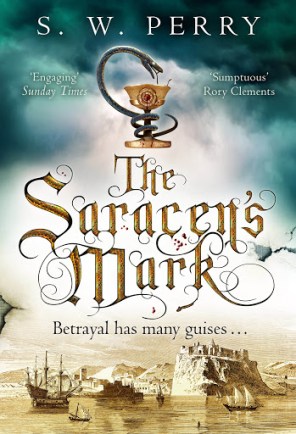
tsm-coverSW Perry has written an excellent thriller about religious extremism, media manipulation and political treachery. The fact that The Serpent’s Mark is set in Elizabethan London rather than 2019 can only make the reader wonder at how little things have changed. Nicholas Shelby is a physician who, despite his relative youth, has served on the battlefields of Europe and has emerged from a debilitating period of alcoholism caused by the tragic death of his wife and child. With many a real life character – including Robert Cecil and John Evelyn – making an appearance, Shelby becomes involved in a desperate affair which seeks to supplant Queen Elizabeth herself with a hitherto unknown child of Mary Tudor – and return the land of Gloriana to the old faith, Roman Catholicism.

night-watch-coverFor all that the era was in my lifetime, the 1950s may just as well be the 1650s given the gulf between then and the modern world. In Nightwatch David C Taylor takes us back to New York in 1954, and we follow a convincingly tough and hard-nosed NYPD cop, Michael Cassidy, who becomes involved in a case which is way, way above his relatively humble pay grade. There were many former Nazis who escaped Nuremburg and had vanished into the ether by 1954 and although many of them were undoubtedly bastards, the sinister folk in American intelligence agencies gave them a lifeline by making sure that they became their bastards. Awkwardly for the CIA, there were also survivors of Hitler’s death camps who had made their way to America, and although they may have been scratching a relatively meagre living, they still had access to information and a burning desire for revenge. Cassidy battles both the indifference of his bosses and the unwanted attention of some very powerful people as he tries to solve a series of murders and make his streets a little less mean.

Hist best

Click the text image above to link to my review of The Mathematical Bridge.

BOOKS OF THE YEAR 2019 . . . Best police procedural

PPheader

While police procedurals, at least in recent years, don’t tend to attract as much publicity as, say, domestic noir (or books with ’Girl’ in the title) they are the solid and dependable backbone of crime fiction. A true cynic might say that the police procedural scene is a roomfull of Detective Inspectors moaning about their desk-bound box-ticking superior officers, but in the hands of writers who are prepared to take a few risks and move away from the norm, a good police novel is hard to beat.

tkim-coverThere are some very special Irish crime writers these days. Some mine the uniquely bitter and bleak seam of Belfast, with its raw and recent memories, while further south the city of Dublin, where “the girls are so pretty”, has its fair share of malcontents and evil doers. Olivia Kiernan and her Chief Superintendent Frankie Sheehan were new to me, but The Killer In Me was a beguiling read. I called it “dark, complex, but full of compassion.” and the story of Sheehan’s search for a killer, while trying to decide if a newly released killer is a wrongly convicted media cause célèbre or a murderous con artist, is beautifully told.

tbwfStaying in Ireland, it has to be said that Jo Spain is ridiculously talented. She has created a bankable stock character in the affable Dublin copper Tom Reynolds, but this has not stopped her from writing such brilliant stand-alones as The Confession. In reviewing her books I have used adjectives like ‘bravura’, ‘intense’, ‘breathtaking’ and ‘mesmerising’, so will gather that I am a fan. It was good to welcome back Tom Reynolds this year in The Boy Who Fell. On one level this is a firecracker of a whodunnit, and Spain’s ability to misdirect the reader and lead us – Pied Piper-like – in the wrong direction, is proudly displayed. On a more reflective level her observations on moneyed Dublin society are sharp and salutary, as Reynolds tries to discover why a teenager died while partying with his privileged and privately educated friends.

CATGVulnerability as a character trait is perhaps more common in British fictional coppers that their American counterparts, and few fit that bill quite like James Oswald’s Edinburgh detective Tony McLean. Cold As The Grave is his ninth outing, and his quest for the truth behind a series of corpses found in strange locations in the old city brings the frayed edges of his character into focus. He has always had an awareness of the fact that there are “more things in heaven and earth … than are dreamt of in your philosophy.” Oswald never goes full-on supernatural, but McLean is ever more aware that the solution to the Edinburgh deaths may lie beyond the dry pages of the Police Scotland training manual.

SleepwalkerIn The Sleepwalker, Joseph Knox reintroduced us to his troubled Manchester Detective Constable, Aidan Waits, who we first met in Sirens (2017) and The Smiling Man (2018). To say that Waits’s Manchester is dystopian is rather like saying that there can be a certain frisson between supporters of City and United. In The Sleepwalker it rarely seems to be daylight as the pallid and pinched faces of drug abusers and petty crimInals are caught in the flickering neon lights of the late night clubs and drinking dens. Waits and his loathsome immediate superior Sergeant Sutcliffe have been tasked with waiting at the bedside of a dying serial killer, in the hope that his final breath will reveal the burial place of one of his victims. Inevitably, everything goes bloodily wrong, and when the dust settles, and the final autopsy is done, Knox asks us – perhaps, maybe, possibly – to bid Waits a fond farewell.

PP

Click this link for a full review of Their Little Secret.

BOOKS OF THE YEAR 2019 . . . Best thriller

thriller header

In the dear, dead days beyond recall, when I was still working as a teacher – casting (as a friend once memorably said) artificial pearls before real swine – someone suggested we apply the WILF principle when explaining to sullen teenagers how to improve their work. WILF stood for What I’m Looking For. Applying the WILF principle to what constitutes a thriller, I would suggest a mixture of the following: severe personal stress, violence, unexplained events, evil masquerading as benevolence, mysterious threats – feel free to add your own criteria, but those will do for me. Click the links to read a full review of each novel.

nohTim Weaver’s intrepid searcher
for the physically lost, David Raker, faced his hardest challenge yet in No One Home when he was hired to find not merely a missing husband or a disappeared friend, but an entire community, albeit a tiny moorland hamlet. As ever Tim Weaver provided a plausible solution to what seemed an impossible conundrum.

severedClergymen writing crime novels? That can only mean cosy village mysteries centred around tweedy villages and eccentric old ladies, surely? Not if Peter Laws has his way. He is a minister in the Baptist Church in Bedforshire, but his Matthew Hunter novels are dark, scary and blood-spattered. In Severed, Hunter encounters a reclusive sect whose primitive and baleful version of Christianity has left a trail of death and disruption.

till-morning-is-nighBen Bracken is a Jack Reacher do-alike transported to contemporary England. Much as I have enjoyed the invincible Reacher over the years, Rob Parker has created a more thoughtful and vulnerable – at least psychologically – version in Ben Bracken, a former soldier who exists in the shady hinterland which lies between law enforcement, special services and officially-sanctioned skullduggery. Till Morning Is Nigh is the fourth in the series and is, by some way, the best yet. Our man infiltrates an extremist far-right group and contributes to a spectacular shootout at a school nativity play.

tbl-coverSad to say, there is no-one more vulnerable in modern society – at least in novels – than a single mother trying to bring up her child. In The Body Lies Jo Baker takes a look at the dichotomy between fictional tropes and reality. Her unnamed protagonist is a lecturer at a minor university, separated from her husband and trying to juggle a job and childcare. Baker spins a delightfully elaborate yarn which begins when the woman is targeted by a stalker.

Thriller best

Click the image above to read just why I thought A Book Of Bones is
MY BEST THRILLER 2019

Blog at WordPress.com.

Up ↑