
PART THREE
SO FAR – On the evening of Sunday 7th March, 1875, 22 year-old Louisa Hodgson is stabbed to death in the family home on Newmarket. Her killer, suitor Peter Blanchard, has been arrested and is awaiting trial at Lincoln Assizes.
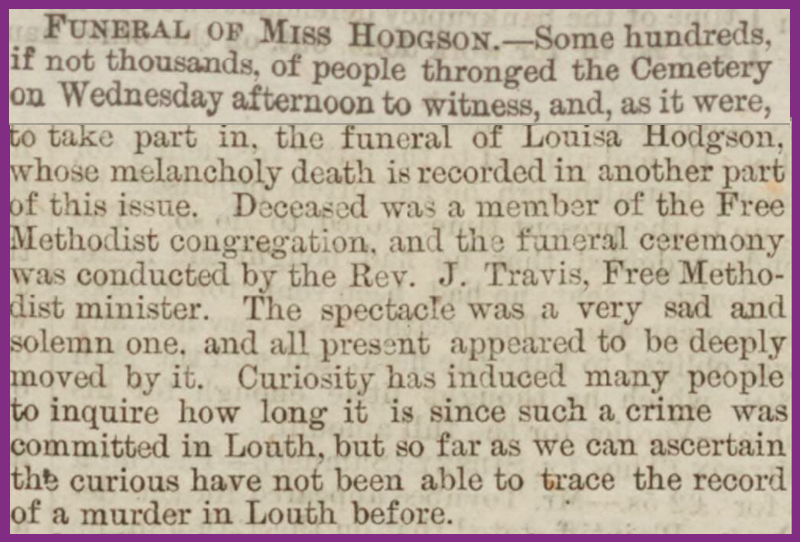
It is worth, at this point – with Louisa dead and buried and Peter languishing in a prison cell – to examine the background – to the killing. It emerged during the investigation that all was not well between Louisa and Peter. While Mr Hodgson kept out of things, Louisa’s mother was beginning to frown on the relationship., partly because Peter Blanchard was subject to epileptic fits.
There is also the question of Peter Blanchard’s jealousy. Was there a rival for Louisa’s affections? At the inquest, evidence was given by John Campion:
“I am a farmer residing in Brackenborough Lane, Louth. I was at Mr. Hodgson’s house from eight to nine o’clock the previous evening. I saw Peter Blanchard there. He came into the kitchen to light his cigar. I left about 9 o’clock and when going out I could hear Blanchard and the deceased talking very loud. I thought I heard Blanchard say ” I will.” and the deceased burst out crying. I am a friend of the deceased’s brother and I had offered to keep company with her. I believe Blanchard was jealous of me and he had threatened to give me a good thrashing as he was going to chapel on Sunday night.”
The Spring Assizes at Lincoln was only a few days after the murder. The case was presented, but adjourned until the summer, to give more time for evidence to be gathered. The Summer Assizes opened at the end of July 1875 and, as usual, the jury was made up of men of ‘reputation and good standing.’

It might be thought that when Peter Blanchard came to take the stand, proceedings would have been relatively brief, given that there was little doubt that he had killed Louisa Hodgson. His defence team, however, lead by Mr Samuel Danks Waddy, knew that their only hope of saving Peter Blanchard from execution was to convince the jury that he was insane at the time of the murder, and so there was a long debate about the prisoner’s mental health. The jury eventually retired and returned with a verdict of ‘guilty’, but with a recommendation that Blanchard should be spared the hangman’s noose. Before the judge gave his verdict, Peter Blanchard was allowed to speak:
“My Lord and Gentlemen, – I have a few words to say. I did not not know what I was doing, or else I could not have done it. I loved her so much, and never believed it was true that I had killed her till I got one of her funeral cards, for I had never anything against her. I would take my place in hell if her dear soul might go to heaven, for I would at any time sooner suffer myself, than see her suffer. I should be thankful if you would give my parents my body to take to Louth, in order that I may laid by the side of my dear Louisa. I wish to give one word of advice to you. my dear young friends, both men and women. You have come here to see me. and hear sentence passed upon me. Keep out of bad company. That was my ruin. My first failing was that I was soon persuaded to smoke ; from that I got to drinking and then to gambling, and then to neglect to go to a place of worship. Then I lost my senses at times, and then the fits came on. Let this be warning to you all. Look to Jesus, or some of you may be standing where I am next year. And if parents would look after their own families they would find plenty of work, without looking after others. After naming a man who. he said, had caused him many restless nights, the prisoner continued : I pray to God that this may be a warning to you all, and I hope my Heavenly Father will permit me to meet you all in heaven, to part no more. I shall soon be in heaven, and I am sure to meet my dear Louisa there. Young and old. come to Jesus, for he will help you in the time of trouble. Good bye to you all.”
Mr Justice Lindley was not empowered, to be merciful, however, and was only able to put Peter Blanchard’s fate in the hands of the Home Secretary:

 Sadly for Peter Blanchard and his family, the Home Secretary, Richard Blanchard Cross (left), was not inclined to be merciful, and Peter Blanchard was executed on Monday 9th August 1875. This newspaper report tells the melancholy story:
“Peter Blanchard, a tanner, of Louth, Lincolnshire, was executed yesterday morning at Lincoln Castle for the murder of Louisa Hodgson at Louth in March last. The prisoner was examined by Dr. Briscoe on Friday, by order of the Home Secretary, with the view of ascertaining whether the jury’s recommendation to mercy, on the ground of his mind having been weakened by fits, could be acted upon. The result, however, was unfavourable to the prisoner, and the law was allowed to take its course. The crime for which Blanchard was executed was committed in a fit of jealousy arising out of a love affair. The young woman whom he was courting disregarded his attentions, nor was he looked upon favourably as a suitor by her parents. On Sunday evening, the 7th of March, she was accompanied to church by a young man, and on returning home they were met by Blanchard, who walked the remaining distance with her. When he took his departure she went to the door with him, and he suddenly drew out a knife and stabbed her to the heart, death being instantaneous. He then left and called on a neighbour, to whom he said, “I have done it.” Since his conviction Blanchard has slept well, and has been most attentive to the ministrations of the clergyman daily. On Saturday he had a final interview with his father and mother, his four brothers, and a friend. He acknowledged the justice of his punishment, and stated he had no wish to live. He averred that he did not know at the moment what he was doing when he committed the deed. Yesterday morning he was quite resigned to his fate, and walked unsupported to the gallows. He shook hands with the gaol chaplain and officials, and the last words he was heard to utter were, “Good-bye, my dear fellows; I am quite re- signed, and hope to meet you all in heaven.” He slept well on Sunday night, rose at six yesterday morning, breakfasted at seven, and wrote a short letter to his parents and brothers. He died almost without a struggle. Mr Marwood was the executioner.”


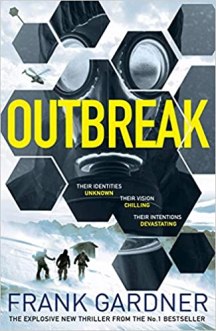 Frank Gardner’s life has been like a thriller in itself. The former army officer had a glittering career in broadcast journalism until he narrowly escaped death at the hands of al-Quaida gunmen in Saudi Arabia. After numerous operations, he resumed his career withe BBC, albeit confined to a wheelchair. This is his third novel, coming after Crisis (2016) and Ultimatum (2018), and again features MI6 operative Luke Carlton. Carlton has his most desperate case yet, as he tries to get to the bottom of a terrifying contagion that seems to have its source in a desolate research station in the Arctic Circle. Outbreak is out in hardback on 27th May, and is published by Bantam Press.
 The author’s work has pretty much become the industry standard for legal thrillers, and this edition is the latest reprint of the book that made his name, way back in 1991. The cover looks like that of the 25th anniversary edition (2016) but with a different colour filter on the cover illustration. The novel tells the tale of a brilliant Harvard educated lawyer, Mitch McDeere, whose first job is a dream come true – especially with an astonishing salary, a new home, and keys to a gleaming new BMW. When he realises that Bendini, Lambert & Locke are little more than a front for the Mafia, he realises he is in deep, deep trouble. This will be available as an Arrow paperback on 1st April.
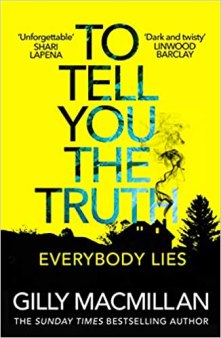 Lucy Harper is a best-selling writer of thrillers, whose talent for macabre invention and stunning plot-twists has earned her a small fortune and tens of thousands of devoted fans. What few of these readers know, however, is that when Lucy was just nine years old – thirty years ago – her brother mysteriously disappeared, and she was the only witness. The case was never solved, but now her husband Dan has also disappeared. What does Lucy know? Is this collision of past and present just a coincidence, or is there something more sinister going on? To Tell You The Truth came out in hardback in June 2020, but this paperback edition will be on sale (Arrow books) from 13th May.
 The Nicholas Shelby books – known as the Jackdaw Mysteries, after a London tavern – are great fun, and rich in period drama and detail. Nicholas Shelby is a somewhat unorthodox physician in Elizabethan England, and he has dealings – somewhat reluctantly – with the Queen’s spymaster Robert Cecil. Here, Gloriana’s personal doctor has been executed for treason. Shelby and his wife Bianca are caught up in the wave of suspicion and conspiracy which follows, and are forced to flee to Italy before their necks are also on the axeman’s block. I have reviewed – and thoroughly enjoyed – earlier books in this excellent series, so click here for more detail.This latest ‘Mark’ will be available from 1st April, and is published by Corvus.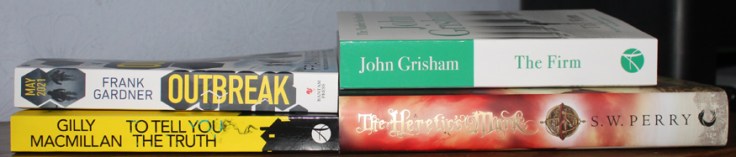

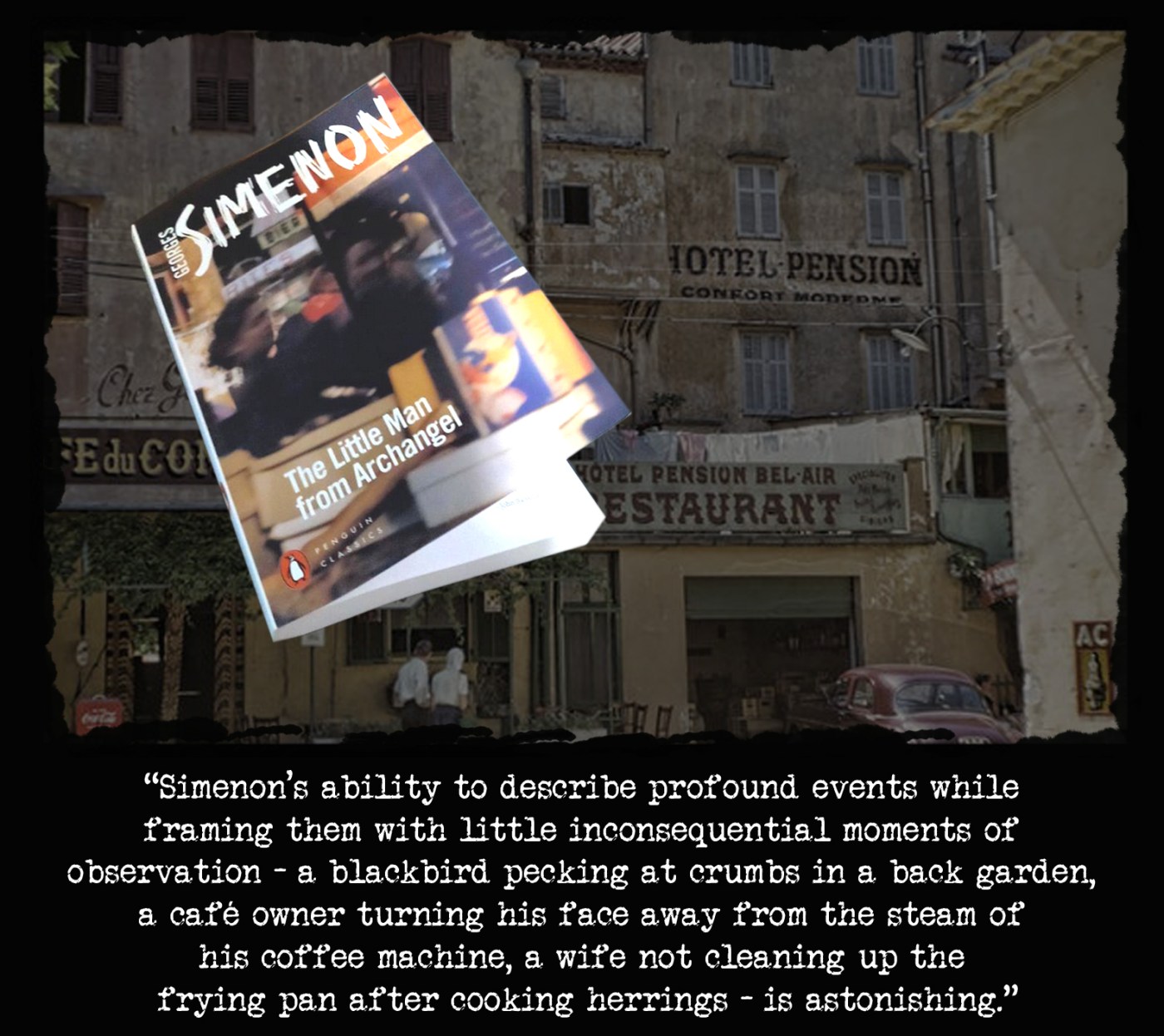


 We are in an anonymous little town in the Berry region of central France, and it is the middle years of the 1950s. Jonas Milk is a mild-mannered dealer in second hand books. His shop, his acquaintances, the c
 Jonas Milk has a wife. Two years earlier he had converted to Catholicism and married Eugénie Louise Joséphine Palestri – Gina – a voluptuous and highly sexed woman sixteen years his junior. No doubt the frequenters of the Vieux-Marché have their views on this marriage, but they are polite enough to keep their opinions to themselves, at least when Jonas is within earshot. But then Gina disappears, taking with her no bag or change of clothing. The one thing she does take, however, is a selection of a very valuable stamp collection that Jonas has put together over the years, not through major purchases from dealers, but through his own obsessive examination of relatively commonplace stamps, some of which turn out to have minute flaws, thus making their value to other collectors spiral to tens of thousands of francs.


![Photograph of Free Methodist Church, Eastgate, Louth, Lincolnshire [c.1930s-1980s] by John Piper 1903-1992](https://fullybooked2017.com/wp-content/uploads/2021/03/chapel-copy.jpg)



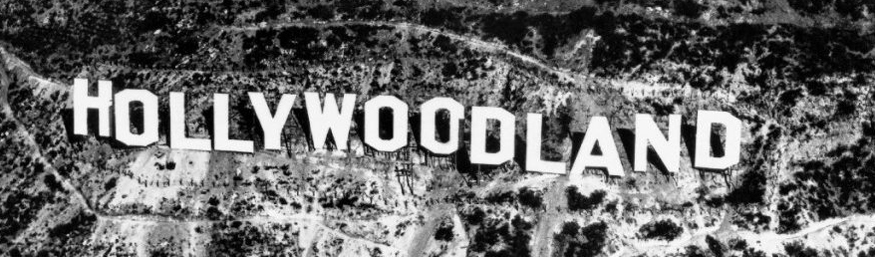
 Former city cop Collins has earned a reputation among movie producers and stars as a man who gets things done, but in a discreet way, and here he becomes involved in getting to the bottom of a nasty blackmail case involving one of Hollywood’s rising stars. José Ramón Gil Samaniego is a young man who was to become better know as Ramon Novarro, star of many hit movies, and an heir to the throne of screen heart-throb vacated by Rudolf Valentino after his untimely death. O’Donovan peoples his story with actual real life characters as far as possible, and it is a winning formula. Samaniego is in trouble because there are intimate photographs of him taken a notorious club for homosexuals. Both he and his studio bosses are desperate that these photos and the negatives are found and destroyed.

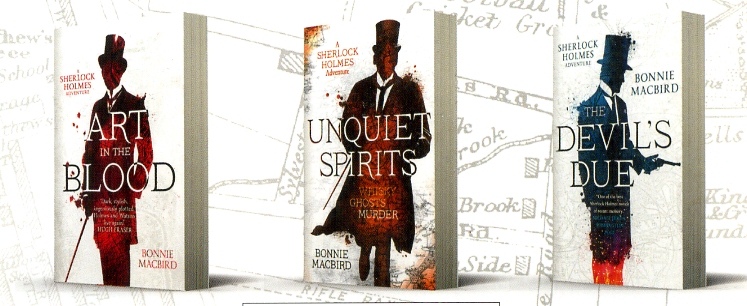
 In a sappingly hot Indian Summer in central London, Dr John Watson is sent – by a relative he hardly remembers – a mysterious tin box which has no key, and no apparent means by which it can be opened. Watson and his companion Sherlock Holmes have become temporarily estranged, not because of any particular antipathy, but more because the investigations which have brought them so memorably together have dwindled to a big fat zero.
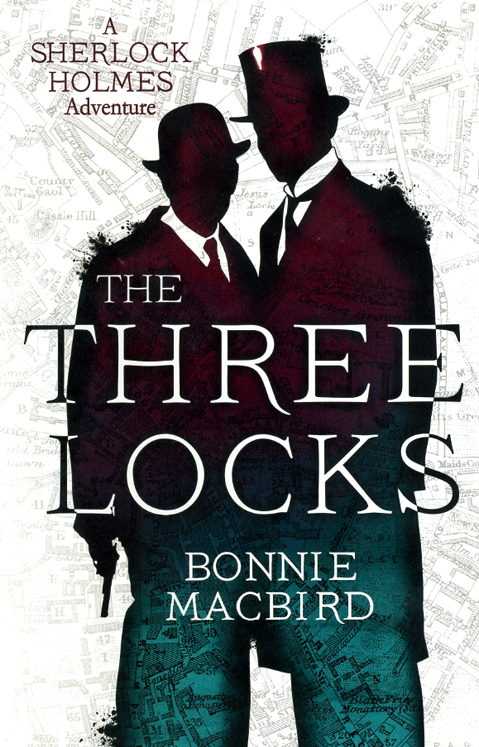 But then, in the space of a few hours, Watson shows his mysterious box to his house-mate, and the door of 221B Baker Street opens to admit two very different visitors. One is a young Roman Catholic novice priest from Cambridge who is worried about the disappearance of a young woman he has an interest in, and the second is a voluptuous conjuror’s assistant with a very intriguing tale to tell. The conjuror’s assistant, Madam Ilaria Borelli is married to one stage magician, Dario ‘The Great’ Borelli, but is the former lover of his bitter rival, Santo Colangelo. Are the two showmen trying to kill each other for the love of Ilaria? Have they doctored each other’s stage apparatus to bring about disastrous conclusions to their separate performances?
 CLICK ON ANY TAG AND THE CONTENT


