

Fans of the series can skip this paragraph. Charlie Parker is private eye based in Portland, Maine. His life has been shaped by the savage murder of his wife and daughter some years earlier, and he is – literally – haunted by the spirit of the dead daughter Jennifer. His cases frequently involve contact with people who are not actually spirits but although they have human shape, they are not entirely of this world. Long standing members of the dramatis personnae of the novels include Louis – an African American assassin, very loyal to Parker, and his personal and professional partner Angel, a skillful thief and locksmith who is recovering slowly from cancer. For more on Charlie Parker, click this link.
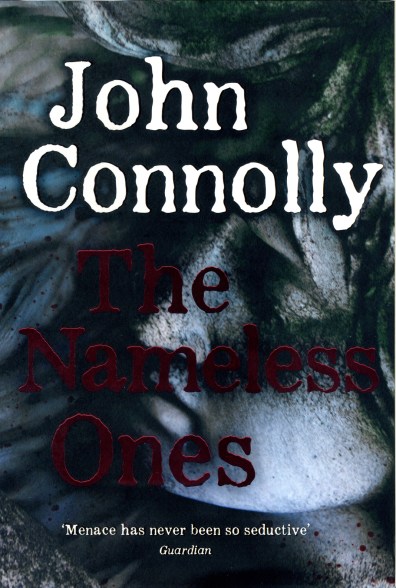 Parker takes something of a back seat in this novel (which is the 20th in a magnificent series) as Louis & Angel take centre stage. The first backdrop to this stage is Amsterdam, where a criminal ‘fixer’ called De Jaager goes to an address he uses as a safe house to meet three of his colleagues. He finds one of them, a man called Paulus, shot dead, while the two women, Anouk and Liesl, have been tied up. In control of the house are two Serbian gangsters, Radovan and Spiridon Vuksan. They have come to avenge the death – in which De Jaager was complicit – of one of their acquaintances, who was nicknamed Timmerman (Timber Man) for his love of crucifying his victims on wooden beams. What follows is not for the faint of heart, but sets up a terrific revenge plot.
At this point it is essential to replay what author John Connolly tells us about modern Serbia. Those with a strong stomach can find plenty on the internet and in books about the atrocities committed by Serbians against Bosnian Muslims – and others – in the brutal wars which erupted after the death of President Tito, the communist strongman who had kept the historical enemies – Croatia, Bosnia, Kosovo, Montenegro, Serbia and Macedonia – from each others’ throats between 1945 and 1980. Connolly paints a picture of a state where, despite former leaders like Milošević, Karadžić and Mladić being brought to justice by war crimes courts, Serbia is still largely run by career criminals who, while they may wear suits rather than Kevlar vests, are at the centre of a huge web of international crime which ranges from human trafficking to the drug trade.
I am guessing that John Connolly might not be on the top table of any future festival of crime fiction in Belgrade, but no matter – we have a seriously good story on our hands. Louis, for a variety of reasons, owes De Jaager, and when news reaches him of the Dutchman’s death he prepares to fly to Europe with the physically fragile Angel, but he is also aware that key USA figures inside The White House and the CIA would not be too dismayed were the Vuksan brothers to come to a sticky end.
With Parker otherwise engaged back in Maine, the supernatural element is largely absent here, as Louis and Angel don’t operate on the same psychic wavelength as their buddy. Largely absent, but not totally. Spiridon Vuksan has a murderous little friend called Zorya. She looks, at first glance, like a little girl, but on closer inspection she is a woman, and not a young one. She reminded me of the malevolent red-hooded little figure in Don’t Look Now – and we all know how that ended. Zorya is, as far as her human form goes, one of the Vlachs people, an ethnic group from the southern Balkans. She is also a strigoi. in Romanian mythology they are troubled spirits that are said to have risen from the grave. They are attributed with the abilities to transform into an animal, become invisible, and to gain vitality from the blood of their victims. Her fate is not in the hands of Louis and Angel, however, but governed by the spirit of Jennifer Parker who, once a victim, is now distinctly menacing.
John Connolly is an inspired storyteller, and if this novel doesn’t play merry hell with your heartbeat, then you may need medical attention. The Nameless Ones is published by Hodder & Stoughton and is out now.


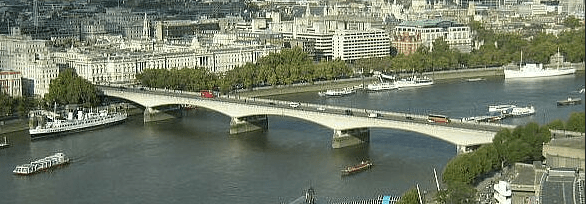





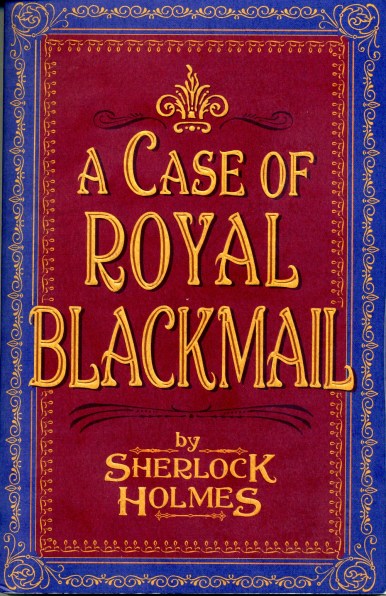 We are in London in the summer of 1879, and young Holmes has yet to meet the man who will write up his greatest cases. Holmes works for a guinea a day, and is striving to build his reputation. Within the first few pages, he has been hired to investigate two cases on behalf of a man who was already a celebrity, and another who would become infamous in his lifetime, but revered and admired after his death. The celebrity is Albert Edward, Prince of Wales, the future King Edward VII, a notorious Lothario whose battleground has been country houses and mansions the length and breadth of the country, the vanquished being a long list of cuckolded husbands. It seems that the heir to the throne has been in the habit of entering his sexual achievements in a diary – a kind of fornicator’s Bradshaw, if you will – but it has gone missing, and Holmes is charged with recovering it.
 One hundred pages in, and it is clear that the author is enjoying a glorious exercise in name-dropping. James McNeill Whistler, Lillie Langtry, Francis Knollys, Patsy Cornwallis-West, Frank Miles, Sarah Bernhardt, John Everett Millais and Rosa Corder (right) are just a few of the real life characters who make an appearance, and it is clear that ‘Sherlock Holmes’ moves in very elegant circles.


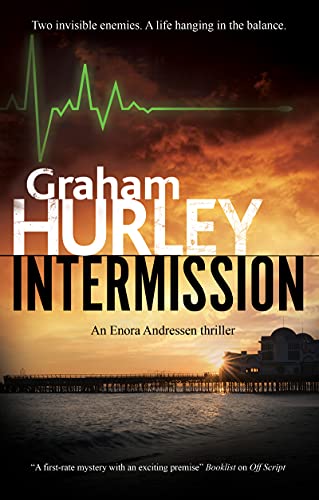 Intermission is, I am sure, the only novel I have read so far that has, as its spine, the Covid-19 pandemic. The action begins in that fateful early spring of 2020, and Hayden Prentice learns that one of his old friends, a former bent copper known as Fat Dave has been laid low with the virus and is in the local ICU, and not expected to live. Visiting is, of course, completely off limits, but the sight – via a video link – of his friend expiring amidst a sea of tubes and monitors chills HP to the bone. He travels from his Dorset manor house and summons Enora down to Portsmouth, where they have been given the use of a shabby flat owned by HP’s solicitor.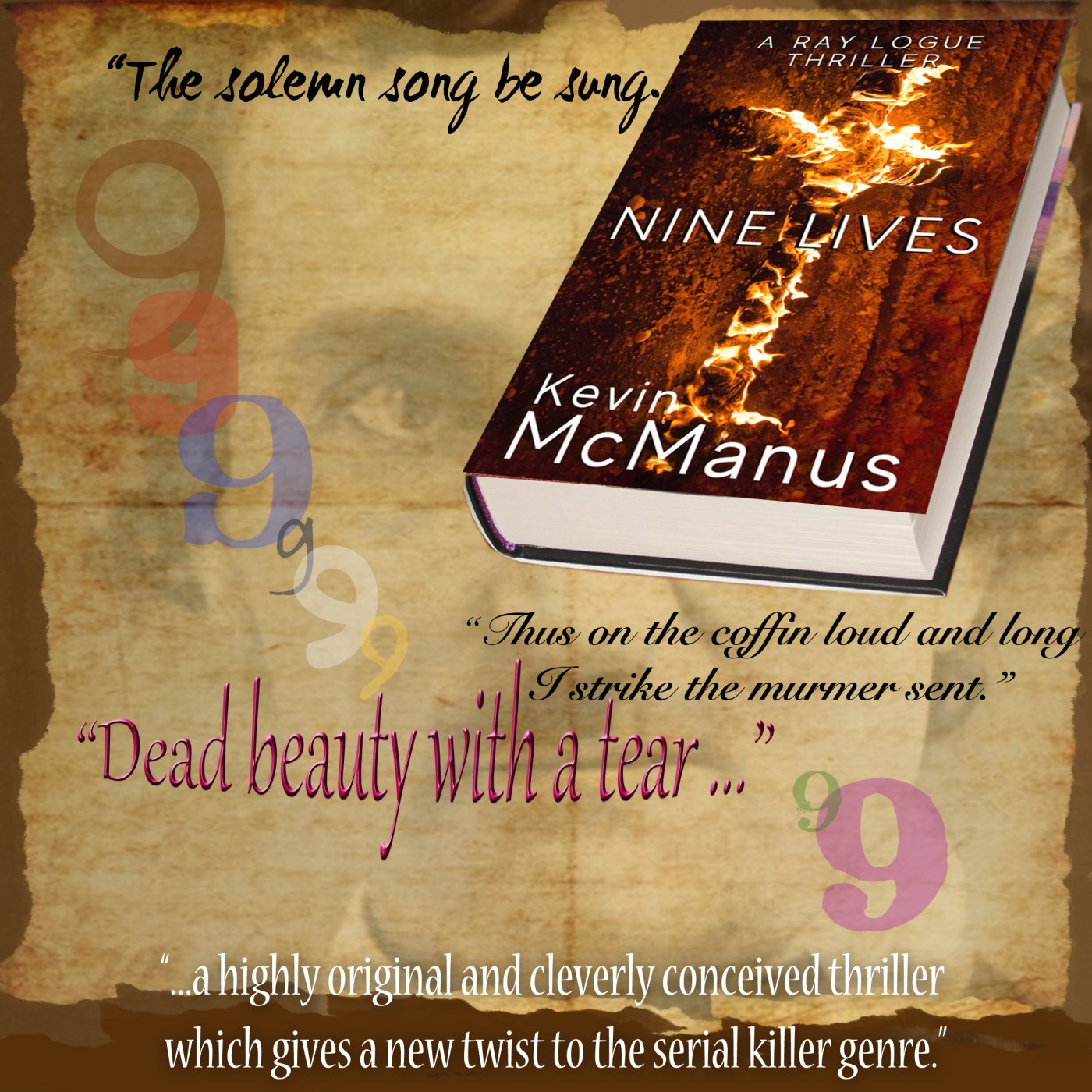
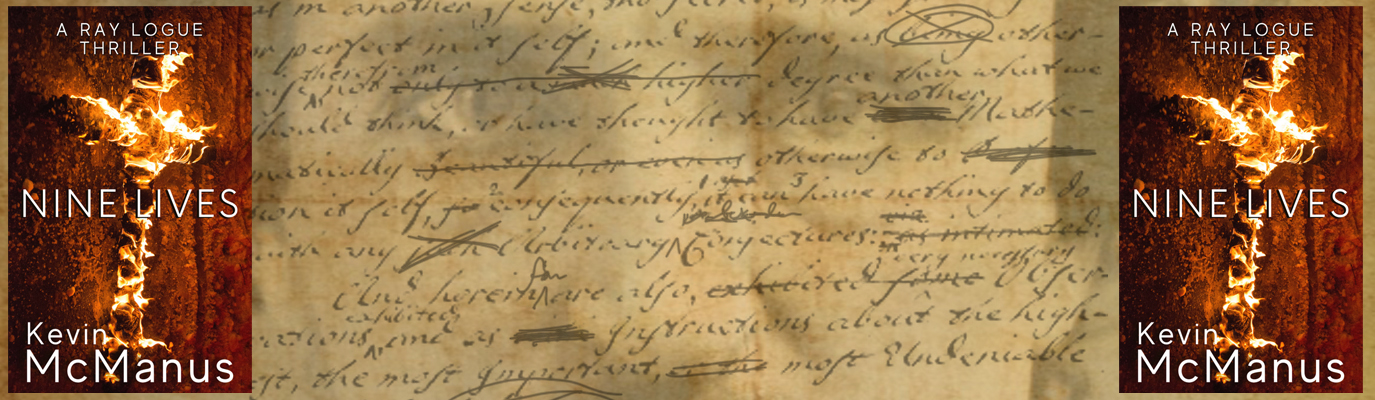
 The action skips thirty years, and Jim Mulcahy who was the rookie detective covering the girl’s disappearance is now Superintendent, and heading for retirement. When recreational scuba divers find the rusting remains of a car at the bottom of a local lough with a skeleton on the back seat – which turns out to be the headless remains of Frank Rudden – the case is reopened. It was Rudden who drove off in his VW Beetle that fateful night three decades earlier, with Hazel Devereaux as his passenger. We are now, of course, in the age of smartphones and internet search engines, and it doesn’t take the Irish coppers long to link this cold case to several similar murders in that Irish home-from-home, Boston Massachusetts. Detective Ray Logue is sent to liaise with the Boston PD, in particular Officers Sam Harper and Olivia Callaghan.
 As Logue, Callaghan and Harper close in on who they think is the killer, Kevin McManus bowls us a couple of googlies – or perhaps I should say, since we are in Boston, throws down some curve balls – and all is not what it seems to be.




 *
*

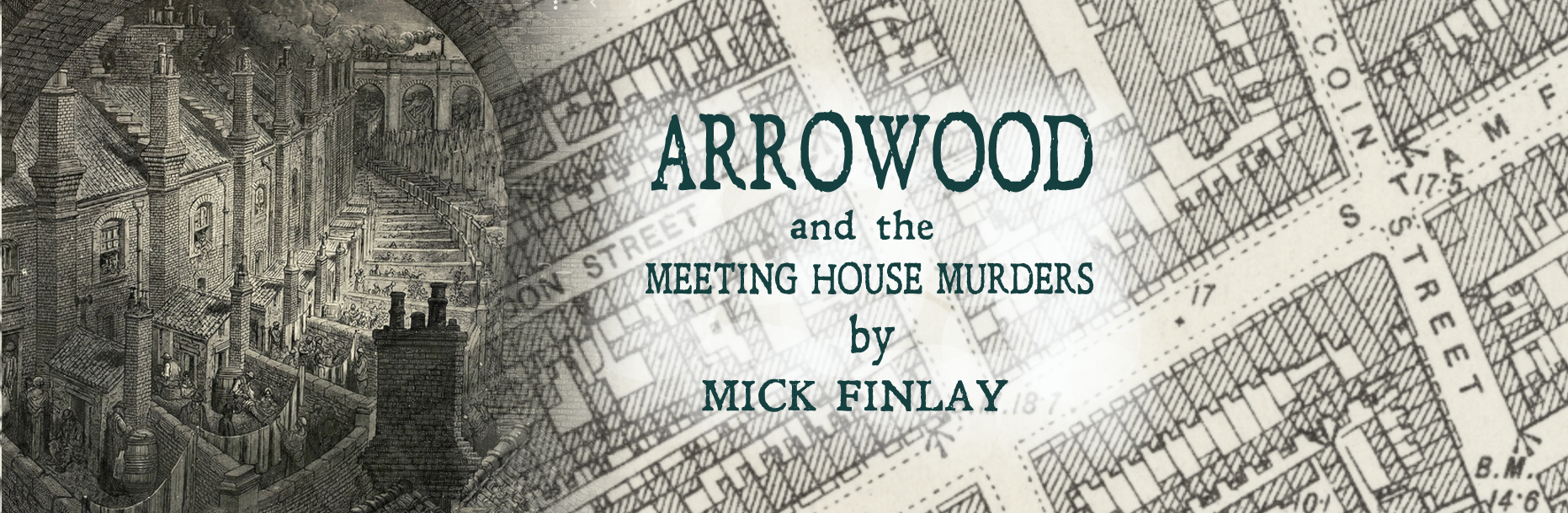
 The narrator is Norman Barnett, William Arrowood’s equally impoverished assistant. Neither man is a stranger to tragedy. Barnett’s wife, ‘Mrs B’ died some months previously, while Isabel Arrowood left her husband to live with a richer man in Cambridge. He died from cancer, leaving her with his baby in her womb. She has since been taken back by her husband, but all is far from well between them. We are in the final years of the 19th century, a few decades since Gustave Doré produced his memorable – and haunting – engravings of the darker side of London, but Arrowood’s London is hardly a shade lighter. Poverty, death and illness are everywhere – in the next room, or just around the corner.


 fullybooked2017