Where would crime-writers be without dog-walkers? Michelle Kidd’s latest novel begins with this most reliable of tropes when a dog sniffs out a suitcase in the low tide mud beneath a bridge over the River Thames. The contents are not for the squeamish. Inside is the torso, arms and legs of a little girl. The head is elsewhere. DI Jack MacIntosh and his team are soon on the case, but there investigations of the crime scene are hindered by the rising tide of Old Father Thames.
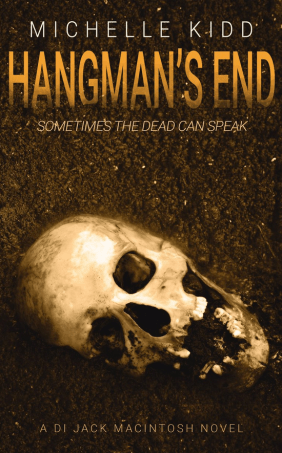 We have the advantage over the police in that we are introduced early on to the man who dropped the suitcase from the bridge into the mud. We are not sure if he is the actual slaughterman, or merely the butcher, but we do learn the whereabouts of the child’s head. The victim is soon identified as Maisie Lancaster, but a visit to her parents’ house brings MacIntosh into a collision with the metaphorical runaway car of one of his previous cases.
“Previous” is the key word here, as Michelle Kidd delicately negotiates the problems of having a main character with a troubled past, with the events having occurred earlier in the series. This is the fifth in the Jack MacIntosh series, and so Kidd has to strike a balance between boring the readers who are well aware of the back-story, and not baffling those new to the books. She carries out this piece of legerdemain very cleverly. Looking at the title, readers will think, “Hang on, we haven’t had capital punishment in the UK since the mid 1960s, so why the reference?” Again , Michelle Kidd has the answers, and they lie in a macabre piece of London history While dodging the tides and trying to investigate the gruesome suitcase, the investigators find more human remains, but this time they are much older. The bleached skull and assorted remnants of its skeleton pose just another headache for MacIntosh and his team.
At one point, I was beginning to feel that there were too many loose ends and plot threads going off at a tangent, and I wondered if Michelle Kidd could – or would – resolve them, but my lack of faith was knocked firmly on the head as the different directions merged, and even the back-story behind the back-story became transparent and lucid. In a startling conclusion, Jack MacIntosh comes face to face with the demons – both human and metaphorical – who plague both his dreams and his waking hours
This is a tense and brutal journey through the dark waters of life that Jack MacIntosh and his colleagues have to wade through. Past and present collide in unpredictable ways. Hangman’s End is published by Question Mark Press and is out now.
I reviewed an earlier book, Guilt, from a different series by Michelle Kidd, and you can read what I thought by clicking the link.
Michelle Kidd is a self-published author best known for the Detective Inspector Jack MacIntosh series of novels set in London. She has also recently begun a new series which is set in her home town of Bury St Edmunds in Suffolk – starring Detective Inspector Nicki Hardcastle.
She qualified as a lawyer in the early 1990s and spent the best part of ten years practising civil and criminal litigation.
In 2018 Michelle self-published The Phoenix Project and has not looked back since. There are currently five DI Jack MacIntosh novels, and the first DI Nicki Hardcastle story was released in August 2021. Follow her at:
Facebook: www.facebook.com/michellekiddauthor
Instagram: https://www.instagram.com/michellekiddauthor/
Twitter: https://twitter.com/AuthorKidd
Website : www.michellekiddauthor.com
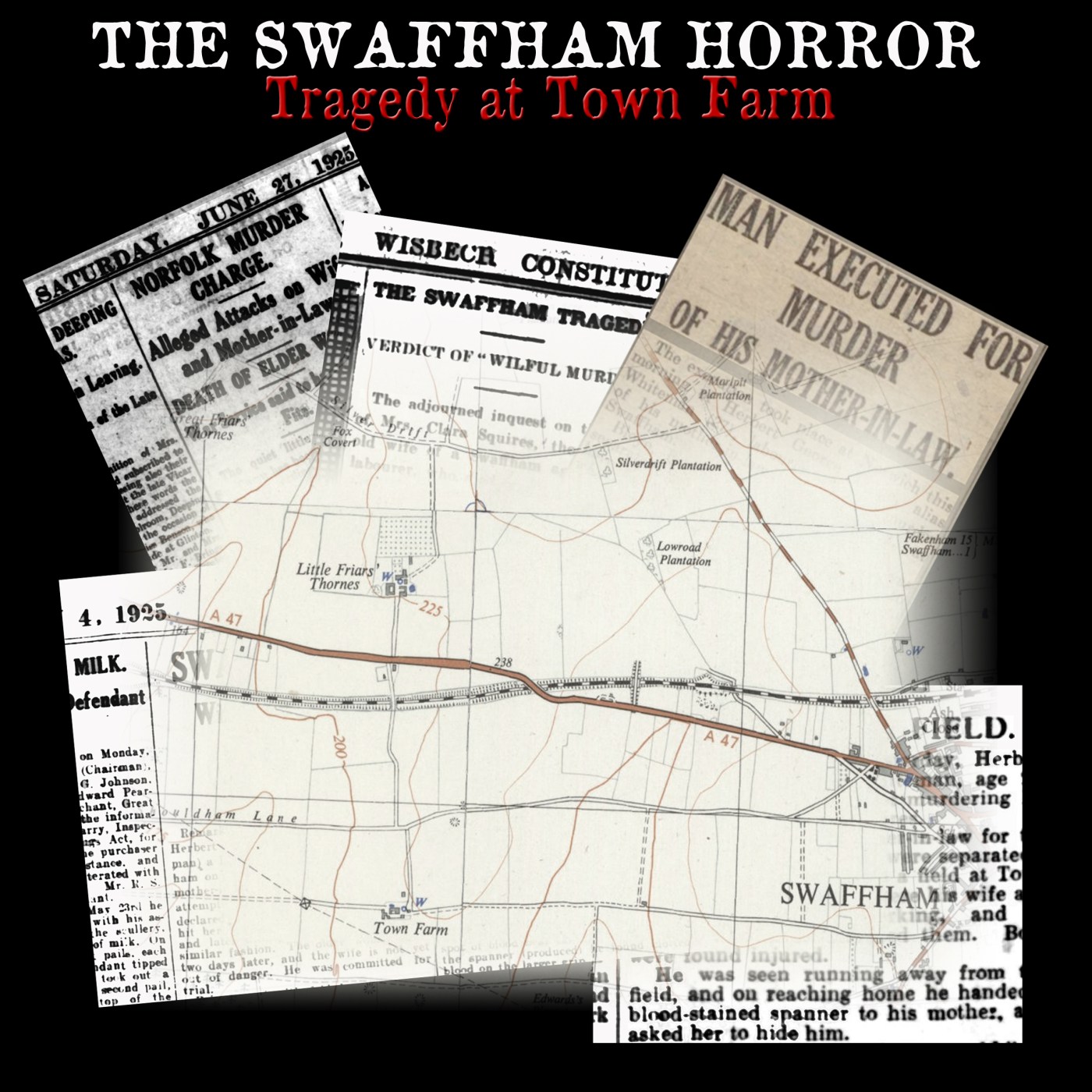


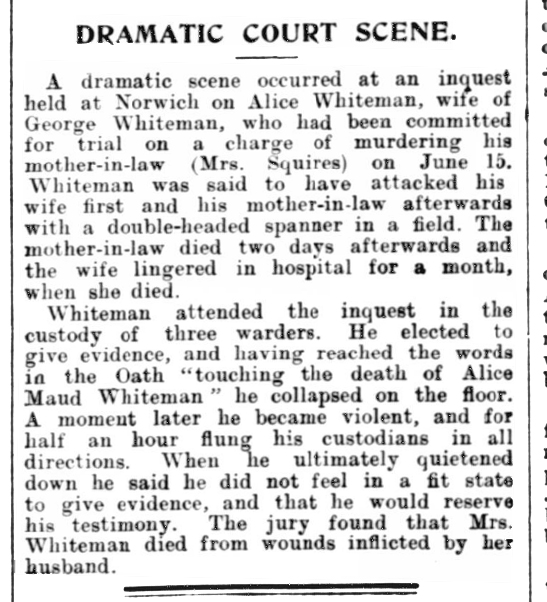
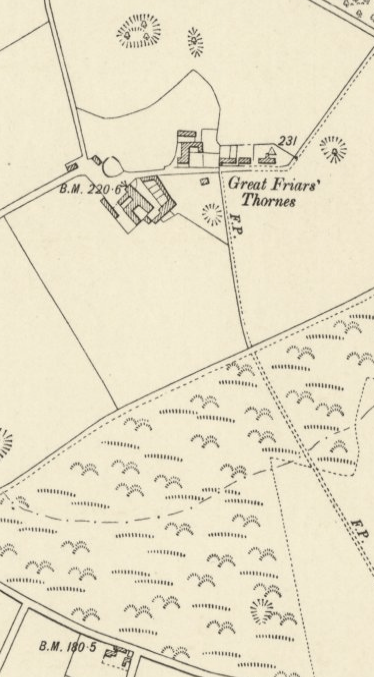 Meanwhile, what of George Whiteman? After the attack on the two women he had headed north across the railway line in the direction of his mother’s cottage near what was known as Great Friars Thornes. Mrs Whiteman was standing in the yard of the farm with another woman, Frances Turner, who later testified:


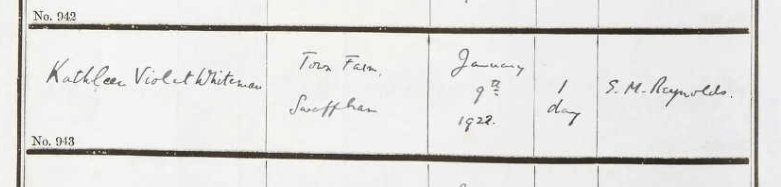
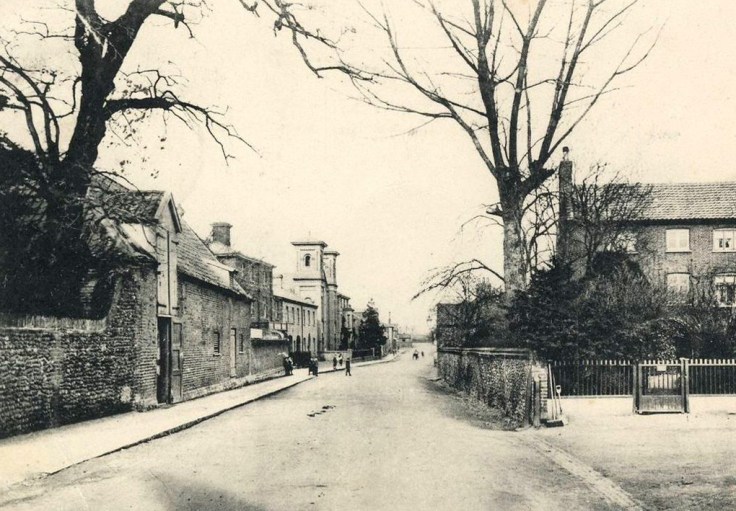
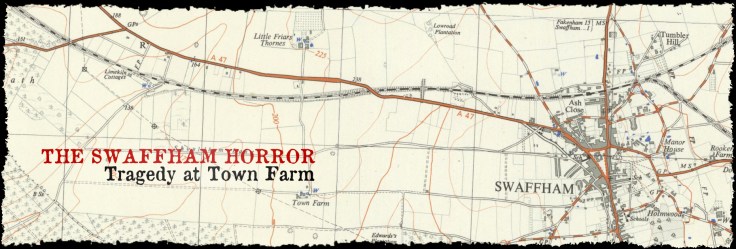
 There is more than one Town Farm near Swaffham, but I am certain that the one central to this story is the farm that sits on Shoemakers Lane. My reasons for this are that immediately after the terrible events of Monday 15th June, George Whiteman is described as making his escape across the railway line in the direction of his mother’s house at Great Thorne. Nothing else makes sense, so I am convinced that this is the correct location. In part two, I will describe the tragic events of that June day, and how justice was done in the case of George Whiteman’s mother in law, if not with regards to his young wife.

 When the cops investigate the house from which the young man ran, they find the second corpse of the morning, with her throat slit. She is – or rather was – Cordi Gannet. She made a decent living producing lifestyle videos for YouTube, full of cod psychology and trite advice about life improvement strategies. Her psychology degree was apparently bought mail-order from an on-line university, and when Alex Delaware gets to the scene with Milo, he remembers that he was once involved in a child custody case where Cordi Gannet was introduced as an expert witness – with disastrous consequences.
 Watching the Delaware-Sturgis partnership work on a case is fascinating. Yes, by my reckoning this is the 37th in the series. No, that’s not a typo. Thirty seven since their debut in When The Bough Breaks (1985). 1985. Blimey. Amongst other ground-breaking events in that year, I read that Playboy stopped stapling its centrefolds, the first episode of Eastenders was broadcast, and Freddie Mercury stole the show at Live Aid. But I digress.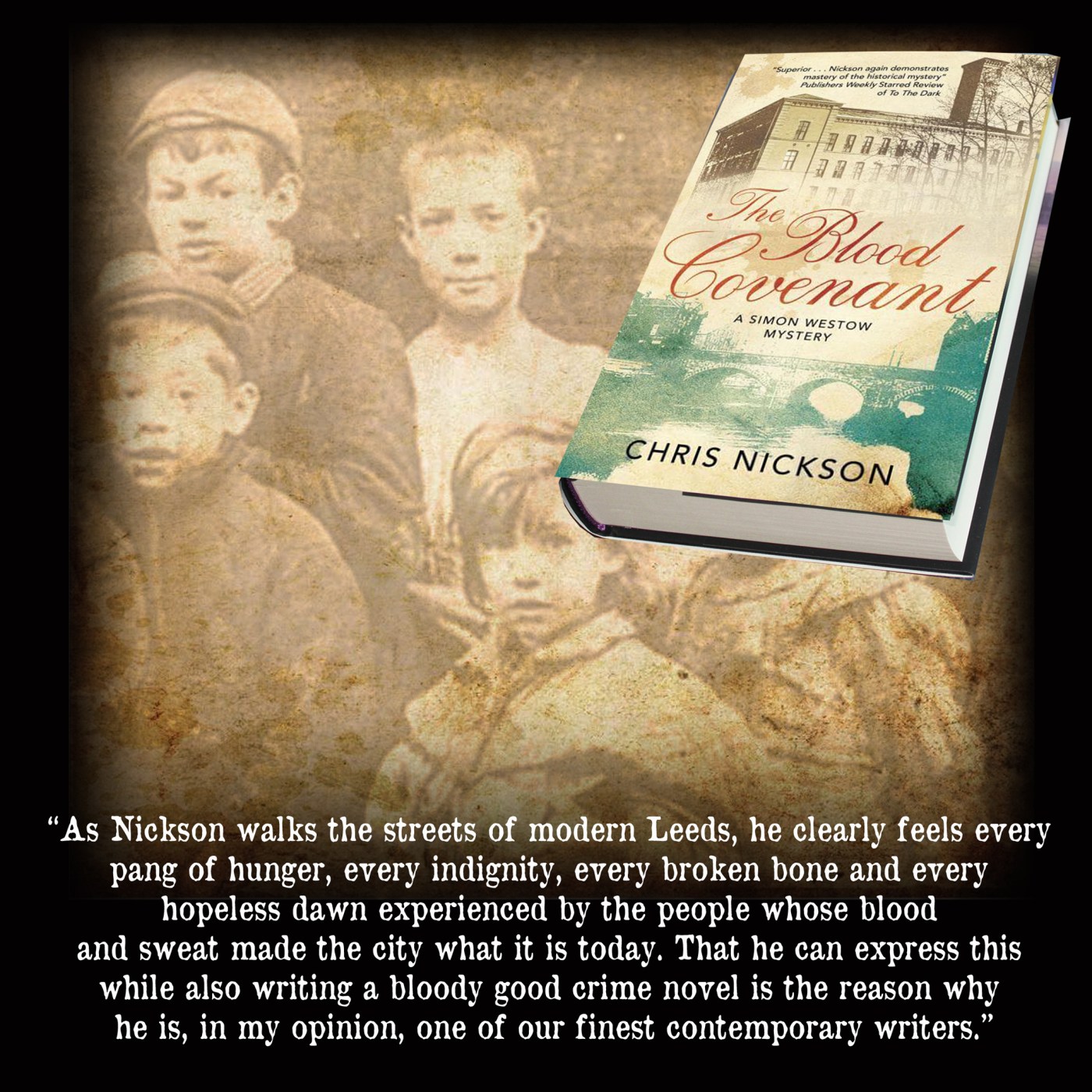

 Chris Nickson’s Leeds is a very different place. In the


 A new book from Chris Nickson is always a joy, even if the times and circumstances he writes about are seldom a cause for celebration. His cerebral connection with the downtrodden and exploited people who once walked the streets of his native Leeds is almost tangible, and here his words burn white hot as his Georgian thief taker – Simon Westow – becomes involved in several cases at once. He is determined to avenge two boys brutalised in a local mill, while also trying to solve the mystery of a corpse dragged from the local river, throat cut and minus a hand. All this while unwillingly coming to the attention of one of the richest – and most dangerous men in the city. Expect another star turn from the enigmatic – but deadly – assassin known only as Jane, as a ghost from her past threatens to disturb her fragile equilibrium. The Blood Covenant is from Severn House and is