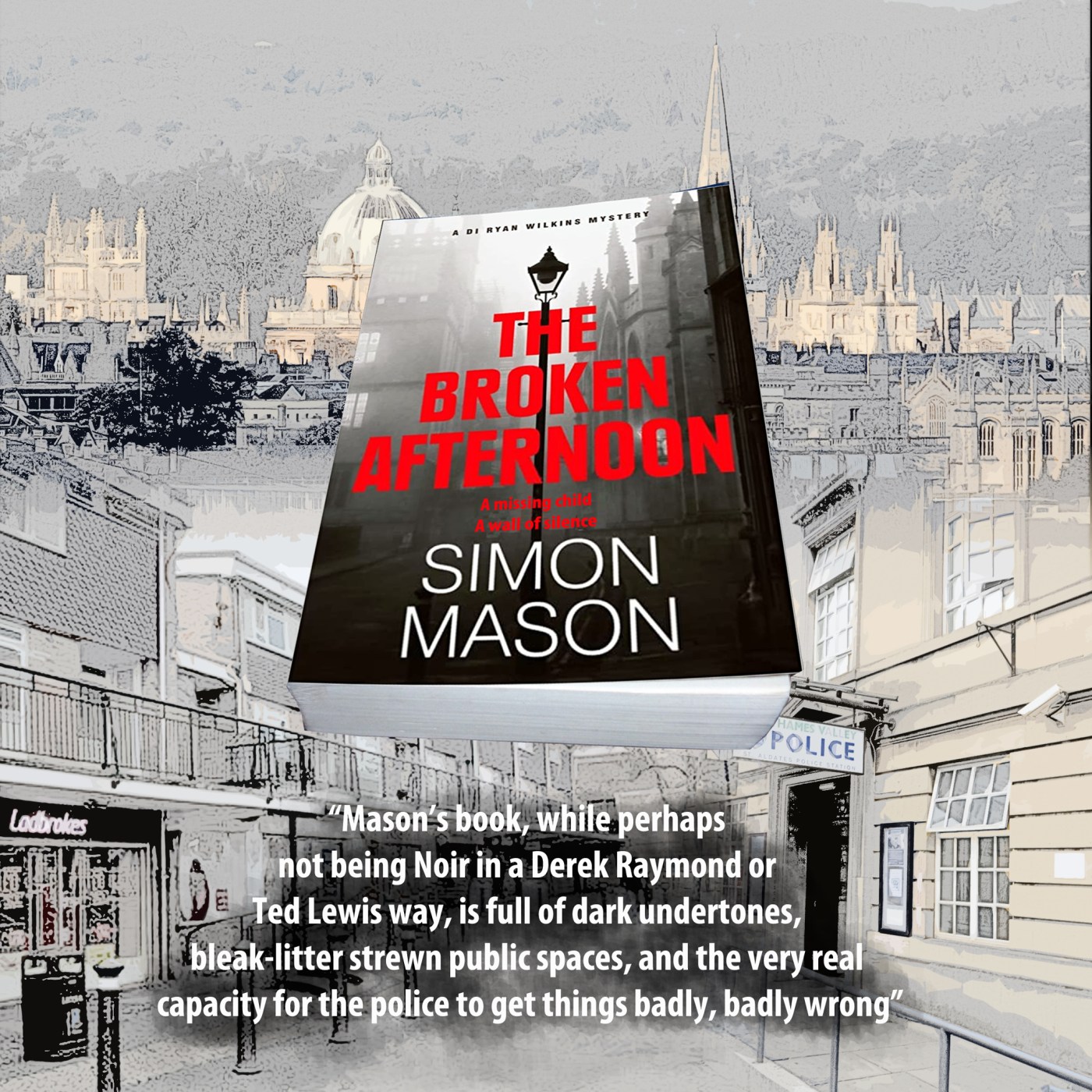
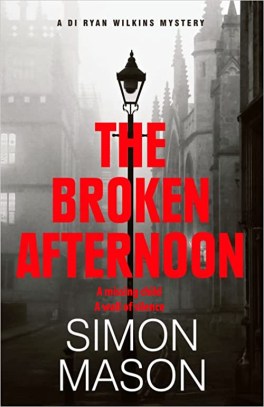
 In Simon Mason’s A Killing In November we met Oxford DI Ryan Wilkins, and the book ended with his dismissal from the force for disciplinary reasons. In this book he is still in Oxford, but working as a security guard/general dogsbody at a van hire firm. His former partner, also named Wilkins, but Ray of that ilk, is now heading up the team that was once Ryan’s responsibility, and it is they who are tasked with investigating the abduction of a little girl from her nursery school.
Ryan and Ray are very different. Ryan is a single dad with a little boy, and somewhat rough round the edges. He was brought up on a caravan site and he is no matinee idol:
“He looked at himself in the mirror. Narrow face, grease-smear of scar tissue, big bony nose, all as familiar to him as his own smell.”
As a copper he was unorthodox, irreverent to his superiors, but with a real nose for the mean streets and those who walk them. Ray Wilkins is university educated – Balliol, no less – a smooth dresser, good looking and at ease in press conferences; his partner Diane is pregnant with twins.
The search for four year-old Poppy Clarke is urgent, driven as much by the clamours of the media as the tearful anguish of Poppy’s mother. Ray is painfully aware of the adage about “the first forty eight hours”, but clues are scant, and he has exhausted the other convention of “close family member”
Ryan, meanwhile, has a mystery of his own to solve. Investigating a suspicious noise in the compound at Van Central, he discovers a man he had last heard of doing five years for burglary in HMP Grendon. Mick Dick is big, black, and sometimes violent, but he is down on his luck, and was trying to get into a transit van just to find somewhere to sleep out of the pouring rain. Ryan sends him on his way. The next day Ryan hears on the local news that there has been a hit and run case near North Hinksey where a body has been found at the side of the road. It is that of Michael Dick.
When the body of Poppy Clarke is found in a shallow grave in nearby woodland, the nature of the investigation changes. The urgency is replaced by a grim determination to find the killer. Time is now removed from the equation. Ryan has been doing his own nosing about into the death of Mick Dick, and finds he had been in contact with another former prison inmate called Sean Cobb. Cobb, however, is a very different kind of criminal from Mick Dick, and when Ryan tells Ray, Cobb becomes very definitely a person of interest in the hunt for Poppy Clarke’s killer. Ryan has also received a ‘phone call from his former boss, DCI Wallace, offering Ryan a carrot in the shape of a possible reinstatement.
We also meet Tom Fothergill, the millionaire boss of a company that produces high end pushchairs and prams. As part of his charitable work, he has helped ex-cons like Dick and Cobb, but how is he involved in the abduction and death of Poppy Clark?
One of the promotional blurbs for this novel declares:
“Mason has reformulated Inspector Morse for the 2020s”
 I am sorry, but that is not how I see this book. Yes, it is set in and around Oxford, but apart from The Broken Afternoon being every bit as good a read as, say, The Silence of Nicholas Quinn or The Remorseful Day, that’s where the resemblance ends. Mason’s book, while perhaps not being Noir in a Derek Raymond or Ted Lewis way, is full of dark undertones, bleak litter strewn public spaces, and the very real capacity for the police to get things badly, badly wrong. Simon Mason (right) has created coppers who certainly don’t spend melancholy evenings gazing into pints of real ale and then sit home alone listening to Mozart while sipping a decent single malt.
The killer of Poppy Clark is eventually ‘unmasked’, but perhaps that cliche is inappropriate, as he has been hiding in plain sight all along. The more squeamish male readers may want to skip the section towards the end set in the hospital maternity unit. It is superbly written, but graphic: I went through that experience with three of my four sons, but on the fourth occasion the ‘phone call came too late – or perhaps I drove to the hospital too slowly.
This is a very, very good book and, while Wilkins and Wilkins are chalk and cheese to Morse and Lewis, I can recommend The Broken Afternoon to anyone who enjoys a good atmospheric and convincing English police procedural. It is published by Riverrun/Quercus and will be out in all formats on 2nd February 2023.




 Dr Augusta Bloom is a psychologist who specialises in the criminal mind. Her business partner is Marcus Jameson, a former British intelligence agent. Bloom is often employed by the police as a consultant when a particular case demands her particular skill-set. The killers Bloom is requested to track down have struck twice, leaving only burnt matches as a clue. I use the plural ‘killers’ advisedly, as we know they are a team, but Bloom and the police have yet to discover this.
 Augusta Bloom is an interesting creation. She is a loner, and not someone who finds personal relationships easy, not with Marcus Jameson nor with her notional boss, DCI Mirza, who is deeply sceptical about Bloom’s insights. When the police finally join all the dots, they realise that rather than two killings, there have probably been as many as eleven, which ramps up the pressure on Bloom and Jameson. Leona Deakin, (right) as one might expect from a professional psychologist, has constructed an complex relationship between Bloom, Walker and Jameson. As readers, we are not spoon-fed any moral certainties about the trio. Rather, we infer that their boundaries are, perhaps, elastic. As John Huston (as Noah Cross) said in Chinatown:







 Tim Yates’s life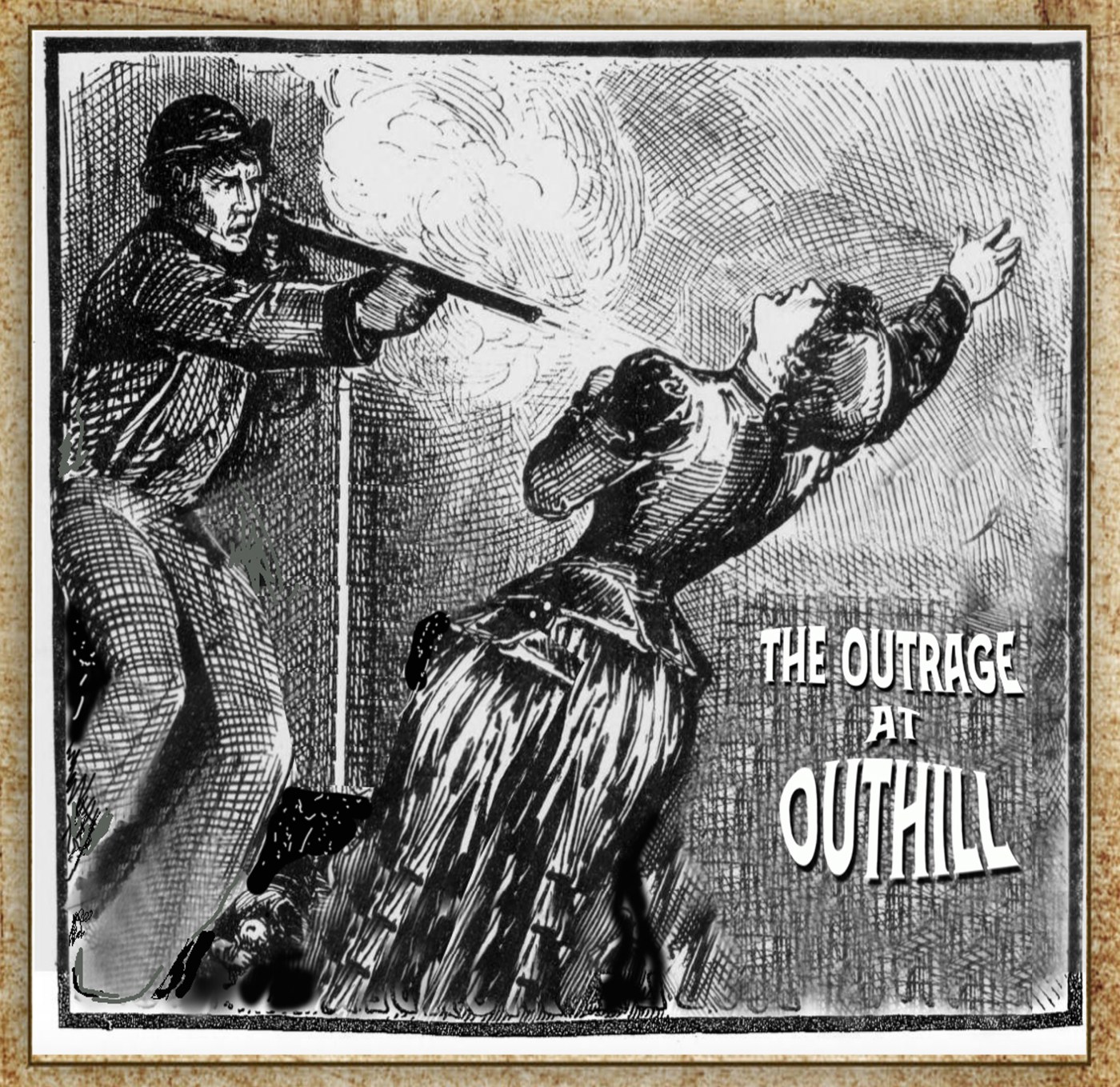
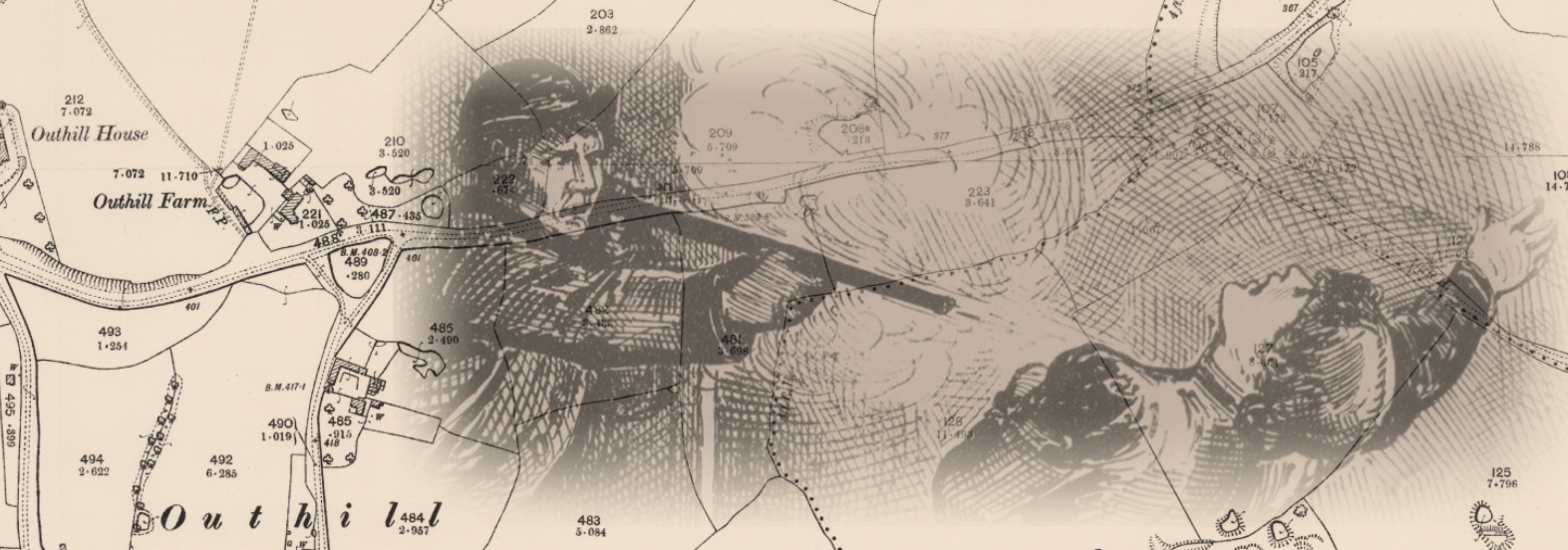
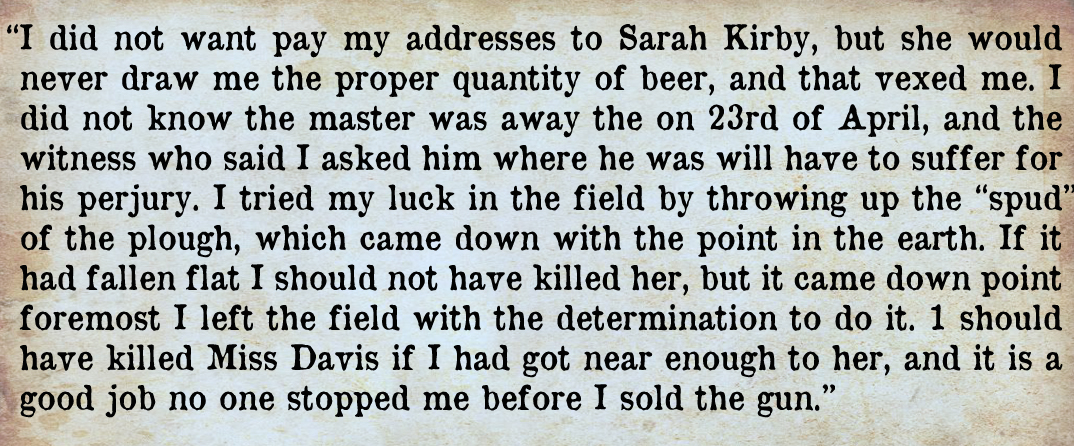
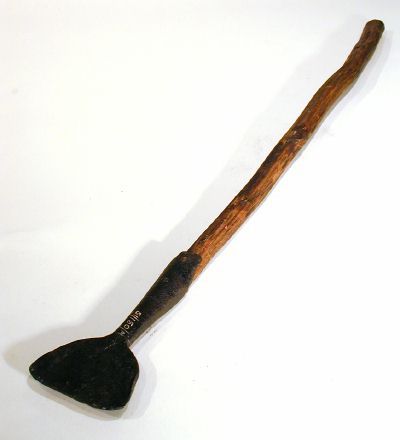 SO FAR: 23rd April, 1862, rural Warwickshire, and a 21 year old ploughman, George Gardner, employed by farmer Davis Edge at Outhill Farm, near Studley, has shot 24 year-old Sarah Kirby, employed by Edge as a domestic servant. Gardner’s peculiar state of mind before killing Sarah Kirby could almost be described as existential, in that it seemed to recognise neither logic nor the law – just his own obsession. He did, however, seem to have acknowledged the presence of chance. He had been uncertain that morning about killing Sarah Kirby, so he adopted a rural version of tossing a coin. Ploughmen used a hand-tool known as a “spud”. It was basically a flat blade, usually mounted on a wooden handle, (left} and used for clearing earth from the blades of the plough. Gardner decided to toss the tool in the air, and if it landed blade first, then Sarah Kirby would die. It did, and so did the young woman.
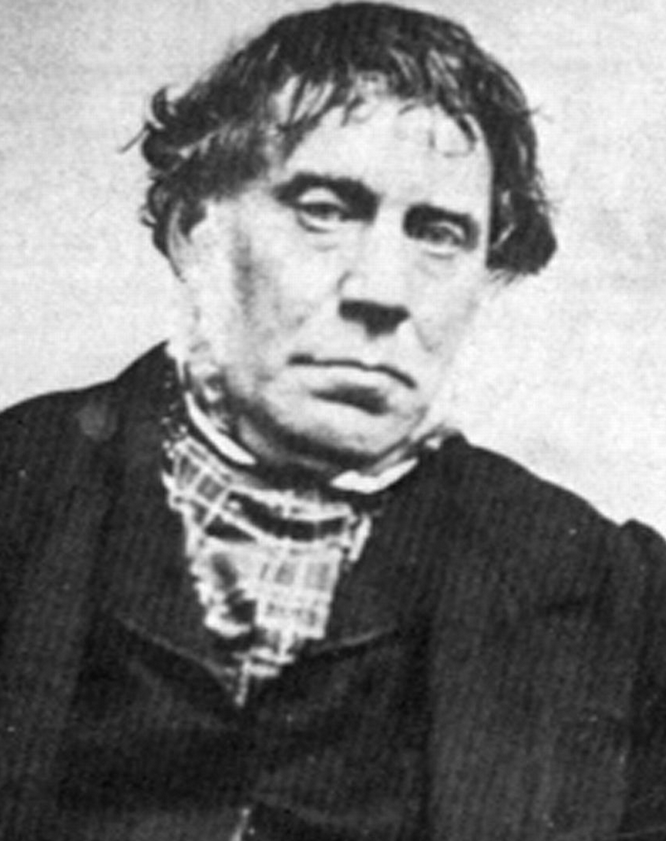 Gardner had one further misfortune. His executioner was none other than George Smith (right), a former criminal and noted drunk, known – with rough humour – as The Dudley Throttler. This was to be a public execution, and a perfectly respectable form of cheap entertainment at the time. A reporter described the scene: