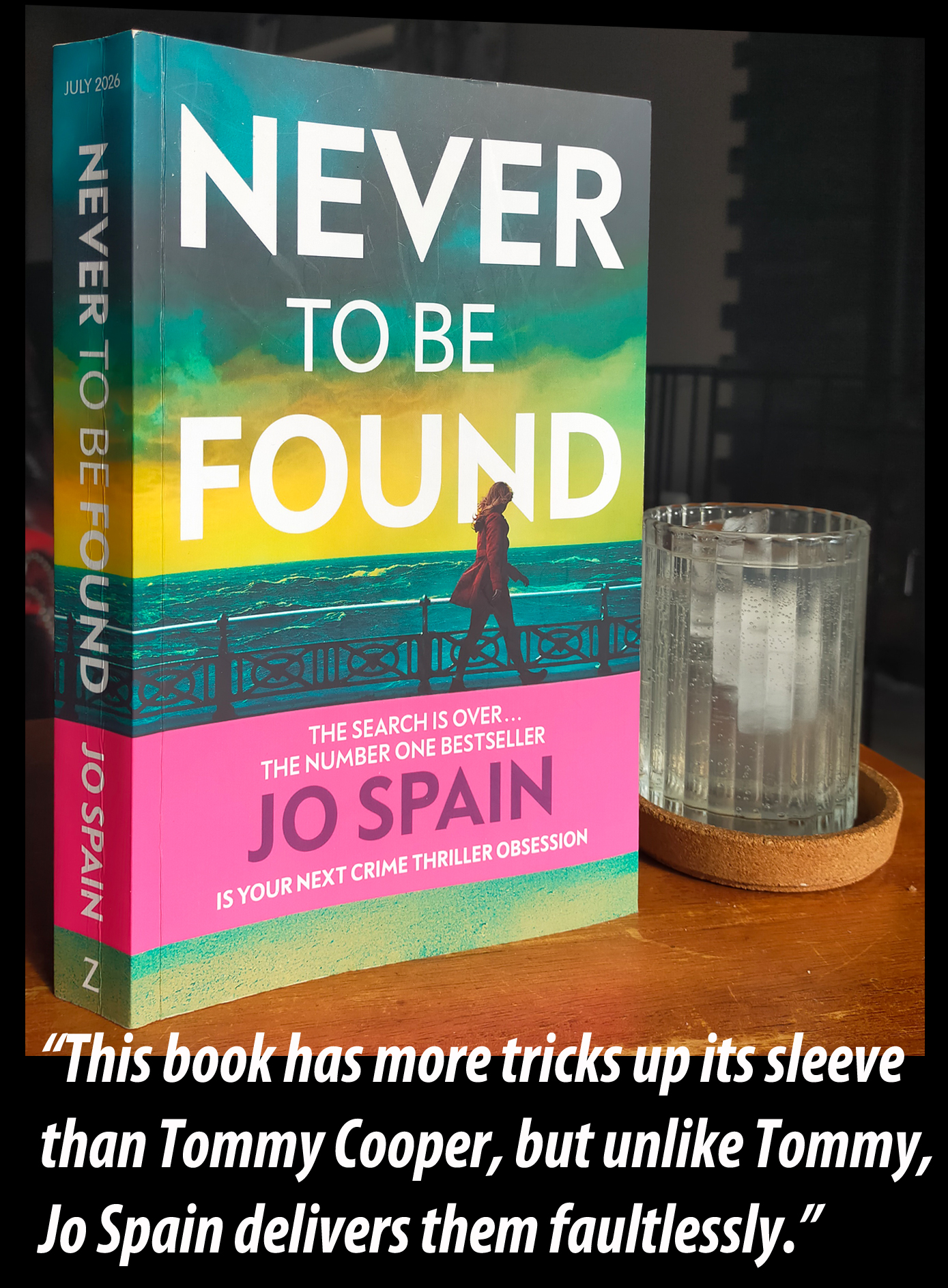
A new Jo Spain novel is always to be welcomed. I still believe that her Tom Reynolds police procedurals (link to reviews here) were the best of that genre I have ever read. Now, however, she is making a name for herself (and, I imagine, much more money) as a screenwriter and, indeed, this new book has already gone into development as a major network TV series.
The premise of Never To Be Found is both original and very clever. Veronica Page has a skill-set which was highly valued in Japan, the art of johatsu – the ability to make people disappear. People who have buckled under pressure, people with futures they are unwilling to contemplate, people who are burdened with some sense of shame or failure. Page isn’t a killer. Quite the reverse. She sees herself as a restorer of lives. She erases the old identity, and gives her customers the chance to reinvent themselves somewhere else, as someone altogether different. Now, she has an English client. A young man called Ben. He is due to inherit a huge fortune somewhere down the line, but now is trapped in the relationship between his feckless alcoholic mother and a bullying stepfather. Ben, however, isn’t the problem.
A man called Mark Drake most definitely is. Fifteen months earlier Veronica helped him disappear and, according to chapter three, he killed his wife. I use the words ‘according to’ advisedly. Problem is, with Jo Spain plots, you never quite know if she is telling you the full story. She has this sublime skill of encouraging the reader to make assumptions, which can lead to all manner of surprises. Anyway, it seems that Mark Drake has fled a murder scene, leaving behind two bodies. One is that of his wife, Amy. But there is another, and there, as WS once said “lies the rub”.
Veronica is approached by suspended police office named Seb who is determined to find Mark Drake and, by a mixture of persuasion and coercion, Veronica agrees to help him. She and Seb get a clue, and head to York, which was where Drake was headed. We know that Mark is in town, because he gets a couple of brief chapters to himself. It is at this point that seasoned Jo Spain readers may begin to suspect that there is s definitely something she is not telling us, at least explicitly. Veronica is nearly run down by a motorcyclist, and then she learns that one of the experts in her chain of identity changers, the man who produces fake IDs, had been found dead. And the police are very keen to speak to her.
Almost exactly half way through the book we learn more about Veronica’s backstory. Her father worked in the restaurant industry, and his main job was sourcing seafood – and in particular, tuna – from Japan. This meant frequent absences from home, but there was one final trip from which he never returned. The 18 year-old Veronica and her mentally fragile mother travel to Japan to find him. They are faced with the chilling truth that Veronica’s father’s rented Lexus was pulled from the water of the Seto Inland Sea. His wallet was there. His passport was there. His phone was there. But he wasn’t. Local contacts suggest that he may have wanted to disappear, and this is Veronica’s introduction to johatsu. I mentioned WS earlier, but what happens in the later part of the book reminds me of Macbeth, rather than Hamlet. In the Scottish Play, there is a recurring theme of reversal, paradox, of black becoming white, of good becoming evil: the celebrated quote is:
“Fair is foul and foul is fair, Hover through the fog and filthy air.”
This book has more tricks up its sleeve than Tommy Cooper, but unlike Tommy, Jo Spain delivers them faultlessly. The narrative is taut and the dialogue is convincing. Compared to the Tom Reynolds novels I mentioned earlier, this story has TV mini-series stamped all over it, and is clearly designed for international consumption. It is none the worse for that, however, and I can heartily recommend it. It will be published by Zaffre on 2nd July.
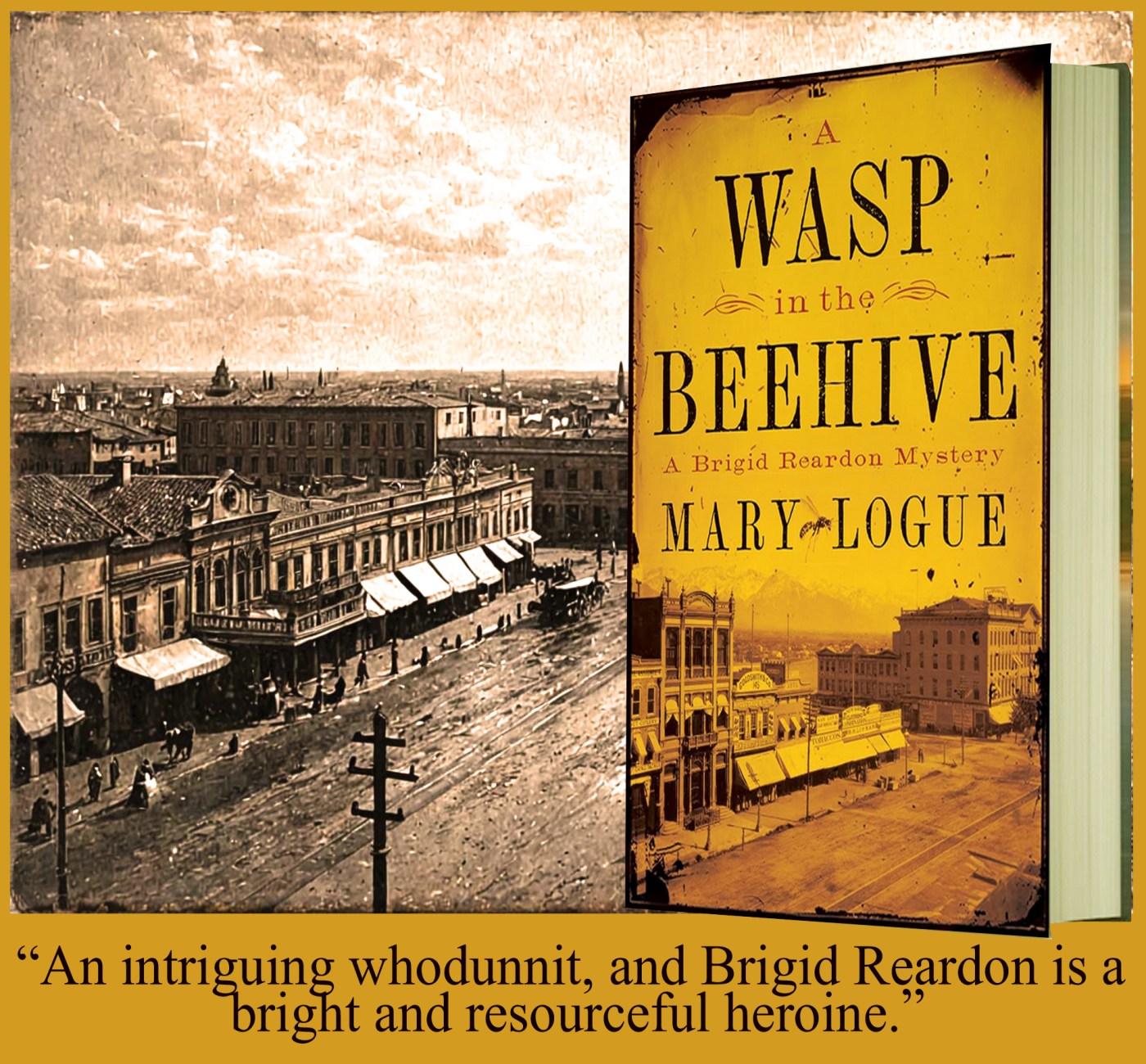
The Brigid Reardon Mysteries by Mary Logue are historical mysteries centered on an Irish immigrant navigating the American West in the 1880s. Starting with The Streel (2020) and followed by The Big Sugar (2023), the series features a determined, independent protagonist who solves murders in places like Deadwood and Cheyenne while seeking a better life. This is the third in the series, and begins in Salt Lake City where the eighteen year-old Brigid is applying for a job in a bookstore owned by a Mr Cutter.
We know from a brief preface that this gentleman has five wives, but this is, after all, Mormon central. Mr Cutter is something of a nasty piece of work. Not content with his five wives, he has his eyes on a sixth, Amelia. Normal terms for relatives become a problem in pluralistic marriages, but I think Amelia is his step daughter, as she is the daughter (by a previous marriage) of his second wife, Sarah. Unfortunately for Cutter’s equilibrium, sixteen year-old Amelia has fallen in love with Brandon, Cutter’s son by his first wife, Eliza.
When Mr Cutter is found dead in the sewing room of their house – a room he never has reason to visit – Brigid is reacquainted with Dr Kohler, a man she met in the bookstore. Doctor K has little to do with live patients – he is the city coroner. Cutter’s demise ushers in a delightful (for us readers) whodunnit, as a longish list of suspects is instantly available. Was it one of the wives, driven by jealousy? Brandon – or even Amelia – angered by his refusal to countenance their affection for each other? Or is it someone outside the family with a grudge against Cutter due to some slight or grievance borne out of the complex local religious politics? Whoever, the relationship between Kohler and Brigid is a CriFi match made in heaven.
At 200 pages, this is more of a novella, but none the worse for that. Spoiler alert – we are introduced to the murder weapon early in the piece, but as to who wielded it, that is rather more nuanced. There is one trivial, but unfortunate, research error. Dr Kohler refers to the methods of Sherlock Holmes. This is 1881, and it would be another six years before the character would appear, in A Study In Scarlet.
Written in the first person, the narrative of A Wasp In The Beehive ensures that we know plenty about Brigid. She is a bright, resourceful and courageous heroine. Categories are subjective, I suppose, but they are useful for tags, so I class this as Cosy Crime. Not my chosen genre, for sure, but I enjoyed this tale. It is published by The University of Minnesota Press and is available now.
I’ll be upfront and say that I loved this book from the very first page. There were two initial reasons, the first being that it is set in my favourite county of Shropshire, a place where I spent happy years, and somewhere that remains a repository of golden memories. Secondly, joy of joys, it has a simple and uncluttered chronological narrative, with none of the contrived ‘two years earlier’ or ‘six months later’ chapter headings so much in vogue with some authors. Priscilla Masters sets Shrewsbury coroner Martha Gunn and DI Alex Randall a grim problem to solve. Two teenage joyriders have died when their stolen car dives headlong off the edge of a steep disused quarry. As the police are cleaning up the scene, they pop the boot, and find the emaciated corpse of an elderly woman. And a third boy, who may well have been in the car, is nowhere to be found. Martha Gunn and Alex Randall are complex but attractive characters. Gunn was widowed some years earlier, and brought up her twins Sam and Sukey while balancing the demands of her job. After a career in sport that didn’t quite work out, Sam is now at university, while Sukey is well-known actress in a popular TV soap. Randall’s back story has an element of tragedy, too. His wife, Erica, died after falling downstairs. She was an unstable woman, and their marriage was unhappy. For a while, the circumstances of her death were considered suspicious, but Randall was cleared of any culpability. The couple had a child, but Christopher died shortly after birth, of a genetic defect.
The missing teenage joy rider is eventually found, and he confesses that they had been taking the car – which belonged to their deceased tutor at a local college – out for illicit drives for some time, but it wasn’t until they opened the boot to find a foot pump that they discovered the body. Panicking, and convinced they would be blamed for her death, they decided to dump it at Clive Quarry, but it went disastrously wrong. The surviving boy, Sol Raintree, managed to jump out of the back seat before it plummeted down the badly eroded cliff side. The body of the elderly woman, tagged with generic name Jane Doe, poses seemingly unanswerable questions. Why was she kept in a cold place – but not frozen – before she was put in the boot of the car? Who had dyed her hair, and painted her nails, and made a loving professional job of both? Why does her broken femur, an accident which occurred not long before she died, not show up on any contemporary medical records?
I am not normally a huge fan of romantic entanglements between investigating officers in crime novels, but Priscilla Masters handles the growing relationship between Gunn and Randall with the lightest of touches. As I hinted earlier, I loved the Shropshire setting, and many of the topographical references chimed with me, in particular the powerful presence of The Severn, deceptively beautiful but also a powerful bringer of destruction when in flood. There is also the occasional hint of the ‘blue remembered hills’, and it was pleasant to be reminded of places like Baschurch and Church Stretton.
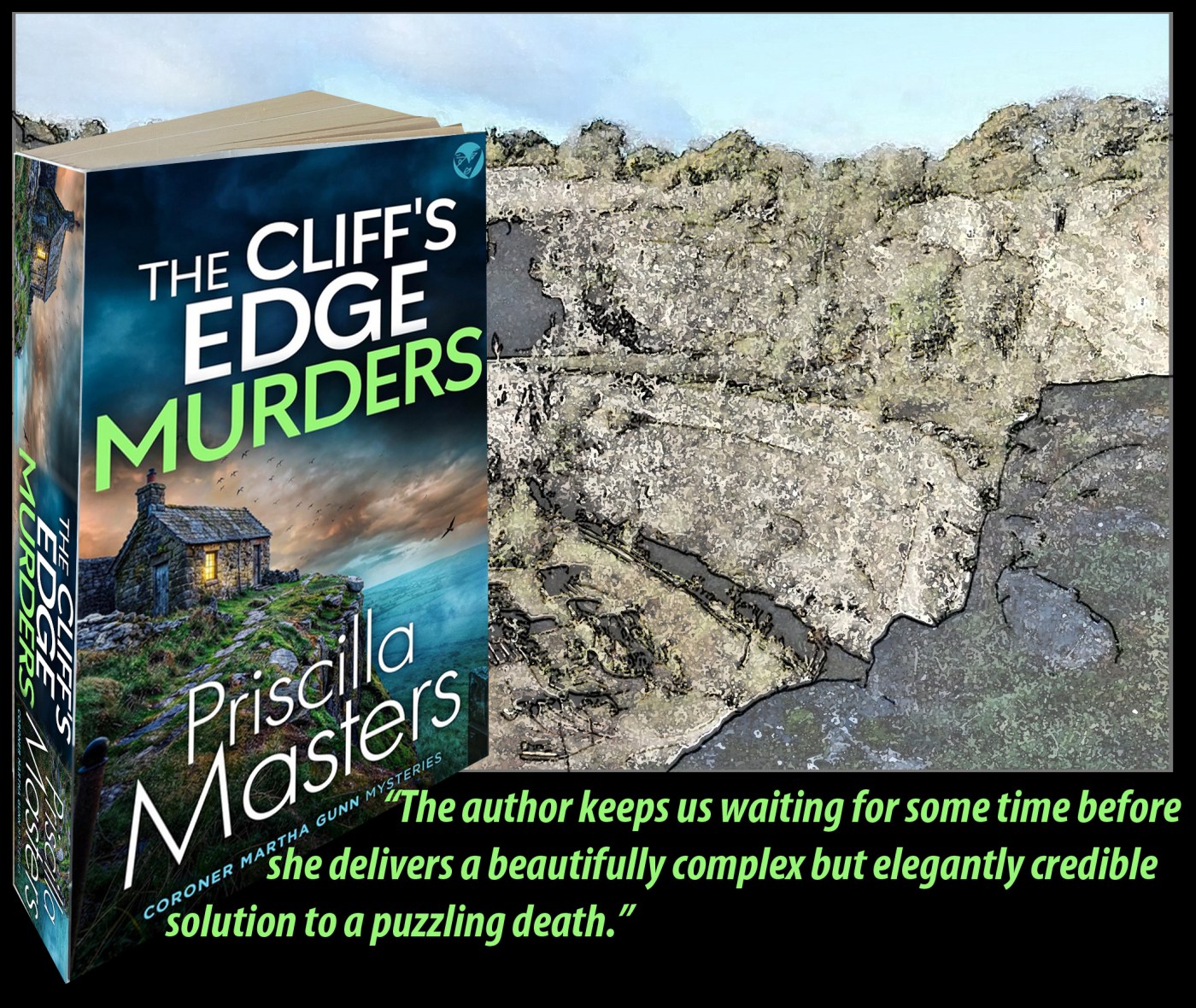
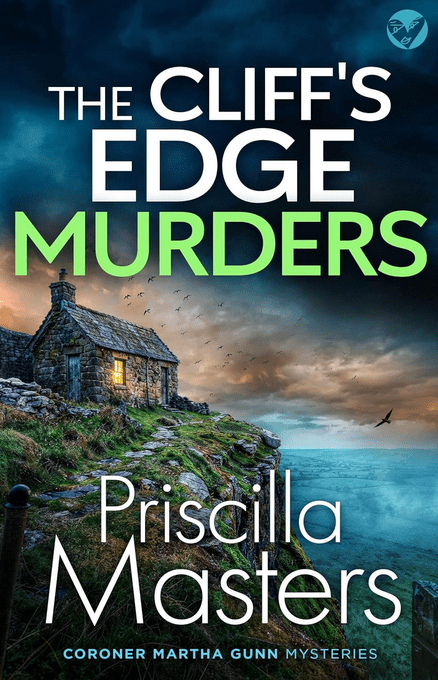
The author keeps us waiting for some time before she delivers a beautifully complex but elegantly credible solution to a puzzling death. Jane Doe finally gets a real name, the dignity of a funeral, and a mourner. The Cliff’s Edge Murders will be published by Joffe Books on 25th June.
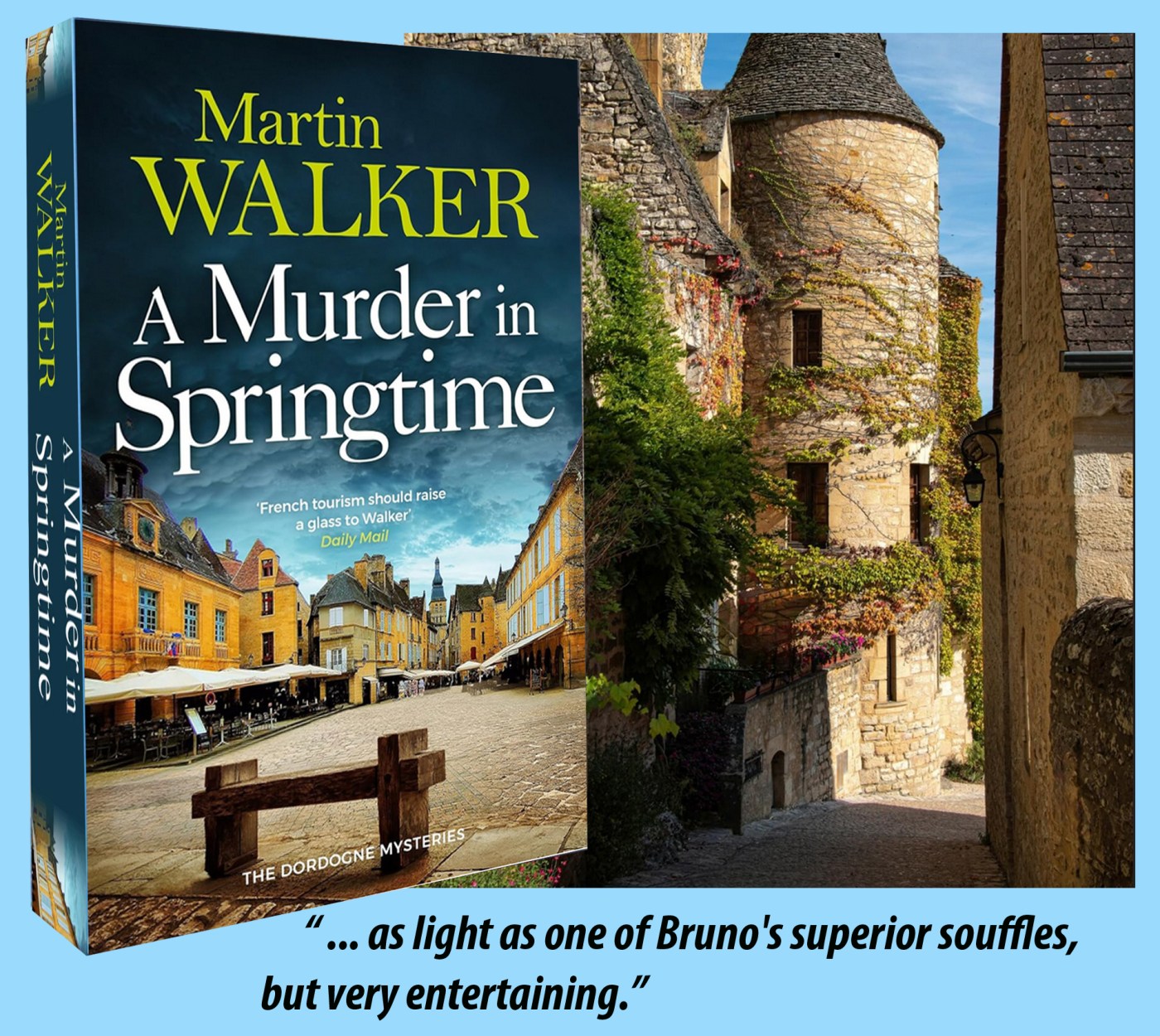
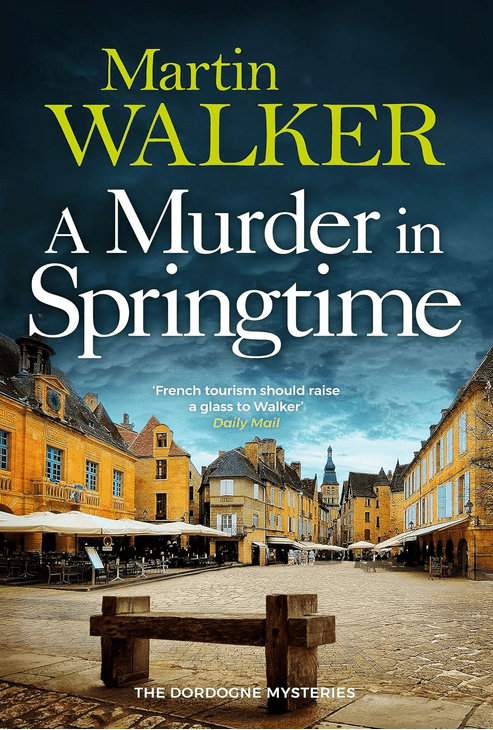
Bruno Courrèges is the Chief of Police of the Vézère Valley in the Périgord region of France. It is springtime in the little market town of St Denis. The genial Bruno does have a past, and it is somewhat darker than the constant sunlight if St Denis. He was raised in an orphanage and, as a young soldier, experienced the mind numbing brutality of the Balkan wars in the 1990s. When his friend Pamela, who runs a riding stables, returns to her house and finds her lodger, Josette Quirit, battered to death on the patio, he is informed, but is forced to recuse himself from the investigation due to his friendship with Pamela. Instead, an old friend Jean-Jacques Jalipeau from Périgeux attends, along with his colleague Fabien Panton. There are two subplots. The gentler of the two is Bruno’s concern for the declining fortunes of St Denis in commercial terms. The weekly market is shrinking: stallholders are relocating to a nearby town, and shops are losing footfall. I realise that a picturesque Dordogne town is very different from where I live – a hard-scrabble town in one of England’s more deprived areas, but at least St Denis seems to have escaped the dubious pleasures of fake barber shops, nail bars, money laundering ventures posing as vape stores, and a proliferation of bookmakers. Bruno hatches a rejuvenation plan. As to the second, we have a mysterious prelude, apparently unrelated to St Denis or the murdered woman. I am not keen on this literary device, and I think it is over-used, but that’s just a personal grouch. In an unidentified school, a young boy is made to stand for ages, holding heavy books on his outstretched arms. Then he falls, cracks his head, and all hell breaks loose. We come to believe that this is the same Catholic boarding school that Fabien Panton was sent by his parents. The mysterious prelude makes sudden – and rather grim – sense, when it is revealed that the school matron who inflicted the fatal punishment on the schoolboy was Joséphine Tauton, convicted of manslaughter. On her release from prison she became Josette Quirit. Bruno and Fabien have another lead. Vehicles captured on CCTV in the vicinity of the murder site are connected to a Netflix crew filming a historical drama series in the area.In the end, it is a curious blend of of technical data – the readings from a FitBit watch – and Bruno’s very human intuition that brings the killer to justice, and the novel ends on a festive note, if not for the victim and her killer, but for the market stallholders of St Denis. This is, of course, cosy crime, but of a superior nature. Bruno is a confirmed gastronome, and the book is full of descriptions of meal preparation, rural charcuterie delicacies and, of course, delicious local wines. Bruno”s world is, of course pure fantasy, albeit of a delightful kind. Despite its perceived decline, St Denis has a proper boulangerie and a shop where a Belgian chocolatier creates his own irresistible treats. There is, of course a high class butcher, from whom Bruno thinks nothing of ordering a 35 kilo lamb in order to treat his friends to an Easter méchoui. Even the rather reduced market has stalls selling proper farm-made cheeses, and the hills around the town are still peopled by small vineyards, each producing delicious – and affordable – wines. This is heady stuff, especially for British readers in provincial towns where genuine locally produced food is either hideously expensive, or completely unavailable. Martin Walker writes of what he knows, as in 2013, he was made a chevalier of foie gras, in the confrérie of paté de Périgueux, and also an honorary Ambassador of the Périgord, which means he gets to accompany the traveling exhibition of the Lascaux cave as it goes on display at museums around the world. He also helps promote the wines of Bergerac at international wine fairs, and was chairman of the jury for this year’s Prix Ragueneau, the international culinary prize. A Murder in Springtime is as light as one of Bruno’s superior souffles, but very entertaining. It will be published by Quercus on 18th June.
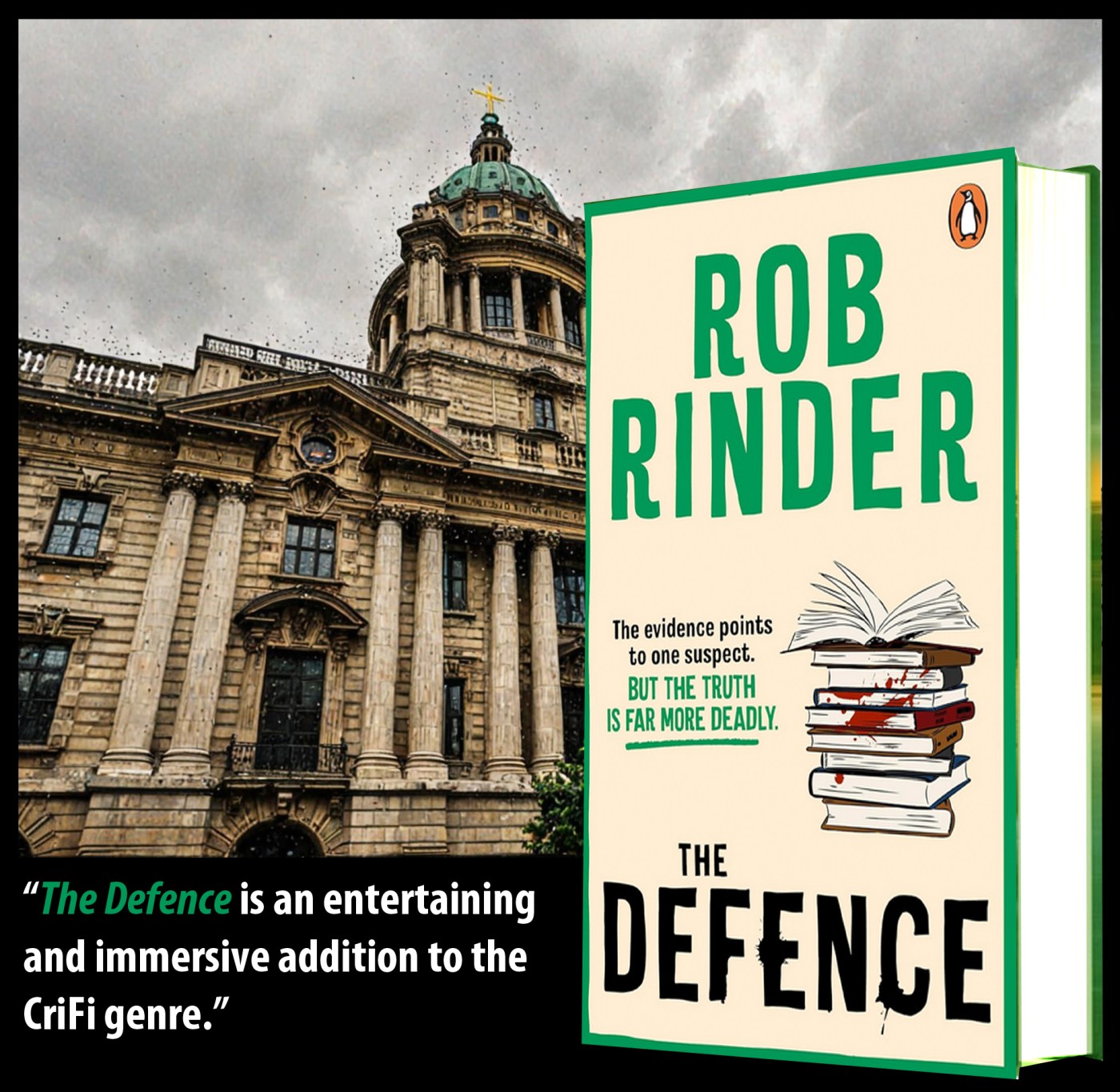
In the unlikely event of anyone reading this being unaware of Rob Rinder, please stay tuned. Rinder is a Mancunian barrister who made his name as TV presenter of popular TV shows based on trials and other legal matters. He turned his hand to writing, and I normally shun crime novels written by TV celebrities, on the grounds that when these books top the book sales charts, it will invariably be because of the fame of the author, rather than the quality of the writing. That said, Rinder’s The Defence is very readable. A (perhaps autobiographical) barrister, Adam Green, a Jewish lad from Manchester (with no known girlfriends) is engaged to help defend Juliet Quentin, personal assistant to a wellness-guru, Adrian Wells, who died while publicly demonstrating his latest herbal panacaea. He died because his miraculous bath elixir contained fatal doses of monkshood, an ancient and deadly poison.
Juliet Quentin has ‘a past’, most significantly being her involvement in a prime time reality TV show, where she was cast as a despicable and malevolent villain, responsible for evicting some of the viewers’ favourites from the TV set. As a potential witness, she is every defence barrister’s nightmare. She is dowdy, sarcastic and surly, and seems to have every available motive for killing Adrian Wells, who was an a manipulative and opportunist chancer. While he was still an MP, he spearheaded legislation aimed at the big pharma companies who were making millions out of anti-cancer drugs. He persuaded several of his stricken constituents to abandon the NHS drugs in favour of herbal remedies which he was developing. The premature deaths of these people gives Adam a bewildering choice of people who might have had reason to kill Wells.
It would be easy to dismiss this novel as just another potboiler by a media celebrity, a book aimed at the book racks in ASDA and TESCO. It is probably guilty on both those charges, but it is better than that. It covers many complex issues. Adam Green is likeable, but he is naive and easily taken in, and his ambivalence at having to stand up in court and be clever in defending unpleasant criminals weighs heavily on him. It seemed to me that Adam is unsure about his own sexuality, but his social and professional circumstances prevent him from addressing the issue. Rinder provides us with a few memorable characters, including the flamboyant and abrasive KC Ursula Elder, and the fractious father and son duo, one of whom is woker than woke, while the other is strict huntin’ shootin’ and fishin’.
Courtroom dramas are not normally my thing, but Rob Rinder, with his vast experience, keeps the tension bubbling. At times he is a bit preachy when talking about LGBTQ issues, but this was a minor irritation. I could also have done without. Adam Green’s cartoon Jewish mother (does anyone have Maureen Lipmann on speed dial?) but The Defence is an entertaining and immersive addition to the CriFi genre. It will be published by Century on 18th June.
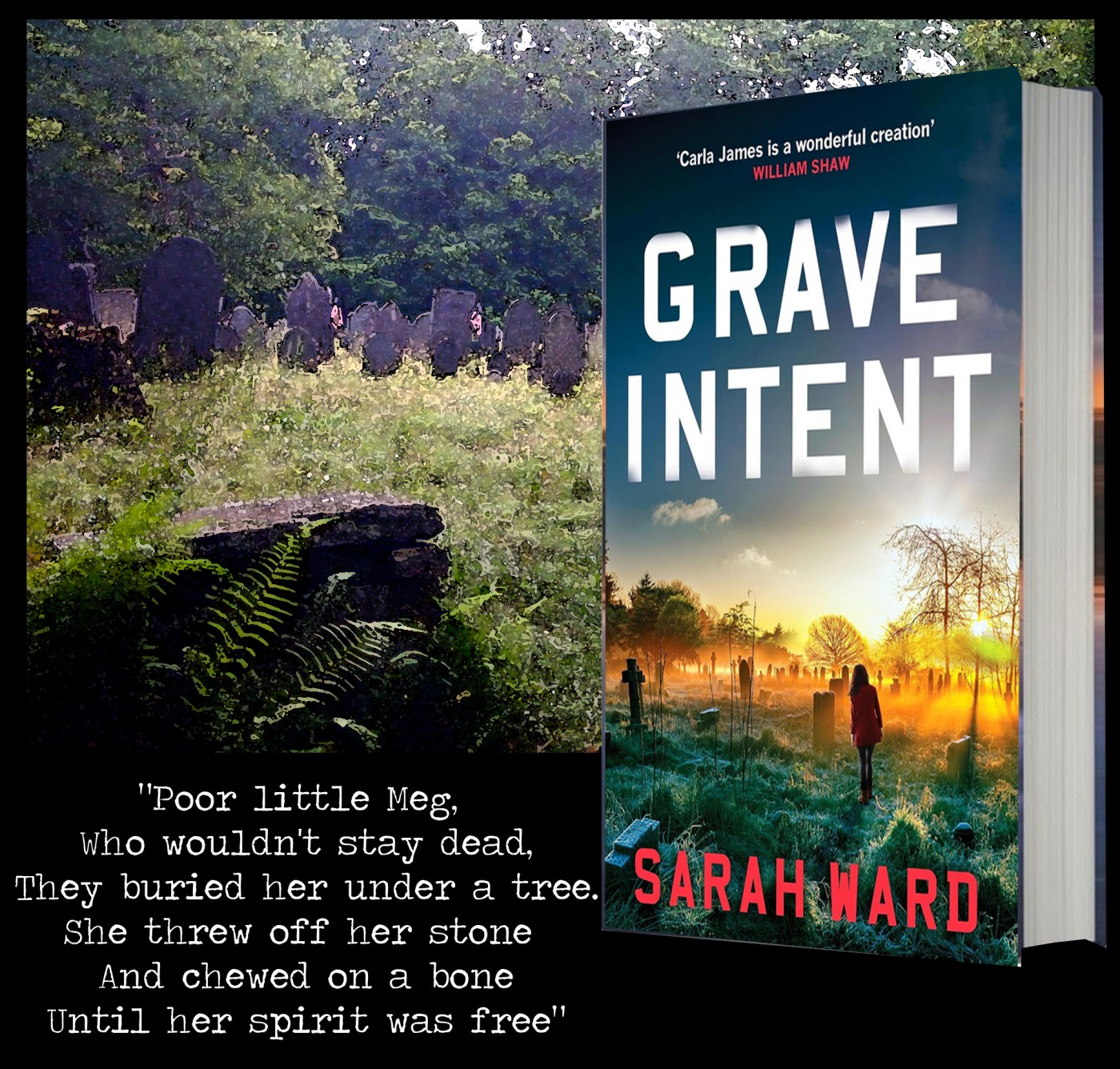
We are in New England, and it is the present day. Carla James, an academic and archaeologist, is about to begin a week’s summer school at an annexe of Jericho College (American for university), an establishment for well-to-do youngsters from connected families. The first few pages of the book, however, take us back to 1870; same place, but we observe a small but significant domestic tragedy involving a woman called Meg Woodthorpe. For Carla, well known locally for using her archaeological skill to help in criminal cases, the mysteries are not long in arriving. One attendee, a mature student called Melissa, had not arrived. Then, Carla is called in by the local pathologist (an old friend) to examine the body of a woman whose face had been hacked into shreds by a metal weapon. That weapon seems to be a geological hand pick, found near the corpse. On the wooden handle is stamped ‘Anthropology Department Jericho College’.
Finally, what is the significance of the antique framed embroidered picture in Carla’s room, which shows a hare in full flight, above the stark warning, ‘Beware’? The significance of the brief prologue is soon explained, as some of the course members have picked up on a local rhyme: “Poor little Meg, who wouldn’t stay dead, They buried her under a tree. She threw off her stone and chewed on a bone Until her spirit was free” Bear in mind that the course Carla is running is a commercial venture, and open to all. The participants are a mixed bunch. There is Trudy Cai, a property lawyer from Chicago; Annie Lockley, an administrator at Jericho, and Belle, an older woman with iron grey hair. The missing Melissa is a care home worker who feels she missed out on a college education. Riley runs a bar somewhere, and his luggage includes cases of beer and wine. Shawn and Lauren are a younger ‘pair’, but Shawn is possessive and edgy. Another older man is Scott, “a tall laconic man with a ponytail, who gave off an ageing hippy vibe.” Jack Caron is another academic, who is co-tutor on the course, and has chosen to live off-site in an attempt to breathe life into a troubled marriage. The missing Melissa is found, but in a place that neither she, Jericho College nor her nearest and dearest would have chosen. The plot is deliciously twisted, and takes us through the highways and byways of New England history, legends of witchcraft and the truly complex folklore surrounding Lepus Europeanis – the hare. This delightful animal is almost certainly entirely innocent of supernatural qualities but, over the centuries, country people have ascribed to it all manner of wizardry, ranging from a harbinger of fertility, being a feminist symbol and a creature in touch with the world of The Dead. Eventually, the body of the woman whose face was so brutally obliterated is Identified as that of Jacky Ek, a local woman well connected to the College and also to the Lepus Society. Clare also learns that the field where her body was found is known locally as the Strevens Land. Catherine Strevens was a near contemporary of the unfortunate Meg Woodthorpe, and there is a strict deed of covenant attached to land, which states that it can never be built on. Carla James is a convincing central character, even if she too often emulated the scantily clad young women much used in Hammer films, who ill-advisedly ventures in the dark crypt in the dead of night, armed only with a flickering candle. Fans of the Ruth Galloway novels by Elly Griffiths, will enjoy this. Grave Intent will be published by Canelo Books on 11th June.
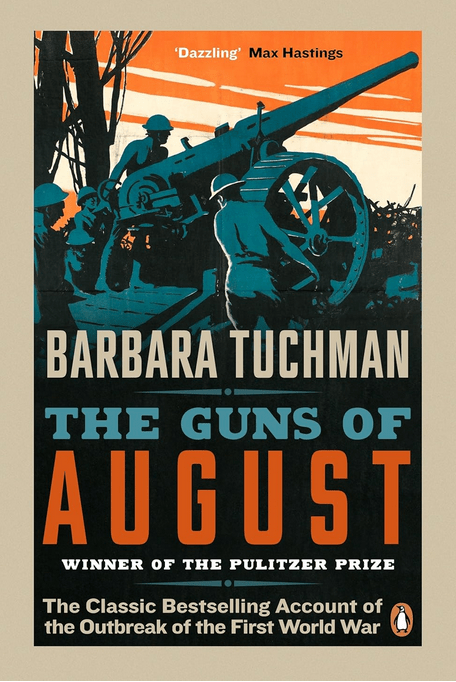
Barbara Tuchman’sThe Guns of August was published in 1962. I was then 15 years old, and any reading I did was probably set texts for the looming ’O’ Level examinations, so I hope I can be forgiven for not reading her account of the events of 1914 earlier than 1973, when I was gifted a copy by a fellow teacher in Melbourne. Then, I read it at every opportunity, including the tram journeys to and from work along St Kilda Road. Her narrative drive, grasp of detail, and her ability to bring to life the petty and petulant relationships between senior military commanders and the sheer starving, parched and blood – shod lives of the poor bloody infantry, gripped me then, and I was determined to re-read it from the view of a widely-read and cynical near-octogenarian.
First, some publishing context. Between the wars there were many personal memoirs of the Great War, some of which were well written and historically accurate, but others less so. In what we now call the Cold War period, writers began to revisit the various hells of The Great War. Below is a very limited chronology of those 1960s publications. 1958 In Flanders Fields, Leon Wolff 1961 The Donkeys, Alan Clark 1961 Covenant With Death, John Harris* 1962 The Guns of August, Barbara Tuchman 1963 Haig, the Educated Soldier, John Terraine 1964 The Somme, Anthony Farrar Hockley *This is a novel, albeit a very good one, based on the experiences of a Pals’ Battalion on !st July 1916. Barbara Tuchman (nee Wurtheim) 1912 – 1989, won the Pulitzer Prize twice, once for this book and also for her account of a rather obscure (for Britons) episode in American history, the story of General Joseph Stilwell and his deeds in the Far East during WW2. One oddity is that in Tuchman’s account of the events leading up to the outbreak of WW1, and the chaotic eight weeks that followed, there is apparently little to interest her American readership, apart from the occasional reference to President Wilson, whose fervent desire for neutrality was never tested during this time. It is, admittedly, just one indicator, but when I logged in to Abebooks (other sellers are available) to check for second-hand copies, most of those on offer were in America. Incidentally, a mint first edition would set you back £ 918.72 plus £ 40.88 shipping. Even within the sometimes fantastical pricing world of second hand book dealers, one has to confess that, as good a book as it is, it is not that good. Sadly, in my recently acquired version of the book, the maps were poor, but Tuchman’s vivid narrative and her awareness of the geography were sufficient to let me see the ‘lie of the land’. Her account is not comprehensive. The Russian victories over Austria Hungary in Galicia are only mentioned in passing but, taking the long view, they were to have no lasting impact on the war. For a description of how the conflict flared up in other parts of the world, I must send you in the direction of Ring of Fire, by Alex Churchill and Nicolai Eberholst (link to my review here). Tuchman focuses on three main battle zones, the clash between Russia and Germany in East Prussia, the fighting on France’s eastern border with Germany in Alsace Lorraine and, crucially, the Schlieffen Plan, involving Germany’s thrust through Belgium and down into northern France. As much as Tuchman shows an astonishing grasp of geography, strategy and tactics, at the core of the book is her vivid portrayal of the key political and military figures who strutted their brief hour on this most bloody of stages. Strutting around on the edge of the German war effort is, of course, the Kaiser, but Tuchman wastes little time on this vainglorious man, neither does she use up much of her word count on Tsar Nicholas who was, despite his grandeur, only remotely connected to the events at the Front. Bestriding the narrative like Shakespeare’s Colossus is Joseph Joffre, the French commander in chief. His main quality was his stoic imperturbability. His world was based around three meals a day, a deceptively placid and ruminative character, and what modern writers might call ‘the long view’.
On the German side, Von Moltke was, nominally the puppet master, but under his command were such men as the mercurial Von Kluck, in charge of Schlieffen’s dictum that ‘the last man on the right should have The Channel at his back.’ On the Russian front, despite the enormous manpower superiority of the Tsar’s army, chaotic and disorganised supply lines resulted in the catastrophic defeat at Tannenburg, after which the Russian general, Samsonov, shot himself in a nearby forest.
So how does Tuchman portray British involvement in these tumultuous and violent weeks? Dispassionately, I would say. At the centre is Sir John French, one of the few British WW1 commanders not as yet successfully ‘rehabilitated’ by modern historians. She gives us a nervous and fractious little man, on his right hand the fragile Sir Archibald Murray, while on his left the eternal schemer, the suave Francophile Sir Henry Wilson. All British Great War buffs have been brought up on the story of Mons, and the murderous rifle fire of the BEF’s Lee Enfield rifles. The subsequent retreat is no less factual, nor is Horace Smith Dorrien’s calculated rearguard action at Le Cateau ( in direct contravention of French’s directive) In the end, French – belatedly and with reluctance – committed the BEF on the Marne. It would be comforting to think that French’s custodianship of the BEF was a presage of the 300,000 men who lived to fight another day 26 years later at Dunkirk, but French then went on to preside over Ist Ypres, 2nd Ypres, Neuve Chapelle, Aubers Ridge and Loos, by which time most of the old BEF were just names on grave markers. Sir John’s own account of the events, 1914 (published in 1919) differs hugely from Tuchman’s account. French’s book (and I have read the relevant chapters) does, as one might expect from a man who was a brilliant cavalry leader in earlier war, exaggerated the role played the mounted troops. In his own lifetime, French’s book was vigorously criticised by none other than Sir John Fortescue, the official historian of the British Army. It is easy to criticise French, as he was ill-equipped for his role, but unlike General McLellan and his massive Army of The Potomac in the early stages of the American Civil War, he did not overestimate the strength of the enemy. The BEF’s six infantry divisions were dwarfed by the strength of both the Germans and the French.
Tuchman has a special place in her narrative for the military governor of Paris, Joseph Galieni. Wisely, she plays down the frequently exaggerated role played by the Paris taxis in the prelude to The Battle of The Marne, but she is unstinting in her praise for Galieni’s strategic awareness.
The social trope that involves the Germans employing impeccable strategy to secure sun beds in Mediterranean hotels, or their ability to devise cunning formations in football midfields must have had its birth somewhere, but it certainly wasn’t in the high summer of 1914. Yes, their precise railway timetables worked well up to a point, but became useless when it was realised that German engines and rolling stock wouldn’t work in Belgium or France because of different gauges. The relentless planned advance of Von Kluck’s divisions was all very well on paper, but when the field kitchens could not keep pace with the leading infantry units, and when men marched in wrecked boots filled with blood, the reality was very different. Tuchman paints a vivid picture of Germany’s armies, hundreds of miles from home, bloodshod and exhausted, sleepless and half – starved, facing a powerful French force and a largely intact BEF in what came to be known as the First Battle of The Marne.
She leaves us after the events of early September 1914, but the First Battle of The Aisne and The Race To The Sea are both well covered elsewhere. Her book remains a masterpiece of narrative history.To conclude, Barbara Tuchman makes us flies on the wall in cabinet meeting rooms across Europe, and hidden observers within General Staff offices of the armies of Germany, Britain, France and Russia. The edition pictured below was published in 2014.
I recently reviewedAn Accidental Death, the first of the Peter Grainger novels to be republished by Hutchinson Heinemann. This is a longer and more complex book and the central character, Detective Sergeant David ‘DC’ Smith has now left Norfolk Constabulary, and has been working for Diver and Diver Associates, a firm of private investigators in the Norfolk town of Kings Lake.
The book begins with Kings Lake copper DCI Cara Freeman being asked to handle a re-investigation into the death of Lord Frederick Thorpe, a young peer who drowned in the swimming pool of wealthy Norfolk businessman eighteen months earlier. The investigation into his death had been carried out by another team and, to put it plainly, it has now proved to have been error strewn. Lord Thorpe’s sister, unhappy with how things had been handled, hired Diver and Diver to investigate, and what they found now threatens to become a very public scandal. Freeman mustnow discover the truth, but with Thorpe long since cremated, will she find conspiracy or cock-up?
Crime writing, from my observations, isn’t like Lego or Meccano (younger readers will have to Google that) in that it is not just a matter of putting the bits together to make the final model.Writers have a series of structural options to involve the reader. Some I hate with a vengeance, such as the split time narrative which uses chapter headings like ‘Two years earlier’ or ‘Six weeks later’. Then there is the ominous prologue, where something apparently unrelated to the main narrative occurs, leaving us wondering how it will resolve.
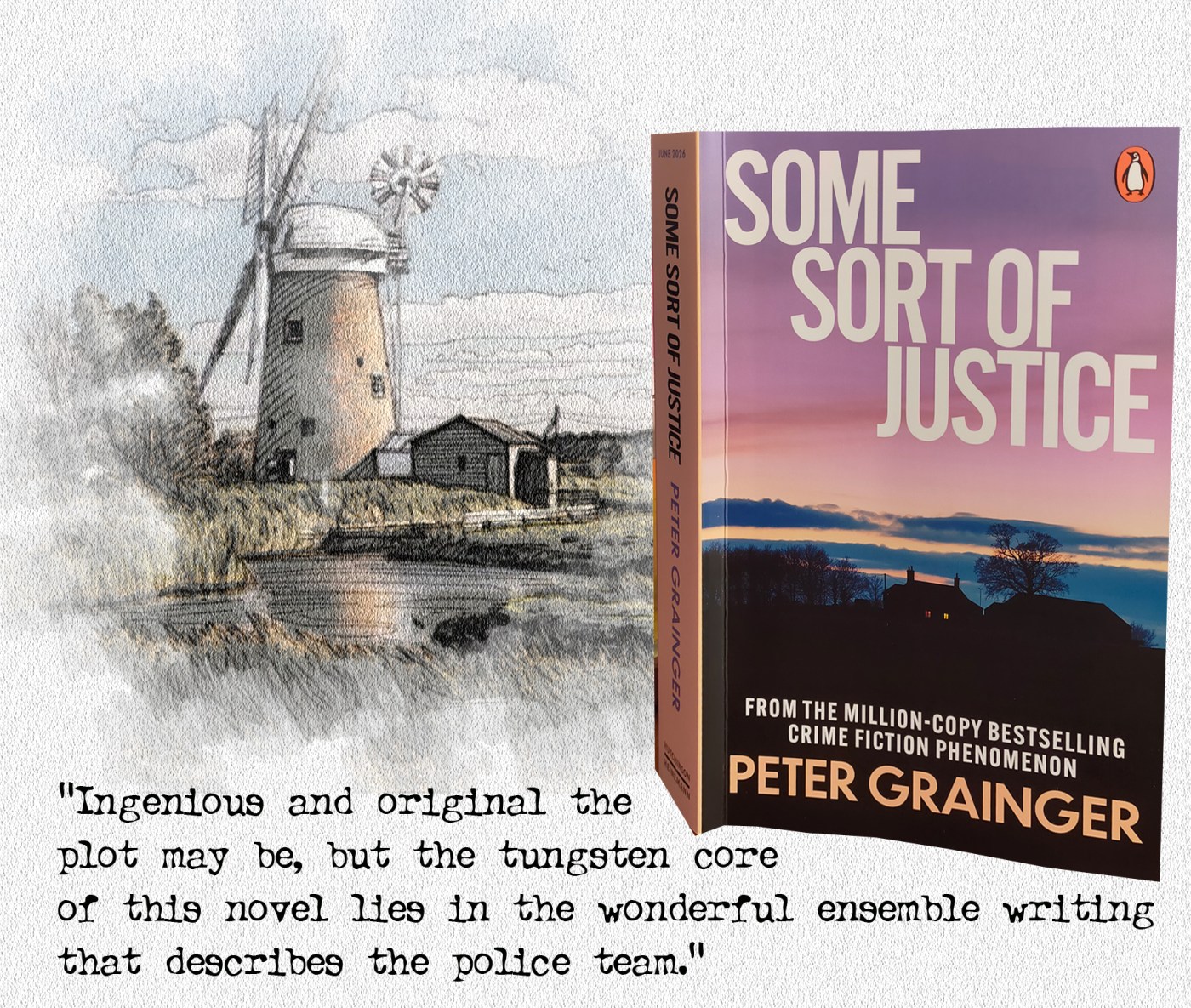
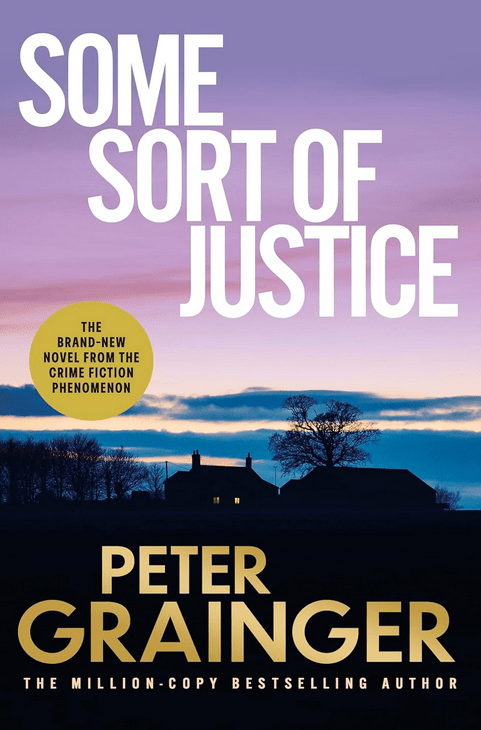
Grainger uses a variant of that here. A woman is nursing her dying father, Charles McAllister, a retired financial advisor. He dies, peacefully. She organises his funeral, and subsequently learns that she has inherited a large sum of money. How this parallel line will converge with the investigation into the death of Frederick Thorpe is, 120 pages in, anyone’s guess. As the case unfolds, it appears that what DDA discovered was a plan by Freddie and some of his politically active friends to put pressure on an MP over his support for military equipment sales to Israel. After Freddie’s demise these youngsters had been approached by a man and a woman and warned that they were involved in a very serious business, and that they had upset some dangerous people. Mossad agents operating in bucolic Norfolk? That seems to be the only explanation, implausible though it may sound. Peter Grainger drip-feeds us clues about who Ms McAllister is, and how she is relevant to the Thorpe affair. She works for the intelligence service, but has been on extended leave. She meets up with a colleague, Ricketts: “There’s trouble with a previous job. A bit of smoke, as if it’s still burning somewhere underground. I don’t know all the details.” When Ricketts looked at her directly, she said, “Which job?” And he said, “Norfolk.” Ingenious and original the plot may be, but the tungsten core of this novel lies in the wonderful ensemble writing that describes the police team. DCI Cara Freeman, at its head may be small in stature but she has a steel will, and suffers fools not at all. At her side is the imperturbable and ruthlessly methodical DI Tom Greene, while DS Chris Waters may be the relatively new ‘boy’ but, he served a long and fruitful apprenticeship with former Sergeant David Smith who, of course, is observing the proceedings with the detachment of an outsider – with the wisdom and savvy of someone with inside knowledge. Some Sort of Justice will be published by Hutchinson Heinemann on 4th June.











 fullybooked2017