




I do love me a good,sweaty Southern Noir, preferably down in Louisiana, with ‘gators thrashing about in the bayou, a storm blowing in from the Gulf, insects the size of golf balls on Kamikaze missions against the fly screens, and folk pushed to the limits of their tolerance by the relentless humidity. Throw in a dash of Cajun music and Acadiana French cursing, and I am set for the night. Tami Hoag’s latest novel ticks all the required boxes.

Hoag, who hails from the relatively temperate zone of Iowa, has created a brilliant husband and wife police partnership in Nick Fourcade and Annie Broussard. The pair first emerged on the printed page as long ago as 1997 in A Thin Dark Line but, of course, crime fiction time isn’t the same as real time, and the two cops are still relatively young and beautiful in Hoag’s latest thriller, The Boy. They are called to a beaten up shack in the sticks beyond the somnolent settlement of Bayou Breaux, and they find a seven year-old boy hacked to death with a knife, while his mother has apparently fled the scene, barefoot and bearing wounds from the same blade that brutalised her son.
Genevieve Gauthier has a past, however. Before settling in Bayou Breaux with son KJ, she has been no stranger to law enforcement. Blessed – or cursed – with an ethereal and vulnerable beauty designed to act as a magnet to predatory men, she has served jail time for suffocating her first-born child. Fourcade and Broussard are faced with a dazzling and perplexing star burst of inconsistencies as they try to find who killed KJ. Why was Genevieve allowed to escape with relatively minor injuries? Where is KJ’s teenage baby-sitter, Nora? Is her disappearance connected to KJ’s death?
Fourcade and Broussard have a bitter enemy in the shape of Kelvin Dutrow, their boss. As Sheriff, he likes to dress in tactical combat gear, his belt heavy with weapons he has no idea how to use. He likes nothing better than a press conference where he can strike a pose, talk tough and play to the camera. His animosity to the pair reaches fever pitch when they discover that not only does he have a sinister past, but it comes with some highly questionable connections to the bereaved young woman nursing her injuries in the local hospital.
The identity of KJ’s killer is cleverly concealed until the final pages, and there is a blood-soaked denouement which will satisfy even the most hardened Noir fan. The Boy is lurid, yes, and certainly melodramatic, but it is a gripping read which had me canceling other activities right left and centre so that I could get to the end.
The Boy is published by Trapeze and is out as a Kindle on 31stDecember 2018, and will be available in other formats in 2019.
https://www.amazon.co.uk/Boy-Broussard-Fourcade-Tami-Hoag-ebook/dp/B01MCZ5Y10/ref=sr_1_1?ie=UTF8&qid=1543917727&sr=8-1&keywords=The+Boy+Tami+Hoag
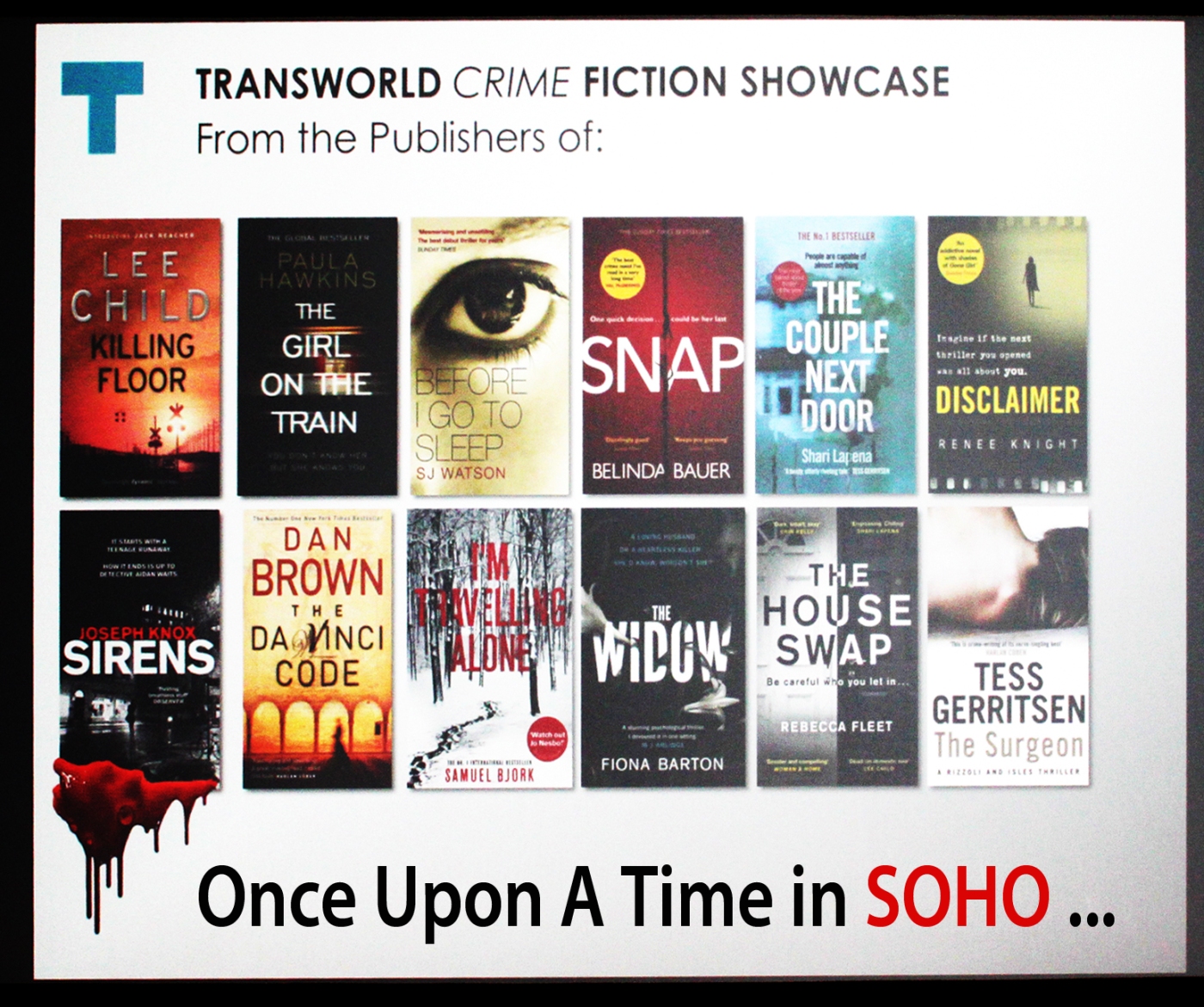

The Great and The Good (plus yours truly) gathered at the decidedly swish Soho Hotel in Richmond Mews on the evening of 29th November for what has become an annual – and eagerly anticipated – event, the Transworld crime fiction showcase. Transworld have an enviable record of not only snaring established writers, but spotting talented authors and giving them a stage on which to make their debut.

After a few glassesof the cup that cheers and inebriates we went down to one of the hotel’s film screening rooms to meet the three writers who were to be centre stage. In the chair was none other than Patricia Nicol – Sunday Times journalist, editor and author. The literary debutante was Lesley Kara, and she talked about how her novel The Rumour had been influenced by real life cases of children murdering other children.The spectres of Mary Bell, Jon Venables and Robert Thompson obviously cast a long shadow over her book, and she spoke with great conviction about the moral dilemma faced by society when these killers reach adulthood and strive for rehabilitation, with or without the anonymity provided by the state. The Rumour will be published on 27thDecember 2018.

Fiona Barton already has two highly regarded novels – The Widow (2016) and The Child (2017) – to her name and The Suspect will be on the shelves from 24th January 2019. It has become something of a rite of passage for aspirational youngsters to heave their back-packs onto their shoulders and head off to the Far East or Australasia in search of who-knows-what, leaving their parents anxiously waiting for a text, a Skype message or – heaven forfend – a postcard saying that all is well and they are having a great time. Fiona takes us into the nightmare world of parents when two girls go missing on a trip to Thailand, and the fate of the eighteen year-olds becomes a lurid and speculative media story, She also explained that her narrative style, where the story is told from several contrasting viewpoints, stems from her work as a journalist where interviewing a range of people can reveal differing versions of reality.

The graphics for The Secretary highlight the first six letters of the second word, and Renée Knight has based her second novel on the uniquely ambiguous position of the women –and it is usually women – who are personal secretaries to powerful corporate individuals. They are the silent shadows in the rooms where decisions are made that will influence the lives of thousands, and they witness the rage and the frustrations of the powerful. What, Renée Knight asks, happens when one such person, silent and discreet for years, is pushed to the point where what she knows and what she has seen hands her a potentially deadly weapon? The Secretary will be available from 21st February 2019.



Whatever your view on lifestyle coaches, they certainly have a market, and perhaps nowhere more so than in the ever-so-socially-aware state of California. Brook Connor may not have cornered that market, but she has a best-selling ‘how to come out on top’ guide to her name, as well as wealthy clients and a regular spot on TV. She may not have absolutely everything – after all, her husband is a failed movie actor-cum-tennis coach with a roving eye, but her bank balance is healthy, her home is valued in the millions, and she has an adorable five year-old daughter.
Correction. She did have an adorable five year-old daughter. She returns home after work one day to find both daughter Paige,and nanny Rosa gone, and a chilling note explaining that they have been taken. A severed finger inside a prettily decorated gift box persuades Brook that these people are not fooling around.
As ever in kidnap cases both real and fictional, the bad guys caution against any police involvement, and so Brook and husband Logan get the ransom money together and set off to make the exchange. Of course, the exchange doesn’t go to plan, and Brook is left concussed at the bottom of a gully out in the sticks, the money has gone, and there is the inconvenient matter of a body in the trunk of her SUV, lifeless mainly because of one of her own kitchen knives sticking out of his ribs.
Brook goes on the run, confounded by her initial decision not to involve the police, and also the discovery of the body in the trunk of her car. There is nothing the media loves more than a celebrity criminal, and soon her face is plastered over every news channel. Armed only with her own automatic sidearm and a blazing desire to find her daughter, she leads the law enforcement agencies a merry dance until her race against time comes to an abrupt and bloody end in the personal gym of a notorious ‘businessman’ with links to the infamous cartels from south of the border, down Mexico way.
Kernick very cleverly uses a split time narrative, with one showing Brook in custody facing multiple murder raps, and another detailing the events which have led to her arrest. He is not done with us, though; a seismic plot shift leads to a dramatic conclusion which even Nostradamus would not have seen coming.
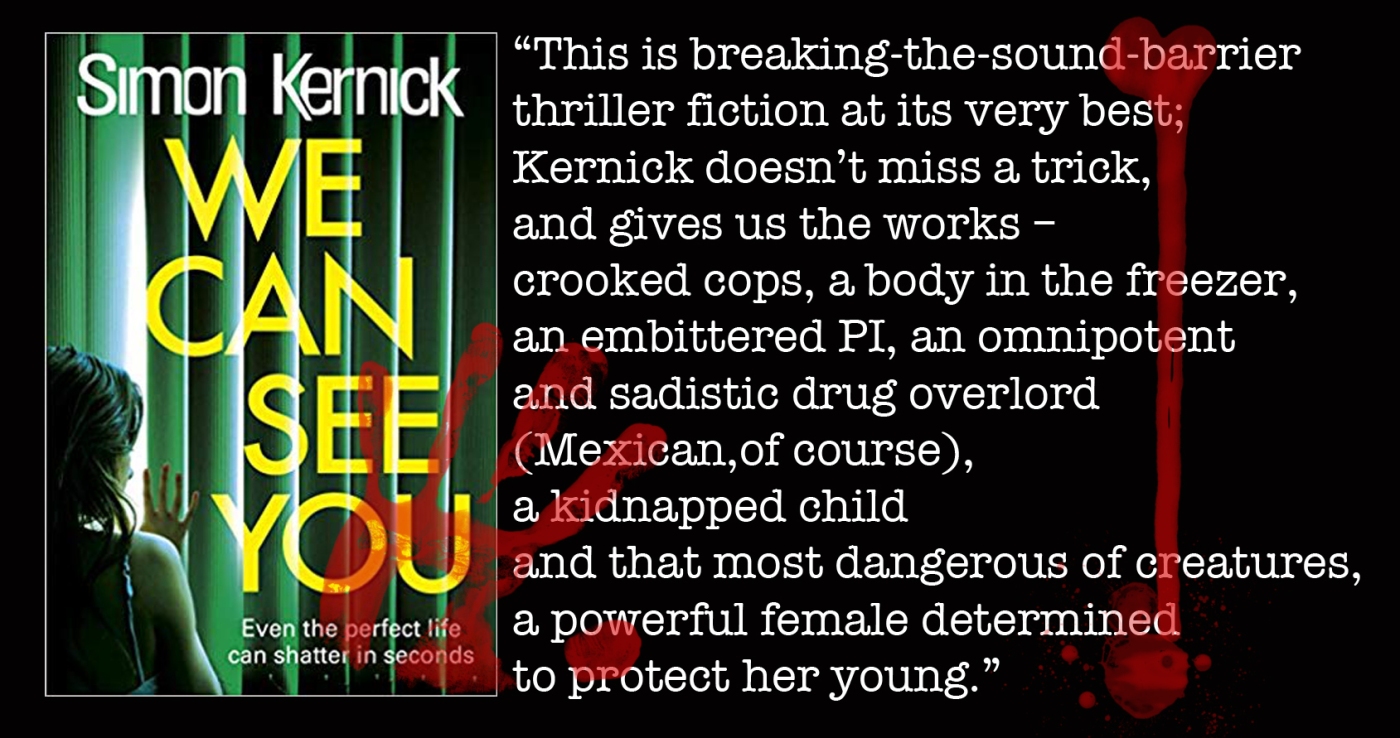
This is breaking-the-sound-barrier thriller fiction at its very best; Kernick doesn’t miss a trick, and gives us the works – crooked cops, a body in the freezer, an embittered PI, an omnipotent and sadistic drug overlord (Mexican,of course), a kidnapped child and that most dangerous of creatures, a powerful female determined to protect her young. We Can See You is published by Century and is out today, 29thNovember.

I can almost hear the sneers now:
“Call yourself a crime fiction reviewer?”
“Pull your head out of the sand, mate”
“What next? You have heard of Sherlock Holmes, I take it..”
Actually, no.Crime fiction reviewers tend to be a fairly charitable lot, especially as most of us are not in it for the money, but for the love of reading (and a few ARCs, naturally) But I do have to confess a sense of embarrassment at reading a brilliant book and then realising that it is only the latest in a well established series of which I had been blissfully unaware.
Apology done and, I hope, dusted. Armand Gamache is a senior policeman with the Sûreté in Quebec the francophile province in Canada. He is still under suspension following a controversial drugs case which resulted in one of his colleagues being badly shot up, and a potentially fatal consignment of the opioid fentanyl going missing.
Gamache is informed by a notary that he has been named as an executor of a will. He has, however, never met or even heard of the deceased woman. Intrigued, he goes to meet the notary and his fellow executors at a remote farmhouse. Arriving, in the teeth of a violent blizzard, he is bemused to discover that a friend from his home village of Three Pines, has received the same summons.
The mystery deepens when Gamache learns that the dead woman was a domestic cleaner, and she has bequeathed an estate apparently worth millions of dollars. She used to joke that she was of noble blood, but was her self-mockery founded in fact?
A murder at ‘Baroness’ Baumartner’s ramshackle farmhouse transforms the affair from peculiar to deadly, and Gamache is sucked into an investigation which can only end badly. In addition, he has a two huge problems, massive elephants in the confined space of his professional room. Firstly, Amelia Choqet, an unconventional young police woman who has been mentored by Gamache, has been kicked out for drug offences, and has now apparently reverted to her former lifestyle of street whore and drug abuser. Secondly he is tormented by the fear that if the missing batch of opioids gets onto the streets, there will carnage.
The murder of Anthony Baumgartner takes Gamache and his team into the murky world of investment finance and an environment where millions of dollars are flicked this way and that by financial ‘experts’.
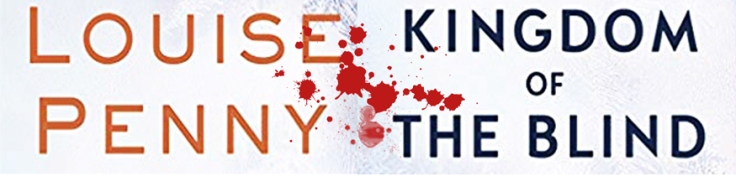
Allegedly, native Canadians have fifty words for snow, and LouisePenny certainly makes us shiver, stamp our frozen feet, and clap our gloved hands together. The weather becomes a baleful and powerful character in The Kingdom Of The Blind, and every step Gamache and his team take is in defiance of snowdrifts, abandoned vehicles and cold of such intensity that exposed skin is first brutalised and then destroyed.

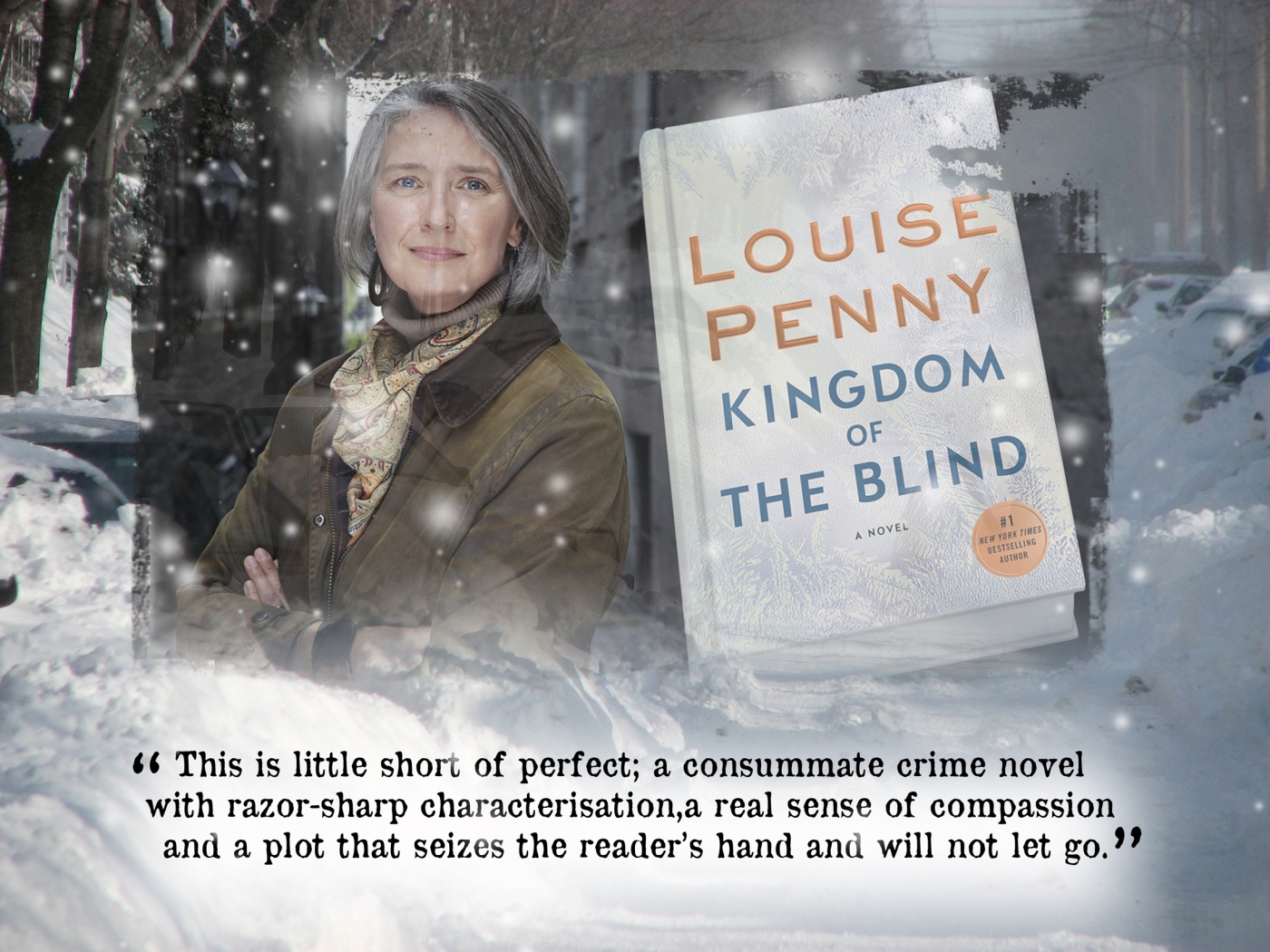
In addition to describing the search for a murderer, Louise Penny cleverly sets off two other plot-lines for us to chase, and she takes great delight in resolving both, but neither in the way we have been led to expect. Kingdom Of The Blind is little short of perfect; a consummate crime novel with razor-sharp characterisation, a real sense of compassion, convincing dialogue and a plot that seizes the reader’s hand and will not let go. Published by Sphere, the novel (the 14th in the series) is out on 27th November.


WE CAN SEE YOU by Simon Kernick
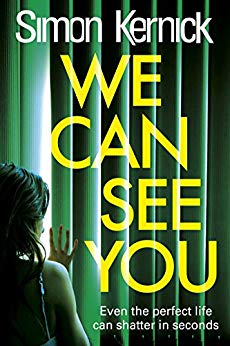
Kernick is one of those writers who needs no introduction. If you need one, then I can only ask, “where have you been for the last seventeen years of so?”
He ventures into Taken territory with his latest novel, but instead of the main character being a vengeful ex-CIA man we have therapist Brook Connor, who returns to her San Francisco home to find that her daughter had been kidnapped.
What follows is an agonising and nail-biting journey through every parent’s darkest dream, where Connor has to put her own life – and that of her daughter – on the line.
Published by Century, We Can See You is out in hardback and Kindle at the end of November, and will be available in paperback in May 2019.
THE SOCIETY GAME by H Lanfermeijer
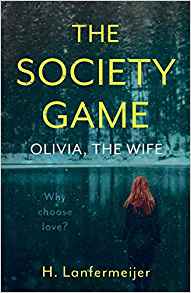
Subtitled Olivia the Wife, this psychological thriller is narrated by Olivia Hopkins, a woman who makes a bad choice in marriage, but puts herself in harm’s way when she seeks an exit strategy.
Her choices force her to examine every aspect of her life – past, present and future – and also the way in which women can make fateful decisions based on distorted perceptions, fed by the manipulative and unscrupulous mass media. This is the first in what is intended to be a seven part series
Heather Lanfermeijer is on Twitter @HeatherLanferm1 and The Society Game is published by Matador, and is out now as a paperback and Kindle. The book also has a dedicated web page which is here.
THE BODY IN THE BOAT by A J Mackenzie
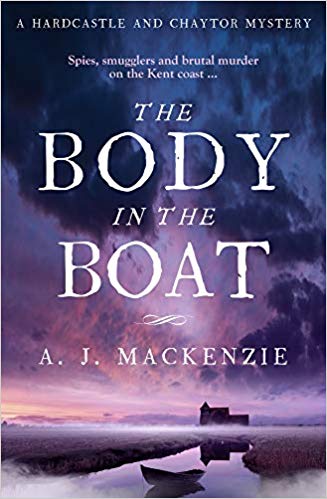 A J Mackenzie is the pseudonym of Marilyn Livingstone and Morgen Witzel, an Anglo-Canadian husband-and-wife team of writers and historians.
Organised crime in Georgian England? Well, yes, but don’t expect Albanian gangs, Yardies or Mafioso. Instead, the villains are very much home grown, and they earn a fine living by smuggling.
These smugglers are not the jolly Yo-Ho-Ho characters of children’s fiction, nor are they the gentlemen typified in Kipling’s wonderful poem:
“Five and twenty ponies,
Trotting through the dark –
Brandy for the Parson, ‘Baccy for the Clerk.
Laces for a lady; letters for a spy,
Watch the wall my darling while the Gentlemen ride by.”
Set on the English Channel coast of Kent, the novel introduces the unlikely but engaging partnership of Reverend Hardcastle and Mrs Choate, as they tangle with coffins in the dark, misty marshes, and desperate criminals.
The Body In The Boat, published by Bonnier Zaffre, is available now as a Kindle or in paperback.

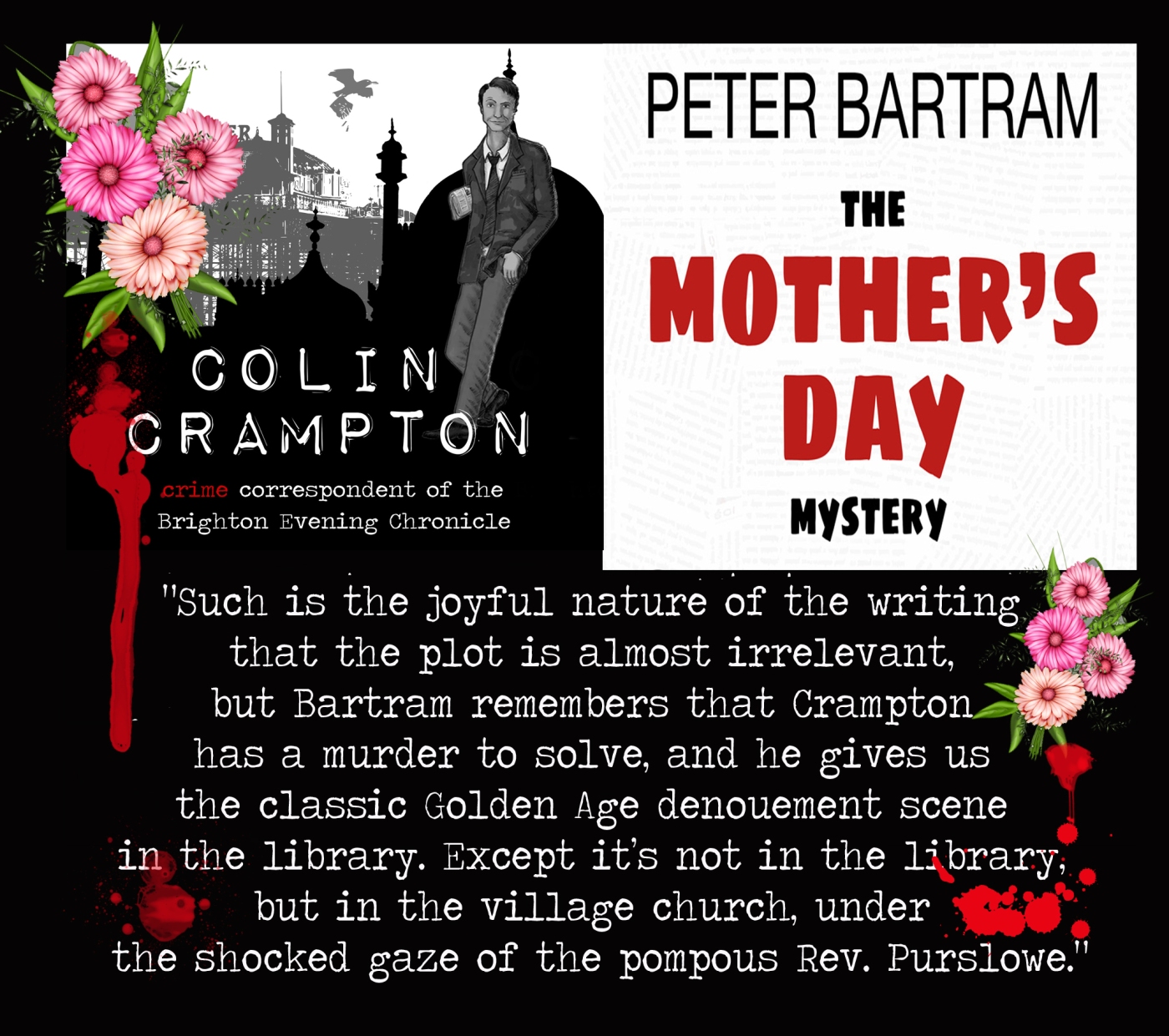
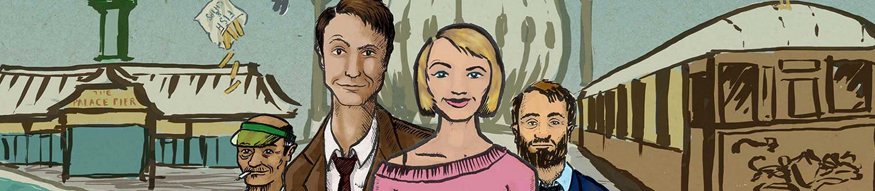
Robin Williams, Paul Krassner, Pete Townshend, Grace Slick, Timothy Leary, and many others have been credited with the saying, “If you can remember the 1960s, you weren’t really there.” Fortunately for us, Peter Bartram can and was. His lifetime of working as a journalist has produced an alter ego, an enterprising young journalist called Colin Crampton who works for The Brighton Evening Chronicle. He has a gorgeous Australian girlfriend called Shirley, a pantomime landlady by the name of Mrs Gribble, a chain-smoking news editor called Frank Figgis, an amazing habit of getting involved in murder mysteries – and he drives an MGB.
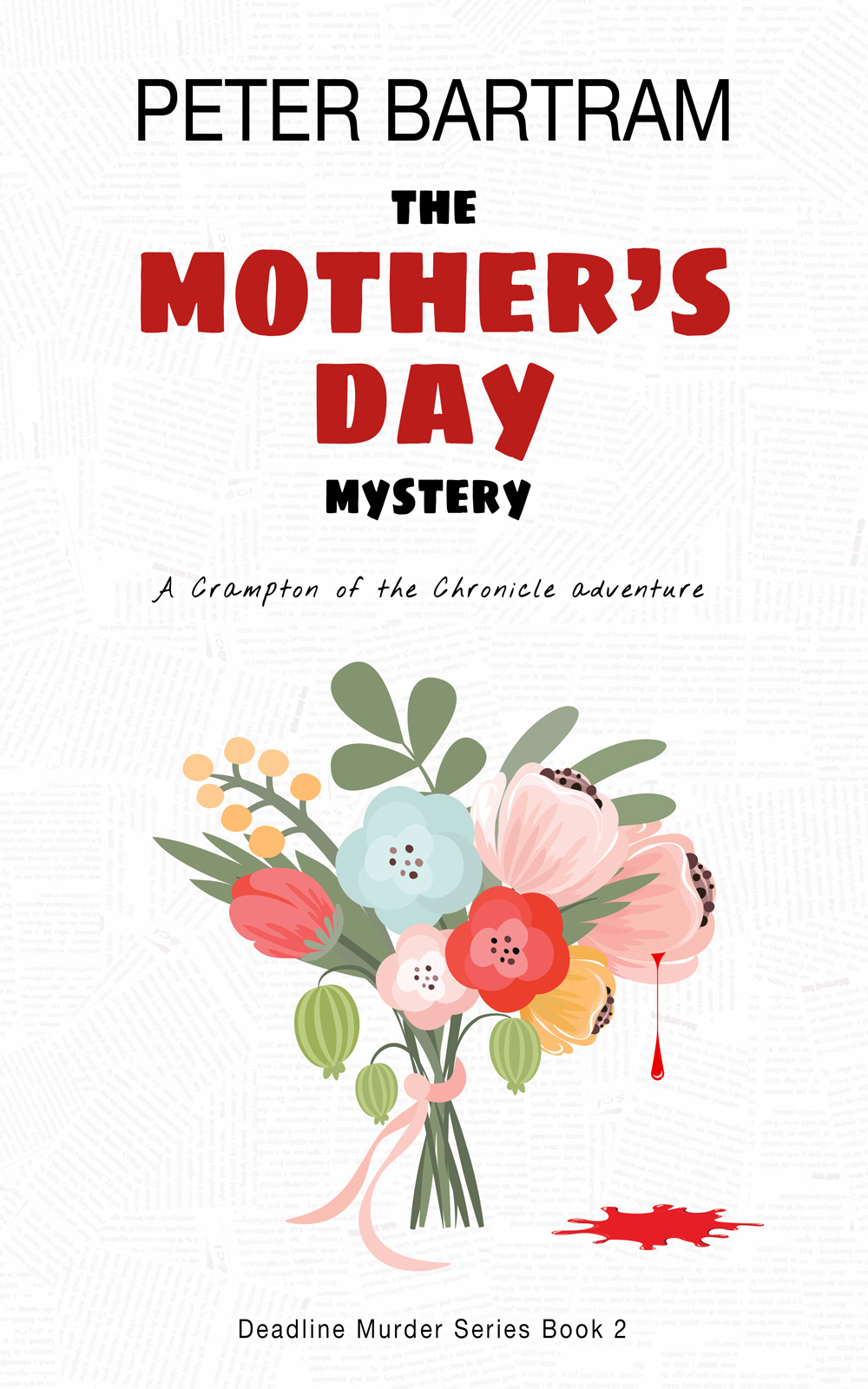 In The Mother’s Day Mystery, Crampton discovers the body of a schoolboy who has evidently been knocked off his bike and fatally injured. What on earth was Spencer Hooke doing away from his dormitory in Steyning Grammar School at the dead of night, cycling along a lonely and windswept clifftop road? In pursuing this conundrum, Crampton whisks us into a world of stage vicars, seedy pub landlords, archetypal leather-elbowed schoolmasters and impecunious toffs. There are jokes a-plenty, and Bartram indulges himself – and those of us who are, similarly, in the autumn of our years – with many a knowing cultural reference that might puzzle younger readers. He takes us into a wonderful sweet shop, the kind which can nowadays only be found in museum recreations:
“I stepped into a small room with a wooden counter topped with a glass-fronted case. To the side of the case was a set of balance scales with its weight tokens. Behind the couter were shelves loaded with jars of sweets. There were chocolate drops and sherbert lemons and liquorice allsorts. There were humbugs and fruit gums. There was barley sugar which glowed yellow like it was radioactive.
The air was loaded with a sickly scent like it had been sprinkled with sugar dust. If you breathed in deeply, you felt you were dancing.”
There is an unashamed sense of the risqué seaside postcard about much of the humour:
‘She was pouring coffee into a mug.
I ambled over and said, “Mine’s white but strong.”
Susan said: “So I’d heard. But how about your coffee, honeybunch?”
She guffawed at her joke and made her chins wobble.’
The wisecracks are not all end-of-the-pier stuff, however. When Crampton meets the owner of the gorgeous sweet shop, he is almost Chandleresque:
“She had a figure that would get Brigitte Bardot demanding a recount …. little laugh lines crinkled around her mouth as her full lips parted in the kind of welcome smile I felt I could pay into the bank.”
 Anyone who is a student of English humour will soon see that Bartram is part of a long and distinguished tradition of comic writers who find meat and drink in the absurdities of English life and social structures. In the world of crime fiction, however, comedy does not always sit well with murder and bloodshed. The great and sadly under-appreciated Colin Watson did the job beautifully in his Flaxborough novels, while modern writers such as MJ Trow and Christopher Fowler perform the balancing act with similar verve. I am happy to put Peter Bartram (right) up there on the podium with those past and present masters. Incidentally, and quite appropriately for a Sussex man, Bartram knows and loves his Kipling, and manages to quote the great man on a number of occasions
Such is the joyful nature of the writing that the plot is almost irrelevant, but Bartram remembers that Crampton has a murder to solve, and he gives us the classic Golden Age denouement scene in the library. Except it’s not in the library, but in the village church, under the shocked gaze of the pompous Rev. Purslowe. Before the riddle of Spencer Hooke’s death is solved (with an “I’m Spartacus” moment) we get the best joke in the book.
“Georgina had caused a stir when she’d walked into the church. She was wearing a low-cut blouse and a mini-skirt which ended a couple of inches below the Book of Revelations.”
The Mother’s Day Mystery is published by The Bartram Partnership, and is out now. Watch the Fully Booked Twitter feed for a chance to win this novel.
Follow the links to check out other features and novels by Peter Bartram.
The News Editor, The Woodbines, and a Eureka Moment
Switched On: The Story of 1960s TV Game Shows
I Do Like To Be Beside The Seaside …
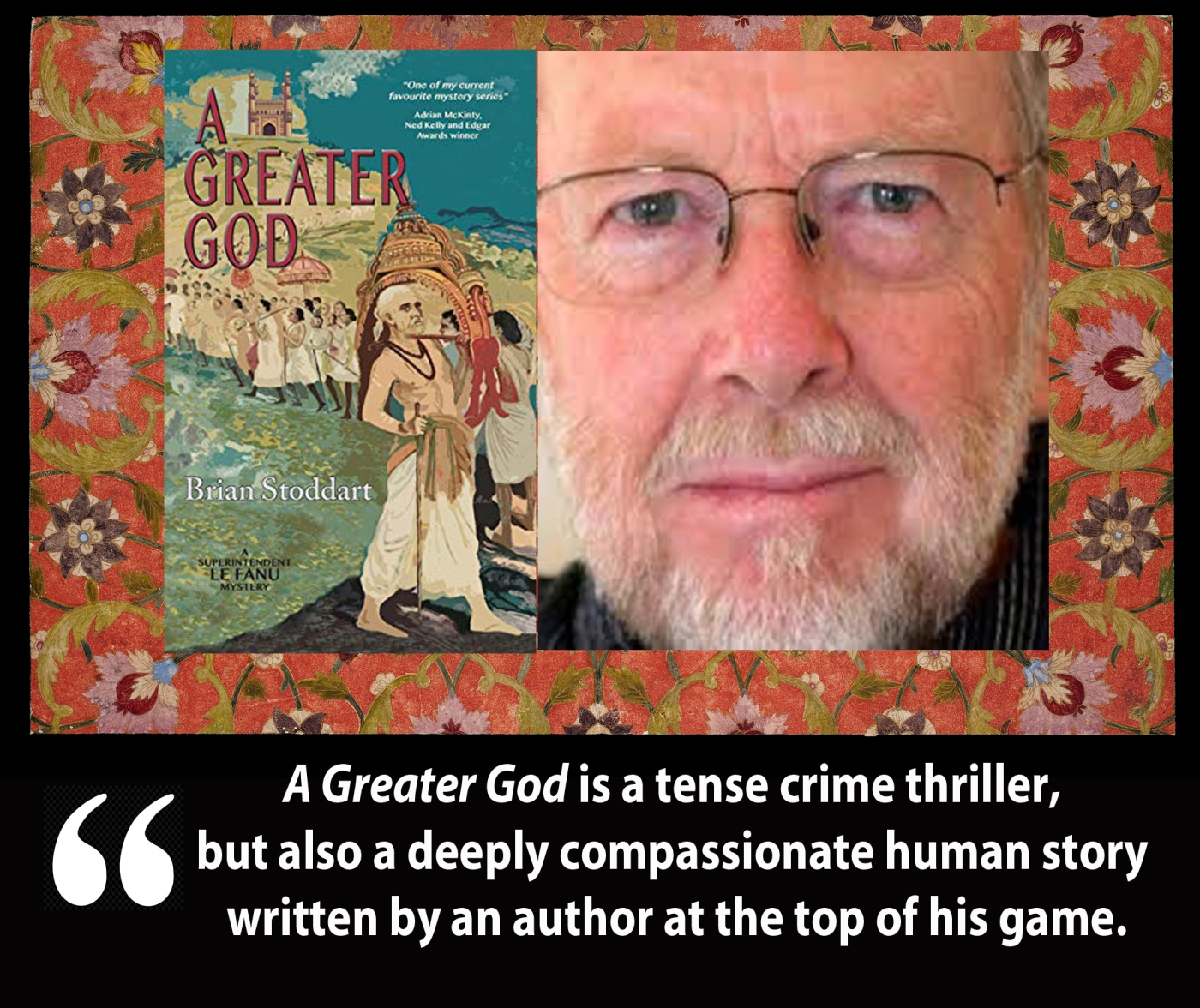
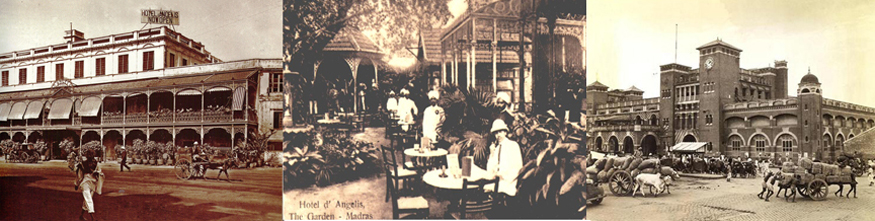
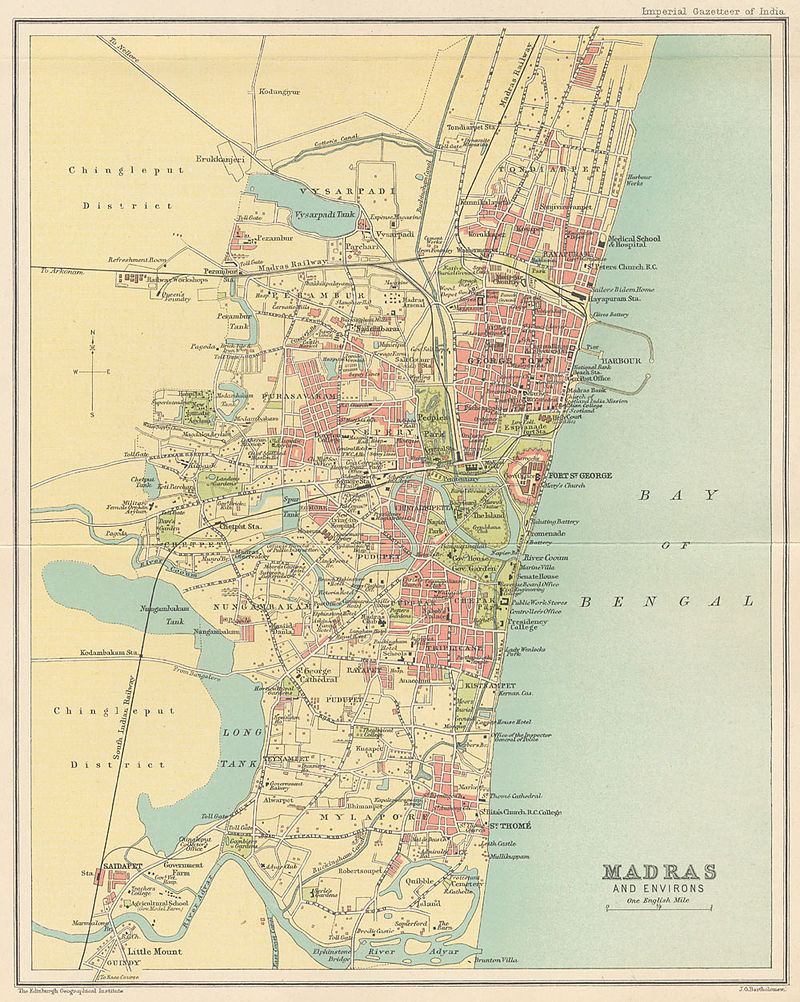
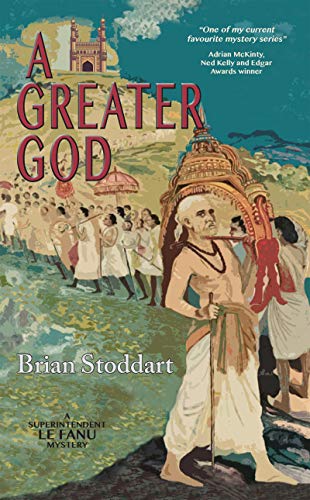 Superintendent Christian Le Fanu makes a welcome return in A Greater God, the fourth in the excellent series of historical crime novels by Brian Stoddart. The previous novel, A Straits Settlement, saw Le Fanu playing away from home in Penang, but now he has returned to his adopted home of Madras. His colleagues Mohammad Habibullah and Jackson Caldicott are relieved to see him, because in his absence the Inspector General of Madras Police, the incompetent and choleric Arthur Jepson, has been creating havoc with his hardline racist approach to policing.
Habibullah and Caldicott normally have a harmonious and respectful relationship, but Le Fanu senses a change. Habibullah is becoming increasingly concerned about the worsening status of his fellow Muslims and this has created tension with Caldicott. This adds to Le Fanu’s sense of unease about the wisdom of his return to Madras. While in Penang, he has fallen in love with Jenlin Koh, a beautiful Chinese woman and has been offered a lucrative job in the Straits Settlements. As the behaviour of Jepson becomes more erratic another piece of bad news adds to Le Fanu’s problems: his former lover, Ro McPhedren, from whom he has parted relatively amicably, has been stricken with typhoid in Hyderabad and is not expected to survive.
For good or ill, events soon jolt Le Fanu out of his introspective mood. A Muslim community has been violently attacked, probably by Hindu extremists, and it looks as if Habibullah’s worst fears are being realised. When nationalist agitators converge on Madras for a planned assault, a disastrous intervention by Jepson leaves police officers dead. Le Fanu’s military experience, cool head and excellent leadership is needed to resolve the situation, albeit temporarily, but the prospect of serious bloodshed between Muslims and Hindus remains a frightening possibility unless wiser heads prevail.
Le Fanu is no Boys’ Own hero: he has a physical revulsion and genuine terror of bloodshed, and this makes his courage under fire even more remarkable. I can’t think of another writer, unless it is the inestimable Chris Nickson with his ‘hear-it, breathe-it, smell-it’ series of Leeds novels, who brings history to life with as much élan as Brian Stoddart. His 1920s India is announced not so much with a trumpet as a fanfare. Where he excels is not so much in the details of sensory perception (although they are strong) but in the portrayal of the infinitely complex social nuances, not only between the Indians and the British, but those between British people of different backgrounds, education and aspirations.

Stoddart knows India, just as we know that the cloud-capped towers, the gorgeous palaces, the solemn temples and the whole insubstantial pageant of British India did, eventually fade. But did they leave ‘not a wrack behind’? There were decent men like the fictional Le Fanu. There were men and women who, maybe through pragmatism, perhaps through enlightenment, realised that in the end a nation of people with minds every bit as quick and aspirations just as heartfelt as those of their colonial rulers, would emerge and cast off recent history like an old and threadbare coat.
The divisions between Britain and its former subjects in India are largely a thing of the past: sadly, what divides Hindu and Muslim within the pages of A Greater God is a more formidable beast and one that has yet to be slain. Add proud Sikhs into the mix, and there remains a conflict which, while it currently appears to be only embers of a former fire, there remains the fear that it can still burst into violent flames.
A Greater God is a tense crime thriller, but also a deeply compassionate human story written by an author at the top of his game. It is published by Selkirk International, and will be out on 30th November.
We also have a feature on the author, and clicking the blue link will take you to it.


 fullybooked2017