

Here’s a challenge for you. A challenge for writers, and for those who like to write about writing. Begin your novel like this. Time? The present day. Scene? A comfortable room in an Irish house. Characters? A man and woman watching television, and an unknown intruder. Action? The intruder hacks the man to death in front of his horrified wife. Placement in book? The opening pages. Now, write a compelling and hypnotic novel of 400 pages which follows this dramatic beginning, and keep your readers hooked until the last paragraph.
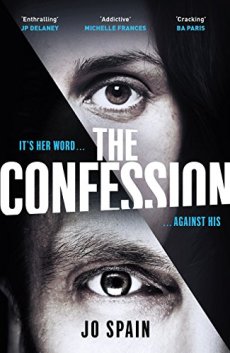 Jo Spain not only takes on the challenge, but she meets it head on and completes it with subsequent pages of The Confession which manage to be, as night follows day, bravura, intense, full of authentic and convincing dialogue, utterly mesmerising and, in places, literally breathtaking. A countryman of Spain’s began his most famous novel with “Stately, plump Buck Mulligan came from the stairhead, bearing a bowl of lather on which a mirror and a razor lay crossed.” She counters with:
“It’s the first spray of my husband’s blood hitting the television screen that will haunt me in the weeks to come – a perfect diagonal splash, each droplet descending like a vivid red tear.”
Now that is as fierce an opening paragraph as you will ever read. The speaker is Julie McNamara. The victim – of a perfectly timed swing with a golf club – is husband Harry, a financier who has recently fallen from grace as his empire took a huge hit in the 2008 financial crash. He is still formidably rich by most people’s standards, but his reputation as some kind of investment Midas has been destroyed. We hear the story of his rise and fall through Julie’s voice. She says, of the beginning of their love affair:
“Young, innocent, hopeful, in love. That was us at the beginning of our fairytale. But here’s the thing about fairytales. Sometimes they’re darker than you can ever imagine.”
Jo Spain continues to defy crime fiction convention by eschewing the standard police procedural manhunt. Instead, the killer of Harry McNamara turns himself in at the nearest police station in his blood-stained clothes and announces himself as John Paul Carney. At this point, Spain introduces us to a very distinctive member of An Garda Síochána, Detective Sergeant Alice Moody:
“Gallagher’s senior detective sergeant arrived at the top of the stairs, sweat patches already forming under her armpits from the three flights, her thin mousy brown hair gleaming from the perspiration emanating from her scalp.Every time that woman took the stairs she gave a convincing performance of somebody on the verge of a heart attack.”
So DS Moody is not cut out to be a TV producer’s idea of a marketable sharp, charismatic – and stunningly sexy – detective. But she is bright. Very, very bright, as we are to discover.
The Confession unfolds like a beautiful but deadly flower opening its petals, one by one. Our narrators are the widowed Julie, Alice Moody, and JP Carney himself. A phrase here and there, a paragraph or two, an apparent revelation, and we think we know why JP Carney has bludgeoned the living daylights out of Harry McNamara. But this is Jo Spain’s skill. A page at a time, she weaves her spell and points us in the direction of the truth. Except we come to a dead end. A literary rockfall. An emphatic no-entry sign.
 Of course, we get there in the end, and understand why JP Carney has exacted such an emphatic revenge on the handsome, charismatic and plausible Harry McNamara, but sometimes book reviews have to stop dead in their tracks, and say, “Trust me, this is a brilliant novel, but to tell you any more would be little short of criminal.” Yes, The Confession is a brilliant novel. Yes, I read it through in one sitting, deep into the early hours of a winter morning. Yes, I am a fan of Jo Spain (right). Yes, if you don’t get hold of your own copy of this, you will receive scant sympathy from me. The Confession is published by Quercus, and will be on sale as a Kindle from 11th January, and as a hardback from 25th January. Check online buying choices here.
For reviews of earlier Jo Spain novels, click on the titles below.
Sleeping Beauties
Beneath The Surface


 James Lee Burke (left) turned 81 in early December 2017. When I picture the face of his majestic but flawed hero, Dave Robicheaux, it is his creator’s face I see. The Robicheaux books have been filmed several times but the best one I have seen is In The Electric Mist (2009) starring Tommy Lee Jones, and Mr Jones is good a ringer for Mr Burke – and my vision of Robicheaux – as you will ever see.
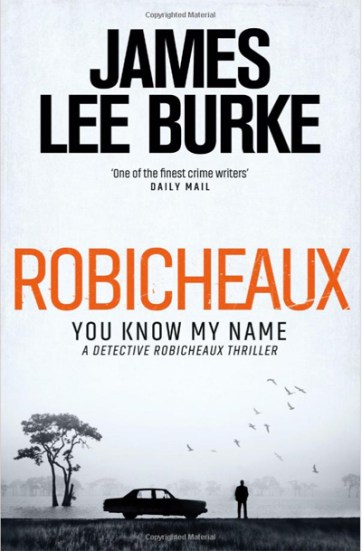 “That weekend, southern Louisiana was sweltering, thunder cracking as loud as cannons in the night sky; at sunrise, the storm drains clogged with dead beetles that had shells as hard as pecans. It was the kind of weather we associated with hurricanes and tidal surges and winds that ripped tin roofs off houses and bounced them across sugarcane fields like crushed beer cans; it was the kind of weather that gave the lie to the sleepy Southern culture whose normalcy we so fiercely nursed and protected from generation to generation.”


 By 22nd March 2018, there should be catkins on the willow and hazel, daffodils should be getting into their stride and, even if it’s a little early to be looking for summer migrants like swallows and warblers, nothing will be more welcome to lovers of good crime fiction than the return of William Lorimer in another – the fifteenth, unbelievably – police procedural set in Scotland. Since Alex Gray (left) saw Never Somewhere Else published in 2002, she has made Lorimer and his world one of the go-to destinations for anyone who loves a well-crafted crime novel, with a sympathetically portrayed central character.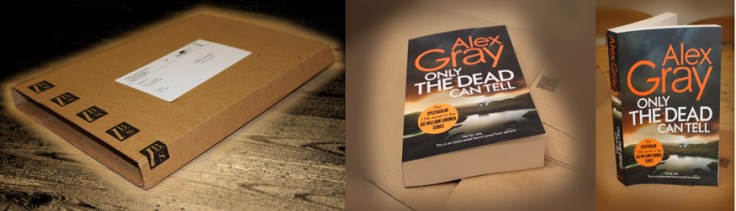
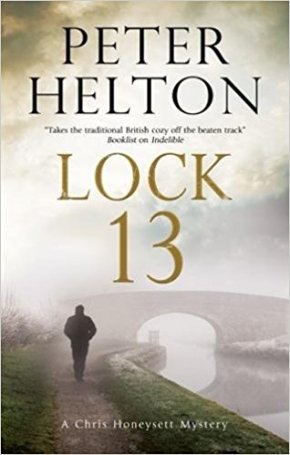 Lock 13 features Chris Honeysett, a private detective whose cases I had never read before, despite this being the sixth in what is clearly a popular series. The previous episodes are Headcase (2005), Slim Chance (2006) Rainstone Fall (2008) An Inch of Time (2012) Worthless Remains (2013) and Indelible (2014). Honeysett, like his creator Peter Helton (more on Helton’s website
  Sometimes a novel is so delightfully written that a reader can reach the last page with a smile and sense of contentment, despite the fact that nothing very dramatic or shocking, at least by the standards of some modern thrillers, has happened during the 200 pages or so which have made up the narrative. Lock 13 is one such book. Peter Helton (right) tells the story through the eyes of Chris Honeysett, and the style is fluent, conversational, occasionally erudite, often witty – but always very, very, readable. Established fans of the Honeysett series can feel duly smug that the amiable painter-sleuth has found another convert, and they can rest assured that I shall be working my way through the file of Honeysett’s previous cases. Lock 13 is published by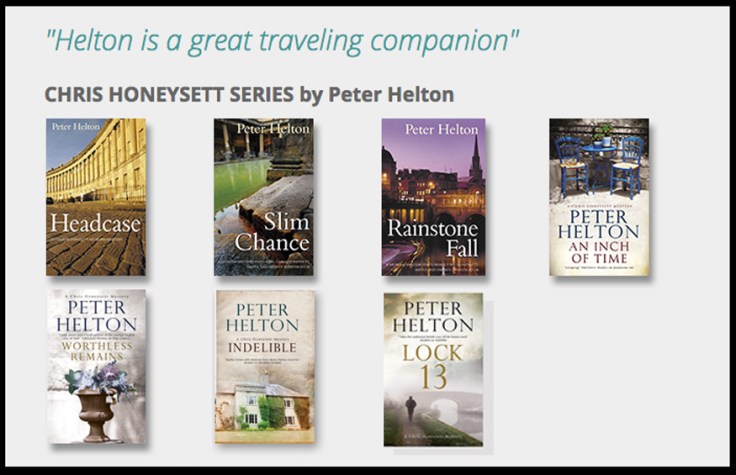

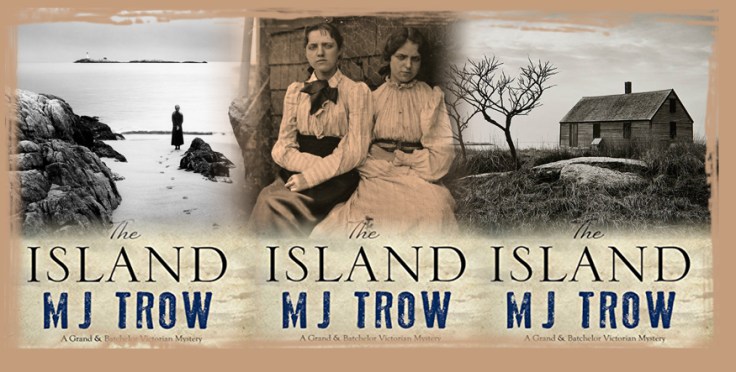
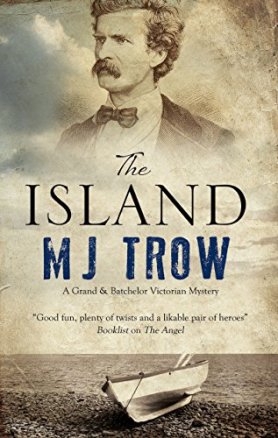 The Island is the latest episode in the eventful partnership between two gentleman detectives in Victorian London. James Batchelor is a former journalist, a ‘gentleman’ in manners and intelligence, if not by upbringing, while his colleague Matthew Grand is an American former soldier, and scion of a very wealthy patrician New Hampshire family. We first met them in
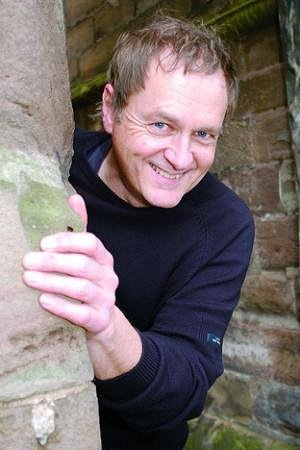
  A few words in praise of the author. Meiron Trow (right) is one of the most erudite and entertaining writers in the land. Over thirty years ago he began his tongue in cheek series rehabilitating the much-put-upon Inspector Lestrade, and I loved every word. I then became hooked on his Maxwell series, featuring a very astute crime-solving history teacher who, while eschewing most things modern, manages to be hugely respected by the sixth-formers (Year 12 and 13 students in new money) in his charge, while managing to terrify and alarm the younger ‘teaching professionals’ who run his school. I was well into the Maxwell series before I realised that MJ Trow and I had two things (at least) in common. Firstly, he went to the same school as I did, although I have to confess he was a couple of years ‘below’ me and would have been dismissed at the time as a pesky ‘newbug’. Secondly, and much more relevant to my love of his Maxwell books, I discovered that we were both senior teachers in state secondary schools, and shared a disgust and contempt for the tick-box mentality characterising the so-called ‘leadership’ of high schools.
 I digress, so back to New Hampshire in the early spring of 1873. The guests begin to arrive, and the ‘downstairs’ staff under the stern eye of the enigmatic butler, Waldo Hart, are emulating the proverbial blue-arsed fly. Trow, at this point, gleefully takes the template of the traditional country house mystery, and has his evil way with it. Despite the title of the book, we are not quite in Soldier Island (And Then There Were None) territory, but Rye is far enough from Boston to make sure that when the first murder happens, the real policemen are too far away and too engrossed with their city crime to pay much attention, even when when of the possible suspects is a certain Mr Samuel Langhorne Clemens. (left)

 There are no honourable mentions here, because, (if you’ve been good) you will have seen them all in the previous four posts. Regular readers of this blog, and those who read my interviews, reviews and features on Crime Fiction Lover, will know that I am a massive fan of Phil Rickman’s books and, in particular, the series featuring the thoroughly modern, but often conflicted, parish priest, Merrily Watkins. She is one of the most intriguing and best written characters in modern fiction, but Rickman (left) doesn’t stop there. He has created a whole repertory company of supporting characters who range in style and substance from the wizened sage Gomer Parry – he of the roll-up fags and uncanny perception (often revealed as he digs holes for septic tanks) – to the twin-set and pearls imperturbability of the Bishop’s secretary, Sophie. In between we have the fragile genius of Merrily’s boyfriend, musician Lol Robinson, the maverick Scouse policeman Frannie Bliss and, of course, Merrily’s adventurous daughter Jane, for whom the soubriquet ‘Calamity” would fit nicely, such is her propensity to go where both angels – and her anxious mother – fear to tread.
 In All Of a Winter’s Night a young man has been killed in a mysterious car crash, and his funeral attracts bitterly opposed members of the same family. Merrily tries to preside over potential chaos, and her efforts to ensure that Aidan Lloyd rest in peace are not helped when his body is disinterred, dressed in his Morris Man costume, and then clumsily reburied. Rickman adds to the mix the very real and solid presence of the ancient church at Kilpeck, with its pagan – and downright vulgar (in some eyes) carvings. The climax of the novel comes when Merrily tries to conduct a service of remembrance in the tiny church. What happens next is, literally, breathtaking – and one of the most terrifying and disturbing chapters of any novel you will read this year or next. With its memorable mix of crime fiction, menacing landscape, human jealousy, sinister tradition and pure menace, All Of a Winter’s Night is my book of 2017.

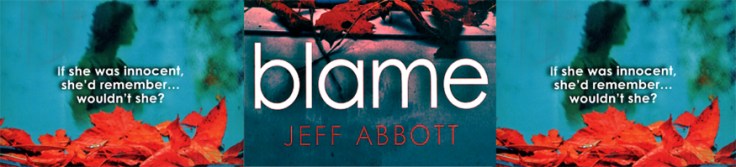
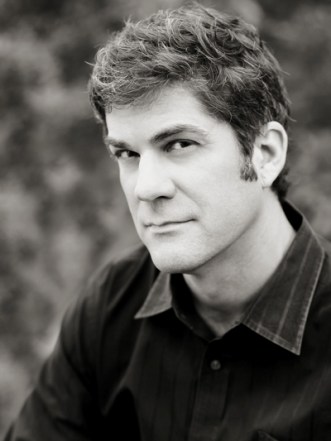 I guess we all play the game. We know the rules, every one of us. No expensive equipment required and no real skill needed, that’s for sure. The Blame Game, it’s called, and when something bad happens in the world it plays out on every social media feed, every newspaper paragraph and every breathless sentence from every permatanned TV news anchor. Bestselling thriller writer Jeff Abbott (left) convinces us that it’s also very popular in the little Texas town of Lakehaven where, just two years ago, a car carrying two teenage friends plummeted off a lonely road and down into a deep gully.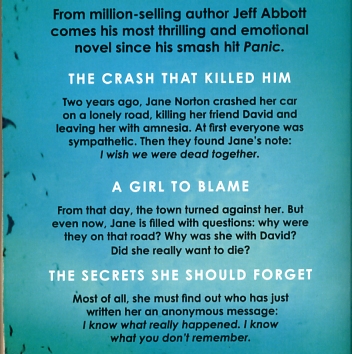
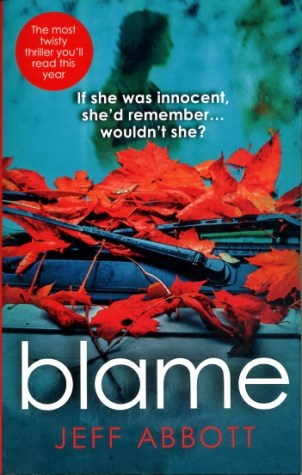 In a nutshell, the novel is an account of Jane’s attempt to find the truth about what actually happened on that dreadful night on High Oaks Road. We have to assume – because we are seasoned readers of crime thrillers – that Jane is innocent of a brutal suicide mission which claimed the life of a boy whose only crime was to be in love. As Jane turns over rock after rock, and unpleasant critters scuttle about, exposed to the light of truth, the novel builds to a dramatic and breathless finale. As might be expected from a writer of Jeff Abbott’s pedigree, he keeps his cards close to his chest, and keeps us guessing until the final few pages.




 So, who thrilled me the most? First across the line by a nose, in a very competitive field, was


 BLAME came out in hardback and Kindle earlier this year, but is due in paperback on
  GUNMETAL GRAY by Mark Greaney (right) takes us away from small-town intrugue and places us on a much bigger stage altogether. Readers who know their spy thriller genre will be well aware that Greaney has pedigree – he collaborated with the late Tom Clancy on his final three books, and has continued the Jack Ryan series under his own name. This novel sees the return of Court Gentry, ‘The Gray Man’. Gone are the days when the only international villains had snow on their boots and answered to the name ‘Ivan”. Gentry becomes involved in a winner-takes-all struggle with ruthless agents from The People’s Republic of China, and he finds that they are every bit as resourceful and relentless as their Russian counterparts. Played out against the background of of Hong Kong and South East Asia, Gunmetal Gray came out in hardback in February this year, but will be available in paperback on
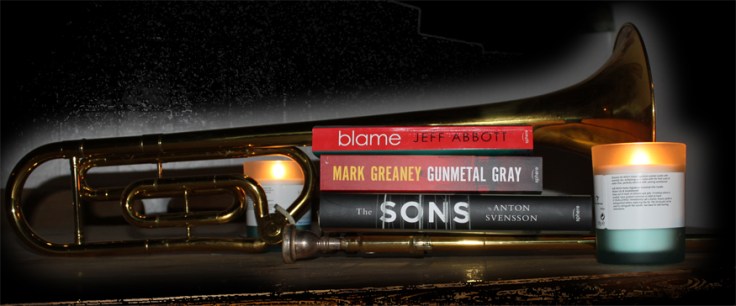


 fullybooked2017