

Wiley Cash lives in North Carolina, and I reviewed his first two novels, A Land More Kind Than Home (2013) and This Dark Road To Mercy (2014). Both had an intense, brooding quality. The first was more of a literary novel but the second – while still thoughtful and haunting – sat more comfortably in the crime genre. You can read my interview with Wiley Cash here.

His latest novel is set, once again, in the writer’s home state. It is 1984 and Winston Barnes is the Sheriff of Oak Island, a town on the state’s southern-facing coastline. It’s separated from the mainland by the Intracoastal Waterway. Barnes is sixty, he is up for re-election and faces a wealthy and brash challenger who has money to burn on his election campaign. In the small hours of an autumn morning Barnes and his wife – who is suffering from cancer – are woken by the sound of an aircraft apparently heading for the island’s tiny airstrip. Barnes knows that something is wrong, as no legitimate aircraft would be flying in the dead of night. When he reaches the airstrip his flashlight reveals two things: a ditched aircraft, much larger than those the facility can safely handle, and a man, recently shot dead. The aircraft is devoid of clues as to its origin, and any fingerprints have been wiped. The corpse is, however, less mysterious. It is the twenty-something son of a local black teacher, and civil-rights activist.
What starts as merely a bad day for Barnes turns into a nightmare. His daughter Colleen, who lives in Dallas with her lawyer husband, and who is mourning a still-born child, turns up unannounced, an emotional wreck. The ditched aircraft case is summarily handed over to the FBI, and the local rednecks (including Barnes’s rival in the upcoming election) assume that the aircraft was carrying a drug shipment from South America, and that Rodney Bellamy – the murdered man – was part of the deal. Consequently, they turn up in the dead of night at Bellamy’s home, in their pick-up trucks, flaunting Confederate flags and shooting guns into the air.
Barnes knows that he unless he can cool hot heads, he is going to have a race war on his hands. No-one sitting here in Britain reading this can have the remotest idea of the intensity of the emotions stirred up in the southern states of America by the matter of race. There’s a vivid depiction of the issue in the Penn Cage novels by Greg Iles, and you read more about them by clicking this link. I have family in North Carolina and know – from a relatively recent visit – that public institutions are at great pains to distance themselves from the past. The whole business of statue-toppling and contemporary apologies for what some see as past offences is a contentious one. But this novel is set in 1984, almost four decades ago, and Wiley Cash paints a haunting picture of a community where the past still collides violently with the present.
Winston Barnes still has a murder to solve, and against the background of his wife’s illness and the mental fragility of his daughter, he has to summon up all his resolve to keep things on an even keel. The FBI sends a qualified pilot and engineer, Tom Groom, up from Florida to repair the aircraft’s damaged landing gear and fly it out so the the Oak Island airstrip can resume business. Barnes is asked to put Groom up for a few nights as the local hotels are all closed for the winter. Colleen, after meeting Groom, has a sixth sense that something is not quite right.
 Wiley Cash is at his best when describing the complex social history of his home state, and the ways in which it affects families and relationships, and he is on good form here. Where the book didn’t work so well, for me at least, was in the ending. In literally two and a half pages, everything we thought we knew about what was happening on Oak Island is turned violently on its head. Abrupt? Yes. Enigmatic? Certainly. There’s no rule that says every plot has to end neatly tied up like a parcel with every question answered, and many readers may enjoy the ambiguity at the end of this book. You could say that Cash (right) gives us the dots and leaves it up to us how we join them up. When Ghosts Come Home is published by Faber and Faber, and is available now in Kindle and paperback. The hardback is due in February 2022.


 We are left to imagine what he looks like. He never uses violence as a matter of habit, but his inner rage fuels a temper which can destroy those who are unwise enough to provoke him. Why is he so bitter, so angry, so disgusted? Of himself, he says:


 This prelude takes place in 1942

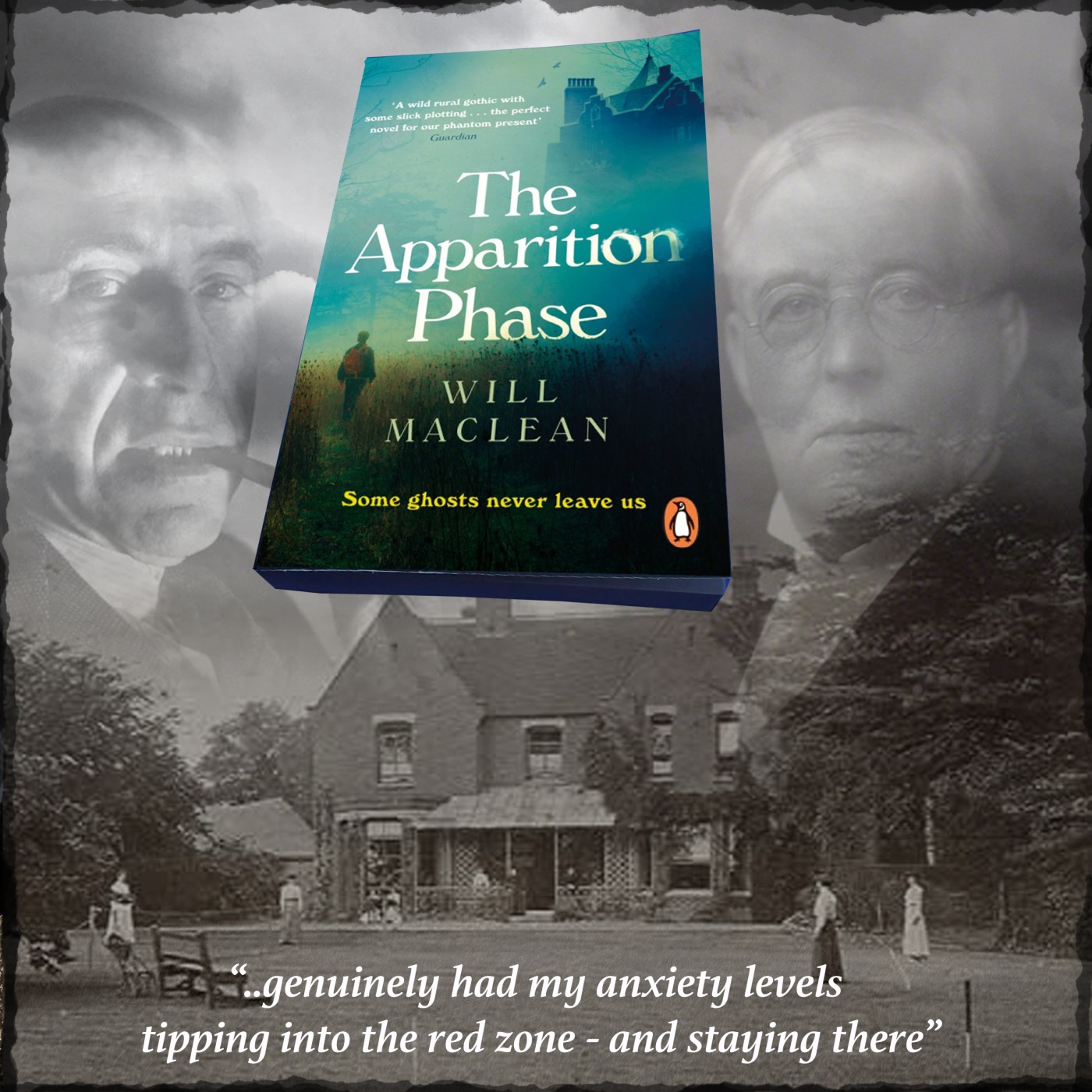

 I don’t review too many non-crime novels on here, but this one really appealed to me. It begins in the 1970s in an unnamed English town. Tim and Abi are teenage twins and, like many such siblings, have an almost preternatural bond that often transcends the spoken word and visual communication. They also have what might be called an unhealthy fascination with ghosts and the paranormal. One of Tim’s hobbies is painting pictures of bygone execution methods, and their favourite book is a well worn copy of The End of Borley Rectory (1946) by
 On a blank wall

 The team investigating the murder is led by Detective Inspector Isabel Blood, her Sergeant and a brace of DCs. They soon learn that the dead man is Kevin Spriggs, a middle-aged car mechanic, with a failed marriage behind him, an estranged son – and an argumentative temperament often fueled by drink. The murder raises many questions for Blood and her people. How did Spriggs and the person who killed him gain access to a locked house? Who hated Spriggs – admittedly not one of life’s natural charmers – enough to kill him? After all, he was something of a nobody, tolerated rather than loved by most people who knew him, but why this brutal – and mysterious – death?

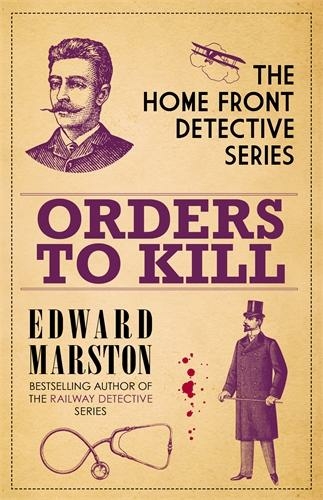 Investigating duos are always a reliable way to spin a police novel, and in this case we have Inspector Harvey Marmion and Sergeant Joe Keedy of the Metropolitan Police. Marmion is married to Ellen, with a son and daughter. Son Paul has been mentally damaged by his time on the Western Front, and has now disappeared leaving no clue as to his whereabouts, while daughter Alice – also a service police officer – is engaged to Keedy.
 Edward Marston

 The story begins with a murder, graphically described and, at this point in the review, it is probably pertinent to warn squeamish readers to return to the world of painless and tidy murders in Cotswold manor houses and drawing rooms, because death in this book is ugly, ragged, slow and visceral. The victim is a middle-aged woman who makes a living out of reading Tarot cards, tea leaves, crystal balls and other trinkets of the clairvoyance trade. She lives in an isolated cottage on the bleak shore of the Humber and, one evening, with a cold wind scouring in off the river, she tells one fortune too many.
 “She has found herself some mornings with little horseshoe grooves dug into the soft flesh of her palms. Sometimes her wrists and elbows ache until lunchtime. She sleeps like a toppled pugilist: a Pompeian tragedy. She sees such terrible things in the few snatched moments of unconsciousness.”






 fullybooked2017
TO ALL THE LIVING . . . Between the covers
This is the latest in the series of excellent reprints from the Imperial War Museum. They have ‘rediscovered’ novels written about WW2, mostly by people who experienced the conflict either home or away. Previous books can be referenced by clicking this link.
We are, then, immediately into the dangerous territory of judging creative artists because of their politics, which never ends well, whether it involves the Nazis ‘cancelling’ Mahler because he was Jewish or more recent critics shying away from Wagner because he was anti-semitic and, allegedly, admired by senior figures in the Third Reich. The longer debate is for another time and another place, but it is an inescapable fact that many great creative people, if not downright bastards, were deeply unpleasant and misguided. To name but a few, I don’t think I would have wanted to list Caravaggio, Paul Gauguin, Evelyn Waugh, Eric Gill or Patricia Highsmith among my best friends, but I would be mortified not to be able to experience the art they made.

So, could Monica Felton write a good story, away from hymning the praises of KIm Il Sung and his murderous regime? To All The Living (1945) is a lengthy account of life in a British munitions factory during WW2, and is principally centred around Griselda Green, a well educated young woman who has decided to do her bit for the country. To quickly answer my own question, the answer is a simple, “Yes, she could.”
Another question could be, “Does she preach?“ That, to my mind, is the unforgivable sin of any novelist with strong political convictions. Writers such as Dickens and Hardy had an agenda, certainly, but they subtly inserted this between the lines of great story-telling. Felton is no Dickens or Hardy, but she casts a wry glance at the preposterous bureaucracy that ran through the British war effort like the veins in blue cheese. She highlights the endless paperwork, the countless minions who supervised the completion of the bumf, and the men and women – usually elevated from being section heads in the equivalent of a provincial department store – who ruled over the whole thing in a ruthlessly delineated hierarchy.
Amid the satire and exaggerated portraits of provincial ‘jobsworths’ there are darker moments, such as the descriptions of rampant misogyny, genuine poverty among the working classes, and the very real chance that the women who filled shells and crafted munitions – day in, day out – were in danger of being poisoned by the substances they handled. The determination of the factory managers to keep these problems hidden is chillingly described. These were rotten times for many people in Britain, but if Monica Felton believed that things were being done differently in North Korea or the USSR, then I am afraid she was sadly deluded.
The social observation and political polemic is shot through with several touches or romance, some tragedy, and the mystery of who Griselda Green really is. What is a poised, educated and well-spoken young woman doing among the down-to-earth working class girls filling shells and priming fuzes?
My only major criticism of this book is that it’s perhaps 100 pages too long. The many acerbic, perceptive and quotable passages – mostly Felton’s views on the more nonsensical aspects of British society – tend to fizz around like shooting stars in an otherwise dull grey sky.
Is it worth reading? Yes, of course, but you must be prepared for many pages of Ms Felton being on communist party message interspersed with passages of genuinely fine writing. To All The Living is published by the Imperial War Museum, and is out now.