

Leona Deakin started her career as a psychologist with the West Yorkshire Police. She is now an occupational psychologist, so you can rest assured that her career has given her a valuable insight into how a fictional criminal psychologist would go about their work. Such knowledge, however, is worthless if the author can’t write. In Deakin’s hands the result is that we have a totally convincing character (Dr Augusta Bloom), an intricate plot with whiplash-inducing twists and turns, and a book that you just don’t want to end.

 Hunt is the third episode in Augusta Bloom’s career, and you can read my reviews of the previous two stories by clicking the images. Bloom has an uneasy relationship with Marcus Jameson (a former military intelligence analyst), notionally her partner in their investigation agency. Rather than Ying and Yang, they are more chalk and cheese. The book begins with Bloom being summoned south from her Yorkshire Dales hideaway. Who demands her services? None other than the Foreign Secretary Gerald Porter. Where is he? In a London police cell, detained on suspicion of selling information to Britain’s enemies. But why does he need Dr Augusta Bloom?
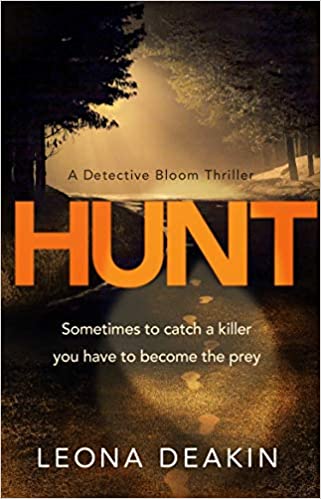 The answer to that conundrum forms the central premise of the book. Porter’s niece Scarlett has been drawn into the orbit of a feminist organisation called Artemis led by a charismatic woman called Paula Kunis. Porter will only answer police questions about his activities if Bloom undertakes to track down Scarlett and extract her from the clutches of Artemis. Bloom is smart enough to realise that Porter is up to something, but cannot work out why he is so worried about his niece, when every other aspect of his behaviour suggests that he is a cold and devious man, with psychopathological elements to his character.
On-line investigations by Bloom and Jameson get them only so far, and so Bloom decides to go to a seminar run by Artemis, to see what manner of creature it is. The women running the presentation are warm, friendly and convincing, but give little away, as Bloom tries to question them as subtly as possible. Having hardly scratched the surface of the veneer, Bloom signs up for a weekend retreat at the Artemis headquarters in an isolated village in the Scottish highlands. Jameson is dubious about this as he has a sixth sense that Artemis is not the benevolent campaigner for women’s rights that its glossy literature and media presence claim it to be. Bloom reassures him. After all, this the 21st century, the age of mobile phones and instant connectivity. What can possibly go wrong over a long weekend?
Bloom and a minibus full of other attendees arrive at the location, and are met by a flock of charming and smiling women who seem overjoyed to welcome potential recruits to the cause. It is all very fragrant, but a tiny alarm begins to ring in Bloom’s head as she sees all mobile phones and watches being handed over to the Artemis greeters. This tinkling bell becomes more clamorous when Bloom realises that the new arrivals are being subjected to sleep deprivation, time disorientation and one-to-one social monitoring by the Artemis devotees.
Back in the outside world, three things have happened. Firstly, Jameson has discovered that the Scottish retreat is entirely surrounded by high fences topped with barbed wire facing inwards, all the better to keep people in rather than to keep intruders out. Secondly – and much more worrying – is the appearance on the scene of Seraphine Walker, a sinister and clever criminal fixer, rather like a 21st  century Professor Moriarty, who has crossed swords with Bloom and Jameson before. Thirdly, Gerald Porter has inexplicably disappeared from police custody and, almost immediately, a huge social media campaign vilifying Paula Kunis and Artemis has been launched, with the result that scores of husbands and fathers of women “poached” by Artemis have headed to the Scottish retreat and are angrily congregating at its gates.
Leona Deakin (right) has written an absolute cracker of a thriller, and her portrayal of how cults go about their business preying on innocent and needy people is chilling. The conclusion of Hunt is dramatic, violent and utterly gripping.
Hunt is out now, published by Black Swan/Penguin, and you can investigate buying choices by clicking the images below. Or, visit your local bookshop if you are lucky enough to have one.





 But back to Clay Edison. He is a Deputy US Coroner in Berkeley, California, and The Burning begins, quite topically, with a destructive bush fire that has knocked out power supplies for everyone except those with their own generators. When Edison and his partner are summoned to retrieve a corpse from a mansion up in the hills, they find that Rory Vandervelde – a multi millionaire – has died from gunshot wounds. He was an avid collector. Rare baseball and basketball memorabilia, Swiss watches, antique knives – you name it, and Vandervelde had bought it. It is when Edison is inspecting the dead man’s astonishing collection of classic cars, stored in a huge garage, that he discovers something that sends a shiver down his spine, and not in a pleasant way.
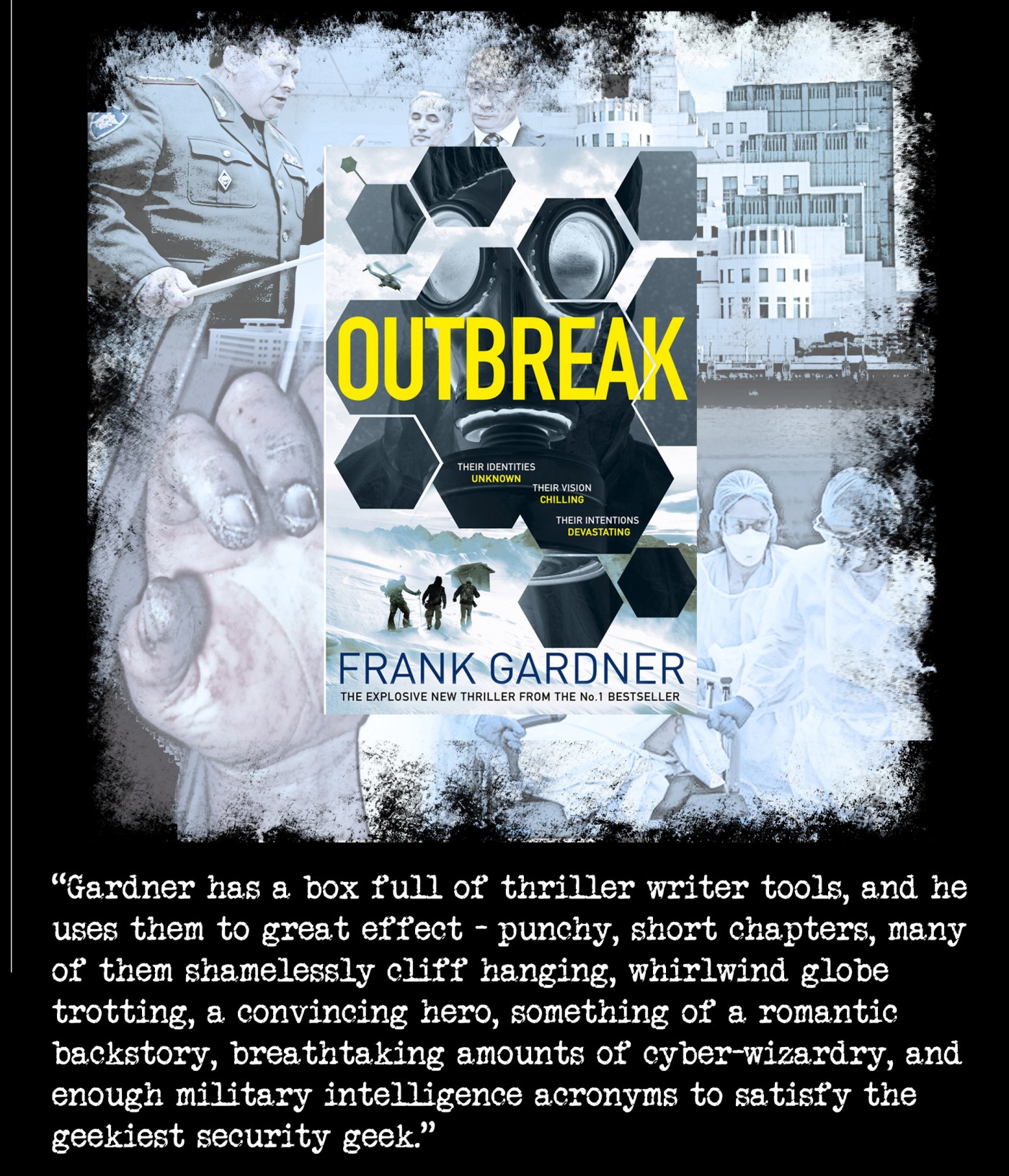

 That, then, is the Aliens moment. Events move with terrifying speed. Mackenzie is airlifted back to England and isolation and the wheels of government and the intelligence agencies begin to whirr. Given that there is a large Russian presence in Svalbard, ostensibly for mining operations, the fingers of guilt begin to point towards Moscow, particularly when the virus is found to be man-made.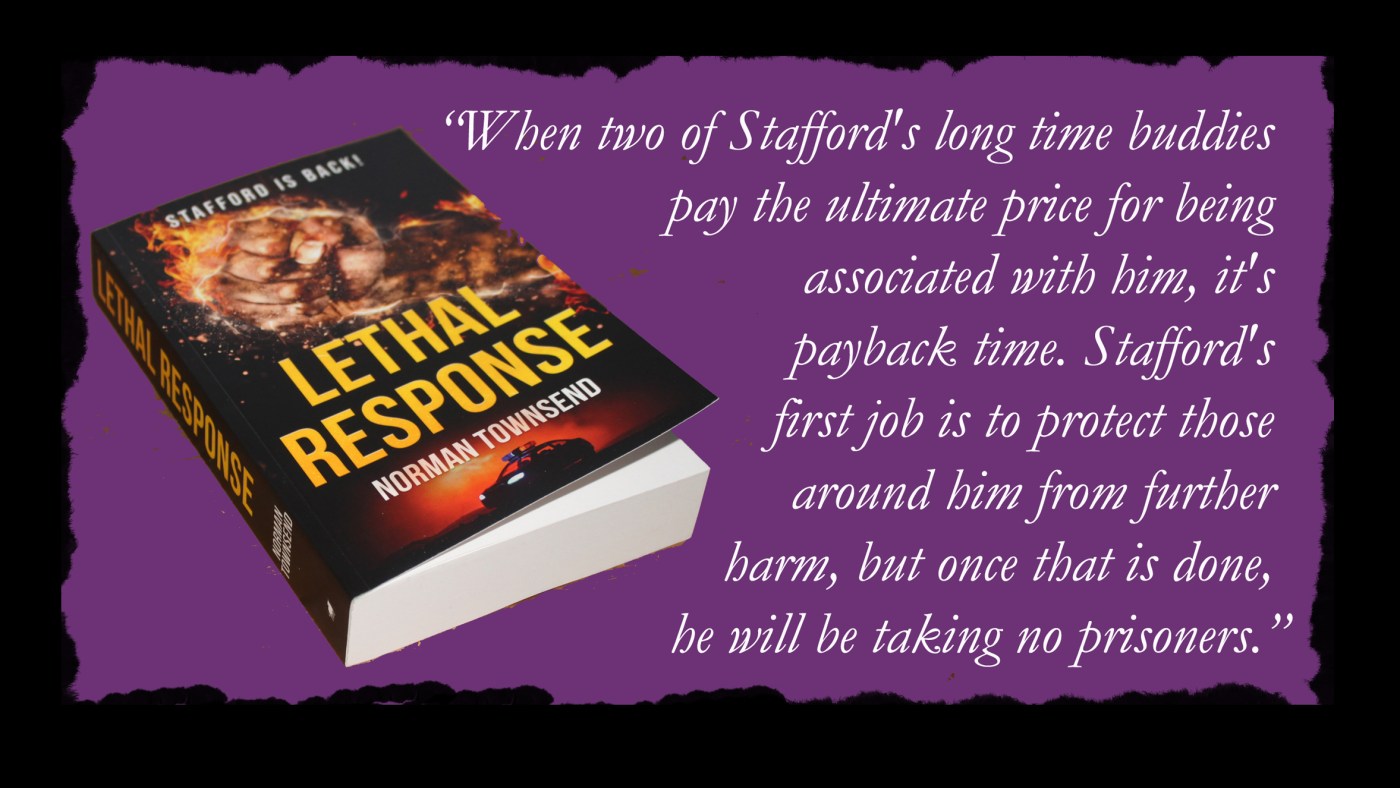


 Stafford’s triumph has won him some influential friends, but also some deadly enemies. You don’t take on powerful international criminal gangs without there being a downside, and when two of Stafford’s long time buddies pay the ultimate price for being associated with him, it’s payback time. Stafford’s first job is to protect those around him from further harm, but once that is done, he will be taking no prisoners.


 While reporting on the death and mutilation of a young rent boy, Russell is asked by a friend to take on another case, this time on behalf of a senior army officer whose daughter is missing. It is a delicate business, because there is a strong suspicion that Lili Zollitsch has run off with a boyfriend who is an active member of the Kommunistische Partei Deutschlands.

 The Steiners are also well-connected. Politicians great and small, financiers, socialites, fund-raisers – mostly anyone who is anyone in Boston and further afield – all tip their hats to the Steiners. Neither does it hurt that the Steiners’ clout enables them to hire serious muscle from the criminal underworld and, as most of the child rape is conducted on a private island somewhere in the vicinity of the Bahamas, neither the Boston Police Department nor the FBI can do anything to intervene.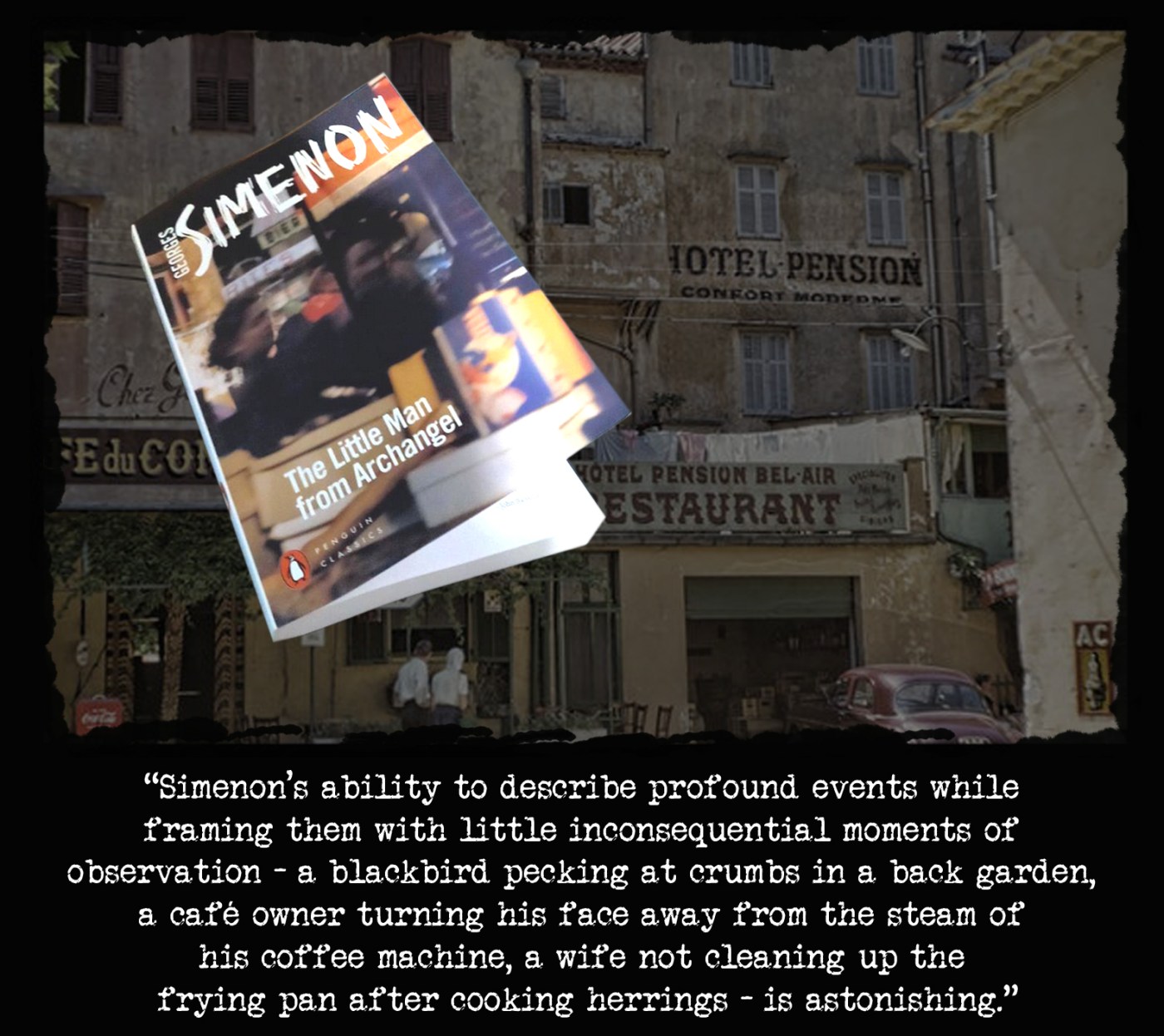


 We are in an anonymous little town in the Berry region of central France, and it is the middle years of the 1950s. Jonas Milk is a mild-mannered dealer in second hand books. His shop, his acquaintances, the c
 Jonas Milk has a wife. Two years earlier he had converted to Catholicism and married Eugénie Louise Joséphine Palestri – Gina – a voluptuous and highly sexed woman sixteen years his junior. No doubt the frequenters of the Vieux-Marché have their views on this marriage, but they are polite enough to keep their opinions to themselves, at least when Jonas is within earshot. But then Gina disappears, taking with her no bag or change of clothing. The one thing she does take, however, is a selection of a very valuable stamp collection that Jonas has put together over the years, not through major purchases from dealers, but through his own obsessive examination of relatively commonplace stamps, some of which turn out to have minute flaws, thus making their value to other collectors spiral to tens of thousands of francs.


 When the body count starts to rise, Elin’s professional training kicks in and, after phoning the local police for permission, she takes charge of the investigation. With no access to forensic support or police databases, she has to make do with what she has – basically her own instincts as a copper. She suspects that whatever is motivating the killer lies in the history of the hotel. Sarah Pearse (right) exploits the conventions of the locked-down/cut-off-from-the-outside-world thriller for all she is worth, and we have hidden passage ways, disused tunnels, murderers in sinister masks, and the general sense that most of the key figures in the plot are hiding secrets of one sort or another.


 fullybooked2017