
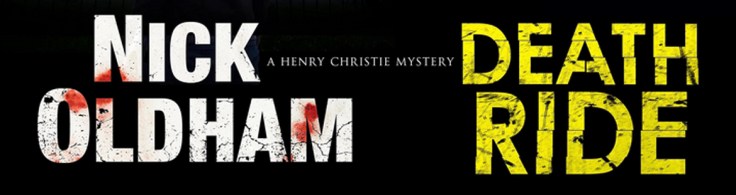
I can’t think of another modern crime writer who does truly despicable villains quite like Nick Oldham. His years policing the semi-derelict housing estates behind the candy-floss, donkey rides and silly hat persona of Blackpool’s seafront taught him that the feral inhabitants thrown up by these estates are not victims of social injustice or poverty; neither are they the product of years of exploitation by cruel capitalists. No. In short, they are absolute bastards, and no amount of hugging by wet-behind-the-ears social workers will make them anything else. In Death Ride, Oldham introduces us to as vile a group of criminals as he has ever created. Led by Lenny Lennox, they are ruthless predators; pickpocketing, catalytic converters, dog-napping, abduction, sexual assault – and murder – frame their lives.
We meet them at a country fair in retired copper Henry Christie’s home village, Kendleton – high on the Lancashire moors – where he runs the local pub. While Lenny Lennox serves burgers from his catering van, his son and three other youngsters pick pockets, steal cameras and strip high end vehicles of their valuable exhaust systems. Ernest Lennox, however has gone a bit further, and abducted a teenage girl who resisted his advances, and to cover up his son’s stupidity Lennox senior has to take drastic action.
Christie has recently been used as a civilian consultant by his former employers, and his last case ended with him being brutally stabbed and left for dead. When the hunt for the missing girl – Charlotte Kirkham – becomes a race against time, Christie, partly crippled by his knife wounds, is drawn into the hunt. I am reminded of the words of Tennyson in his magnificent poem Ulysses:
“Tho’ much is taken, much abides; and tho’
We are not now that strength which in old days
Moved earth and heaven, that which we are, we are;
One equal temper of heroic hearts,
Made weak by time and fate, but strong in will
To strive, to seek, to find, and not to yield.”
In rather blunter terms, Oldham writes:
“If Henry was honest with himself, he felt the urge to drag Lennox out of the burger van and smash his face again, just for old times’ sake, even though he knew he didn’t have the physicality to put that desire into action.
The Lennox gang create carnage in Christie’s life – and the lives of those he loves – but about three quarters of the way through the book, there is an abrupt change of scene, and we are reunited with two characters from Christie’s past – FBI agent Karl Donaldson and ex special forces maverick, Steve Flynn. They say that revenge is both sweet and best served cold. Suffice it to say that Henry Christie enjoys his gelato.
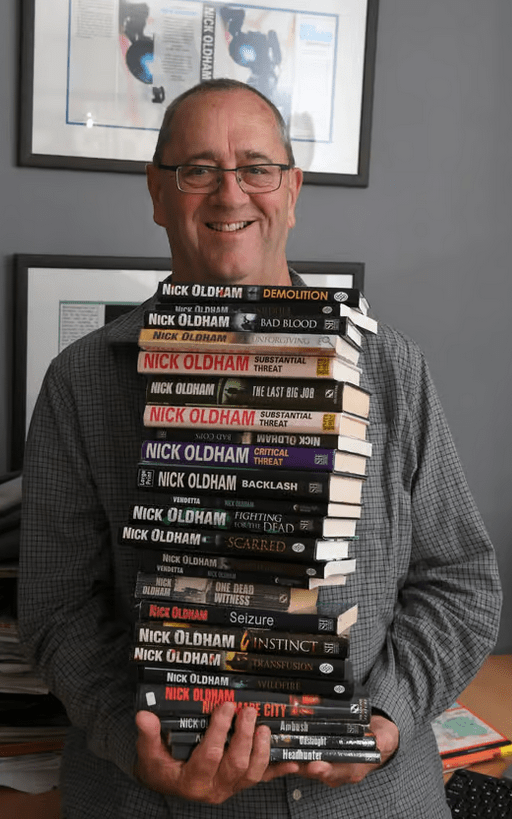
The Henry Christie books have always had plenty of action and their fair share of grit and gore, but on this occasion, be warned. Nick Oldham goes into Derek Raymond territory here, with a dark and terrifying novel which explores the depths of human malice and depravity. Death Ride is published by Severn House and will be available from 7th March. For more about Nick Oldham and the Henry Christie books, click the image below.




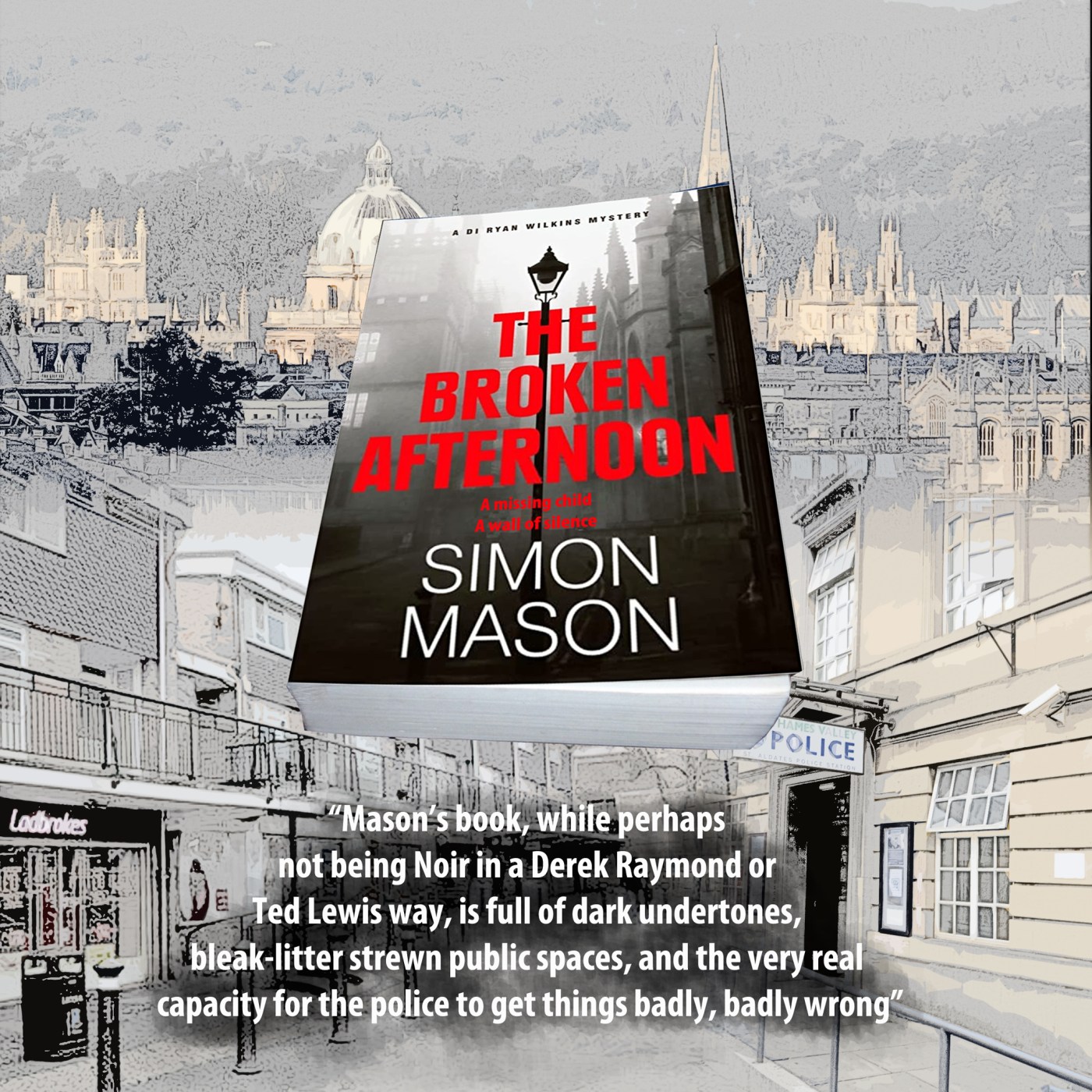
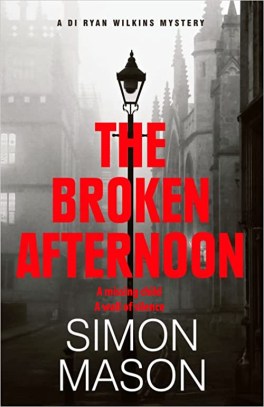 In Simon Mason’s A Killing In November we met Oxford DI Ryan Wilkins, and the book ended with his dismissal from the force for disciplinary reasons. In this book he is still in Oxford, but working as a security guard/general dogsbody at a van hire firm. His former partner, also named Wilkins, but Ray of that ilk, is now heading up the team that was once Ryan’s responsibility, and it is they who are tasked with investigating the abduction of a little girl from her nursery school.
 I am sorry, but that is not how I see this book. Yes, it is set in and around Oxford, but apart from The Broken Afternoon being every bit as good a read as, say, The Silence of Nicholas Quinn or The Remorseful Day, that’s where the resemblance ends. Mason’s book, while perhaps not being Noir in a Derek Raymond or Ted Lewis way, is full of dark undertones, bleak litter strewn public spaces, and the very real capacity for the police to get things badly, badly wrong. Simon Mason (right) has created coppers who certainly don’t spend melancholy evenings gazing into pints of real ale and then sit home alone listening to Mozart while sipping a decent single malt.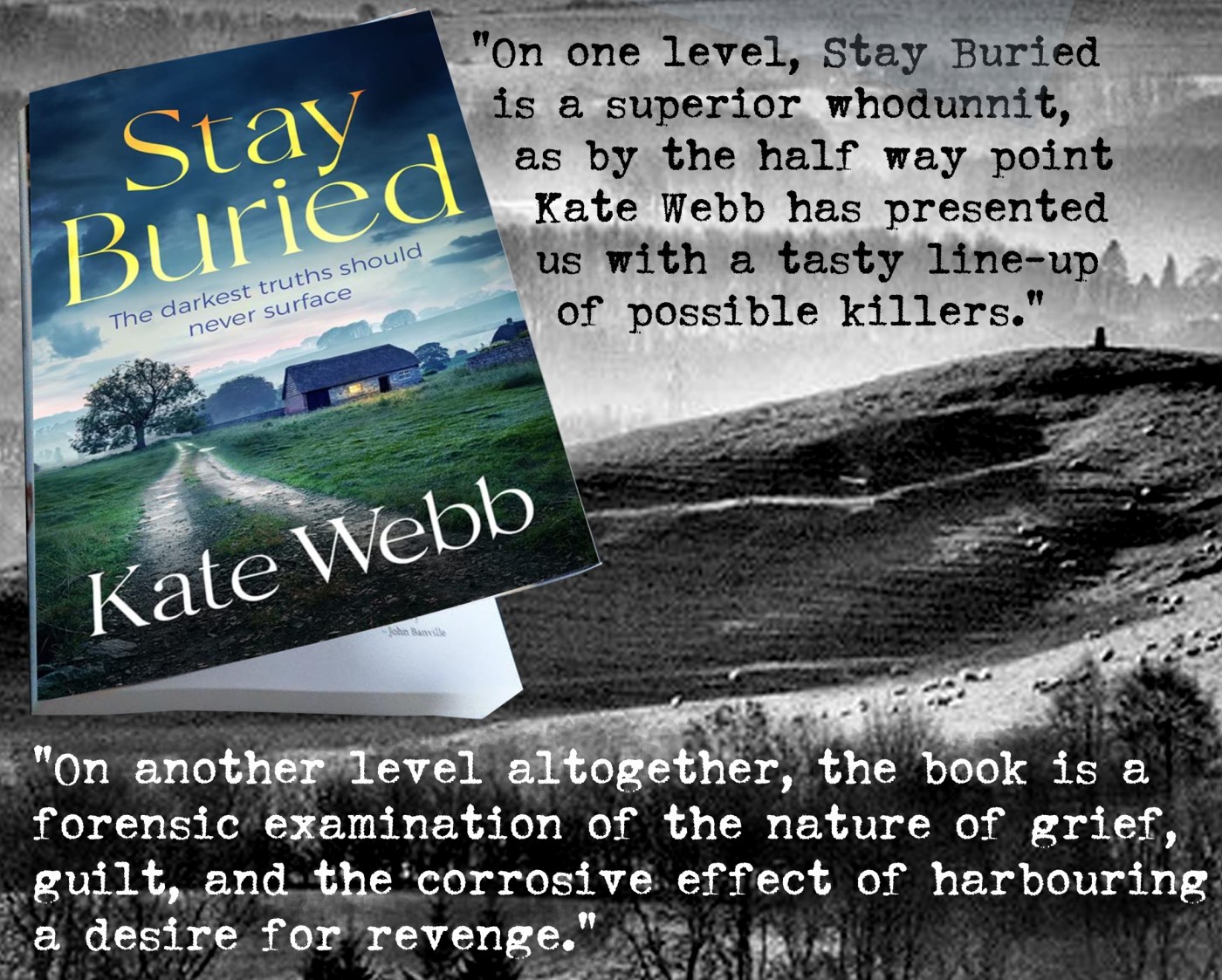

 Writing as Katherine Webb, the author (left) is a well established writer of several books which seem to be in the romantic/historical/mystery genre, but I believe this is her first novel with both feet firmly planted on the terra firma of crime fiction. Wiltshire copper DI Matthew Lockyer, after a professional error of judgment, has been sidelined into a Cold Case unit, consisting of himself and Constable Gemma Broad.




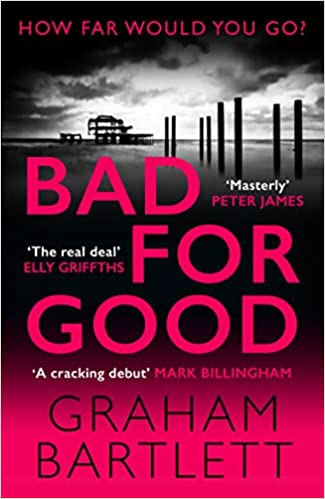 The plot hinges around a series of dire events in the life of Jo Howe’s boss, Detective Chief Superintendent Phil Cooke. Already trying to keep his mind on the job while his wife is dying of cancer, fate deals him another cruel blow when his son Harry, a promising professional footballer, is murdered, seemingly a casualty in a drug turf war. He steps down, but then comes into contact with a shadowy group of apparent vigilantes, who tell him that Harry was not the clean-cut sporting hero portrayed in the local media – he was heavily into performance enhancing drugs. The vigilantes – whose business plan is to provide a highly illegal alternative police force, where customers pay for the quick results that the Sussex Constabulary seem unable to provide – blackmail Phil into standing in the election of Police and Crime Commissioner. He is forced to agree, and is elected.
 Graham Bartlett (right) was a police officer for thirty years and mainly policed the city of Brighton and Hove, rising to become a Chief Superintendent and its police commander, so it is no accident that this is a grimly authentic police procedural. It is also very topical as, away from the violence and entertaining mayhem, it focuses on the seemingly insoluble problem of the divide between the public’s expectations of policing, and what the force is actually able – or willing – to deliver. Bartlett doesn’t over-politicise his story but, reading between the lines – and I may be mistaken – I suspect he may feel that, with ever more limited resources, the police should not be so keen to divert valuable time and resources away from their core job of catching criminals. My view. and it may not be his, is that effusive virtue signaling by police forces in support of this or that social justice trend does them – nor most of us – no favours at all.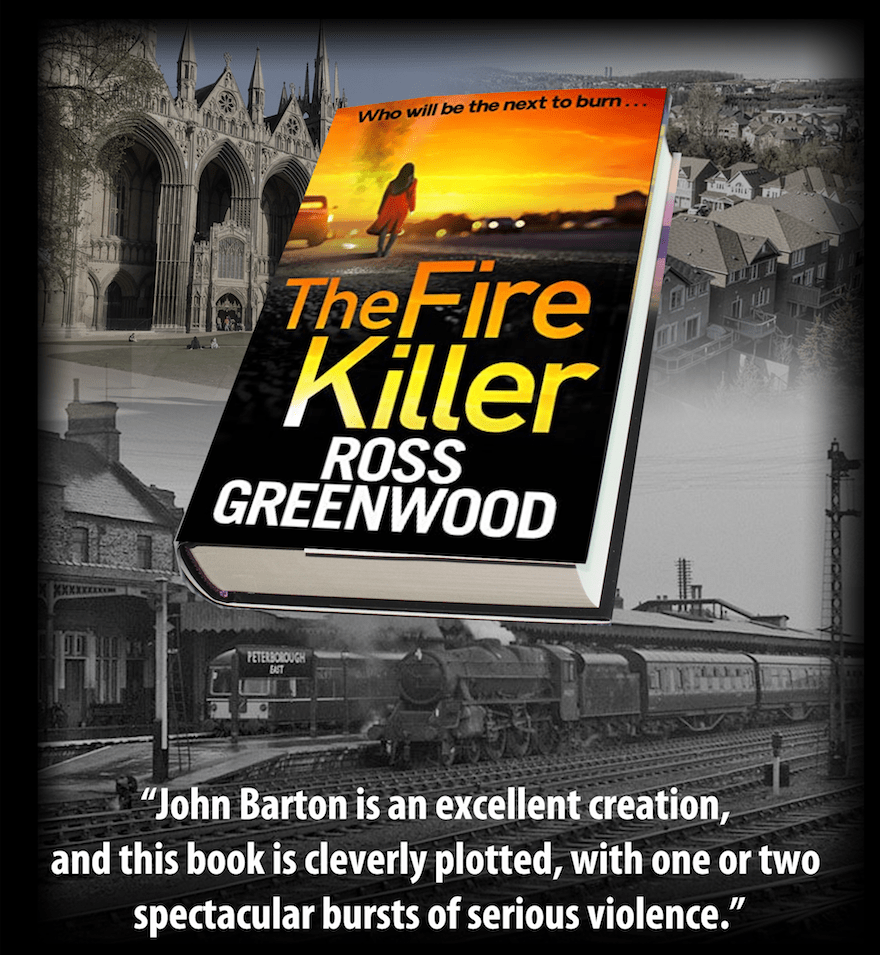

 Late again! My excuse is that I am a one-man-band here at Fully Booked, and notwithstanding the occasional erudite contribution from Stuart Radmore (who has forgotten more about crime fiction than most people will ever know), there are only so many books I can read and review properly. My first experience of Peterborough copper DI Barton is the fifth of the series (written by Ross Greenwood), The Fire Killer. Peterborough is a big place, at least for us Fenland townies, but is rarely featured in CriFi novels. I am pretty sure that Peter Robinson’s DI Banks grew up there (The Summer That Never Was) and Eva Dolan’s Zigic and Ferreira books are certainly set in the city.
 Ross Greenwood (right) has fun inviting us to make out own guesses, but also makes the game a little more interesting by giving us intermittent chapters narrated by The Fire Killer, but he is very wary about giving us too many clues. The dead girl, Jess Craven had been involved with a very rich dentist with links – as a customer – to the London drug trade.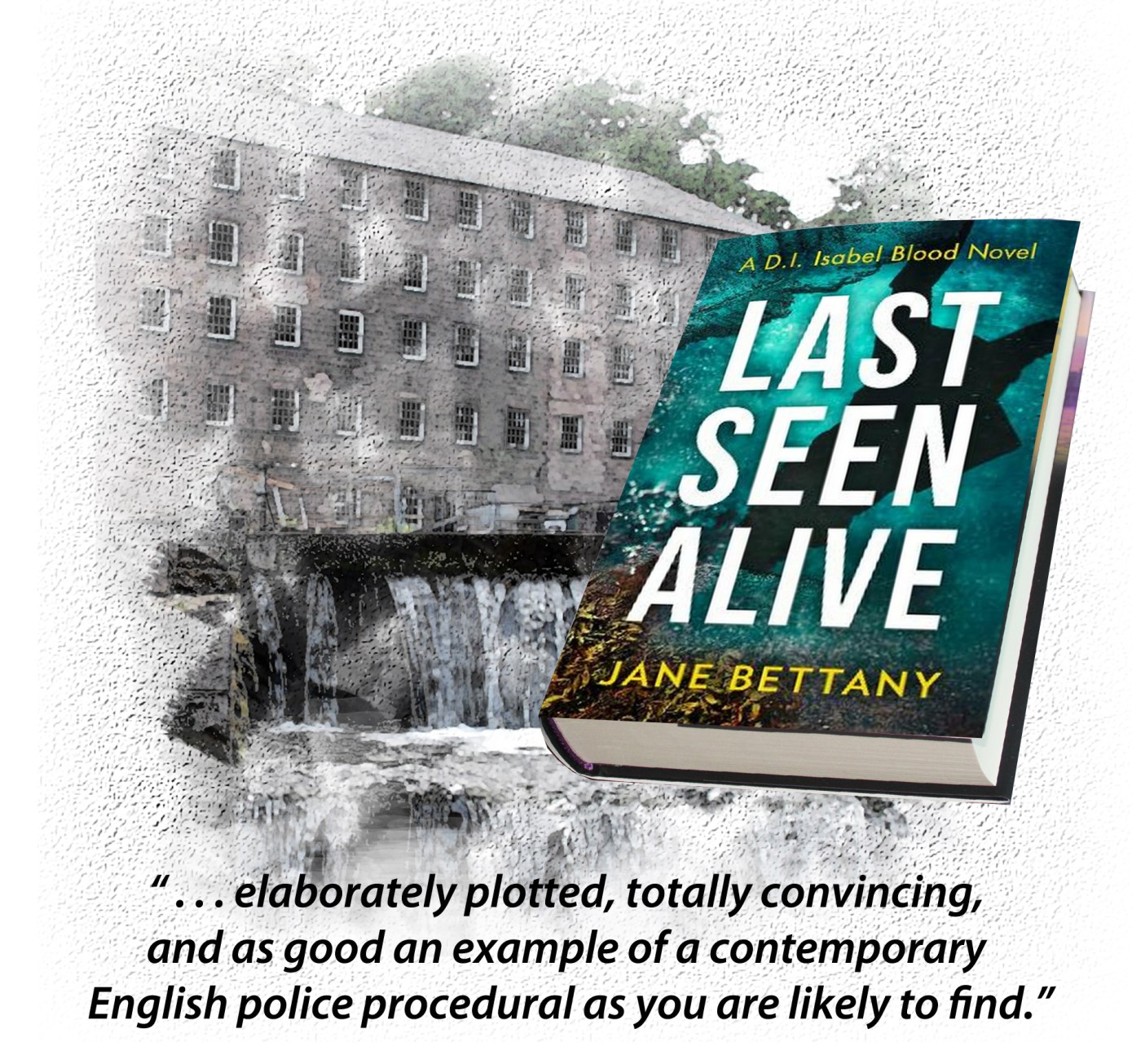

 Last Seen Alive is the third book by Jane Bettany (left) featuring the Derbyshire copper DI Isabel Blood. The story begins when Anna Matheson, a single mother who works at a large confectionery firm, fails to pick up her infant son from the child minder after a social event at work. Lauren Talbot, the child minder, raises the alarm late at night, but precious hours elapse before morning comes and the police are able to start making enquiries.


 fullybooked2017