

London, 1927, and Divisional Detective Inspector Ernest Hardcastle is summoned to the office of Chief Constable Frederick Wensley[1], who has received a letter from a Norfolk parson. The Rev. Percy Stoner is convinced that his nephew Guy has met with misfortune. The former army Captain has disappeared, and when Hardcastle despatches men to visit the business young Stoner had set up with another Great War veteran, they make a chilling discovery.
Hardcastle himself was too old to serve in the war, but for his younger colleagues who knew the Western Front, body parts hold few terrors. The human remains found in the burnt-out premises in Surrey are examined by none other than Sir Bernard Spilsbury[2] and his findings complicate Hardcastle’s case. Is the first body that of Guy Stoner, or is it that of his business partner? And who was the young woman whose butchered remains shared the same ignominious burial place?
 Forced to play cherchez-la-femme, the detectives stumble down one blind alley after another, but as they do so they learn a few home truths about the fate of the young men who went to fight in the war-to-end-all-wars, and returned home to find that their birthplace was not the ‘land fit for heroes’ glibly promised by politicians. There is a peacetime army with no place for young officers whose courage was welcome in the trenches, but whose humble upbringing is now seen as an embarrassment as the cigars are lit, and the port passed in the correct direction at mess dinners. Such young men, not all heroes, but men nevertheless, are forced to find civilian employment which is neither honest, decent nor lawful.
Eventually, after an investigation which takes the detectives on many a trip into the provinces and away from their metropolitan stamping grounds, the case is solved, and there is work for the hangman to do, but not before an intervention by the Home Secretary.
 Graham Ison is a master story-teller. The Hardcastle books contain no literary flourishes or stylistic tricks – just credible characters, excellent period detail and an engaging plot. Cosy? Perhaps, in the sense that we know how Hardcastle and his officers are going to react to any given situation, and their habits and small prejudices remain unchanged. Comfortable? Only because novels don’t always need to shock or challenge; neither do they always benefit from graphic descriptions of the damage humans can sometimes inflict on one another. Ison (right) credits his readers with having imaginations; he never gilded the lily of English life in the earlier Hardcastle cases which took place during The Great War, and he doesn’t start now, nearly a decade after the final shots were fired. The suffering and trauma of those four terrible years didn’t end at the eleventh hour on that eleventh day; they cast a long and sometimes baleful shadow which frames much of the action of this novel.
Hardcastle’s Quandary is a great read. As well as being a fascinating period police procedural, it is a gently reflective but sharply observant look at England in the 1920s. We sense that Hardcastle, deeply conservative and instinctively opposed to the steady advance of technology, has entered his autumn period. Colleagues like Marriott and Catto tolerate his idiosyncrasies and work around the fact that he sometimes appears to be a creature from a bygone age, preserved in his own block of amber. Hardcastle’s quandary? That is for the reader to judge, and it may only be resolved in the final pages. The novel is published by Severn House and is available here.
[1] Frederick Porter Wensley OBE KPM (28 March 1865 – 4 December 1949) was a British police officer from 1888 until 1929, reaching the rank of chief constable of the Scotland Yard Criminal Investigation Department. Serving in Whitechapel for part of his career, Wensley was involved in the investigation of the Jack the Ripper murders, details of which he would later publish in his memoirs in 1931.
[2] Sir Bernard Henry Spilsbury (16 May 1877 – 17 December 1947) was a British pathologist. His cases include Hawley Harvey Crippen and the “Brides in the Bath” murders by George Joseph Smith,. Spilsbury’s courtroom appearances became legendary for his demeanour of effortless dominance.


 #Taken kicks off, appropriately enough, when a young ballet dancer, Jessica Lyle, is snatched from her borrowed car just yards from the gated luxury home she shares with another girl. From here, Wolfe and his alcoholic boss DCI Pat Whitestone face a veritable University Challenge of questions. Their starter-for-ten is to decide if Jessica was actually the intended victim. Although her father is a retired copper who may have run up an impressive list of enemies, isn’t it more likely that Jessica was mistaken for her flatmate, Snezia? After all, Snezia is not only a dancer of a different kind from Jessica (think ‘gentlemen’s’ clubs, tiny thong and shiny pole) but she is the mistress of fabled former gang boss Harry Flowers. Jessica was driving Snezia’s car when she was taken. Isn’t this just another example of the stupidity of hired thugs?


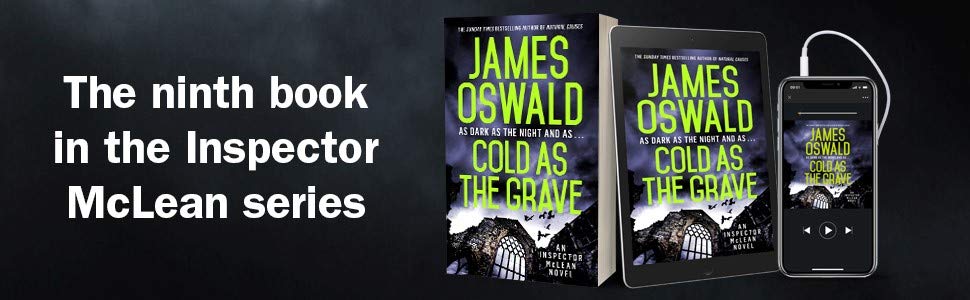
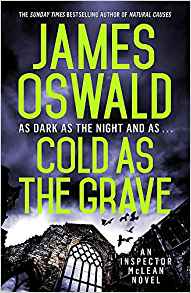 Cold As The Grave is the ninth novel in the Tony McLean series, but fine writers – and Oswald is up there with the very best – make sure that it is never too late to come to the party. For anyone new to the series, McLean is something of an individual. Due to an inheritance, he is exceedingly wealthy, but has a modest lifestyle and chooses to remain a police officer. He has a long-standing ‘significant other’ in Emma Baird, but the previous novel,
 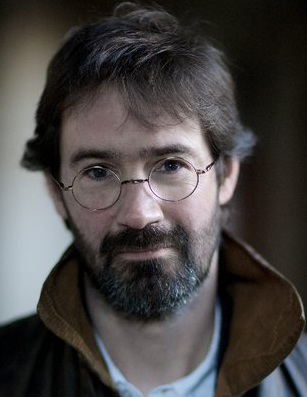 Does McLean follow his head or his heart? The road to the left or the right? Cold As The Grave is a brilliant police procedural, but there is more – so much more – to it. For those who love topographical atmosphere Oswald (right) recreates a wintry Edinburgh that makes you want to turn up the central heating by a couple of notches; for readers drawn by suggestions of the supernatural there is enough here to induce a shiver or three, while making sure the bedroom light remains on while you sleep. The sheer decency and common humanity of Tony McLean – and the finely detailed portraits of the people he works with – will satisfy the reader who demands authentic and credible characterisation.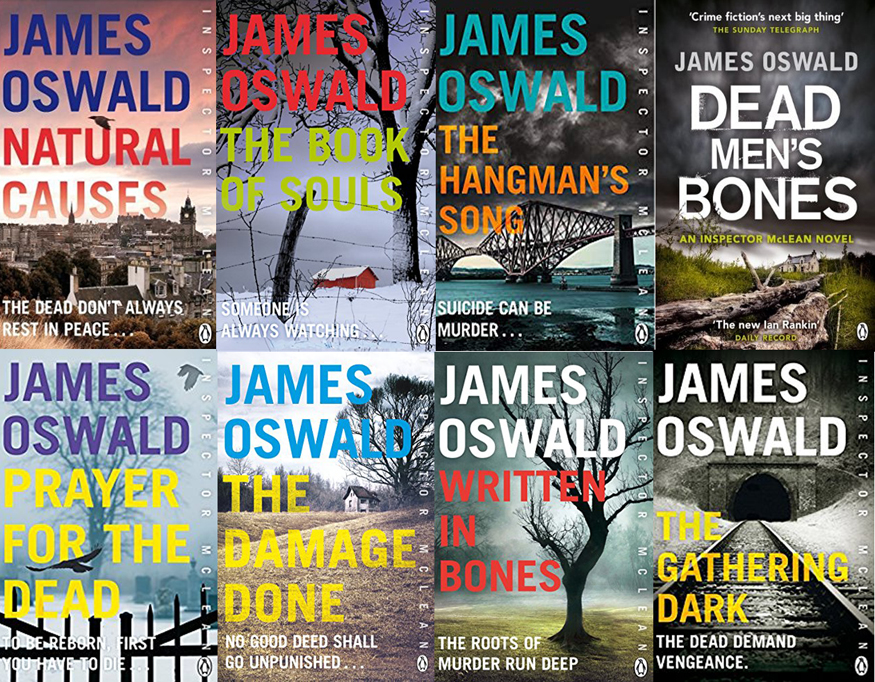
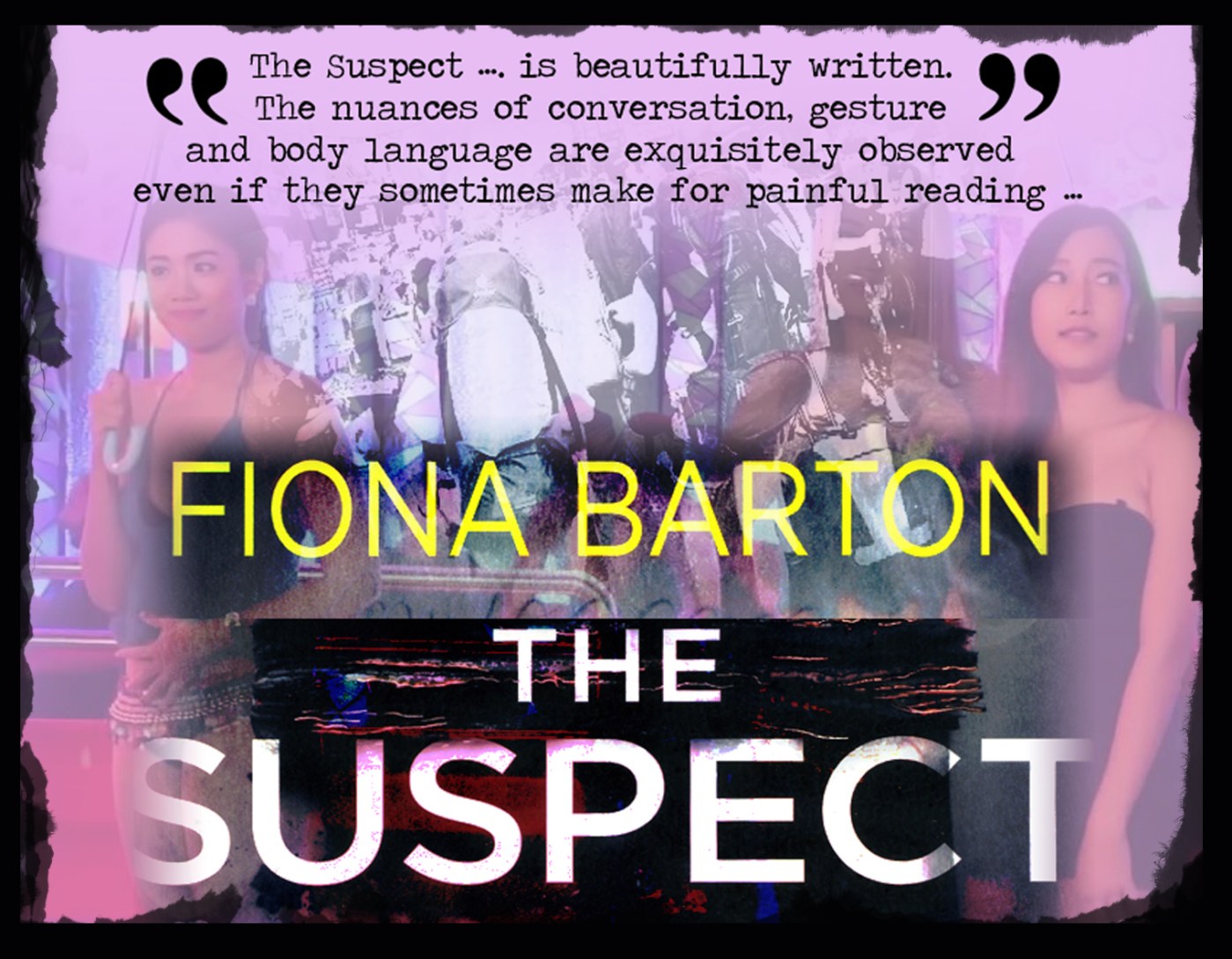

 Sensing a very productive headline story that will run and run, Kate Waters uses all her empathy and tricks-of-the-trade to get close to the girls’ families, and the story does indeed have the whole enchilda. Beautiful teenage girls, disappearance in a Bangkok drug den, frantic parents, the possibility of incompetence by foreign police – what could possibly go wrong? Jake Waters is what could possibly go wrong. Kate’s son has been away in Thailand “finding himself” after a failed spell at university, and her journalistic glee at the ramifications of the story is brutally brought up short when she finds that her errant boy might be at the very epicentre of the story she has claimed as her own.
 It must be said that this is a story long on personal misery and rather short on redemption, but it is beautifully written. The nuances of conversation, gesture and body language are exquisitely observed even if they sometimes make for painful reading, such as the bittersweet moments between Bob Sparkes and his dying wife. My own children are, thankfully, well past the age of “doing” Thailand, but my advice to those with gap-year offspring is, with all respect to Fiona Barton (right), don’t read this book! Once your teenagers have shouldered their backpacks and waved goodbye at the departure gate, your mind will hark back to The Suspect it will be nessun dorma for you!






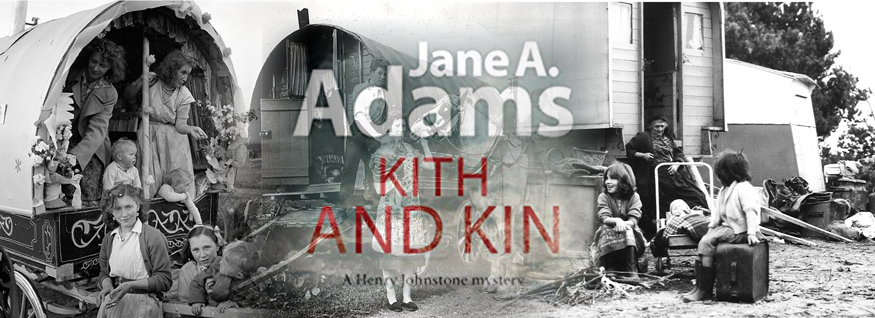
 Coming across a very, very good book by an author one has never encountered before and then realising that she has been around for a while is a shock to the system, and if the downside is that the experience further highlights one’s own ignorance, then the blessing is that as a reviewer and blogger, there is something new to shout about. Jane A Adams made her debut with The Greenway back in 1995, and has been writing crime fiction ever since, notably with four-well established mystery series featuring Mike Croft, Ray Flowers, Naomi Blake and Rina Martin. She began the saga of London coppers Henry Johnstone and Micky Hitchens in 2016, with The Murder Book. Their latest case is Kith and Kin.
 The period is set to perfection, and Adams (right) skilfully combines past, present and future. The past? There can scarcely have been a man, woman or child who escaped the malign effects of what politicians swore would be the war to end wars. The present? 1928 saw devastating flooding on the banks of the River Thames, a book called Decline And Fall was published, and in Beckenham, not a million miles away from where this novel plays out, Robert ‘Bob’ Monkhouse was born. The future? Johnstone’s sister, who has married into money, has a head on her shoulders, and senses that in the financial world, a dam is about to break – with devastating effects.
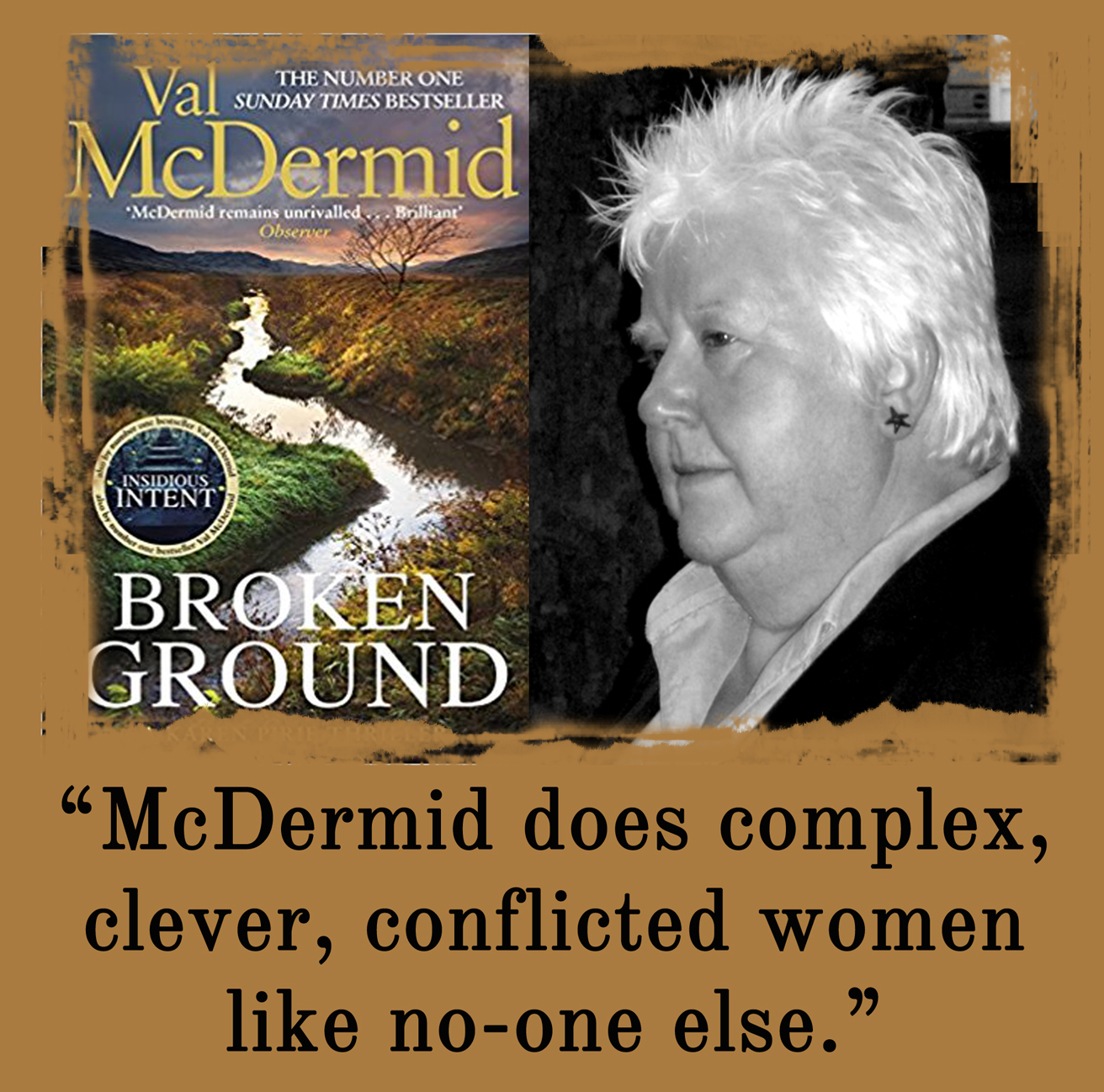

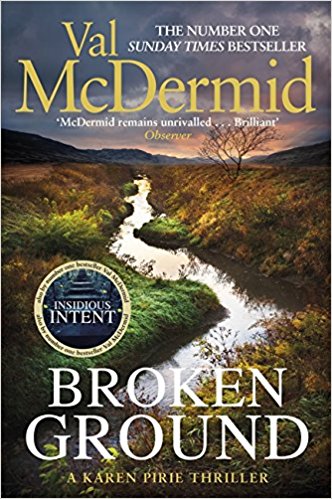 The Body In The Bog is a nicely alliterative strapline normally used to liven up reports of archaeologists discovering some centuries-old corpse in a watery peat grave. The deaths of these poor souls does not usually involve an investigation by the local police force, but as Val McDermid relates, when the preserved remains are wearing expensive trainers, it doesn’t take the tenant of 221B Baker Street to deduce that the chap was not executed as part of some arcane tribal ritual back in the tenth century.
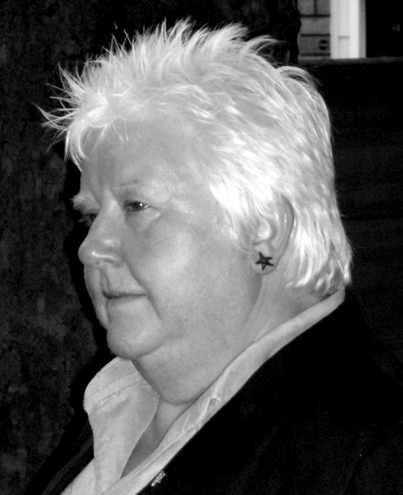 If music halls were still in vogue, McDermid would be the dextrous juggler, the jongleur who defies gravity by keeping several plot lines spinning in the air; spinning, but always under her control. There is the Nike bog body, a domestic spat which ends in savagery, a cold-case rape investigation which ends in a very contemporary tragedy, and an Assistant Chief Constable who is more concerned about her perfectly groomed press conferences that solving crime. They say that the moon has a dark side, and so does Edinburgh: McDermid (right) takes us on a guided tour through its majestic architectural and natural scenery, but does not neglect to pull away the undertaker’s sheet to reveal the squalid back alleys and passageways which lurk behind the grand Georgian facades. We slip past the modest security and peep through a crack in the door at a meeting in one of the grander rooms of Bute House, the official residence of Scotland’s First Minister, even getting a glimpse of the good lady herself, although McDermid is far too discreet to reveal if she approves or disapproves of Ms Sturgeon.


 fullybooked2017