
 t was not until the middle of the nineteenth century that Britain had anything like an organised police force. The Hocus Girl is set well before that time, and even a developing community like Leeds relied largely on local Constables and The Watch – both institutions being badly paid, unsupported and mostly staffed by elderly individuals who would dodder a mile to avoid any form of trouble or confrontation. There were, however, men known as Thieftakers. The title is self-explanatory. They were men who knew how to handle themselves. They were employed privately, and were outside of the rudimentary criminal justice system.
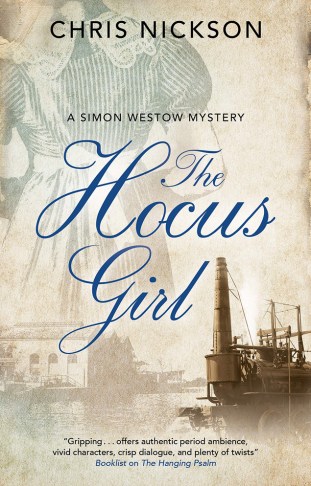 Such a man is Simon Westow. He is paid, cash in hand, to recover stolen goods, by whatever means necessary. His home town of Leeds is changing at an alarming rate as mechanised cloth mills replace the cottage weavers, and send smoke belching into the sky and chemicals into the rivers. We first met Westow in The Hanging Psalm, and there we were also introduced to young woman called Jane. She is a reject, a loner, and she is also prone to what we now call self-harm. She is a girl of the streets, but not in a sexual way; she knows every nook, cranny, and ginnel of the city; as she shrugs herself into her shawl, she can become invisible and anonymous. Her sixth sense for recognising danger and her capacity for violence – usually via a wickedly honed knife – makes her an invaluable ally to Westow. I have spent many enjoyable hours reading the author’s books, and it is my view that Jane is the darkest and most complex character he has created. In many ways The Hocus Girl is all about her.
 he 1820s were a time of great domestic upheaval in Britain. The industrial revolution was in its infancy but was already turning society on its head. The establishment was wary of challenge, and when Davey Ashton, a Leeds man with revolutionary ideas is arrested, Simon Westow – a long time friend – comes to his aid. As Ashton languishes in the filthy cell beneath Leeds Moot Hall, Westow discovers that he is treading new ground – political conspiracy and the work of an agent provocateur.
The books of Chris Nickson which are set in the nineteenth century have echoes of Blake contrasting England’s “green and pleasant land ” with the “dark satanic mills”. Yes, scholars will tell us that this is metaphor, and that the Blake’s mills were the churches and chapels of organised religion, but a more literal interpretation works, too. By the time we follow the career of Tom Harper, all the green has turned black, and the pounding of the heavy machinery is a soundtrack which only ceases on high days and holidays. Simon Westow, on the other hand, half a century or more earlier, sees a Leeds where twenty minutes walk will still find you a cottage built of stone that is still golden and unblackened by industrial soot. There are still becks and streams which run clear, uncoloured by cloth dyes and industrial sludge. Just occasionally – very occasionally – there is an old woman still working on her hand loom, determined and defiant in the face of mechanised ‘progress’.
“Up on a ridge, a large steam engine thudded, powering a hoist. A single stone chimney rose, belching out its smoke. No grass anywhere. The land seemed desolate and wasted, people by miners in pale trousers ans waistcoats, blue kerchiefs knotted at the neck. Women and children bent over heaps of coal, breaking up bog black chunks as they sorted them.
This was progress, Simon thought as he watched. It looked more like a vision of hell on earth.”
am not sure if Nickson would have been battling with the Luddites as they fought to hold back mechanisation. He is too intelligent a writer to be unaware that the pre-industrial age may have had its golden aspects but life, for the poor man, was still nasty, brutish and short. His anger at the results of ordinary people being sucked into cities such as Leeds to be set to work tending the clattering looms and feeding the furnaces is palpable. Chris Nickson is a political writer of almost religious intensity who, paradoxically, never preaches. He lets his characters have their hour on the stage, and lets us make of it what we will. The Hocus Girl is powerful, persuasive and almost impossible to put down. It is published by Severn House and is available now.
For more on Chris Nickson’s historical novels click the image below.


 o, this is not a novel about stamp collecting, and it would be a skillful writer who could turn the rather dry pursuit of philately into a thriller. The Penny Black is a pub – one of three – in the apparently languid and peaceful Norfolk riverside village of Horning. On the river pleasure boats glide, coots skate and squabble while, beneath the ripples, Esox Lucius bides his time, ready to snap up an unwary Roach or two, or perhaps a duckling who has strayed too far from its siblings.
 This riparian idyll is about to suffer a tsunami of turbulence however, partly due to one of its temporary residents. To call Ben Bracken, the creation of author Rob Parker (left), a Wild Card is something of an understatement. In A Wanted Man and Morte Point (
 With the cash needed to pay for a fake passport and drivers’ licence Bracken prepares to bid farewell to Horning, a brutal murder and an encounter with a new enemy puts him – literally – on his back, recuperating in a lonely farmhouse. We learn that Norfolk’s would-be Medellin Cartel are actually dancing to the tune played by a London mobster called Terry “Turn-up” Masters, with whom Bracken has serious history. When Masters and his thugs turn up in Horning at the same time as a government Black Ops unit determined to eliminate Bracken, the scene is set for a spectacular shootout involving a buried cache of Home Guard weapons, gallons of blood sprayed liberally over the walls of The Penny Black and enough corpses to keep the local pathologist busy for weeks.
 ob Parker writes in a full-on style which frequently exceeds the speed limit and sometimes skates dangerously on the thin ice of probability, but he is never less than entertaining. Amid the mayhem, there are some sharp social observations:


 We first met London’s Detective Inspector Jake Porter and Sergeant Nick Styles in Robert Scragg’s debut novel What Falls Between The Cracks (
 orter is still haunted by the death of his wife in a hit-and-run accident and, like all good fictional DIs, he is viewed by his bosses – in particular the officious desk jockey Milburn – as mentally suspect. He is forced to go for a series of counselling sessions with the force’s tame psychologist, but after one hurried and fruitless encounter, he becomes totally immersed in a puzzling case which involves an old friend of his, Max Brennan. Brennan has arranged to meet his long-estranged father for the first time, but the older man fails to make the rendezvous. When Brennan’s girlfriend is abducted, he turns to Porter for help.
 eanwhile, Styles has a secret. His wife is expecting their first child and she has grave misgivings about her husband continuing as Porter’s partner, as their business puts them all too often – and quite literally – in the line of fire. Understandably, she recoils at the possibility of raising the child alone with the painful duty, at some point, of explaining to the toddler about the father they never knew. Styles has accepted her demand to transfer to something less dangerous, but as the Brennan Affair ratchets up in intensity, he just can’t seem to find the right moment to break the news to his boss.
 his is a well written and entertaining police procedural with all the necessary tropes of the genre – maverick cop, desk-bound boss, chaotic personal lives, grimy city background and labyrinthine plot. Naturally, Porter finally gets to the bottom of the mystery of the missing businessmen, but this point was reached with a fair few pages left to go, so clearly something else is about to happen. Sure enough, it does, and it is clever plot twist which I certainly didn’t see coming. Robert Scragg may be a relative novice in the crime fiction stakes but, to mangle a metaphor, he casts his red herrings with the ease and accuracy of an expert.

 he dramatic events of The Rooks Die Screaming take place in the spring of 1921 in the Cornish market town of Bodmin. The bare bones of the story are that Detective Inspector Cyril Edwards of Scotland Yard has come to Bodmin to investigate murder and treachery involving a group of spies known as The Four Rooks. This book is a sequel to The Woman With The Red Hair, and to say there is a back-story is something of an understatement. The eponymous young woman is called Morag and, amongst other things, is Edwards’ sister-in-law. Elisha Edwards was one of the millions of unfortunates taken by an agent even deadlier than high explosives and machine gun bullets – Spanish Influenza.
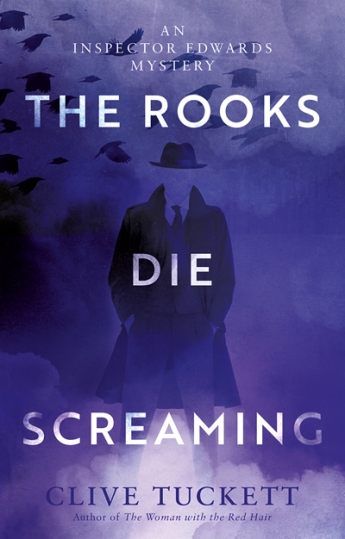 Morag is now Lady Frobisher. Her husband Harry, heir to The Fobisher Estate on the outskirts of Bodmin, is blind, victim of a grenade in the Flanders trenches. In the previous novel, Frobisher Hall was the scene of great torment for Morag, as she fell into the clutches of Morgan Treaves, an insane asylum keeper and his evil nurse. Treaves has disappeared after being disfigured with a broken bottle, wielded my Morag in a life or death struggle.
 That said, The Rooks Die Screaming is inspired escapist reading. It would be unfair to say that Tuckett (right) writes in an anachronistic style. This is much, much better than pastiche, even though there are elements of Conan Doyle, the Golden Age, John Buchan and even touches of Sapper and MR James. So, eventually, to the plot, but we need to know a little more about Cyril Edwards. Like many a fictional detective inspector he is his own man. In another nice cultural reference Tuckett adds a touch of Charters and Caldicott as Edwards explains to the bumptious Standish, a mysterious officer from Military Intelligence;
 tandish orders Edwards to investigate the possibility that Harry Frobisher is one of the Rooks, but one who has betrayed his country. Arriving in Bodmin his first task is to explain to the local police how a corpse found on a train is that of a notorious London contract killer. Tuckett’s Bodmin is full of stock characters, including a stolid police sergeant, an apparently tremulous clergyman and a punctilious but respected solicitor who is privy to all the secrets of the local gentry, but is oh, so discreet. To add to the fun, Frobisher Hall also has its requisite roll call of faithful retainers.


 al McDermid was anxious that over-enthusiastic reviewers and fans might give away the ending of her previous Carol Jordan and Tony Hill novel,
 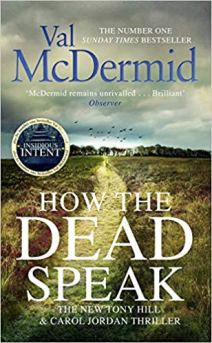 After the events of which we will not speak, Jordan’s Regional Major Incident Team has been disbanded while the woman who was its beating heart and soul keeps her fragile psyche from harm by continuing to renovate her home, a former barn on a heather covered northern hillside. Visitors are few and usually unwelcome, but none more so than Tony Hill’s vindictive and manipulative mother Vanessa who, after inflicting her abrasive personality on her son in a prison visit, coerces Jordan into using her investigative skills to track down a fraudster who has conned her out of a small fortune. Only slightly less welcome is Bronwen Scott, Tony Hill’s solicitor. She also has a job for Jordan, but this time it is to establish grounds for an appeal against a murder conviction handed down to a gay man who, the jury believes, has murdered a rent boy.
 nd there is a bonus. McDermid – who, as fans of her band will know, is no mean singer – might just be performing a cover version of one of my favourite songs Save The Best For Last (below). If any potential readers are sentimental old (or young) sods like me, you will be permitted a little sniffle and a dab at a moist eye when you read the final pages.

 London. 1894. The British Museum has become a crime scene. A distinguished academic and author has been brutally stabbed to death. Not in the hushed corridors, not in the dusty silence of The Reading Room, and not even in one of the stately exhibition halls, under the stony gaze of Assyrian gods and Greek athletes. No, Professor Lance Pickering has been found in the distinctly less grand cubicle of one of the museum’s … ahem …. conveniences, the door locked from inside, and the unfortunate professor slumped over the porcelain.
 This is a highly readable mystery with two engaging central characters, a convincing late Victorian London setting, and a plot which takes us this way and that before Daniel and Abigail uncover the tragic truth behind the murders. Jim Eldridge (right) is a veteran writer for radio, television and film as well as being the author of historical fiction, children’s novels and educational books. Murder At The British Museum is published by Allison & Busby,


 ince she first appeared, sixteen years ago, in Driftnet, forensic scientist Dr Rhona MacLeod has lived out the words of her infamous Scottish compatriot, the former Thane of Glamis:
 Indeed, her creator Lin Anderson has included the fatal ‘D’ word in the titles of each successive novel from number eight, Picture Her Dead (2012) to this latest novel, the thirteenth in the series. For readers new to the novels, and I am one such, Anderson wastes no time in letting us know that Dr MacLeod is recovering physically and mentally from a terrible ordeal. She is on enforced sick leave, has taken herself away from her Glasgow base and rather than endure a spell in the official police rehabilitation unit at Castlebrae, has decided to revisit her teenage summer holiday haunts on the Isle of Skye.
 t is now winter on Skye, and it is a very different place from the sunlit island Rhona knew as a teenager. As ever, the Black Cuillin broods over Glen Brittle and Sligachan, but now the crests of the peaks are white with the first snows. Rhona is reunited with Jamie McColl, a summer holiday friend and, through him, she meets the proprietors of A.C.E Target Sports, an outdoor adventure facility – and their dog, Blaze. Rhona takes Blaze for a walk – or vice versa – but as the December light begins to fail:
 We are now on page 29 of 425, but Lin Anderson (right) has already established an intriguing parallel narrative, the significance of which we can only guess at this stage. As the novel unfolds, however the mists begin to clear, although the full significance of this sub-plot, and how it converges, horrifically, with Rhona MacLeod’s supposed recuperation, only becomes clear in the last few pages.
 ithout, I hope, giving away any of the beautiful intricacies of this novel, I can say that a group of serving RAMC medics, on leave, have decided to visit Skye to see if the resilience and courage they showed in the face of the implacable brutality of Helmand Province and the Taliban will be, in any way, tested by the wintry glens and screes of Skye. What befell them in Afghanistan, and how those events play out on Eilean a’ Cheo, the Misty Isle, is for you to discover.


 In the last of England’s civil wars, forces opposed to King Charles 1st and his belief in the divine right of kings have won the day. 1656. Charles has been dead these seven years and his son, another Charles, has escaped by the skin of his teeth after an abortive military campaign in 1651. He has been given sanctuary ‘across the water’, but his agents still believe they can stir up the population against his father’s nemesis – Oliver Cromwell, The Lord Protector.
 tells us that Seeker succeeds, but along the way SG MacLean (right) makes sure we have a bumpy ride through the mixture of squalor and magnificence that is 17th century London.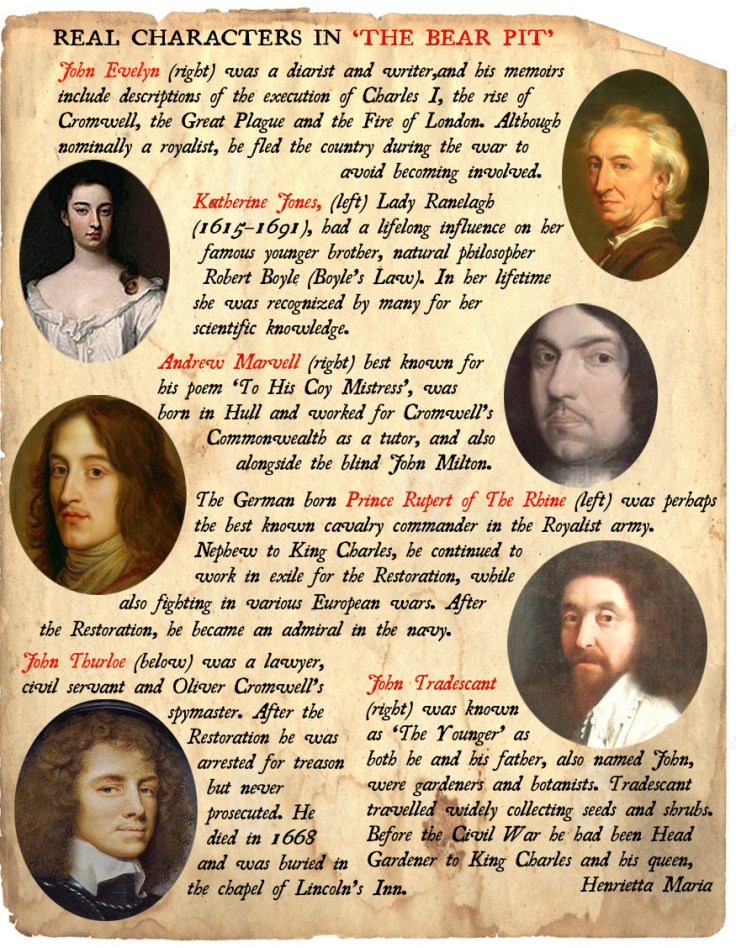
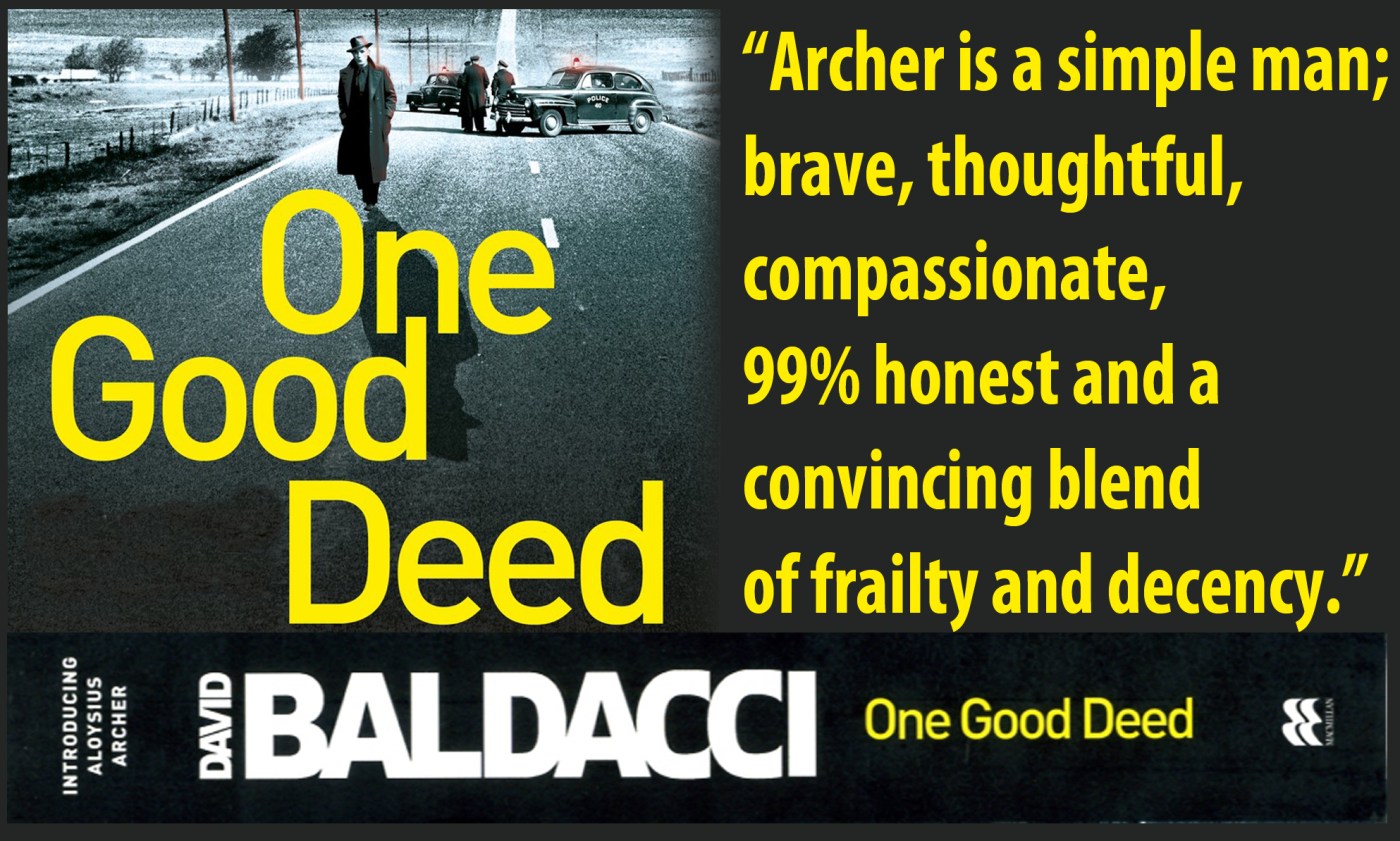

 Wearing a cheap suit, regarded as trash by the local people, and with every cause to feel bitter, Archer checks into the Derby Hotel and contemplates the future. His immediate task is to check in with his Probation Officer, Ernestine Crabtree. Quietly impressed by her demeanour – and her physical charm – Archer goes, in spite of his parole restrictions, for a drink in a local bar, The Cat’s Meow
 ven before Lucas Tuttle answers the door to Archer’s knock by pointing a cocked Remington shotgun at his unwelcome visitor, Archer has learned that the floozie on Pittleman’s arm in the bar is none other than Jackie, Tuttle’s estranged daughter. Archer finds the coveted motor car hidden away on Tuttle’s ranch, but it has been deliberately torched. Cursing his involvement in this blood feud, Archer’s equilibrium and freedom both take a severe knock when Pittleman’s body is found in a bedroom just along the floor from Archer’s room in The Derby. Thrown into the cells as the obvious suspect, Archer is released when he meets up with Irving Shaw – a serious and competent detective – and convinces him of his innocence.
 Pretty much left on his own to solve the case after a violent attempt to silence Jackie, Archer has to summon up very ounce of his military experience and his innate common sense to put himself beyond the reach of the hangman’s noose.


 fullybooked2017