

Having not come across author Eric Brown before, I did a quick search, and Wiki told me that he was a prolific science fiction writer, and I immediately thought I must have got the wrong chap, but he is one and the same. His versatility in writing Golden Age-ish mysteries set in the 1950s as well as futuristic fantasies is to be commended, but after all, he was born and raised in Haworth which, if you are looking for literary connections, is as good a place as any, and better than most.
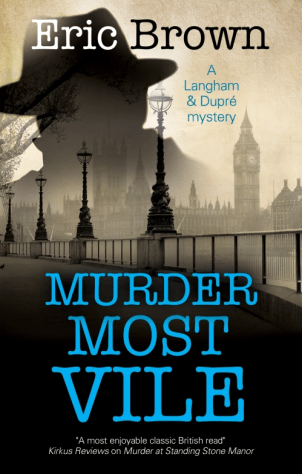 What is happening then, in Murder Most Vile? All too often these days, I am a late arrival at the ball and this is the ninth in a series centred on a pair of investigators in 1950s England. Donald Langham is a London novelist, who runs an investigation agency with business partner Ralph Ryland. Langham’s wife, Maria Dupré, is a literary agent. Here, Langham is engaged by a rather unpleasant and misanthropic – but very rich – old man named Vernon Lombard. Lombard has a daughter and two sons, and the favourite one of the two boys, a feckless artist called Christopher, is missing.
Old Lombard has history, and not a particularly salubrious one in terms of British politics in the 1930s. He was a fervent supporter of Oswald Mosley and his fascists, and while this years ago, it is to rake up uncomfortable memories for Ralph Ryland when it emerges that the boss of a London brewery is also a pervert, a gangster – and, like Vernon Lombard – someone who longs for the glory days of the British Union of Fascists.
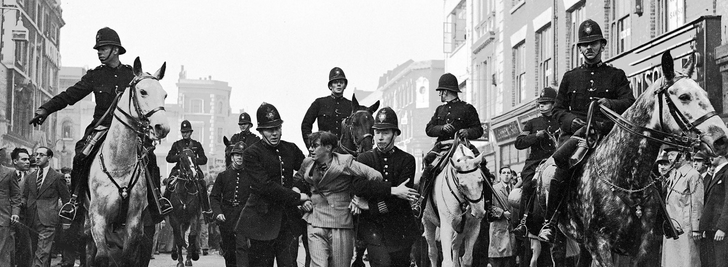
Langham and Ryland are an interesting team, with Langham the more urbane and middle class of the two, while Ryland’s father was a London docker who was on what we now consider to be the wrong side of things during the infamous Battle of Cable Street in 1936, when Mosley’s fascists went head to head with an opposing force of trade unionists, Jewish groups and communists, with the police trying to keep the sides apart. Out of loyalty to and, perhaps, fear of his father, Ryland was there that day, and what he saw – and did – has continued to haunt him, especially since he was among the Allied troops who liberated Belsen in April 1945 – a month that has special significance for some of the characters in this novel.
What the pair uncover is that most poisonous of situations – bitter family jealousy. It transpires that Christopher Lombard’s apparent success as an artist is due to his father buying up most of his canvases, and the other two siblings are not happy. There are abductions, murders and mysteries – and Eric Brown provides a clever plot twist which I never saw coming.
It’s not always helpful to shepherd crime novels into genres, but I know that many readers are not comfortably retired like me, and the time they have for settling down with a good book is limited, and that is why they sometimes welcome a ‘heads-up’ as to what kind of book to pick up next. I would say that Murder Most Vile is cosy crime, but with a hard edge. It is also, I suppose, historical crime fiction, because, for some, 1957 is as far away as 1757 in terms of social attitudes and the trappings of technology. It might also be doffing its trilby to the world of bygone investigators – Paul Temple, certainly, with maybe just a hint of Bulldog Drummond. We have dead bodies, escapes from dungeons, powerful embittered and influential old men and – essential to all private investigators – friends in the police force. The bottom line, however, is that this is cleverly written by Eric Brown, and is well worth a few hours of anyone’s time. Murder Most Vile is published by Severn House and is out now.
ERIC BROWN’S WEBSITE IS HERE


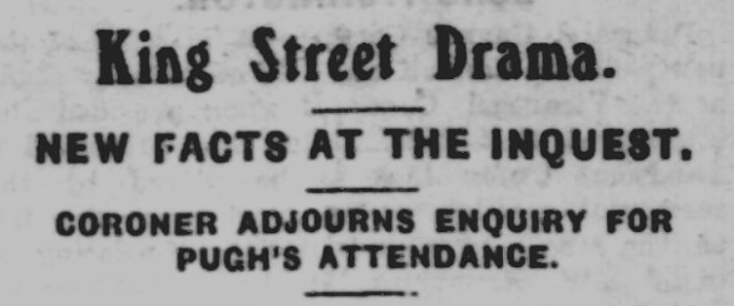


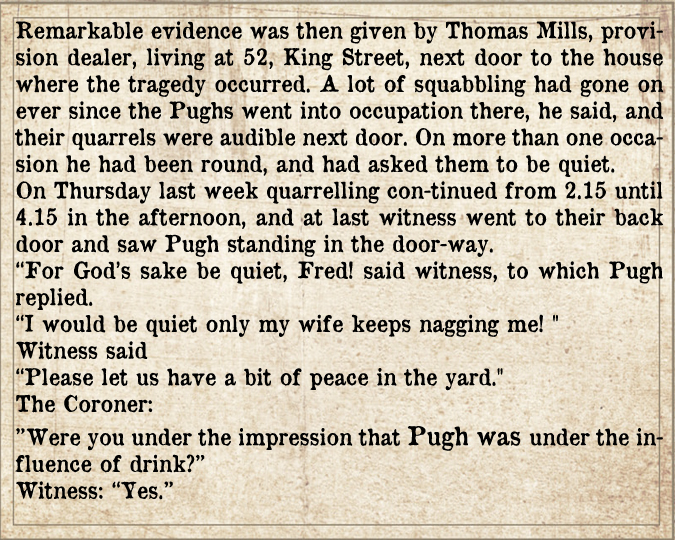
 As with many of these stories, there are always the children who become victims of adult misdeeds. The Pughs had two children. In the census which was held in the summer of 1921, an Arthur Frederick Pugh, born in 1920 and listed as grandson, was living in Leamington in a house, the head of which was Edith Jones, born in Bishops Itchington, and almost certainly Constance Pugh’s mother. Sadly, the next time we hear of Arthur Frederick Pugh it is as a casualty in WWII. His body lies in Madras War Cemetery.

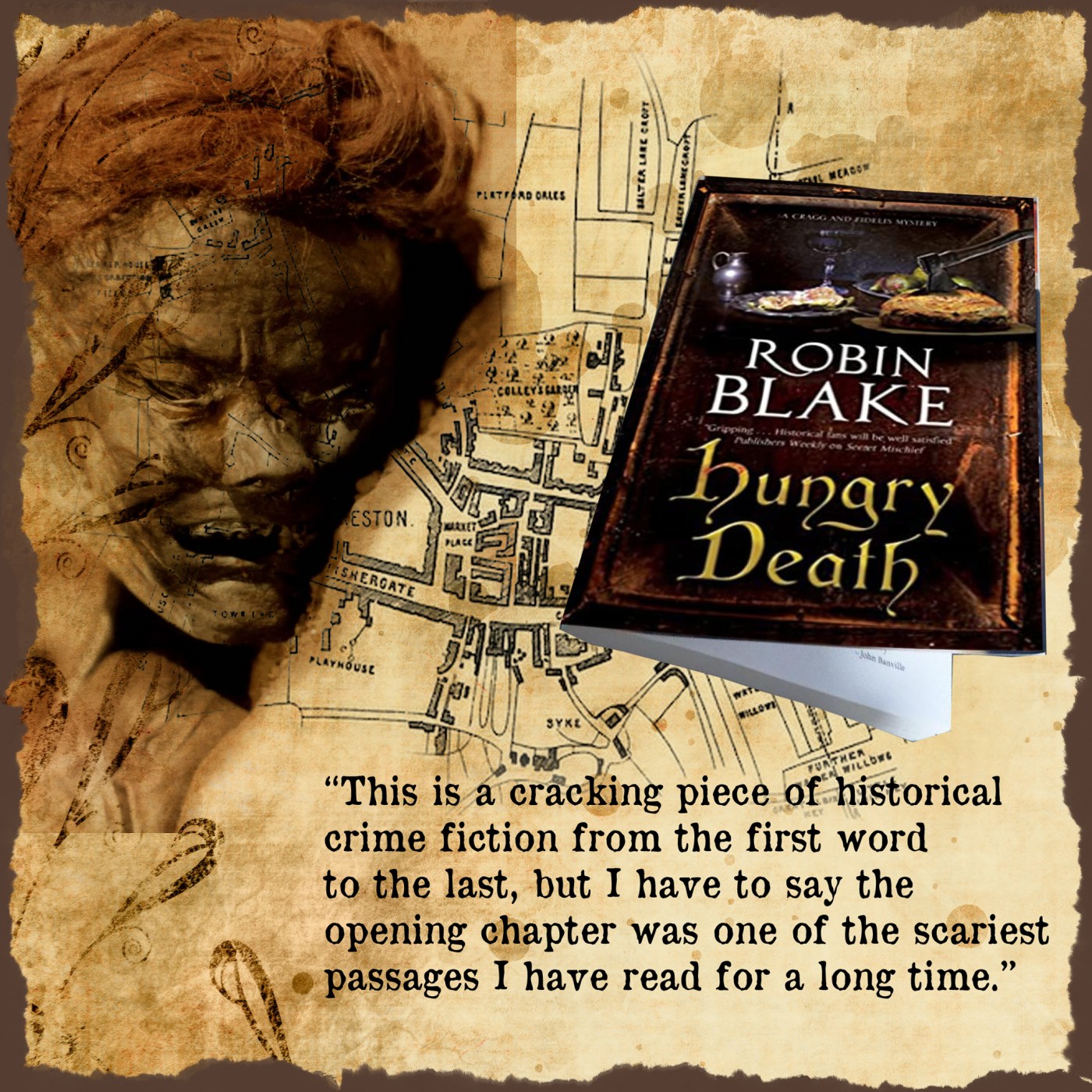
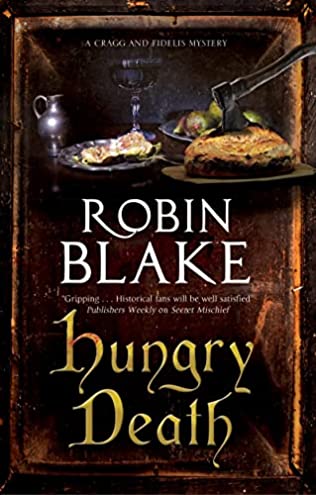 Cragg is instructed to ride out to a lonely moorland farmhouse, and what he finds surpasses any of the previous horrors his calling requires him to confront. He finds an entire family slaughtered, by whose hand he knows not, unless it was the husband of the house, himself hanging by a strap hooked over a beam. To add even more mystery to the grisly tableau, Cragg learns that the KIdd family were members of a bizarre dissenting cult which encourages its members into acts of brazen sexuality. Then, in a seemingly unconnected incident, the gardener at a nearby mansion, trying to improve the drainage under his hothouse, discovers another body. This corpse may have been in the ground for centuries, as it has been partly preserved by the peat in which it was buried. When Fidelis conducts an autopsy, however, he concludes that the body is that of a young woman, and was probably put in the ground within the last decade or so.


 Jimmy Mullen is a former Royal Navy man, but he has fallen on hard times. He served in The Falklands and has recurrent PTSD. He has served a jail term for manslaughter after intervening to stop a girl being slapped around and, until recently, lived out on the streets of Newcastle, among the city’s many homeless. Now, for the first time in years, he has a job – working for a charity – and a proper roof over his head. Author Trevor Wood (left) introduced us to Mullen in
  Gadge becomes the victim of one of these assaults, but when he is woken up from his drunken stupor by the police, he is covered in blood – most of it not his – and in an adjacent alley lies the corpse of man battered to death with something like a baseball bat. And what is Gadge clutching in his hands when the police shake him into consciousness? No prizes for working that one out!

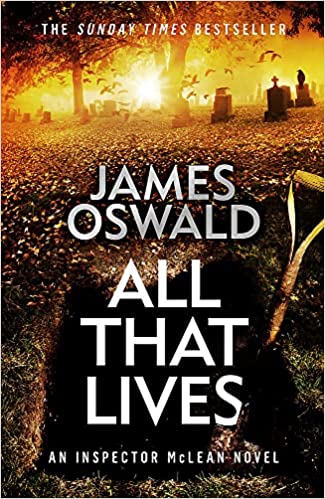 That reminiscence may seem unrelated to a book review, but it is relevant. When reviewing the latest book in a long and successful series it is tempting to think that all prospective readers will be fully up to speed with the quirks and history of the main characters. But that’s not so. Thankfully, people come to books at different times and for different reasons, so a paragraph about Edinburgh copper DI Tony McLean won’t be wasted. If you already know, then just skip ahead.




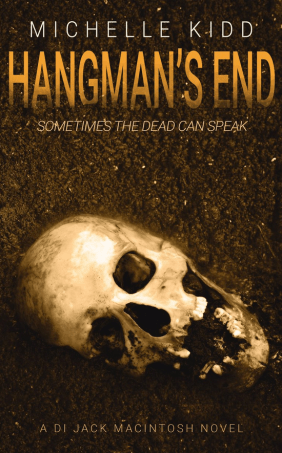 We have the advantage over the police in that we are introduced early on to the man who dropped the suitcase from the bridge into the mud. We are not sure if he is the actual slaughterman, or merely the butcher, but we do learn the whereabouts of the child’s head. The victim is soon identified as Maisie Lancaster, but a visit to her parents’ house brings MacIntosh into a collision with the metaphorical runaway car of one of his previous cases.


 fullybooked2017