Search

fullybooked2017

Tag

murder

THE SPY COAST . . . Between the covers

tsc spine007 copy

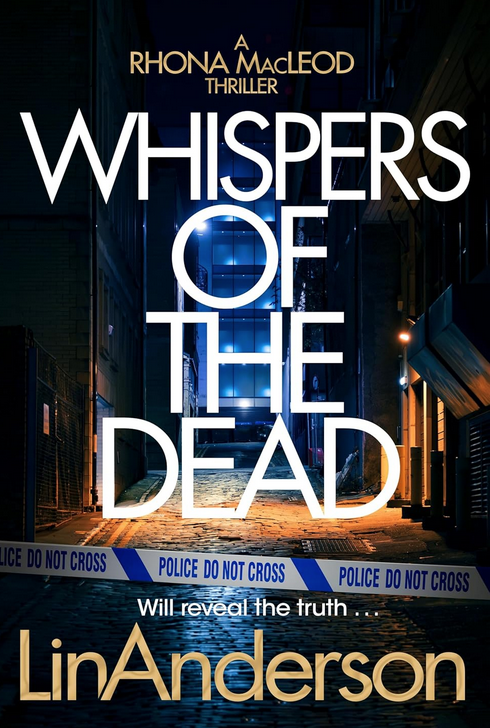
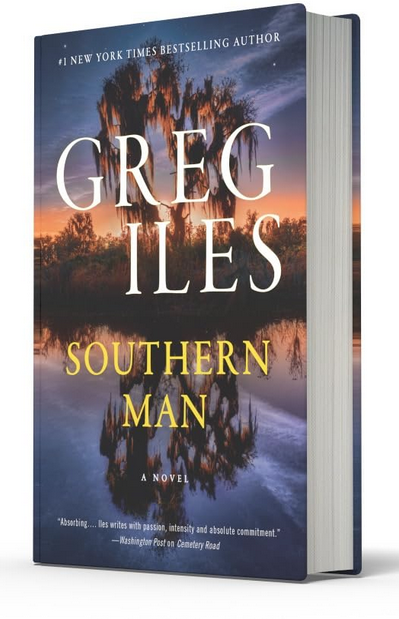
Have you ever wondered were CIA spooks go when they are pensioned off? Tess Gerritsen tells us that a number of them have settled down in the tiny Maine harbour town of Purity. Among them is Maggie Bird, once a stone cold killer for the Company, but now just a chicken farmer with the common ailments – such as aching joints –  shared by all senior citizens. Her neighbours are mostly of a similar age and background – particularly Ben Diamond, Declan Rose and the elderly couple Lloyd and Ingrid Slocum.

When Maggie is visited by a current CIA operative, a young woman who identifies herself only as Bianca, she is reminded of an unwelcome part of her past, in the shape of a fellow agent called Diana Ward. Ward is still active, but has gone missing, her bosses are concerned, and are offering to pay Maggie to help trace the missing woman. Maggie rejects the offer, saying she does not care if Ward is dead or alive.

Why the indifference? It is, as they say, complicated, and we learn that Ward and Maggie go back a long way, with the pivotal point in their professional relationship being an attempt, years earlier to take out a British wheeler-dealer – and international gangster – called Phillip Hardwicke. Long story short, the end result was a CIA sting that ended in disaster for Maggie. Her doctor husband, Danny, had been working as Hardwicke’s personal physician, and a private jet they were were traveling in left Malta, only to explode mid-air and crash into the sea with the  loss of all on board.

Back in present day Maine, Maggie is with her friends, discussing the mysterious visit of Bianca, when she hears that police have surrounded her house. Rushing home to investigate, she finds there is a corpse lying in the frozen snow of her driveway. It is the woman who called herself Bianca, and she has been tortured bt then professionally despatched with two bullets to the head.

Cocktails009

Maggie realises that the carnage is all about her and her past and so reluctantly she packs a few things, arranges some chicken-sitters, and goes back on the road to see if she can exorcise the ghosts of her past. Her travels take her into immediate and present danger, in Thailand and across Europe. My copy of the book came with a couple of cocktail recipes (above). The Spy Coast has all the hallmarks of a classic mainstream American thriller – taut as piano wire, danger round every corner and with convincing portraits of exotic locations.

T

THE LONGEST GOODBYE . . . Between the covers

TLGspine

This tough and unflinching Tyneside police thriller is the latest outing for Mari Hannah’s DCI Kate Daniels. The Longest Goodbye is the ninth in a series which began in 2012 with The Murder Wall. We are in late December 2022, and in Newcastle, like other cities across Britain, revellers are raising two fingers to the recently discovered Omicron variant of the Coronavirus, and are out in the clubs and pubs wearing – because it is Newcastle, after all – as little as possible, despite the freezing weather. Two lads in particular – homeward bound from overseas, and just off the plane –  are determined to have  a few beers before being reunited with mum and dad.

However, neither the two bonny lads nor mum and dad quite fit the ‘home for Christmas’ template. Lee and Jackson Bradshaw are only in their twenties, but have already done serious time for violence, and are returning from a European bolthole where they have been hiding from British police. Mum and Dad? Don Bradshaw is a career criminal, but pales into insignificance beside his wife Christine, who is the ruthless boss of the region’s biggest crime syndicate.

When the two prodigal sons are gunned down on the doorstep of their parents’ (recently rented) home just as they are about to sing ‘Silent Night‘, la merde frappe le ventilateur (pardon my French) The police are called and Don Bradshaw, brandishing the handgun dropped by one of his sons, is shot dead by a police marksman. No-one on the staff of Northumbria police will mourn three dead Bradshaws, but for Kate Daniels, the incident opens up a particularly unpleasant can of worms. Three years earlier, her best friend and police colleague Georgina Ioannou was found dead in a patch of woodland. Shot in the back. Executed. And it was the Bradshaw boys who were prime suspects.

Kate is forced to think the unthinkable: that Georgina’s twins, Oscar and Charlotte, now both police officers, were involved; even worse is the thought that Georgina’s husband Nico, although ostensibly a peaceful restaurateur, has avenged his wife’s murder. Revisiting old cases is never easy, and this one is made even worse by the fact that the Senior Investigating Officer at the time, was lazy, incompetent, and all-too-willing to cut corners.

Mari Hannah does not spare our sensibilities. She takes us through the painful process of self-examination one uncomfortable step at a time. It isn’t just Kate Daniels who must own up to past mistakes and errors of judgment, it is the whole Major Incident Team. Meanwhile, although the appalling Christine Bradshaw is safely behind bars facing a murder charge (the Firearms Officer she brained with a baseball bat has since died) like a badly treated tumour, malignant cells remain, and these men, enabled by her corrupt lawyer, are hard at work on the streets and in the pubs, clubs and private homes of Newcastle, determined to prevent the police from discovering the truth.

The Longest Goodbye, with its gentle nod to the Raymond Chandler thriller of almost the same name, grips from the first page, and we are fed the reddest of red herrings, one after the other, until Mari Hannah reveals a murderer who I certainly had not suspected. While few mourn the two dead criminals, when their killer is finally unmasked it is heartbreaking on so many levels. This is superior stuff from one of our finest writers. The Longest Goodbye is published by Orion and was published on 18th January.

LOST AND NEVER FOUND . . . Between the covers

LANF header

Screen Shot 2023-12-14 at 17.40.34If the tags “Oxford”, “Murder” and “Detective” have you salivating about the prospect of real ale in ancient pubs, choirs rehearsing madrigals in college chapels, and the sleuth nursing a glass of single malt while he listens to Mozart on his stereo system, then you should look away now. Simon Mason (left) brings us an Oxford that is very real, and very now. The homeless shiver on their cardboard sleeping mats in deserted graveyards, and the most startling contrast is the sight of Range Rovers and high-end Volvos cruising into car washes manned by numerous illegal immigrants from God-knows-where, all controlled by criminals, probably embedded within the Albanian mafia.

Against this background, meet Detective Inspector Ryan Wilkins, and his partner DI Ray Wilkins (no relation to Ryan or the late footballer). Ray is from a wealthy Nigerian family, happily married, photogenic and a rising star in the police hierarchy, while Ryan is – to put it bluntly – what some people might call a Chav. His idea of workwear is silver shell-suit bottoms, baseball cap and knock-off Nike hoodie. He is working hard to revive his career after being suspended. His former girlfriend died of a drug overdose, while his son – Ryan junior, – is largely looked after by Wilkins’s sister.

I missed the first novel in the series, but enjoyed the second, The Broken Afternoon, which I reviewed in December last year. Now the unlikely partners are faced with a new mystery. A formerly wealthy heiress, who has frittered away most of her privilege on drugs and a hedonistic lifestyle, has gone missing. Her Rolls Royce is found abandoned after colliding with the gates of the station car park. The tabloids, who have a huge library of back copy on Zoey Fanshawe, sniff a sensation, and they are not wrong. When Ryan finds her body, brutally strangled in an empty Oxford property owned by her former husband, the world and his wife are leaning on him to find the killer.

The concept underpinning this series is the contrast between Ray and Ryan, and that Ryan – the anarchic slob – is the one with the real detective’s brain. He is also unlucky in love. His current girlfriend, ostensibly a flourishing florist, has a dark past. We meet an officer who seems to be everyone’s favourite copper, the charismatic Assistant Chief Constable, Chester Lynch. There isn’t a contemporary box she doesn’t tick. Female?√ Black?√ Media friendly?√ Wears leather and designer shades?√ So far, her career trajectory has not been impeded by awkward bastards like Ryan Wilkins, who has a habit of asking difficult questions. This is all about to change.

While Ray seems mesmerised by Lynch (who has just offered him a serious promotion) Ryan is immune to the hype, and suspects she is a player in the murky back-story of the late Zoe Fanshawe. The plot of Lost and Never Found is beautifully crafted, and the description of the underbelly of Oxford life – the homeless camping in the graveyards of its ancient churches, and the women plying their trade in the derelict garages of its bleak outer suburbs – is a salutary contrast to the “Dreaming Spires” trope. Another part of the spell that Simon Mason casts is the difference between what Ray and Ryan face when they go home at night. Ray is met by his eminently sensible and forbearing wife Diane, while Ryan faces only the wrath of his sister, and the fact that Ryan junior has fallen asleep yet again without a bed-time story from his dad. This book will be published by Riverrun on 18th January.

THE TEACHER . . . Between the covers

Teacher header

This is a welcome return for Tim Sullivan’s distinctive copper, Detective Sergeant George Cross. Based in Bristol, the series is centred upon this unusual police officer – unusual in that he has a mental condition variously described as Autism, or Aspergers Syndrome. Common symptoms of the condition include lavish attention to detail, the inability to understand figurative speech and an intense reliance on pattern and repetition in personal life. I loved the previous book, The Monk, and you can read what I thought by clicking the link.

Now, in a village not far from Bristol an elderly man has been found dead at the foot of the stairs in his cottage. Alistair Moreton was not well-loved in Crockerne . The former headmaster of a private school was abrupt and aloof – except at parish council meetings when he objected to anything and everything on the agenda, mainly because he could, and because he took pleasure at being a contrarian.

A few years previously, he had been wrongfully implicated in the disappearance of a local schoolgirl, and much damage was done before she presented herself at a London police station, admitting she had just run away from home. Moreton had managed to alienate almost everyone in Crockerne, particularly the London couple – the Cockerells – who had a weekend cottage next to his, and with whom he had engaged in several lengthy – and expensive – legal battles.

Moreton’s son Sandy is an MP whose right-wing views have resulted in his being ‘recalled’ by his constituents, and so he faces a by-election. When George Cross’s temporary boss, DI Bobby Warner makes a premature arrest, and organises a press conference alongside Sandy Moreton, Cross quietly continues his own investigations, troubled by the fact that Alistair Moreton’s ‘set-in-stone’ daily routine had changed significantly over the two weeks prior to his death.

Cross discovers that Moreton’s tenure as headmaster of All Saints was characterised by brutality and a cruel disregard, and that there are many grown men whose childhoods were disfigured by beatings at the school – and the almost universal disbelief of their parents when they were told what was going on. A Facebook group of All Saints ‘survivors’ has been set up, and Cross comes to think that Moreton’s killer may be one of the members.

Along the way we have an intriguing glimpse into Cross’s family life. His father came out as gay later in life, but his partner has died, while Cross’s mother has remarried. A local priest is perhaps the closest thing Cross has to a friend and the cleric – Stephen – acts as an unofficial master of ceremonies in this unusual ménage.

The Crown Prosecution Service have been persuaded to put Barnaby Cotterell on trial for murder, but the case falls apart. Meanwhile disturbing information has come to light about the professional behaviour (or otherwise) of DI Bobby Warner.

Tim Sullivan leads us a merry dance and we whirl through a plethora of potential killers until, with just a few pages to go, we finally learn just who – from a classroom full of suspects – did away with the vicious and sadistic former schoolmaster. George Cross is a remarkable character – resolute, hugely intelligent, baffling to many of his colleagues, but blessed with insights that make him unique among modern fictional coppers. The Teacher is published by Head of Zeus and will be available on 18th January.

HUNTS . . . Between the covers

HUNTS HEADER

The first thing to say is that the title won’t make much sense if you just randomly saw it on a shelf, but pick it up and you will see it is the first part of a trilogy, the two following novels being Skins and Kills. We meet Arran Cunningham, a young Scot. He is a Metropolitan Police officer working in Hackney, East London. Not being a Londoner, I have no idea what Hackney is like these days. I suspect it may have become more gentrified than it was in the spring of 1988. What Cunningham sees when he is walking his beat is something of a warzone. There is a large black population, mostly of Jamaican origin, and the lid is only just holding its own on a pot of simmering racial tensions, turf wars between drug gangs and a general air of despair and degeneration.

The pivotal event in the novel is a mugging (for expensive trainers) that turns into rape. The victim is a black teenager called Nadia Carrick. The attackers are a trio of young white men, led by a boy nicknamed Spider. They are unemployed, drug addicted, and live in a squat. Nadia tries to conceal the attack from her father, Stanton, but eventually he learns the true extent of her nightmare, and he seeks retribution. Stanton Carrick is an accountant, but a rather special one. His sole employer is Eldine Campbell, ostensibly a club and café owner, but actually the main drugs boss in the borough, and someone who needs his obscene profits legitimised.

Carrick is also a great friend of Arran Cunningham, who learns what has happened to Nadia. Purely by luck he saw Spider and his two chums on the night of the incident, but was unaware at the time of what had happened. Rather than use his own men to avenge Nadia’s rape, Eldine Campbell has a rather interesting solution. He has what could be called a “special relationship’ with a group of police officers, led by Detective Chief Inspector Vince Girvan, and he assigns them the task of dealing with with the perpetrators.

Meanwhile, Girvan has taken a special interest in Arran Cunningham, and assigns him to plain clothes duties, the first of which is to be a part of the crew eliminating Spider and his cronies. In at the deep end, he is not involved with their abduction, but is brought in as the trio are executed in a particularly grisly – but some might say appropriate – fashion. There is problem, though, and it is a big one. He recognises Spider’s two accomplices, but the third man is just someone random, and totally innocent of anything involving Nadia.

The three bodies are disposed of in the traditional fashion via a scrapyard crushing machine, but Cunningham is in a corner. His dilemma is intensified when his immediate boss, DI Kat Skeldon, aware that there is a police force within a police force operating, enrols him to be ‘on the side of the angels.’ As if things couldn’t become more complex, Cunningham learns that Stanton Carrick is dying of cancer.

JLDDurnie’s plot trajectory which, thus far, had seemed on a fairly steady arc, spins violently away from its course when he reveals a totally unexpected relationship between two of the principle players in this drama, and this forces Cunningham into drastic action.

The author (left) was a long-serving officer in the Met, and so we can take it as read that his descriptions of their day-to-day procedures are authentic. In Arran Cunningham, he has created a perfectly credible anti-hero. I am not entirely sure that he is someone I would trust with my life, but I eagerly await the next instalment of his career. Hunts is published by Caprington Press and will be available on 8th January.

THE BURNING TIME . . . Between the covers

TBT header

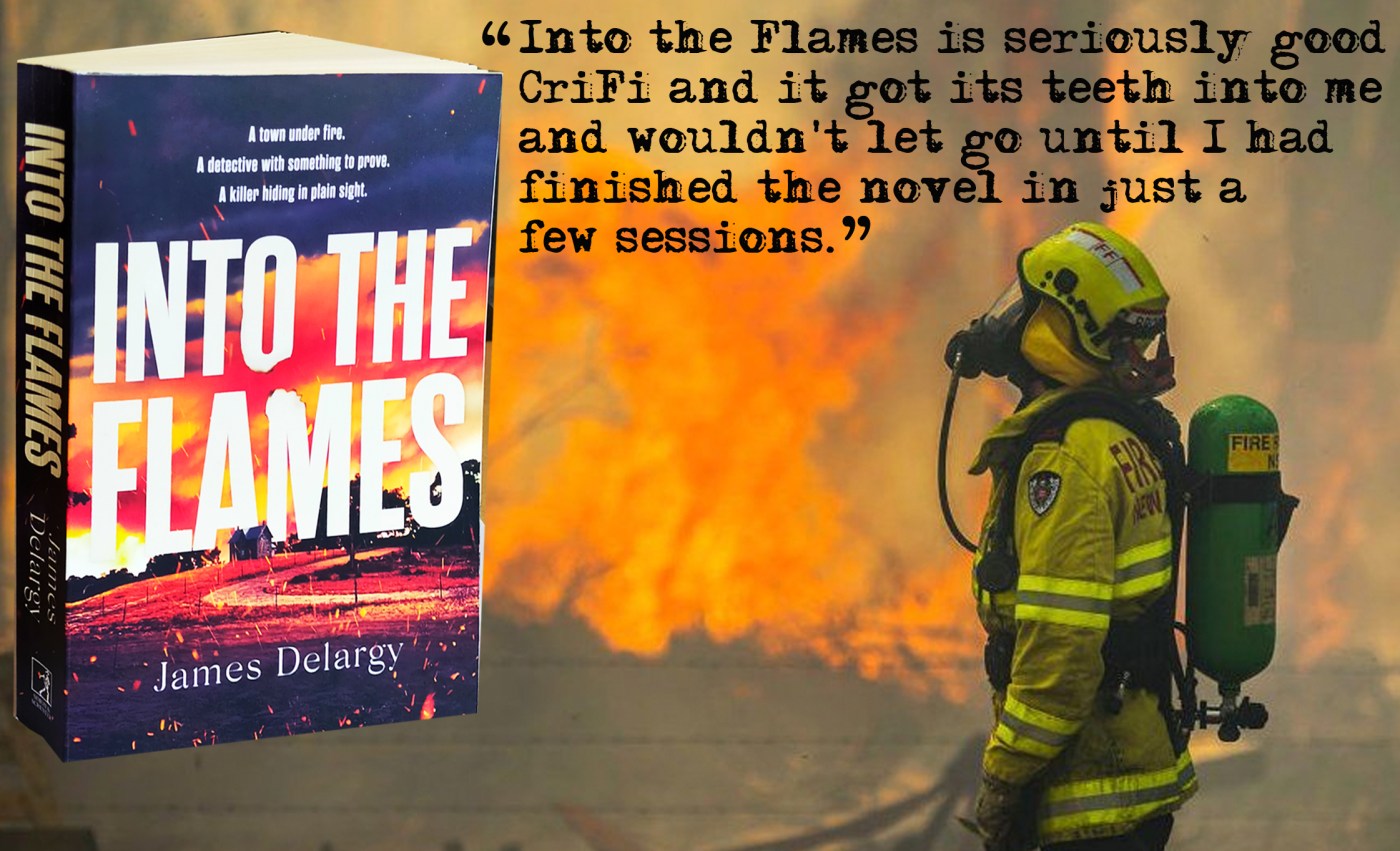
After David Mark starts his latest novel with a nod to the celebrated first three words of Herman Melville’s masterpiece, the first chapter of The Burning Time made me wonder if I had slipped off the page and fallen into a visceral nightmare straight out of the Derek Raymond playbook displayed in I Was Dora Suarez – there was blood, pain, death, distortion, madness, fire – and human disintegration.

Chapter two reminds readers that we are accompanying Inspector Aector McAvoy on his latest murder investigation. Bear-like McAvoy – based in Hull –  and his beguiling gypsy wife Roisin, have been invited to an all-expenses-paid stay at a luxury hotel in Northumbria  to celebrate the seventieth birthday of McAvoy’s mother. Mater and filius have become somewhat estranged over the years, mainly due to mum dispensing with Aector’s dad when her son was young, and opting for a newer, richer husband – who insisted on Aector being sent away to boarding school, causing mental scars which have not healed over the years. Aector, via this arrangement, has a step brother called Felix, older than he, and a person who subjected his younger step sibling to all kinds of mental and physical bullying back in the day. It is Felix who has organised the family gathering.

Part of the carnage in chapter one involves  Ishmael Piper – a middle-aged hippy living with a twin curse, the first part being that he was the son of the late and legendary rock guitarist Moose Piper, and the second being that he is suffering from Huntington’s Chorea, the degenerative disease whose most famous victim was the American musician Woody Guthrie. Ishmael inherited much of his father’s wealth, guitars and memorabilia, but his life has become a protracted car crash. His life comes to an end when his remote cottage on the Northumberland moors is gutted by fire. He is found dead outside, his daughter Delilah clutching his hand, while one of his female companions, asleep in an upstairs room, is the second fatality. Delilah has been badly burned. Later, McAvoy sees her:

He wants to look away; to jerk back – to not have to see what the flame has done on half of her face. He thinks of wormholes at low tide. He can’t help himself: his imagination floods with memories; so many twisted worm-casts in the soft grainy sand.’

McAvoy is an intriguing creation. He is physically massive, but suffers from debilitating shyness and a chronic lack of social confidence. He is, however, formidably intelligent and a very, very good policeman. Crime fiction buffs will know that there is a certain trope in police novels, where the newly promoted detective becomes frustrated with paper work, and longs to be out on the street catching villains. McAvoy is more nuanced:

‘It always surprises his colleagues to realise that, in a perfect world, McAvoy would never leave the safety of his little office cubicle at Clough Road Police Station.’

The Puccini aria from Tosca, Recondita Armonia, can be translated as ‘strange harmony’, and no harmony is stranger than that between McAvoy and his wife Roisin. They share a fierce intelligence, but David Mark portrays her as slender, captivatingly beautiful and blessed – or cursed – with an intuition and silver tongue inherited from her Irish gypsy ancestors, and a dramatic contrast to her physically imposing but socially gauche husband.

McAvoy realises that he has been invited to the family gathering, not out of any desire for reconciliation, but because Felix wants him to find out the truth behind Ishmael’s death, a task at which the local police have failed. McAvoy, of course – after bouts of epic violence involving various bit-players in the drama – does find the killer, but in doing so illustrates that the birthday party was nothing other than a bitter charade. The Burning Time – a powerful and sometimes disturbing read –  is published by Severn House and is available now. For more reviews of David Mark novels, click the image below.

Screen Shot 2023-12-09 at 19.36.32

THE SCOTSMAN . . . Between the covers

scotsman spine049 copy

Screen Shot 2023-11-27 at 19.53.03The trope of a police officer investigating a crime “off patch” or in an unfamiliar mileu is not new, especially in film. At its corniest, we had John Wayne in Brannigan (1975) as the Chicago cop sent to London to help extradite a criminal, and in Coogan’s Bluff (1968), Clint Eastwood’s Arizona policeman, complete with Stetson, is sent to New York on another extradition mission. Black Rain (1989) has Michael Douglas locking horns with the Yakuza in Japan, and who can forget Liam Neeson’s unkindness towards Parisian Albanians in Taken (2018), but apart from 9 Dragons (2009), where Michael Connolly’s Harry Bosch goes to war with the Triads in Hong Kong, I can’t recall many crime novels in the same vein. Rob McClure (left) balances this out with his debut novel, The Scotsman, which was edited by Luca Veste.

Charles ‘Chic’ Cowan is a Glasgow cop, and his daughter, Catriona, was studying at an Washington DC university when she was shot dead on the Metro. CCTV footage shows that her assailants were two black men, one of whom later ends up dead as a result of feuding between drug gangs. The local police remain mystified as to who the other shooter was, and they are also baffled by an apparent lack of motive, and the fact that the shooting – at close range with a small calibre pistol – has all the hallmarks of a contract killing. Cowan travels to DC in an attempt to discover the truth.

Our man is a synthesis of every Scottish copper we have ever read about. He is undoubtedly intelligent, but abrasive in his speech and manner. He used to like a drink or six but is now ‘on the wagon’, and has a jaundiced view of humanity, hence a nice collection of one-line gags. He recalls a fracas he was involved in at a family wedding  in an insalubrious district of Glasgow:

“Easterhouse was the kind of place Ethiopia held rock concerts for.”

Cowan has long since separated from Catriona’s mother, and the more he investigates her life in the American capital, the more he realises how little he knew her. To start with, she was a lesbian, and it is when he discovers her relationship with a political journalist that he realises her murder is connected to something rotten in the state of American politics.

The closer he gets to the reason for his daughter’s murder, the more dangerous the men who are sent after him, but one by one, they come to rue the fact that the back streets of Glasgow make the sidewalks of Washington Highlands/Bellevue look like a Disney theme park by comparison. It is in places like Possilpark and Govan that Cowan learned every dirty trick in the book, and one involves a very inventive use of a piece of plywood, a razor blade, a length of duct tape and some knicker elastic. As for inducing a pursuer to ‘fall off’ a Metro platform thus making the acquaintance of the third rail, it is straight out of Cowan’s Glasgow playbook.

The Scotsman contains scorching violence, graveyard humour, and is as black as night – a rare ‘two session’ read for me. I don’t do star ratings, but if I did, it would be a five. I wasn’t fussed about the romantic interlude, but if it gives Cowan an excuse to return and cull a few more DC lowlife, then I’ll give his moments of passion a thumbs-up. The book is published by Black Spring and is available now.

THREE WEEKS-BLACK CAP-ROPE-HANGED BY THE NECK-FINISHED . . . The murder of Annie Coulbeck, Caistor 1919 (2)

Annie Header

SO FAR: Caistor, North Lincolnshire, October 1919. William Wright (39), a former soldier, is now working in a sawmill in nearby Moortown. He has a reputation as a ne’er-do-well and sometime vagrant, with a long criminal record. He has been in a relationship with Annie Coulbeck, (34). She is carrying his child.

Annie, who lives in a cottage at Pigeon Spring on Horsemarket. has been working as a nanny, looking after the children of Mrs Plummer.  On the morning of Wednesday 29th October, Annie has not turned up for work, so Mrs Plummer sends one of her children to Annie’s cottage to see if she was unwell.

Child's ordeal

Annie Coulbeck had been strangled, and had been dead for some hours, and it goes without saying that her unborn child – some seven months in her womb – had shared its mother’s fate. At the coroner’s inquest, the doctor gave his report:

Strangulated

It was no secret that Annie Coulbeck and William Wright were lovers, and when police visited him at his home in South Dale, Caistor, his admission was astonishingly matter-of-fact:

“Last night, a little after 10 o’clock, I left the Talbot public house. I had a lot of drink and went down to Annie Coulbecks house. I asked her where she had got the brooch from which she was wearing. She said it was her mothers. I told her I did not think it was. I told her I thought it was one of her fancy men’s. She said, “I’m sure it is not, Bill.” I told her I would finish her if she did not tell me whose it was. I strangled her with my hands and left her dead. I put the lamp out and went home.”

Talbot

The Talbot in Caistor (above) is no longer a pub, but if its walls could talk, they might bear witness to a chilling conversation William Wright had with a fellow drinker, a local chimney sweep.

Strange Statement

The umbilical cord is often used as a metaphor for two things being inextricably joined, but it also has a presence in the British legal system, particularly in the case of murdered babies. Criminal history, particularly back in the day, is full of young women being tried for murder after they have killed an unwanted new-born baby. For it to be murder, it has to be established that the  infant had an independent existence, and it is clear that the child Annie Coulbeck was carrying had no such thing. However, in my book, William Wright was as guilty of murdering that child – his child –  as he was of killing its mother.

Screen Shot 2023-11-22 at 19.02.01

Wright, in his drunken estimation that it would take just three weeks from the death of Annie Coulbeck to his appointment on the gallows, was as ignorant of the legal system as he was of the way decent human beings should behave. The law took its rather ponderous course, and after the Coroner’s Inquest and then Magistrate Court, William Wright finally appeared at Lincoln Assizes, before Mr Justice Horridge (left) on Monday 2nd February 1920. It was a perfunctory affair. Wright’s defence lawyers, as they were bound to do, came up with the only possible plea – that Wright was insane. They cited his war experience, and the fact that members of his family had been committed to institutions. Neither judge nor jury were impressed and, as Wright had predicted, hunched over his beer in The Talbot, the judge donned the Black Cap. An appeal was lodged, but failed.

Appeal

Throughout the legal process, Wright had shown not one iota of remorse, nor did he betray any concern about what awaited him.

Black Cap
Screen Shot 2023-11-22 at 19.17.49

Wright was executed at Lincoln Castle on 10th March 1920. He had refused the ministrations of the prison chaplain, and the last face he would have focused on before the hood was placed over his head and he dropped to his death was the grim visage of executioner Thomas Pierrepoint (right), uncle of the more celebrated hangman Albert Pierrepoint, subject of the excellent film (2005) featuring Timothy Spall as the man who hanged, among others, Ruth Ellis and dozens of Nazi war criminals. The corpses of executed criminals at Lincoln Castle were interred in a little graveyard situated on the Lucy Tower. If ever a soul deserved to rot in hell, it is that of William Wright.

FOR MORE HISTORIC MURDERS IN LINCOLNSHIRE
CLICK THE IMAGE BELOW

Screen Shot 2023-11-25 at 20.25.19

THREE WEEKS-BLACK CAP-ROPE-HANGED BY THE NECK-FINISHED . . . The murder of Annie Coulbeck, Caistor 1919 (1)

Annie Header

There is an aphorism attributed to George Orwell which goes:

“We sleep safe in our beds because rough men stand ready in the night to visit violence on those who would do us harm.

It echoes Rudyard Kipling’s famous poem, ‘Tommy”, where he says:

“For it’s Tommy this, an’ Tommy that, an` Chuck him out, the brute! ”
But it’s ” Saviour of ‘is country ” when the guns begin to shoot”

In a nutshell, we want our soldiers to be savages when they face the enemy, but except them to revert to civilised and urbane when they walk our peaceful streets, far away from conflict.

This prelude is in no way an excuse for the  murder of a woman in the Lincolnshire village of Caistor in the autumn of 1919, but it points to the problems that some former soldiers have when they leave the world of government-endorsed killing, and walk again down peacetime streets.

William Wright was certainly not from an impoverished or brutal background. He was born in 1880, and the 1881 census shows that he was the youngest of three children to Charles Wright, a tailor, and his wife Jamima. He worked for his father for a while in his teens but it is recorded that he joined the army in 1898, and fought in the Boer War. Peacetime clearly didn’t suit him, as between 1907 to 1914 he received 32 convictions, mostly for theft, vagrancy and drunkenness.

Convictions

1914 came, and with it the chance to turn whatever demons plagued him in the direction of the Boche. His military record was to be no better than his civilian one, however, as In 1916 he was sentenced to death for striking his superior officer. The sentence was commuted to one of five years penal servitude and then further reduced to two years hard labour.

The army was clearly glad to be rid of Wright, and when he returned to Caistor in 1918, he struck up a relationship with Annie Coulbeck. We know relatively little of Annie. We know that she was 34 at the time of her death, was probably born in the nearby village of Stallingborough, and some sources suggest that she was simple minded. More pertinent to this story is that she had the misfortune to meet William Wright, and was pregnant with his child. In October 1919, her daily employment was to look after the children of a Mrs Plummer at her cottage near Pigeon Spring on Caistor’s Horsemarket. The picture below dates from 1908.

Horsemarket

This is an extract from a short video about the Horsemarket, and  is well worth watching, as it places Pigeon Spring on the photograph.

On the afternoon of 28th October 1919, William Wright came to visit Annie Coulbeck at Pigeon Spring. On the morning of the 29th, Annie Coulbeck had not arrived to look after the children, so Mrs Plumer sent one of her daughters to see if Annie had slept in. What the child found sent shock waves through the peaceful rural community.

TO FOLLOW
A DREADFUL DISCOVERY
AN INNOCENT BROOCH
A SMILING PRISONER
MORE WORK FOR MR PIERREPOINT

Blog at WordPress.com.

Up ↑