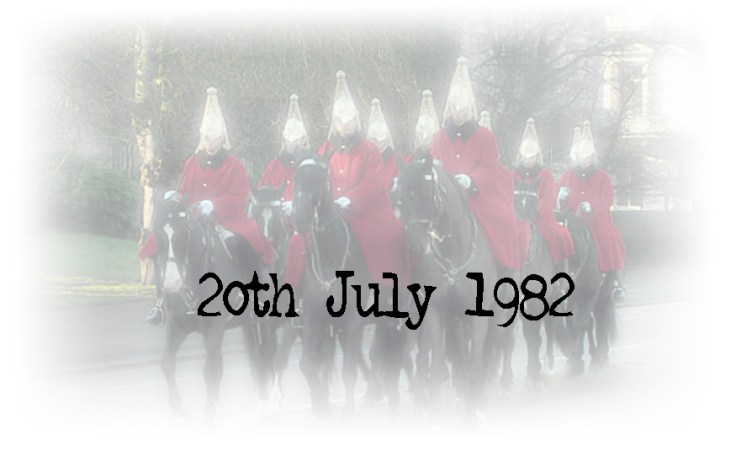
 There is, perhaps, a legitimate debate to be had over what to call killings which are carried out in the name of a political cause. No-one in their right mind would label the millions of soldiers who died in the two world wars of the 20th century as murder victims. The wearing of a uniform, and the acceptance of the King’s shilling has always legitimised the act of pulling the trigger, firing the shell, or dropping the bomb.
But what about guerilla activities? What about resistance movements? When does a killing become a murder? Is one man’s freedom fighter another man’s terrorist? I am far from unique in being unable to resolve those conundrums. The men who assassinated Reinhard Heydrich on a Prague boulevard in June 1942 have been hailed as heroes. What about the Irishmen who killed eleven British soldiers in a few hours on the streets of London in July 1982? They wore no uniform and carried no flag, but in their hearts their targets were legitimate.
My view? Emotionally, I am drawn to the view that soldiers engaged in ceremonial duties in a nation’s capital are not fair game. Therefore, I am treating the events of 20th July 1982 as murder. Cold blooded murder, pure and simple.
London, 20th June, 1982. The weather was warm, but unsettled, with a promise of showers. A troop of The Household Cavalry, the ceremonial guardians of the English monarch, were calmly riding along South Carriage Drive in Hyde Park, on their way to the ceremony known as The Changing Of The Guard. Unknown to them, a blue Morris Marina car, parked alongside their route, was packed with gelignite and nails. At 10.40 a.m. the device was triggered, presumably by a nearby operative. The result was carnage.
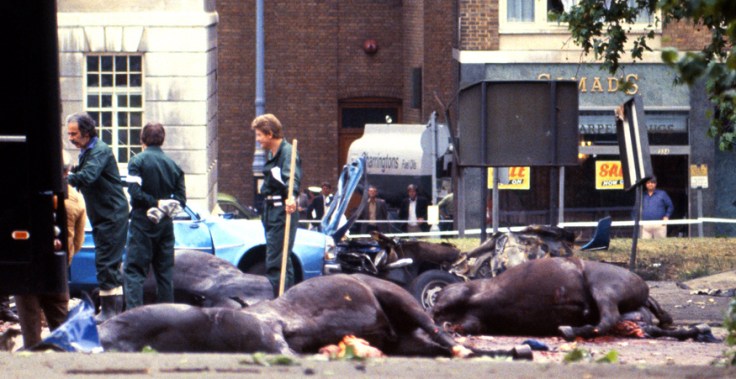
The road was littered with flesh, of the three guardsmen who were killed instantly (that telling euphemism which denotes catastrophic injuries) – and that of horses. The three soldiers who died at the scene were Lieutenant Anthony Daly, Trooper Simon Tipper and Lance Corporal Vernon Young. Corporal Raymond Bright was rushed to hospital, but died on 23rd July. The men are pictured below, left to right.

 Just a couple of hours later, as emergency services struggled to deal with the mayhem in South Carriage Drive, the terrorists struck again. It seems barely credible that in another part of the city, life was going on as normal. Remember, though, that these were the days before mobile ‘phones and social media, the days when news was only transmitted in print, by word of mouth and on radio and television. The regimental band of The Royal Green Jackets was entertaining a small crowd clustered round the bandstand in Regent’s Park. They were playing distinctly un-martial music from the musical ‘Oliver!’ when, at 12.55 pm, a massive bomb went off beneath the bandstand. The blast was so powerful that one of the bodies was thrown onto an iron fence thirty yards away, and seven bandsmen were killed outright. They were: Warrant Officer Graham Barker, Serjeant Robert “Doc” Livingstone, Corporal Johnny McKnight, Bandsman John Heritage, Bandsman George Mesure, Bandsman Keith “Cozy” Powell, and Bandsman Larry Smith.
Keith Powell’s mother, Mrs Patricia Powell was later to say:
“On the day (20th July 1982) at 1pm – I was rinsing a cup at the sink in my classroom – I suddenly felt very ill and mentioned it to a colleague – saying I’d no idea why I felt so ill. On the way home I went to the music store to purchase the score of Oliver – No idea why I wanted it suddenly nor did I have any idea this was what the band was playing. Got it – went to the bus station and saw on the placards news about the bombs in London – I knew instantly that he was dead. This was confirmed later that evening.”
Keith Powell’s comrades gave him his nickname because of the celebrated rock drummer Colin Powell, who played with bands such as Black Sabbath, the Jeff Beck Group and Whitesnake. No-one was ever convicted of the Regent’s Park atrocity, but responsibility was claimed by the IRA. In 1987, Gilbert “Danny” McNamee, an electronics engineer from Northern Ireland, was jailed for 25 years after being found guilty of building the radio-controlled bomb used in the Hyde Park attack.
He was released from prison in 1998 under the terms of the Good Friday Agreement, and later that year the Court of Appeal overturned his conviction on the grounds that it was unsafe. Another suspect, John Anthony Downey, was to be tried for his part of the Hyde Park bombing as recently as 2014, but his trial collapsed when it was revealed that he was one of those Republican activists who had been sent a ‘comfort letter’ by the British government, promising them immunity from prosecution. Following the 1998 Good Friday Agreement, which brought something resembling peace to Northern Ireland, there was an ongoing issue over what to do about IRA suspects who were still “on-the-run”. As part of the peace deal, IRA terrorists serving prison terms were granted early release but that could not apply to those on the run. A deal was reached between the Tony Blair government and Sinn Fein to carry out an exercise whereby checks would be carried out and for those who were no longer wanted by police, they would be sent a letter informing them of that fact.
 Downey (right) may or may not have been implicated in the Hyde Park murders. Only he knows for certain. At least he had the decency to cancel a party planned in his honour when he was released. He said:
“The party had been planned as a simple get-together of family, friends and neighbours who supported me after my arrest. Some elements of the media are portraying the event planned for tonight as triumphalist and insulting to bereaved families. That was never what it was about.”
There was a macabre and tragic postscript to the Hyde Park murders. One of the horses, named Sefton, survived the attack despite terrible injuries. The horse became something of a media celebrity, which is not surprising given the British public’s sentimental obsession with animals. Sefton’s days of celebrity were, at least, harmless. Not so the fate of his rider on that day, Michael Pedersen. He survived the attack physically, but suffered irreparable hidden mental damage. In 2012, after two failed marriages, he drove himself and his two children, Ben and Freya, to a remote lane near Newton Stacey in Hampshire, stabbed them to death, and then took his own life.


 With a father, Leif Gustav Willy Persson a Swedish criminologist and novelist who was a professor in criminology at the Swedish National Police Board, it is hardly surprising that Malin Persson Giolito should be drawn to the world of crime. Not only is she a lawyer, but has a growing reputation as a writer of crime fiction. Her latest novel, Quicksand, will be released in March/April of this year. Published by Simon & Schuster and translated by Rachel Willson-Broyles, Quicksand is the story of Maja Norberg, a teenage girl who has been caught up in one of the worst crimes in recent Swedish history. She has been, in turn, vilified and championed by the mainstream media, but now she is to have her hour – and more – in court. Is she a cold-blooded killer, or a demonised victim of an unspeakable evil?
 Barbara Nadel (right) is best known for her long running and highly successful crime series set in Istanbul, featuring the established cast of Çetin İkmen, a chain-smoking and hard-drinking detective on the Istanbul police force, and his colleagues Mehmet Süleyman, Balthazar Cohen and Armenian pathologist Arto Sarkissian.
 Falling Creatures by Katherine Stansfield will appeal to those who like a good period drama, a dead body or two, an atmospheric setting and a sense of Gothic looming over everything. 1844? Tick. Beautiful girl found with throat cut? Tick. Bodmin Moor, beloved of Arthur Conan Doyle and Daphne du Maurier? Tick. Mists, marshes and malevolent men? Tick. The author grew up on Bodmin Moor, and her debut novel The Visitor, won the Holyer an Gof Fiction Prize in 2014. You can find out more about the author (pictured left) by visiting her website katherinestansfield.blogspot.co.uk. Due to be published in March by Alison and Busby, Falling Creatures can be pre-ordered here .

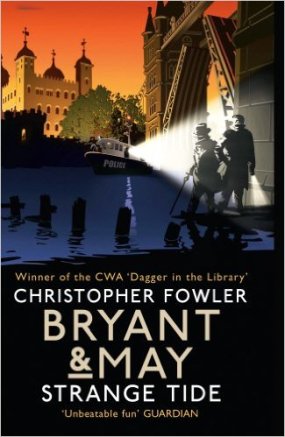 But all is not well. Arthur Bryant is physically sound enough, but his encyclopaedic mind is starting to betray him. He is suffering episodes of serious dislocation. He causes havoc in what he thinks is an academic library when he’s actually in the soft furnishings department of British Home Stores. While soaking up the ambiance of a Thames-side crime scene, all he can sense are the sights, sounds and smells of the early 20th century docks. John May and the more sprightly members of the PCU have to keep Arthur virtually under lock and key, for his own protection.

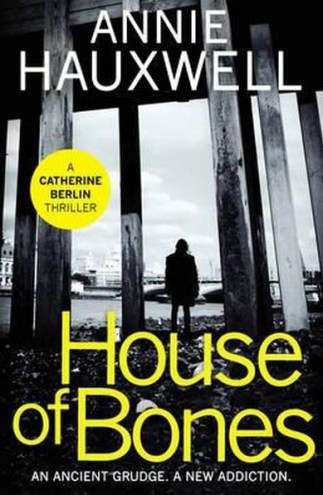 It’s always fun to come late to an established series that has many established followers, if only to see what all the fuss is about. I had covered Catherine Berlin in writing brief news grabs, but House of Bones was to be my first proper read. There is a wonderfully funereal atmosphere throughout the book. Sometimes this is literal, as at the beginning:
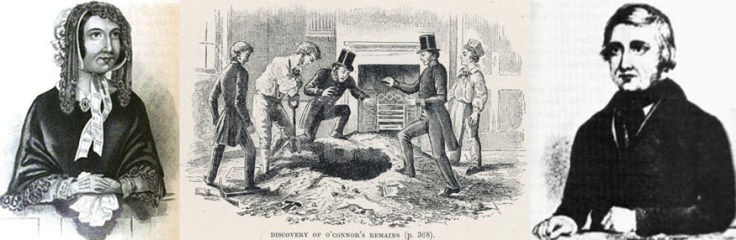 This is the tale of a ghastly pair of opportunists in Victorian London. Frederick Manning turned a blind eye to his wife, Marie, while she dispensed her favours to a rich customs official, Patrick O’Connor. The pair prepared a grave for him under their kitchen floor, and having murdered him, tried to escape with all his money. Inevitably, they were caught, and provided yet another job for William Calcraft, the Lord High Executioner.
 The sounds and sweet airs might have been provided by Haydn Woods’ A Brown Bird Singing or, if you were more disposed towards the art of Edith Sitwell, William Walton’s setting of her poetry – Façade. The discordant sounds of the thousand twangling instruments could have come from several sources; possibly the thousands of impoverished ex-servicemen sold short by the country they had fought for; perhaps, however, the isle which was most full of noises was that of Ireland, and in particular the newly formed Irish Republic.
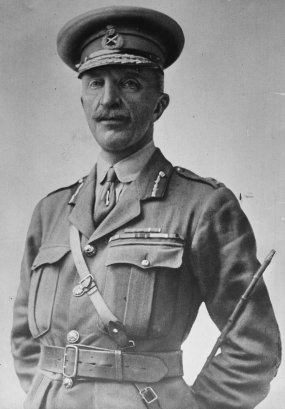 Sir Henry Wilson was a former General in the British Army, and his contribution to events in The Great War divides opinion. Some have him firmly in the ‘Butchers and Bunglers’ camp, a stereotypical Brass Hat who send brave men off into battle to meet red hot shards of flying steel with their own mortal flesh. Others will say that he was part of the combined military effort which defeated Germany in the field, and led to the surrender in the railway carriage at Compiègne in 1918. Whatever the truth, Wilson was never a field commander. He was much more at home well behind the front line, hobnobbing with politicians and strategists.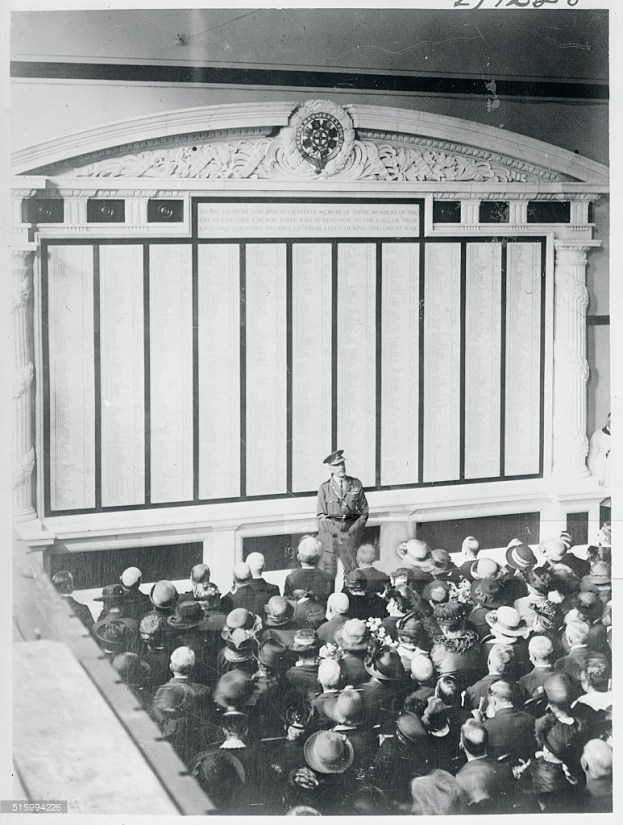

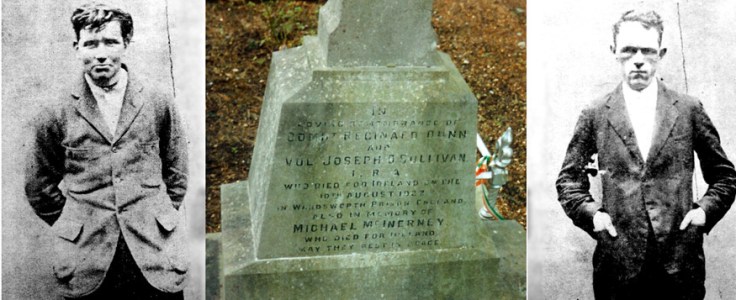

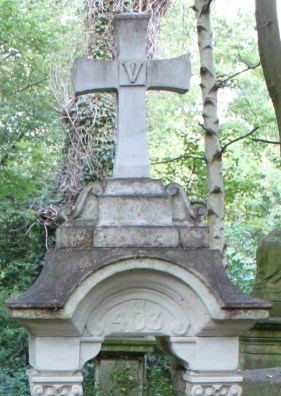
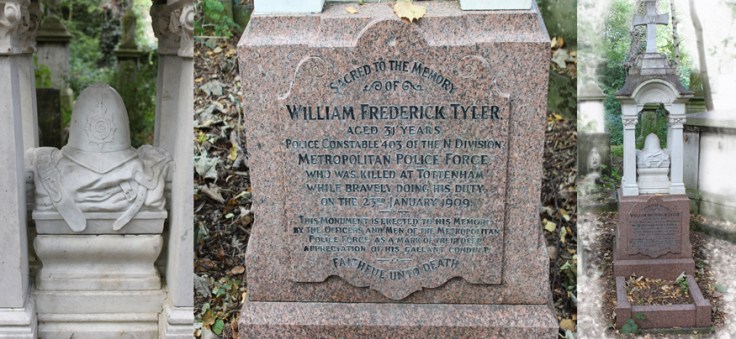


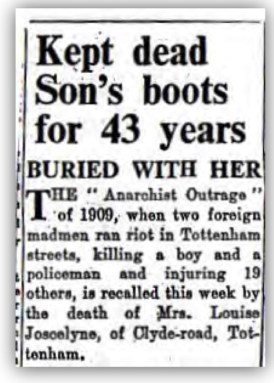 Ralph Joscelyne’s mother, Louise, was to raise another seven children, but she kept the pair of boots Ralph was wearing on the day he was killed. When she died in 1952, the boots were buried with her. In more recent times, both Joscelyne and Tyler have been commemorated. WIlliam Tyler has a plaque on the wall of Tottenham police station, while Ralph Joscelyne is remembered in a memorial outside a church in Mitchley Road. There is an abiding irony that the corner of Tottenham where the robbery occurred and the resultant chase began is exactly where the catastrophic riots of 2011 started. An initially peaceful protest by relatives of Mark Duggan, a gangster shot by police, did not get the required response from officers within the police station. It then, as they say, “all kicked off.”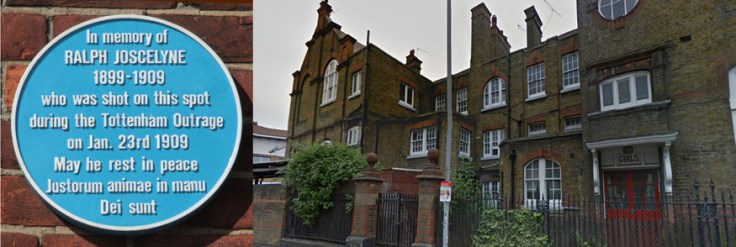

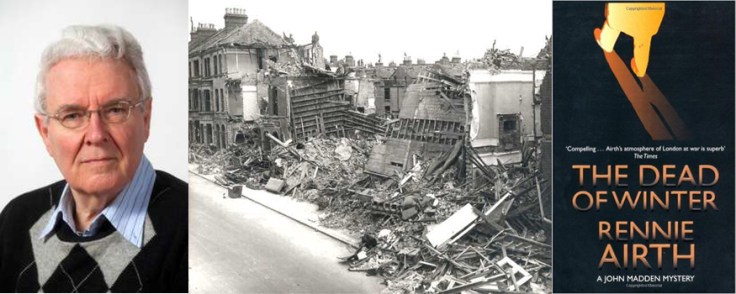
 We are in the weeks leading up to Christmas 1944, deep in what would prove to be the last winter of a war which, thanks to the Luftwaffe, had brought death and destruction to the doorsteps of ordinary people in towns and cities up and down the country. German aircraft no longer drone over the streets of London; instead, the Dorniers and Heinkels have been replaced by an even more demoralising menace – the seemingly random strikes by V1 and V2 rockets. Despite the fact that the rockets need no visible target to aim at, the ubiquitous blackout is still in force. An Air Raid Precaution Warden, whose job has become as redundant as that of those manning anti-aircraft batteries, makes a chilling discovery. He stumbles – literally – on the body of a young woman. Her neck has been broken by someone clearly well-versed in killing, and the only clue is a number of spent matches lying by the body.
 There is more than a touch of The Golden Age about this novel, but it is much more than a pastiche. Although the killing of Rosa Nowak is eventually solved, with a regulation dramatic climax in a snow-bound country house, Rennie Airth allows us to breathe, smell and taste the air of an England almost – but not quite – beaten down by the privations of war. Many of the characters have menfolk away at the war, including Madden himself and his wife Helen. Their son is in the Royal Navy, on the rough winter seas escorting convoys. The contrast between life in the city and in the country is etched deep. In the city, restaurant meals are frequently inedible, the black market thrives unchecked due to depleted police manpower, and even the newsprint bearing cheering propaganda from the government is subject to rationing. Travelling anywhere, unless you are fiddling your petrol coupons, is arduous and unpleasant.


