A tad early for a Valentine, but hey ho . . . . . . .
She loves me, she loves me not . . . .
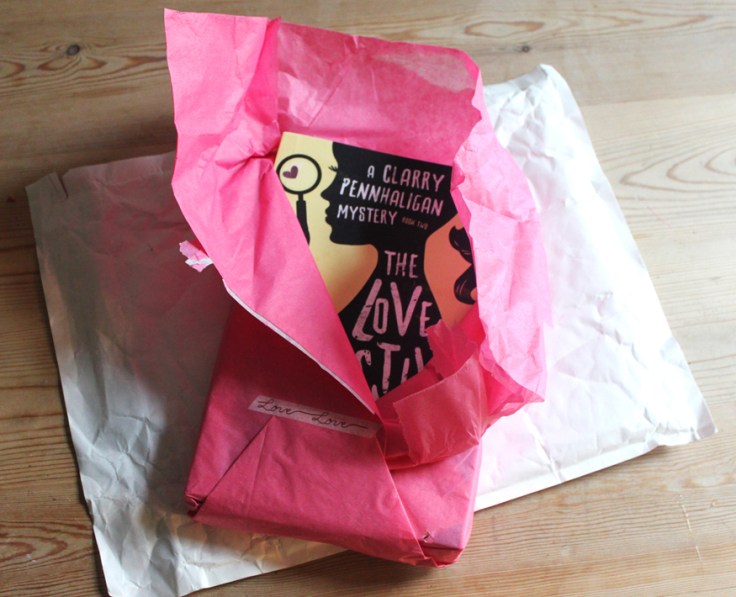
In the pink . . .


THE LOVE DETECTIVE: THE NEXT LEVEL is written by Angela Dyson, published by Matador, and is out now.
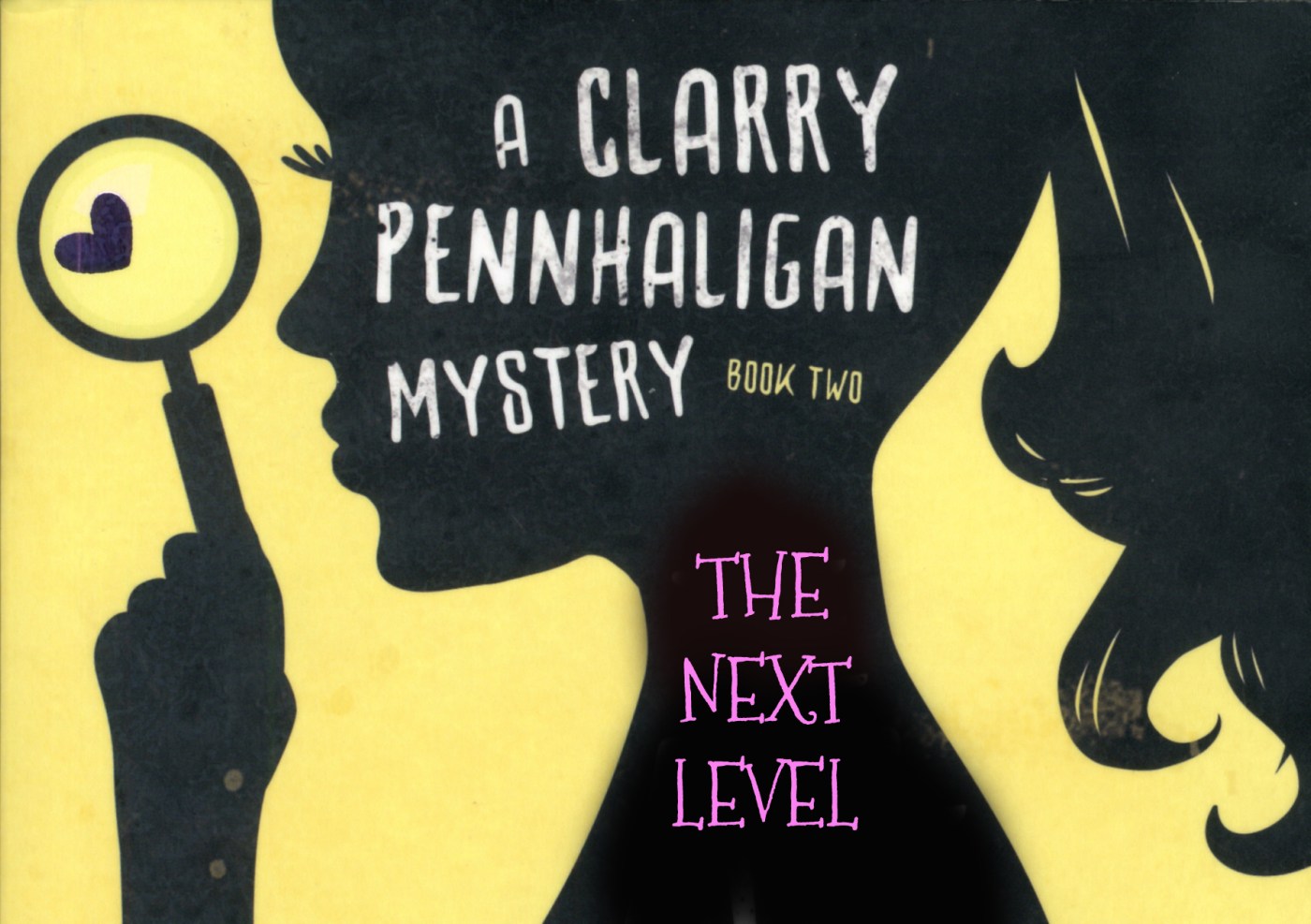
THE LOVE DETECTIVE: THE NEXT LEVEL is written by Angela Dyson, published by Matador, and is out now.



During more years than I care to count as a journalist, there was one thing I could always be sure of. I never knew what I’d be asked to do next. One minute I was interviewing a bloke seven hundred feet down a coal mine. The next I was firing questions at a courtier in Buckingham Palace. (Well, not literally the next minute, but you get the idea.)
The sheer variety of situations that journalists can find themselves in was one of the reasons I decided to make the protagonist in my Crampton of the Chronicle crime mysteries a reporter. Specifically, a crime reporter. I felt that as I’d had a few reporting years under my belt, I would be able to get into character as Colin Crampton and tell his story with a true eye.
But I didn’t bargain for something else. I’d also need to get under the skin of the other characters I wrote about. In the case of some of them, that wasn’t too difficult. Take the irascible news editor Frank Figgis, for instance. He has some of the characteristic of news editors I’ve known. One, in particular!

Other denizens of the Chronicle’s newsroom have taken on the features – delightful and not-so-delightful – of other journalists I’ve worked alongside down the years. But it’s been a tougher task creating other characters and the latest book – The Comedy Club Mystery – provided a particular challenge. Much of the plot centres around the suspicions of whether one of five stand-up comedians murdered a theatrical agent.
I puzzled long and hard on how to build the characters of five entirely different comics and then an idea hit me. The characters of most stand-up comedians come through in their acts. So I decided the book would include an excerpt from the stand-up routine of each of the comedians. Of course, it wasn’t long before I realised I’d just made another rod for my back. However, with a bit of thought, it wasn’t too difficult to create five different excerpts for stand-up comics.
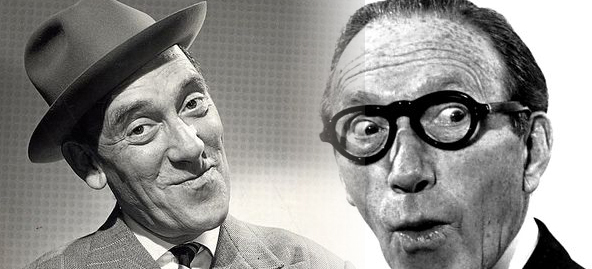
Comic number one is what I call an old-fashioned schmoozer. In the book I call him Ernie Winkle. But he’s the same kind of comic as old troopers from the music halls, like Tommy Trinder or Arthur Askey, who’d entertain an audience with a friendly patter that often included a lot of catch phrases. “You lucky people,” in the case of Trinder, “I thank-you,” with a heavy emphasis on the “I”, in Askey’s case.
 Then there was the female comic, in the 1960s often from the north of England, like Hylda Baker. In fact, I’ve made my version – Jessie O’Mara – younger and more overtly feminist than Baker. The feminist movement was stirring in the 1960s. I’ve made O’Mara a Liverpool lass with a strong line in scouse chat.
London’s Windmill Theatre, which featured tableaux of striptease dancers, was open until 1964. There were a lot of comedians – including Harry Secombe and Jimmy Edwards – who started their careers by telling gags between the girls’ performances. My version – Billy Dean – is not a nice man and scrapes the barrel when it comes to dirty jokes.

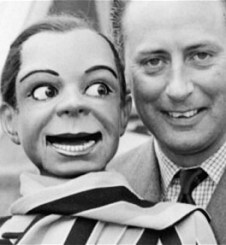 A special kind of comic in the days of variety theatre was the ventriloquist. The most famous was Peter Brough whose dummy was Archie Andrews. The pair featured in a long-running radio show. (I could never see the point of doing a vent act any more than a juggling act on the radio.) So I’ve created Teddy Hooper and his dummy Percival Plonker who do what used to be called a cross-talk act of quick-fire gags.
Finally, in 1962 BBC TV launched a late-night satire show called That Was The Week That Was. It spawned a growth in stand-up comics who had a contemporary edge to their acts. They were often more concerned about commenting on current affairs than delivering traditional punchlines. My guy is Peter Kitchen.

It took a lot of time to research different stand-up styles and the kind of jokes they told. But it was one of the most entertaining pieces of work I’ve done since I started writing the Crampton series. I hope you enjoy it.


 I have become a great fan of the Crampton of the Chronicle mysteries. Despite having multifarious murders and diverse dirty deeds, they are breezy, funny, beautifully written and they have a definite feel-good factor. Peter Bartram (left) is an old newspaper hand himself, and the background of a 1960s newsroom in a provincial newspaper is as authentic as it can get. Colin Crampton’s latest journey into the criminal underworld of Brighton is The Comedy Club Mystery. The cover blurb tells us:
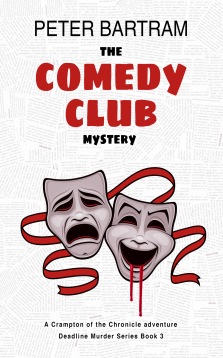 “When theatrical agent Daniel Bernstein sues the Evening Chronicle for libel, crime reporter Colin Crampton is called in to sort out the problem.
But trouble escalates when Bernstein turns up murdered. Colin discovers that any of five comedians competing for the chance to appear on a top TV show could be behind the killing.
As Colin and his feisty girlfriend Shirley Goldsmith investigate, they encounter a cast of colourful characters – identical twin gangsters, an Irishman who lives underground, and a failed magician’s assistant.
And it’s not long before their own lives are in peril. Join Colin and Shirley for a rollercoaster of an adventure in Swinging Sixties England – where the laughs are never far from the action.”
The story will be published on 24th May and there will, of course, be a full review in due course, plus news of a Blog Tour and other goodies. In the meantime, you can check out why I am so fond of the series by clicking on the image below.

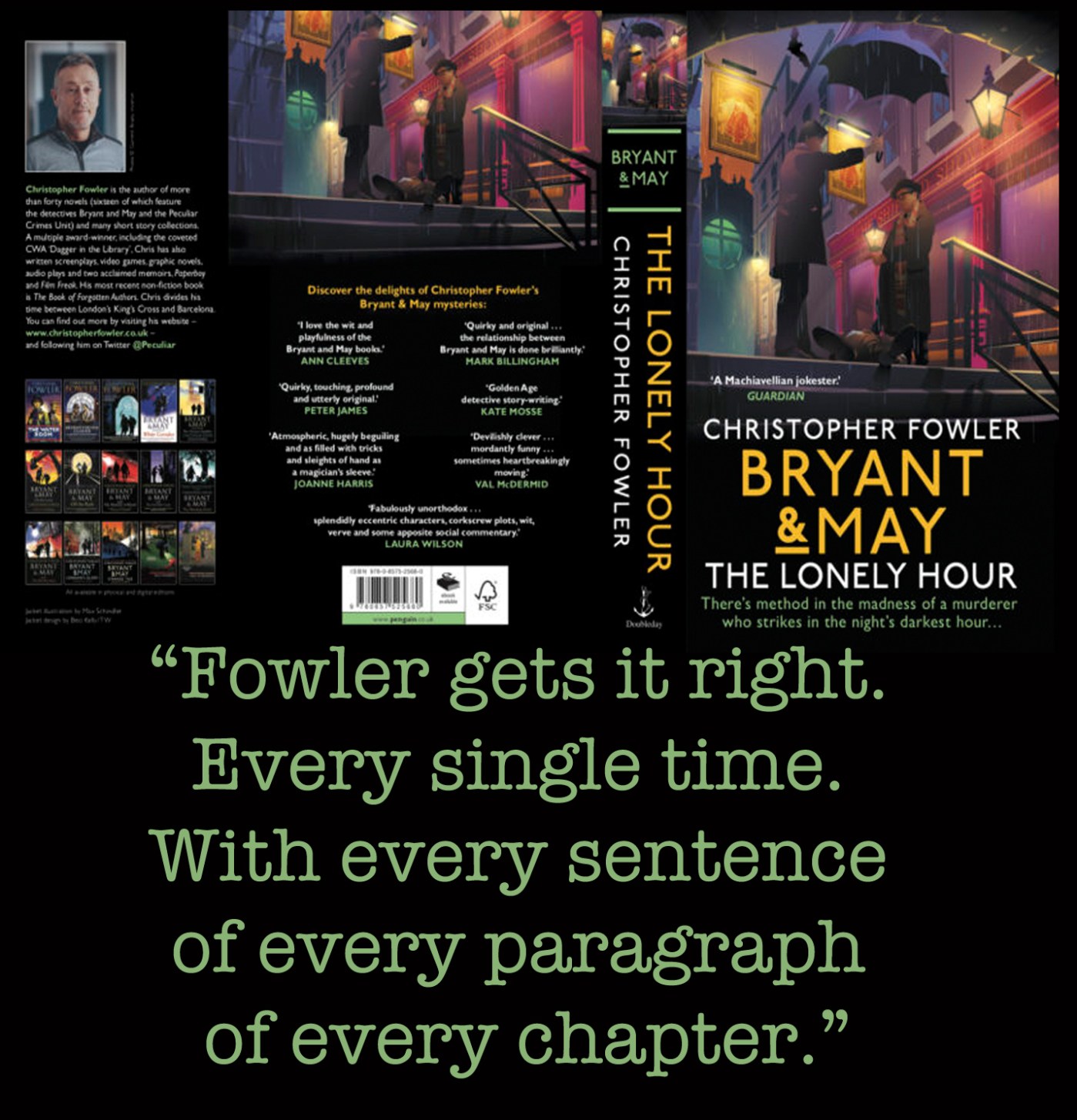
The impossibly geriatric constabulary codgers Arthur Bryant and John May return for another journey into London’s darkside in pursuit of those who kill. This time, the killer appears to be armed with a trocar – an obscure but deadly surgical instrument originally intended to penetrate the body allowing gases or fluid to escape. From the undergrowth of a copse on Hampstead Heath, and the unforgiving undertow of the Thames, via an exclusive multi-story apartment complex, to the pedestrian walkway of a Thames bridge, the victims seems to have nothing in common except the time of their demise – the deadly hour of 4.00 am.
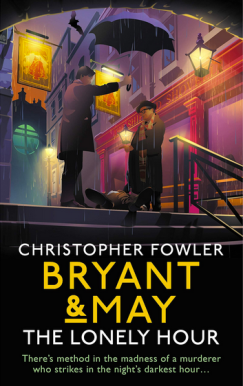 Bryant and May – and the rest of the Peculiar Crimes Unit – have been threatened with closure before, but this time their impatient and disapproving police bosses mean business. The PCU, both collectively and individually flounder around trying to work out what connects the corpses, and who is expertly wielding the trocar. Like Andrew Marvell’s ‘Time’s Winged Chariot’, the accountants and political schemers of the Metropolitan Police are ‘hurrying near’, and failure to catch this killer will certainly mean that the shambolic HQ of the Peculiar Crimes Unit on Caledonian Road will soon be in need of new tenants.
Don’t be misled by the jokes, delightful cultural references, and Arthur’s frequent put-downs of the PCU’s hapless boss, most of which go over Raymond Land’s head but, fortunately, not ours. Physicists will probably say that their world has different rules, but in literature light can only exist relative to darkness, and Fowler does not allow the chiffon gaiety within the Peculiar Crimes Unit to disguise a dystopian London woven from a much darker thread. He says:
“Approaching midnight, the black and grey striped concourse of King’s Cross Station remained almost as busy as it had been during the day. Some Italian students appeared to be having a picnic under the station canopy. A homeless girl ms on her knees next to a lengthy cardboard message explaining her circumstances. A Jamaican family dressed in home-made ecclesiastical vestments were warning everyone that hell awaited sinners. A phalanx of bachelorettes in tiny silver dresses, strappy shoes and bunny ears marched past, heading to their next destination like soldiers on a final tour of duty. Inside the station, tourists were still lurking round the Harry Potter trolley that had been originally set there as a joke by the station guards, then monetized when queues appeared. As flinty-eyed and mean as it had ever been, London was good at making everyone pay.”
If a better paragraph about London has been written in recent years, I have yet to read it
Fowler’s London is a place where the same streets, courtyards, alleys and highways have been walked for centuries; Roman legionaries, Norman functionaries, medieval merchants, Tudor politicians, Restoration poets, Georgian gamblers, Victorian philanthropists, Great War Tommies, and now City spivs with their dreams and nightmares spinning about in front of them on their smartphones – all have played their part in treading history down beneath their feet into a compressed and powerful seam of memory. This memory, whether they know it or not, affects the lives of those who live, work, lust, learn and – ultimately – die in London. Other writers, notably Peter Ackroyd, have been drawn to this lodestone and tapped into its power. Some authors have taken up the theme but befuddled readers with too much arcane psychogeography. Fowler gets it right. Every single time. With every sentence of every paragraph of every chapter.
Bryant is neither Mr Pastry, Charles Pooter nor Mr Bean. He is as sharp as a tack despite such running gags as his coat pockets being full of fluff covered boiled sweets long since disappeared from English shelves. If we knew no better, we might describe him as having a personality disorder somewhere on the autism spectrum, but there are precious moments in The Lonely Hour where the old man brings himself up short with the realisation that he is, most of the time, chronically selfish.
 Thanks to Bryant’s genius, the mystery is solved and the killer brought to justice, but these are certainly the grimmest days ever for the PCU, and as this brilliantly entertaining story reaches its conclusion, Fowler (right) slowly but irrevocably turns the tap marked Darkness to its fully open position. The Lonely Hour is published by Doubleday and is out now.
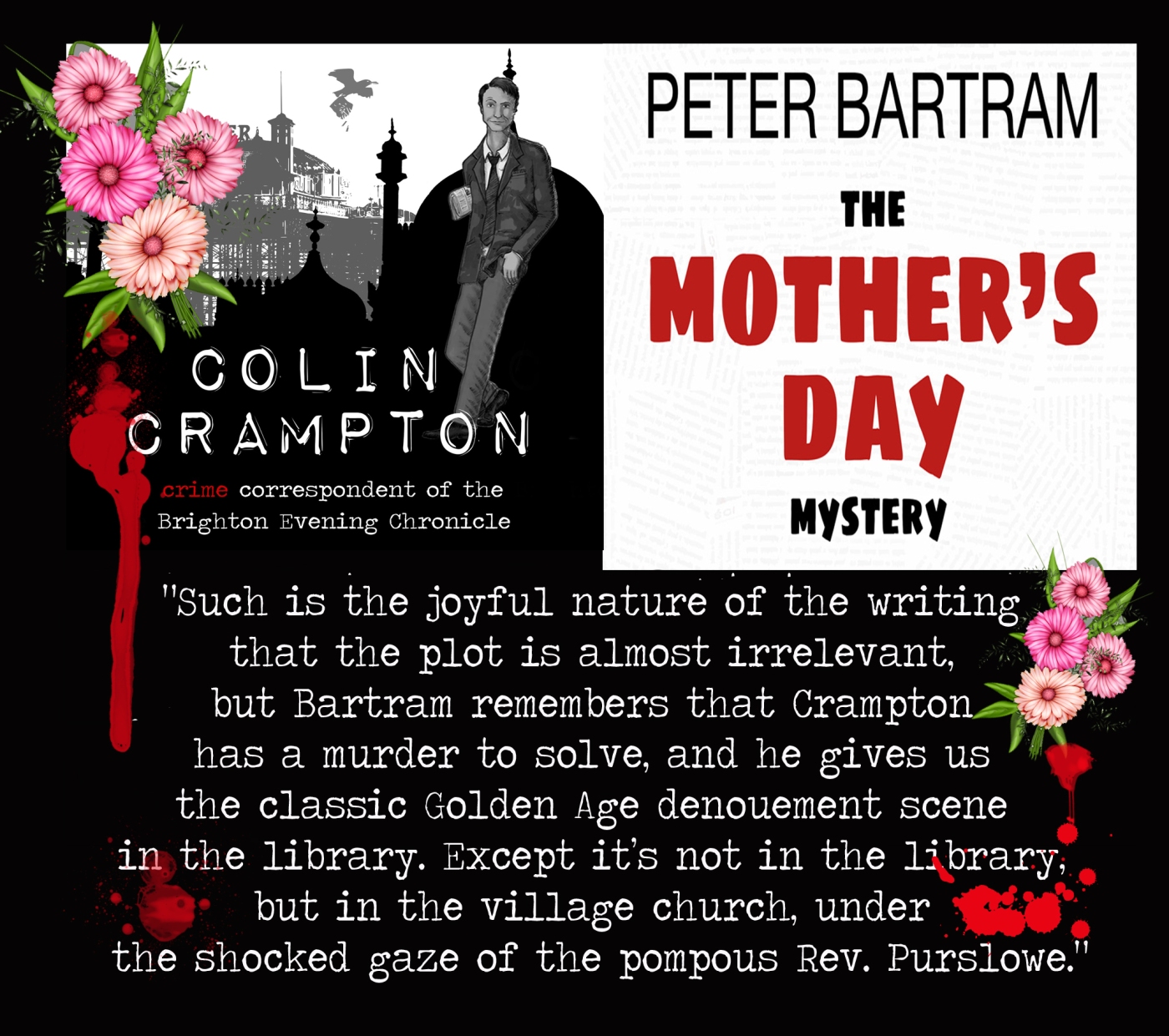
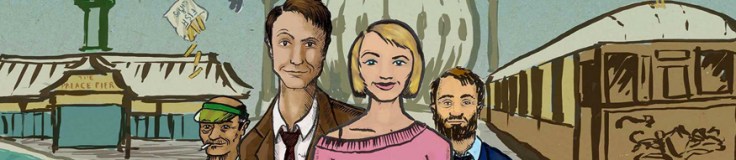
Robin Williams, Paul Krassner, Pete Townshend, Grace Slick, Timothy Leary, and many others have been credited with the saying, “If you can remember the 1960s, you weren’t really there.” Fortunately for us, Peter Bartram can and was. His lifetime of working as a journalist has produced an alter ego, an enterprising young journalist called Colin Crampton who works for The Brighton Evening Chronicle. He has a gorgeous Australian girlfriend called Shirley, a pantomime landlady by the name of Mrs Gribble, a chain-smoking news editor called Frank Figgis, an amazing habit of getting involved in murder mysteries – and he drives an MGB.
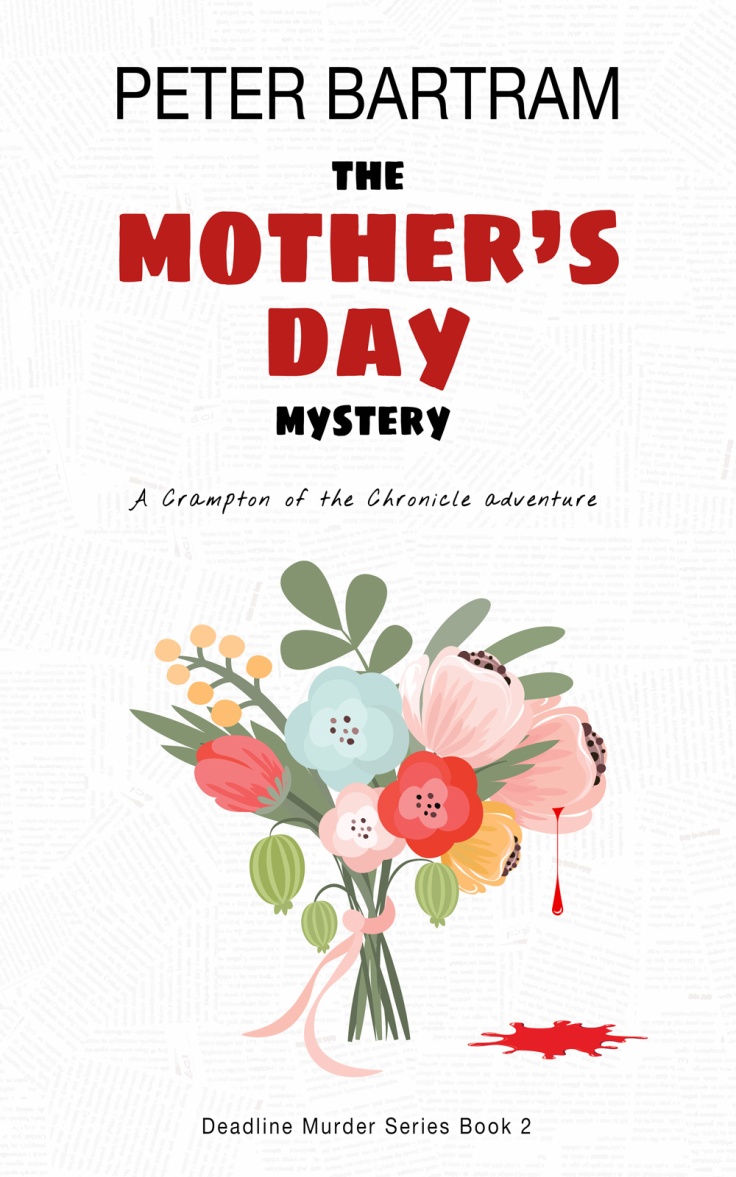
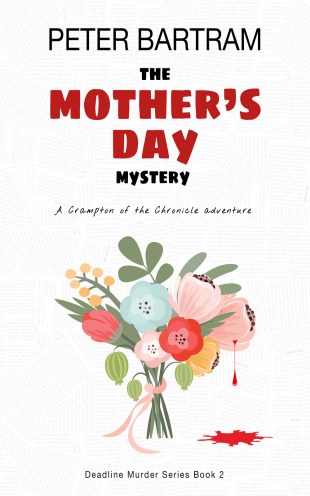 In The Mother’s Day Mystery, Crampton discovers the body of a schoolboy who has evidently been knocked off his bike and fatally injured. What on earth was Spencer Hooke doing away from his dormitory in Steyning Grammar School at the dead of night, cycling along a lonely and windswept clifftop road? In pursuing this conundrum, Crampton whisks us into a world of stage vicars, seedy pub landlords, archetypal leather-elbowed schoolmasters and impecunious toffs. There are jokes a-plenty, and Bartram indulges himself – and those of us who are, similarly, in the autumn of our years – with many a knowing cultural reference that might puzzle younger readers. He takes us into a wonderful sweet shop, the kind which can nowadays only be found in museum recreations:
“I stepped into a small room with a wooden counter topped with a glass-fronted case. To the side of the case was a set of balance scales with its weight tokens. Behind the couter were shelves loaded with jars of sweets. There were chocolate drops and sherbert lemons and liquorice allsorts. There were humbugs and fruit gums. There was barley sugar which glowed yellow like it was radioactive.
The air was loaded with a sickly scent like it had been sprinkled with sugar dust. If you breathed in deeply, you felt you were dancing.”
There is an unashamed sense of the risqué seaside postcard about much of the humour:
‘She was pouring coffee into a mug.
I ambled over and said, “Mine’s white but strong.”
Susan said: “So I’d heard. But how about your coffee, honeybunch?”
She guffawed at her joke and made her chins wobble.’
The wisecracks are not all end-of-the-pier stuff, however. When Crampton meets the owner of the gorgeous sweet shop, he is almost Chandleresque:
“She had a figure that would get Brigitte Bardot demanding a recount …. little laugh lines crinkled around her mouth as her full lips parted in the kind of welcome smile I felt I could pay into the bank.”
 Anyone who is a student of English humour will soon see that Bartram is part of a long and distinguished tradition of comic writers who find meat and drink in the absurdities of English life and social structures. In the world of crime fiction, however, comedy does not always sit well with murder and bloodshed. The great and sadly under-appreciated Colin Watson did the job beautifully in his Flaxborough novels, while modern writers such as MJ Trow and Christopher Fowler perform the balancing act with similar verve. I am happy to put Peter Bartram (right) up there on the podium with those past and present masters. Incidentally, and quite appropriately for a Sussex man, Bartram knows and loves his Kipling, and manages to quote the great man on a number of occasions
Such is the joyful nature of the writing that the plot is almost irrelevant, but Bartram remembers that Crampton has a murder to solve, and he gives us the classic Golden Age denouement scene in the library. Except it’s not in the library, but in the village church, under the shocked gaze of the pompous Rev. Purslowe. Before the riddle of Spencer Hooke’s death is solved (with an “I’m Spartacus” moment) we get the best joke in the book.
“Georgina had caused a stir when she’d walked into the church. She was wearing a low-cut blouse and a mini-skirt which ended a couple of inches below the Book of Revelations.”
The Mother’s Day Mystery is published by The Bartram Partnership, and is out now. Watch the Fully Booked Twitter feed for a chance to win this novel.
Follow the links to check out other features and novels by Peter Bartram.
The News Editor, The Woodbines, and a Eureka Moment
Switched On: The Story of 1960s TV Game Shows
I Do Like To Be Beside The Seaside …
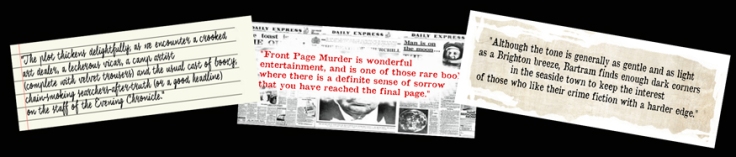

 Peter Bartram (left) is an old school journalist who has turned his life’s work into an engaging crime series set in 1960s Brighton, featuring the resourceful reporter on the local paper, Colin Crampton. Peter now reveals how he came to invent his alter ego. You can read reviews of three Crampton of The Chronicle novels by clicking the title links below.
THE NEWS EDITOR, THE WOODBINES AND A EUREKA MOMENT by Peter Bartram
Two hours into my first day as a newspaper reporter, aged 18, my news editor called me into his office and said: “I’ve got a job for you.” I thought: “This is great. I’m going to be sent out on a big story.” He gave me half a crown – twelve and half pence if you’re two young to remember the old currency – and said: “Just pop across the road to the shop and buy me 20 Woodbines.”
Well, it was a start in newspapers that turned out to be surprisingly useful a good many years later when I was thinking about writing a crime mystery series. My original idea had been to base the series around two ill-matched characters – a formula that has served well in thousands of crime books from Holmes and Watson, through Poirot and Hastings, to Dalziel and Pascoe. The trouble was I couldn’t think of any way to make my pair original.
Whenever I thought of an idea, it turned out that something similar had already been done. And then I had a Eureka moment. The answer to my problem was staring me in the face. I was a journalist. I would make my protagonist a journalist. My reporter hero would be a young journalist starting his first job, aged 18, just as I had done. He’d be given some dull jobs to do – just as I’d been – but he’d also stumble across crimes to solve.
On my paper, the chief reporter had started me off covering batches, matches and despatches – better known as births, marriages and deaths. As it happened, there weren’t many batches to write about. The trick with writing the matches was to avoid double-entendres. Never write, “the bride carried a sheath of flowers,” the chief reporter warned me.
But the despatches carried different perils. I turned up at one house to discover the deceased had been laid out on the dining room table. I’m not sure what the rest of the household were doing for dinner that night.
I soon found there were perils in newspaper work I hadn’t fully appreciated. One of them occurred in my first week. One of the sports reporters had covered a football match. He’d started his report: “This was a scrappy game of football.” Except that the compositors – the mischievous guys who set the paper in hot metal type in those days – had dropped the “s” off the word “scrappy”.
That morning, you could see people all over town sniggering at the piece. Later, you could hear the editor yelling at the proof readers. Anyway, I was so taken with the idea of having a rookie reporter as a crime-busting hero, I rushed to my laptop and batted out the first chapter. A couple of hours later, I realised I’d made a big mistake. A rookie simply wouldn’t have the experience to tackle the challenges a crime buster would face.
I sat down and thought about it some more. I decided that my protagonist would be a crime reporter who’d have regular contact with the police – one of my early newspaper jobs was to attend the local cops’ daily press briefing. But I also realised he’d need realistic newspaper characters around him.
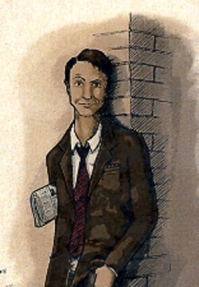 And that was when I remembered my first news editor. I never saw him without a Woodbine hanging off his lower lip. And so Frank Figgis, news editor of the Evening Chronicle, was born. Of course, there was still lots to think about – especially more regular characters. But with Colin (right) and Frank I felt I was on my way. Both of them have big roles to play – along with other regulars, especially Colin’s girlfriend Shirley Goldsmith – in the latest tale The Mother’s Day Mystery.

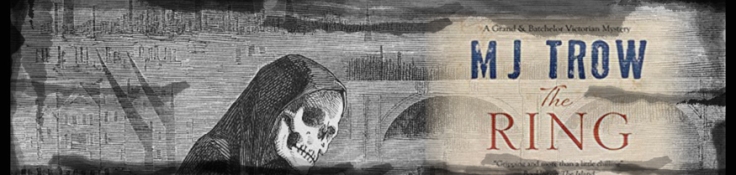
London. 1873. It would be another fourteen years before a gentleman calling himself a Consulting Detective would make his first appearance in Beeton’s Christmas Annual, but Matthew Grand and James Batchelor are just that – people consult them, and they try to detect things. That is pretty much where any resemblance to the residents of 221B Baker Street ends. Neither Grand nor Batchelor is nice but dim, nor is either given to bashing out a melancholy bit of Mendelssohn on a Stradivarius. Matthew Grand, though, has seen military service; rather than battling the followers of Sher Ali Khan in Afghanistan, he has had the chastening experience of fighting his fellow Americans during the War Between The States a decade earlier. While James Batchelor is an impecunious former member of The Fourth Estate, his colleague comes from wealthy New Hampshire stock.
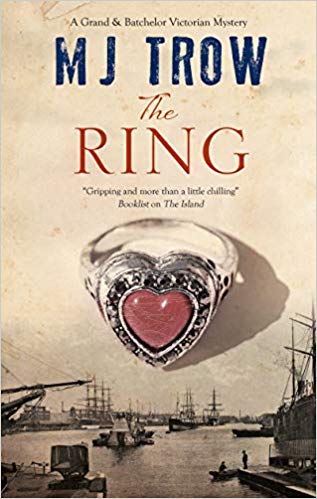 The River Thames plays a central part in The Ring. Although Joseph Bazalgette’s efforts to clean it up with his sewerage works were almost complete, the river was still a bubbling and noxious body of dirty brown effluent, not helped by the frequent appearance of human bodies bobbing along on its tides. In this case, however, we must say that the bodies come in instalments, as someone has been chopping them to bits. PC Crossland makes the first grisly discovery:
“… he knew exactly what the white thing was. It was the left side of what had once been a human being, sliced neatly at the hip and below the breast. There was no arm. No head. No legs.”
Trow gives us a Gilbertian cast of comedy coppers, in this case the River Police, led by the elephantine Inspector Bliss. While Bliss and his minions are trying to put together a case – and also the various limbs and organs of an unfortunate woman – Grand and Batchelor are visited by Selwyn Byng, an unseemly and ramshackle character, who believes his wife has been abducted, and has the ransom note to prove it. Byng may look cartoonish, and lack moral fibre; “Where’s your stiff upper lip?” “Underneath this loose flabby chin!” (quoted with due reverence to Tony Hancock and Kenneth Williams) but he has a bob or two, and so our detectives take on the search for the missing Emilia Byng.
It occurs to me that in dismissing any resemblance between H&W and G&B I am missing out one very important personage, and that is the housekeeper. The much revered Mrs Hudson is felt, rather than seen or heard, but Mrs Rackstraw is another matter entirely. The formidable woman dominates the apartment supposedly ruled over by the two young gentlemen:
“Mrs Rackstraw had been brought up in a God-fearing household and didn’t really hold with young gentlemen of their calibre not going to church. Had they been asked, both Grand and Batchelor would have preferred the constant nagging; her frozen silence and the way the boiled eggs bounced in their cups as she slammed them down on the table was infinitely worse.”
 MJ Trow (right) has been entertaining us for over thirty years with such series at the Inspector Lestrade novels and the adventures of the semi-autobiographical school master detective Peter Maxwell. Long-time readers will know that jokes are never far away, even when the pages are littered with sudden death, violence and a profusion of body parts. Grand and Batchelor eventually solve the mystery of what happened to Emilia Byng, both helped and hindered by the ponderous ‘Daddy’ Bliss and a random lunatic, recently escaped from Broadmoor. Trow writes with panache and a love of language equalled by few other British writers. His grasp of history is unrivalled, but he wears his learning lightly. The Ring is a bona fide crime mystery, but the gags are what lifts the narrative from the ordinary to the sublime:
“They adjusted their chairs and faced the wall. Mr and Mrs Gladstone stared back at them from their sepia photographs, jaws of granite and eyes of steel. Since he was the famous politician and she was merely loaded and fond of ice-cold baths, he sat in the chair and she stood at his shoulder, restraining him, if the rumours were true, from hurtling out of Number Ten in search of fallen women.”
The Fully Booked review of The Island, the previous Grand and Batchelor mystery, is here. The Ring is published by Severn House, and will be out on 28th September.


Colin Crampton and his beautiful – if rather vulgar – Australian girlfriend are eating out at a Brighton restaurant. Shirley likes her steak rare, and she subscribes to the old adage about cooking a huge slice of beef, “Knock its horns off, wipe its bum, and lead it quickly through a warm kitchen,” Unfortunately, the blood on her Porterhouse has an additional source – a growing stain in the ceiling above their table.
In this sanguinary manner we get straight into the action in Peter Bartram’s third tale of Colin Crampton, the intrepid 1960s reporter for the Evening Chronicle. Colin races upstairs to the flat above the restaurant and finds an extremely leaky corpse, later to be identified as the mortal remains of one Derek Clapham.
 Colin’s day has already been bad enough. He has been summoned to the office of Frank Figgis, the News Editor, and given a daunting task. The newspaper’s Editor, Pope by name (dubbed “His Holiness”, naturally) has a brother called Gervaise. Gervaise is in trouble. He has been mixing with some rather unsavoury characters, namely the adherents of Sir Oscar Maundsley, the aristocratic former fascist leader. Interned by Churchill during the war, he now dreams of Making Britain Great Again.
Due to internal feuds among the fascist folk – which has also resulted in the stabbing of Derek Clapham, and the spoling of Shirley’s steak – Gervaise Pope has threatened to shoot Maundsley. Figgis has been told by His Holiness to find the errant brother and stop him from committing murder. One problem. Gervaise has disappeared and so, Figgis, with all his fabled capacity for delegation, has handed the task to Colin Crampton.
What follows is a fascinating and completely beguiling journey through a 1960s England that seems now, at least to those of us old enough to have been there, as far away and foreign as medieval Cambodia, including a visit to the bizarre school for dancing mentioned in the title. Maundsley is a thinly disguised …. ? Well, since neither Peter nor I can afford expensive libel lawyers, you must do your own homework. Along the way we are reminded that the Prime Minister of the day was the curiously archaic Alexander Frederick Douglas-Home (pronounced ‘Hume’), and Bartram also has great fun as he remembers – more or less with affection – the way we were and the things we ate and wore.
Peter Bartram doesn’t mind at all if this book is popped onto the ‘cosy’ shelf of your library, but he serves up just enough violence and and downright malice to blow away the gentle mists of human kindness which can soften the outlines of dark deeds. Like the old trick where you were persuaded to put your tongue on the terminals of a 9 volt battery – and then regretted it – the dialogue tingles and sparks. The gags, puns and one-liners come thick and fast, and – as befits the experienced newspaperman that he is – Bartram never wastes a word.
In terms of plot content, Bartram audaciously brings A Very Important Person into the narrative at the end of the book and, my goodness, how well it works. In the hands of a lesser writer, this episode could have fallen flat on its face, but such is Bartram’s skill, it works beautifully and with added poignancy, given what was to happen just a few months later.
I reached the final page with that mix of sadness and satisfaction which will be familiar to anyone who has ever read a good book. The Tango School Mystery is a delight from start to finish and, sentimental old sod that I am, I want to find a tree and carve ‘Colin 4 Shirley’ on it, inside a big heart. Yes, well spotted – amidst the murder, mayhem and subterfuge, there is an enchanting love story, too! The Tango School Mystery is published by The Bartram Partnership.


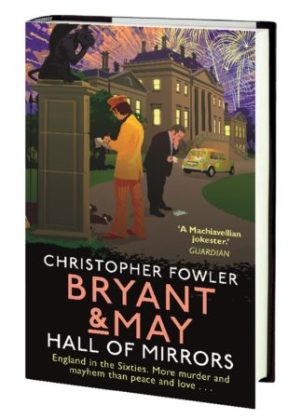 If a more extraordinary duo of fictional detectives exists than Christopher Fowler’s Bryant & May, then I have yet to discover them. The peculiar pair return in Hall of Mirrors for their fifteenth outing, and this time not only are they far from their beloved London, but we see a pair of much younger coppers on their beat in the 1960s. Fowler’s take on the period is typified by each of the fifty chapters of the novel bearing the title of a classic pop hit. We are also reminded of the strange fashions of the day.
“Two young men in Second World War army uniforms painted with ‘Ban The Bomb’ slogans were arguing with a pair of Chelsea Pensioners who clearly didn’t take kindly to military outfits being worn by trendy pacifists. They were briefly joined by a girl wearing a British sailor’s uniform with a giant iridescent fish on her head.”

In attempt to keep them out of trouble, our heroes are given the task of being minders to an important witness in a fraud trial, but Monty Hatton-Jones is due at a country weekend party deep in rural Kent, and so John and Arthur must accompany him to Tavistock Hall. What follows is a delicious take on the Golden Age country house mystery, with improbable murders, secret passages, an escaped homicidal maniac and suspects galore. Things are complicated by nearby military manoeuvres involving the British army and their French counterparts. Fowler (above) reprises the great gag from Dr Strangelove – “Gentlemen – you can’t fight in here. This is the War Room!” Captain Debney, the British Commanding Officer is having a bad day.
“The menu for tonight’s hands Across The Water dinner has already gone up the Swanee. We had terrible trouble getting hold of courgettes, and now I hear there’s no custard available. I don’t want anything else going wrong. These are international war games. We can’t afford to have anyone hurt.”
The urbane John May is quite at home in the faded grandeur of Tavistock Hall, but Arthur is like a fish out of water. He also has an aversion to the countryside.
“It appeared to be the perfect Kentish evening, pink with mist and fresh with the scent of the wet grass. Bryant looked at it with a jaundiced eye. There was mud everywhere, the cows stank, and were all those trees really necessary? As a child he had been terrified of the bare, sickly elm in his street with a branch that scarped at his bedroom window like a witch’s hand and sent him under the blankets.”
As usual with the B & M books, the jokes come thick and fast, but we are reminded that Fowler is a perceptive and eloquent commentator on the human condition. Arthur investigates the local parish church as its rector, Revd Trevor Patethric is a house guest – and suspect.
“Bryant pushed open the church door and entered. He had never felt comfortable in the houses of God, associating them with gruelling rites of childhood: saying farewell to dead grandfathers, and the observance of distant, obscure ceremonies involving hushed prayers, peculiarly phrased bible passages, muffled tears and shamed repentance.”

Eventually, of course, the pair – mostly through Arthur’s twisted thought processes – solve the crimes. Prior to revealing his theories on the murder to the assembled guests, however, Bryant has a slight misfortune with a missing painting hidden in a very unswept chimney. Covered in soot, he somehow lacks the gravitas of a Poirot or a Marple.
“Bryant had made a desultory attempt to wipe his face, but the result was more monstrous than before. He rose before them now, a lunatic lecturer in the physics of murder.”
Reading a crime novel shouldn’t be about being educated, but Hall of Mirrors teaches us many things. Those who didn’t already know will learn that Christopher Fowler is a brilliant writer. He is, in my view, out on his own in the way he weaves a magic carpet from a dazzling array of different threads: there is uniquely English humour, the sheer joy of the eccentricities of our language and landscape, labyrinthine plotting, and an array of arcane cultural references which will surely have Betjeman beaming down from heaven. Those of us who, smugly perhaps, consider ourselves as old Bryant & May hands will also now know the origins of Arthur’s malodorous scarf and also his cranky, clanky Mini.
Amidst the gags, the fizzing dialogue and the audacious plot twists Fowler waves his magic wand, and with the lightest of light touches dusts a page near the very end with poignancy and great compassion. Look out for the section that ends:
“Bryant looked in his mirror to try and catch another glimpse of them, but they had disappeared, ghosts of a London yet to come.”
And do you want to know the best five words of the entire book? I’ll tell you:
Hall of Mirrors is published by Quercus, and is available from 22nd March.


 fullybooked2017