
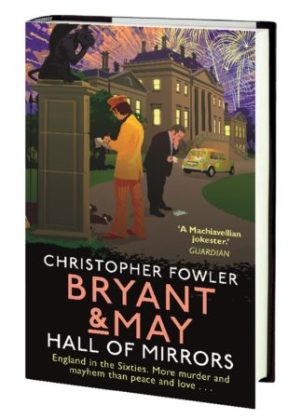
 If a more extraordinary duo of fictional detectives exists than Christopher Fowler’s Bryant & May, then I have yet to discover them. The peculiar pair return in Hall of Mirrors for their fifteenth outing, and this time not only are they far from their beloved London, but we see a pair of much younger coppers on their beat in the 1960s. Fowler’s take on the period is typified by each of the fifty chapters of the novel bearing the title of a classic pop hit. We are also reminded of the strange fashions of the day.
“Two young men in Second World War army uniforms painted with ‘Ban The Bomb’ slogans were arguing with a pair of Chelsea Pensioners who clearly didn’t take kindly to military outfits being worn by trendy pacifists. They were briefly joined by a girl wearing a British sailor’s uniform with a giant iridescent fish on her head.”

In attempt to keep them out of trouble, our heroes are given the task of being minders to an important witness in a fraud trial, but Monty Hatton-Jones is due at a country weekend party deep in rural Kent, and so John and Arthur must accompany him to Tavistock Hall. What follows is a delicious take on the Golden Age country house mystery, with improbable murders, secret passages, an escaped homicidal maniac and suspects galore. Things are complicated by nearby military manoeuvres involving the British army and their French counterparts. Fowler (above) reprises the great gag from Dr Strangelove – “Gentlemen – you can’t fight in here. This is the War Room!” Captain Debney, the British Commanding Officer is having a bad day.
“The menu for tonight’s hands Across The Water dinner has already gone up the Swanee. We had terrible trouble getting hold of courgettes, and now I hear there’s no custard available. I don’t want anything else going wrong. These are international war games. We can’t afford to have anyone hurt.”
The urbane John May is quite at home in the faded grandeur of Tavistock Hall, but Arthur is like a fish out of water. He also has an aversion to the countryside.
“It appeared to be the perfect Kentish evening, pink with mist and fresh with the scent of the wet grass. Bryant looked at it with a jaundiced eye. There was mud everywhere, the cows stank, and were all those trees really necessary? As a child he had been terrified of the bare, sickly elm in his street with a branch that scarped at his bedroom window like a witch’s hand and sent him under the blankets.”
As usual with the B & M books, the jokes come thick and fast, but we are reminded that Fowler is a perceptive and eloquent commentator on the human condition. Arthur investigates the local parish church as its rector, Revd Trevor Patethric is a house guest – and suspect.
“Bryant pushed open the church door and entered. He had never felt comfortable in the houses of God, associating them with gruelling rites of childhood: saying farewell to dead grandfathers, and the observance of distant, obscure ceremonies involving hushed prayers, peculiarly phrased bible passages, muffled tears and shamed repentance.”

Eventually, of course, the pair – mostly through Arthur’s twisted thought processes – solve the crimes. Prior to revealing his theories on the murder to the assembled guests, however, Bryant has a slight misfortune with a missing painting hidden in a very unswept chimney. Covered in soot, he somehow lacks the gravitas of a Poirot or a Marple.
“Bryant had made a desultory attempt to wipe his face, but the result was more monstrous than before. He rose before them now, a lunatic lecturer in the physics of murder.”
Reading a crime novel shouldn’t be about being educated, but Hall of Mirrors teaches us many things. Those who didn’t already know will learn that Christopher Fowler is a brilliant writer. He is, in my view, out on his own in the way he weaves a magic carpet from a dazzling array of different threads: there is uniquely English humour, the sheer joy of the eccentricities of our language and landscape, labyrinthine plotting, and an array of arcane cultural references which will surely have Betjeman beaming down from heaven. Those of us who, smugly perhaps, consider ourselves as old Bryant & May hands will also now know the origins of Arthur’s malodorous scarf and also his cranky, clanky Mini.
Amidst the gags, the fizzing dialogue and the audacious plot twists Fowler waves his magic wand, and with the lightest of light touches dusts a page near the very end with poignancy and great compassion. Look out for the section that ends:
“Bryant looked in his mirror to try and catch another glimpse of them, but they had disappeared, ghosts of a London yet to come.”
And do you want to know the best five words of the entire book? I’ll tell you:
Bryant and May Will Return
Hall of Mirrors is published by Quercus, and is available from 22nd March.


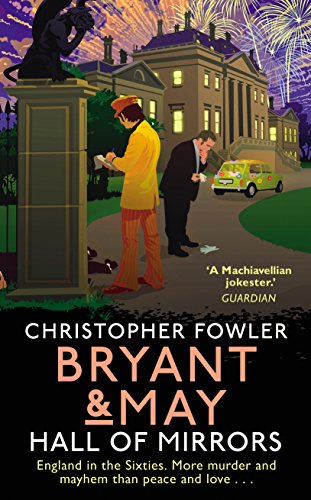 The dust jackets of the Bryant & May novels are a work of art in themselves, but between the covers is where the true genius lies. Arthur Bryant and John May are detectives working for the Peculiar Crimes Unit, an imaginary department of London’s Metropolitan Police. Their adventures take them mostly to curious and forgotten corners of London where the past is just below the modern surface. Fowler has many talents as a writer, not least of which is his comedic talent. He is a direct descendant of English humourists such as George and Weedon Grossmith and HV Morton, and the jokes come thick and fast amid the serious business of solving murders or strange crimes.
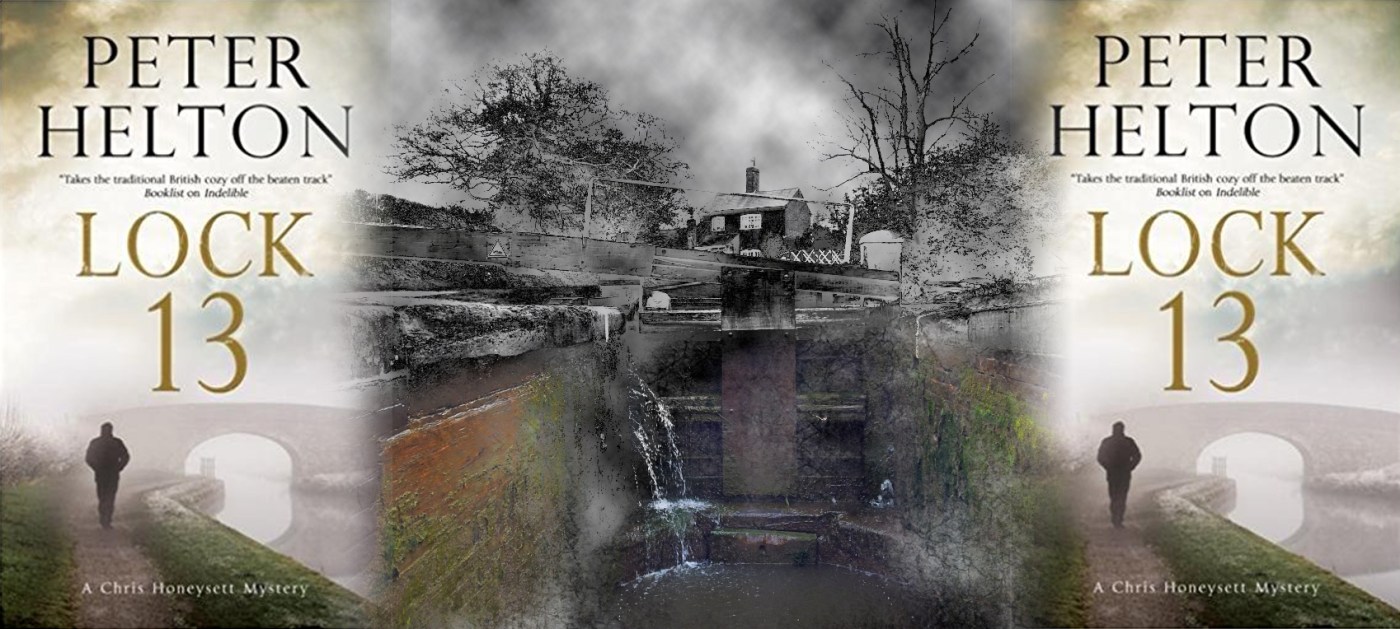
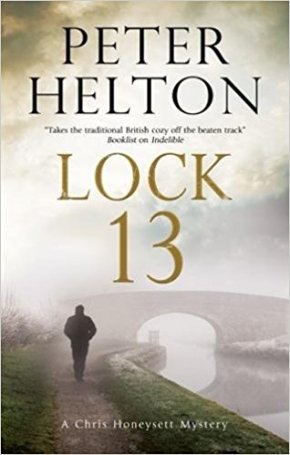 Lock 13 features Chris Honeysett, a private detective whose cases I had never read before, despite this being the sixth in what is clearly a popular series. The previous episodes are Headcase (2005), Slim Chance (2006) Rainstone Fall (2008) An Inch of Time (2012) Worthless Remains (2013) and Indelible (2014). Honeysett, like his creator Peter Helton (more on Helton’s website
  Sometimes a novel is so delightfully written that a reader can reach the last page with a smile and sense of contentment, despite the fact that nothing very dramatic or shocking, at least by the standards of some modern thrillers, has happened during the 200 pages or so which have made up the narrative. Lock 13 is one such book. Peter Helton (right) tells the story through the eyes of Chris Honeysett, and the style is fluent, conversational, occasionally erudite, often witty – but always very, very, readable. Established fans of the Honeysett series can feel duly smug that the amiable painter-sleuth has found another convert, and they can rest assured that I shall be working my way through the file of Honeysett’s previous cases. Lock 13 is published by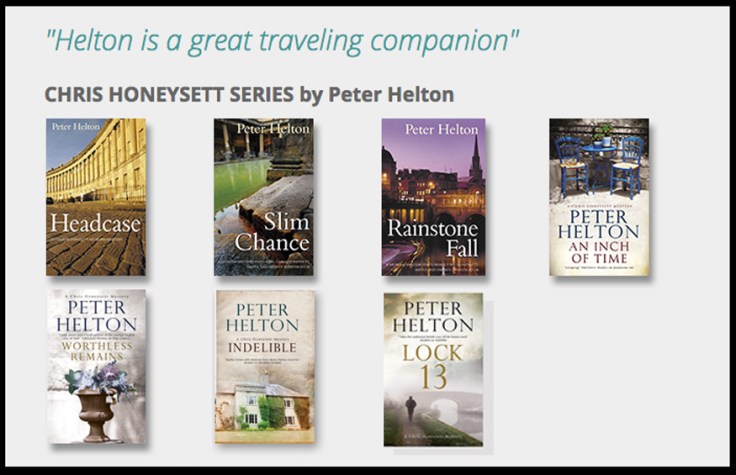

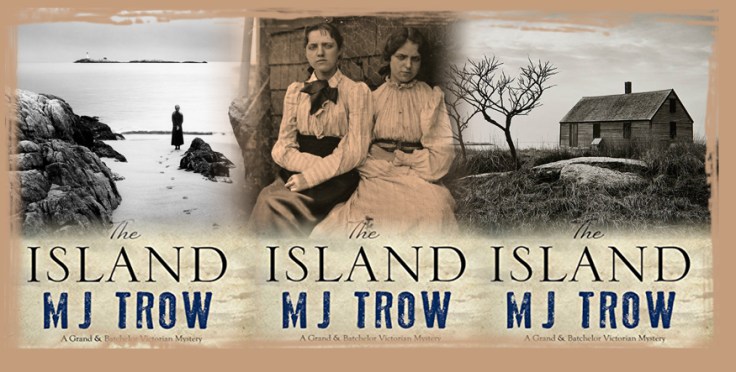
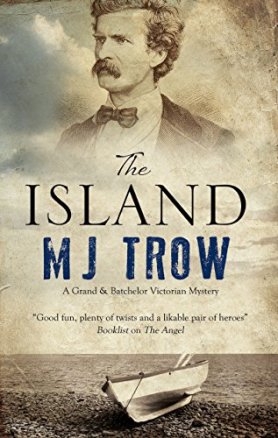 The Island is the latest episode in the eventful partnership between two gentleman detectives in Victorian London. James Batchelor is a former journalist, a ‘gentleman’ in manners and intelligence, if not by upbringing, while his colleague Matthew Grand is an American former soldier, and scion of a very wealthy patrician New Hampshire family. We first met them in
  A few words in praise of the author. Meiron Trow (right) is one of the most erudite and entertaining writers in the land. Over thirty years ago he began his tongue in cheek series rehabilitating the much-put-upon Inspector Lestrade, and I loved every word. I then became hooked on his Maxwell series, featuring a very astute crime-solving history teacher who, while eschewing most things modern, manages to be hugely respected by the sixth-formers (Year 12 and 13 students in new money) in his charge, while managing to terrify and alarm the younger ‘teaching professionals’ who run his school. I was well into the Maxwell series before I realised that MJ Trow and I had two things (at least) in common. Firstly, he went to the same school as I did, although I have to confess he was a couple of years ‘below’ me and would have been dismissed at the time as a pesky ‘newbug’. Secondly, and much more relevant to my love of his Maxwell books, I discovered that we were both senior teachers in state secondary schools, and shared a disgust and contempt for the tick-box mentality characterising the so-called ‘leadership’ of high schools.
 I digress, so back to New Hampshire in the early spring of 1873. The guests begin to arrive, and the ‘downstairs’ staff under the stern eye of the enigmatic butler, Waldo Hart, are emulating the proverbial blue-arsed fly. Trow, at this point, gleefully takes the template of the traditional country house mystery, and has his evil way with it. Despite the title of the book, we are not quite in Soldier Island (And Then There Were None) territory, but Rye is far enough from Boston to make sure that when the first murder happens, the real policemen are too far away and too engrossed with their city crime to pay much attention, even when when of the possible suspects is a certain Mr Samuel Langhorne Clemens. (left)


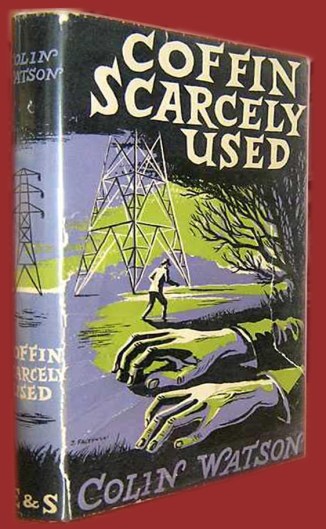 Coffin Scarcely Used – the first of The Flaxborough Chronicles – begins with the owner of the local newspaper dead in his carpet slippers, beneath an electricity pylon, on a winter’s night. Throw into the mix an over-sexed undertaker, a credulous housekeeper, the strangely shaped burns on the hands of the deceased, a chief constable who cannot believe that any of his golf chums could be up to no good, and a coffin containing only ballast, and we have a mystery which might be a Golden Age classic, were it not for the fact that Watson was, at heart, a satirist, and a writer who left no balloon of self importance unpricked.
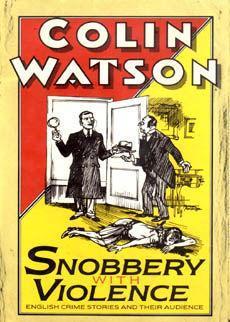 In addition to such delightful titles as Broomsticks Over Flaxborough and Six Nuns And A Shotgun (in which Flaxborough is visited by a New York hitman) Watson also wrote an account of the English crime novel in its social context. In Snobbery With Violence (1971), he sought to explore the attitudes that are reflected in the detective story and the thriller. Readers expecting to find Watson reflecting warmly on his contemporaries and predecessors will be disappointed. The general tone of the book is almost universally waspish and, on some occasions, downright scathing.
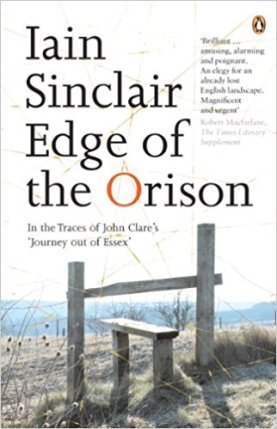 In the end, it seems that Watson had supped full of crime fiction writing. Iain Sinclair sought him out in his later years at Folkingham, and wrote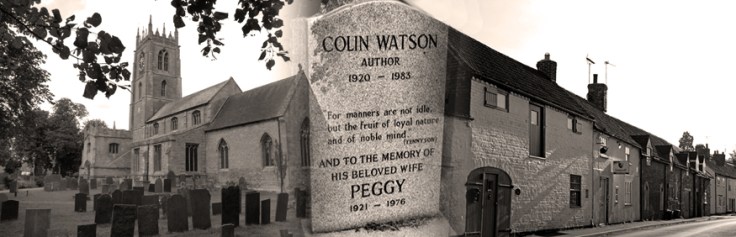
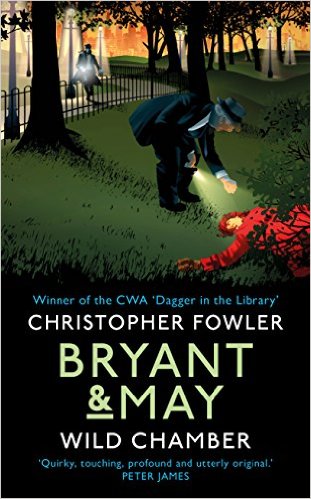
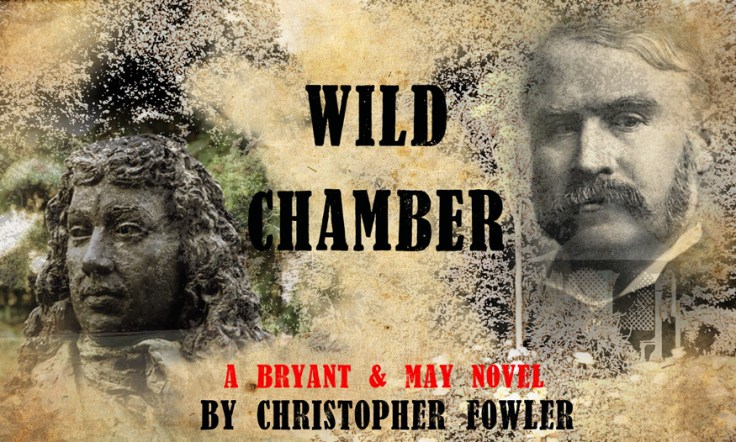
 Other murders follow, and each has been committed in one of the parks and gardens – the Wild Chambers – which are scattered throughout central London. Are the gardens linked, like some erratically plotted ley line? Why are the murders connected to a tragic freak accident in a road tunnel near London Bridge? Why are the murder sites speckled with tiny balls of lead?
 Along the way, Fowler (right) has the eagle eye of John Betjeman in the way that he recognises the potency of ostensibly insignificant brand names and the way that they can instantly recreate a period of history, or a passing social mood. At one point, Bryant tries to pay for a round of drinks in a pub:


