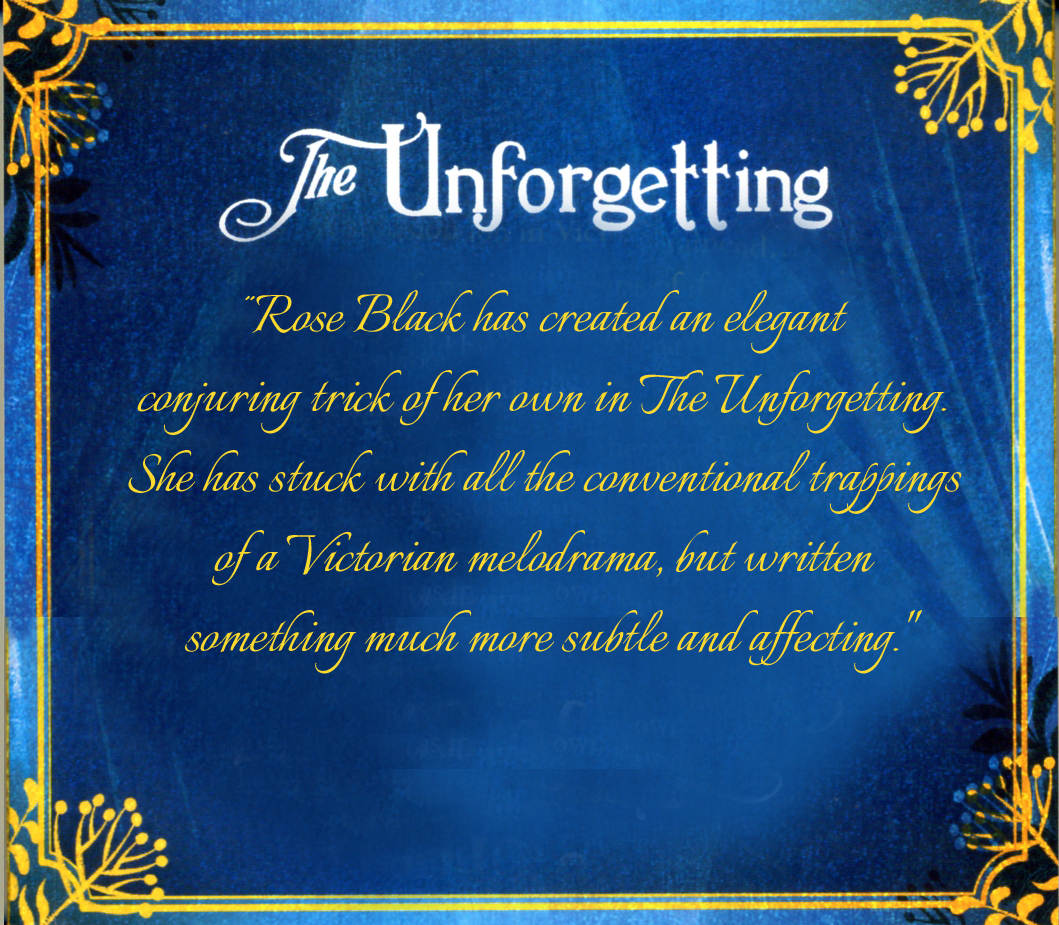

 s she gazes up at her bedroom ceiling, Lily Bell daydreams of becoming an actress. She is, to be sure, beautiful enough, with her long almost-white blond hair and her flawless complexion, but for the stepdaughter of a struggling artist in the London of 1851, her dreams of becoming Ophelia, Juliet or Desdemona are just foolish fantasies. Until the day her penniless stepfather receives a visit from one of his creditors, a mysterious self-styled Professor – Erasmus Salt. Salt is actually a theatrical showman, with a macabre interest in that overwhelming Victorian obsession, communicating with the dead. He offers Alfred Bell respite from the debt in return for Lily accompanying Salt and his spinster sister Faye to become the star of a new production, in which he will convince audiences that he has raised the dead.
 Despite her misgivings, Lily is intrigued by what appears to be a chance to achieve her ambition. After all, Salt’s theatrical illusion may be faintly sinister, but who knows what career doors it might unlock? Bell, despite the tears and misgivings of his wife, cannot get Lily out of the door fast enough, and soon the girl is on her way south, to the seaside town of Ramsgate, where Salt’s production is due to be presented at The New Tivoli theatre.
Salt’s production is, literally, smoke and mirrors. Lily is not to appear on stage at all, but is confined to a cubicle, where her image is projected onto the stage via a huge mirror and the swirling aura produced by the burning of quicklime. On stage, an actor plays the role of a grieving husband trying to summon up the image of his dead wife. When she ‘appears’, he tries to clasp her to his arms but her wraith vanishes, and he ends it all, courtesy of a knife and a bladder of pig’s blood concealed under his shirt.
At first, Lily does not object to her new career, strange though it might be. Things take a turn for the worse, however, when Salt – in order to further foster the illusion of Lily’s miraculous reincarnation – publishes notices announcing her death, and has a headstone bearing her name erected over an (empty) grave in a nearby cemetery.
 y now we, as readers, know much more about Salt than does the hapless Lily. Having experience a terrible trauma in his youth, the balance of his mind has been disturbed; he may also be a murderer, and his obsession with the dead could be leading further than simply the creation of a melodramatic theatrical illusion.
Lily is an admirable character and becomes more resilient as her fortunes take a downturn at the hands of Salt, but the most intriguing part of the story is the way that Rose Black brings Faye Salt more and more centre stage, from being a slightly forbidding Mrs Danvers-like character, to becoming a vivid and compassionate woman. In the end the book was, for me, more about Faye than it was about Lily.
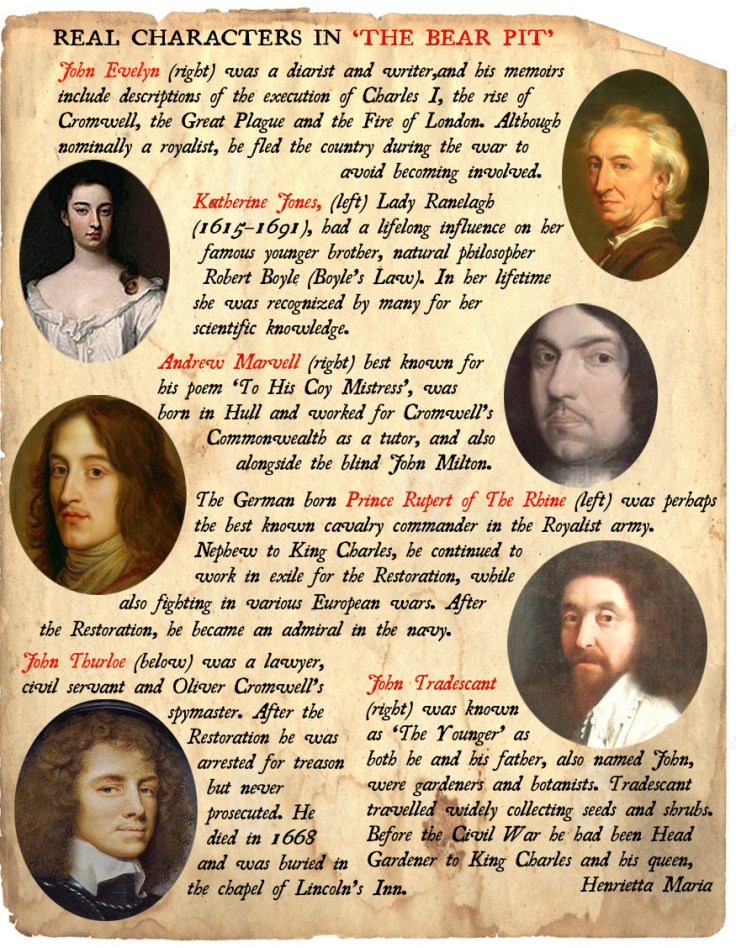
Rose Black has created an elegant conjuring trick of her own in The Unforgetting. She has stuck with all the conventional trappings of a Victorian melodrama, but written something much more subtle and affecting. Yes, we have a sneering villain, his grotesque henchman, a gothic mansion witness to a terrible tragedy, a wronged woman, a dying mother, exotic travelling gypsies, a noble young man who turns the tables on the degenerate despoiler – but there is more, so much more than that. The Unforgetting is published by Orion and is out now.


 istorical crime fiction is all the more accessible when the history is recent enough for readers such as I to recognise it as authentic, and give a nostalgic sigh when some piece of popular consumer ephemera – a brand of chocolate, a radio programme or a make of car – crops up in the narrative. Colin Crampton may possibly be the autobiographical alter ego of author Peter Bartram, himself a distinguished and experienced journalist who remembers the deafening sound of the printing presses, the smell of ink, the jangle of telephones in the press room, the scratch of a pen on the paper of a notebook, and the overiding miasma of Woodbines and Senior Service drifting on the air. The Poker Game Mystery is the latest episode in the eventful career of Colin Crampton, crime reporter for the Brighton Evening Chronicle.
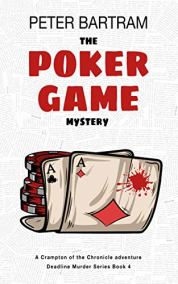 One of the many joys of the Colin Crampton novels is that Peter Bartram usually manages to set the tales against actual circumstances appropriate to the period and, sometimes, we have a very thinly disguised version of a real person. In this case, we meet an outlandish minor aristocrat, heir to daddy’s millions but, more luridly, a fancier of young women. He collects them, rather like a lepidopterist collects butterflies, but rather than sticking his prizes into a display case with a pin, he keeps his young lovelies in cottages the length and breadth of the extensive estate, and has managed to organise one for each day of the week. For the life of me, I can’t think of whom Peter might have as his template for this roué, but I expect it will come to me in the middle of the night, rather like Ms Monday and the others do to their lord and master.
 hen the body of a widely disliked local bouncer is found – his face a rictus of horror and agony – with a suspiciously large sum of used notes beside him, Crampton is sucked into a case which involves a shadowy WW2 home defence unit known as The Scallywags. Crampton discovers that they were a strange combination of Dad’s Army and the SAS – trained to wreak havoc on the Germans should they ever succeed in invading Britain. To enliven matters further, the aforementioned noble Lothario becomes the new owner of The Chronicle on the death of his father, but then promptly signs away the paper as a stake in a losing card game, this threatening the existence of The Chronicle – and those who sail in her.
 ided by his feisty (and rather beautiful) Australian girlfriend, Crampton is up to his neck in a sea of trouble involving, among other things, dead bodies, wartime gold bullion, a predatory newspaper baron, and the arcane skill of doctoring a set of playing cards. It’s wonderful stuff – not just a crime caper, but another fine novel from a writer who wears his learning lightly.
 Colin Crampton’s Brighton is slightly down at heel but all the more charming for not yet having succumbed to the deadening hand which has now made it the world capital of all things green, ‘woke’, diverse and inclusive. There are still saucy postcards to be bought at the sea-front newsagent, and incorrect jokes to be delivered by Brylcreemed comedians in faded variety halls. Peter Bartram (right) has set the bar very high with his previous Crampton novels but he just gets better and better, and The Poker Game Mystery clears that bar with loads to spare. We even have a finale worthy of Indiana Jones, albeit in a murky tunnel somewhere in Sussex rather than in some more exotic location. A word of warning. If the words Atrax Robustus make you feel queasy, then you might need someone to mop your fearful brow while you read the final pages. Clue – not all of Australia’s exports are as cuddly as Crampton’s gorgeous girlfriend, Shirley Goldsmith.
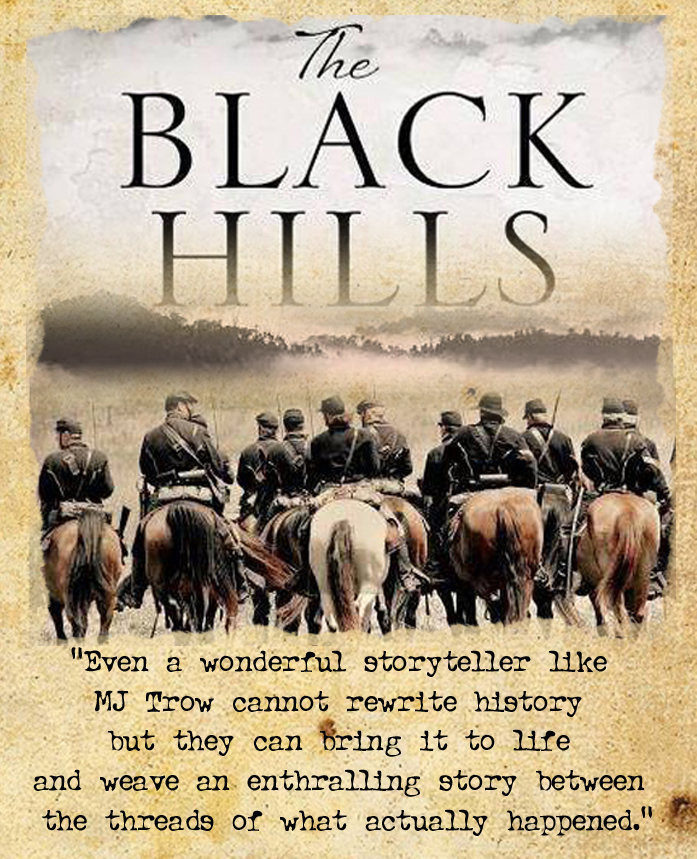

 e may not have been the first to do so, but George MacDonald Fraser entertained many of us with the idea of writing novels where we get to meet actual key players from history. His archetypal bounder Harry Flashman, himself nicked from Tom Brown’s Schooldays, rubbed shoulders and crossed swords with a variety of celebrities, including Otto von Bismarck, Abraham Lincoln, and Emperor Franz Joseph. The late Philip Kerr narrowed things down as he introduced us to Heinrich Himmler, Reinhardt Heydrich and Joseph Goebbels in his Bernie Gunther novels.
 One of the enjoyable conceits of the series is the comparison of how the two men behave when out of their cultural comfort zone. Grand is no gnarled backwoodsman, as his parents are wealthy New Hampshire patricians, but there is generally more fun to be had when Batchelor is trying to navigate the social niceties – or lack of them – in America. Trow, like MacDonald Fraser and Kerr, is a shameless name-dropper and we are not many pages into The Black Hills before we have bumped into George Armstrong Custer and broken into The White House to have a conversation with its current occupant, Ulysses Simpson Grant.
 I readily put my hand up. When I read the words The Black Hills, the first image that flashed before my eyes was that of Doris Day in her buckskins and with her blonde bob under a troopers’ hat. Yes, my age is showing, but the 1953 film Calamity Jane starring Doris Day in the title role featured great songs like The Deadwood Stage, Secret Love and The Black Hills of Dakota. Trow is pretty much of my generation. He was a couple of years behind me at a minor public school (but don’t hold that against either of us). Never one to miss a trick, he features Calamity Jane in The Black Hills but, my oh my, Doris Day she ain’t. Short, pug-ugly and a stranger to personal hygiene, Jane Cannery is a fixture at Fort Abraham Lincoln. She is rarely sober and earns her living by washing the long johns of the Seventh Cavalry men who guard the frontier. She is notoriously quick on the draw with her Navy Colt, and the soldiers take care to give her a wide berth when she is in one of her moods.

 t was not until the middle of the nineteenth century that Britain had anything like an organised police force. The Hocus Girl is set well before that time, and even a developing community like Leeds relied largely on local Constables and The Watch – both institutions being badly paid, unsupported and mostly staffed by elderly individuals who would dodder a mile to avoid any form of trouble or confrontation. There were, however, men known as Thieftakers. The title is self-explanatory. They were men who knew how to handle themselves. They were employed privately, and were outside of the rudimentary criminal justice system.
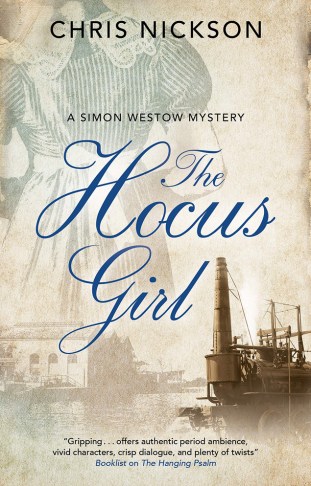 Such a man is Simon Westow. He is paid, cash in hand, to recover stolen goods, by whatever means necessary. His home town of Leeds is changing at an alarming rate as mechanised cloth mills replace the cottage weavers, and send smoke belching into the sky and chemicals into the rivers. We first met Westow in The Hanging Psalm, and there we were also introduced to young woman called Jane. She is a reject, a loner, and she is also prone to what we now call self-harm. She is a girl of the streets, but not in a sexual way; she knows every nook, cranny, and ginnel of the city; as she shrugs herself into her shawl, she can become invisible and anonymous. Her sixth sense for recognising danger and her capacity for violence – usually via a wickedly honed knife – makes her an invaluable ally to Westow. I have spent many enjoyable hours reading the author’s books, and it is my view that Jane is the darkest and most complex character he has created. In many ways The Hocus Girl is all about her.
 he 1820s were a time of great domestic upheaval in Britain. The industrial revolution was in its infancy but was already turning society on its head. The establishment was wary of challenge, and when Davey Ashton, a Leeds man with revolutionary ideas is arrested, Simon Westow – a long time friend – comes to his aid. As Ashton languishes in the filthy cell beneath Leeds Moot Hall, Westow discovers that he is treading new ground – political conspiracy and the work of an agent provocateur.


 fter her success with
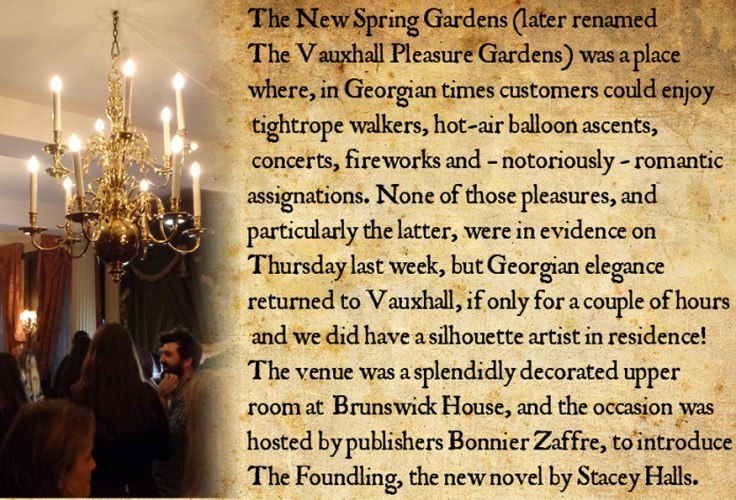
  Zosha Nash (left), formerly Head of Development at The Foundling Museum explained, the care and love bestowed on the children was remarkable, even by modern standards. Their life expectancy exceeded that of many children at the time, and all were taught to read and write. The hospital was also famously associated with Handel, and it was in the chapel that Messiah was performed for the first time in England
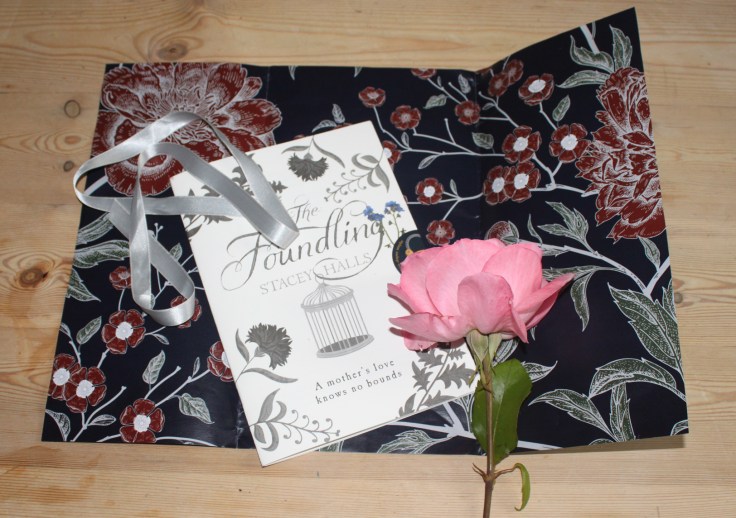
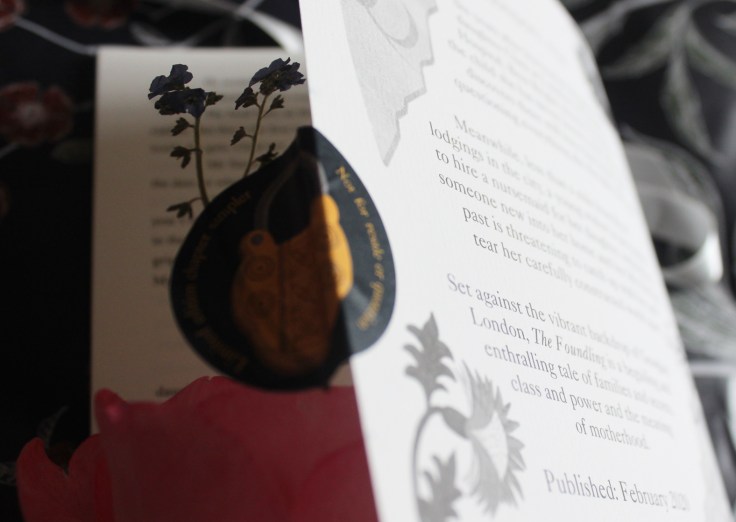
 ix years after leaving her, Bess Bright returns to claim her daughter, to be greeting with the shattering news that Clara is no longer there. She has been claimed – just a day after Bess left her – by a woman correctly identifying the child’s token, a piece of scrimshaw, half a heart engraved with letters. The authorities are baffled, but convinced that a major fraud has been perpetrated. Bess’s shock turns to a passionate determination to find Clara.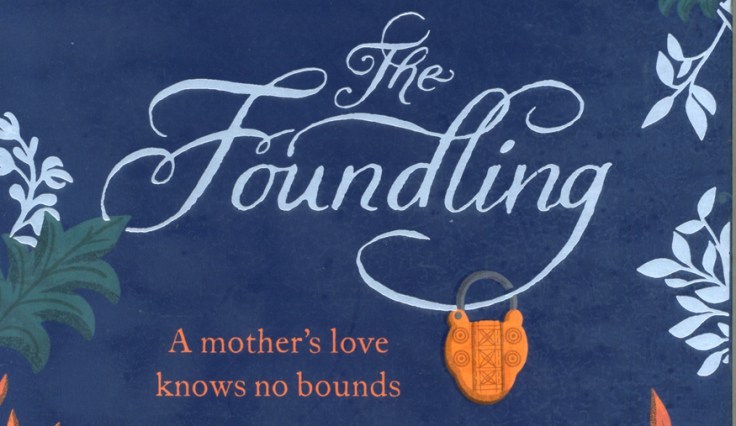





 he dramatic events of The Rooks Die Screaming take place in the spring of 1921 in the Cornish market town of Bodmin. The bare bones of the story are that Detective Inspector Cyril Edwards of Scotland Yard has come to Bodmin to investigate murder and treachery involving a group of spies known as The Four Rooks. This book is a sequel to The Woman With The Red Hair, and to say there is a back-story is something of an understatement. The eponymous young woman is called Morag and, amongst other things, is Edwards’ sister-in-law. Elisha Edwards was one of the millions of unfortunates taken by an agent even deadlier than high explosives and machine gun bullets – Spanish Influenza.
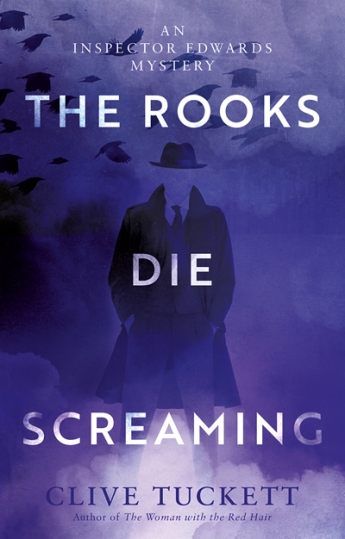 Morag is now Lady Frobisher. Her husband Harry, heir to The Fobisher Estate on the outskirts of Bodmin, is blind, victim of a grenade in the Flanders trenches. In the previous novel, Frobisher Hall was the scene of great torment for Morag, as she fell into the clutches of Morgan Treaves, an insane asylum keeper and his evil nurse. Treaves has disappeared after being disfigured with a broken bottle, wielded my Morag in a life or death struggle.
 That said, The Rooks Die Screaming is inspired escapist reading. It would be unfair to say that Tuckett (right) writes in an anachronistic style. This is much, much better than pastiche, even though there are elements of Conan Doyle, the Golden Age, John Buchan and even touches of Sapper and MR James. So, eventually, to the plot, but we need to know a little more about Cyril Edwards. Like many a fictional detective inspector he is his own man. In another nice cultural reference Tuckett adds a touch of Charters and Caldicott as Edwards explains to the bumptious Standish, a mysterious officer from Military Intelligence;
 tandish orders Edwards to investigate the possibility that Harry Frobisher is one of the Rooks, but one who has betrayed his country. Arriving in Bodmin his first task is to explain to the local police how a corpse found on a train is that of a notorious London contract killer. Tuckett’s Bodmin is full of stock characters, including a stolid police sergeant, an apparently tremulous clergyman and a punctilious but respected solicitor who is privy to all the secrets of the local gentry, but is oh, so discreet. To add to the fun, Frobisher Hall also has its requisite roll call of faithful retainers.

 London. 1894. The British Museum has become a crime scene. A distinguished academic and author has been brutally stabbed to death. Not in the hushed corridors, not in the dusty silence of The Reading Room, and not even in one of the stately exhibition halls, under the stony gaze of Assyrian gods and Greek athletes. No, Professor Lance Pickering has been found in the distinctly less grand cubicle of one of the museum’s … ahem …. conveniences, the door locked from inside, and the unfortunate professor slumped over the porcelain.
 This is a highly readable mystery with two engaging central characters, a convincing late Victorian London setting, and a plot which takes us this way and that before Daniel and Abigail uncover the tragic truth behind the murders. Jim Eldridge (right) is a veteran writer for radio, television and film as well as being the author of historical fiction, children’s novels and educational books. Murder At The British Museum is published by Allison & Busby,


 olitical disagreement in modern mainland Britain is largely non-violent, with the dishonorable exceptions of Islamic extremists and – further back – Irish Republican terror. For sure, tempers fray, abuse is hurled and fists are shaken. Just occasionally an egg, or maybe a milkshake, is thrown. You mightn’t think it, given the paroxysms of fury displayed on social media, but sticks and stones are rarely seen. Scottish writer SG MacLean in her series featuring the Cromwellian enforcer Damian Seeker reminds us that we have a violent history.
 In the last of England’s civil wars, forces opposed to King Charles 1st and his belief in the divine right of kings have won the day. 1656. Charles has been dead these seven years and his son, another Charles, has escaped by the skin of his teeth after an abortive military campaign in 1651. He has been given sanctuary ‘across the water’, but his agents still believe they can stir up the population against his father’s nemesis – Oliver Cromwell, The Lord Protector.
 hile Seeker searches for his bear, he has another major task on his hands. A group of what we now call terrorists is in London, and they mean to cut off the very head of what they view as England’s Hydra by assassinating Oliver Cromwell himself. Rather like Clint Eastwood in In The Line of Fire and Kevin Costner in The Bodyguard, Seeker has one job, and that is to ensure that the No.1 client remains secure. Of course, history
  tells us that Seeker succeeds, but along the way SG MacLean (right) makes sure we have a bumpy ride through the mixture of squalor and magnificence that is 17th century London.