

There are locations for British crime novels that fit certain moods. You can have rural idylls which are shattered by evil deeds – the Cotswolds, the Yorkshire Dales and the majestic Scottish Highlands all fit that bill. Then you have the criminals hiding behind the bright lights of cities like London, Glasgow, and Manchester. James Henry has chosen a rather more understated milieu for his Nick Lowry police novels – Essex, and in particular, the garrison town of Colchester.
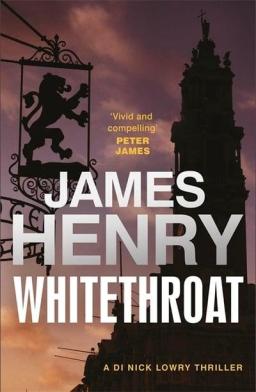 Essex has become something of a trigger word in recent years, conjuring up images such as lavish mansions owned by London gangsters and dumb bottle-blondes with their perma-tanned, medallioned boyfriends. James Henry, however, takes us back forty years to the 1980s. DI Nick Lowry and his boss, Chief Superintendent Sparks, inhabit a police HQ which leaks, has rotten floorboards, and is maybe only months away from the demolishers’ wrecking ball. Sparks contemplates his desk:
“He studied the wooden surface of his desk. Countless semicircles, rings from years of mugs, cups, scotch glasses, placed carelessly and staining the untreated grain. The there were more pronounced wounds and scars: cigarette burns, knife scores, unusual marks – traces of events only the man behind the desk could read.”
Since Roman times, the history of Colchester has been inextricably intertwined with that of soldiering, and it is the death of a young ‘squaddie’ (an unranked private soldier) that Lowry investigates. Improbably, it seems that the dead man was shot in a Victorian-style duel, complete with gentlemanly observance and the presence of Seconds. With the help of his friend Captain James Oldham, of the Military Police, Lowry discovers that the two men had been fighting over a woman. But who was the other duellist, and who was the woman?
The plot goes this way and that, but this is a book that is always about the quality of the prose. Lowry has a young subordinate called Kenton, who has been on leave since being traumatised by the death of a young girl. Kenton is clever, well-educated, but enjoys his stimulants. In pursuit of the more legal kind, he observes pub life:
“..it was different being here as a punter. You saw the place through different eyes; peaceful and inviting and shabbily familiar. Flaking paintwork, worn hardwood surfaces, the yellow, cracked ceiling; a naked aging structure smoothed by the warmth of alcohol and density of cigarette smoke.”
And again:
“The first to arrive were the regulars. Men in their sixties. One, Wilf, was already in situ, perched quietly at a corner table, steadfastly drinking IPA. He would sut there until last orders, then leave as silently as he had arrived. Around midday, the bohemian set – ‘intellectual dossers’, Sparks called them – would drift in. Young men clutching tatty paperbacks. Sucking the end of biros and staring pensively into the middle distance.”
Like most self-respecting fictional police detectives, Lowry’s personal life is something of a wasteland. He is divorced, and his wife has poisoned their son against him. He feels that the years are taking their toll on him, but he remains compassionate:
“Lowry moved to place his arm across Sparks’s shoulders, but instead grasped the nearest arm, squeezed the firm bicep and bowed his head. He was winded by a surge of sympathy, revealing an attachment to the older man that seldom surfaced. Even now – more and more, in fact, the older he became – life caught Lowry out, introducing unsolicited emotions and concerns, age bringing with it a new sort of awareness.”
 The plot is the least important part of this fine novel, but it unfolds gradually. The woman whose favours are being fought over by the duellists is not a woman at all, but a fifteen year-old schoolgirl, the daughter of a local businessman. He, in turn, has unfinished business with a local enrepreneur, and business that dates back to a racial attack three decades earlier. We are in a world of simmering resentment born out of old slights, and the result? The proverbial dish that is best served cold.
Whitethroat is bleak, downbeat and mesmerising; a subtle, compassionate and beautifully written novel that is something of an elegy to a way of policing – and living – that is gone for ever. James Henry (above right), as James Gurbutt, has also written prequels to RD Wingfield’s Jack Frost series. Whitethroat is published by Riverrun and will be out in hardback on 9th July. The two previous Nick Lowry novels are pictured below.










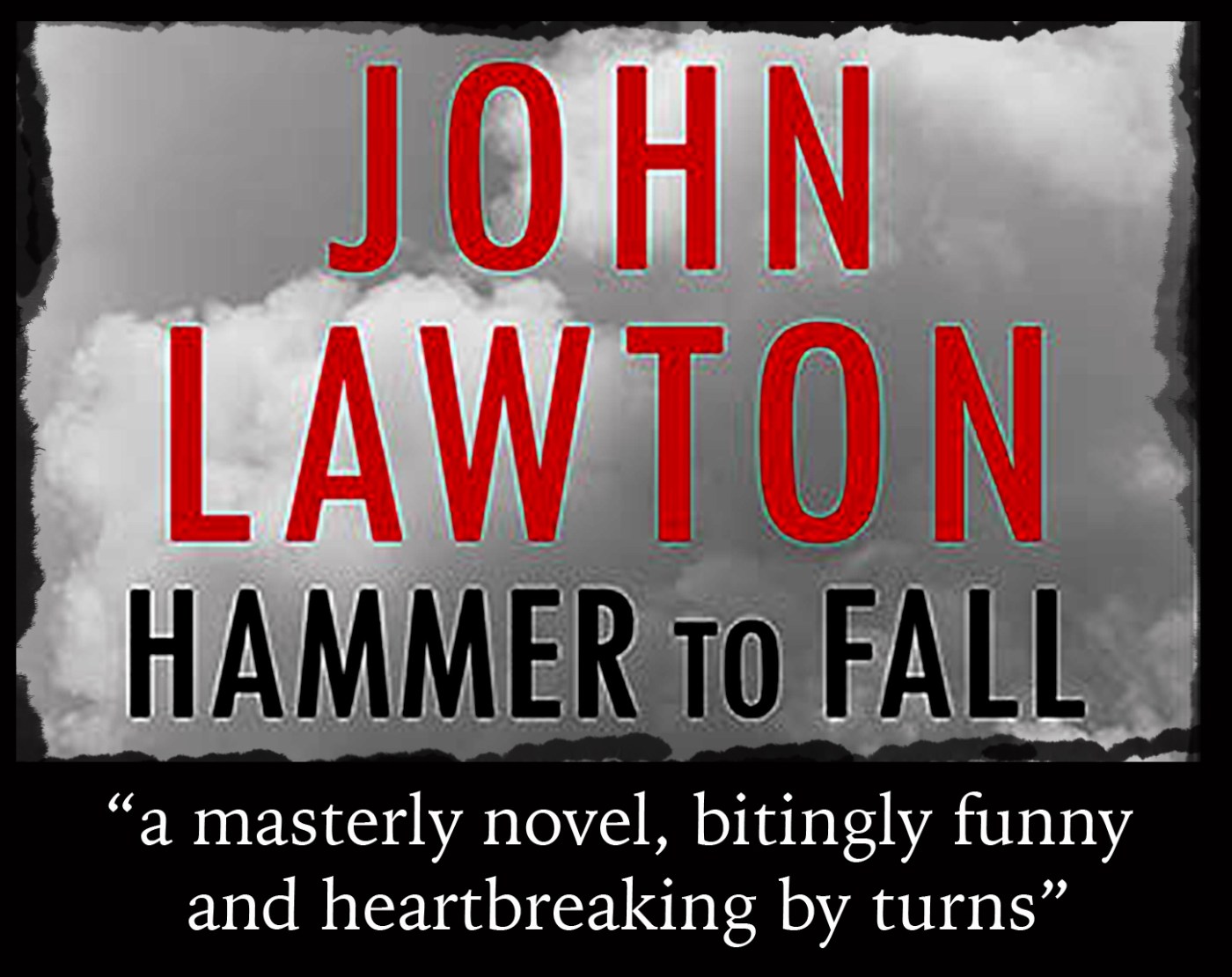

 He is no James Bond figure, however. His dark arts are practised in corners, and with as little overt violence as possible. Hammer To Fall begins with a flashback scene,establishing Joe’s credentials as someone who would have felt at home in the company of Harry Lime, but we move then to the 1960s, and Joe is in a spot of bother. He is thought to have mishandled one of those classic prisoner exchanges which are the staple of spy thrillers, and he is sent by his bosses to weather the storm as a cultural attaché in Finland. His ‘mission’ is to promote British culture by traveling around the frozen north promoting visiting artists, or showing British films. His accommodation is spartan, to say the least. In his apartment:
 So far, so funny – and Lawton (right) is in full-on Evelyn Waugh mode as he sends up pretty much everything and anyone. The final act of farce in Finland is when Joe earns his keep by sending back to London, via the diplomatic bag, several plane loads of …. well, state secrets, as one of Joe’s Russian contacts explains:
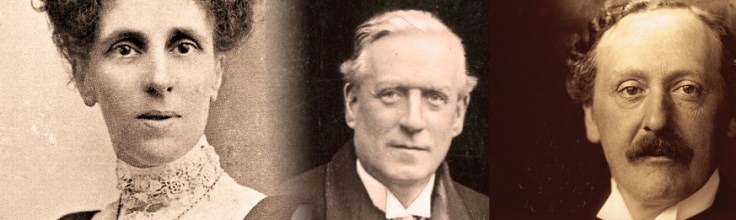
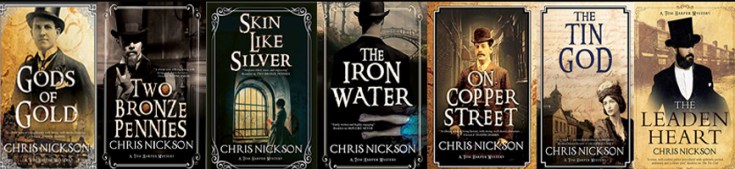
 We first met Leeds policeman Tom Harper in Gods of Gold (2014) when he was a young CID officer, and the land was still ruled by Queen Victoria. Now, in The Molten City, Harper is a Superintendent and the Queen is seven years dead. ‘Bertie’ – Edward VII – is King, and England is a different place. Leeds, though, is still a thriving hub of heavy industry, pulsing with the throb of heavy machinery. And it remains grimy, soot blackened and with pockets of degradation and poverty largely ignored by the wealthy middle classes. But there are motor cars on the street, and the police have telephones. Other things are stirring, too. Not all women are content to remain second class citizens, and pressure is being put on politicians to consider giving women the vote. Sometimes this is a peaceful attempt to change things, but other women are prepared to go to greater lengths.
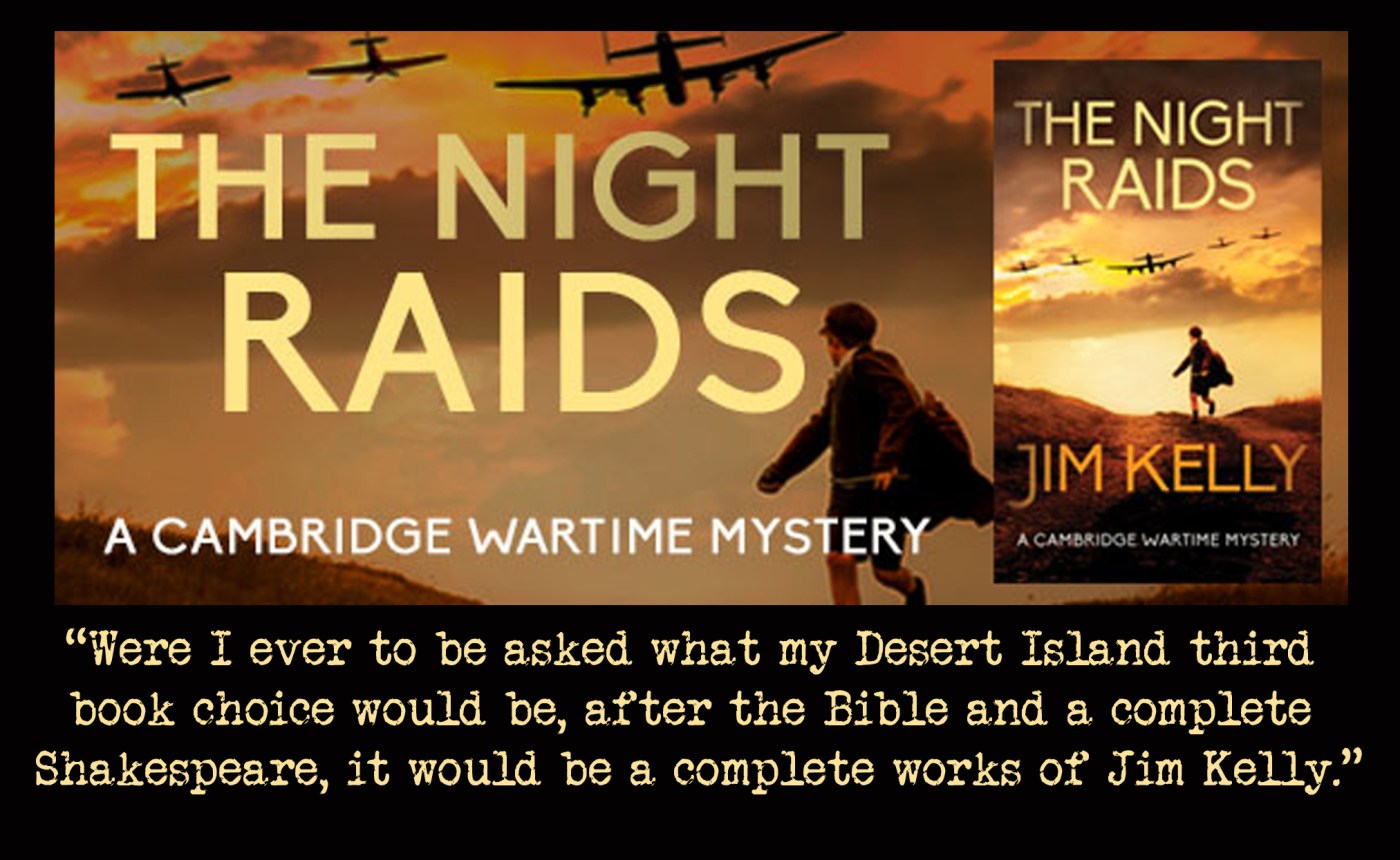
 In Night Raids we see some of the story through the eyes of a crew of a German Heinkel bomber. Their mission is to destroy an essential bridge over the river; the bridge, crucially, carries the railway taking vital men and munitions to the east coast, where invasion is a daily expectation.The bombers come over at night, and have so far failed to destroy the bridge. What they have done, however, is unload some of their bombs on residential areas of the town, and inside one of the terraced houses wrecked by the raid, Brooke finds the body of an elderly woman. Her death is clearly attributable to Hermann Goering’s Luftwaffe, but the fact that her left ring finger and middle finger have been removed with a hacksaw cannot, sadly be laid at the door of the Reichsmarschall.
 eing a middle class British father and grandfather, the concept of abandoning a newly born baby is totally beyond my experience of life and (the fault is perhaps mine) my comprehension. The fact is, however, that since Adam had his way with Eve, biology has trumped human intention, and babies have come into the world unloved and unwanted. Thankfully, there have been charitable institutions over the centuries which have done their best to provide some kind of home for foundlings. Abandoning babies is not something consigned to history: modern Germany has its Babyklappe, and Russia its Колыбель надежды – literally hatches – rather like an old fashioned bank deposit box – built into buildings where babies can be left. Back in time, Paris had its Maison de la Couche pour les Enfants Trouvés while in Florence the Ospedale degli Innocenti is one of the gems of early Renaissance architecture. London had its Foundling Hospital, and it is the centre of The Foundling, the new novel by Stacey Halls.
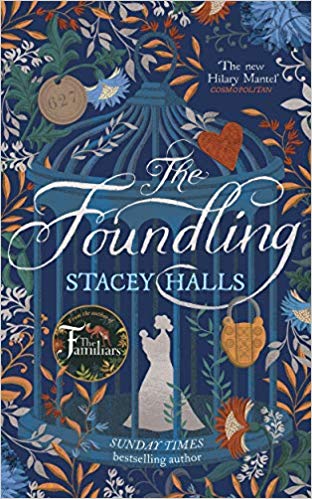 Bess Bright is a Shrimp Girl. Her father gets up at the crack of dawn to buy Essex shrimps from Billingsgate Market, and Bess puts the seafood in the brim of a broad hat and, clutching a tiny tankard to measure them out, she walks the streets of
  elling shrimps from the brim of your hat is not an occupation destined to provide sufficient funds to keep a growing child, and so Bess presents herself and baby Clara at
 ow – and where – Bess finds her missing daughter is for you to discover, but I promise that The Foundling is ingenious, delightful, and the author’s skills as a storyteller are magnetic. The attention to detail and the period authenticity are things to be wondered at, but what elevates this novel above the humdrum is how Stacey Halls conjures up our sheer emotional investment in the characters, each one beautifully observed. Art lovers will recognise the painter – and the title – of the picture below and, were he alive to read it, the great observer of London life would thoroughly approve of The Foundling, which is published by Manilla Press and is out on


 The idea of the female spy has attracted writers and dramatists over the years with its unbeatable combination of danger and sexual allure. Pete Langman comes to the party with his enjoyable new novel, Killing Beauties set in the England of 1655. Remember those old historical movies that began with a dramatic piece of text scrolling over the opening titles, giving us a lurid and enticing potted background to whatever we were about to watch? The blurb for Killing Beauties might say something like,
  he beautiful woman is Susan Hyde, whose brother Sir Edward Hyde, Earl of Clarendon is principle advisor to the King in exile. With the aid of another young woman, Diane Jennings, Susan – and other members of the secret society known as Les Filles d’Ophelie – work with The Sealed Knot, coordinating underground Royalist activity in England and preparing for a general uprising against the Protectorate. Readers may be aware that the modern version of The Sealed Knot is a popular organisation of English Civil War re-enactors, but their historical namesakes were in deadly earnest, and organised two major rebellions before Charles II was finally crowned in 1661.
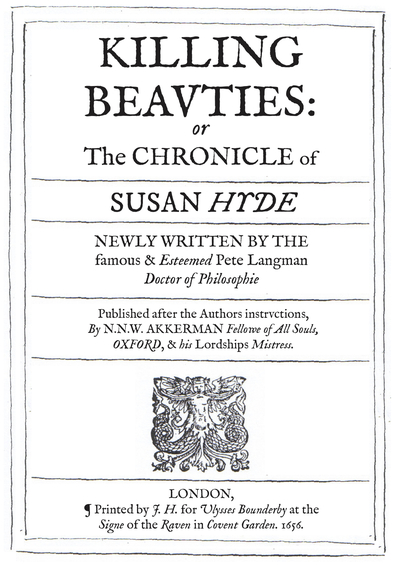 In order to succeed in her mission, Susan must use the deadliest weapon at her disposal – her sexuality. The beneficiary of her attention is none other than John Thurloe himself. Thurloe is a fascinating historical figure, and has featured in several other novels, most notably in the Thomas Challoner series by Susanna Gregory, and in the SG MacLean’s Seeker stories. I reviewed MacLean’s
  ne of the problems facing writers of historical fiction is how to handle dialogue. We know how they wrote to each other in letters, but what were conversations like? Despite one or two of his characters occasionally lapsing into more recent vernacular, Langman negotiates this particular minefield successfully. Killing Beauties is an engaging and well researched piece of costume drama acted out on a turbulent and dangerous stage. It is published by Unbound


