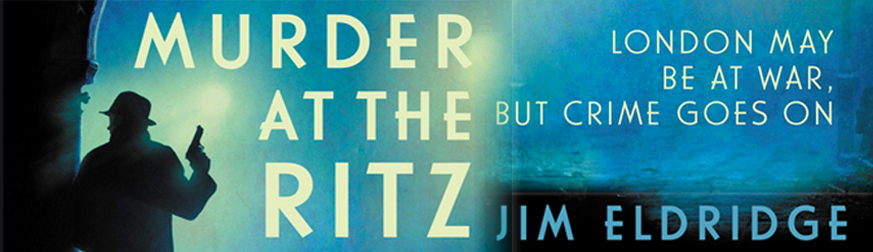
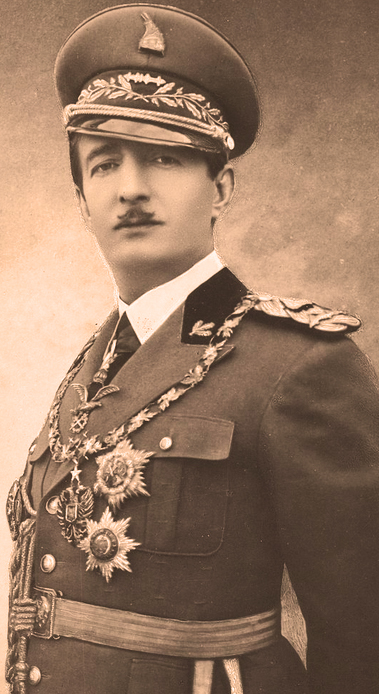
 Any novel which features – in no particular order – Commander Ian Fleming, King Zog of Albania, a dodgy lawyer called Pentangle Underhill, and a Detective Chief Inspector named The Hon. Edgar Walter Septimus Saxe-Coburg promises to be a great deal of fun, and Murder At The Ritz by Jim Eldridge didn’t disappoint. It is set in London in August 1940, and Ahmet Muhtar Zogolli, better known as King Zog of Albania (left) has been smuggled out of his homeland after its invasion by Mussolini’s Italy, and he has now taken over the entire third floor of London’s Ritz Hotel, complete with various retainers and bodyguards – as well as a tidy sum in gold bullion.
Anyone who has studied the history of Albania will know that it has always been a chaotic place. In the 1920s, while working at the League of Nations, the famous sportsman CB Fry was reputedly offered the throne. For a rather more serious memoir of Albania during WW2, Eight Hours From England (click for the review) by Anthony Quayle is well worth a read, and we all know – thanks to the Taken franchise, starring Liam Neeson, that Albania’s chief export to the rest of the world is organised crome, drug-running, money laundering and people trafficking.
 Back to the story, and when a corpse is discovered in one of the King’s suites, Coburg is called in to investigate. The attempt to relieve the Albanian monarch of his treasure sparks off a turf war between two London gangs who, rather like the Krays and the Richardsons in the 1960s, occupy territories ‘norf’ and ‘sarf’ of the river. After several more dead bodies and an entertaining sub-plot featuring Coburg’s romance with Rosa Weeks, a beautiful and talented young singer, there is a dramatic finale involving a shoot-out near the Russian Embassy. This is a highly enjoyable book that occupies the same territory as John Lawton’s Fred Troy novels (click to read more). It is nowhere near as dark and dystopian as those books, but Murder At The Ritz is none the worse for that.
Since 2016 Jim Eldridge has concentrated on writing historical crime fiction for adults. Previously he worked as a scriptwriter and wrote books for children and young adults. As a scriptwriter he had over 250 TV and 250 radio scripts broadcast in the UK and internationally. In 2019 I read, enjoyed and reviewed an earlier book by this writer, and if you click on the title – Murder At The British Museum – you can see what I thought. Murder At The Ritz is published by Allison & Busby and is out now.

 Just days earlier, Samuel had approached his best man, Charles Ellis, with a request for help. Louisa’s young cousin, Henry Cuff, is a member of the Minster choir, but it has been reported that he is desperately unhappy, is absenting himself from school, and refusing to sing in the choir. So how can Charles help? His half brother, Matthew Ellis is the Choirmaster. Could Charles please intercede, and try to find out what is the matter with young Henry?












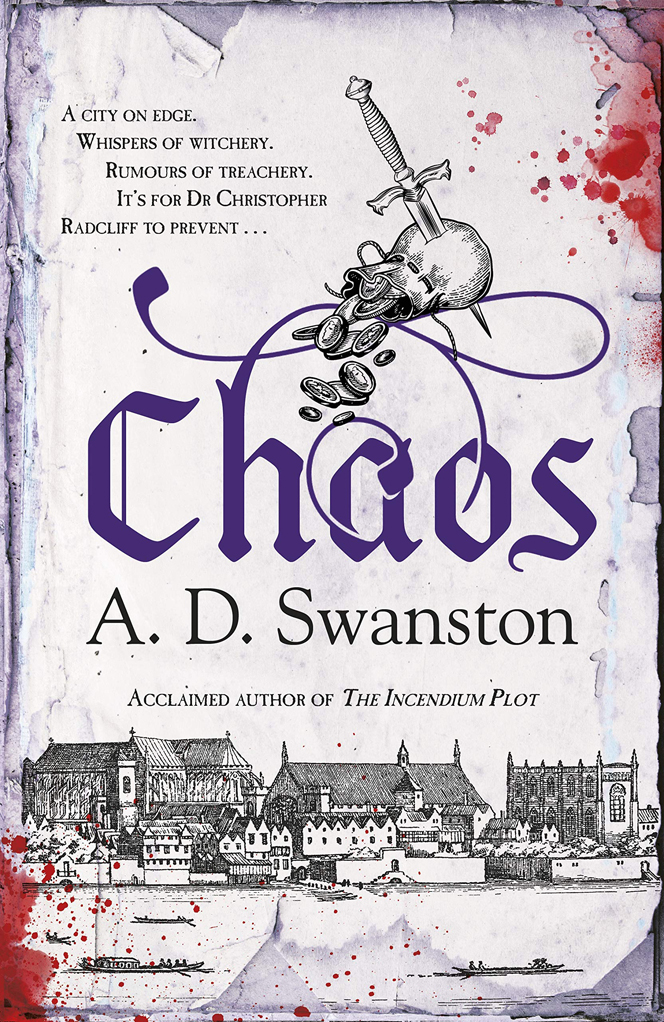 Radcliff, the creation of author AD Swanston, made his literary debut in The Incendium Plot (2018). The blurb for that book said that the country was “a powder keg of rumour, fanaticism, treachery and dissent.” Well, a few years on, and things haven’t changed a great deal. The big threat to Good Queen Bess still comes from those devious and malignant Papists, but the adherents of ‘the old religion’ have changed tack. Military conquest by Spain or France has proved ineffectual, so has a more subtle method has been chosen?