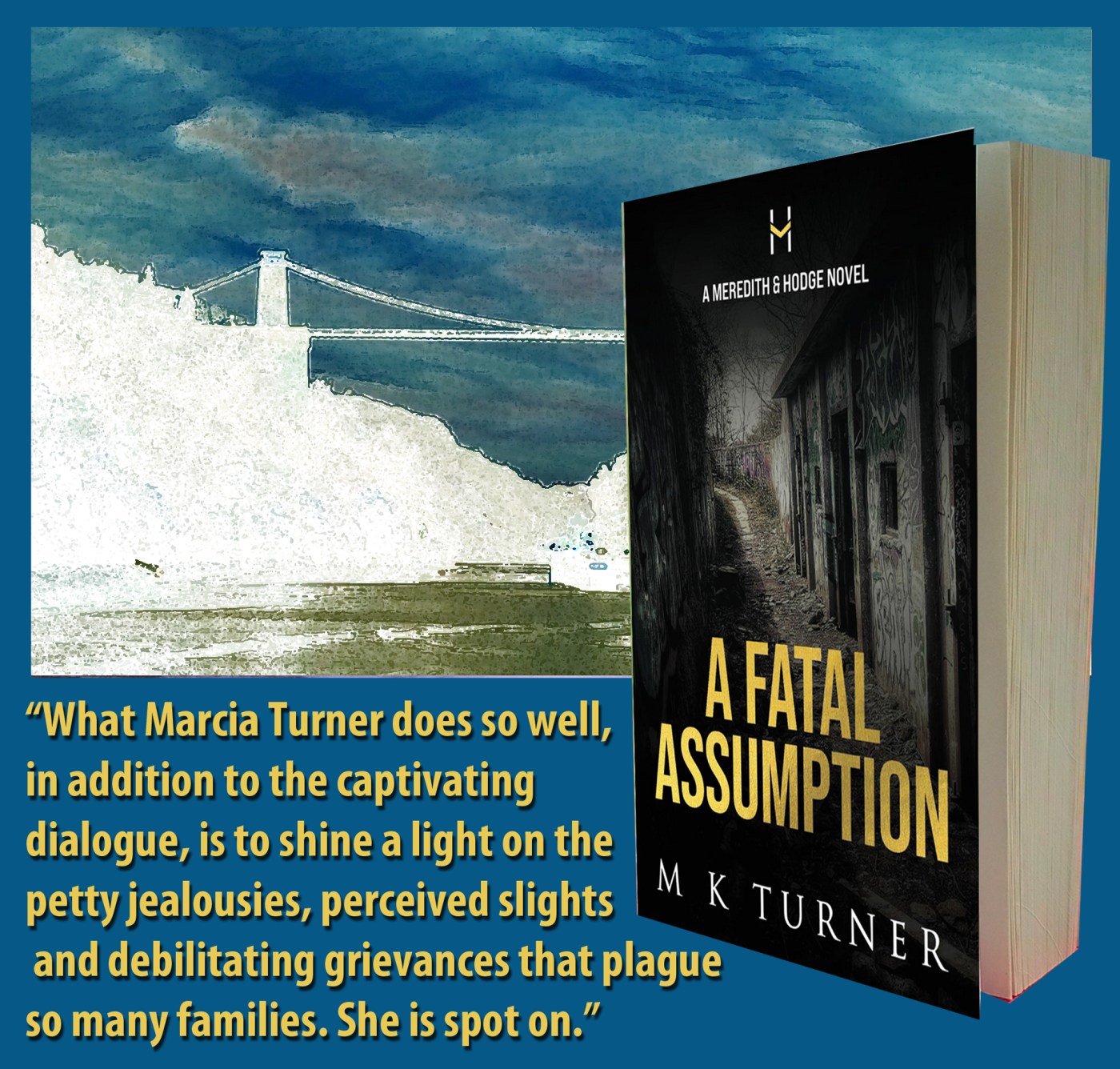

These Bristol based Meredith & Hodge cold-case-crime novels are rather special. Their latest case seems unsolvable. For starters it’s over a decade old. Christine Hawker was making breakfast for the children with husband Mike was upstairs getting them ready for school. The smoke alarm goes off. Mike discovered it has been triggered by a pan of burned porridge. But where was Christine? Puzzled, he took the kids to school, but then he disappears, too. The case baffled everyone, and gradually slid further and further back down the “To Do” list.
Now, the case has been reopened, because Mike Hawker’s remains have been inadvertently exposed by the bucket of a digger preparing the ground for a new supermarket. Meredith & Hodge? DCI Meredith and his wife, fellow officer Patsy Hodge are the ideal husband and wife team. Except – at the moment – they’re not. Patsy is on extended sick leave after a case went horrifically awry and has fled to relatives in New Zealand. Meredith? He’s getting over jetlag in a budget Auckland hotel having flown in to try to save his marriage.
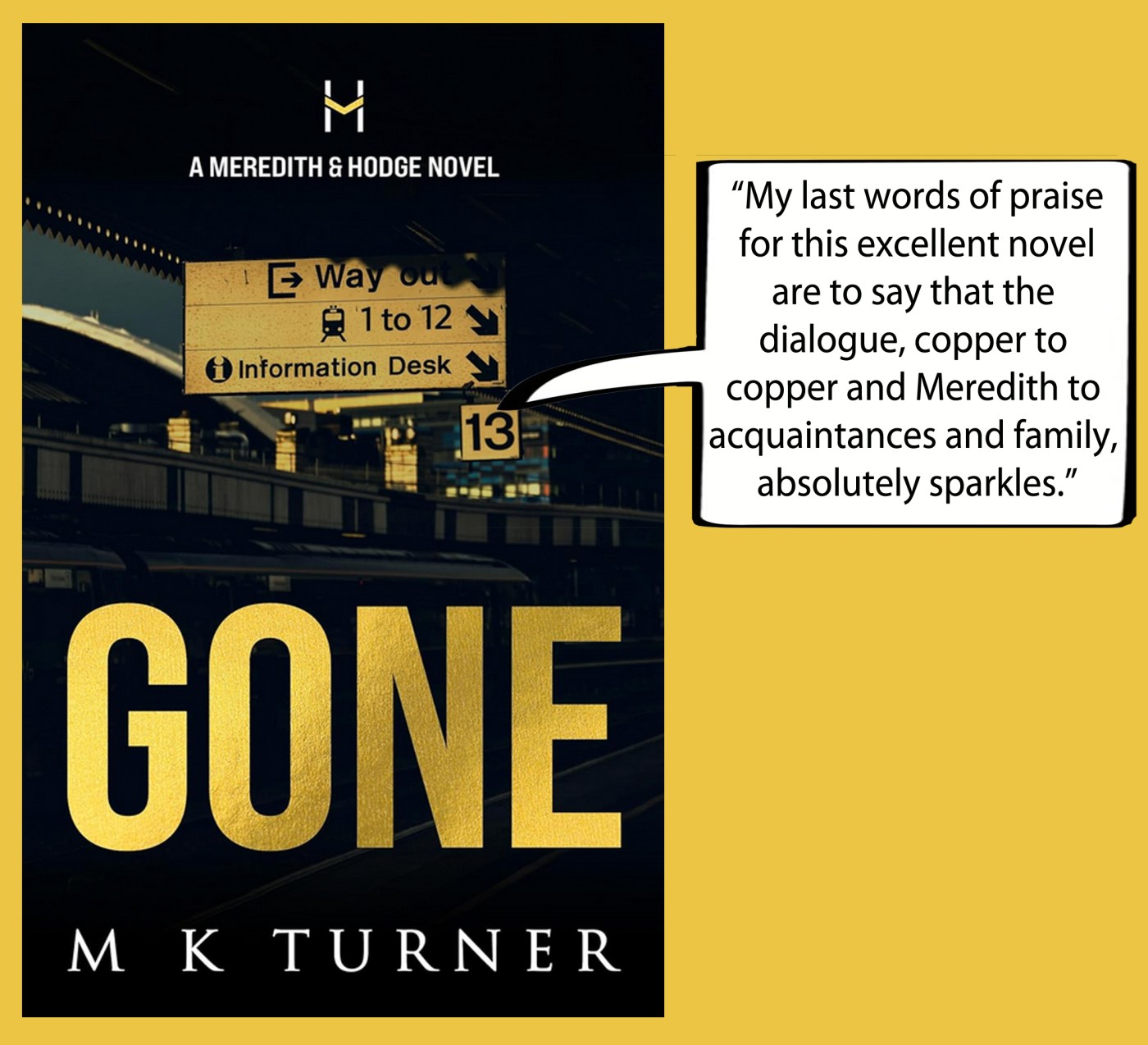
By any standard, this is a terrific police procedural novel. Yes, all the operational details are convincing and the plotting is cleverly done. For me, however, it is the dialogue that sparkles. Marcia Turner enlivens her characters by what they say, and the idioms they use. For example, an elderly man says that he is a bit ‘mutton’. Younger readers might be baffled, but Turner knows that people of this character’s generation would recognise the rhyming slang. Mutt ‘n’ Jeff were comic book characters back in the day. Mutt ‘n’ Jeff became rhyming slang for ‘deaf’ and this later evolved into ‘mutton’ – a double play on words.
Meredith’s peacemaking overture in New Zealand is favourably received, and the pair return to the UK and face the mysteries of the Hawker case. The extended family dynamic is complex, and throws up a number of grievances. In no particular order. Christine’s father died of cancer when she was in her early teens, and she had become embittered that her mother remarried so quickly, suspecting that the relationship may have been blossoming while her father was on his bed of death. Mike’s father is cantankerous and an awkward customer, and his peace of mind was not improved a few months before his son’s disappearance when a young man met him and introduced himself as his long-lost son, conceived in a youthful fling decades earlier.
Meredith’s team clutch at what seem to be increasingly flimsy straws of evidence and imperfect recollections. What about the mysterious white van seen near the Hawker’s house on the day of the abduction? It is of no help at all that several of the potential suspects worked in trades where the proverbial ‘white van’ was ubiquitous. As is probably the case in real life criminal investigations, forensic questioning unearths all manner of ill-concealed grievances and grudges within the extended family of Mike and Christine Hawker.
Despite the proverbial quote suggesting the opposite, it is inspiration rather than perspiration which finally lifts the veil for Meredith, and it comes by way of a pleasant couple of hours the detective spends with his baby grandchildren. The next day, he calls the investigative team together, and on the whiteboard writes one simple word. The culprit returns to the interview suite, confesses, and the cold case team can chalk up another success. What Marcia Turner does so well, in addition to the captivating dialogue, is to shine a light on the petty jealousies, perceived slights and debilitating grievances that plague so many families. She is spot on. We all know what she is writing about. Thankfully, it doesn’t make us all murderers, but – as they say – we have all been there. From 127 Publishing, this excellent police thriller is available now.









 Writing as Katherine Webb, the author (left) is a well established writer of several books which seem to be in the romantic/historical/mystery genre, but I believe this is her first novel with both feet firmly planted on the terra firma of crime fiction. Wiltshire copper DI Matthew Lockyer, after a professional error of judgment, has been sidelined into a Cold Case unit, consisting of himself and Constable Gemma Broad.


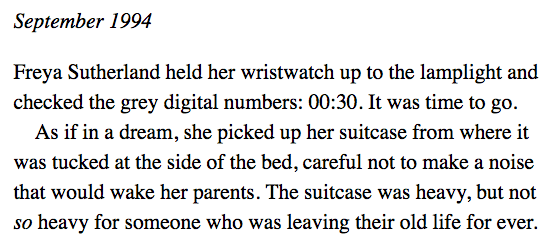
 One of Kennedy’s chief scalps was serial killer Pauline Tosh, who now faces spending the rest of her days in a remote high security jail. Out of the blue, Tosh requests a visit from the officer who ended her murderous career, and what she reveals sets off a search for a body. When it is discovered, and is revealed to be that of the long-since missing Freya Sutherland, what is in effect a massive cold-case-murder hunt is put into place.
 As with all good crime writers, Halliday (right) leads us up the garden path, and killers (plural) are actually found, but the solution is surprising and beautifully complex. Oh yes, I almost forgot. From his bio, GR Halliday is a lover of cats, so if you share his passion, there are cats in this story. Several of them.






 The Body In The Bog is a nicely alliterative strapline normally used to liven up reports of archaeologists discovering some centuries-old corpse in a watery peat grave. The deaths of these poor souls does not usually involve an investigation by the local police force, but as Val McDermid relates, when the preserved remains are wearing expensive trainers, it doesn’t take the tenant of 221B Baker Street to deduce that the chap was not executed as part of some arcane tribal ritual back in the tenth century.
 If music halls were still in vogue, McDermid would be the dextrous juggler, the jongleur who defies gravity by keeping several plot lines spinning in the air; spinning, but always under her control. There is the Nike bog body, a domestic spat which ends in savagery, a cold-case rape investigation which ends in a very contemporary tragedy, and an Assistant Chief Constable who is more concerned about her perfectly groomed press conferences that solving crime. They say that the moon has a dark side, and so does Edinburgh: McDermid (right) takes us on a guided tour through its majestic architectural and natural scenery, but does not neglect to pull away the undertaker’s sheet to reveal the squalid back alleys and passageways which lurk behind the grand Georgian facades. We slip past the modest security and peep through a crack in the door at a meeting in one of the grander rooms of Bute House, the official residence of Scotland’s First Minister, even getting a glimpse of the good lady herself, although McDermid is far too discreet to reveal if she approves or disapproves of Ms Sturgeon.
 There are just a handful of authors who, when you have their latest book in your hands, remind you of the sheer unalloyed pleasure that can come from reading. For me, that is the best feeling in the creative world, bar none – and that’s from someone who spent most of his professional life teaching and playing music. One of those treasured authors is Val McDermid, who you know is never going to let you down.


 fullybooked2017