

C.C. MacDonald’s debut novel is a psycho-thriller which mines the rich seam of middle-class anxiety and social neuroses which has become a staple of recent English crime fiction. Naomi and Charlie, along with toddler Prue, have relocated from the hipster London district they can no longer afford, kissing goodbye to the artisan bakeries, faux village ambience and the coffee shops where the wi-fi signal is as vital as the alchemy of the barrista. They now live in a rambling Victorian house in Margate, on the Kent coast, a town which MacDonald himself refers to as Shoreditch-on-Sea.
 aomi is a feature writer of some sort, while Charlie is an entrepreneur designer in the tech industry. While a succession of sharp-intake-of-breath builders and carpenters transform the neglected house into a Sunday supplement paradise, Naomi is desperate to conceive a second child. Naturally, both she and Charlie have smartphone apps which track her fertility cycle and give the couple vital windows when hurried coupling should produce little Prue’s sibling. Sadly, none of the digital wizardry seems to work. Charlie is all-too-often not up-to-snuff, and Naomi’s obsessive quest is becoming counter productive.
 While on her daily run there and back to Prue’s nursery school, Naomi meets a stunningly attractive alpha male called Sean, and his bluff insouciance is such a contrast with Charlie’s needy self-absorption that she is smitten. One thing leads to another – the ‘another’ being hurried stand-up sex in the shower cubicle at a local leisure centre – and guess what? Sean’s urgent thirty seconds has done the job, and Naomi is, at last, pregnant, but possibly by the wrong man.
Cue much heart-searching by Naomi as she tries to get to grips with the moral dilemma of her situation. Sean, however, is not around, however, either to help or to hinder. When Naomi discovers that Sean was only at the nursery on a baby-sitting job, she tries to find him. His apparent disappearance is resolved when Naomi discovers that he has not only been hiding in plain sight, but actually conspiring to stalk her and threaten the already fragile happy family she has tried to create.
 acDonald doesn’t set out to make us laugh with obvious satire, but he has fun casting a jaundiced eye on Naomi’s preoccupations. She is at a rather pretentious playgroup called ‘Sing, Sign and Movement.’
“She looks around the huge room at bored dads looking at football news on their phones, harassed mums in sportswear attempting to marshall small-scale civil wars between siblings and sugar-amped children rocketing around like derailed dodgems. She never feels further from her life in London than when she’s somewhere like this.”
Later, she is living the life at a popular café:
“Kids run riot between the replica Eames chairs as Charlie bustles between them carrying a tray. Some people talk a good game when it comes to doing everything for their children but the parents here have come for the artisan coffee and to talk to people like them in a décor that resembles something they’ve seen on Instagram and sod it if their child has to fight with ten others to play with the lone Ikea kitchen.”
 Any sense of lifestyle mockery, gentle or otherwise, dissipates once we reach the final quarter of the book. Naomi discovers that whoever Sean really is, his plans for her and her family involve much than a few moments of lust. I certainly didn’t see the plot twist coming, and MacDonald (right) springs one surprise after another, right up to the final paragraphs. If you can’t make sense of the brief chapter interludes which consist of MSN messages (remember them?) between some bitchy schoolgirls, don’t fret – you will.
While Happy Ever After won’t leave you with a warm and life affirming glow about people’s basic decency, it is a rattling good read, full of acerbic observation and dark character insights. It is published by Harvill Secker and is out on 23rd January.
I have a mint unopened hardback copy of Happy Ever After, and it needs a good home. To be in the draw to win it, just ‘like’ this post here or on the Fully Booked Facebook page. You can also check my twitter feed, and RT or like any of the links to this review. Competition closes 10.00pm Tuesday 28th January. UK addresses only, please.

 All the fun of the fair? They are strange throwbacks to an earlier, perhaps more innocent time, these funfairs that travel the country setting up in this or that town for a few days of loud music, strings of multicoloured light bulbs swinging in the wind, the shrieks of excited children and the unique smell of candyfloss and toffee apples. All That Is Buried, the latest case for Robert Scragg’s coppers Jake Porter and Nick Styles begins with an abduction in one such fair, pitched on a field in a London suburb. We see some of the story through the eyes of the killer. Our man – if he is indeed the culprit – describes the fair:

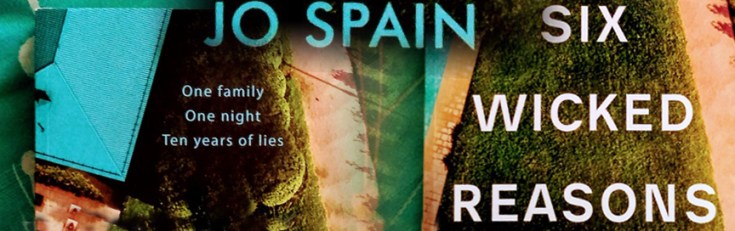
 artre insisted that the celebrated line from his 1944 play Huis Clos (No Exit), “L’enfer, c’est les autres.” was forever misinterpreted, but the idea that hell is other people has stuck, despite the protestations of the Great Existentialist. Some, like Jo Spain in her latest novel Six Wicked Reasons, would suggest – to mix and match poets – that Dante’s Nine Circles of Hell could be condensed into an overpowering tenth – Family.
 The Lattimer family, patriarch Frazer, sons James, Adam and Ryan, daughters Ellen, Kate and Clíodhna – Clio – have assembled at the family home in south east Ireland overlooking the waters of Spanish Cove in the Irish Sea, so called because of its earliest recorded casualties – sailors from a Spanish galleon blown adrift from the Armada and then shattered on the hidden rocks.
 eaders new to Jo Spain’s novels will welcome the apparently straightforward back-stories of Frazer Lattimer’s children, and their motives for wanting him dead. Those who know that the author is The Mistress of Misdirection will suspect, correctly, that this is only the start. But, for the record, I give you the Lattimer children. James is a big media name, with TV screenwriting and production credits on his CV. Lives in Dublin, of course with ex-model wife and step daughter. Adam – now there’s a tale. He now lives abroad, making money for fun, but he disappeared ten years earlier, broke the heart of his late mother Kathleen, and has now re-appeared, equally mysteriously, and it is his return ‘from the dead’ which has prompted the reunion. Ryan, alas poor Ryan. Drug addicted as a teenager, he has somehow survived industrial intakes of pharmaceuticals, and now lives in Italy, just about getting by as an odd-job man.
 llen Lattimer is the female equivalent of the Prodigal Son’s brother. Remember, the bloke who stayed at home while his brother was out on the town, giving it all away? Ellen has stayed at home, cleaning, cooking, dusting – and paying for the upkeep of the house. She is prim, joyless, and what Private Eye used to call “tight-lipped and ashen-faced.” Kate, on the other hand, has spread her wings and learned to fly. Having overcome a teenage weight problem which caused her to be known locally as King Kong, she is now svelte, lean and lovely. Also, married to a filthy rich Chinese businessman with a chain of luxury hotels. Clio, though has been in the wars. Summoned from a dingy bedsit in downtown New York to attend the family gathering, she is the most volatile of the children, the antithesis of the line from the old hymn which described Our Lord as “slow to chide and swift to bless.”
 s an amateur wordsmith I can only guess at Jo Spain’s writing technique; her prose is so assured, so fluent and has that sense of flair that cannot, surely, be the result only of endless hours of editing. No matter how long you spend polishing a piece of coal, you will never transform it into a gem stone. Six Wicked Reasons is a diamond, multi-faceted and reflecting both the light and the darkness of the human soul. It is

 s she gazes up at her bedroom ceiling, Lily Bell daydreams of becoming an actress. She is, to be sure, beautiful enough, with her long almost-white blond hair and her flawless complexion, but for the stepdaughter of a struggling artist in the London of 1851, her dreams of becoming Ophelia, Juliet or Desdemona are just foolish fantasies. Until the day her penniless stepfather receives a visit from one of his creditors, a mysterious self-styled Professor – Erasmus Salt. Salt is actually a theatrical showman, with a macabre interest in that overwhelming Victorian obsession, communicating with the dead. He offers Alfred Bell respite from the debt in return for Lily accompanying Salt and his spinster sister Faye to become the star of a new production, in which he will convince audiences that he has raised the dead.
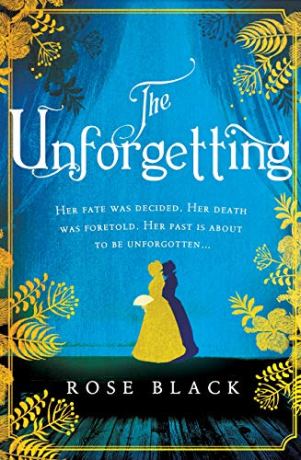 Despite her misgivings, Lily is intrigued by what appears to be a chance to achieve her ambition. After all, Salt’s theatrical illusion may be faintly sinister, but who knows what career doors it might unlock? Bell, despite the tears and misgivings of his wife, cannot get Lily out of the door fast enough, and soon the girl is on her way south, to the seaside town of Ramsgate, where Salt’s production is due to be presented at The New Tivoli theatre.
 y now we, as readers, know much more about Salt than does the hapless Lily. Having experience a terrible trauma in his youth, the balance of his mind has been disturbed; he may also be a murderer, and his obsession with the dead could be leading further than simply the creation of a melodramatic theatrical illusion.






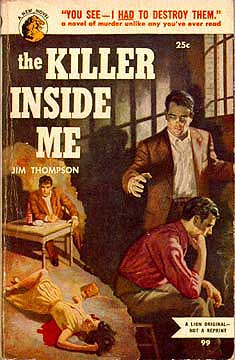 Thompson’s first major success came in 1952 with The Killer Inside Me and it remains grimly innovative. Psychopathic killers have become pretty much mainstream in contemporary crime fiction, but there can be few who chill the blood in quite the same way as Thompson’s West Texas Deputy Sheriff Lou Ford. His menace is all the more compelling because he is the narrator of the novel, and a few hundred words in we are left in no doubt that the dull but amiable law officer, who bores local people stupid with his homespun cod-philosophical clichés, is actually a creature from the darkest reaches of hell.
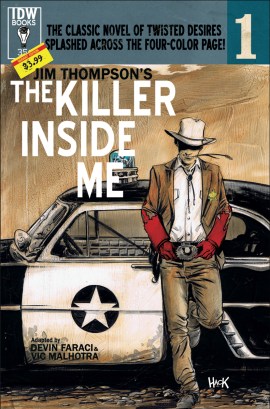 Joyce is savvy, and world-weary, but when Ford’s “pardon me, Ma’am,” charm strikes the wrong note, she slaps him. He slaps her back and the encounter takes a dark turn when Ford takes off his belt and gives Joyce what used to be known as “a leathering.” She responds to the beating with obvious arousal, and the pair begin a violent sado-sexual affair.
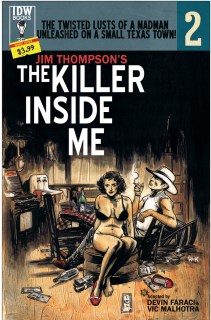 A key figure in Ford’s life is Amy, his long-time girlfriend. Thompson paints her as physically attractive, but socially constrained. She is a primary school teacher from a good local family who, despite responding to Ford’s violent sexual ways, is determined to marry him. As the dark clouds of suspicion begin to shut the daylight out of Lou Ford’s life, she is the next to die, and Ford’s clumsy attempt to frame someone else for her death is the tipping point. Thereafter his downfall is rapid, and his final moments are as brutal and savage as anything he has inflicted on other people.
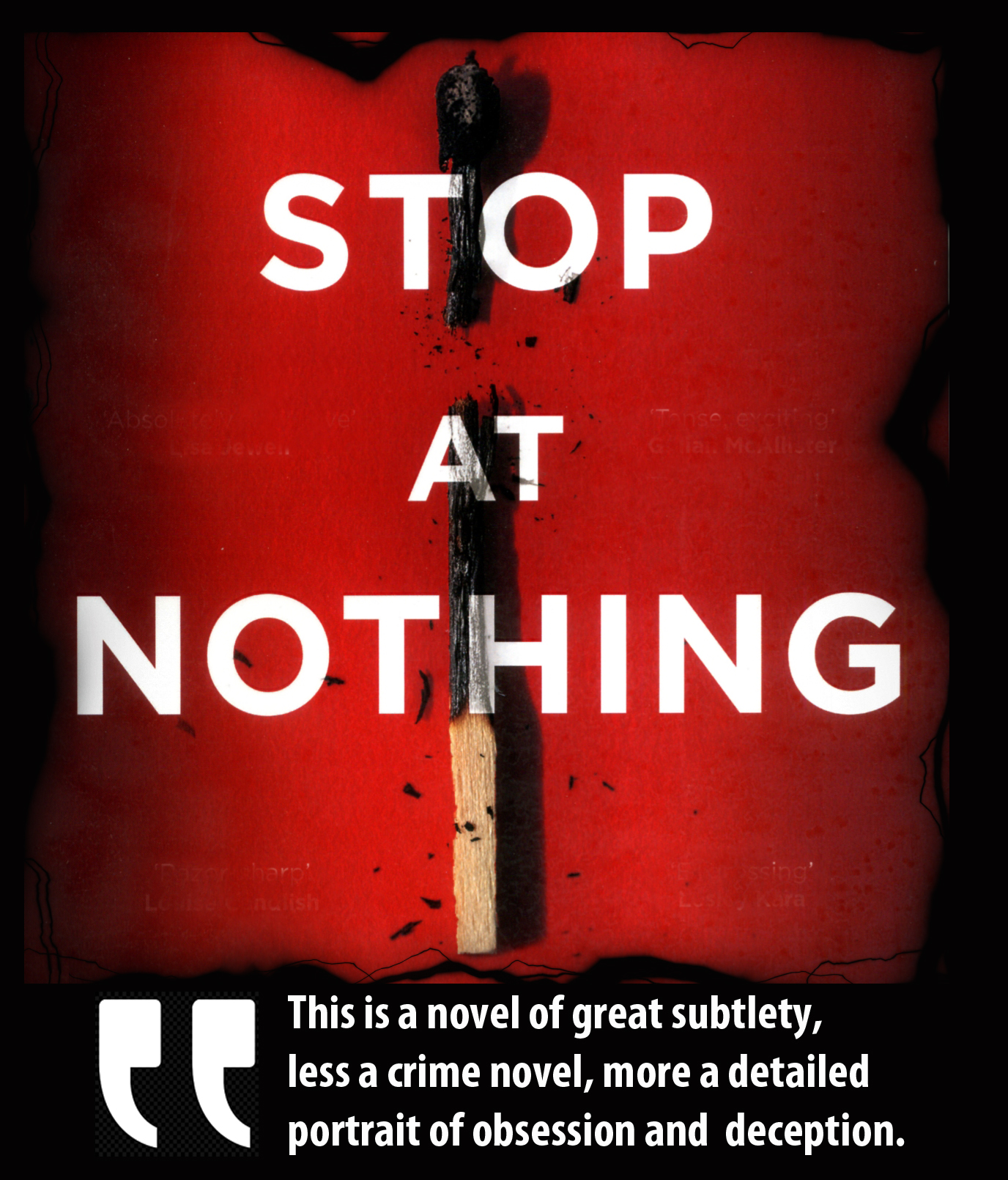

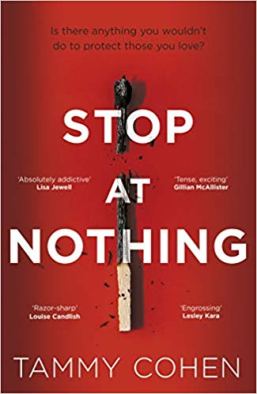 Poor Tessa is a mess, actually. Struggling to cope with the physical and psychological effects of the menopause and her self-esteem battered by redundancy, she is prey to all manner of fancies, midnight imaginings and “the thousand natural shocks that flesh is heir to.” Much of Stop At Nothing is pure anxiety porn, as Tessa makes bad judgment after bad judgment, wrong call after wrong call. Readers will see the picture – at least part of it – way, way before she does, and in places the narrative reminded me of the frequent moments in Hammer horror films where the heroine (usually scantily clad) insists on going down into the cellar clutching only a flickering candle. We want to grab Tessa by the arm and say. “Do. Not. Do. This!”
 Personally, I warmed to Tessa – and her unfailing knack of getting things wrong – much more when her relationship with her elderly parents moved to centre stage. The tragedy of dementia is a natural cruelty that makes even the most devout religious person want to howl with rage at the heavens, and Tammy Cohen (right) handles this poignant mix of frustration and fury with a deft touch.
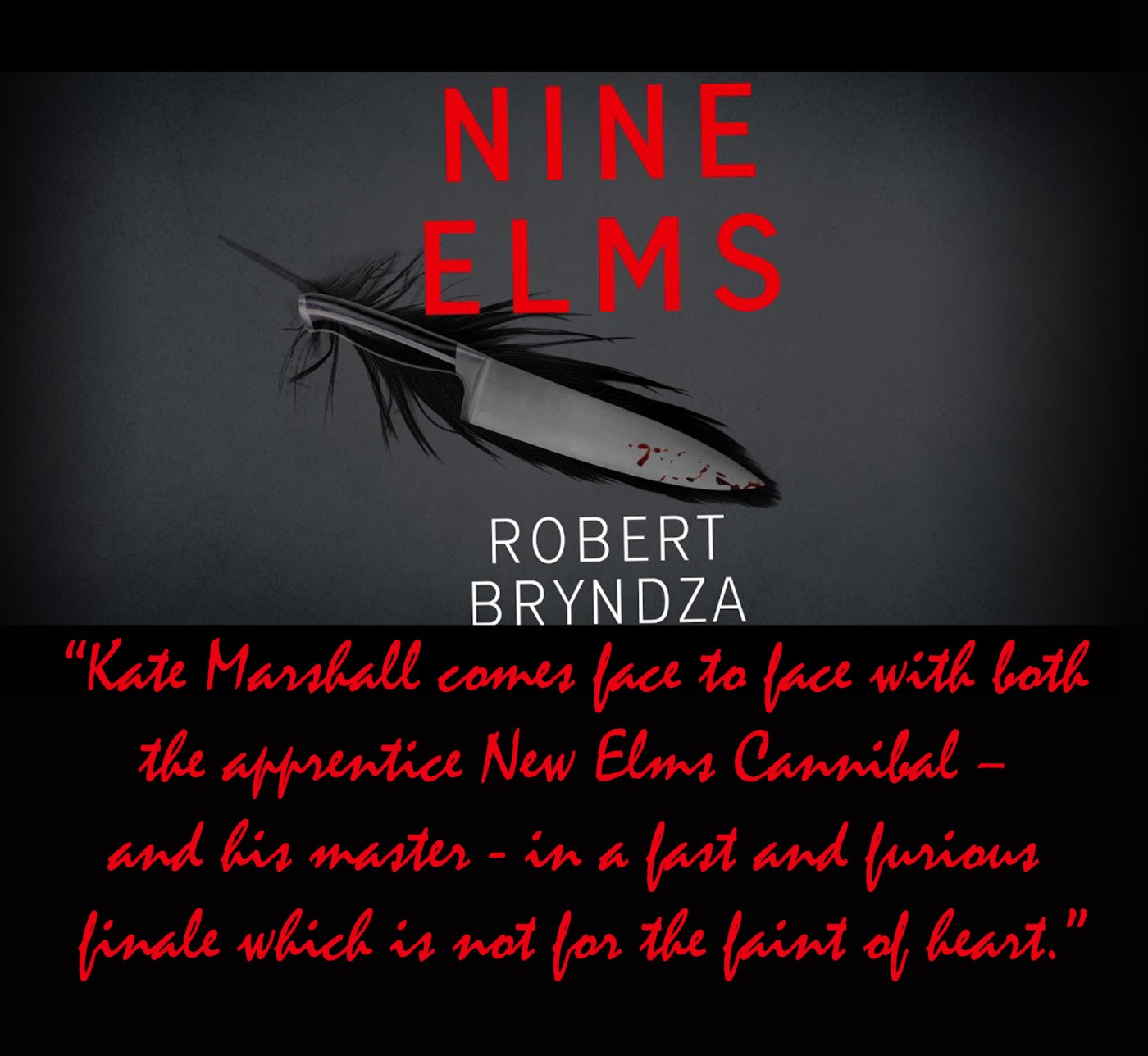

 ate Marshall lectures in criminology at a university in the south west of England, but when she speaks to her students it is not as an academic, making judgments based purely on the research of others; neither does she approach the subject as an outsider, albeit one who is well read and well prepared. Fifteen years earlier, when she was a humble detective constable with London’s Metropolitan Police, she brought to justice one of the country’s most prolific and perverted serial killers. In doing so, she paid a heavy price; only skilled surgeons prevented her death from terrible injuries, but her career – and personal reputation – were both beyond saving.
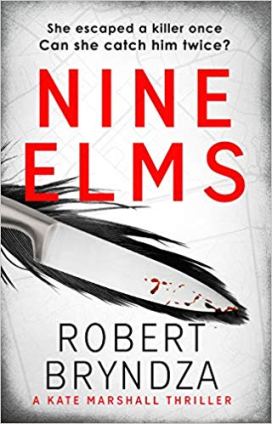 Fifteen years on, the former police officer dubbed The Nine Elms Cannibal is serving multiple life sentences in a secure mental institution, and Kate Marshall, if not exactly dining out on her experiences, uses her involvement in the case as part of the course she delivers. She lives alone and while not exactly lonely, she is a changed woman from her days as part of London’s police force. She battles alcoholism, but with the support of Alcoholics Anonymous and, in particular, a local AA member called Myra, Kate sips her iced tea and pretends it contains a hefty shot of Jack Daniels.
 ith her research assistant Tristan Harper, Kate tries to reassemble the pieces of an increasingly complex puzzle, but it is not until events take a spectacular turn that she comes face to face with both the apprentice New Elms Cannibal – and his master – in a fast and furious finale which is not for the faint of heart.
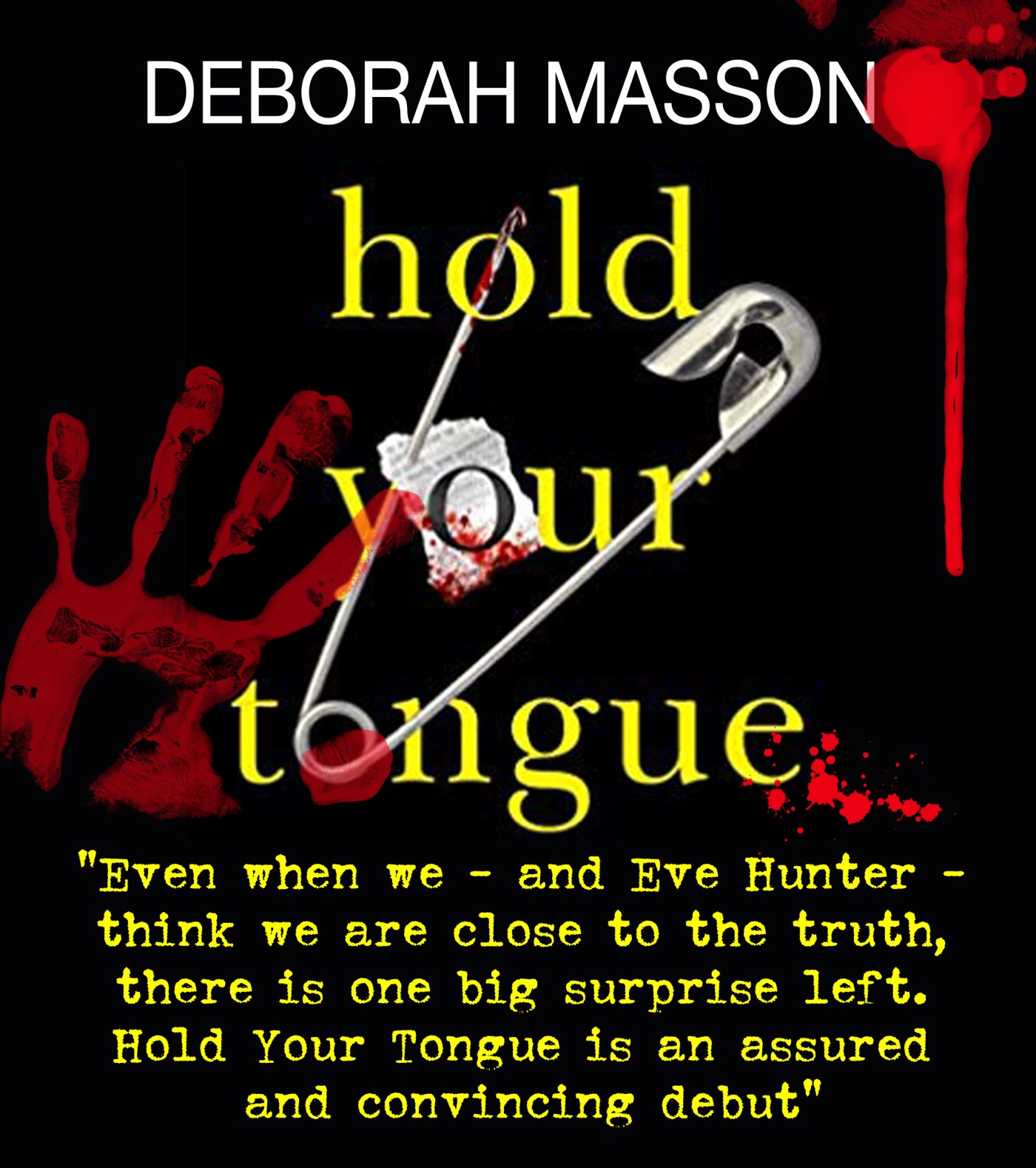

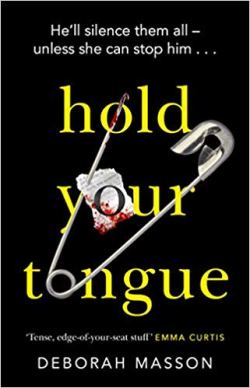 Deborah Masson’s police procedural Hold Your Tongue is as gritty as the granite in the Aberdeen where it is set. Fictional Detective Inspectors tend to be brilliant, yet with fatal flaws; perceptive, but incapable of managing calm personal lives; honest and principled, but concealing their own dark secrets. Masson’s Eve Hunter ticks all the boxes, and adds a few of her own. She is returning to work after a catastrophic encounter with a notorious criminal family. After the son of the crime gang’s Capo sustains life changing injuries in a car chase, Johnny MacNeill has exacted brutal revenge resulting in Hunter’s partner DS Nicola Sanders being paralysed from the neck down, while Hunter herself has a permanently damaged leg and intense psychological scarring.
 As the killer works towards the Sabbath Day child, Hunter and her colleagues dash this way and that, always vital hours behind the murderer. Masson (right) contributes to the mayhem with some elegantly clever misdirection. Early in the piece she teases us with the suggestion that the series of murders has something to do with brothers and sisters, but even when we – and Eve Hunter – think we are close to the truth, there is one big surprise left. Hold Your Tongue is an assured and convincing debut, and I hope there will be more cases to come for Eve Hunter. The book is out now, and


 fullybooked2017