
Each decorative bar is a clickable link to
a video of the book of the day and a piece of seasonal music






Each decorative bar is a clickable link to
a video of the book of the day and a piece of seasonal music

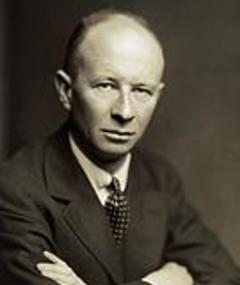 Humphrey Cobb (left) was born on 5th September 1899, in Siena, Italy. His mother was a doctor, and his father was an artist. He was sent to England for his early schooling, but then received his secondary education in America. After being expelled from high school in 1916, he decided to join the Canadian Army and was sent to Europe to fight. Remember that America did not join the war until 1917. He kept a war diary, and October 1917 has him at Shoreham Camp, in Sussex, as part of the 23rd Canadian Reserve battalion. January of 1918 has him near Hill 70, in front of Loos. He describes the death of a friend from his platoon.
“What happened to Young, no-one ever knew for sure. Some thought a Fritz potato masher had landed on his respirator and that it had exploded just as he was brushing it off. Evidence: face blown in and right hand blown off. “
He saw the war out, and after being stationed in post-war Cologne for a spell, he finally arrived back in Montreal on 31st May 1919.

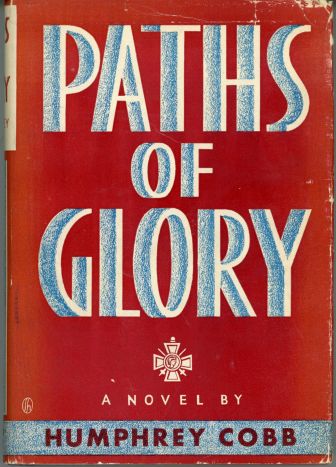 The years after The Great War saw Cobb involved in a variety of enterprises. He wrote Paths of Glory while working for Gallup, the advertising and polling company, and it was published in 1935 by The Viking Press. It is believed that Cobb took the core of his story from real events on the Marne front, where for Corporals from the 136th Regiment were executed after a failed attack on a German strong-point near Souain.
So how does the book stand when set alongside the film? Firstly, it has to be said that Cobb died in 1944, so any input from him was clearly impossible. Anecdote has it that Kubrick had read the book as a teenager, and had been deeply affected by it, but a chain of events led to the film screenplay differing in one essential element from the book. In the mid 1950s Kubrick was still an emerging talent as a director, and did not have the clout to persuade big studios to put up the money for an anti-war film, made in black and white. The crucial intervention came with the interest (and influence) of Kirk Douglas. The star clearly had to have a main part in the film, but who?
In the novel, Colonel Dax is a relatively peripheral figure who, reluctantly, goes along with the doomed plan to storm the German bastion which is, incidentally, called ‘The Pimple” in the novel. So, it was a bold stroke in one way for Kubrick to re-imagine Dax as the forthright and confrontational character whose personal bravery is never in doubt, and a man who just happens to have been a lawyer in civilian life. And who better to play Dax than the dimple-chinned Hollywood heart-throb Kirk Douglas?
Cobb focuses almost all of his attention in the novel on the three men who were executed, and on the various reasons why they came to be shot by their own comrades. The book has no pantomime villains, and certainly no one person who has the blood of the victims on his hands. The men die as a result of the inexorable grinding of the military machine and the numbing effect of battlefield casualty statistics. Men are reduced to numbers, compassion is subverted by casualty statistics, and procedure trumps initiative every time. As William Tecumseh Sherman may (or may not) have said, “I tell you, war is Hell!“
 There are places where Kubrick and his screenwriters – Calder Willingham and Jim Thompson – did stick close to the book. The first is with the three man patrol into No Man’s Land where the cowardly and drunken Lieutenant causes the death of one of the men, thus setting up the selection of the other to be one of the judicial victims. The film plays it pretty straight, too with the events immediately prior to the execution. The character of Private Ferol is played with characteristic bravura by Timothy Carey, (right) There is one crucial difference; in the book, Ferol is chosen because he he is anti-social and widely disliked for his unpleasant behaviour, and he continues to be sarcastic and foul-mouthed right up to the point where he is strapped to the execution post. In the film, however, the enormity of his fate finally overwhelms him, and he in the unforgettable procession from the chateau to the place of execution – a chilling via dolorosa – he is reduced to a weeping, stumbling figure, clutching the arm of the Padre.
The final confrontation between Dax and the general doesn’t happen in the book, neither does the powerful final scene where the soldiers in the estaminet boo and mock the captured German girl who is forced to sing to them, but then they are reduced first to silence, with some in tears, and then they join in with the simple old song she is singing. Outside, Dax has just been told that the regiment has been ordered to return to the Trenches, but he walks away, leaving his men to their brief hour of peace.
It is worth repeating that Cobb’s gaze is focused on the rigid mechanism of army life. It whirrs, ticks and chimes the hours with little regard for the human lives caught up in its cogs. He shapes this in many different ways, but never better than when he describes the efforts made to make sure the execution is done ‘properly’.
“Regimental Sergeant-Major Boulanger was there, busy, competent as regimental sergeant-majors always are, in the same way that head waiters are busy, competent, or seem to be so, if they are good head waiters.”
It is to Boulanger that Cobb gives the very last action, in the last paragraph of the book, where he is given the task of administering the coup de grace to the bodies slumped against their posts.
“It must be said of Boulanger that he had some instinct for the decency of things, for, when he came to Langlois, his first thought and act was to free him from the shocking and abject pose he was in before putting an end to any life that might be clinging to him. His first shot was, therefore, one that deftly cut the rope and let the body fall away from the post to the ground. The next shot went into a brain that was already dead.”
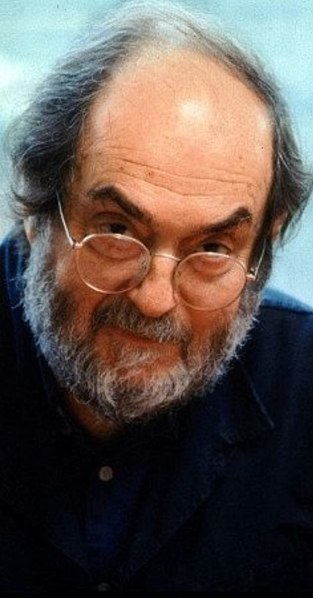
I think that Kubrick (below) takes the gist of the novel, and shaped it to his own ends, and in doing so created a magnificent piece of cinema. His anti-war message is different from Cobb’s, but was clearly something he felt very deeply. A decade or so later he was able to return to his theme in Dr Strangelove, but this time he used satire and the comedy of the absurd to make his point.

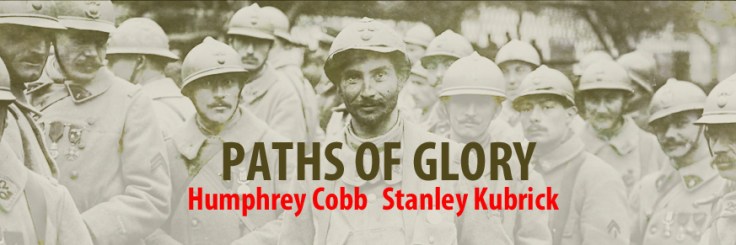
Stanley Kubrick’s 1957 film The Paths of Glory was a limited success at the time – it just about broke even at the box office – and was initially highly controversial. It was banned in France for twenty years, and several other European countries refused to show it as a gesture of solidarity with France. It was also banned in all American military establishments. So, why the fuss?

The film, based on a book by American writer Humphrey Cobb, focuses on a section of The Western Front in 1916 held by the French. Although it is never mentioned in the film, we assume that the action takes place around Verdun, the most costly single engagement in a war that chewed up men’s lives like a meat grinder. The 701st Regiment are ordered to attack an impregnable German position known as ‘The Anthill’. General Miraud, (George Macready, above) after initially protesting to his superior that the attack would be suicidal, changes his mind after being offered promotion.

Colonel Dax (Kirk Douglas, above) is the officer who will lead the attack. He is dubious about the prospects, but obeys the order. The attack is an unmitigated disaster. German shellfire halts progress in No Man’s Land, while one company is unable even to leave the trench, such is the ferocity of the bombardment. In a rage, Miraud orders his artillery to fire on his own lines in order to force the men to attack.
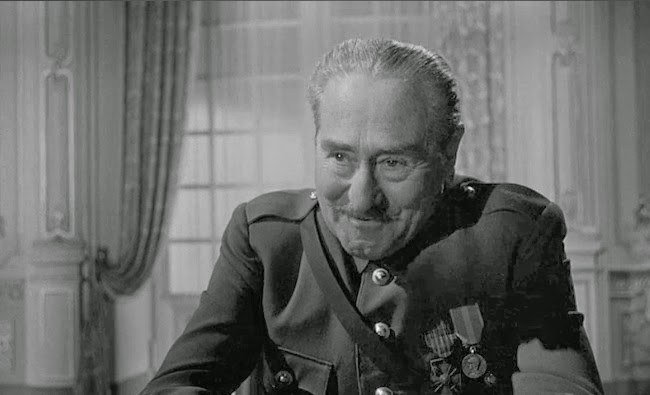
Miraud feels that his own honour has been impugned, and, after removing the regiment out of the line to a chateau some miles away, orders that 100 of the surviving men be arrested and charged with cowardice. The scheming General Broulard ( Adolphe Menjou, below) suggests that just three men will be enough pour encourager les autres, and Dax is forced to ask three of his company commanders to select three sacrificial victims.
Three men are chosen: Corporal Paris (Ralph Meeker) is selected because his superior officer, Lieutenant Roget, needs to silence him in case he exposes Roget’s cowardice. Private Arnaud’s name is simply drawn out of a hat, while Private Ferol (Timothy Carey) is a deeply unpleasant individual who, it seems, ‘has it coming’.
The three men are tried in a mockery of a judicial process, despite an impassioned defence by Dax, who was a lawyer in civilian life. They are sentenced to death. Dax has one last card to play. He has a written testimony that Miraud has ordered gunfire down on his own men, but it is dismissed by Broulard. The men are duly executed, with one of them, Arnaud, strapped to a stretcher after being seriously injured in a fight with his guards.
Broulard and Miraud are enjoying a leisurely breakfast in luxurious surroundings, when Dax is invited to join them. He shares his information about Miraud’s order to shell his own trenches. Miraud is told that he will face and enquiry, and then storms out voicing a sense of betrayal. Broulard congratulates Dax on a very clever plan to secure his own promotion. Dax finally loses his temper at this interpretation of his motives and rages at his superior officer.
Back at the chateau, the surviving members of the 701st Regiment are in an estaminet, drunk and reckless. The proprietor pushes a young German girl onto the makeshift stage and forces her to sing. She hesitantly sings an old song. “Der treue Husar” (The Faithful Hussar). The men’s mockery turns to empathy and then grief, as they join in with the song. Outside, Dax has just been given the order that the 701st are to return to the front line with immediate effect.
In Part two of this feature, I will explore the differences between the book and the film, and attempt to understand what Cobb and Kubrick were trying to say about this tragic episode in European history.


Each decorative bar is a clickable link to
a video of the book of the day and a piece of seasonal music







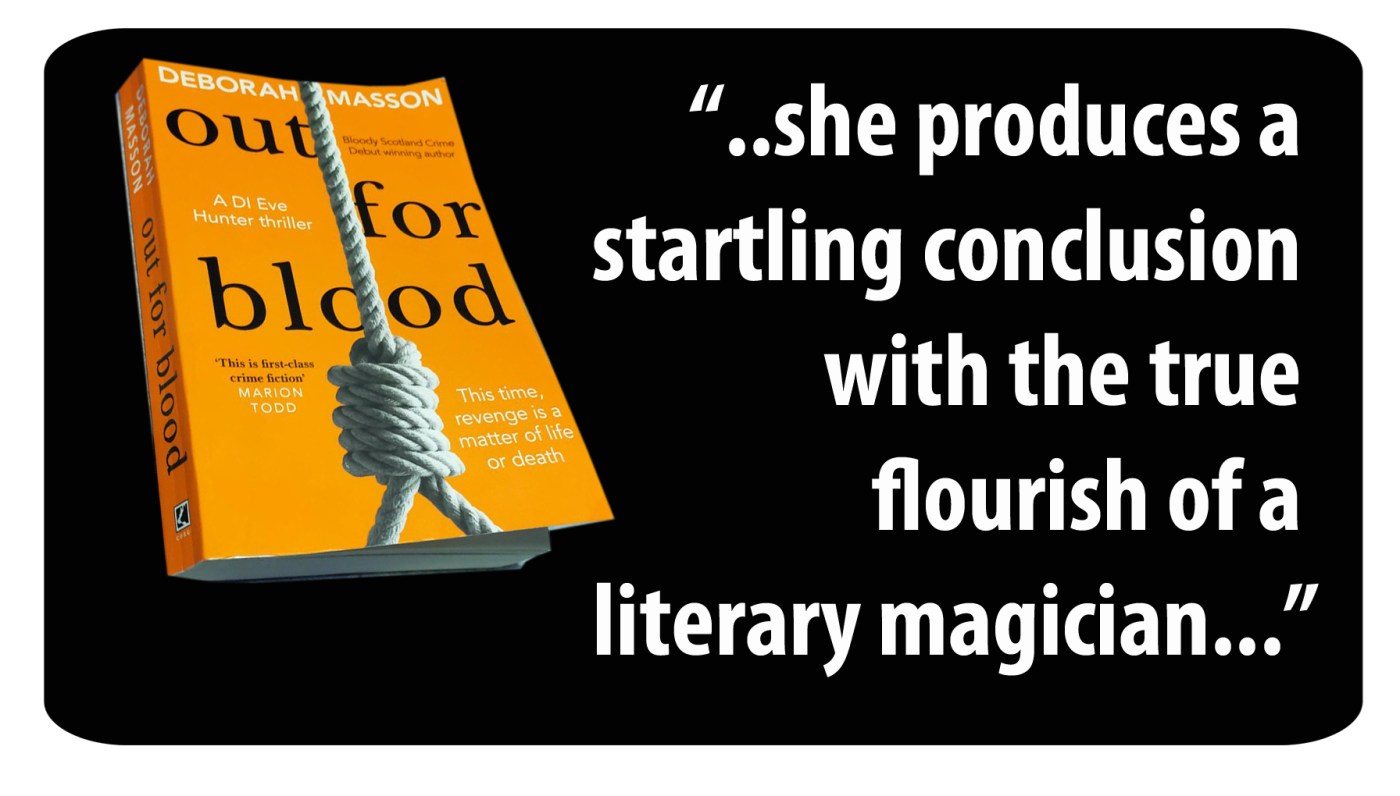

Aberdeen, Scotland.The Granite City. To say that Police Scotland’s DI Eve Hunter has baggage would be something of an understatement. Physically and mentally damaged by a ruinous encounter with a notorious crime family, she is only allowed back to work on the understanding that she undergoes tortuous (for her) therapy sessions with Dr Shetty, the police psychologist. We first met Hunter in Hold Your Tongue, and you can read that review by clicking the link.
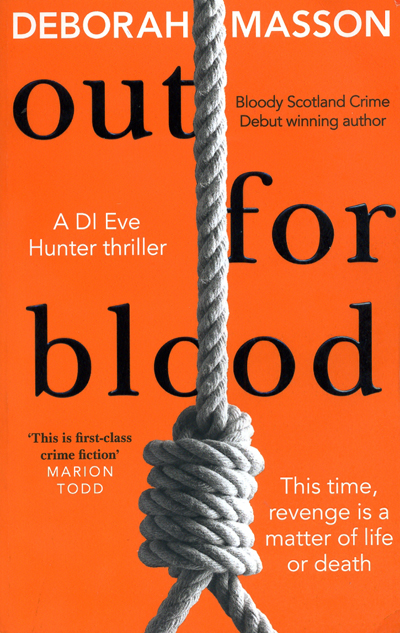 We start with two corpses. One is an unidentified young woman, strung up by her neck to a tree on a golf course. The other, a young man, is found in more comfortable surroundings – his flat – but he is equally dead. As Hunter’s team begin to investigate the cases it seems that they could not be further apart. The dead man is an old boy of one of the area’s most prestigious independent schools, and has a rich father. The girl, however, is an Eastern European prostitute. Links between the two deaths slowly turn from gossamer to steel. Was one using the other? Is it that simple? Why do the names of powerful local figures crop up over and over again on the peripheries of the case?
In some ways we are on familiar territory here. We have the classic police procedural trope of the tired and overworked detectives trying to keep their family lives on track, while still having to give everything to ‘the job’. We have some coppers who are, if not actually corrupt, downright idle, their only concern being how to protect their pension Somehow, these stresses and strains of police work come over as fresh and as harrowing as if it were the first time we had read them.
This is not the first novel in recent years to highlight the deeply unpleasant trade in human lives carried out by Eastern European criminals. I live in a town where it happens, and nothing Deborah Massen (below) has written here is in any way exaggerated or fanciful. She vividly portrays the brutality of the men – and women – who run the rackets, and the misery of the girls who become enslaved.

Masson showed in her previous book that she has a talent for having her police characters (and with them, we readers) pursue one line of enquiry, convinced that solution can only lie in that single direction, only for events to take a startling turn in another direction altogether. In proving that we are all wrong, and making the plot twist plausible, she takes a great risk, but I have to say her gamble pays off, and she produces a startling conclusion with the true flourish of a literary magician. Out For Blood is available in Kindle from Transworld Digital now, and will be out in paperback under the Corgi imprint on 10th December.


A little while ago I reviewed a novel set in Worcestershire – it was the beginning of WW2, and it centred on the fictional village of Ambridge and, of course, featured The Archers. History of a very different kind now. River of Sins is the seventh in a series of historical mysteries written by Sarah Hawkswood set in and around the city of Worcester in the 12th century.

I am new to the series but I enjoyed the fact that we have that most dependable of crime fiction tropes – a pair of investigators. There is a slight variation a theme in this case, as they are aided by an intrepid young apprentice. The dynamic between the three works well. Hugh Bradecote is the Under Sheriff, and is of noble birth with a degree of hauteur, while Sergeant Catchpoll is Worcester through-and-through, rough and ready, but very street-wise. Walkelin – the apprentice – is something of a ‘gofer’, but is bright, perceptive, and not afraid to speak his mind.

The novel begins with a woman being brutally done to death on a small island in the River Severn on the northern outskirts of Worcester. We learn that the woman and her killer are acquainted, but just how, and what the significance is, only unfolds with the investigation.
The dead woman is Ricolde, known throughout the city as The Whore of Worcester. She was widely despised by the gentlewomen of the city, while being used by their husbands, but as Bradecote and Catchpoll discover, there was another dimension to Ricolde. Educated, and perfectly content to talk the night through with men who demanded nothing other than her company, she also gave money to the church to be used to ameliorate the misery of other women of the street who were less resilient than she.
The investigators struggle to find a motive for the murder. Moral disapproval doesn’t usually lead to someone being dismembered with a woodsman’s axe, but does the clue to Ricolde’s death lie deep in her past, and has it to do with the horrific scars on the soles of her feet, inflicted decades earlier?
Sarah Hawkswood’s Worcester is a place we can see, hear, feel, breathe – and smell – as the mystery unfolds. What is the River of the title? It is the River Severn, broad and deep, a source of fresh food, a vital artery of transport at a time when roads were just beaten dirt, but also a means of escape and concealment. With only the most rudimentary forensic skills available, Bradecote and Catchpoll must rely on the most basic and time-honoured methods of detection, means, motive and opportunity. This is an excellent detective story which also gives us an intriguing glimpse into a long-lost world.
River of Sins is published by Allison & Busby and will be out in paperback and as a Kindle on 19th November.


 It’s the summer of 1966 and Brighton journalist Colin Crampton – he’s the crime reporter for the Evening Chronicle – gets a tip off from a friendly local copper that there has been a murder in Embassy Court, an upmarket block of flats on the seafront. Racing to the scene to try to out-scoop his rival from the Evening Argus, he ducks under the crime scene tape and learns that the dead man is Claude Winterbottom, a financial consultant.
Reporters are sometimes accused of muck-raking, and Crampton does literally that as he holds his nose and sifts through Winterbottom’s dustbin. He soon finds a motive for the man’s death. The so-called ‘financial consultant’ was actually a fraudster, selling get-rich-quick schemes to people with more money than sense. The list of people Winterbottom has scammed is quite impressive, and it even includes Crampton’s landlady, the redoubtable Mrs Gribble.
 Peter Bartram (right) doubles up on the enjoyment by giving us a parallel plot (which eventually weaves in with the murder of Winterbottom) involving an off-shore pirate radio station, Radio Sea Breeze. Younger readers used to the communication free-for-all we have today may be puzzled by the concept. Back in the 1960s licences to transmit radio were not readily available in the UK and record companies had a tight grip on who played their music. Taking their cue from America, enterprising broadcasters exploited a loophole in the law by using ships anchored in international waters as their radio stations. The most famous was probably Radio Caroline which was on the air, using five different ships with three different owners, from 1964 to 1990. It still exists, but is now fully digital – and legal.
The Beach Party Mystery is a highly entertaining merry-go-round involving, in no particular order, The Rolling Stones, the FBI, the KGB, MI5, auditions for a James Bond movie, a Mary Whitehouse soundalike – and the world’s most insanitary pub. Unsurprisingly, for a man who has spent his life as a journalist, Peter Bartram has a nice turn of phrase, and a keen eye:
“It was one of those picture book places you find in the Sussex countryside. There were ancient houses with oak beams and sagging roofs. There were moss-encrusted flint walls. There was an old stone church and graveyard with weathered headstones. There was a village hall with a noticeboard. It carried news of scouts’ picnics’ Women’s Institute keep-fit sessions and parish council meetings.”
I make no apology for being a huge fan of the Colin Crampton novels. Yes, they may be light in tone, and they don’t set out to examine the darker recesses of the criminal mind, but I love them. The Beach Party Mystery is published by The Bartram Partnership and is out now, For reviews of the previous novels in the series, and also feature articles by Peter Bartram, click on the image below.


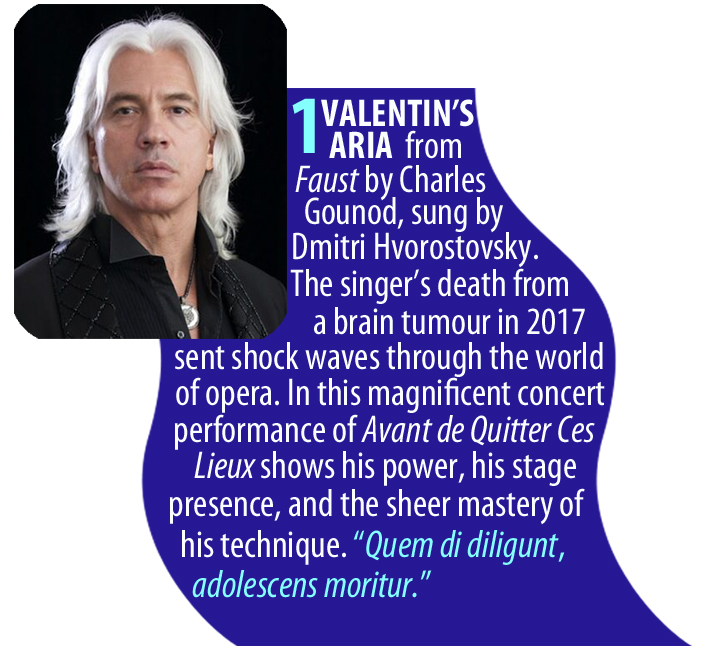
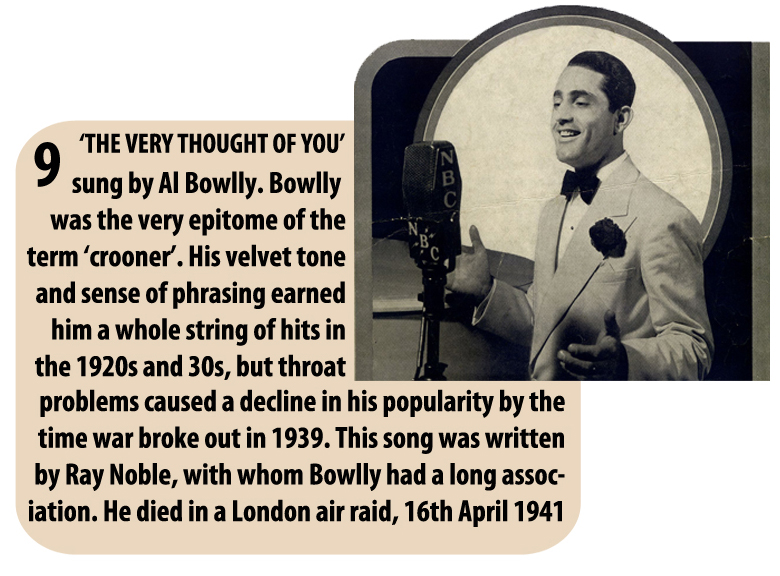
I have been a singer for most of my life. My first recalled performance was dressed up in a kilt and velvet bonnet singing The Bonnie Banks of Loch Lomond, at the age of five, on the stage of the Methodist church hall. Some would say it went downhill from then, but I have enjoyed singing opera, oratorio, folk music and even in rock bands. I no longer perform except to the microphone at home, but a good singing voice can make my spine tingle like no other instrument. Here are ten pieces of music by great singers. One or two of my choices might surprise you, but please take a listen. Click each graphic to link to a YouTube video of the song. I’ll upload one every couple of days until we get to Number One.







 The strange-looking empty mansion in the dry hills above Los Angeles is rented out as a venue for everything from cancer charity fundraisers to wild parties. As the much put-upon guy from the agency wearily pushes his cart of cleaning materials up the hill, he is expecting the usual joyless cocktail of spilled food, used needles and condoms. What he actually finds causes him to part company with his breakfast burrito.
In a stretch limo parked in front of the house, he finds four people, each very, very dead, and with the floor of the car swimming in blood. Cue another case for LAPD Detective Milo Sturgis and psychologist Dr Alex Delaware. Veterans of the long-running series (this is book number 35 since When The Bough Breaks in 1985) will know the basic set-up. Delaware’s day job is in child psychology, while Sturgis is, in now particular order, gay, unkempt, a brilliant cop and eternally hungry.
The four corpses in the limo seem to have nothing at all in common aprt from being dead; a thirty-something professional bachelor with an insatiable – but perfectly legal – love life, and elderly chauffeur, a gentle and harmless man with mental problems who lives in sheltered accommodation, and a rather unprepossessing middle-aged woman who, it transpires, had drink and drug issues, and lived mostly on the streets. To add to the mystery, the forensic team analyses the blood on the floor of the car – and it is canine.
Delaware and Sturgis are convinced that the killings took place elsewhere, and the interior of the limo was an elaborate stage set. But who is the director of this hellish drama, what is the message of the play, and who was the intended audience?
 Bit by bit, one slender thread at a time, the tangle of the mystery is unpicked. As per usual Kellerman (right) gives us a spectacularly complex solution to the quadruple murder. It’s almost as if we are passengers on a train journey, and some of the sights that flash by the window before we reach our destination include erotic Renaissance paintings, a chillingly damaged autistic teenager and a brief glimpse of Herman Göring’s fabled collection of looted art.
There will be, no doubt, some people who will look down their noses at this book – and others like it – while dismissing it as formulaic. Of course it is written on a certain template, but that’s what makes it readable. That’s why readers turn, again and again, to books that are part of long running series. We don’t want John Rebus to start behaving like Jack Reacher, any more than we will be happy for Carol Jordan to turn into Jane Marple. The Museum of Desire is slickly written, for sure, but I think a better word is ‘polished’. Both the dialogue and interaction between Delaware and Sturgis crackle with their usual intensity, and we are not short-changed in any respect in terms of plot twists and deeply unpleasant villains.
The Museum of Desire is published by Century/Arrow/Cornerstone Digital, came out in hardback and Kindle earlier this year, but this paperback edition will be available from 12th November.


