Search

fullybooked2017

A PRIVATE CATHEDRAL . . . between the covers

APC spine009
Is it tempting fate to wonder who is the oldest living crime writer? James Lee Burke (below) is now 83, but writing better than ever. A Private Cathedral is another episode in the tempestuous career of Louisiana cop Dave Robicheaux and the force of nature that is is his friend Clete Purcel. Ostensibly about a simmering war between two gangster families, it goes to places untouched by any of the previous twenty two novels.

JLB

All the old familiar elements are there – Dave, as ever, battles with drink:

“No, I didn’t want to simply drink. I wanted to swallow pitchers of Jack Daniels and soda and shaved ice and bruised mint, and chase them with frosted mug beer and keep the snakes under control with vodka and Collins mix and cherries and orange slices, until my rockets had a three-day supply of fuel and I was on the far side of the moon.”

Then there are the astonishing and vivid descriptions of the New Iberia landscape, the explosive violence, and Louisiana’s dark history. But this novel has a villain unlike any other James Lee Burke has created before. We have met some pretty evil characters over the years, but they have been human and mortal. Robicheaux,  long prone to seeing visions of dead Confederate soldiers, is now faced with an adversary called Gideon, who is also from another world, but with human powers to wreak terrible violence.

APC cover008The Shondell and the Balangie families manipulate, pervert and use people. Robicheaux suspects that seventeen year-old Isolde Balangie has, to be blunt, been pimped out by her father to Mark Shondell. A ‘friendly fire’ casualty is a talented young singer, Johnny Shondell, Mark’s nephew. Ever present, bubbling away beneath the surface of the Bayou Teche is the past. At one point, we even get to walk past the great man’s house, so why not use his most celebrated quote?

“The past is never dead. It’s not even past.”
William Faulkner, Requiem For A Nun

The past involves Mafia hits, grievances nursed and festering over generations, and the sense that the Louisiana shoreline has been witness to countless abuses over the years, from the brutality of slavery through to the rape of nature to which abandoned and rotting stumps of oil rigs bear vivid testimony.

Music – usually sad or poignantly optimistic – is always ringing in our ears in the Robicheaux books. Sometimes it is Dixieland jazz, sometimes blues and sometimes the bitter sweet bounce of Cajun songs. At one point, the young singer Johnny takes his guitar and plays:

“He sat down on the bench and made an E chord and rippled the plectrum across the strings. The he sang ‘Born to Be with You’ by the Chordettes. The driving rhythm of the music and the content of the lyrics were like a wind sweeping across a sandy beach.”

In A Private Cathedral, the plot is not over-complex. It is Dave and Clete – The Bobbsy Twins – against the forces of darkness. Burke gives us what is necessary to ensure the narrative drive, but everything is consumed by the poetry. Sometimes it is the poetry of violence and passion; more tellingly, it is the poetry of valiant despair, the light of decency and honour, guttering out in the teeth of a malignant gale which forces Dave and Clete to bend and stumble, but never quite crack and fall.

A Private Cathedral is published by Orion and is out now. For more on James Lee Burke and Dave Robicheaux, click here.

Cathedral quote


THE POSTMAN DELIVERS . . . Raya, Curtis & Williams

Poetic Justice016

POETIC JUSTICE: FAME by Fran Raya

This is the third book in Raya’s series featuring a shamanic criminal with telepathic gifts called Randal Forbes. He uses his dark talents to enrich himself and outwit the police. He is no amiable villain,however. In his wake he has left shattered lives, death and mayhem. In her preview, Raya writes:

“So, I’ll raise a glass to authors, artists and aspirations. My Characters are waiting in the wings, so sit back, kick off your shoes and let the drama unfold. It’s dark, but with chinks of light, together with Randal’s laconic wit.”

Poetic Justice is published by The Book Guild and is out on 28th August.

KHQ014

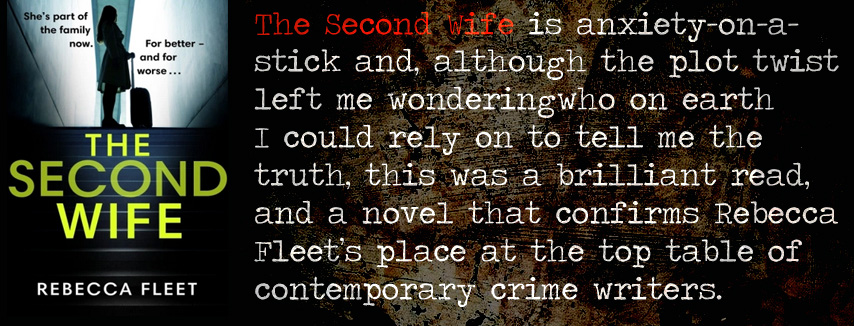
KEEP HER QUIET by Emma Curtis

This nail-biting domestic psycho-drama begins with Jenny crying tears of joy as she cradles the new born child she thought she would never have. Her joy is countered by the despair of her husband Leo, whose desolation and betrayal stems from the bitter truth that he knows the child is not his.

In another place, Hannah weeps over her new born child, because it is lifeless.

Years down the line, the four lives become entangled in a fatal coming together that will be bring only tragedy to all involved. Keep Her Quiet is published by Black Swan and is out on 17th September.

Fatal revenge012

FATAL REVENGE by James L Williams

The action jumps between rural Canada and England as RCMP officer Sergeant Vic Holland finds family links to an unsolved series of brutal murders that took place in ‘the old country.’

Vic returns to his old beat to gather evidence, but he uncovers more than he was bargaining for. Someone is plotting revenge on several individuals, including Vic’s family back in Pine Creek Falls. But who is making these attacks and how is Vic connected to all of this? Fatal Revenge is published by The Book Guild and is out now in KIndle, and will be available in paperback on 28th August

KILLING IN YOUR NAME . . . Between the covers

In February this year – remember when everything was normal, and Covid-19 was just something nasty that was happening in China and Italy? – I reviewed Blood Will Be Born, the debut thriller by Belfast writer Gary Donnelly. I said it was:
“… breathtakingly violent, vividly written and a bleak commentary on a seemingly terminal bitterness which makes normal human beings behave like creatures from a warped vision of hell.”

The full review of that book is here, but in no time at all, it seems, comes the second episode in the career of Met Police detective Owen Sheen. He has been seconded to the historic crimes unit of the Police Service of Northern Ireland. If ever there were a British city where historic crimes still haunt the streets, it is Belfast. Sheen was born in Belfast, and watched his own brother being blown to pieces by a terrorist bomb as the two youngsters played football in the street. Donnelly says:

“Over the decades, so much blood had spattered the streets of Belfast, all now washed away, and forgotten by many. But there would always be those, the ones who had been left behind to count the cost, for which the stain and the pain would never really go.”

The (literally) explosive conclusion to the previous case has left Sheen sidelined and his PSNI partner Aoifa McCusker walking with a stick and suspended from duty after a stash of Class ‘A’ drugs were planted in her locker. Sheen is haunted by the discovery of a boy’s body, found in remote Monaghan bogland on the border with the Republic. The body has been partially preserved by the acidic water, but even a post mortem examination reveals few details.

Meanwhile, a spate of horrific killings has perplexed PSNI detectives. A priest has been decapitated in his own sacristy; the teenage daughter of a prominent barrister has been abducted and then killed; her body, minus one of its hands has been dumped at her father’s front door. The adult son of a former hellfire Protestant preacher and politician has been found dead – again, butchered.

Against the better judgment of senior officers, Sheen is allowed to ‘get the band back together’ and so a limping McCusker, and colleague George ‘Geordie’ Brown are joined by Hayley, a mysterious transgender person who calls herself an ‘instinctive’ because she has what used to be called a sixth sense about death or extreme violence.

As ever in Belfast, the answers to modern questions lie irremovably in the past and, almost too late, Sheen and his team discover that the killings are bound up with acts of scarcely credible evil that took place decades earlier. Revenge is certainly being served cold and, for someone, it tastes delicious.

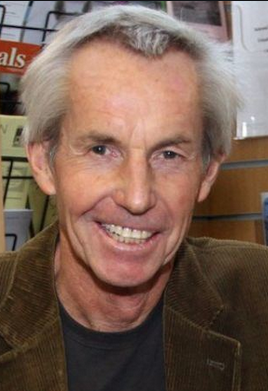
Donnelly (below) has another winner on his hands here, and it is partly due to his superb sense of narrative, but also to his ability to create truly monstrous villains, and there is at least one in Killing In Your Name to rival anything his fellow Irishman John Connolly has created. Connolly’s creations tend to have a sulphurous whiff of the supernatural about them. Donnolly’s monsters are human, if in name only. Killing In Your Name is published by Allison & Busby and is out today, 20th August.

ON MY SHELF . . . August 2020

OMS headerIt looks as though the bastards at WordPress have done their worst, and inflicted the ‘new improved’ system on us. Bastards. I rarely swear in print, but this time I have a good excuse.The good news, however, is that I have some lovely new books in my shelf. Full reviews will follow in due course, but here’s a little introduction to each.

A PRIVATE CATHEDRAL by James Lee Burke

The great man is knocking on 84 years old, but he has lost none of his creative drive. Dave Robicheaux and his explosive buddy Cloetus Purcel are back in A Private Cathedral, another dose of Southern Noir for addicts like myself. It seems that Dave, long prone to seeing visions of dead Confederate soldiers, is about to enter an even more terrifying supernatural world, as he tries to dampen down a violent feud between two Louisiana crime families – and combat an adversary who is not constrained by normal human bounds. A Private Cathedral is out now, from Simon & Schuster.

GATHERING DARK by Candice Fox

Last year I reviewed Gone By Midnight by the Australian writer Candice Fox, and I was very impressed. Now, she crosses the ocean to Los Angeles and introduces us to two strong women – Detective Jessica Sanchez and Blair Harbour, a former top surgeon jailed for a murder she didn’t commit, and now caught up in a vendetta which involves crooked cops and senior gangland figures. The Kindle for Gathering Dark came out in March this year, the paperback is due on 3rd September, but hardback fans will have to wait until next year for a copy. Publishers are, respectively, Cornerstone Digital, Arrow, and Forge.

AND THE SEA DARKENED by Vicki Lloyd

It sounds as if we have a touch of the Agathas here – a remote island, a storm closing in, an intractable and violent sea and – of course – a relentless killer on the loose. Throw into the mix an outside world bitterly split by false news and tribalism, and brothers Magnus and Nick, habitually at each other’s throats, are at first captivated by the arrival of a young academic called Jasmin, but then her presence threatens to turn a bleak situation into a catastrophe. And The Sea Darkened is published by Book Guild and is out on 28th August.

STILL LIFE by Val McDermid

A new book by the most celebrated supporter of Raith Rovers is always an event. 2019 saw the latest episode in the troubled saga of Tony Hill and Carol Jordan, How The Dead Speak, but now we have a book featuring another long-term favourite, DCI Karen Pirie. A body washed up on a bleak shore by fishermen spells the beginning of a traumatic investigation in which Pirie must confront a legacy of secrets, conspiracy and betrayal involving some very high profile names. Still Life is published by Little, Brown in Kindle and hardback on 20th August, and a paperback is due next year.

CRY BABY . . . Between the covers

CB header

Mark Billingham is certainly a man of many parts. To name a few, there is Gary, the dim-but-lovable stooge to the Sheriff of Nottingham in Maid Marian and her Merry Men, stand up comedian and scriptwriter, acoustic guitarist with Fun Lovin’ Crime Writers and, of course, best selling crime novelist. But author of historical fiction? Well yes, in a manner of speaking. In his afterword to his latest novel Cry Baby, Billingham says that in writing this prequel to the Tom Thorne series he had to imagine a world of clunky computers the size of refrigerators, telephone boxes and ‘phone cards, and pubs where people smoked.

We are, as ever in London, but it is the summer of 1996. The city and the country – at least many of the menfolk thereof – are transfixed with the European Cup. Crosses of St George flutter from the aerials of Mondeos up and down the land and pubs are rammed with supporters of Shearer, Sheringham, Southgate and company. Detective Sergeant Tom Thorne is trying to schedule his work around the matches, but when a boy is abducted from a London park, football has to take a back seat.

54502348._UY2560_SS2560_Kieron Coyne is playing with his mate Josh under the watchful eyes of their mothers, Cat and Maria. Cat goes off for a pee, Maria settles back on the park bench and lights a fag. One minute Kieron is there, the next he has disappeared. Josh emerges from the little wood where the boys were playing hide and seek. He neither saw nor heard anything of his friend.

A major police investigation kicks in, with Thorne doing the leg work at the best of his incompetent boss. We learn that Cat and Maria are both single mothers – had ‘lone parents’ been invented in 1996? – but in different circumstances. Kieron’s father is doing a long spell in a maximum security prison, while Maria’s doctor husband divorced her a couple of years back.

Hours turn into days and there is no sign of Kieron, dead or alive. A birdwatcher thinks he saw a boy getting into a car with a man he obviously knew, and a Crimewatch presentation by the late lamented Jill Dando turns up nothing more useful than imagined sightings the length and breadth of the country, and the usual false confessions from the mentally ill.

Thorne does find a suspect – a neighbour of Cat’s with a suspicion of ‘form’ for dodgy sexual activity – but the arrest of Grantleigh Figgis does not go well for either the police of the suspect.

Billingham manages the historical details very well, and we meet one or two regular characters from the Thorne series for the first time, none more dramatically than Phil Hendricks, the much-tattooed and oft-pierced pathologist. In a rare droll moment in a seriously dark book, Billingham has gentle fun with making Thorne’s gaydar so wonky that he has our man making enquiries as to why Hendricks hasn’t found the right woman to settle down with. We also meet Thorne’s soon-to-be-ex wife Jan, and fellow copper Russell Brigstocke who, as lovers of the series know, manages subsequently to keep his CV much cleaner than Thorne.

Fans of Billingham’s novels, both the Tom Thorne series and the stand-alones, know that he likes nothing better than a dramatic twist in the final few pages, and he doesn’t let us down here. There is something of a ‘where the **** did that come from’ moment when all the patient door-knocking, statement-taking and deduction of the coppers is spun on its head in a few dazzling pages of revelation. Cry Baby is published by Little, Brown and is out now.

LOST SOULS . . . Between the covers

header

51K-Sy2OGJL._SX323_BO1,204,203,200_Lost Souls is something of an oddity, and no mistake. There’s nothing at all wrong with the novel itself apart from something of an identity crisis. Search for it on Amazon UK, and up it comes, but the page URL contains the title Half Moon Bay. Search for Half Moon Bay and up comes the same novel, but with a different cover. It looks as though Half Moon Bay is the Penguin Random House American title, while on this side of the Atlantic Century are going with Lost Souls.

Deputy US Coroner Clay Edison first appeared in Crime Scene (2017). That was followed by A Measure of Darkness in 2018, and now Edison returns but this time with baby Charlotte to look after when his wife is out on shift in her hospital. The Edisons live in that eternal bastion of West Coast sensibilities, Berkeley, and it is in the infamous People’s Park that the case begins.

LS illustration

Clay Edison is called to the park, scene of decades of hippy protest. Two bodies have been found during building excavation. The first is neither human nor animal. It is a stuffed blue teddy bear, missing an eye. The second is the skeleton of a baby, and the glare of the pathologist’s strip lights reveal that it was once a little boy. Edison is drawn into an investigation to see if the teddy bear and the boy are connected, and this means he has to visit a truly terrifying settlement of biker red-necks:

“I bounced along the tracks, wheels spitting gravel. Slowly the smudge began to resolve like a body surfacing in swamp water. Structures, then vehicles, then living things: gaunt dogs and children chasing one another, their roles as hunter or prey in constant flux. Bare feet raised a dusty haze. ….. Amid a weedy patch a woman slouched in a lawn chair. Pustulant acne ravaged her face; she could have been eighteen or forty. A slack-limbed toddler slept on her chest.”

51wZ1Fd-WIL._SX327_BO1,204,203,200_As Edison tries to link the skeleton of the baby with the abandoned cuddly toy, he accepts an ‘off-the-books’ job. A wealthy businessman, Peter Franchette, asks him to try to find the truth about his missing sister. Possibly abducted, perhaps murdered, she has disappeared into a complexity of disfunctional family events – deaths, walkouts, divorces, remarriages and rejections.

The Kellermans clearly have an ambivalent view of Berkeley. A place perhaps, where a seventy-something former revolutionary might wake up and imagine, for a fleeting moment, before old age and reality kick in, that it is 1966, and everything is still possible. The reality is more sobering, however:

” … and the countless others, men and women alike, who’d found their way to the Pacific, only to find that it was not the golden bath they’d expected but a terrifying force of nature, immense and violent and indifferent.”

I’ll be blunt and say that I have never understood the concept of writing partnerships in fiction. Over many years I enjoyed Jonathan Kellerman’s Alex Delaware books. They are slick and formulaic, but never less than gripping, and it is obvious that Kellerman is a gifted writer. Why he should want to want to pair up with someone else – even if it is his son – is for him to know and me to be left wondering. Lost Souls reads as if it has been written by one person, so I suppose that is all that matters.

Lost Souls is cleverly written and has a plot which is, like Chandler’s immortal The Big Sleep, deeply complex. Rather like the anecdote which has Chandler being asked who killed the chauffeur, and him replying that he wasn’t sure, I couldn’t put my hand on my heart and say that Edison finds Peter Franchette’s missing sister. I think he does, but you must judge for yourselves.

Lost Souls and/or Half Moon Bay are out now, and available here.

AFTER THE FIRE . . . Between the covers

ATF header

Jo Spain’s Irish copper Tom Reynolds – now Detective Chief Superintendent, if you please – returns in After The Fire and we are, as ever, in Dublin’s Fair City. Are the girls still ‘So Pretty’? The young woman walking naked down the city street, much to the astonishment of shoppers might have been pretty once, but now she is in a terrible state. Hair awry, skin blackened with dirt and a look of sheer terror in her eyes.

Except that is not dirt on her skin. It is soot, and she has escaped, traumatised, from a catastrophic house fire. The terraced house is in an area which has moved upmarket because of its proximity to the The International Financial Services Centre (IFSC) but the services being offered at the ruined house were something different altogether. First one body is recovered, and then another, and as the young woman – a Russian –  recovers in hospital, it becomes clear to the police that the house was a brothel, and she was one of the items on the grisly menu.

As a DCS, Tom Reynolds is not meant to get his hands dirty at an investigational level, but there is no drama in balancing budgets and supervising staff deployment, so the admirable Mrs Spain has Tom notionally taking a spot of leave so that he can lend a hand in the case which is being led by his former protégé Laura Lennon.

Tyanna, the woman who fled the fire, is too terrified of the people who controlled the trade at 3 Shipping Row to be of much use, but she has mentioned a baby, now missing, the child of a young woman whose corpse was discovered in the building. Another frightened young woman – Nina Cusack – who was bought and sold there has also emerged, but she has sought sanctuary with her parents and is, again, too terrified to divulge much about the identities of the guilty men who are controlling the brutal trade.

The sheer fluency of Jo Spain’s writing will come as no surprise to those of us who are long term admirers, and the bottom line is that every book she writes is, quite simply, a bloody fine read. It is, however, worth taking a moment to look at just how and why she is so good. Lesser writers will seed their narratives with gore and gruesome detail, while Spain leaves us in no doubt about how brutal people can be, but in a much more subtle way.

Some police procedurals rely too much on the central copper being a maverick, or a bitter misanthrope, or a damaged person with a hundred different devils to fight each day. Tom Reynolds doesn’t distract us in that way – he is a decent man who has been dealt a fair hand by fate, and so we don’t waste valuable time having to understand him by examining his CD collection. (Yes, I know CDs are so very yesterday, but you get my drift)

As for elaborate scene setting with endless paragraphs about how Dublin looks, smells, sounds and feels, Jo Spain puts us in the place with a couple of telling sentences. We know we are in Dublin – that’s fine – but then she gets on with the important stuff. The important stuff? That is the story and above all, Jo Spain is a storytelling genius. Those who follow her career will know she is also much sought after as a screenwriter. The Tom Reynolds books and the stand-alones are not written for the screen, but they may as well be because every page, every paragraph and every sentence comes to life as vividly – and as visually – as if we were standing right there, watching.

After The Fire is published by Quercus. It is available now as a Kindle, and will be out in paperback on 6th August.

For more on Jo Spain and her novels, click the image below.

image

ORANGES AND LEMONS . . . Between the covers

OAL header027

For a good part of its long and curious history, it seems that The Peculiar Crimes Unit of London’s Metropolitan Police has been under threat. Civil servants and box-tickers without number have tried to close it down; it has endured bombs (courtesy of both the Luftwaffe and those closer to home); it has suffered plague and the eternal pestilence of whatever vile tobacco Arthur Bryant happens to stuffing into his pipe at any particular moment. The PCU has become:

“..like a flatulent elderly relative in a roomful of
millennials,a source of profound embarrassment..”

But now, yet another crisis seems to be the fatal straw that will break the back of the noble beast. Bryant’s partner John May (the sensible one) is on sick leave recovering from a near-fatal gunshot wound. Mr B has gone AWOL (trying to have his memoirs published), and the office has been invaded by a tight lipped (and probably ashen-faced) emissary from the Home Office who has instructions to observe what he sees and then report back to Whitehall.

The PCU creaks into arthritic action when Arthur Bryant puts his literary ambitions on hold, and links three apparently random deaths. A Romanian bookseller’s shop is torched, and he dies in police custody; a popular and (unusually) principled politician is grievously wounded, apparently by a pallet of citrus fruit falling from a lorry; a well-connected campaigning celebrity is stabbed to death on the steps of a notable London church. For Bryant, the game is afoot, and he draws on his unrivaled knowledge of London’s arcane history to convince his colleagues that the killer’s business is far from finished. His colleagues? Regular B&M fans will be relieved to know that, in the words of the 1917 American song (melody by Sir Arthur Sullivan) “Hail, Hail – The Gang’s All Here!”

roster

An intern in the PCU? Yes, indeed, and in the words of Raymond Land;

“You may have noticed there’s an unfamiliar name attached to the recipients at the top of the page. Sidney Hargreaves is a girl. She’s happy to be called either Sid or Sidney because her name is, I quote, ‘non gender specific in an identity-based profession.’ It’s not for me to pass comment on gender, I got lost somewhere between Danny la Rue and RuPaul.”

There are more deaths and Arthur Bryant is convinced that the killings are linked to the London churches immortalised in the old nursery rhyme, with its cryptic references:

Poem

But what links the victims to the killer? Beneath the joyous anarchy Arthur Bryant creates in the incomprehending digital world of modern policing, something very, very dark is going on. Fowler gives us hints, such as in this carefully selected verse between two sections of the book:

“The past is round us, those old spires
That glimmer o’er our head;
Not from the present are their fires,
Their light is from the dead.”

Also, underpinning the gags and joyfully sentimental cultural references there are moments of almost unbearable poignancy such as the moment when the two old men meet, as they always have done, on Waterloo Bridge, and think about loves won and lost and how things might have been.

There is no-one quite like Christopher Fowler among modern authors. He distills the deceptively probing gaze of John Betjeman, the sharp humour of George and Weedon Grossmith, the narrative drive of Arthur Conan Doyle and a knowledge of London’s darker corners and layers of history quite the equal of Iain Sinclair and Peter Ackroyd,  The result? A spirit that is as delicious as it is intoxicating. Oranges and Lemons is published by Doubleday and is out now.

More about the unique world of Arthur Bryant and John May can be found here, while anyone who would like to learn more about the origin of the rather sinister verse quoted earlier should click on the picture of its author, below, Letitia Elizabeth Landon.

Letitia_Elizabeth_Landon_-_Pickersgill

ON MY SHELF . . . July 2002

OMS header

OMS body text

CHAOS by AD Swanston

Dr Christopher Radcliff is an ‘Intelligencer’ for the security services of Queen Elizabeth 1st. Despite the bitter winter weather of 1574, the threats of Catholic plots and rumours of a Spanish invasion are producing a political fever which has nothing to do with the temperature on the streets of London. Radcliff and his agents must use all the wiles of their devious trade to combat a threat against the Queen herself. Bantam Press, 20th August.

KILLING IN YOUR NAME by Gary Donnelly

I was hugely impressed with Donnelly’s debut police thriller Blood Will Be Born (click for review) and now London copper DI Owen Sheen tackles the second case of his secondment to the Police Service of Northern Ireland. As before, the misdeeds and brutality of The Troubles are never far away as Sheen and his colleague DC Aoife McCusker search for justice for an unnamed boy whose body has been found in bogland. Alison & Busby (Kindle) 20th August

A PHILOSOPHCAL INVESTIGATION by Philip Kerr

Kerr’s untimely death has been ameliorated, at least in a literary sense, by the republication of some of his earlier stand-alone novels. This novel, first published in 1993, looks forward to 2013 and we are in a London terrorised by a serial killer who uses algorithms to identify potential violent criminals, and then executes them – even if they have not yet committed the predicted misdemeanours. Quercus, out now.

KEEP HER QUIET by Emma Curtis

A must for fans of domestic angst and tortured family life, Keep Her Quiet tells the story of an adored new born baby, a cheated husband and another young mother whose baby has died at her side. Guilt, grief, secrets and betrayal fester for years until pay-back time turns their world upside down. Black Swan, Kindle 6th August, PB 17th September.

OMS footer

Blog at WordPress.com.

Up ↑