No-one will ever accuse Jo Spain of being unadventurous. With a best-selling series of police procedurals under her belt – the superb Tom Reynolds novels – a lesser writer might hunker down and play safety first by sticking to the familiar. But that’s not Jo Spain. Her last standalone thriller, The Perfect Lie (click for review), was set in Newport, Rhode Island, and now she takes us to the ski resort of Koppe in icy Finland, where Brit Alex Evans has travelled to identify the murdered body of his sister, Vicky. She was something of a ‘free spirit’, having wandered half the way round Europe doing a variety of temporary jobs (including pole dancing in a Spanish bar), always broke, but always looking for the next big adventure. Her body has been found by an ice fisherman, and has been in the water for some time.
Handling the investigation is local police chief Agatha Koskinen, but Alex is determined to ask his own questions. He discovers that Vicky had been working at a local hotel and had made friends with an American tourist who is now back in the states, but has an alibi for the time when Vicky disappeared. Agatha has demons of her own to contend with, however, as somewhere out there is the abusive parent of her three children – Luca – and she fears for them should Luca come back into their lives.
As ever, Jo Spain weaves a complex mystery, and gives us a split time narrative. She takes us back to 1998 where we are a fly on the wall in the house of Miika and Kaya Vartinen. Miika is a Sami – one the ethnic people of what used to be known as Lapland. He is a reindeer herder. Kaya is pregnant, but Miika is not the father. She is carefully managing the usual symptoms so that when she tells him, Miika will believe the child is his.
The significance of the book’s title becomes clear when Alex visits Agatha at her home, and she reveals that Vicky is the latest woman to disappear in a ten-year period, and that Kaya Vatinen was the first. She also tells Alex that Miika Vartinen is widely suspected as being involved in the disappearances, but no evidence has ever emerged to connect him to the cases.
With the most delicate of touches, Jo Spain hints at the darker aspects of life in Koppe, where there is an undercurrent of racism towards the Sami people, and she reminds us of the familiar theme of movers and shakers in tourist resorts – think the Mayor of Amity Island in Jaws – not wanting anything to disturb the inward flow of visitors and their cash. There is also the spectre of an international mining company sensing a million dollar windfall from the minerals sitting beneath the pristine and picturesque Finnish landscape.
Jo Spain’s tricksy thrillers are very cleverly written. She relies on us making assumptions. She invites us to make these assumptions rather like a fly fisherman casting the cunningly constructed fly on the water, hoping it will fool the fat trout (aka the reader). When we realise we have been gulled, we might turn back a few ages and react with something like, “hang on – didn’t she tell us that …?“, only to find that what she wrote was perfectly ambiguous, and that we have jumped to the wrong conclusion. Perhaps there’s a few too many mixed metaphors there, but I hope you get my drift.
There are only two predictable things about a Jo Spain thriller. The first? There will be a dramatic plot twist. The second? You won’t see it coming! The Last to Disappear is published by Quercus, and will be out on 12th May. For more of my reviews of Jo’s books, click the image below.

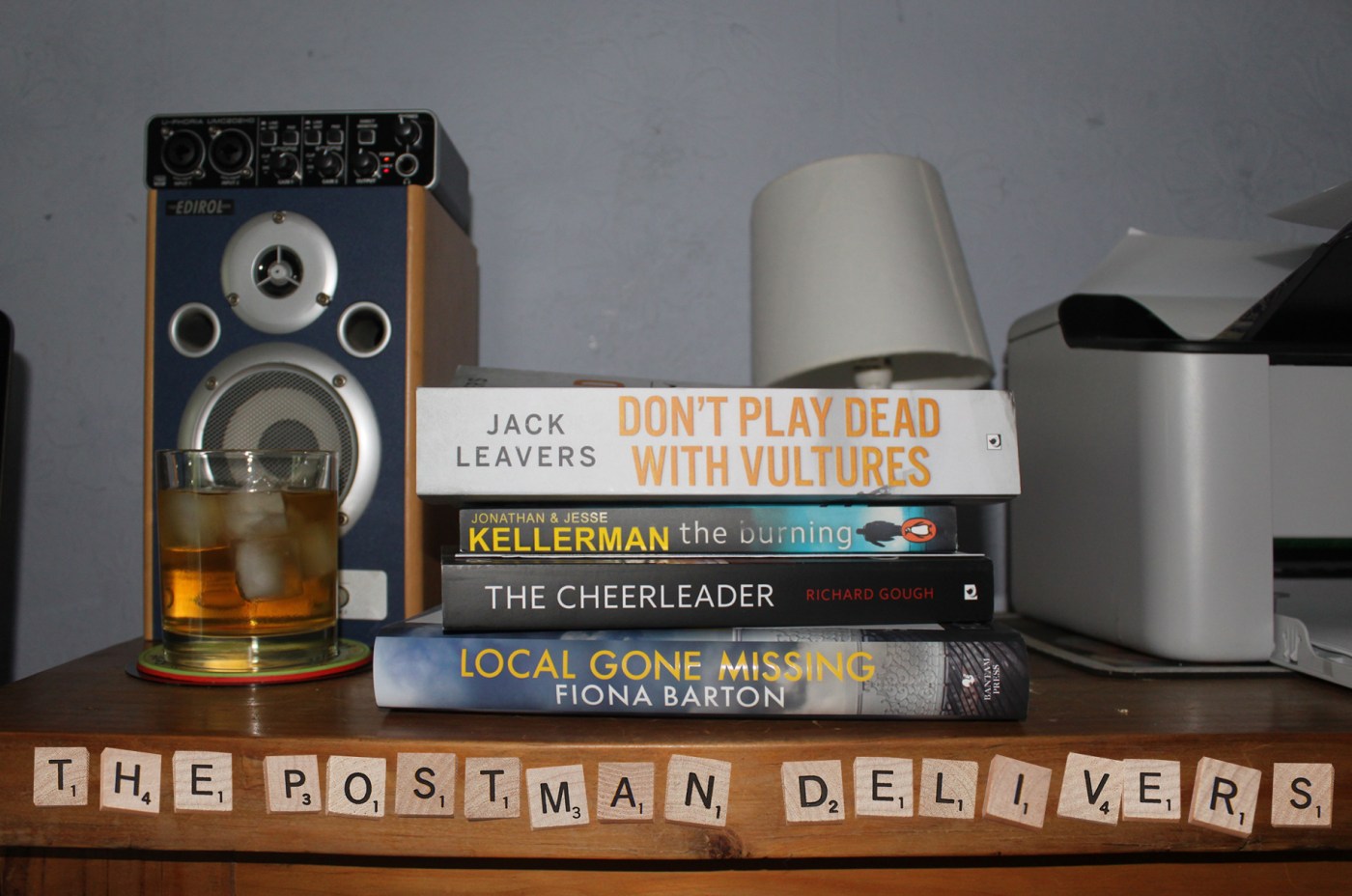


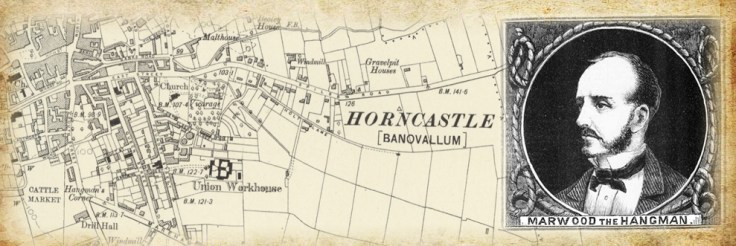

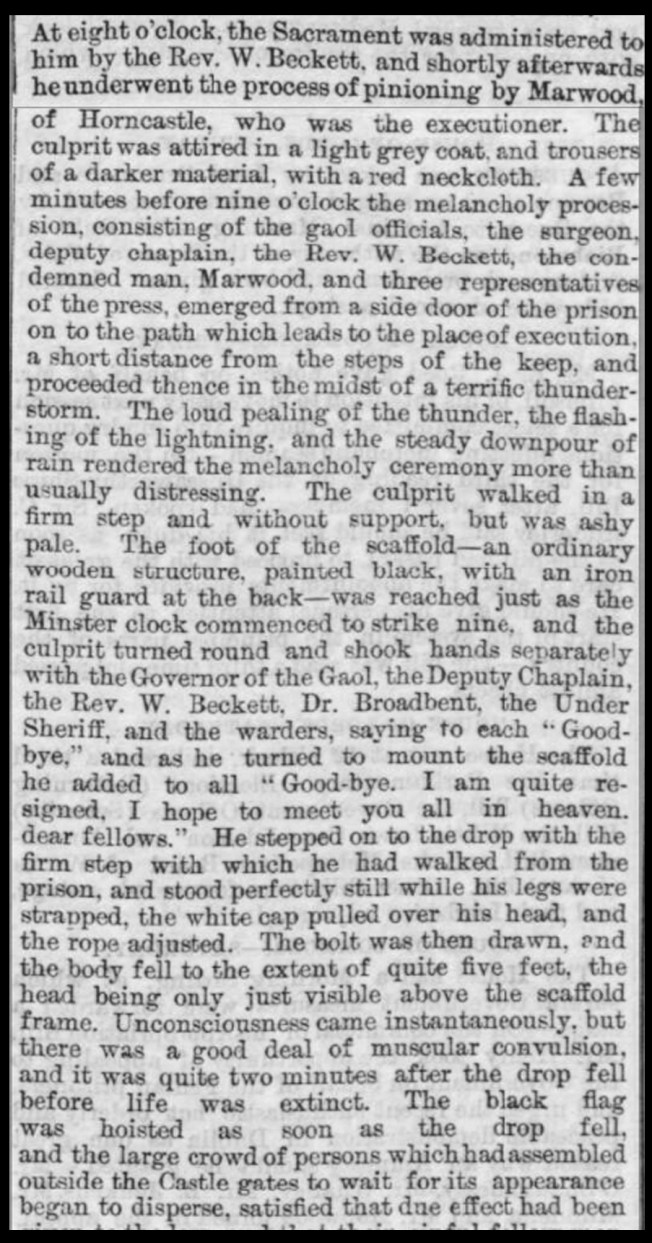

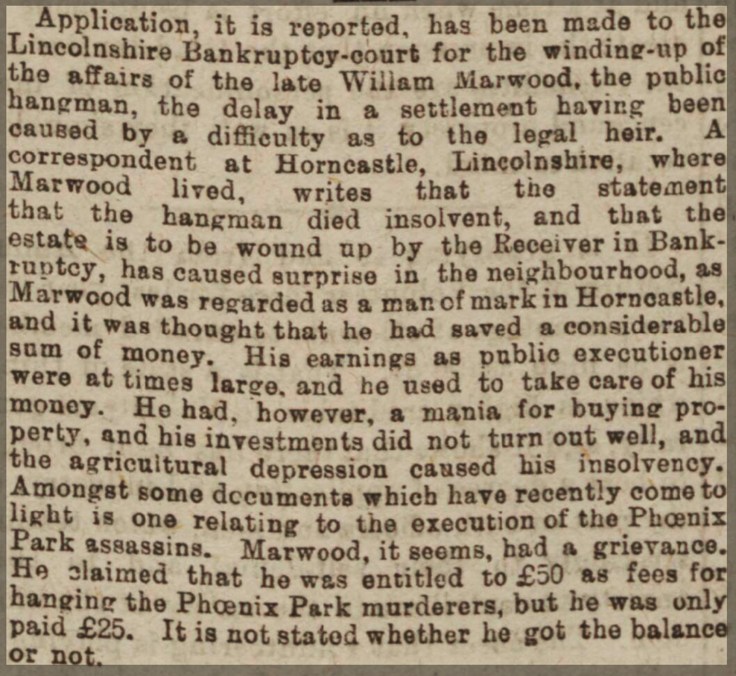


 “During my stay in Horncastle I got to know that Marwood had been doing duty as a hangman some time before his neighbours knew of the circumstance. And it would have been a secret for some time longer, but that a Horncastle man happened to be present at an execution which took place at some distant town, and, on seeing the operator, recognised his fellow-townsman. The news spread like wildfire at Horncastle, and when Marwood arrived home he found himself the object of a few attentions which were more demonstrative than nice. And for some time after, when he started for, or came back from, an execution, he was followed about by people who showed no displeasure by hooting him, and by beating tin kettles, pots, and pans. This grew to be a veritable nuisance, so bad that Marwood was compelled to write to the Home Secretary claiming protection. After he had done this the head of Horncastle police was communicated with, and since that time Marwood has been permitted to depart from, and return to this town without molestation; in fact, he walks about the place without attracting any special attention. I noticed that his fellow townsmen greeted him in an unmarked but friendly manner, and he appeared to be on good terms with everybody. He keeps a shoemaker’s shop, and is comfortably off, owning several houses in Horncastle.”

 This is a new police procedural from Stuart MacBride (left) and it introduces Detective Sergeant Lucy McVeigh. Her beat is the fictional town of Oldcastle (not to be confused with the actual city of Oldcastle, which lies between Aberdeen and Dundee). Aberdeen, of course, is where DS Logan McRae operated in the hugely successful earlier series from MacBride. Also, DS McVeigh comes across – to me at any rate – as a younger version of McRae’s boss, the foul-mouthed and acerbic DCI Roberta Steel. McVeigh is equally sharp tempered, and similarly indisposed to suffer fools gladly.
 As the search for The Bloodsmith continues, and Lucy McVeigh struggles to keep abreast of that investigation, as well as her battle with the Black family and coping with the mental agonies of Benedict Strachan, MacBride treats us to his signature mixture of Noir, visceral horror and bleak humour. Even though his Oldcastle is a fictional place, it is vividly brought to life to the extent that I would not be in the least surprised if the author has a map of the place hanging on the wall of his writing room. The situation becomes ever more complex for Lucy McVeigh when she learns there is a connection between the murdered former policeman and Benedict Strachan. That connection is a prestigious and exclusive independent school, known colloquially as St Nicks’s. When she visits the school, she unearths more questions than answers.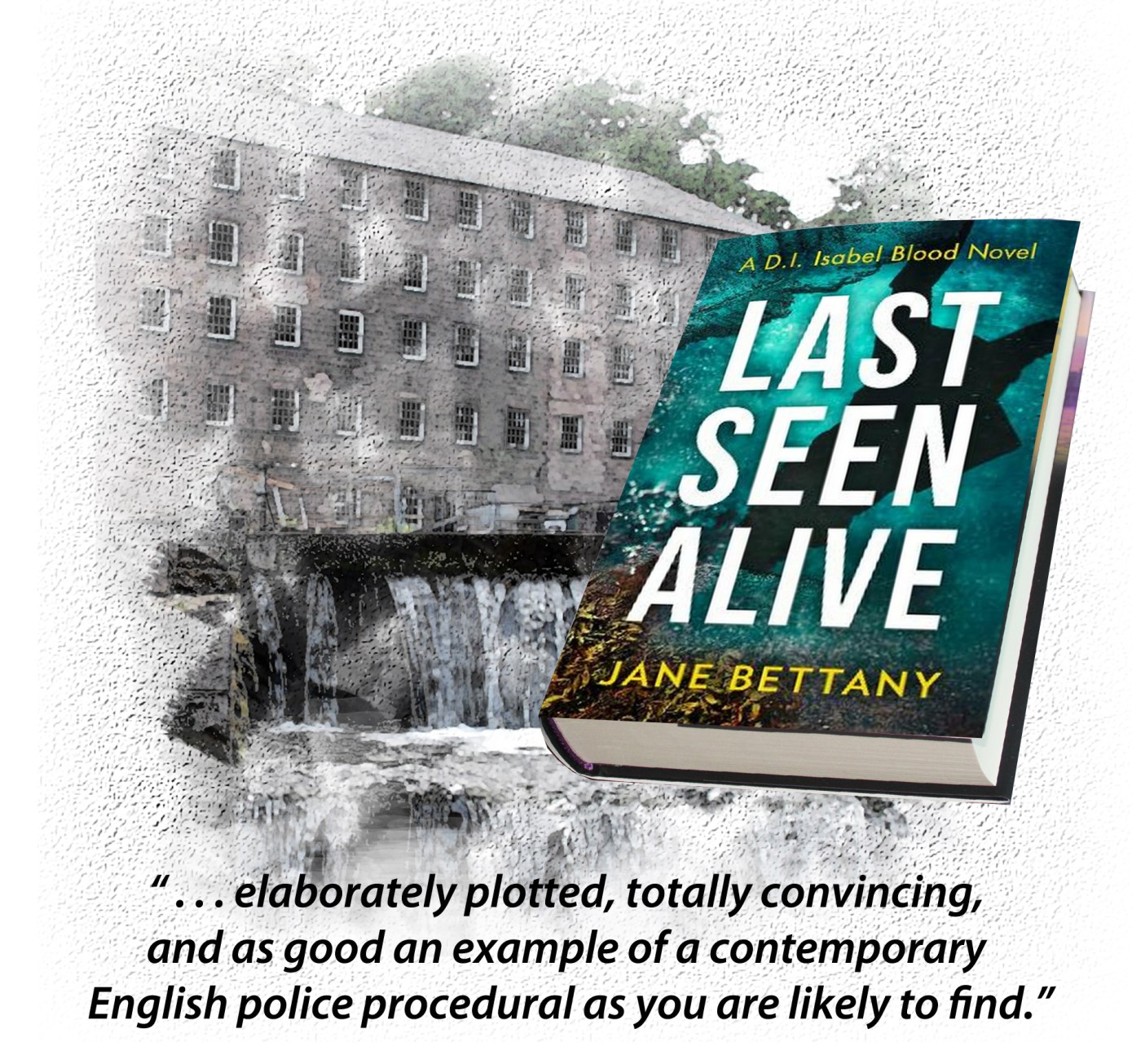

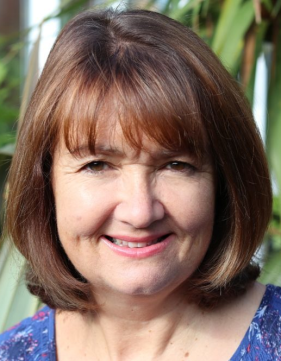 Last Seen Alive is the third book by Jane Bettany (left) featuring the Derbyshire copper DI Isabel Blood. The story begins when Anna Matheson, a single mother who works at a large confectionery firm, fails to pick up her infant son from the child minder after a social event at work. Lauren Talbot, the child minder, raises the alarm late at night, but precious hours elapse before morning comes and the police are able to start making enquiries.





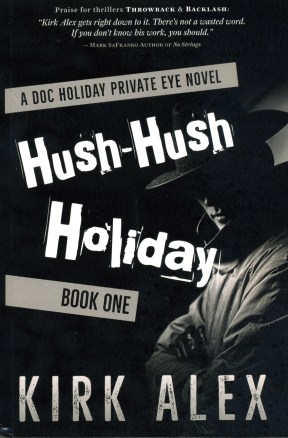 The Tucumcari Press is based in Tucson, Arizona, and they have kindly sent me a couple of books by Kirk Alex. So who is he? He can tell us:
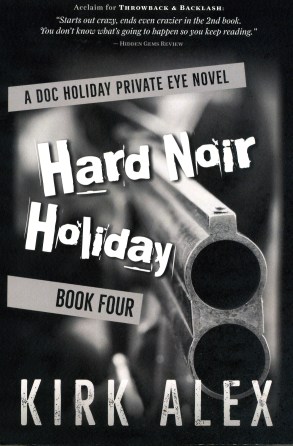 In L.A., unless you have the flashy car, luxury apartment, good paying job, you can forget about having a woman in your life to be with, any of that; so yeah, we hung in there alone. What doesn’t break you makes you stronger, so they say.