Search

fullybooked2017

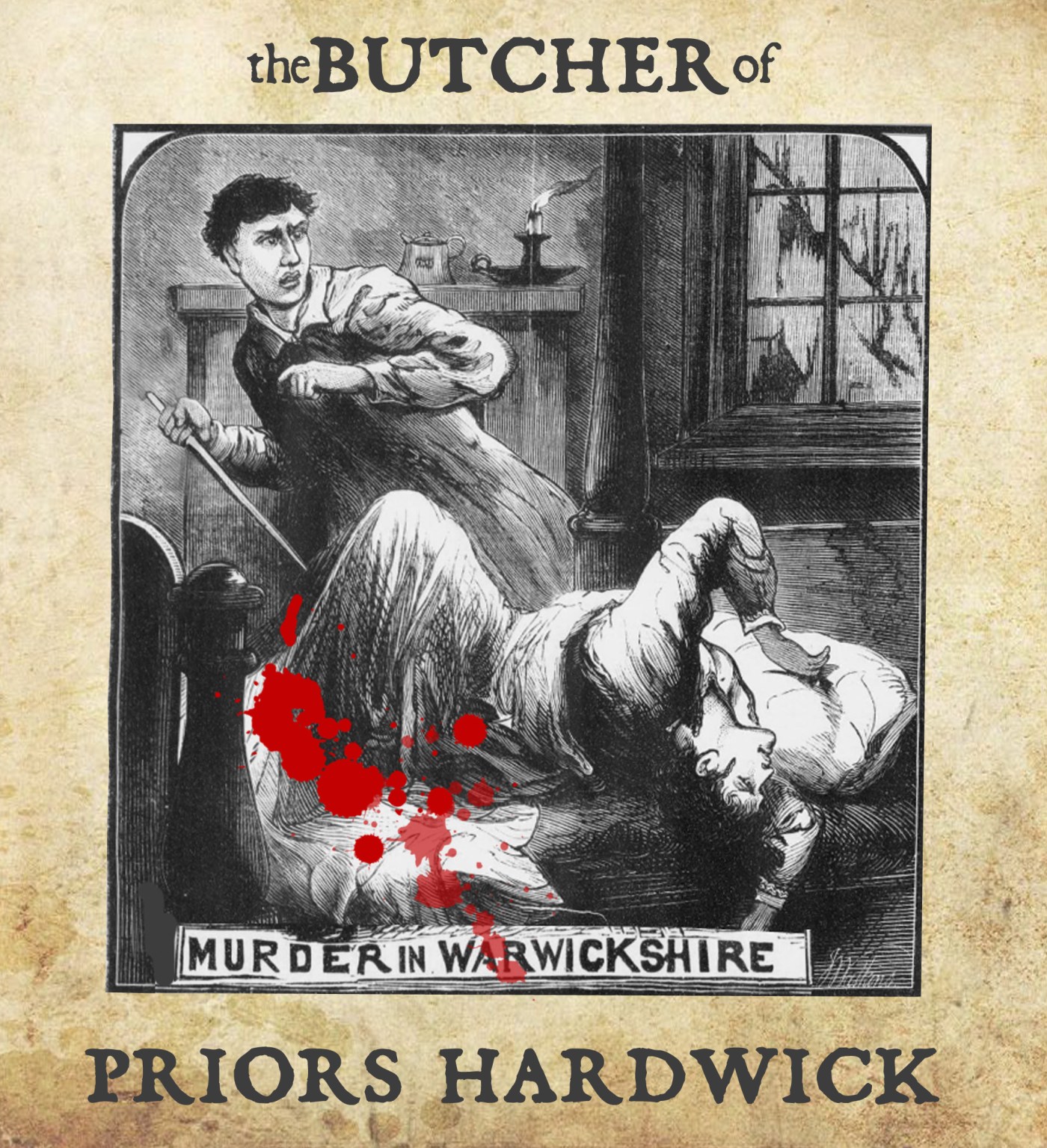
A SEA CAPTAIN SPURNED . . . A Grimsby murder, 1893 (part one)

Rumbold feature

Tunnard Street in Grimsby is in the East Marsh area of the town, cited recently as the most dangerous areas in Lincolnshire in terms of reported crime. Many of the houses just wouldn’t be built today. They are tiny two up-two down terraces, built by 19thC profiteering builders and financiers, eager to make a quick profit. Perhaps violence is embedded in the very ground beneath residents’ feet. But that violence isn’t a recent phenomenon. One of the town’s most infamous murders took place there. 

As far as I can judge, the house that was numbered 124 Tunnard Street no longer exists. Along with its neighbouring houses, it has been demolished and replaced by more modern – and spacious – dwellings. The old chapel on the corner still stands, but rather than being a place where Grimsby’s Pentecostal congregation worshiped, it is now a boxing club.

The old 124 Tunnard Street was, in November 1893, witness to a brutal murder that shocked townsfolk and  attracted attention across England.The two leading players in this fatal drama were Harriet Rushby and Henry Rumbold.

HarrietThe early life *(see footnote) of Harriet Rushby has been difficult to trace. One newspaper report says that she was 24 in 1893, while another says she was 20. There is a death record for December 1893, where a Harriet Rushby was buried in Caistor, aged 22, and a census record for 1881 which gives us a Harriet Rushby living in Lower Burgess Street with her grandparents, but she is listed as being born in 1874.

RumboldHenry Rumbold proved just as problematic, until I realised that his actual surname was Rumbell, and that his family were well known seafarers from Yarmouth. On the night of Sunday 3rd April 1881 he was listed in the census as being on board the ship Tempus Fugit, moored off the Suffolk Coast. It looks as though he was described as Master, while his younger brother Walter was Mate

Census

By 1893, Rumbell was master of Nightingale, a fishing smack operating out of Grimsby. Later reports stated that he had previously been married in Yarmouth, but that the union was  an unhappy one and had not lasted long. In Grimsby, Rumbell had become enchanted by Harriet Rushby, almost half his age, and described as being of ‘very pleasing appearance’. The problem for Rumbell was, however, that his trade meant lengthy absences from Grimsby, and it seems that Harriet Rushby was ready neither to settle down nor to remain faithful to her lover. A contemporary newspaper report primly stated:

“She came of an old Grimsby family, was very respectably connected, but she fell into evil ways, and was the habitual associate of bad men and women. At what time she made the acquaintance of Rumbold is not clear, but at all events an illicit intimacy had existed between them before his last fishing cruise, from which he returned unexpectedly on the fatal 7th of November. “

The pitiful scenario of an older man becoming entranced by a younger woman, and then possessiveness and jealousy leading to tragedy, is as old as humanity itself. It seems that Rumbell had become aware that he was not the only person in Harriet’s life, and in late October,  as he prepared to take Nightingale out into the wintry North Sea for another trip, he had made arrangements. This, from a contemporary newspaper report:

“He had expected being way at sea for eight weeks, and from motives probably of a personal kind had arranged that she should lodge in his absence at the house of her own cousin, Charles Rushby, in Ayscough Street. She did not, however, fall in with his plans. ”

 IN PART TWO

a surprise return
a revolver is purchased
a job for Mr Billington

Screen Shot 2022-05-11 at 20.14.11

* Of the many such cases I have written about over the years, this has been the hardest to research in terms of the people involved. Normally it is possible to trace participants through census and birth/marriage/death records, after picking up the gist of the story from old newspaper reports. This time, however names either don’t exist at all, or don’t match addresses. I suspect, as with Henry Rumbell, names were either miss-spelled or misheard by court reporters and other journalists.

A TASTE FOR KILLING . . . Between the covers

ATFK spine005

Sarah HawkswoodThose of us who are lucky enough to be sent printed copies of novels for review almost certainly have “keepers” – books which don’t go off to friends, free libraries or charity shops once they are read. Looking across at my shelves, I see books by Jim Kelly, Christopher Fowler, Philip Kerr, John Connolly, Phil Rickman, James Oswald, Peter Bartram – and Sarah Hawkswood (left). I was a late arrival at the ‘Bradecote Ball’, but these superb stories of medieval Worcester have joined my list of favourite books which I will not be parted from. A Taste For Killing is the tenth in this splendid series featuring the 12th century Worcester trio of Hugh Bradecote, Serjeant Catchpoll and Underserjeant Walkelin.

Blurb006

It is a bitter January afternoon in Worcester, 1145. The wells have frozen, the streets are empty, and decent folk are huddled around their fires. In the house of Godfrey Bowyer – remember the origin of many surnames – a skilled, but widely disliked maker of longbows, it is supper time. As Godfrey sups his pottage with his wife Blanche, the servants cower in another room, listening to the customary arguments and smashing of crockery. Godfey and Banche (his second wife) frequently disagree, but they are as one when it comes to the adage about it being better to let it all out than to keep it in. Tonight’s row takes an unexpected – and fatal – turn, as both Godfrey and Blanche collapse with the symptoms of poisoning. Blanche recovers quickly enough, but it is to be Godfrey’s last night on earth.

Catchpoll and Walkelin are summoned and are joined – reluctantly – by Bradecote, who was anxiously at the side of his heavily pregnant wife. She has miscarried before, and he is reluctant to leave her, but  suspected murder is what it is, and he joins his two colleagues. The row between Godfrey and Blanche which culminated in a dish of pottage (a soup thickened with grain, containing vegetables and – when available – meat) being thrown at the wall raises the crucial question – the contents of whose bowl redecorated the wall of the house? Was it Blanche’s, and did Godfrey then sup from the bowl intended for his wife? What was the poison, and who put it in the pottage?

It transpires that the Bowyer ménage is far from simple. Runild the servant girl is pregnant, but by whom? Alwin, Bowyer’s apprentice is out of the frame as he is too shy to even look at a girl, let alone do anything more physical, but there is another suspect. The late Godfrey’s  hands often followed not far behind his roving eye, as more than one Worcester woman can testify. Furthermore, what was Blanche’s relationship with the Steward of Worcester Castle, Simon Furneaux, a pompous individual who has a hate-hate relationship with Hugh Bradecote? There was little love lost between Godfrey Bowyer and his younger brother Herluin the Stringere, also a maker of bows, and a man who has his eyes on his late brother’s business. There is even a rumour that they do not share the same father.

medieval-bow-maker_bowyer

One of the many captivating qualities of this book is the reminder of the potent symbolism of the Yew tree in human history. The traditional home of the Yew tree in England is the village churchyard, and there is a deep irony that its wood was used to produce the fine – and lethal – bows that were to dominate medieval warfare. The Yew is also a more direct cause of death, however, as its wood contains toxins that bow makers had to wash from their hands before eating, and the seeds in the delightful red berries contain a deadly alkaloid.

When there is yet another death in the Bowyer household, a local herbalist and bone-setter called Roger the Healer, who has thus far been on the fringe of events, takes centre stage. He suspects that Yew killed Godfrey Bowyer, but a glance at the cover of the novel will give readers a clue as to what caused the second tragedy.

The chemistry between Bradecote, Catchpoll and Walkelin is a work of alchemy in itself. Bradecote is, I suppose, minor nobility, quick-witted and well educated, while Catchpoll is grizzled, rough round the edges, but wily. Walkelin, in the earlier books, was simply a clever but callow lad. Now, however, he uses his apparent naivety and lack of guile to extract information from people who would otherwise be too deferential to Bradecote, or too fearful of Catchpoll’s reputation as a street fighter.

A Taste For Killing is raw-knuckle historical crime fiction which, while it never flinches from describing the often brutal lives of people in 12th century England, still paints a picture of decent, thoughtful folk living honest lives as best they can. Thanks to Sarah Hawkwood’s skill, that picture has a timeless quality. The book is published by Allison & Busby and is out today, 12th May. Click on the images below for my reviews of earlier books in the series.

ROS

BRT

WATD

THE LAST TO DISAPPEAR . . . Between the covers

TLTD header

No-one will ever accuse Jo Spain of being unadventurous. With a best-selling series of police procedurals under her belt – the superb Tom Reynolds novels – a lesser writer might hunker down and play safety first by sticking to the familiar. But that’s not Jo Spain. Her last standalone thriller, The Perfect Lie (click for review), was set in Newport, Rhode Island, and now she takes us to the ski resort of Koppe in icy Finland, where Brit Alex Evans has travelled to identify the murdered body of his sister, Vicky. She was something of a ‘free spirit’, having wandered half the way round Europe doing a variety of temporary jobs (including pole dancing in a Spanish bar), always broke, but always looking for the next big adventure. Her body has been found by an ice fisherman, and has been in the water for some time.

Handling the investigation is local police chief Agatha Koskinen, but Alex is determined to ask his own questions. He discovers that Vicky had been working at a local  hotel and had made friends with an American tourist who is now back in the states, but has an alibi for the time when Vicky disappeared. Agatha has demons of her own to contend with, however, as somewhere out there is the abusive parent of her three children – Luca – and she fears for them should Luca come back into their lives.

As ever, Jo Spain weaves a complex mystery, and gives us a split time narrative. She takes us back to 1998 where we are a fly on the wall in the house of Miika and Kaya Vartinen. Miika is a Sami – one the ethnic people of what used to be known as Lapland. He is a reindeer herder. Kaya is pregnant, but Miika is not the father. She is carefully managing the usual symptoms so that when she tells him,  Miika will believe the child is his.

The significance of the book’s title becomes clear when Alex visits Agatha at her home, and she reveals that Vicky is the latest woman to disappear in a ten-year period, and that Kaya Vatinen was the first. She also tells Alex that Miika Vartinen is widely suspected as being involved in the disappearances, but no evidence has ever emerged to connect him to the cases.

With the most delicate of touches, Jo Spain hints at the darker aspects of life in Koppe, where there is an undercurrent of racism towards the Sami people, and she reminds us of the familiar theme of movers and shakers in tourist resorts – think the Mayor of Amity Island in Jaws –  not wanting anything to disturb the inward flow of visitors and their cash. There is also the spectre of an international mining company sensing a million dollar windfall from the minerals sitting beneath the pristine and picturesque Finnish landscape.

Jo Spain’s tricksy thrillers are very cleverly written. She relies on us making assumptions. She invites us to make these assumptions rather like a fly fisherman casting the cunningly constructed fly on the water, hoping it will fool the fat trout (aka the reader). When we realise we have been gulled, we might turn back a few ages and react with something like, “hang on – didn’t she tell us that …?“, only to find that what she wrote was  perfectly ambiguous, and that we have jumped to the wrong conclusion. Perhaps there’s a few too many mixed metaphors there, but I hope you get my drift.

There are only two predictable things about a Jo Spain thriller. The first? There will be a dramatic plot twist. The second? You won’t see it coming! The Last to Disappear is published by Quercus, and will be out on 12th May. For more of my reviews of Jo’s books, click the image below.

Screen Shot 2022-05-01 at 20.00.42

THE POSTMAN DELIVERS . . . Barton, Gough, Kellerman & Leavers

Header

LOCAL GONE MISSING by Fiona Barton

Detective Elise King moves to the apparently placid seaside town of Ebbing after illness threatens her career. What should be a period of rest and recuperation turns distinctly nasty when tension between locals and  rich weekender visitors bubbles over into violence. When two teenagers end up in hospital and a local man vanishes without trace, Elise searches for answers from the community, but all lips are sealed. This will be out on 9th June from Bantam Press. Back in 2019 I read and reviewed Fiona Barton’s The Suspect, and you can see what I thought by clicking this link.

THE CHEERLEADER by Richard Gough

The Cheerleader is a psychopathic serial killer who is terrorising London. On the trail is maverick Detective Chief Inspector Rachel Cortes who, with a reputation for arrogance and a very individual approach to policing, has to try to get inside the mind of a mentally disturbed person who – just like her –  makes their own rules. The Cheerleader is available now, and is published by The Book Guild.

THE BURNING by Jonathan  and Jesse Kellerman

The latest case for Deputy Coroner Clay Edison involves the mystery of a millionaire found dead in his luxury hilltop home. The matter becomes personal when, at the crime scene, evidence is found that links to Ckay’s own brother Luke, recently released from prison. This came out in hardback last year, and you can read my review here. This paperback edition will be out on 12th May and is published by Penguin.

DON’T PLAY DEAD WITH VULTURES by Jack Leavers

Author Jack Leavers is a former Royal Marine with over thirty-years’ experience spread across the military, private security, corporate investigations, maritime counter-piracy, and risk management. This fast paced novel reflects his own experiences, and features mercenary John Pierce as he battles greed, intrigue, a ferocious climate and international gangsters in the inhospitable jungle of what used to be known as French West Africa. Don’t Play Dead With Vultures is published by The Book Guild and is available now.

THE HANGMAN OF HORNCASTLE . . . part two

Marwood header

Inevitably, Marwood’s profession brought him face to face with some of the most notorious criminals of the second half of the 19th century. One of these was Charles Peace. Seldom can a man’s surname have been so inappropriate. Peace,after killing a policeman in Manchester, fled to his native Sheffield, where he became obsessed with his neighbour’s wife, eventually shooting her husband dead. Settling in London, he carried out multiple burglaries before being caught in the prosperous suburb of Blackheath, wounding the policeman who arrested him. He was linked to the Sheffield murder, and tried at Leeds Assizes. Found guilty, he was hanged by Marwood at Armley Prison on 25th February 1879.

Peace merged

One of Marwood’s jobs involved the despatch of someone who was, quite literally, ‘close to home’. In August 1875 he presided over the execution of a young man from Louth, Peter Blanchard, who had savagely murdered his girlfriend in a fit of jealous madness. I have written about the case elsewhere on this website, and if you click this link, it will take you to the feature. Blanchard’s death was described in the Lincolnshire Chronicle.

Blanchard

Perhaps the most controversial period of Marwood’s career as hangman was as a result of rising tensions in Ireland in the 1880s. The Irish nationalists, in particular the group known as The Irish National Invincibles, were determined to inflict damage on what they saw as British imperialism, and on 6th May 1882, two high profile British officials, Thomas H Burke and Lord Frederick Cavendish were murdered while walking in Dublin’s Phoenix Park. In Kilmainham Jail, Dublin, on 14th May 1883, Marwood hanged the five men found guilty of the murder. In the previous year, 15th December, Marwood had hanged Maolra Seoighe for his part in the murder of a local family in Maamtrasna in County Mayo. The five ‘invincibles’ are pictured below:

The five copy

Such was the animosity between the Irish republicans and anyone thought to be an agent of the British state that when Marwood died – officially of pneumonia and jaundice – in September 1883, there was speculation that he had been assassinated by the Fenians. This was from the Leeds Times:

The Irish lnvincibles sent him a threatening missive, warning him that if he set foot upon Irish soil he would not depart alive. Marwood was carefully protected while in Ireland and the threats against his life prove to be inoperative. Rumours having gained currency that the Irish Invincibles were in someway responsible for the illness and death of .Marwood, it was deemed advisable to inform the coroner. Arrangements were-made for the interment of the body, but pending the coroner’s decision the funeral was delayed. The inquest was held on Thursday. The coroner remarked that deceased’s death was not unexpected. Two medical men attended him. Sarah Moody, who had nursed deceased, was not aware that anything of an unfair kind was administered to him. Mrs. Marwood, wife of deceased, said her husband went to Lincoln on Friday week. He had not been well since. She asked him on Sunday if anything of an injurious kind was given to him. He said “no” and made light of the matter. She did not believe he had received any threatening letters since one published a year ago. He had no fear or expectation of violence at the hands of the Irish. Dr. Hadden and Mr. Jelland, surgeon, who had attended deceased, said that their patient died from natural causes, and a verdict to that effect was returned. The remains of Marwood were afterwards interred in Trinity Churchyard.

A sad postscript to the life of William Marwood was that, despite his quite prodigious earnings from his job, he had mismanaged his affairs. Some years after his death, this was the report in The Manchester Courier and Lancashire General Advertiser:

Bankrupt

THE HANGMAN OF HORNCASTLE . . . part one

Marwood header

The 1841 census has a William Marwood (55) living in Goulceby with his wife Mary (35) and two children – John (3) and Jane, just a month old. Marwood was a shoemaker, as was another William Marwood (20) and Jesse (30) who lived in Bolingbroke, and was also a shoemaker. The 1851 census gives Marwood’s date of birth as 1819 and he is living in Dexthorpe, near Spilsby. Dexthorpe is now classed as a deserted medieval village. In this census return, Marwood has described himself as a Master Cordwainer. The term comes from the use of Cordovan leather to make high quality shoes. 1861 found William and Jesse Marwood living at 182 Foundry Street in Horncastle. Jesse died in the summer of 1867 at the age of 61, but William did not remain a widower for very long. He married his second wife, Ellen, later that year.

In 1881, William and Ellen Marwood were still in Foundry Street, but the house has a different number, whether through new builds necessitating renumbering, or through actual moving house, it is not clear. He describes himself as a Professional Executioner and shoe dealer – surely a unique combination! Marwood has a blue plaque in town, but it is on a tiny building in Church Street.

Plaque

It is pointless to speculate what made Marwood wish to become an executioner, but an infamous Lincolnshire murder in 1872 prompted him to offer his services to the governor of Lincoln Castle prison, where Boston-born William Horry was in the condemned cell, have been sentenced to death for killing his wife. After the abolition of public executions in 1868, prison governors and staff were required to witness hangings, which normally involved slow strangulation. Marwood had devised a method known as ‘The Long Drop’, where a calculation was made using the prisoner’s body weight to ensure that the neck was broken instantly.

The execution of Horry, on 1st April 1872, went perfectly, and in 1874 Marwood was appointed senior hangman. He was awarded a retainer of £20 a year – in modern money over £2400 – and earned the equivalent of £1200 for each execution. The Long Drop’ was certainly a more humane method of judicial killing – when it was correctly calculated calculated. Marwood’s successor, James Berry, got things badly wrong on one infamous occasion, when he was required to execute the Wisbech murderer, Robert Goodale in 1885 at Norwich. When the trap opened and Goodale disappeared from view, onlookers were horrified to see the rope spring back through the trap door as if it were made of elastic. When they opened the door leading to the space below the scaffold, Goodale’s head had completely been severed from his body.

William Marwood was hangman for nine years, and hanged 176 people, which gave him lifetime earnings from his trade (again in modern money) as £232,800! His second career undoubtedly enabled him to enjoy a comfortable lifestyle. The Lincolnshire Chronicle of 5th April 1881 reported that he and his family were enjoying the Spring sunshine in France.

Holiday

Marwood certainly experienced a certain mixture of celebrity and notoriety in his home town. The famous Scottish music hall entertainer, Arthur Lloyd (pictured below left), recalls meeting him after giving a concert at Horncastle Corn Exchange:

its-naughty-but-its-nice-sung-by-arthur-lloyd-comic-song“During my stay in Horncastle I got to know that Marwood had been doing duty as a hangman some time before his neighbours knew of the circumstance. And it would have been a secret for some time longer, but that a Horncastle man happened to be present at an execution which took place at some distant town, and, on seeing the operator, recognised his fellow-townsman. The news spread like wildfire at Horncastle, and when Marwood arrived home he found himself the object of a few attentions which were more demonstrative than nice. And for some time after, when he started for, or came back from, an execution, he was followed about by people who showed no displeasure by hooting him, and by beating tin kettles, pots, and pans. This grew to be a veritable nuisance, so bad that Marwood was compelled to write to the Home Secretary claiming protection. After he had done this the head of Horncastle police was communicated with, and since that time Marwood has been permitted to depart from, and return to this town without molestation; in fact, he walks about the place without attracting any special attention. I noticed that his fellow townsmen greeted him in an unmarked but friendly manner, and he appeared to be on good terms with everybody. He keeps a shoemaker’s shop, and is comfortably off, owning several houses in Horncastle.”

IN PART TWO
Marwood’s ‘celebrity clients’ & bankrupt death

NO LESS THE DEVIL . . . Between the covers

nltd header

610XqcYjnhL._SX450_This is a new police procedural from Stuart MacBride (left) and it introduces Detective Sergeant Lucy McVeigh. Her beat is the fictional town of Oldcastle (not to be confused with the actual city of Oldcastle, which lies between Aberdeen and Dundee). Aberdeen, of course, is where DS Logan McRae operated in the hugely successful earlier series from MacBride. Also, DS McVeigh comes across – to me at any rate – as a younger version of McRae’s boss, the foul-mouthed and acerbic DCI Roberta Steel. McVeigh is equally sharp tempered, and similarly indisposed to suffer fools gladly.

Early on, we are aware that McVeigh has been involved a high profile incident where she killed a man – Neil Black –  in the line of duty. This requires her to suffer – by order of her bosses – psychological treatment and counselling. Like the good storyteller that he is, MacBride doesn’t let us know the nature of the incident right away, thus keeping us guessing for a while. When we do learn what happened, over seven terrifying pages, it is horrific stuff.

McVeigh is involved in the  hunt for a serial killer nicknamed The Bloodsmith. He – or she – eviscerates victims and scrawls “Help Me’ on the wall of the murder scene, using the blood of the unfortunate prey. The trail is cold, but when a new victim emerges McVeigh and her ‘gofer’ Detective Constable Fraser (aka The Dunk) have some fresh clues to work with. It turns out that the latest corpse is the remains of a former police officer who did time for petty theft, and then ended up as a vagrant on the streets.

Women are supposed to multi-task better than men, but Lucy McVeigh has two other problems. Firstly, she is being harassed by the family of the man she killed. They are determined to end her career by fair means or foul, and the press are lapping up every minute of the feud. Secondly, a case from the past surfaces. Years earlier, McVeigh was involved in putting behind bars an eleven year-old boy who, along with another boy as yet unidentified, committed a terrible murder. Now a young man, Benedict Strachan  is back – literally – on the streets, using an alias, misusing drugs, living rough, and he is convinced that someone is trying to kill him.

Screen Shot 2022-04-19 at 19.51.13As the search for The Bloodsmith continues, and Lucy McVeigh struggles to keep abreast of that investigation, as well as her battle with the Black family and coping with the mental agonies of Benedict Strachan, MacBride treats us to his signature mixture of Noir, visceral horror and bleak humour. Even though his Oldcastle is a fictional place, it is vividly brought to life to the extent that I would not be in the least surprised if the author has a map of the place hanging on the wall of his writing room. The situation becomes ever more complex for Lucy McVeigh when she learns there is a connection between the murdered former policeman and Benedict Strachan. That connection is a prestigious and exclusive independent school, known colloquially as St Nicks’s. When she visits the school, she unearths more questions than answers.

Novels that use the name of the Devil in their title are making a statement that the writer has to live up to. No-one did it better than the great Derek Raymond in his 1984 The Devil’s Home On Leave, but what about this book? I won’t over-egg the pudding and say that it’s an existential treatise on the nature of evil. It’s just a crime novel, albeit a very superior one. Suffice it to say that Stuart MacBride takes us to some very dark places, and convinces us that the Devil is real, if only in the sense that he lives in the hearts and souls of certain human beings.

No Less The Devil will be published by Bantam Press on 28th April. As a postscript, I have to say that I found the last hundred or so  pages seriously strange, and it took me all the way back to the 1990s and my weekly (and increasingly puzzled) visits to Twin Peaks. Without any further spoilers, I will simply say that I think I know what happens, but I aIso believe readers will be divided over the plot swerve.  I would be interested to hear from other people what they made of it.

LAST SEEN ALIVE . . . Between the covers

Screen Shot 2022-04-14 at 19.27.22

Screen Shot 2022-04-16 at 20.05.42Last Seen Alive is the third  book by Jane Bettany (left) featuring the Derbyshire copper DI Isabel Blood. The story begins when Anna Matheson, a single mother who works at a large confectionery firm, fails to pick up her infant son from the child minder after a social event at work. Lauren Talbot, the child minder, raises the alarm late at night, but precious hours elapse before morning comes and the police are able to start making enquiries.

I wonder where crime stories would be without the ever-reliable assistance of dog walkers? Inevitably, it is one such who makes the grim discovery of a body which turns out to be that of Anna Matheson. She has been strangled, but there is no evidence of sexual assault. Isabel Blood’s team begin their investigations at Allwoods – the successful firm where Anna was marketing manager. The firm is jointly owned by Fay Allwood – widow of Barry – and their son, Ross. Suspicion initially falls on a member of the management team, James Derenby, who has been unsuccessfully trying to date Anna for some time, but this is, apparently, a blind alley.

Isabel Blood is convinced that the key to the mystery lies in discovering who was the the father of Benedict – the dead woman’s baby son. Anna Matheson had steadfastly and consistently refused to reveal his identity – even to her own mother. What follows is an intensely complex voyage of discovery for the detectives, as they encounter what becomes almost a criminal version of Who Do You Think You Are? Old secrets are revealed and – like creatures scuttling away from the light when a large flat stone is lifted – many people try to avoid their past indiscretions being made public.

DI Blood is an interesting character. Lord knows, there are probably as many Detective Inspectors in crime fiction as there are real ones, so what makes her stand out? Thankfully, she is happily married, comfortable in her own skin and, praise be, we don’t have regular updates about her CD collection. Like many of her fictional counterparts, she is constantly being admonished by her boss for becoming too involve with cases and doing more investigating than inspecting. Another reason for the empathetic portrayal of the Derbyshire detective is, I suspect, that she and her creator are in more or less of the same age and, perhaps, family circumstances.

Last Seen Alive is elaborately plotted, totally convincing, and as good an example of a contemporary English police procedural as you are likely to find. It is published by HQ Digital (Harper Collins), is out now in Kindle, and will be available as a paperback on June. If you want to read my review of the previous novel Without A Trace click the link.

MAILED FIST . . . Between the covers

MF header

The superb Wartime Classics series from the Imperial War Museum includes stories from the home front, such as Plenty Under The Counter, To All The Living, and Mr Bunting at War. Eight Hours From England took us to the undercover war in Albania, Patrol was set in the North Africa campaign, and in Trial by Battle, we sweated along with the men fighting in the Malayan jungle. The battle in the air was covered by Pathfinders and Squadron Airborne. Now, in the twelfth of the series, Mailed Fist joins Warriors For The Working Day and Sword of Bone with an account of the fighting in mainland Europe.

Cedric John Foley MBE (7 March 1917 – 8 November 1974) was a British Army officer, author, broadcaster, and public relations specialist. A regular soldier between 1936 and 1954, he was made MBE for his services to the Royal Armoured Corps during WW2. A man of wide interests, he was also known as a broadcaster and scriptwriter, and was military advisor to the popular ITV comedy show, The Army Game.

Cover

This is perhaps the least fictionalised of all the books in the series. Foley faithfully records his own experience after being commissioned into the Royal Armoured Corps in 1943. He was to command Five Troop – a trio of Churchill tanks named Avenger, Alert, and Angler. Foley follows the progress of the Allied forces through Normandy, the Ardennes and eventually – after bitter and brutal fighting against German forces – across the Rhine into Germany itself.

Earlier editions of the book had a very gung-ho blurb on the front but it is worth  pointing out that although Foley is, as one might expect, intensely loyal to the Churchill tank, it was widely regarded as being something of a lame duck in the tank world. The massed-produced American Shermans, the devastating Panthers and Tigers of the Panzerkorps, and the Russian T34s were all probably superior in overall performance.

MF previous

The book is markedly different from Warriors For The Working Day, another account which included a description of  a tank regiment advancing through Normandy. Peter Elstob’s writing is much more, for want of a better word, poetic, while Foley’s words have more the feel of a diary. He also concentrates more on the mechanics of the war, rather than the emotions of the men fighting it. That isn’t to say that Mailed Fist isn’t well written, and there are some memorable passages, such as this description of a column of German prisoners:

“One cheerful imp-faced man – obviously the platoon jester –  gave a Nazi salute grinned broadly as he turned it into a mime of pulling a lavatory chain. At the end of the column came a boy, he looked about thirteen years old and as he stumbled past he used the sleeve of his greatcoat to wipe the tears from his eyes.”

If you hadn’t worked it out from the featured illustration, the book’s title refers to the cap badge of the Royal Armoured Corps. Mailed Fist is a highly readable and authentic account of a crucial stage during WW2. It is published by the Imperial War Museum, and will be available on 21st April.

GLOSSARY OF SOME MILITARY TERMS USED IN THE BOOK

BESA British version of a Czech machine gun, frequently mounted in WW2 British tanks. Fired 7.92 Mauser rounds.
BOCAGE Countryside in Normandy typified by small fields, dense hedgerows and sunken roads. Difficult country for offensive warfare but ideal for defenders.
CHURCHILL British tank, well armoured, but lacking the firepower of its German adversaries. Still in use in the 1950s.
ENSA Entertainments National Service Organisation – dedicated to bringing light entertainment to serving military units.
LST Landing Ship, Tank. American boat used to transport tankson D-Day
PANTHER German tank considered one of the best of the war in terms of fire power, protection and mobility.
SHERMAN The ubiquitous Allied tank of WW2. American designed and built, easy to run and maintain, produced in huge numbers.
SPANDAU German machine gun, firing up to 1200 rounds a minute/Known to the Allies as ‘Hitler’s Buzzsaw’.
TELLERMINE Literally ‘Plate Mine’ – German anti-tank mine.
TIGER Probably the supreme tank of WW2, at least in theory. Fast, manoeuvrable, with a powerful gun and formidable armour, it was, difficult to repair and too highly engineered to be produced in sufficient numbers.

Blog at WordPress.com.

Up ↑