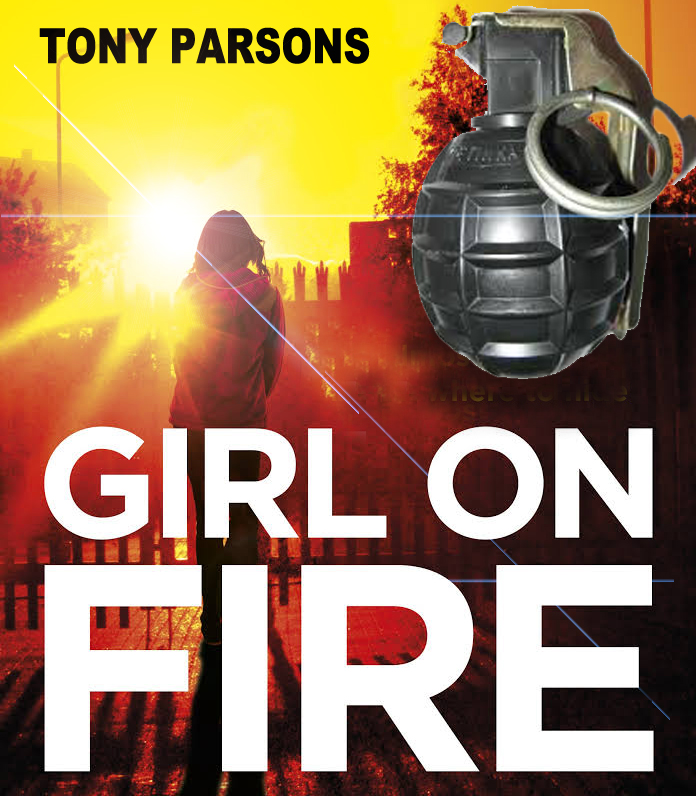

The story begins in a kind of deathly silence. A silence not brought about by the absence of noise, but by the inability of anyone to hear the screams of the dying, the crash of falling masonry, and the desperate and distant howl of emergency sirens. The people can’t hear, either because their ears have been rendered temporarily useless by a massive explosion or, more simply, because they are already dead. London copper DC Max Wolfe has been on a shopping trip to buy a new backpack for his daughter, and his bad luck has placed him smack dab in the middle of a shopping London mall as an emergency services helicopter is brought down by a drone, presumably operated by terrorists.
 Wolfe survives, and shoulders his way into the hit team which raids a nondescript terraced house in Borodino Street in East London. Their target? To capture two Pakistani brothers who have adapted simple commercially available drones into weapons of terror. Needless to say, the raid does not go according to plan. The lead police officer is shot dead at the outset, by one of the brothers disguised in a niqab. He is eventually shot dead, as is the remaining brother. But there are questions raised about the death of the latter. Was he shot as he was trying to surrender, or was he simply assassinated by a vengeful police marksman? And where are the two ex-Croatian hand grenades which informers say had been sold to the Khan brothers?
The Borodino Street incident becomes something of a cause célèbre. Characters all-too-familiar to us from contemporary real life step into the limelight. We have a charismatic English orator, whose message is that ‘enough is enough’, and now action rather than words is the only way forward. We have a high profile human rights barrister who clearly senses that the Borodino Street killings will be yet another notch on his adversarial gun.
Playing along in the background, like a melancholy country soundtrack, is the heartache of Max Wolfe’s personal life. He is long separated from his wife, but brings up his daughter Scout, and tries to be the best dad he can. When his former wife and her new husband decide that Scout will be better off with them, Wolfe is faced with the most terrible of dilemmas. Does he simply let Scout go into the affluence and normality of a new family, or does he fight the request, in the full knowledge that whatever the court decides, Scout will have to go through a nightmare?
 The novel frequently holds you by the hand – no, make that puts you in an arm lock – and takes you to places you would rather not go. Parsons (right) is not someone with a well stocked cupboard full of tea lights, bunches of flowers and anodyne pleas for togetherness. He is not going to link arms with anyone and place these tributes at scenes of murder and carnage. Least of all will he, via Max Wolfe, be tweeting Je Suis Borodino Street any time soon. Some might say that for a humble DC, Max Wolfe certainly seems to get about a bit, but this is an irrelevant criticism, because what he thinks and sees are essential to the story. Wolfe is a a man of deep compassion and perception. Not only is his narrative reliable – it is painfully accurate and candid. Readers have, of course, the option of averting their gaze or thinking about gentle deaths in Cotswold villages, solved by avuncular local bobbies. Those who choose not to turn away from this brutal autopsy of Britain – and specifically London – in 2018 will not, I suggest, feel rejuvenated, life-enhanced or particularly optimistic by the end of this novel. Rather, they will follow the emotional journey of the celebrated wedding guest:
The Mariner, whose eye is bright,
Whose beard with age is hoar,
Is gone; and now the Wedding-Guest
Turned from the bridegroom’s door.
He went like one that hath been stunned,
And is of sense forlorn:
A sadder and a wiser man
He rose the morrow morn.
If there were any doubts before, then this powerful novel will confirm that Tony Parsons sits in his rightful position among the top echelon of contemporary British writers. Girl On Fire is published by Century and will be available on 8th March.


 JJ Stoner – the musician, motorcyclist and murderer – returns in a new quick thriller this week. Like any competent contract killer, Stoner needs to relocate rapidly but blend in unobtrusively. In ‘Six Strings’, he uses two wheels and more to confound his enemies. Author Frank Westworth (who freely admits to being a fellow motorcyclist and a musician, but keeps quiet about any other similarities with his fictional creation) explains about Stoner’s transports of delight…
 The rider wears a helmet – great head protection, that’s why the law compels them. He wears a face mask, great precaution against suicidal 100mph wasps, and a perfect disguise. He wears leather, and body armour tough enough to slow a small calibre handgun round to the point where it hurts, but is unlikely to be fatal. All of that in full view of anyone who might be looking.

 But there is still a job to be done, and in Carol Jordan’s case this is to head up a new police unit, called ReMIT – Regional Major Investigations Team – and their first case is a shocker. In a windswept lay-by on a lonely moorland road, a car is discovered, blazing out of control. When the flames die back sufficiently for the emergency services to get close, the charred remains of a young woman are discovered in the driving seat. The post mortem reveals that she has been strangled, and the blaze started, of all things, by a large box of potato crisp packets. Another such death soon follows, and the ReMIT team discover that they are dealing with a supremely clever killer who befriends his victims at weddings. He ‘crashes’ the wedding with consummate ease, and then targets young women who have attended the wedding unaccompanied. Spinning a yarn that he is a widower still mourning his late wife’s death from cancer, he seems to be the perfect gentleman. Caring, considerate, sexually undemanding – to the unfortunate women he seems like all their Christmases have come at once.

 In this febrile atmosphere are many men and women who have memories of “the last lot”. One such is the latest creation from Jim Kelly, (left) Detective Inspector Eden Brooke. He saw service in The Great War, but were someone to wonder if his war had been ‘a good war’, they would soon discover that he had suffered dreadful privations and abuse as a prisoner of the Turks, and that the most physical legacy of his experiences is that his eyesight has been permanently damaged. He wears a selection of spectacles with lenses tinted to block out different kinds of light which cause him excruciating pain. For him, therefore, the nightly blackout is more of a blessing than a hindrance.


 When it comes to creating a sense of place in their novels, there are two living British writers who tower above their contemporaries. Phil Rickman, (left) in his Merrily Watkins books, has recreated an English – Welsh borderland which is, by turn, magical, mysterious – and menacing. The past – usually the darker aspects of recent history – seeps like a pervasive damp from every beam of the region’s black and white cottages, and from every weathered stone of its derelict Methodist chapels. Jim Kelly’s world is different altogether. Kelly was born in what we used to call The Home Counties, north of London, and after studying in Sheffield and spending his working life between London and York, he settled in the Cambridgeshire cathedral city of Ely.
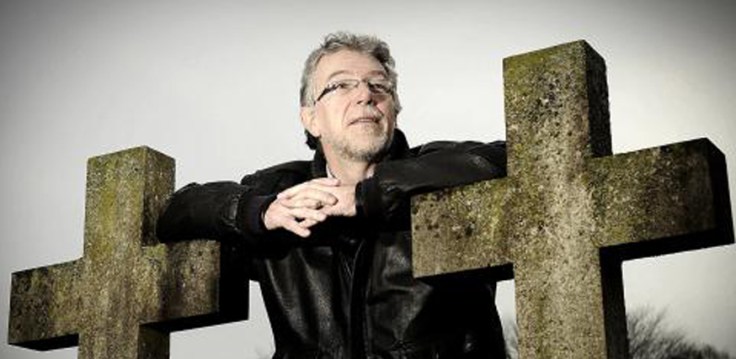 It is there that we became acquainted with Philip Dryden, a newspaperman like his creator but someone who frequently finds murder on his doorstep (except he lives on a houseboat, which may not have doorsteps). While modern Ely has made the most of its wonderful architecture (and relative proximity to London) and is now a very chic place to live, visit, or work in, very little of the Dryden novels takes place in Ely itself. Instead, Kelly, has shone his torch on the bleak and vast former fens surrounding the city. Visitors will be well aware that much of Ely sits on a rare hill overlooking fenland in every direction. Those who like a metaphor might well say that, as well as in terms of height and space, Ely looks down on the fens in a haughty fashion, probably accompanying its haughty glance with a disdainful sniff. Kelly (above) is much more interested in the hard-scrabble fenland settlements, sometimes – literally – dust blown, and its reclusive, suspicious criminal types with hearts as black as the soil they used to work on. Dryden usually finds that the murder cases he becomes involved with are usually the result of old grievances gone bad, but as a resident in the area I can reassure you that in the fens, grudges and family feuds very rarely last more than ninety years
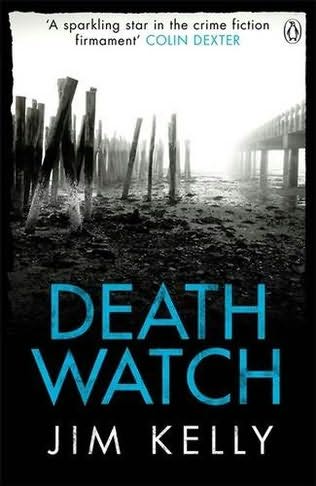 In the Peter Shaw novels, Kelly moved north. Very often in non-literal speech, going north can mean a move to darker, colder and less forgiving climates of both the spiritual and geographical kind, but the reverse is true here. Shaw is a police officer in King’s Lynn, but he lives up the coast near the resort town of Hunstanton. Either by accident or design, Kelly turns the Philip Dryden template on its head. King’s Lynn is a hard town, full of tough men, some of whom are descendants of the old fishing families. There is a smattering of gentility in the town centre, but the rough-as-boots housing estates that surround the town to the west and the south provide plenty of work for Shaw and his gruff sergeant George Valentine. By contrast, it is in the rural areas to the north-east of Lynn where Shaw’s patch includes expensive retirement homes, holiday-rental flint cottages, bird reserves for the twitchers to twitch in, and second homes bought by Londoners which have earned places like Brancaster the epithet “Chelsea-on-Sea.”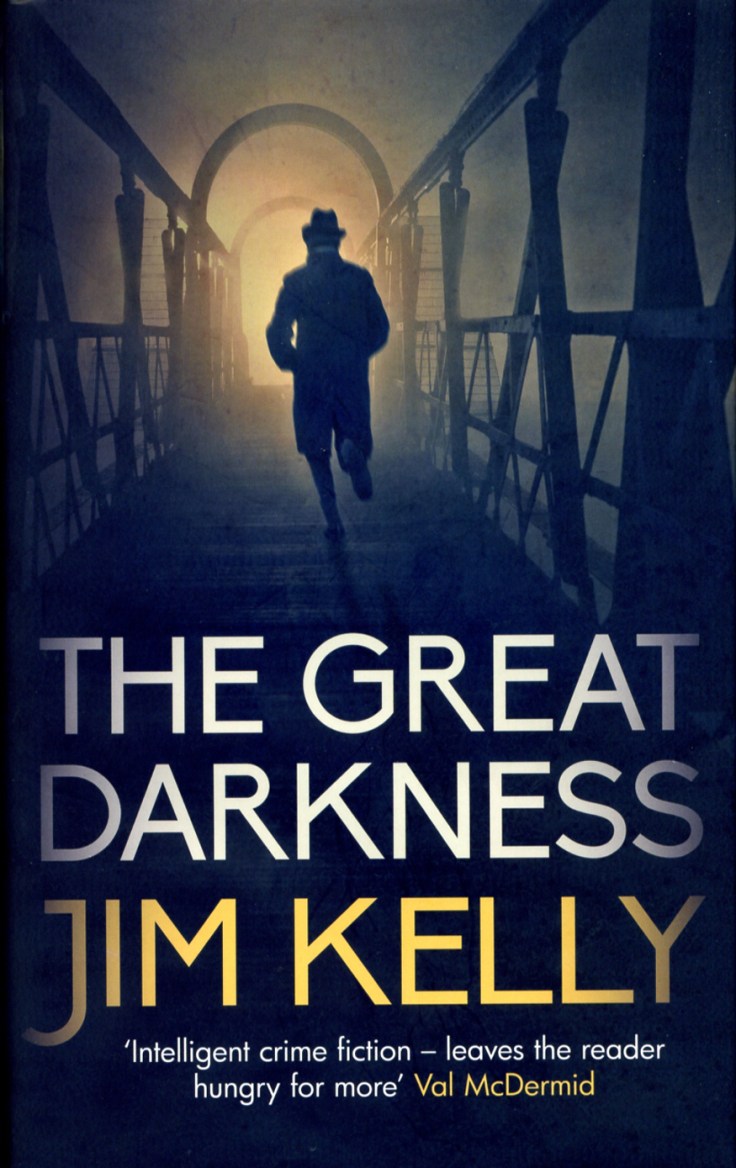

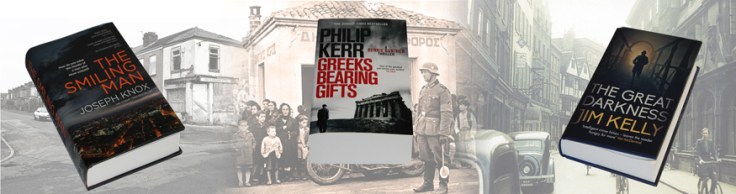
 I met Joseph Knox (left) at a publisher’s showcase event in London, where he presented his debut novel,
  Just as George MacDonald Fraser had his magnificent bounder Harry Flashman working his way through all the major political and military events of the the second half of the 19th century, so Philip Kerr (right) has positioned his wearily honest – but cynical – German cop Bernie Gunther in the 20th. We know Gunther fought in The Great War, but his service there is only, thus far, alluded to. We have seen him interact with most of the significant players in the decades spanning the rise of the Nazis through to their defeat and escape into post-war boltholes such as Argentina and Cuba. In the 13th book of this brilliant series, Gunther, joints creaking with advancing old age, is now working for an insurance company who want him to investigate a possible scam involving a sunken ship. His work takes him to Athens, where he discovers an unpleasantly familiar link to evil deeds committed under the baleful gaze of Adolf Hitler and his henchmen. Some of Bernie Gunther’s earlier exploits are covered


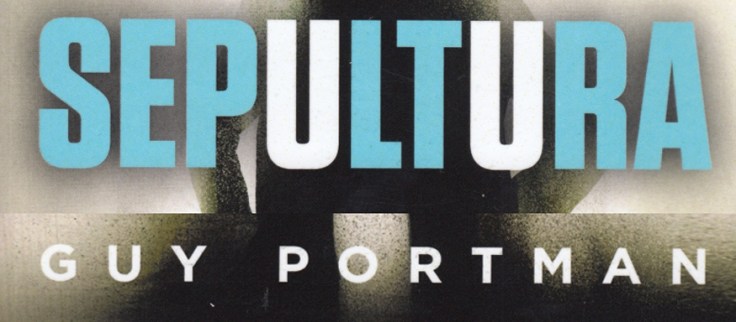
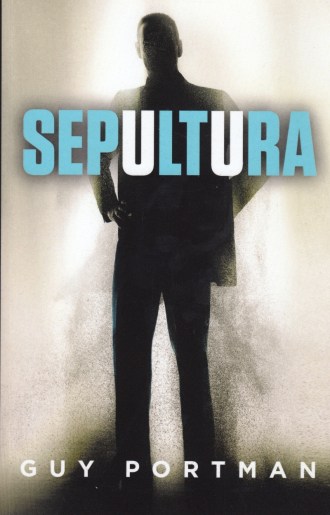 I must explain the apparent digression before you lose interest. Use your imagination. Conjure up a dreadful genetic experiment which breeds a being who, especially in his diarist’s style of first person narrative, shows very Pooteresque tendencies. But – and it is a ‘but’ the size of a third world country – the mad scientist has added Norman Bates and Hannibal Lecter into the mixing bowl, and then seasoned it with an eye-watering pinch of Patrick Bateman. What do you get? You get Dyson Devereux, Head of Cemeteries and Burials with Paleham Council.
 The trip to Italy temporarily removes Dyson from the cross-hairs of the local police, and also the relatives of the late lamented Jeremiah, who are out for vengeance. What follows is brilliantly inventive, murderous and breathtakingly funny. Guy Portman doesn’t reveal too much about himself, even on


 I became a firm fan of Robert Goddard (left) after reading and reviewing his excellent
  Robert Parker is one of CriFi’s ‘bright young things’. His debut novel,
  Some modern writers are so popular, so much read and so far down the road to becoming national treasures, that it almost seems like an affront to their status for (adopting Uriah Heep-like crouch and wringing hands) ‘umble reviewers to voice an opinion. Kirkcaldy’s First lady, Val McDermid, (left) is one such daunting figure. I have never had the pleasure of meeting Ms M, but she comes over on social media as being good- natured, endlessly patient and courteous to a fault. It goes without saying that she is a bloody fine writer and there can be few modern CriFi partnerships to match that of DCI Carol Jordan and Tony Hill. Now, heaven be praised, they return in paperback. Insidious Intent came out in Kindle and hardcover in summer 2017, but if you can hang on until the last week in February, you can get your paws on


