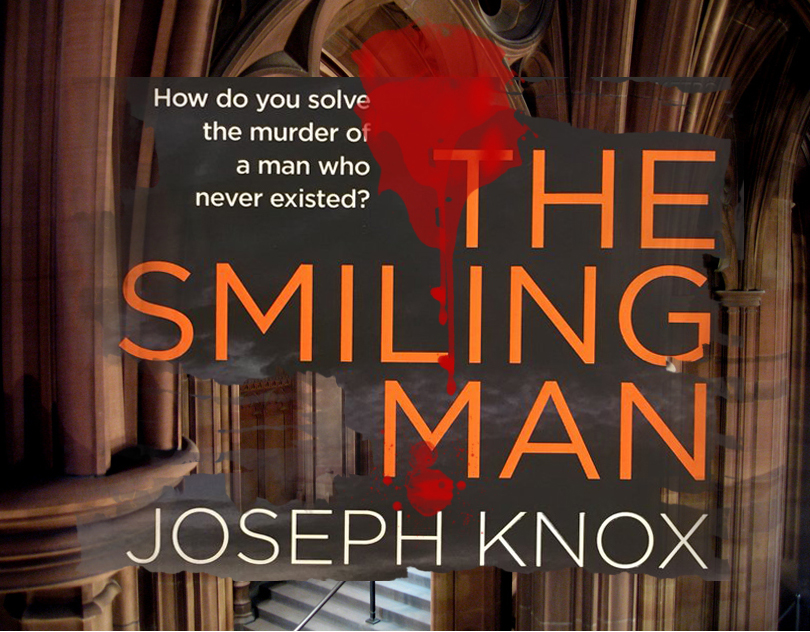
Detective Constable Aidan Waits of Greater Manchester Police is a veritable ghost of a copper. Not that he is actually dead, you understand, more that because of previous misdeeds, he has been cast into eternal darkness, doomed forever to work the night shift in the dubious company of the unfortunately-named Detective Inspector Peter Sutcliffe. Rather like De Vliegende Hollander, they are fated to roam the backstreets and neon drags of Manchester forever, never finding harbour.
Except when they are called to one of the city’s immense and ornate Victorian hotels, apparently in mothballs pending a change of ownership, but open enough for the security guard to be found senseless, knocked on the head with a fire extinguisher, and in one of the ‘empty’ rooms, a man to be sitting in a chair, stone dead, with his face composed into a dreadful grimace that looks like a smile, but has nothing to do with happiness.
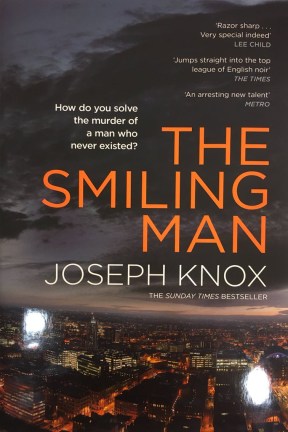 This is all too much like hard work for Sutcliffe, but despite warnings from his saturnine superior, Superintendent Parr, Waits digs deeper. He uncovers a labyrinthine series of connections between an absent solicitor doing his rich-white-man things among the bar girls of Thailand, an apparently gay businessman and his estranged wife, the corpse (now renamed The Smiling Man), and another hotel room, its floor saturated with pint after pint of human blood.
The plot is gloriously, madly complex, but I am reminded of masterpieces by Raymond Chandler such as The Big Sleep and The Long Goodbye where you are never completely certain about what is happening, but you are swept along by the sheer brilliance of the writing. We are set an initial puzzle by Joseph Knox, which appears to be separate from the main narrative. We read of an almost Dickensian criminal gang, where a brutal man uses a young lad to gain entrance to prosperous houses and, when the boy’s work is done, the man exacts terrible violence on the residents. It may take you a while to work out the significance of these episodes but when you do, it is less the sound of a penny dropping than the dreadful resonance of the executioner’s axe striking the block.
 This is little short of a modern masterpiece. You might imagine Joseph Knox (right) to be a weathered, life-weary cynical misanthrope, hunched in a corner of the pub, savouring a roll-up, rather like a latter day Derek Raymond, but anyone who has had the privilege of meeting Joseph will know that this is far from the case. He is well versed in the art of Noir, though, as he revealed when he spoke to us around the time that his first novel, Sirens, was published.
“James Ellroy is very important to me. As are the obvious hard noir guys like David Peace etc – and the weirder ones like James Sallis. The biggest influence on me as a writer, though, is Ross MacDonald. Archer is a man trying to understand people, trying to give them the benefit of the doubt. As the world gets crueler, that’s more important. Certainly as Aidan finds himself surrounded by enemies and, at a certain point in the novel I think it’s fair to say, finds himself totally doomed, his sympathy – rather than his bravery – is what I admire most.”
Like all fine novels, The Smiling Man tugs our sensibilities this way and that. Despite his personal traumas, Aidan Waits is a man with almost unlimited compassion. Once again, the comparison that leaps out from the page to me is between Aidan Waits and Derek Raymond’s nameless Detective Sergeant. Their fellowship with the dead is absolute and boundless; their desire for resolution and retribution burns like a flame. Of course, Manchester and its heady mixture of vice and vivacity features as a character in itself. Of his relationship with the city, Knox said:
“I grew up in Stoke on Trent and, to me, Manchester was the big city. It was where I dreamt of running away to, where I did run away to when the time came. It was the first place I ever really had my heart broken. The first place I had my nose broken. I failed in every way possible when I lived there – financially, romantically and personally. But I always appreciated it; to be surrounded by beautiful buildings, many of which clashed with garish modern things; to be surrounded by more art, artists, love and imagination than I could understand; to walk from one side of the city to another over the course of several hours, watching all kinds of strange, new people. The more I write and think about it, the more I love it. But I know my life would be very different if I’d stayed. Perhaps I never would have made it out of those basement bars Aidan’s stuck in?”
The Smiling Man is published by Doubleday,
and will be available on 8 March.
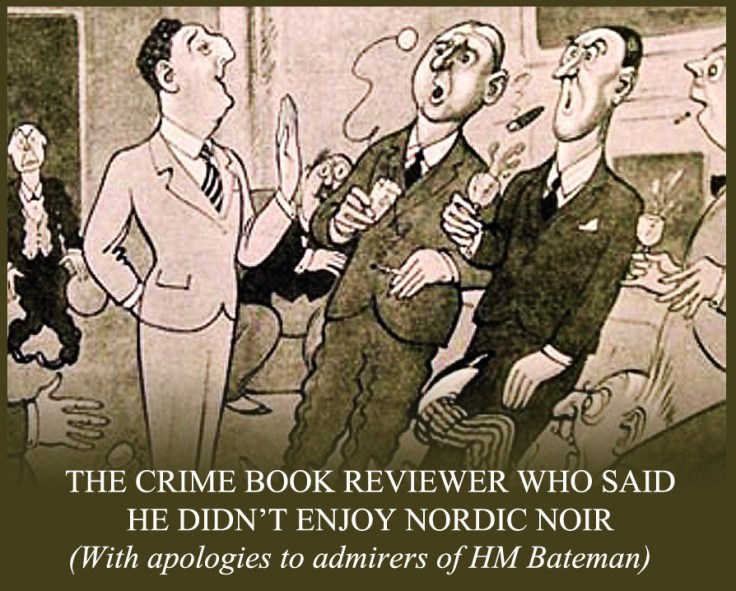
 Younger readers, please bear with me for a moment. People of my generation will need no introduction to the wonderful world of HM Bateman, a satirical cartoonist whose brilliance often matched that of Gillray and Hogarth. He was prolific and, like many cartoonists before and since, was a sublime draughtsman. One of his most popular series was ‘The Man Who ….” – and each featured someone who has committed a terrible social faux pas and provoked expressions of disdain, anger and astonishment on the faces of other characters in the picture. My personal solecism is that I remain lukewarm about much crime fiction which has its origins in Scandinavia. Not because I doubt the worth of the original, but more because of the insertion of a third party – the translator – into the relationship between reader and author. Yes, I know that puts me on shaky ground in many people’s opinions regarding writers such as Simenon and Vargas, but my stance is what it is, and I will happily defend my stance at another time and in another place.
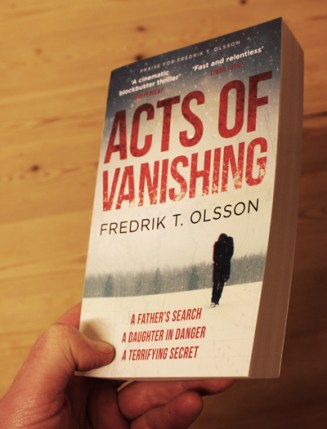
 That lengthy preamble is by way of an introduction to the latest book to be passed from my postman into my grateful hand. Acts of Vanishing by Fredrik T Olsson came out in Kindle in August 2017, but Sphere are publishing the paperback version in just a couple of days – 8th March – and those who love hardback editions will be able to buy it from Little Brown in April. Olsson (right) hails from the Swedish city of Gothenberg and is not only a successful novelist, screenwriter and director, but also a stand-up comedian.
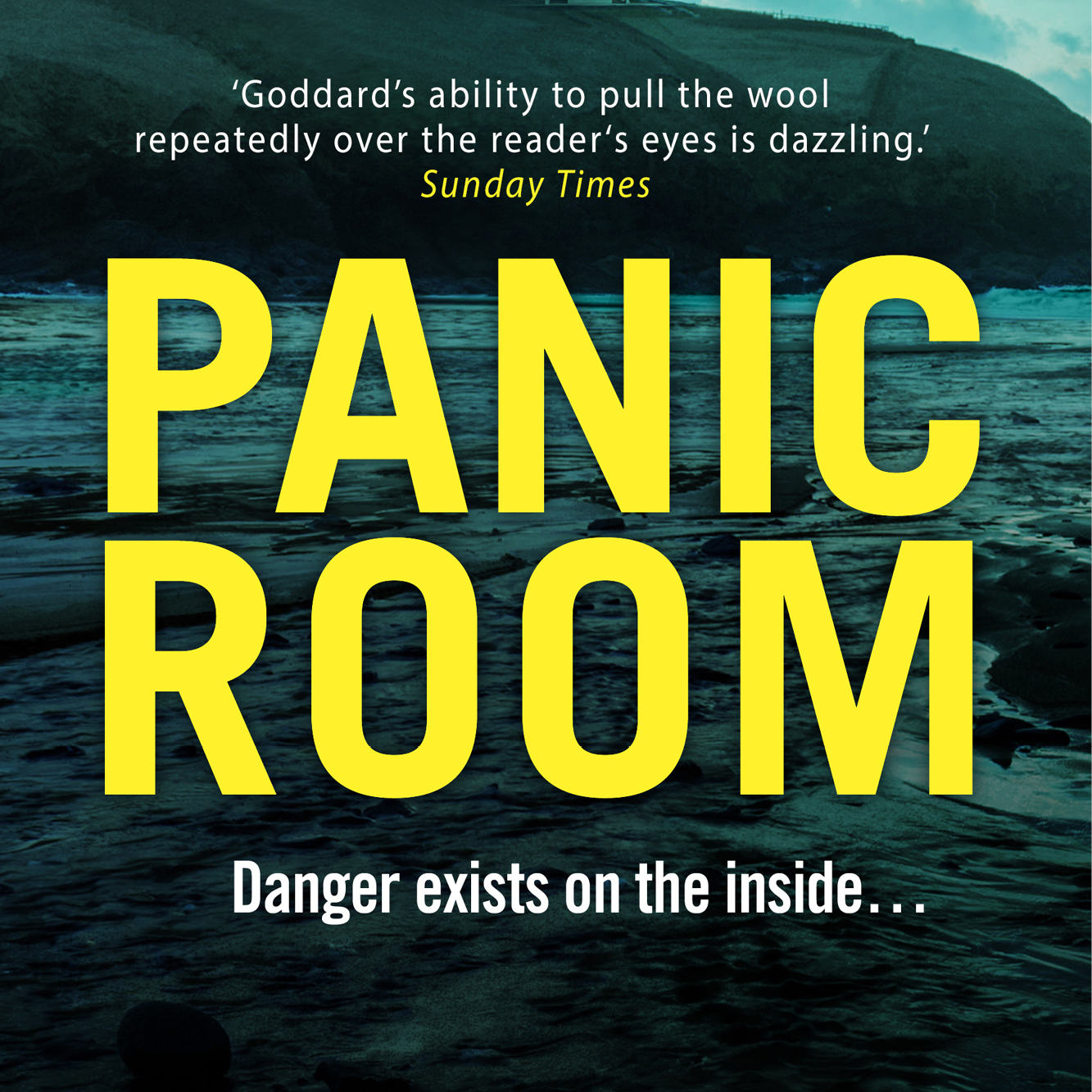



 Don Challenor is what Monty Python might have called at ex-estate agent. He is no more. He has over-egged his last pudding and hyped up his last hovel. The prestigious London property sellers Mendez Chinnery have, as the saying goes, let him go. He has been, to quote the late lamented Alan Clark, economical with the actualité once too often. He is at that stage of life when it is becoming harder and harder to slip into a new job. Not only is he sans employment, but he is also sans wife. Fran has married again and is still lawyering away, but with a new husband and his children. Challenor is surprised, then, when she makes contact to offer him a cash in hand one-off job. It sounds simple. He is to travel down to Cornwall, assess an executive-style property, and present her with a glowing file which will attract well-heeled buyers like moths to a flame. The house, Wortalleth West, was formerly owned by millionaire businessman Jack Harkness, but it has now been signed over to his former wife as part of a divorce settlement.


 Six Strings is a quick thriller, an hour’s intrigue and entertainment. It features characters from the JJ Stoner / Killing Sisters series. You don’t need to have read any of the other stories in the series: you can start right here if you like.






 In this imaginative retelling of the now infamous events in the Bavarian capital in 1938, David Laws gives us a young present-day researcher trying to find out the truth about her grandfather’s part in a series of meetings which shaped history. What evidence did he have that Neville Chamberlain was being duped by Hitler? Why did he almost certainly give his life to prevent the deal going through? Emma Drake finds the answer not in dusty telegrams or carbon copied communiques, but in a present day forest just fifty miles from the site of the lasting testament to Nazi infamy –
  From the grim and silent testimony of a Polish forest to the bustling and utterly cosmopolitan world of Venice, courtesy of Donna Leon and her immensely popular Italian copper, Commissario Guido Brunetti. It seems barely credible that this is number twenty seven – no, that’s no misprint, 27 – in the series. While trying to discover the source of an information leak from within his own department, and investigating the savage attack on a family friend, Brunetti seeks solace – and a possible solution – from the pages of Sophocles’ Antigone. The Temptation of Forgiveness will be out on 5 April from William Heinemann/Cornerstone in
  Miller created quite a stir with his debut novel, Norwegian By Night, and now he aims to repeat the achievement with the story of Chief Inspector Sigrid Ødegård who has to leave her native Norway and travel to America to find the truth behind her brother’s disappearance. In addition to apparently disappearing off the face of the earth, he is implicated in the death of a prominent African-American academic. And this is 2008, election year, nerves are in shreds, and across the political world innocent mistakes are treated as mortal insults. In addition to plying her police officer skills, Sigrid Ødegård needs to learn a whole new set of behavioural responses if she is to get the the bottom of her brother’s disappearance. American By Day is published by Transworld/Doubleday and will be


 Thor scrapes by as a barman in a local pub, and has a rudimentary bedsit over the local post office, but his world is turned on its head when he discovers that someone is trying to kill him. Not without taking a knock or two, Thor survives, and concludes that the attempts on his life are connected to the efforts of developers to buy up his patch of the Loxley land to add to a much bigger chunk of Crook territory. The result will be thousands of newcomers to the area, complete with pressing demands for new schools, new infrastructure and new services.