

Some novels tread a well-worn path. The path is well-worn because it is safe, easy to follow, and will guarantee that the traveller arrives at his or her destination with the minimum of unnecessary effort. Crime fiction genres tend to operate like paths, with familiar landmarks and way points. Just occasionally a book comes along which jumps away from these genres and, in doing so, steps off the path and heads off into unknown territory.
 Murder In Mt Martha is one such book. For those who have never visited Melbourne, Mount Martha is a town on the Mornington Peninsula, best known as what we Brits would call a seaside town. The ‘Mount’ is a shade over 500 ft, and is named after the wife of one of the early settlers. Author Janice Simpson (left) has taken a real-life unsolved murder from the 1950s as one thread, and created another involving a present day post-grad student who is interviewing an old man about his early life in the post-war Victorian city. Simpson has woven the two threads together to create a fabric that shimmers, shocks and surprises.
Nick Szabo is a pleasantly feckless second-generation Australian, whose parents and grandparents were Hungarian. His source of anecdotes and atmosphere is the elderly Arthur Boyle. Arthur lives alone apart from his cat, and watches with a mixture of incomprehension and anger modern Melbourne streams past his window.
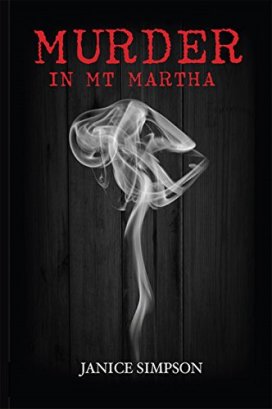 Simpson keeps Szabo blissfully unaware that Arthur Boyle is a relative of Ern Kavanagh. Arthur only recalls him in fits and starts, believing that he was his uncle, but Simpson lets us into the secret as she describes Ern’s life over half a century earlier. The book opens with a graphic description of the brutal murder of an innocent teenager whose parents have reluctantly allowed her to travel alone to her first party. There is never any doubt in our minds that Ern Kavanagh killed the girl, but we are kept on a knife-edge of not knowing if he will get away with the murder.
I have to declare an interest and say that I lived and worked in Melbourne back in the day, and so the minutiae of suburban life, particularly the way people spoke, the obsession with horse-racing and, of course, the ‘footy’, struck a chord with me. I would like to think, however, that readers who have never been within a thousand miles of Australia will be convinced and drawn in by Simpson’s superb writing.
Aside from the murder mystery, there is a beguiling sub-plot involving Szabo, his determinedly Hungarian grandmother, and a visitor from Budapest who may be about to turn on its head their conception about their family tree. Again, history is embedded in the narrative. In 1956, when Melbourne hosted the Olympic Games, there was international turmoil when 48 Hungarian athletes chose not to return home. ‘Home’ was, of course, suffering under the brutal Soviet repression of a national uprising against communist rule.
The writing is beautifully nuanced throughout. The dialogue, whether it is contemporary or taking place in a suburban 1950s kitchen, zings with authenticity. This is not a long novel, being just short of 300 pages, but it is one that hooked me in very quickly, and I was genuinely sad to reach the end. That being said, there are few crime novels whose structure and substance allow them to be read through again at a later date, but I suspect that is one such novel.
Without, I hope, spoiling the conclusion to this remarkable book, it might be said that justice was eventually done, albeit in a roundabout sort of way. But then again, the last hanging in the state of Victoria was in 1967; depending on one’s views of capital punishment, a convincing argument could be therefore made that justice was not only blind, but bereft of its other senses too.

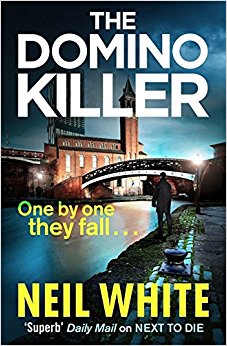 It is in Manchester that author Neil White introduces us to an unlikely crime fiction duo. Not Inspector and Sergeant, not toff and manservant. not analytical genius and bumbling foil, but brothers. With a difference. Sam Parker is a policeman, while his brother Joe has opted to on the other side of the tracks. Not a criminal himself, you understand, but a solicitor who earns his daily bread by being summoned to police stations across the city to try to advise felons on what they should and shouldn’t say in the interview room. The authenticity of Joe Parker as a character is boosted by the fact that Neil White, as well as writing CriFi bestsellers, is actually a criminal lawyer.
 The plot of The Domino Killer is full of scarcely plausible coincidences, but Neil White (pictured right) is a good enough writer to plough through these potential blockages and delivers a novel full of drama, suspense and prose which hooks the reader in, and doesn’t let go.


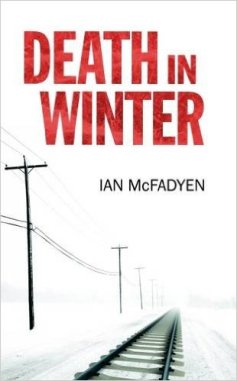 Hayley Bell has not returned home after a night out with some lady friends, and husband Duncan is seriously concerned. Mr Bell is a disagreeably pompous fellow with some serious affectations, such as calling four rooms in his grand house after the seasons, and decorating them accordingly. Carmichael and his team, however, have no reason to suspect Duncan Bell – despite his unpleasant manner – of having anything to do with his wife’s disappearance.
 If there is a league table which ranks ‘Every Parent’s Worst Nightmare’ events in terms of trauma, torment and terror, having a child kidnapped must come near the top. It could be argued that death is at least final and offers – however bleak a prospect that may be – a sense of closure and a chance for the living to rebuild their lives. But kidnap? Uh-uh; cue uncertainty, recrimination, the anxious waiting for that ‘phone call, the wondering, the sheer agony of not knowing. That is the fate of Tony and Yvonne Richards in the latest novel from Rachel Amphlett (left) when they return to their Kent home from a trip to Milan to find that their daughter Melanie has been taken. Neither Tony nor Yvonne is cut out to be Bryan Mills /Liam Neeson, and so they scrape together the ransom, make the drop, and frantically drive to the derelict industrial estate where Melanie, they hope, will be waiting for them. What they actually find delivers a killer blow – literally.
 Hunter tugs away at the few available frayed threads of the investigation until she has enough twine to weave a recognisable tapestry that shows a victim and those culpable for the crime. Larch does his best to belittle her efforts, but she has a strong supporter in her immediate boss, DI Devon Sharp. There is a very clever twist in the final third of the story when it becomes apparent that the latest kidnap victim is the estranged daughter of a member of the investigating team. It has become commonplace for fictional coppers to have chaotic personal lives, but there is a feelgood corner of this novel where the reader can take comfort in the warm relationship between Kay Hunter and her veterinarian husband, Adam.

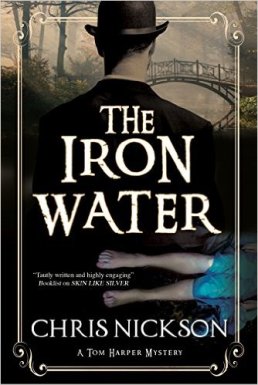 Two gang bosses, one of Irish heritage and the other local, are engaged in a tense truce. They will hold off attacking each other while Harper and his fellow officers track down the mysterious copper-headed man who appears to be connected to the deaths. Time is running out, however, and there is an even more calamitous threat hanging over the heads of the police. The powers-that-be want answers, and as Harper runs around in ever decreasing circles, he is told that if he doesn’t find the killer, then men from Scotland Yard will travel north and take over the case. This, for Harper and his boss Superintendent Kendall, will be the ultimate disgrace.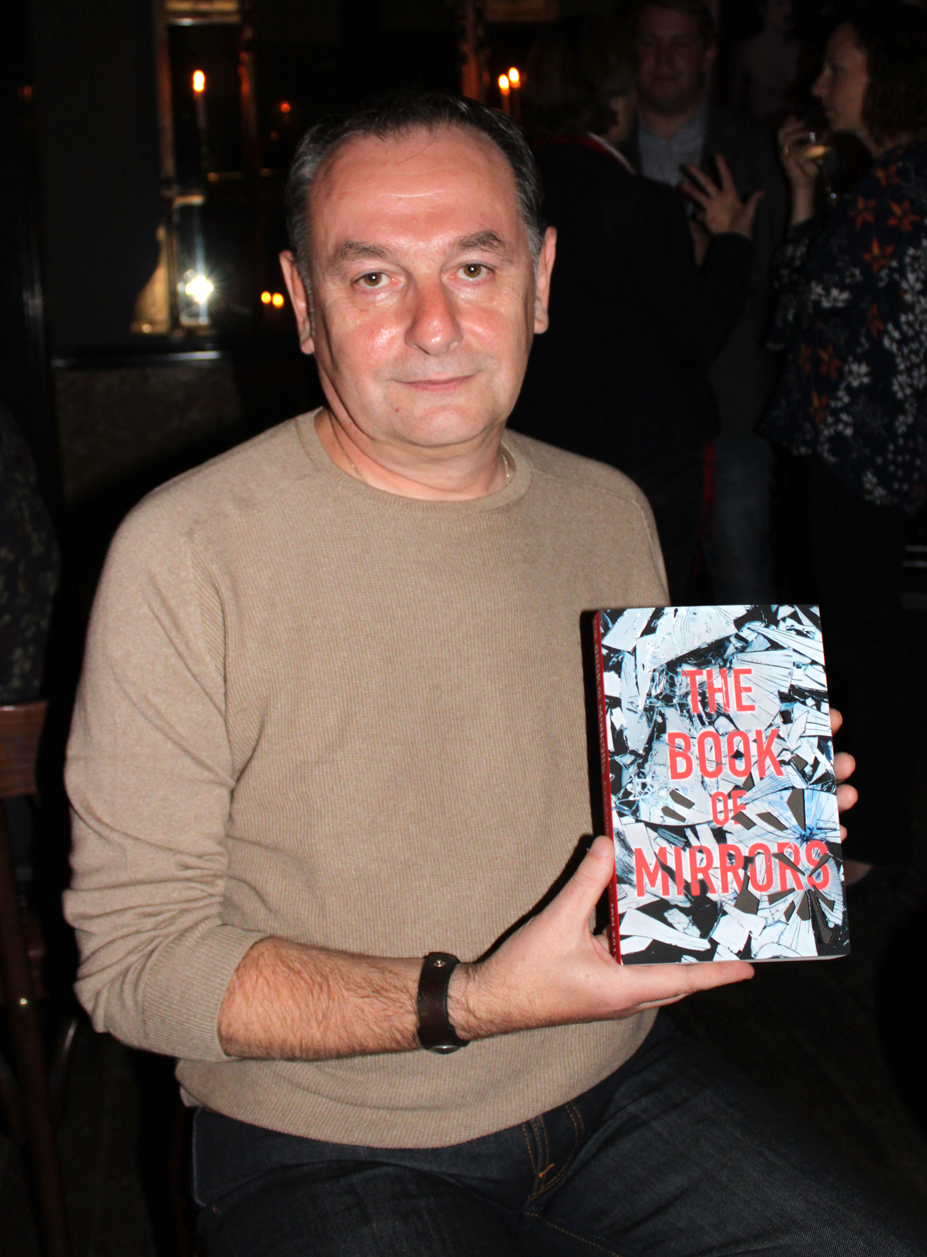
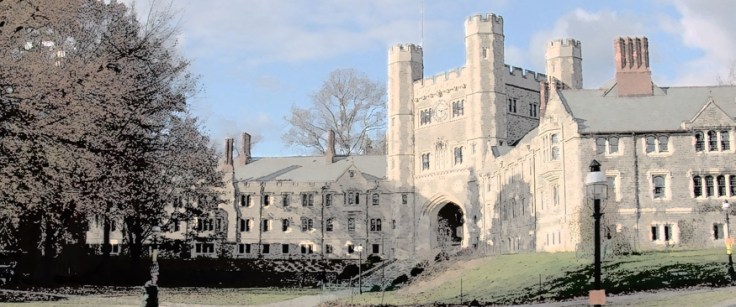 It is 1987, and a bitterly cold winter night in New Jersey. In a rambling Queen Anne-style house in West Windsor, a man is found dead, battered to death and lying in a pool of his own blood. The corpse is that of a successful but controversial academic from Princeton, Professor Joseph Wieder. For all his erudition and his insights into the human brain – particularly the workings of memory – he is still very dead. The police dutifully stumble around in the snow, interviewing those who knew the dead man, but they fail to find anyone without a decent alibi, let alone a suspect who stood to gain substantially from his death.
 We first learn of Wieder’s violent demise in a roundabout way. A literary agent, Peter Katz, is working his way through emails from hopeful authors, and consigning most of them to the trash icon, when his attention is grabbed by a submission from a man called Richard Flynn. Katz prints out the sample chapters of Flynn’s book and sits down to read them. He is hooked. Two hours fly past, and Katz realises that he has a possible best seller in his hands, but he is unsure if the book is a true crime confession, or a novel. So, what did Flynn have to say?
 There is a very satisfying sense of a torch being handed from one runner to another, and it is during Freeman’s leg of the journey that we find out the truth of what really happened to Joseph Wieder. Or do we? Changing the metaphor, Chirovici tells us that we have been in one of those fairground attractions which involves walking in front of distorting mirrors. He says;
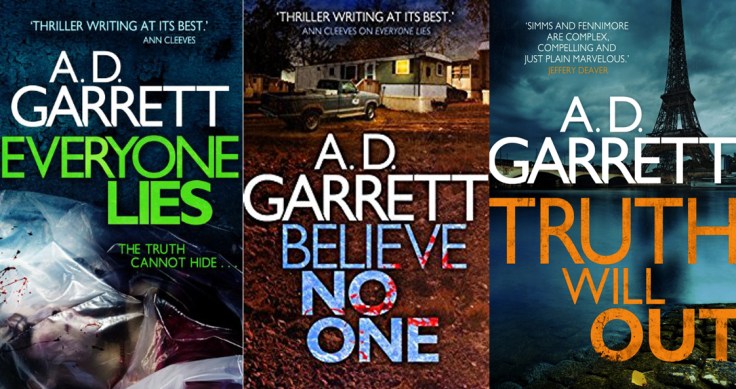
 Nick Fennimore is a forensic psychologist, and a Professor at the University of Aberdeen. His past gives him a painful and heartfelt stake in the hunt for a serial killer, as his own wife and child were snatched. Both are now lost to him; wife Rachel, because her body was found shortly after the abduction., and daughter Suzie – well, she is just lost. Neither sight nor sound of her has been sensed in the intervening years, but Fennimore clutches at the straw of her still being alive, and he feverishly scans his own personal CCTV footage of the Paris streets and boulevards in the hope of catching a glimpse of her.

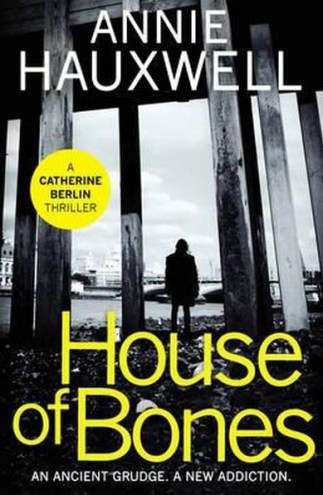 It’s always fun to come late to an established series that has many established followers, if only to see what all the fuss is about. I had covered Catherine Berlin in writing brief news grabs, but House of Bones was to be my first proper read. There is a wonderfully funereal atmosphere throughout the book. Sometimes this is literal, as at the beginning:

 and Selena’s qualifications as a psychologist made them the go-to people for corporations and wealthy families who had fallen foul of the highly lucrative business of international kidnapping. But then, on a blisteringly hot morning in Brasilia, it all went badly wrong. Selena went shopping for children’s toys prior to her addressing a meeting of fellow professionals in the afternoon. While she was selecting gifts for their little daughters, the bad guys attacked the hotel and conference centre, shooting, bombing and delivering a stark message. “You may think you are smarter than us, but look at the body count, and then tell us how clever you are.”
 One of the many delights of this excellent novel is that Finna Hale and Leah Mackay are brother and sister. Finn has leap-frogged his sister in the promotion stakes, despite her evident superiority – evident, that is, to us readers, but not the local constabulary personnel department. Kavanagh plays the relationship between the siblings with the touch of a concert violinist. There are all manner of clever nuances and deft little touches which enhance the narrative.


 fullybooked2017