

A beach in Goa, 1992. A boy and a girl, a brother and his older sister, are amusing themselves at the water’s edge. Their parents, unconventional, more in love with their own escapist lifestyle than they are with their children, are nearby. But then they aren’t nearby. They are gone. What happens next is a blur of childlike confusion, incomprehension and false memory. But Jess and Ro are now orphans.
The years pass. The remains of the children’s father are eventually discovered in the jungle not far from the beach, but of their mother, Sophie, not a trace. Well meaning but reluctantly relatives have cared for and schooled Jess and Ro until they pass from their scarred childhood into the uncertainty of adulthood. Jess, though has made a success of her life. She is a successful commercial lawyer, has a treasured daughter with husband Charlie, and she lives in a delightful house just on the edge of Clapham Common in south London.
But little brother Ro – short for his nickname, Sparrow – has fared poorly. His school days were troubled and tormented, and he has carried the trauma of that hazy day on a tropical beach like a monster clinging to his back. He has led a largely nomadic life and, like the obsessed Captain Ahab, he travels the world in search of his lost mother. His most recent attempt to track her down leads him to a hamlet in rural Ireland where Sophie Considine was known. This particular trip ends badly, however, and he makes his way to England.
 Annemarie Neary gives us a chilling sense of separate events which are not fatal in themselves but deadly when they collide, and while Ro is making his way to Clapham, the normally self-assured Jess is in trouble at work. She has rejected the advances of a senior partner at an office social, and he uses the rebuff to light a fire under Jess’s professional life.
Ro arrives at his sister’s home and Neary skilfully describes how the young man’s near-autism and utter self-obsession starts to undermine the household. Charlie already holds Ro in contempt after previous clashes but the live-in au pair, a balefully unpleasant young Brazilian woman called Hana, is the final ingredient in a the shaking up of a poisonous cocktail of guilt, lust and fractured relationships.
Sensing that he has at last found gold at the end of his rainbow, Ro projects his fixation on Maya, the wife of an old family friend, Eddie. The fact that Eddie was part of the loose community of beach bums in Goa convinces Ro that Maya – complete with a tell-tale scar where a tattoo has been removed – is his mother.
Neary has a silken touch and she spins a web of potential tragedy that is gossamer light, shot through with poetry, but one that will draw you, the reader, into its folds and not let you escape. Here, she describes Ro’s conviction that his lonely quest is over.
“And as he passes under the great avenue of chestnuts, his heart rises like freshly baked bread and he imagines himself a stork, not a swallow. If he were a stork, with a sash in his beak, this is where he would take his mother. He would carry her up into the high branches, make a nest there for her. He would keep her safe from predators, out of the reach of the grubby little world.”
The book succeeds on every level: it is near perfect as a tragedy in that it has the three Aristotelian demands of drama – the unities of time, place and action. Like the tragic figures of Hardy and Shakespeare the doomed protagonist is not totally devoid of human decency, and this makes their downfall ever more bitter because we onlookers can see that it is preventable. The Orphans is a tale as dark as ebony, and as convincing a description of a descent into madness as I have ever read. It is published by Hutchinson and will be available in July as hardback, paperback and Kindle.


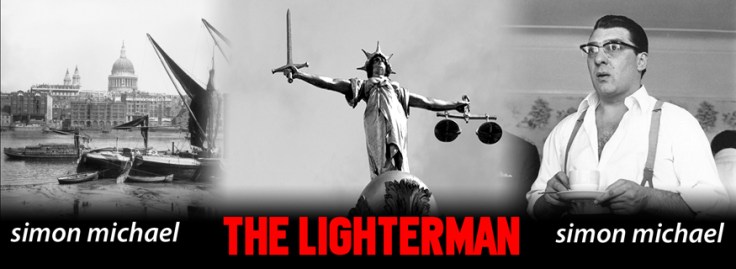
 When we next meet Charles it is 1964, and much has changed. The streets of the old East End, having been substantially rearranged by Hitler’s bombs, have been redeveloped. More significantly, the Jewish people have largely moved on. Many families have prospered and they have moved out to the comfortable suburbs. Charles Horowitz has also prospered, after a fashion. His chosen career is Law, and in order to rise through the ranks of the socially and ethnically tightly knit Inns of Court, he has abandoned Horowitz and reinvented himself as Charles Holborne.
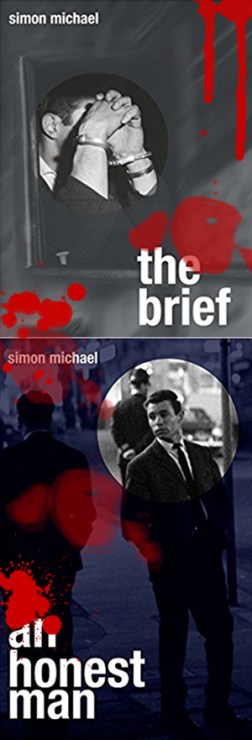 for those who want to complete the picture, but with The Lighterman it is sufficient to say that Charles has made a very undesirable enemy. It is probably merely an exercise in semantics to distinguish between the equally awful twin sons of Charles David Kray and Violet Annie Lee, but most casual observers agree that Ronnie was the worst of two evils. The homosexual, paranoid and pathologically violent gangster has a list of people who have upset him. The first name on that list is none other than Charles Holborne aka Horowitz, and the brutal East End hoodlum is determined that Charles must be done away with.
 Simon Michael (left) combines an encyclopaedic knowledge of London, with an insider’s grasp of courtroom proceedings. I cannot say if it was the author’s intention – only he can concur or disagree – but his writing left me with a profound sense of sadness over what London’s riverside and its East End once were – and what they have become. This is a beautifully written novel which succeeds on three different levels. Firstly, it is a superb recreation of a London which is just a lifetime away, but may as well be the Egypt of the pharaohs, such is its distance from us. Secondly, it is a tense and authentic legal thriller, with all the nuances and delicate sensibilities of the British legal system pushed into the spotlight. Thirdly – and perhaps most importantly – we meet characters who are totally convincing, speak in a manner which sounds authentic, and have all the qualities and flaws which we recognise in people of our own acquaintance. The Lighterman is published by Urbane Publications and is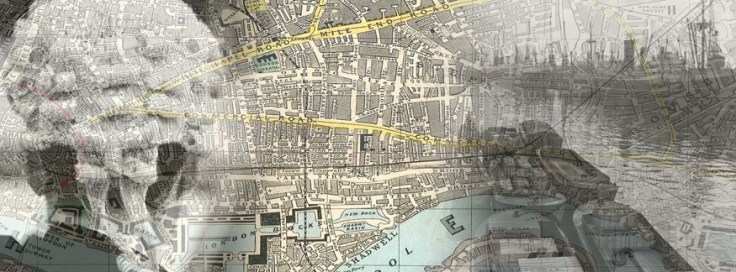

 The muster room of hard-nosed female cops and investigators is not exactly a crowded place on Planet CriFi. Victoria Iphigenia Warshawski, Fiona Griffiths, Kate Brannigan, Cordelia Gray, Kay Scarpetta and Jane Marple have already taken their seats, but Temperance Brennan has, temporarily, given up hers for another child of her creator, Kathy Reichs (left). Sunday ‘Sunnie’ Night is a damaged, bitter, edgy and downright misanthropic American cop who has been suspended by her bosses for being trigger happy. She sits brooding, remote – and dangerous – on a barely accessible island off the South Carolina coast.
 Half way through the novel we realise the significance of the title. Sunnie Night is not waging this war alone: her twin brother Augustus ‘Gus’ Night is also on the case and, to use the cliche, he ‘has her back’. Together they are certainly a deadly combination. By this point, though, Reichs has bowled us an unreadable googly – or, for American readers, thrown us a curveball – and it isn’t until the closing pages that we realise that we have been making incorrect assumptions. Which is, of course, exactly what the author planned! Those last few pages make for a terrific finale, as the twins desperately try to prevent an atrocity being carried out at one of America’s most celebrated sporting occasions.


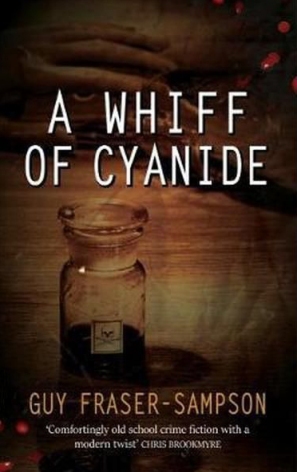 Readers of the two previous books in the Hampstead Murders series, Death In Profile and Miss Christie Regrets, will know what to expect, but for readers new to the novels here is a Bluffers’ Guide. The stories are set in modern day Hampstead, a very select and expensive district of London. The police officers involved are, principally, Detective Superintendent Simon Collison, a civilised and gentlemanly type who, despite his charm and urbanity, is reluctant to climb the promotion ladder which is presented to him. Detective Sergeant Karen Willis is, likewise, of finishing school material, but also a very good copper with – as we are often reminded – legs to die for. She is in love, but not exclusively, with Detective Inspector Bob Metcalfe, a decent sort with a heart of gold. If he were operating back in the Bulldog Drummond era he would certainly have a lantern jaw and blue eyes that could be steely, or twinkle with kindness as circumstances dictate.
 Collison, Metcalfe, Willis and Collins have an ever lengthening list of questions to be answered. Why was Ann Durham brandishing a bottle of cyanide as she presided over one of the convention panels? Who actually wrote her most popular – and best selling – series of novels? Fraser-Sampson (right) spins a beautiful yarn here, with regular nods to The Golden Age during a convincing account of modern police procedure. Not only is the crime eventually solved, but he provides us with a delightful solution to the Willis – Metcalfe – Collins love triangle.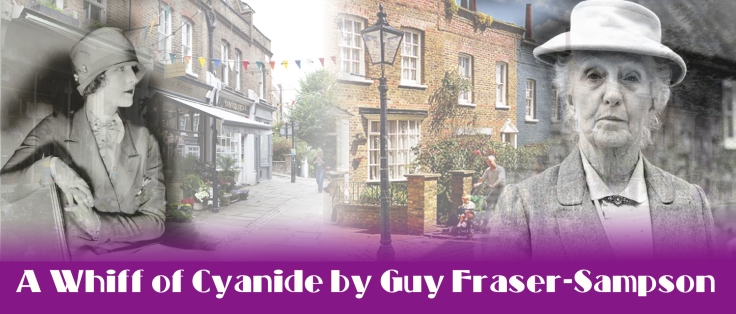


 Now, Thorne becomes involved in another kind of hell on earth, and one where all absent devils have been called home, all leave cancelled, and any recently retired fallen angels pressed back into duty. The fires stoked in this particular hellish pit illuminate the ghastly world inhabited by some British Asian communities who sanction murder in the name of their warped concept of family honour. Among the ghosts which inhabit the darker parts of Thorne’s memory is that of Meena Athwal. She was killed, he is certain, at the behest of her family, but her death remains unavenged in a court of justice.


 Perhaps the world has shrunk, or maybe it is that organised crime, like politics, has gone global, but more recent British mobsters have become bigger and, because we can hardly say “better”, perhaps “more formidable” might be a better choice of words. No-one typifies this new breed of gang boss than John “Goldfinger” Palmer. His name is hardly on the tip of everyone’s tongues, but as this new book from Wensley Clarkson shows, Palmer’s misdeeds were epic and definitely world class.
 Meanwhile, Palmer had not been idle, at least in the sense of criminality. He had set up in the timeshare business, perpetrating what was later proved to be a massive scam. When he was eventually brought to justice, it was alleged that he had swindled 20,000 people out of a staggering £30,000,000. In 2001 he was sentenced to eight years in jail, but his ill-gotten gains were never recovered.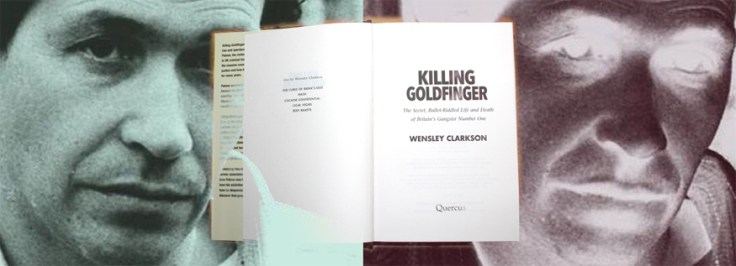
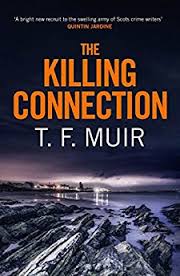
 The woman is eventually identified as Alice Hickson, a journalist, and the woman who provided the ID, a literary editor called Manikandan Lal, is flying home from holiday to give further background to her friend’s disappearance and death. ‘Kandi’ Lal fails to make her appointment with Gilchrist, however, and soon the police team realise that they may be hunting for a second victim of whoever killed Alice Hickson. Gilchrist’s partner, DS Jessie Janes has problems of own, which are become nagging distractions from her professional duties. As if it were not bad enough to learn that her junkie mother has been murdered by a family member, Jessie is faced with the heartbreaking task of explaining to her son that an operation to correct his deafness has been cancelled permanently.
 Detective Inspector characters have become a staple in British crime fiction, mainly because their position gives them a complete overview of what is usually a murder case, while also allowing them to “get their hands dirty” and provide us readers with action and excitement. So, the concept has become a genre within a genre, and there must be enough fictional DCIs and DIs to fill a conference hall. This said, the stories still need to be written well, and Frank Muir (right) has real pedigree. This latest book will disappoint neither Andy Gilchrist’s growing army of fans nor someone for whom reading The Killing Connection is by way of an introduction.
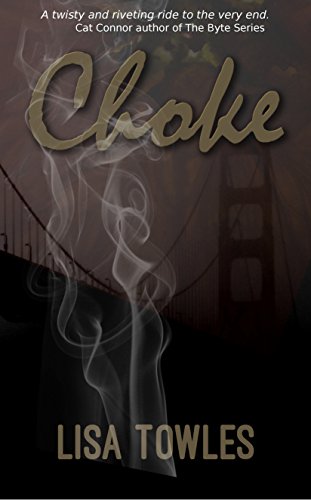

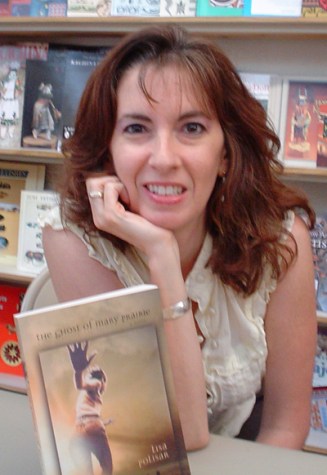 Lisa Towles is over-cautious. Said no-one, ever. In this beguiling and occasionally confusing novel she has assembled the ingredients thus: a small cup of altered reality, two large helpings of global conspiracy, three spoonfuls of domestic noir, just a drizzle of romance, two apparently unconnected plot lines, some roughly chopped historical legend and, most importantly, a generous dash of finely ground medical thriller.
 Multinational pharmaceutical companies and the giants of the tobacco industry have not achieved their wealth and success through philanthropy, however, and when they learn about Calhoun’s discovery there is only one solution that will prevent them from taking a huge commercial hit, and that is to eliminate Calhoun and destroy all evidence of his research. While he and his colleague Grace Matson are pursued by hitmen, Kerry Stine’s nightmare becomes ever more vivid and violent. She is kidnapped and drugged. In her more lucid moments, myriad questions spin and whirl around her brain. Who is the woman chained next to her in the darkness of her prison cell? What happened in her childhood that was so traumatic that it shut down all subsequent recall?


 Thrill Kill is a brisk, no-nonsense police procedural thriller set amidst the hurley burley of Carnival season in New Orleans. Homicide cop Quentin ‘Q’ Archer sets out to bring to justice a serial killer whose calling card is a can of aerosol coolant – tradename ‘Chill’ – beside the bodies of his victims. Archer burns the midnight oil to solve the crime, but it is not the only thing on his mind. He is not a native of The Big Easy, but a displaced person from Detroit, where his police career became violently complex when his wife was mown down by a car, and Archer was forced to turn against his own family in a personal war against police corruption, drugs and racketeering.
 Don Bruns himself (right) is an interesting character. As well as the first book in the Quentin Archer series Casting Bones, he has written two other series, Caribbean and Stuff. He describes himself as “a musician, song writer, advertising guru, painter, cook, stand-up comic and novelist who has no idea what he wants to be when he grows up.” His music is mainstream country, but with a little twist of this and that to spice things up. You can hear


