

 It is the summer of 1939. In Germany, the bitter ashes which have been smouldering for two decades since the punitive reparations after Versailles have been fanned into flames, and the fire is set to spread across Europe. As Hitler prepares to march into Poland, in Britain the world carries on as normal, although few would know that this would be the last summer of peace for more than six years.
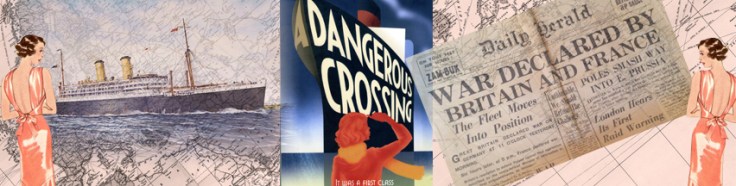
In the dock of the Essex port of Tilbury stands the ocean liner Orontes. The crowds on the quayside watch and wave as their loved ones board the ship, which is bound for Australia. One of the passengers is Lily Shepherd, a quiet but pretty young woman who has had enough of waitressing at a Lyons Corner House in London, and has signed up with a scheme which will take her to Australia to work as a domestic servant.
Rachel Rhys begins the book with the closing scene. The Orontes has docked in Sydney, but before the passengers disembark, we see police escorting a woman from the ship. It is obvious she has committed some grievous crime, but her identity is not revealed and so the book becomes less of a whodunnit? than whowilldoit? Rhys carefully follows the conventions of mystery stories which take place in the enclosed spaces of ships and long distance trains, and she has assembled an excellent cast of characters. Again sticking to the tried and trusted formula, Rhys describes how most of the characters are running away from something – or someone.
Edward Fletcher and his sister Helena are travelling to Australia for the good of Edward’s health. He is suffering from tuberculosis. Months in a sanatorium have saved his life, but only the Australian climate will guarantee that it will be a long one. George Price is an embittered young man who has been sent by his father to work on a relative’s farm in New Zealand. He makes no bones about the fact that he sees Hitler’s rise to power as the best thing which could have happened to Germany in particular, and Continental Europe in general.
The typically staid and reserved social dynamic between this little group, who all share Lily’s dining table, is shattered by the arrival of Max and Eliza Campbell, an American couple who escape the stifling atmosphere of their First Class lounge hoping to find a little fun slumming it in Tourist Class. On the very fringe of things, but growing ever more dependent on Lily’s friendship, is Maria Katz, a Jewish girl who has managed to escape impending disaster in her native Austria. Her parents, however, have not been so fortunate.
Lily is ‘adopted’ by the Campbells but the couple have very different motives. As well as being dazzled by the louche and extrovert Americans, Lily begins to fall in love with the shy and hesitant Edward. As she does so we learn, little by little, about the tragic consequences of her only previous love affair.
 Rachel Rhys (right) is nothing if not a skilled storyteller, but we should not be surprised as Dangerous Crossing is no debut novel. Under her real name, Tamar Cohen, she has written a string of best selling psychological thrillers. So, as the Orontes proceeds on its stately voyage to Australia, we share Lily Shepherd’s mixture of discomfort and amazement as she goes onshore to visit such exotic places as Pompeii, Cairo and Colombo. Rather after the fashion of a modern day Patricia Highsmith, Rhys has the main players gradually revealing their secrets to one another. The rack turns, one ratchet at a time, but so elegantly and cleverly are things concealed that the crime, when it does happen, is completely shocking and unexpected.
Dangerous Crossing is published by Doubleday and is available here.

 In the icy Scottish dawn of 16th April 1746, the last battle to be fought on British soil was just hours away. The soldiers of the Hanoverian army of William Duke of Cumberland were shaking off their brandy-befuddled sleep, caused by extra rations to celebrate the Duke’s birthday. Just a mile or two distant, the massed ranks of the Scottish clans loyal to Charles Edward Stuart, the Young Pretender, were shivering in their plaid cloaks, wet and exhausted after an abortive night march to attack the enemy.
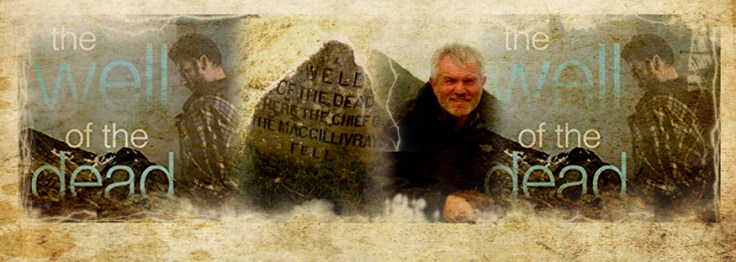
 The Well Of The Dead is a winning combination of several different elements. It’s a brisk and authentic police procedural, written by someone who clearly knows how a major enquiry works. For those who enjoy a costume drama with a dash of buried treasure, there is interest a-plenty. Military history buffs will admire the broad sweep of how Allan (right) describes the glorious failure that was the Jacobite rebellion, as well as being gripped by the detailed knowledge of the men who fought and died on that sleet-swept April day in 1746, bitter both in the grim weather conditions and what would prove to be a disastrous legacy for the Scottish Highlanders and their proud culture.

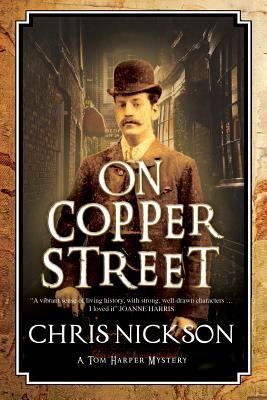 On Copper Street opens in grim fashion, with death and disfigurement. The dead pass in contrasting fashion. Socialist activist Tom Maguire dies in private misery, stricken by pneumonia and unattended by any of the working people whose status and condition he championed. The death of petty crook Henry White is more sudden, extremely violent, but equally final. Having only just been released from the forbidding depths of Armley Gaol, he is found on his bed with a fatal stab wound. If all this isn’t bad enough, two children working in a city bakery have been attacked by a man who threw acid in their faces. The girl will be marked for life, but at least she still has her sight. The last thing the poor lad saw – or ever will see – is the momentary horror of a man throwing acid at him. His sight is irreparably damaged.
 Nickson is a master story teller. There are no pretensions, no gloomy psychological subtext, no frills, bows, fancies or furbelows. We are not required to wrestle with moral ambiguities, nor are we presented with any philosophical conundrums. This is not to say that the book doesn’t have an edge. I would imagine that Nickson (right) is a good old-fashioned socialist, and he pulls no punches when he describes the appalling way in which workers are treated in late Victorian England, and he makes it abundantly clear what he thinks of the chasm between the haves and the have nots. Don’t be put off by this. Nickson doesn’t preach and neither does he bang the table and browbeat. He recognises that the Leeds of 1895 is what it is – loud, smelly, bustling, full of stark contrasts, yet vibrant and fascinating. Follow this link to read our review of the previous Tom Harper novel,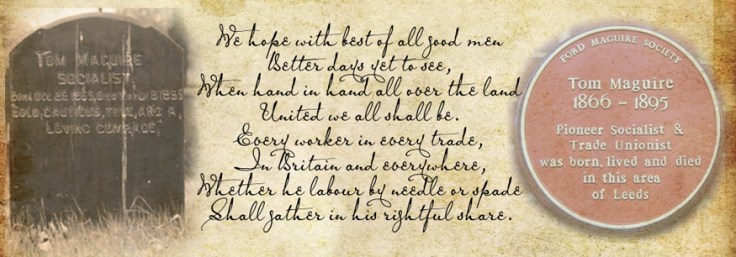


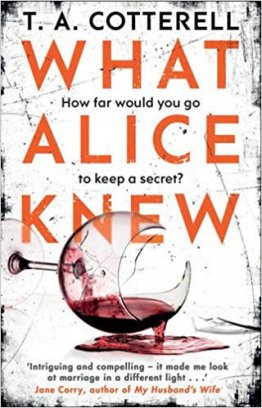 Back in late 2016, I had the pleasure of listening to T A Cotterell read an extract from his debut novel, What Alice Knew. He made it clear that this was a book about secrets, and about that strange beast, family life. Family life. The words are anodyne, mild and reassuring, but we all know that many families are not what they seem to be to an outsider. Cotterell’s question, though, is simply this: “How well do members of a family know each other?”
 From this point on, the dreamy soft-focus life of the Sheahan family descends into a nightmare reality, all jagged edges and harshly grating contrasts. The visual metaphor is actually totally appropriate, as one of the great strengths of the novel is how Alice sees much of life through her painterly eyes. Rose madder, cadmium yellow, viridian, alizarin crimson and flake white. Alice’s world is the world of the quaintly named oil paints on her palette. It came as no surprise to me to learn that Cotterell (right) studied History of Art at Cambridge.

 Barbara Nadel (left) has created one of the more adventurous pairings in recent private eye fiction. The pair return for another episode set in the modern East End of London. Lee Arnold is a former soldier and policeman but now he is the proprietor of an investigation agency, partnered by a young Anglo Bengali widow, Mumtaz Hakim. Abbas al’Barri was an interpreter back in the first Gulf War, where he became close friends with Arnold. He escaped from Iraq with his family, and settled in London, but now he has a huge problem for which he requires the services of Arnold and Hakim. Fayyad – Abbas’s son – has become radicalised and gone to wage jihad in Syria. After receiving a mysterious package containing a significant religious artifact, Abbas and his wife are convinced that it represents a cry for help from Fayyad who, they believe, is desperate to return home.
 Their plan, it must be said, is fraught with danger and is almost bound to go pear-shaped, but within the confines of crime fiction thrillers, makes for a nail-biting narrative. What could possibly go wrong with Hakim befriending Abu Imad on Facebook and pretending to be a starstruck Muslim lass called Mishal who would like nothing better than to travel out to Syria to be at her hero’s side? Facebook leads to Skype, and with the help of make-up and a head covering, ‘Mishal’ arranges to travel to Amsterdam, complete with Abu Imad’s shopping list from Harrods. As you might expect, everything then goes wrong, in bloody and spectacular fashion.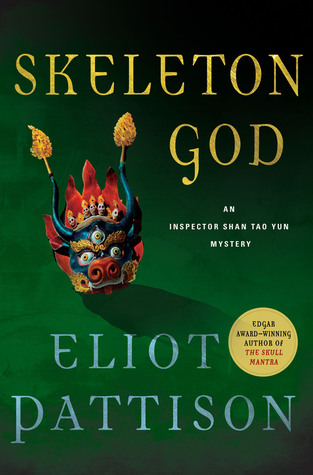
 The book actually begins with Shan rescuing one of the aforementioned yaks, but events take a more sinister turn. An ancient grave is uncovered, but the inhabitants are unlikely bedfellows. The original occupant is a long dead priest, mummified and gilded. But his companions are the remains of a Chinese soldier, and the very recent corpse of an American visitor. There is cultural confusion when a mobile ‘phone, presumably not the property of either the priest of the soldier, chimes out Handel’s Hallelujah Chorus across the chill mountain air and into the ears of alarmed Yangkar locals.
 masters far away to the east is described with wit and a certain degree of compassion. I am never completely convinced by the regular use of italicised foreign language nouns in novels, particularly when the original words would have used an entirely different alphabet, but this is a tiny complaint dwarfed by what is a brilliant and evocative police procedural, albeit one set in a world as far away from our European certainties as it is possible to recreate. Pattison (right) has written a novel which reminds us that China’s eminence as a world power has not been achieved painlessly.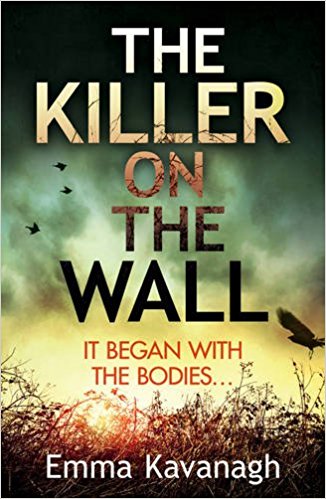
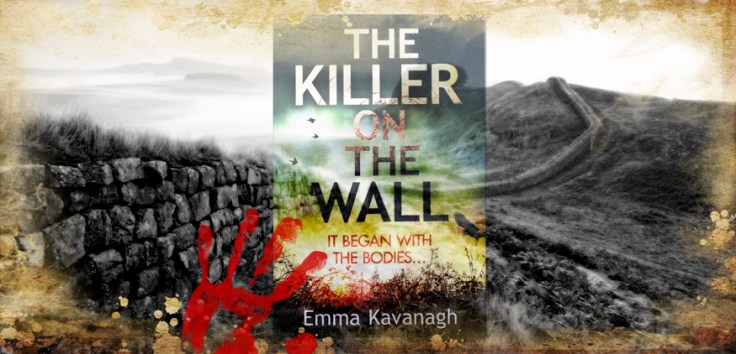
 The name Briganton, to most British people, conjures up a series of murders, where the victims were dragged up the steep hillside and posed, in death, gazing with sightless eyes out over the windswept moorland. But all that was long ago. The killer, Heath McGowan, was brought to justice by the determination of Eric Bell, a local policeman who has since been promoted and has achieved national celebrity due to his solving the case. His triumph had added poignancy because it was his teenage daughter, Isla, who discovered the first bodies while out for an early morning run.
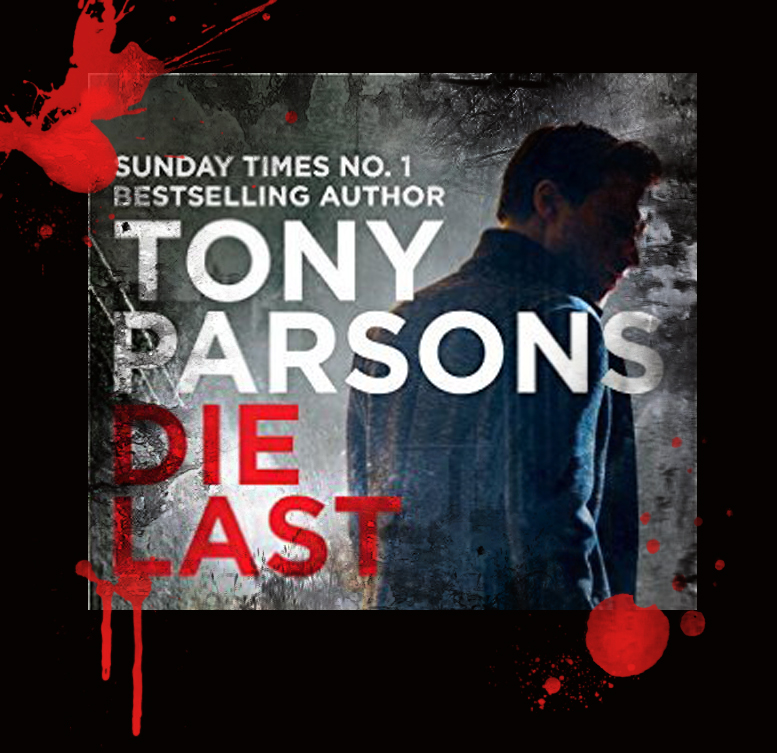

 His London copper, DC Max Wolfe, becomes involved when a refrigerated lorry is abandoned on a street in London’s Chinatown. The emergency services breathe a huge sigh of relief when they discover that the truck is not carrying a bomb, but their relaxed mood is short-lived when they break open the doors to discover that the vehicle contains the frozen bodies of twelve young women. The bundle of passports – mostly fake – found in the lorry’s cab poses an instant conundrum. There are thirteen passports, but only twelve girls. Who – and where – is the missing person?
 Max Wolfe certainly gets around for a humble Detective Constable, but he is an engaging character and his home background of the Smithfield flat, young daughter, motherly Irish childminder and adorable pooch make a welcome change from the usual domestic arrangements of fictional London coppers with their neglected wives, alcohol dependency and general misanthropy. Parsons (right) is clearly angry about many aspects of modern life in Britain, but he is too good to allow his writing to descend into mere polemic. Instead, he uses his passion to drive the narrative and lend credibility to the way his characters behave.


 He has killed at the bidding of his masters, who are shadowy government types, but now things have changed. Stoner has been stitched up, people close to him have been badly hurt, and he has retreated from the his former world. He is shattered, mentally and physically.
 Like its two predecessors, The Redemption of Charm is immensely entertaining and another bravura performance from Frank Westworth (right), who shares his creation’s love of Harleys and fine guitars. We are led to believe that a love of killing and a knowledge of inventive ways to use an SAS dagger are skills that, to date, divide the two men.


