

Diana Cowper crosses the Fulham Road, and walks into a funeral parlour. We are told that she is:
“… a short, very business-like woman: there was a sense of determination in her eyes, her sharply cut hair, the very way she walked. She was in her sixties, with a pleasant, round face. There were plenty of women like her in the streets of Fulham and South Kensington. She might have been on her way to lunch or to an art gallery.”
 Many people in their sixties – particularly those who are comfortably off – plan ahead for their own funerals. Daytime television programmes are interspersed with advertisements featuring either be-cardiganed senior citizens smugly telling us that they have taken insurance with Coffins ‘R’ Us, or rueful widows plaintively wishing that they had been better prepared for the demise of poor Jack, Barry or Derek. However, it would be unusual to hear that the be-cardiganed senior citizen had died only hours after planning and paying for their own send-off from the world of the living.
But that is precisely what happens to Diana Cowper. She is found murdered in her smart Chelsea terraced house. It is at this point that we are introduced to the two main characters in the story. One is Daniel Hawthorne, a former police detective sacked for unprofessional conduct, but with such an uncanny ability to solve murders that he is retained as a consultant by his former employers. The other is also involved in murder, but of a fictitious kind. He is a successful author and screenwriter with a string of hit TV shows and book bestsellers to his credit. His name? None other than Anthony Horowitz.
Plot-wise, the semi-fictional Horowitz is approached by Hawthorne, who wants him to write a crime story detailing his skill as a solver of murder mysteries. Where better to start than with the mysterious death of Diana Cowper? The back-story to her murder includes her complicity in the death of a young boy in a road accident ten years earlier, her son – now one of the best known young actors between the West End and Hollywood – the shattered family of the dead boy, and the judge who let Diana Cowper walk away a free woman from her trial for causing the boy’s death.
 During the story, Horowitz (right) drops plenty of names but, to be fair, the real AH has plenty of names to drop. His CV as a writer is, to say the least, impressive. But just when you might be thinking that he is banging his own drum or blowing his own trumpet – select your favourite musical metaphor – he plays a tremendous practical joke on himself. He is summoned to Soho for a vital pre-production meeting with Steven and Peter (that will be Mr Spielberg and Mr Jackson to you and me), but his star gazing is rudely interrupted by none other than the totally unembarrassable person of Daniel Hawthorne, who barges his way into the meeting to collect Horowitz so that the pair can attend the funeral of Diana Cowper.
To write a novel with yourself as one of the main characters takes a certain amount of chutzpah and a great deal of narrative skill. Does Horowitz get away with it? Yes, yes, yes – and yes again. This is a gloriously complex whodunnit and a sly dig at the bizarre intensity of the worlds of both film-making and publishing. It is one of those books where the pages are turned all too quickly. The best books draw you into their world, make you part of it, make you care about what happens to the characters and force a sigh of regret when you reach the end papers. The Word Is Murder is one such book. It is full of intrigue, enjoyment, dark humour and superb characterisation.
I genuinely hope that this is not the last of Daniel Hawthorn. Horowitz has created an intriguing anti-hero who is, at times, almost autistic, but also capable of a chameleon-like transformation into an empathetic and sensitive listener. Hawthorne can switch between figuratively holding someone’s hand but then, in the blink of an eye, stabbing them with a bodkin. We learn just enough about Hawthorne to answer a few basic questions, but Horwowitz leaves us so much more to discover. Let us hope that he delivers. The Word Is Murder will be published by Century on 24th August, and is available for pre-order here.
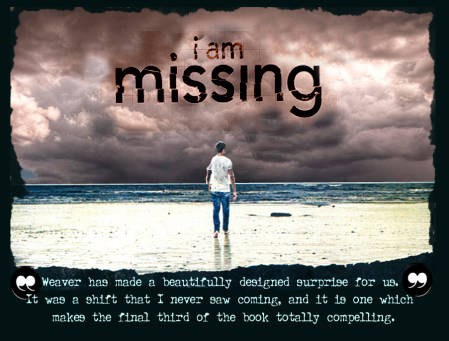
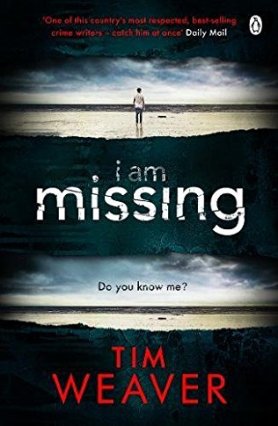 Raker agrees to take on the case on a more-or-less pro bono basis. Whatever and whoever Richard Kite once was, he has not brought wealth of any kind with him into his new life. Raker’s initial trip south to meet Kite is less than fruitful. Kite only recalls two shadowy images from his past; one is that he is looking out across a lonely beach to a grey expanse of water; is it the sea, perhaps, or a river? The other image is just as enigmatic; Kite sees a television screen, and on it is a graphic of a broadcasting pylon emitting what seems to be a children’s programme.
 Meanwhile, Weaver (right) gives us what seems to be a parallel but unconnected narrative. Two girls, sister and step sister, apparently living in a remote moorland community, perhaps in the north of England, have taken to sneaking out of their house after dark, and climbing up the hill onto the moors, where they have constructed an imaginary and malevolent presence out there in the wind and rain-swept darkness. Malevolent it certainly seems to be, but is it just a figment of the girls’ lurid imaginings?
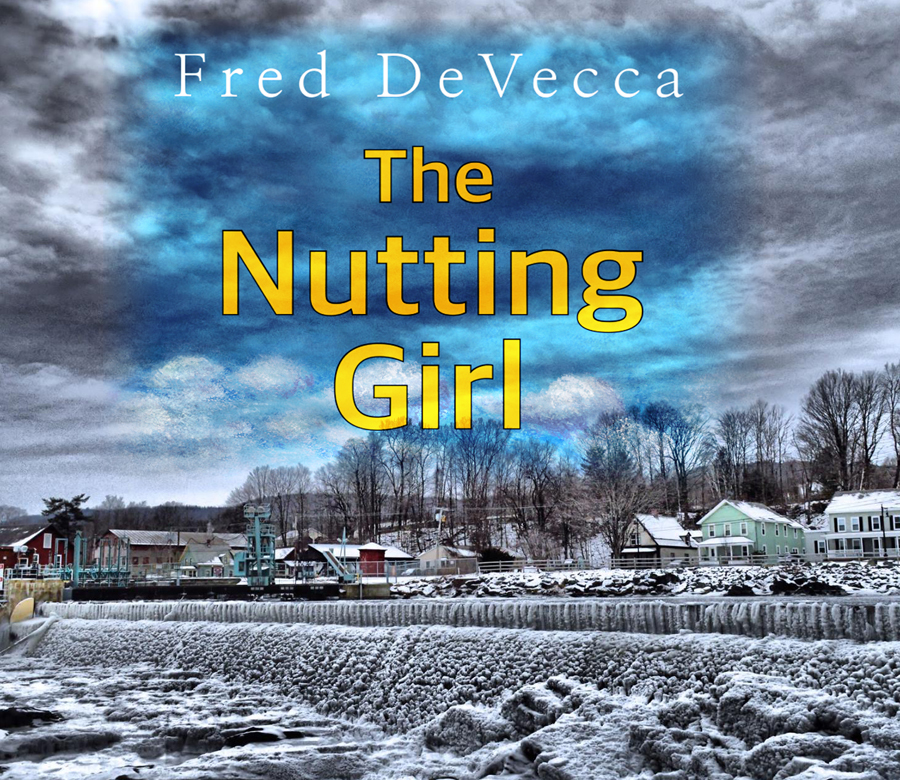

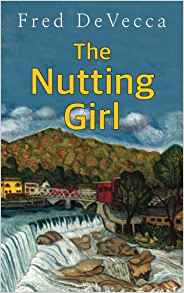 Raven’s job seems like money for nothing until the fateful day when, after a spell of heavy rain, the normally placid stream running through Shelburne Falls is turned into a deadly torrent. ‘Velcro’ ends up in the water, and disappears. Did she fall? Was she pushed? Or is there another more disturbing and puzzling solution? Frank Raven, with the help of Sarah, the eighteen year-old daughter of Clara (Raven’s love interest), unlocks the door to a labyrinth of deception, false identities, dark motives and venal behaviour which they work their way through more in the spirit of hope than the expectation of ever finding the door marked ‘Exit’.
 Finding a new path through the undergrowth of PI novels, overgrown as it is with violent, cynical, wisecracking and tough, amoral men (and women) must be a difficult task, but Fred De Vecca (right) makes his way with a minimum of fuss and bother. Frank Raven rarely raises his voice, let alone his fists, but his intelligence and empathy with decent people shines through like a beacon in a storm. It would be a forgivable mistake to place this novel in the pile marked ‘Cosy small-town domestic drama’, but it is a mistake, nonetheless. Of the people Raven is tasked with looking for, he finds some and loses some – because he is human, fallible and as susceptible to professional bullshitters as the next guy. What he does find, most importantly, is a kind of personal salvation, and a renewal of his belief in people, and their capacity to change.
 If the South London suburb of Menham could be described as unremarkable, then we might call the down-at-heel terraced houses of Barley Street positively nondescript. Except, that is, for number 29. For a while, the home of Mary Wasson and her daughters became as notorious as 112 Ocean Avenue, Amityville. But the British tabloid press being what it is, there are always new horrors, fresh outrages and riper scandals, and so the focus moved on. The facts, however, were this. After a spell of unexplained poltergeist phenomena turned the house (almost literally) upside down, the body of nine year-old Holly Wasson was found – by her older sister Rachel – hanging from a beam in her bedroom.
 Laws (right) takes a leaf out of the book of the master of atmospheric and haunted landscapes, M R James. The drab suburban topography of Menham comes alive with all manner of dark interventions; we jump as a wayward tree branch scrapes like a dead hand across a gazebo roof; we recoil in fear as a white muslin curtain forms itself into something unspeakable; dead things scuttle and scrabble about in dark corners while, in our peripheral vision, shapes form themselves into dreadful spectres. When we turn our heads, however, there is nothing there but our own imagination.
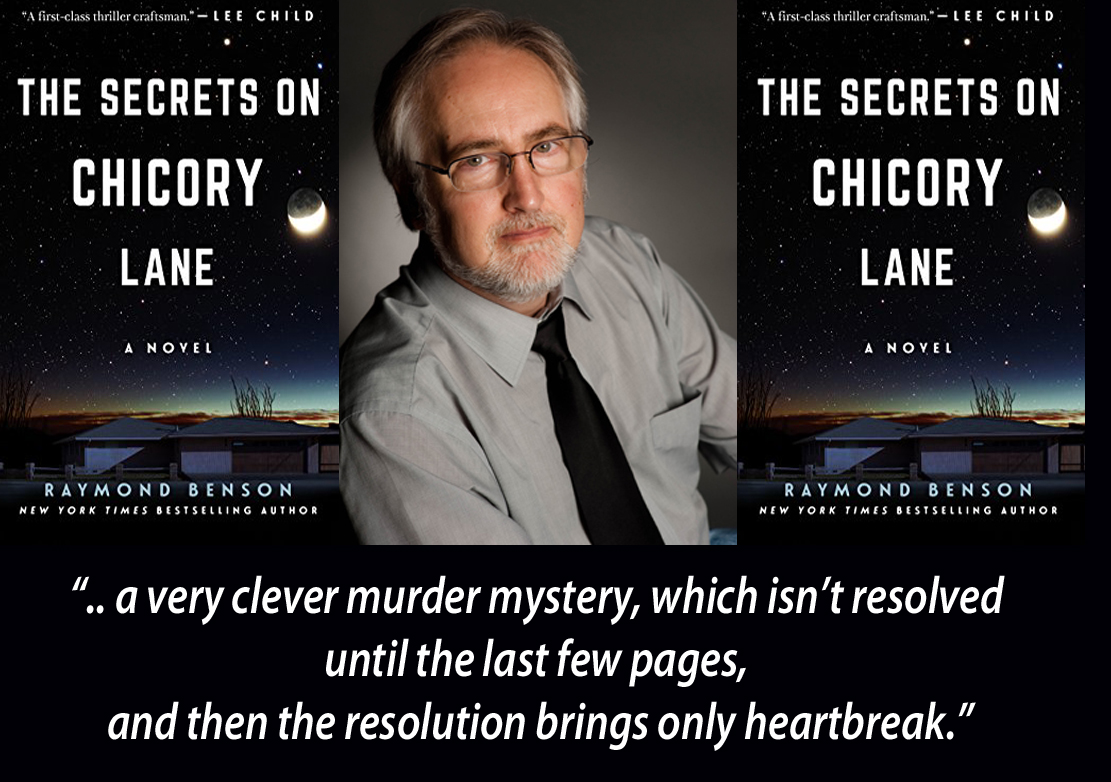

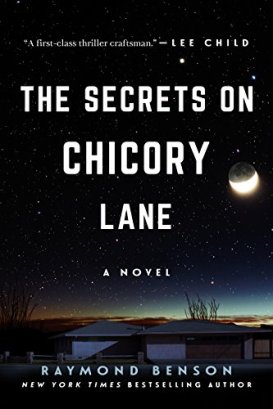 Eddie is Eddie Newcott, the boy who used to live across the street in Chicory Lane, Limite. The boy who was just a bit different from all the other kids at school. The kid whose dad was a rough and abusive oilfield mechanic. The kid whose mom turned to the bottle to escape her violent husband and the beatings he handed out to their only child. But that was then. Now sees Eddie fallen on hard times. Times so hard that he achieved brief notoriety in the tabloid press, and has now been sentenced to death by lethal injection for murdering his pregnant girlfriend, slashing her open, dragging the foetus out and then arranging the two corpses on his front lawn, posed in an obscene mockery of a Nativity tableau. And it was Christmas Eve.
 Like Shelby Truman, Raymond Benson (right) is a highly successful writer. He has written thrillers under his own name, most notably his Black Stiletto Saga, and has also written novels based on video games. He has taken up the baton from authors who are no longer with us, like Tom Clancy, and has written several James Bond stories which have either been based on established screenplays – like Die Another Day – or standalone original stories such as The Man With The Red Tattoo.

 So, when Gabriel answers the door bell one day only to behold the wedge-shaped and granite faced personage of Farrelly – chauffeur, enforcer and general gofer for Frank Parr – he is led, like a naughty boy tweaked by his ear, to Parr’s sumptious office building. To say that Parr – now a respectable media mogul – has something of a history, is rather like saying that Vlad The Impaler was someone of interest to Amnesty International. Parr made his money – loads of it, and of the distinctly dirty variety – by publishing magazines which were not so much Top Shelf as stacked in the stratosphere miles above the earth’s surface.
 “For a while, I wandered the streets of Soho, as I had on the day I’d first visited forty years ago. Doorways whispered to me and ghosts looked down from high windows.”

 When the battered body of teenager Melanie Cooke is found amid the garbage bins in a seedy Bristol alleyway, it is obvious that she has been murdered. Only fourteen, she is dressed in the kind of clothes which would be considered provocative on a woman twice her age. Vogel goes to make the dreaded ‘death call’, but he only has to appear on the doorstep of the girl’s home for her mother and father to sense the worst. Like many rebellious teenagers before her, Melanie has told her parents that she is going round to a mate’s house to do some homework. When she failed to come home, their first ‘phone call confirmed Melanie’s lie, and thereafter, the long dark hours of the night are spent in increasing anxiety and then terror, as they realise that something awful has happened.
 The book actually starts with a prologue which at first glance appears to be nothing to do with Melanie’s death. It is only later – much later – that we learn its true significance. Bonner (right) is determined not to give us a straightforward narrative. The progress of Vogel’s attempts to find Melanie’s killer are sandwiched between accounts from three different men, each of whom is living a life where all is not as it seems.
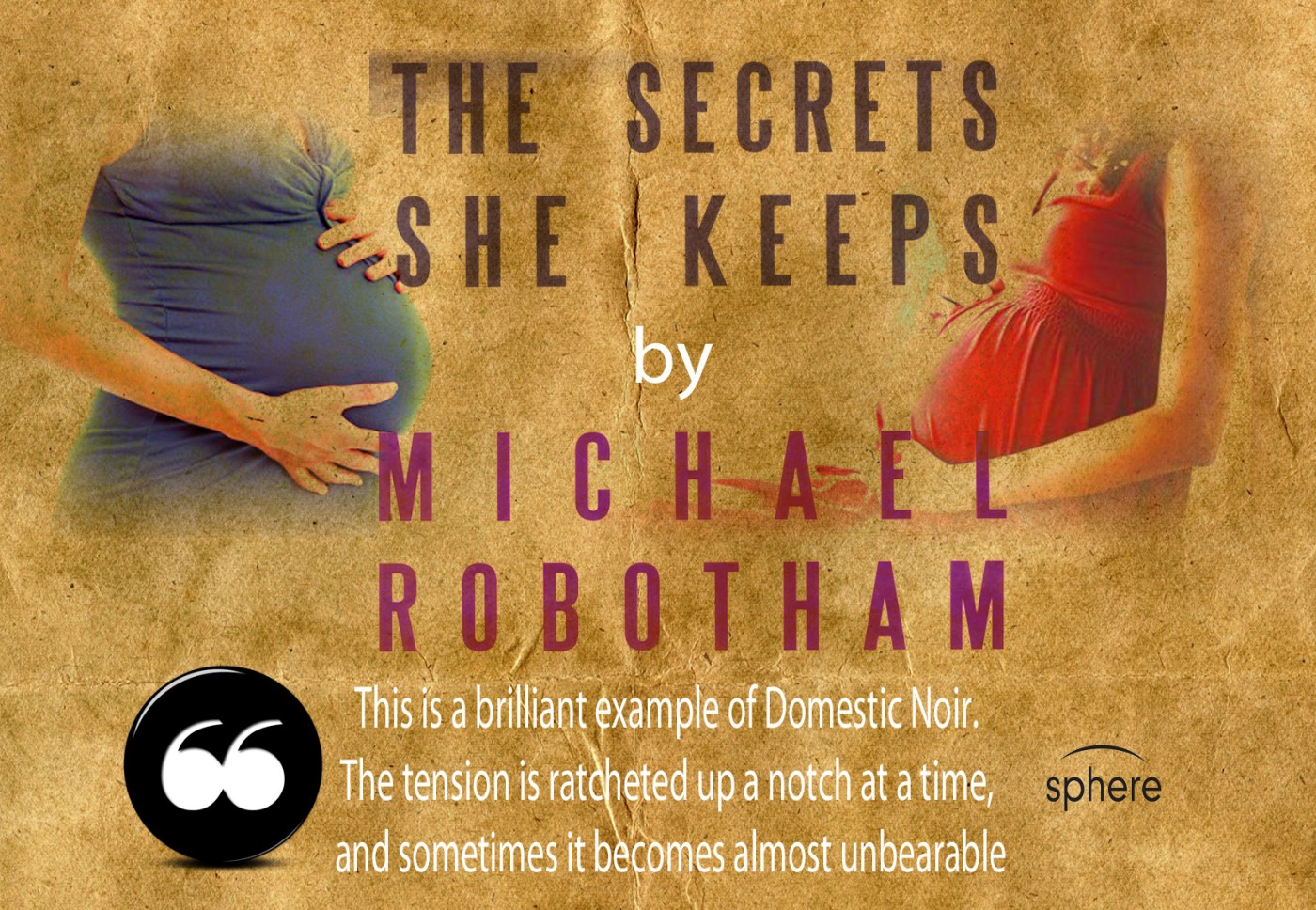

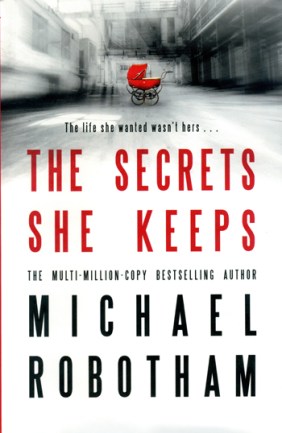 Agatha Fyfle works for peanuts in a ‘Village’ supermarket but Mr Patel, her boss, is not the kind of man to be offering generous maternity leave. He is so tight that he once docked her pay for putting the wrong price on a tin of peaches. The father of her baby is far, far away on a Royal Navy ship patrolling the Indian Ocean, chasing Somali pirates. Despite her nothing job and the desperate ordinariness of her life, Agatha has her imagination and her dreams:


 Charles Harris (right), a best-selling non-fiction author and writer-director for film and television sets in train a disastrous serious of mishaps, each of which stems from Kati’s ostensibly harmless error. Too exhausted from her daily grind making sure that Every Little Helps at everyone’s favourite supermarket, she sends her hapless son, Liam, off to the cashpoint, armed with her debit card and its vital PIN. Sadly, Liam never makes it home with the cash, the pizza guy remains unpaid, and Kati Glass is pitched into a nightmare.
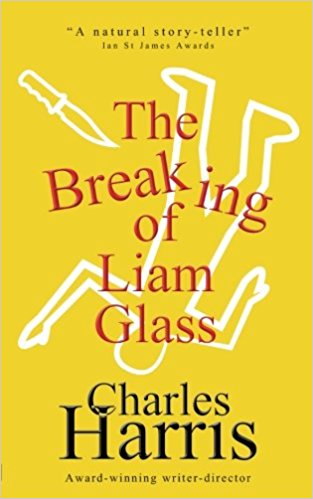 Trying to find out who stabbed Liam Glass is Detective Constable Andy Rackham. He is a walking tick-box of all the difficulties faced by an ambitious copper trying to please his bosses while being a supportive husband and father. The third member of this unholy trinity is Jamila Hasan, an earnest politician of Bengali origin who senses that the attack might be just the campaign platform she needs to ensure that she is re-elected. But what if Liam’s attackers are from her own community? Sadly, in her efforts to gain credibility on the street, Jamila has been duped.


 fullybooked2017