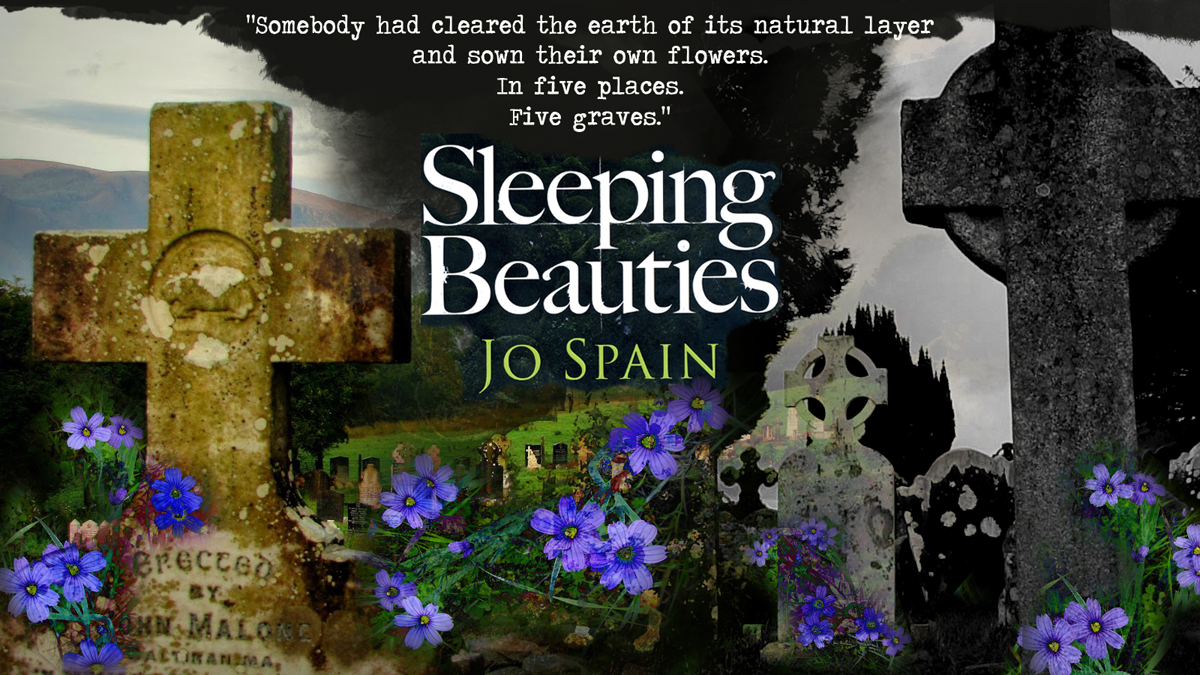

 In the beautiful valley of Glendalough there are ancient stones, shades and spirits of the holy men who prayed in the monastery – and in the cemetery, lichen-covered headstones of generations of Byrnes, Cullens, Farrells, Nolans, Waldrons – all, both monks and villagers, at peace now. But the body of a young woman has been found. Interred without sacrament, beyond the gaze of those who would mourn her. In a shallow grave on a hillside, wearing the clothes she disappeared in. It is all that remains of Una Dolan, a twenty four year-old lass from Waterford. Last seen April 29th, 2011.
Inspector Tom Reynolds, of Dublin’s An Garda Síochána, is called to the scene on a blisteringly hot summer afternoon. The police tapes are strung out, a tent is put over the body, the hundreds of tourists shepherded away beyond gawping distance, but Una does not lie alone in her woodland grave:
“The Inspector frowned and examined the earth under the trees. As he scanned the glade, his stomach lurched.
One, two, three, four. Five, counting the mound of earth disturbed under the tent.
Tom counted five separate patches where the same delicate blue flower was blooming. And then he saw it …
Somebody had cleared the earth of its natural layer and sown their own flowers.
In five places.
Five graves.”
Reynolds and his team are already searching for another missing woman, Fiona Holland, but as the forensic experts do their macabre job and try to identify the five Glendalough women, Fiona’s name doesn’t seem to be among them. Instead, the unresolved disappearances of the last few years are narrowed down in a business-like but brutal fashion.

While the guards go about the melancholy business of dashing the hopes of the girls’ relatives, Tom Reynolds has more than one disagreeable offering on his plate. One unpalatable mouthful is his immediate superior. The very model of a modern career policeman, Joe Kennedy sits in the ergonomically designed executive chair which Tom himself was offered, but turned down because the job would have distanced him from all the aspects of policing which energise and inspire him. Kennedy is, to put it bluntly, a prick. Worse, far worse, is that Sean McGuiness, Tom’s previous boss and mentor, is facing the retirement from hell as he tries to cope with the regressive dementia of his wife, June. Tom and his wife Louise feel helpless as their old friends face the worse crisis of their lives.
Tom Reynolds is compassionate and perceptive, but he is also driven by his own desire to see justice done. His investigative team are sympathetically drawn, and the sense of police teamwork is palpable. The guards must combat the possibility of police corruption and deal with the pent-up anger of frustrated and grieving families but, just as the killer appears to be cornered, caught and convicted, the gut-wrenching possibility arises that the case may not be ready for filing in the “solved” drawer.
 Jo Spain writes like an angel. No fuss. No bother. No pretension. The narrative flows as smoothly as a glass of Old Bushmills slips down the appreciative throat, and she has us looking this way and that as we stand beside Tom Reynolds as he searches for the killer. This is, on one level, a police procedural, but Jo Spain doesn’t let methodology bog the story down. We know that she knows how the police operate, and that is more than enough. Her rural Ireland is beautifully described without unnecessary frills and furbelows, and she gives us as perceptive a story of the heights and depths of human behaviour as you will read all year. If you have come a little late to the Tom Reynolds party, the first episode of his career is With Our Blessing, followed by Beneath The Surface.

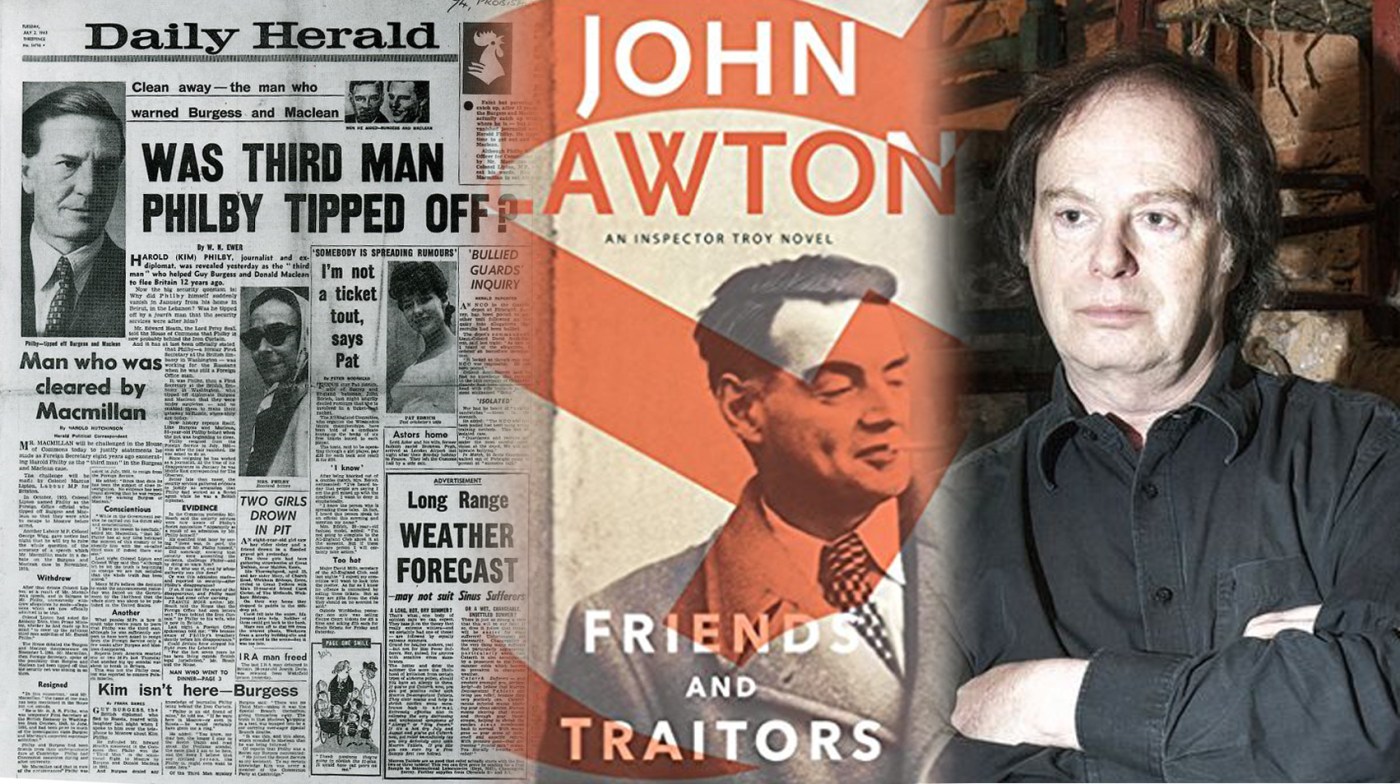

 Friends and Traitors focuses mostly on the 1951 defection – and its aftermath – of intelligence officer Guy Burgess, to the Soviet Union. A huge embarrassment to the British government at the time, it was also about personalities, Britain’s place in the New World Order – and its attitudes to homosexuality. Burgess’s usefulness to the Soviets was largely symbolic, but the crux of the story is the events surrounding Burgess’s regrets, and heartfelt wish to come home. Troy interviews him in a Vienna hotel.
 Lawton (right) was born in 1949, so would have only the vaguest memories of growing up in an austere and fragile post-war Britain, but he is a master of describing the contradictions and social stresses of the middle years of the century. Here, he describes Westcott, a notoriously persistent MI5 interrogator, sent to quiz Troy on the events in Vienna:
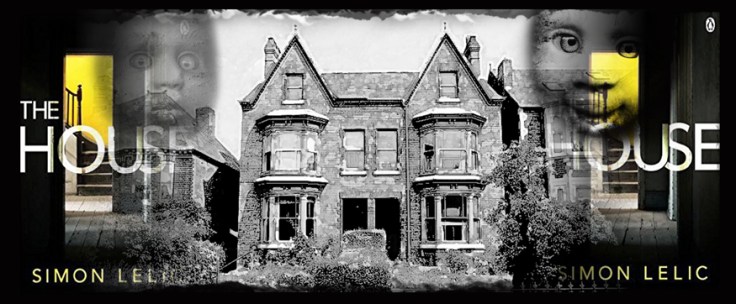
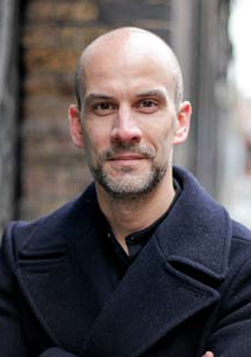 There is, however, that strange smell. A certain je ne sais quoi which will not go away, despite the couple’s best efforts. When Jack finally plucks up the courage to climb up into the roof space, he finds the physical source of the smell but unpleasant as that is, he also finds something which is much more disturbing. Simon Lelic (right) then has us walking on pins and needles as he unwraps a plot which involves obsession, child abuse, psychological torture and plain old-fashioned violence.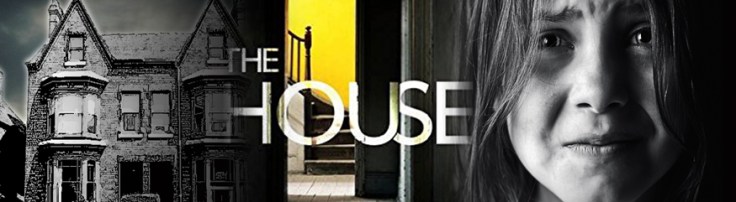
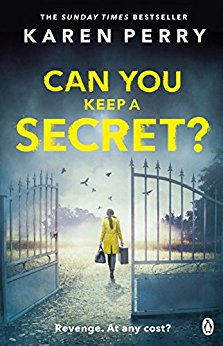 Lindsey Morgan is our narrator. She is a photographer with the Irish police, the Garda Síochána, and her frequent visits to gory crime scenes mean that she must don a cloak of cold objectivity as she looks through her camera at the damage people do one another. The distance between the person behind the viewfinder and the scene captured by the lens is a key motif in the story, as you will discover when you read the book.

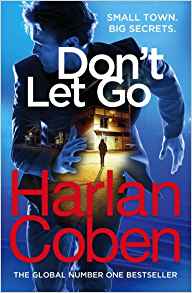 “Mr Nice Neighbour. See, I am that rarest of creatures in suburban towns – a straight, single, childless male is about as common out here as a cigarette in a health club – so I work hard to come across as normal, boring, reliable.”
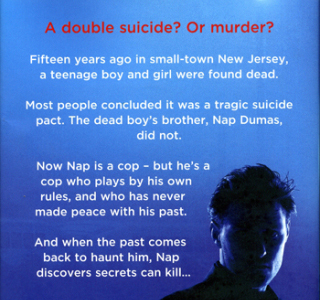
 Coben is never anything but readable and he is great form here. This was one of those books which pose a delicious dilemma – do I carry on reading as the hook of the action bites deeper and deeper, or do I put it down for a couple of hours to make it last longer? As a regular reader of Coben’s books I knew that the big reveal – in this case the truth about the deaths of Leo and Diane – would be a definite “Oh, my God!” moment, but try as I might, I didn’t get close to guessing the actual shocking detail.
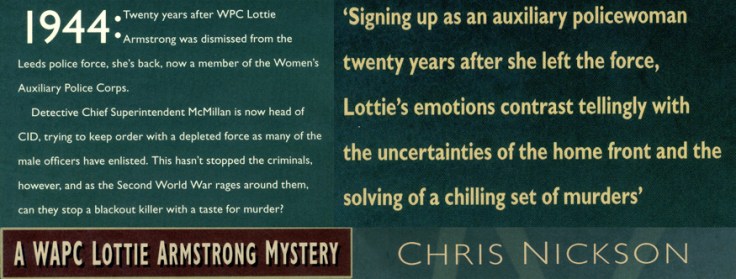
 So, Lottie is back in uniform again, but this time as a lowly member of the Women’s Auxiliary Police Corps. Her main job is to drive her boss, Detective Superintendent McMillan, to wherever he needs to go. McMillan, a veteran of The Great War, certainly needs his transport as a killer seems to be stalking vulnerable young women across the city. Kate Patterson, a Private in The Auxiliary Territorial Service (ATS) is found dead in the sombre ruins of the medieval Kirkstall Abbey. She is the first victim, but others follow, and Lottie and McMillan are soon convinced that the killer is a member of the American forces based in the city.
 You will note the date – spring 1944 – and will not need a degree in military history to work out what those ‘vital operations’ might be. Invasion or no invasion, McMillan still has a job to do, and the murderer is eventually cornered. Don’t anticipate a comfortable outcome, however. Nickson (right) doesn’t do cosy, and the conclusion of this fine novel is as dark as a blacked out city street.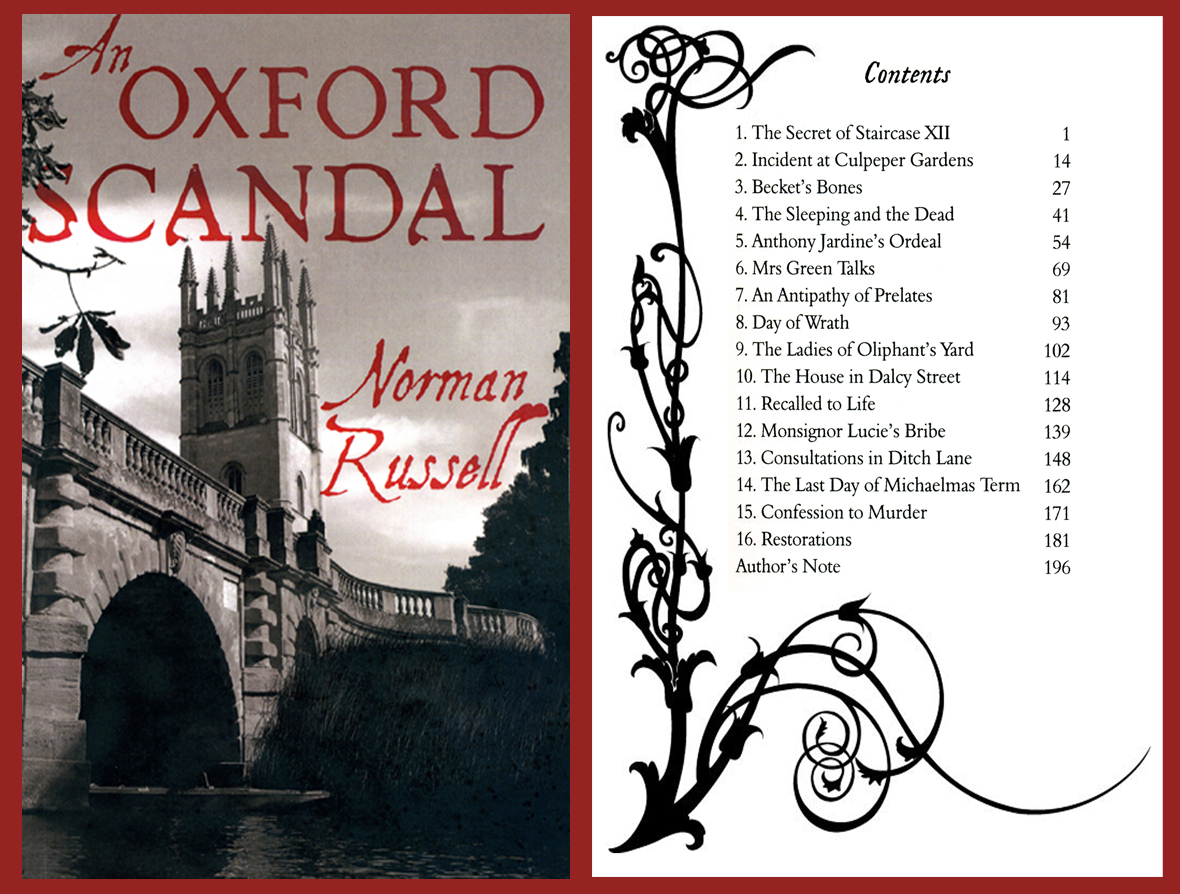

 Oxford, 1895. The spires may well be dreaming, but for Anthony Jardine, Fellow of St Gabriel’s College, the nightmare is just beginning. His drug addicted wife is found stabbed to death, slumped in the corner of a horse tram carriage. His mourning is shattered when his mistress is also found dead – murdered in the house she shares with her elderly eccentric husband. With a background story of an archaeological discovery threatening to shake the English religious establishment to its very roots, Inspector James Antrobus must avoid the temptation to make Jardine a swift and easy culprit. Helped by the uncanny perception of Sophia Jex-Blake, a pioneering woman doctor, Antrobus finds the answer to the killings lies in London, just forty miles away on the railway.
 Norman Russell (right) is a writer and academic, who has had fifteen novels published. He is an acknowledged authority on Victorian finance and its reflections in the literature of the period, and his book on the subject, The Novelist and Mammon, was published by Oxford University Press in 1986. He is a graduate of Oxford and London Universities. After military service in the West Indies, he became a teacher of English in a large Liverpool comprehensive school, where he stayed for twenty-six years, retiring early to take up writing as a second career.

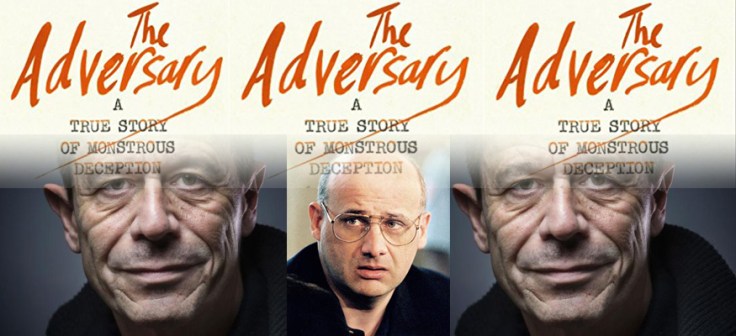
 To this farrago of lies and deception add fraud on a grand scale. Romand was able to keep himself and his family in relative prosperity by claiming that he had access to investment opportunities which would pay handsome dividends to those fortunate enough to be ‘in the know’. He relieved relatives and members of his wider family of hundreds of thousands of French francs – every one of which went into his numerous personal bank accounts. Separating his mistress and her vast personal fortune was his undoing. She was sharp enough – eventually – to call him out and, with his fantasy world on the verge of unraveling, Romand, on an icy weekend in January 1993, killed his wife, two children, and both of his parents.
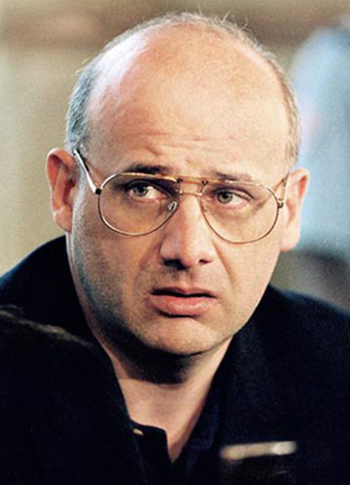 Inevitably, Romand was found guilty of murder, and in 1996 was sentenced to life imprisonment with no chance of parole for at least twenty two years. Prior to the trial, Carrère had begun a correspondence with Romand (right) with a view to writing an account of the case. In this account, aside from the factual detail, Carrère invites us to ponder the true nature of evil and insanity, and makes us wonder if the two states are totally separate, or whether or not they are actually bedfellows.
 Carrère (left) concludes:

 Kristy puts food on the table and tries to make sure that Ryan isn’t disadvantaged. She has a job, and it is one that demands every ounce of her compassion and every droplet of her sang froid. Her official title? Public Information Officer for the Texas Department of Criminal Justice. If that sounds like some bureaucratic walk-in-the-park, think again. Acting as mediator between inmates, the press and the prison system is one thing, but remember that The Lone Star State is one of the thirty one American states which retains the death penalty. Consequently, Kristy not only has to manage the fraught liaison between prisoners on death row and the media, but she is also required to be an official witness at executions.
 It will come as no surprise to learn that Hollie Overton (right) is an experienced writer for TV. In The Walls every set-piece, every scene is intensely visual and immediate. With consummate cleverness she sets up two story lines which at first run parallel, but then converge. Two men. One is definitely guilty. One possibly innocent. Both are condemned to death. One by the State of Texas. The other by his battered wife.


 fullybooked2017