
This is the latest from Karen Gillece and Paul Perry, the successful Dublin writing partnership. How two people can write one novel remains a mystery to me but, my goodness, Gilece and Perry do the business. Who contributes what may well remain a trade secret, but if you have any misgivings about the effectiveness of collaborations, ditch them now. This narrative is seamless, gripping, intensely creepy, and an object lesson in how to to convince the reader that they know what is going on, while cooking up surprise after surprise and twist on twist. Eventually, a rather sinister rabbit is pulled out of a bloodstained hat.
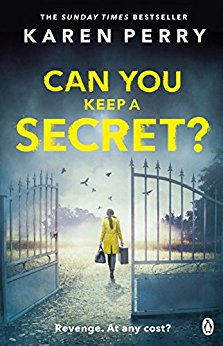 Lindsey Morgan is our narrator. She is a photographer with the Irish police, the Garda Síochána, and her frequent visits to gory crime scenes mean that she must don a cloak of cold objectivity as she looks through her camera at the damage people do one another. The distance between the person behind the viewfinder and the scene captured by the lens is a key motif in the story, as you will discover when you read the book.
Lindsey finished her education at an independent school, and it was there that she met the players in this drama. There’s Niall, Marcus and Hilary but, most significantly we have Rachel Bagenal and her older brother Patrick. Rachel and Patrick are the children of what used to be called landed gentry. Their home is Thornbury, a substantial mansion in the countryside.
We have two separate timelines here. First, we have the present day, where Patrick Bagenal, living alone in the decaying house, invites his old school friends for a final weekend at Thornbury. The house has deteriorated beyond Patrick’s ability to maintain it, and so he has been forced to sell. His parents, Peter and Heather, are both dead. The second timeline takes us back to the early 1990s. The youngsters are all still at school, but enjoy being invited for weekends at Thornbury. It is one such visit – for Patrick’s lavish eighteenth birthday party – which ends in a tragedy which will resonate down the years.
As with all reunions, the adults appraise each other and remember how they used to be, and how they have changed. Marcus has embraced modern acceptance of homosexuality and is comfortably gay, while Niall has made a success of his business but failed in the marriage game. Hilary has metamorphosed from the archetypal fat girl into a waif-like lifestyle coach. Patrick retains his boyish charm, but has grey hairs because of the demands imposed on him by being the sole tenant of Thornbury. Rachel? Rachel was always the force of nature, the woman among the teenagers, the assured femme fatale among the gauche schoolgirls. Now, she returns from a life in London to preside over a weekend which will self destruct in a clatter of betrayal, guilt, recrimination and violence.

This is an outrageously brilliant thriller, and we are pretty much hit with every shot in the stylistic locker. We have a classic convergence of past and present, where convergence becomes a collision, and the collision explodes into a catastrophe. We have the timeless element of a crumbling old house, complete with secrets, unexplained noises, and the shades of the dead – some of them malevolent, but some of them wronged. Thornbury is every bit as haunted as Daphne du Maurier’s Manderley. We may not have a Mrs Danvers, but we certainly do have a Rebecca.
Throughout the book, I felt an over-arching sense of regret for lost innocence, but the authors are far too canny to make that straightforward as they shine a torch into all the little guilty corners in the lives of the characters. And, the novel’s tour de force, the narrator herself. Victim? Catalyst for tragedy? Innocent observer? As the saying goes, if I told you, I would have to kill you. You can avoid further bloodshed by buying your own copy of Can You Keep A Secret, which is published by Penguin.
For more top quality Irish crime fiction, check out our reviews of:

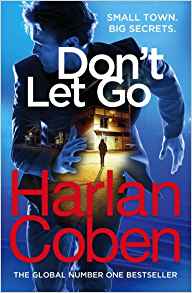 “Mr Nice Neighbour. See, I am that rarest of creatures in suburban towns – a straight, single, childless male is about as common out here as a cigarette in a health club – so I work hard to come across as normal, boring, reliable.”
 Coben is never anything but readable and he is great form here. This was one of those books which pose a delicious dilemma – do I carry on reading as the hook of the action bites deeper and deeper, or do I put it down for a couple of hours to make it last longer? As a regular reader of Coben’s books I knew that the big reveal – in this case the truth about the deaths of Leo and Diane – would be a definite “Oh, my God!” moment, but try as I might, I didn’t get close to guessing the actual shocking detail.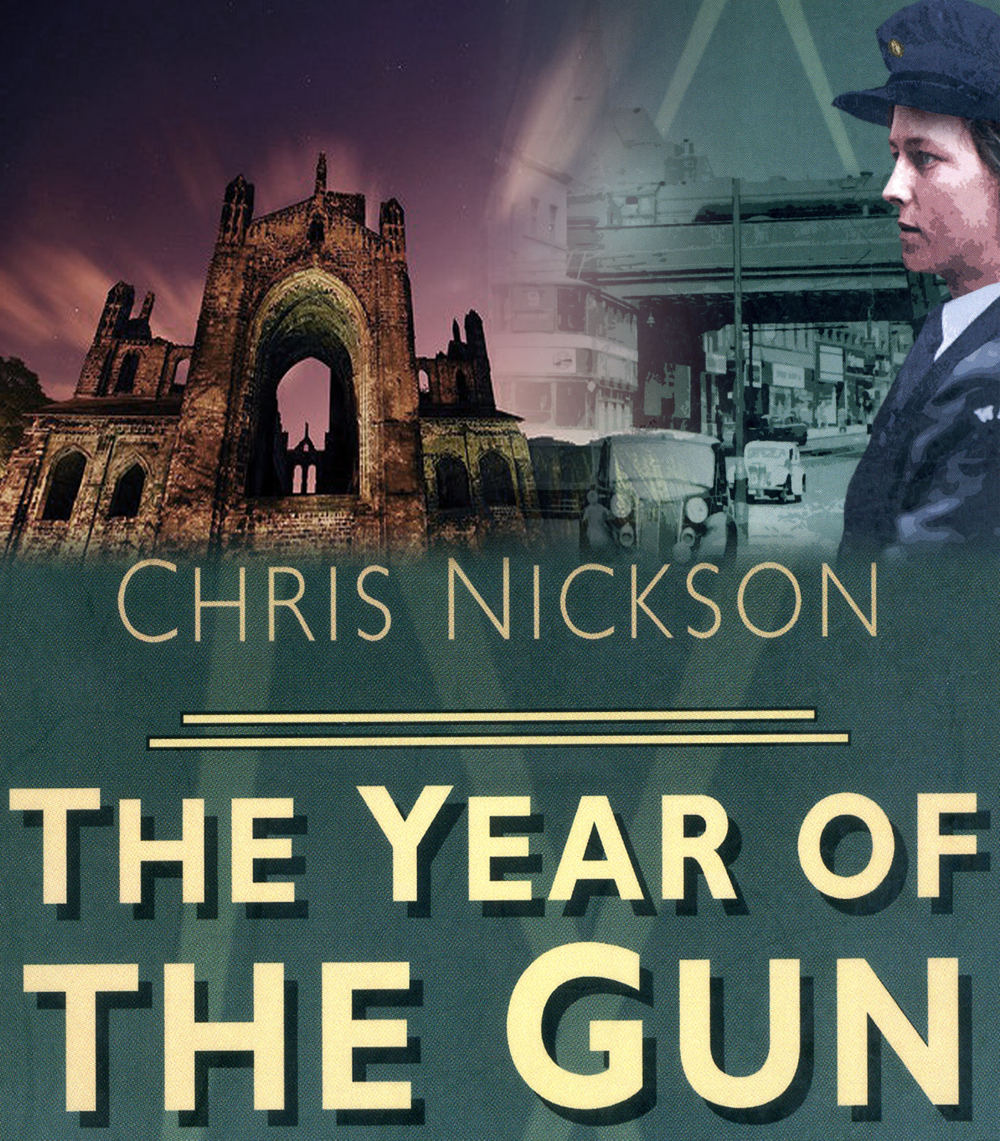
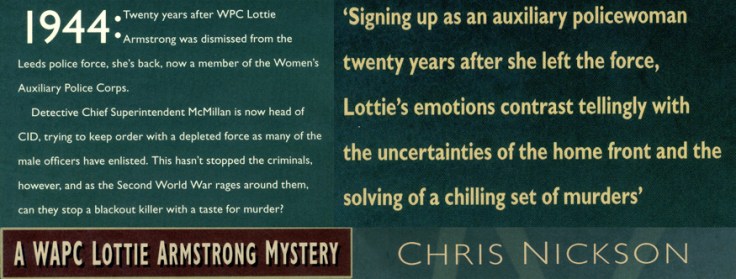
 So, Lottie is back in uniform again, but this time as a lowly member of the Women’s Auxiliary Police Corps. Her main job is to drive her boss, Detective Superintendent McMillan, to wherever he needs to go. McMillan, a veteran of The Great War, certainly needs his transport as a killer seems to be stalking vulnerable young women across the city. Kate Patterson, a Private in The Auxiliary Territorial Service (ATS) is found dead in the sombre ruins of the medieval Kirkstall Abbey. She is the first victim, but others follow, and Lottie and McMillan are soon convinced that the killer is a member of the American forces based in the city.
 You will note the date – spring 1944 – and will not need a degree in military history to work out what those ‘vital operations’ might be. Invasion or no invasion, McMillan still has a job to do, and the murderer is eventually cornered. Don’t anticipate a comfortable outcome, however. Nickson (right) doesn’t do cosy, and the conclusion of this fine novel is as dark as a blacked out city street.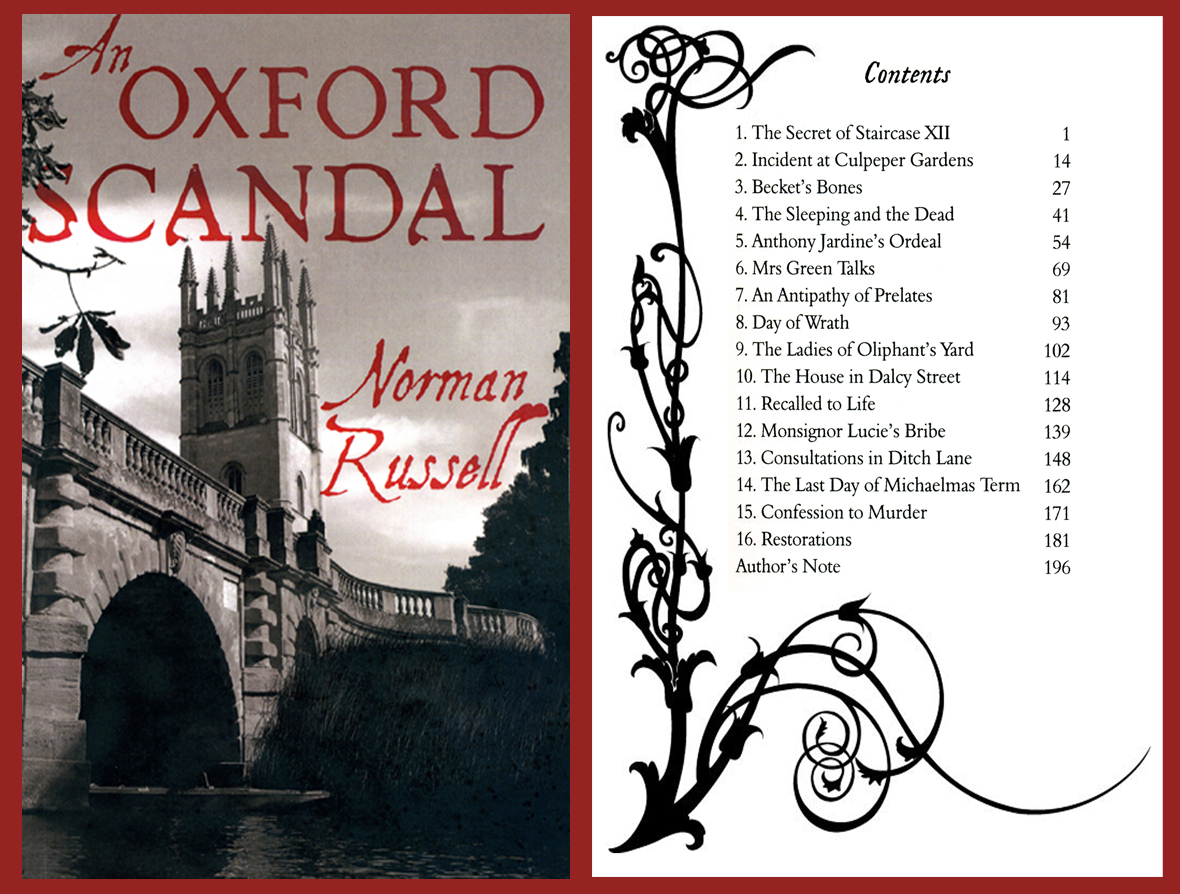

 Oxford, 1895. The spires may well be dreaming, but for Anthony Jardine, Fellow of St Gabriel’s College, the nightmare is just beginning. His drug addicted wife is found stabbed to death, slumped in the corner of a horse tram carriage. His mourning is shattered when his mistress is also found dead – murdered in the house she shares with her elderly eccentric husband. With a background story of an archaeological discovery threatening to shake the English religious establishment to its very roots, Inspector James Antrobus must avoid the temptation to make Jardine a swift and easy culprit. Helped by the uncanny perception of Sophia Jex-Blake, a pioneering woman doctor, Antrobus finds the answer to the killings lies in London, just forty miles away on the railway.
 Norman Russell (right) is a writer and academic, who has had fifteen novels published. He is an acknowledged authority on Victorian finance and its reflections in the literature of the period, and his book on the subject, The Novelist and Mammon, was published by Oxford University Press in 1986. He is a graduate of Oxford and London Universities. After military service in the West Indies, he became a teacher of English in a large Liverpool comprehensive school, where he stayed for twenty-six years, retiring early to take up writing as a second career.

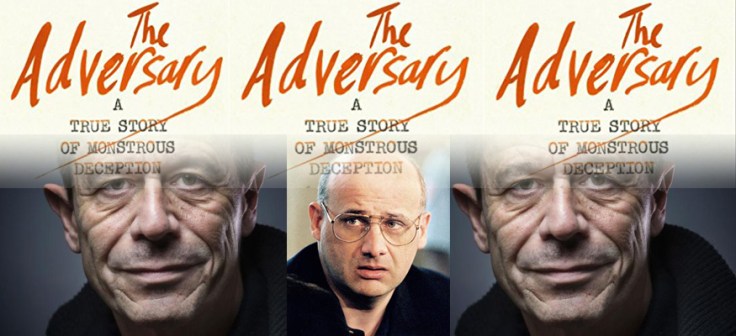
 To this farrago of lies and deception add fraud on a grand scale. Romand was able to keep himself and his family in relative prosperity by claiming that he had access to investment opportunities which would pay handsome dividends to those fortunate enough to be ‘in the know’. He relieved relatives and members of his wider family of hundreds of thousands of French francs – every one of which went into his numerous personal bank accounts. Separating his mistress and her vast personal fortune was his undoing. She was sharp enough – eventually – to call him out and, with his fantasy world on the verge of unraveling, Romand, on an icy weekend in January 1993, killed his wife, two children, and both of his parents.
 Inevitably, Romand was found guilty of murder, and in 1996 was sentenced to life imprisonment with no chance of parole for at least twenty two years. Prior to the trial, Carrère had begun a correspondence with Romand (right) with a view to writing an account of the case. In this account, aside from the factual detail, Carrère invites us to ponder the true nature of evil and insanity, and makes us wonder if the two states are totally separate, or whether or not they are actually bedfellows.
 Carrère (left) concludes:

 Kristy puts food on the table and tries to make sure that Ryan isn’t disadvantaged. She has a job, and it is one that demands every ounce of her compassion and every droplet of her sang froid. Her official title? Public Information Officer for the Texas Department of Criminal Justice. If that sounds like some bureaucratic walk-in-the-park, think again. Acting as mediator between inmates, the press and the prison system is one thing, but remember that The Lone Star State is one of the thirty one American states which retains the death penalty. Consequently, Kristy not only has to manage the fraught liaison between prisoners on death row and the media, but she is also required to be an official witness at executions.
 It will come as no surprise to learn that Hollie Overton (right) is an experienced writer for TV. In The Walls every set-piece, every scene is intensely visual and immediate. With consummate cleverness she sets up two story lines which at first run parallel, but then converge. Two men. One is definitely guilty. One possibly innocent. Both are condemned to death. One by the State of Texas. The other by his battered wife.


 Many people in their sixties – particularly those who are comfortably off – plan ahead for their own funerals. Daytime television programmes are interspersed with advertisements featuring either be-cardiganed senior citizens smugly telling us that they have taken insurance with Coffins ‘R’ Us, or rueful widows plaintively wishing that they had been better prepared for the demise of poor Jack, Barry or Derek. However, it would be unusual to hear that the be-cardiganed senior citizen had died only hours after planning and paying for their own send-off from the world of the living.
 During the story, Horowitz (right) drops plenty of names but, to be fair, the real AH has plenty of names to drop. His CV as a writer is, to say the least, impressive. But just when you might be thinking that he is banging his own drum or blowing his own trumpet – select your favourite musical metaphor – he plays a tremendous practical joke on himself. He is summoned to Soho for a vital pre-production meeting with Steven and Peter (that will be Mr Spielberg and Mr Jackson to you and me), but his star gazing is rudely interrupted by none other than the totally unembarrassable person of Daniel Hawthorne, who barges his way into the meeting to collect Horowitz so that the pair can attend the funeral of Diana Cowper.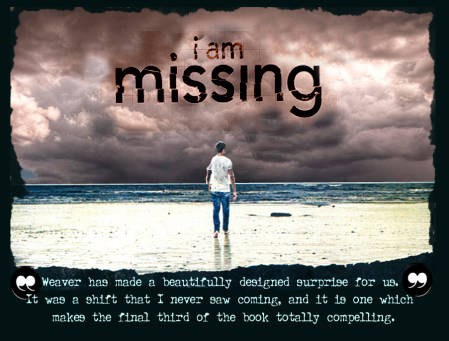
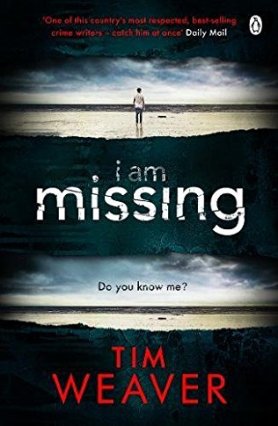 Raker agrees to take on the case on a more-or-less pro bono basis. Whatever and whoever Richard Kite once was, he has not brought wealth of any kind with him into his new life. Raker’s initial trip south to meet Kite is less than fruitful. Kite only recalls two shadowy images from his past; one is that he is looking out across a lonely beach to a grey expanse of water; is it the sea, perhaps, or a river? The other image is just as enigmatic; Kite sees a television screen, and on it is a graphic of a broadcasting pylon emitting what seems to be a children’s programme.
 Meanwhile, Weaver (right) gives us what seems to be a parallel but unconnected narrative. Two girls, sister and step sister, apparently living in a remote moorland community, perhaps in the north of England, have taken to sneaking out of their house after dark, and climbing up the hill onto the moors, where they have constructed an imaginary and malevolent presence out there in the wind and rain-swept darkness. Malevolent it certainly seems to be, but is it just a figment of the girls’ lurid imaginings?

 Raven’s job seems like money for nothing until the fateful day when, after a spell of heavy rain, the normally placid stream running through Shelburne Falls is turned into a deadly torrent. ‘Velcro’ ends up in the water, and disappears. Did she fall? Was she pushed? Or is there another more disturbing and puzzling solution? Frank Raven, with the help of Sarah, the eighteen year-old daughter of Clara (Raven’s love interest), unlocks the door to a labyrinth of deception, false identities, dark motives and venal behaviour which they work their way through more in the spirit of hope than the expectation of ever finding the door marked ‘Exit’.
 Finding a new path through the undergrowth of PI novels, overgrown as it is with violent, cynical, wisecracking and tough, amoral men (and women) must be a difficult task, but Fred De Vecca (right) makes his way with a minimum of fuss and bother. Frank Raven rarely raises his voice, let alone his fists, but his intelligence and empathy with decent people shines through like a beacon in a storm. It would be a forgivable mistake to place this novel in the pile marked ‘Cosy small-town domestic drama’, but it is a mistake, nonetheless. Of the people Raven is tasked with looking for, he finds some and loses some – because he is human, fallible and as susceptible to professional bullshitters as the next guy. What he does find, most importantly, is a kind of personal salvation, and a renewal of his belief in people, and their capacity to change.


 fullybooked2017