

OK, so Liam Neeson and Luc Besson got their anti-Albanian-gangster campaign in first, but Tony Parsons’ version has a hashtag, and only two citizens of the Adriatic republic bite the dust during DC Max Wolfe’s latest investigation. So, what do we have? Fans of the previous Max Wolfe novels The Murder Bag (2014) The Slaughterman (2015) The Hanging Club (2017) Die Last (2017) Girl On Fire (2018) can look away for a moment during a quick bio of DC Wolfe. He lives in a flat overlooking Smithfield Market. He is a single parent to daughter Scout (as in To Kill A Mockingbird), and has a dog called Stan, to whom he is devoted. Wife Anne is vaguely in the background, but is more concerned with her looks, career and latest boyfriend than she is about her daughter. The Wolfe household is run by a benevolent Irishwoman called Mrs Murphy.
 #Taken kicks off, appropriately enough, when a young ballet dancer, Jessica Lyle, is snatched from her borrowed car just yards from the gated luxury home she shares with another girl. From here, Wolfe and his alcoholic boss DCI Pat Whitestone face a veritable University Challenge of questions. Their starter-for-ten is to decide if Jessica was actually the intended victim. Although her father is a retired copper who may have run up an impressive list of enemies, isn’t it more likely that Jessica was mistaken for her flatmate, Snezia? After all, Snezia is not only a dancer of a different kind from Jessica (think ‘gentlemen’s’ clubs, tiny thong and shiny pole) but she is the mistress of fabled former gang boss Harry Flowers. Jessica was driving Snezia’s car when she was taken. Isn’t this just another example of the stupidity of hired thugs?
As if Wolfe doesn’t have enough on his plate, he is forced to cover for his boss when she gets herself into a whole world of trouble. He is far from being a stupid man, but makes assumptions about the Lyle abduction which lead him down a succession of dark alleys, with Whitestone’s obsession with nailing Harry Flowers adding more heat than light as he gropes for the truth.
Parsons takes us on a white knuckle ride through London’s gangland, a place where unpredictable violence à la Ronnie Kray is a marketable commodity, and luxury homes on the Essex fringes are paid for by dark deeds committed in the shadows cast by mountains of wrecked cars in scrap dealers’ yards. Lovers of London will be entranced by some of the locations, including a ghostly disused underground station and the spectacular mortuary extravagance of Highgate West cemetery.

Amid all the thuggery, armed police raids and visits to some of London’s least-visited curiosities, Parsons (above) finds space and time to deal with Wolfe’s tortuous relationship with his estranged wife. The writing here is full of emotional intelligence, sensitivity, perception, and not without pain. Wolfe’s devotion to his daughter, Scout, could not be more of a stark contrast with Anne’s insouciance, and yet there is still a sense that, to paraphrase Bobby McGee’s un-named companion, he would trade all his tomorrows for a single yesterday. Those who are familiar with Parsons’ best-seller Man and Boy will know that he is writing from the heart.
#Taken is published by Cornerstone/Century and will be out as a Kindle on 1st March, and in April as a hardback. If you click on the image below it will take you to a video of Tony Parsons talking about the book, and reading the first chapter.

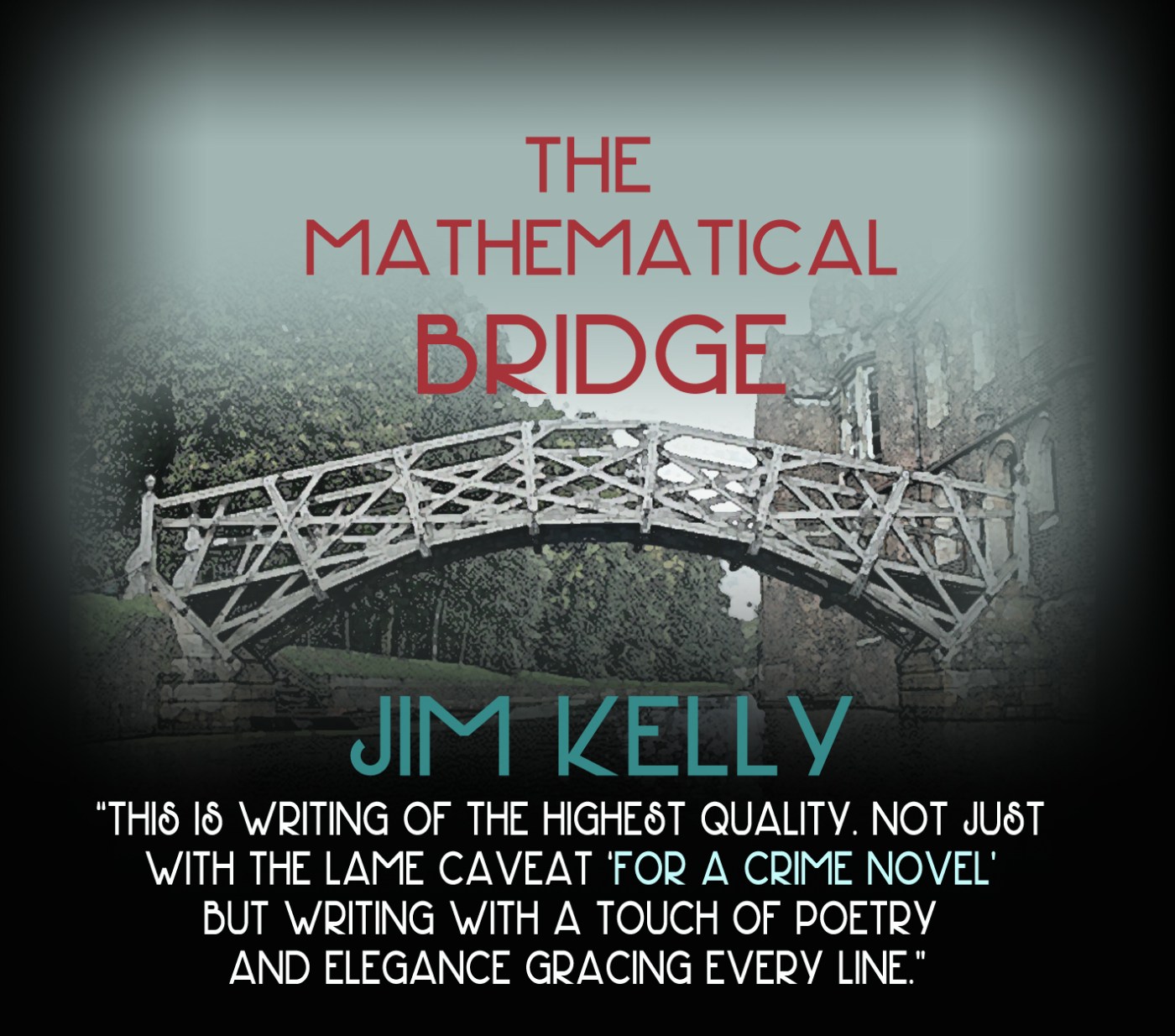
 “Begin as you mean to go on” says the old adage, and Jim Kelly sets himself a hard task with the brilliant and evocative first paragraph of The Mathematical Bridge. The beautiful use of language aside, Kelly’s first 126 words convey a wealth of information. A country at war. Midwinter. A city preparing for an attack from the air. A policeman out and about when honest men are abed.
 This is writing of the highest quality. Not just with the lame caveat ‘for a crime novel’ but writing with a touch of poetry and elegance gracing every line. Even when the crime is solved, the perpetrators are behind bars, and the delightfully complex contradictions of the plot have been explained, Kelly (right) still has the emotional energy to give us a last scene which manages to be poignant but, at the same time, life-affirming.


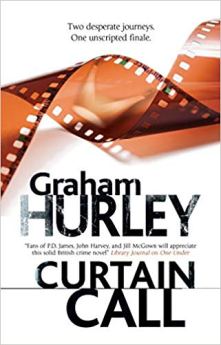 Enora’s reunion with her one-time lover has unintended consequences, particularly in relationship to her son, who turns up in London having fallen out with his father who, in turn is facing bankruptcy after a severe career downturn. There is crime – of a sort – in the novel, most horrifically when Culligan’s Syrian boyfriend is beaten within an inch of his life, but Curtain Call is much more complex and multi-layered. Admirers of the Faraday novels will love the fact that Saucy was a long-time confrère of the ebullient and occasionally unhinged King of the Portsmouth underworld, Bazza Mackenzie, a nemesis who Joe Faraday spent twelve memorable novels trying to put behind bars.

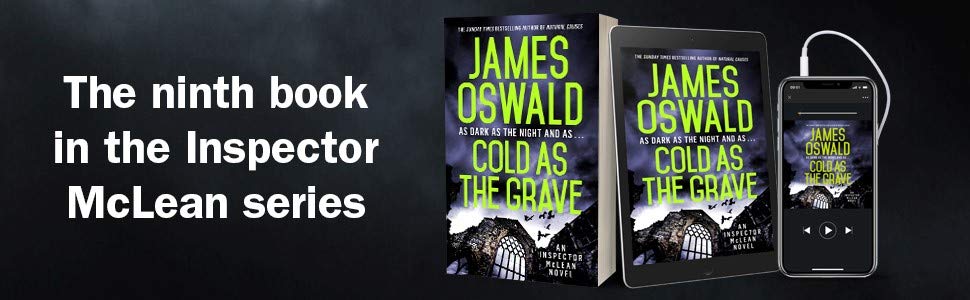
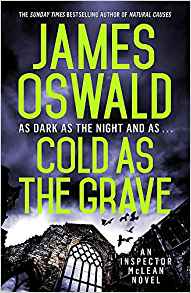 Cold As The Grave is the ninth novel in the Tony McLean series, but fine writers – and Oswald is up there with the very best – make sure that it is never too late to come to the party. For anyone new to the series, McLean is something of an individual. Due to an inheritance, he is exceedingly wealthy, but has a modest lifestyle and chooses to remain a police officer. He has a long-standing ‘significant other’ in Emma Baird, but the previous novel,
 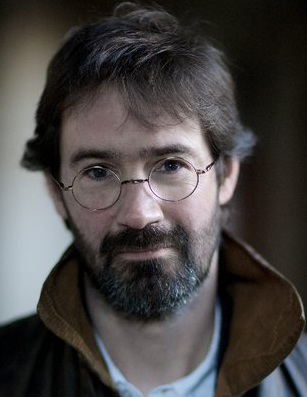 Does McLean follow his head or his heart? The road to the left or the right? Cold As The Grave is a brilliant police procedural, but there is more – so much more – to it. For those who love topographical atmosphere Oswald (right) recreates a wintry Edinburgh that makes you want to turn up the central heating by a couple of notches; for readers drawn by suggestions of the supernatural there is enough here to induce a shiver or three, while making sure the bedroom light remains on while you sleep. The sheer decency and common humanity of Tony McLean – and the finely detailed portraits of the people he works with – will satisfy the reader who demands authentic and credible characterisation.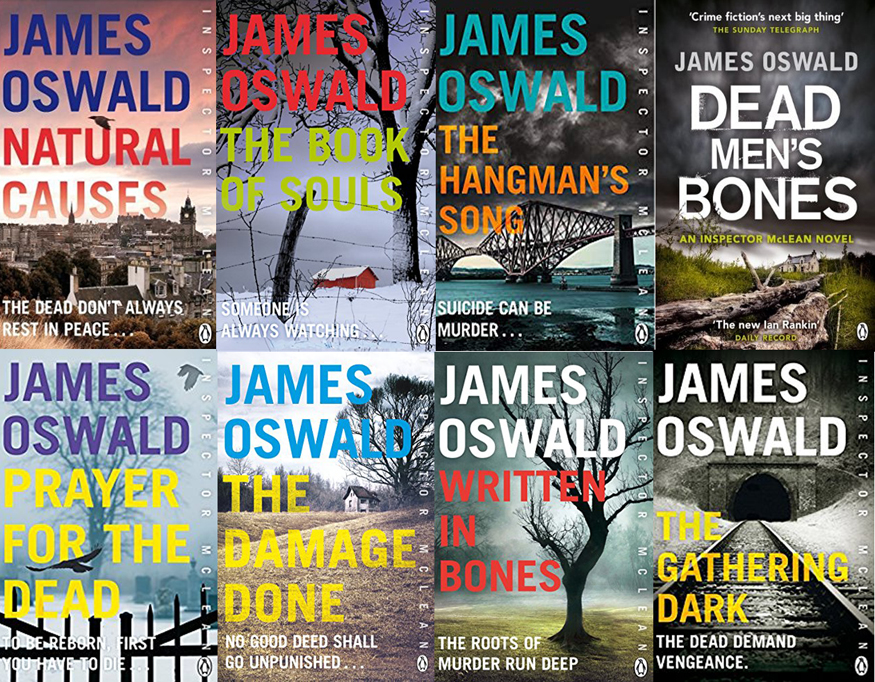


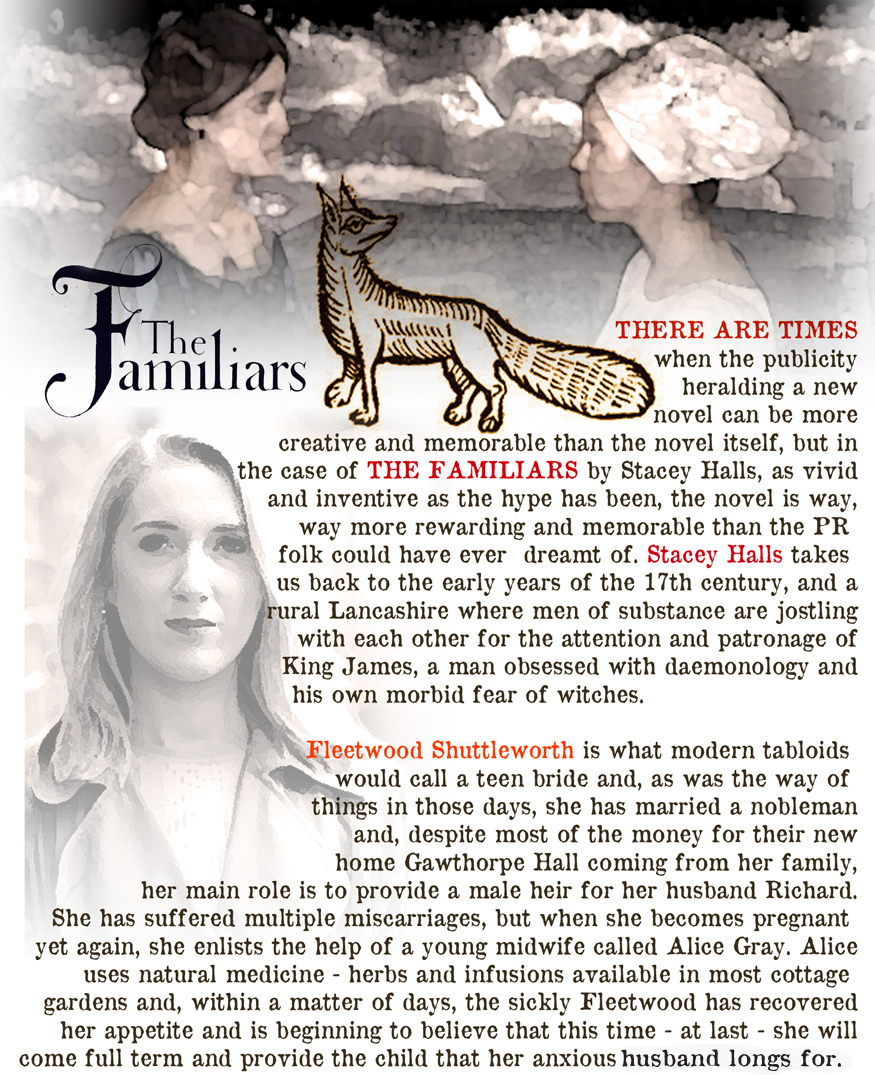


 Thus begins another case for Professor Matt Hunter, a university lecturer in religion and belief. He has previously helped the police in cases which involve sacred or supernatural matters (see the end of this review) and he is called in when it becomes clear that the wielder of the axe was none other than the teenage son of the Reverend David East, and that the boy was under the spell of a cult of deviant Christians whose central belief is that God The Father is a brutal tyrant who murdered his only son. They are also convinced that all other humans but them are ‘Hollows’ with evil in their eyes. Consequently, they shun all contact with the outside world, and live in a remote farmhouse, deep in the hills at the end of a rutted farm track.
 One of the most intriguing aspects of the Matt Hunter books is the relationship between the fictional former man of God and the very real and present minister in the Baptist church, the Reverend Peter Laws himself . We get a very vivid and convincing account of how Hunter has lost his faith, but also the many facets of that belief that he has come to see as inconsistent, illogical, or just plain barbaric. It suggests that Laws has identified these doubts in his own mind but, presumably, answered them. In these days of CGI nothing is impossible, so a live debate between Reverend Laws and Professor Hunter would be something to behold.
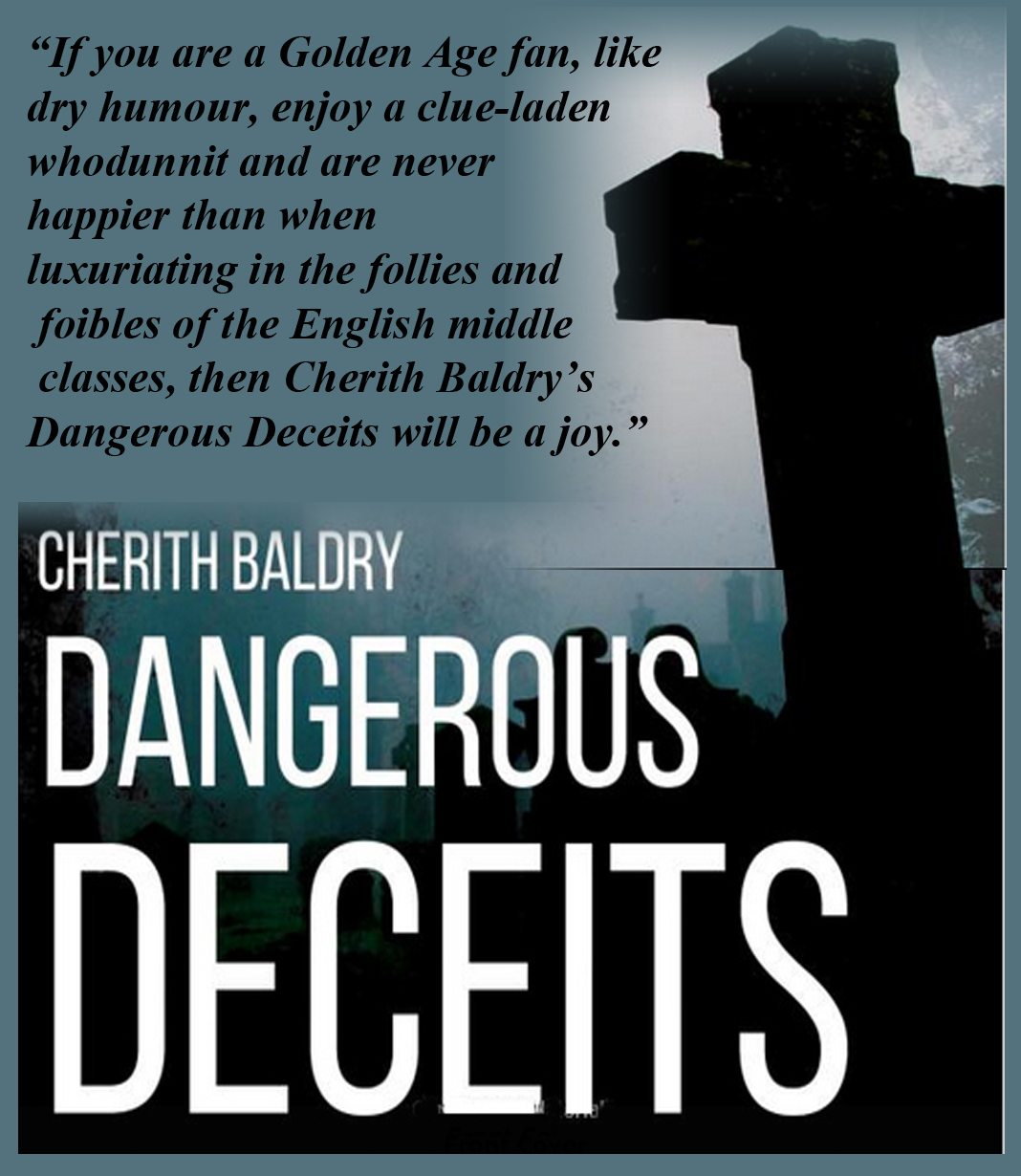
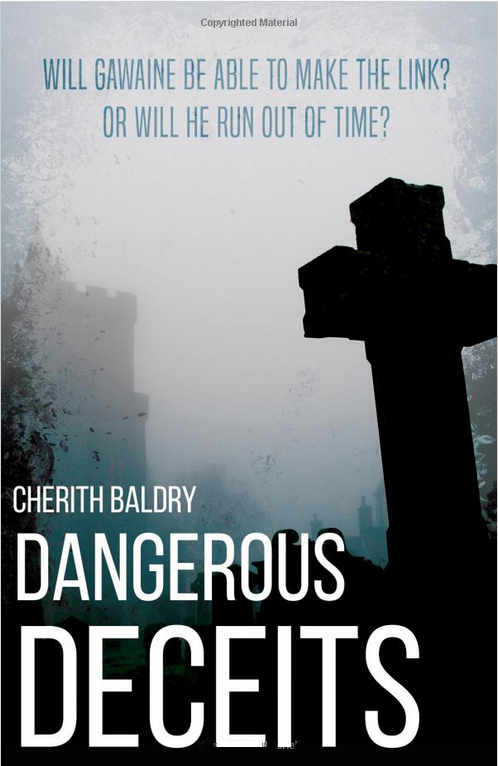 You might guess that a crime novel featuring an amateur detective called Gawaine St Clair is not going to take you down many mean streets; furthermore, were one to Frenchify its chromatic tint, then it would probably be nearer beige than noir. This being said, if you are a Golden Age fan, like dry humour, enjoy a clue-laden whodunnit and are never happier than when luxuriating in the follies and foibles of the English middle classes, then Cherith Baldry’s Dangerous Deceits will be a joy.
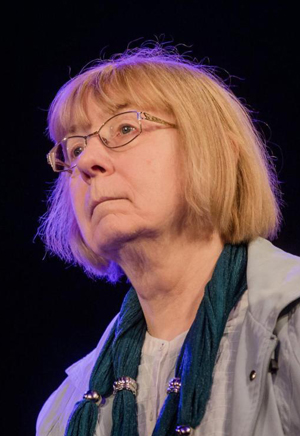 Gawaine may be too arch and precious for some tastes but he fits perfectly into the Home Counties landscape with its manicured village greens and faux Tudor dwellings. I thoroughly enjoyed Dangerous Deceits and Father Tom’s killer is unmasked not amid the dusty shelves of a country house library, but in the altogether more fractious atmosphere of an extraordinary (in the procedural sense) meeting of the Ellingwood PCC. The solution, as in many a whodunnit, rests with everyone – including Gawaine, the local coppers and, in this particular case, me – making a seemingly obvious assumption early in the piece.
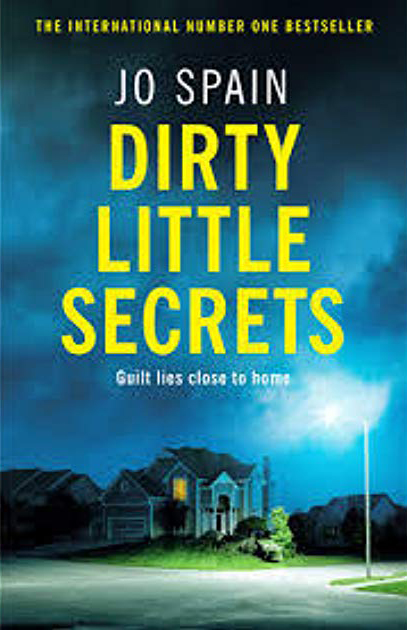 Withered Vale? Hardly your standard estate agent euphemism. Honeysuckle Meadows, Skylark Leys, Virginia Reach, Lakeside View, maybe, but Withered Vale? Years ago, the man who farmed the fields now built over was over-zealous with his pesticide, and nothing grew ever again. The enterprising developer, alert to a possible marketing triumph, chose to retain the local name, thinking that it had a certain ironic snap to it which might appeal to wealthy young professionals. He was right. No. 4 The Vale – Olive’s cottage – dates from before the development, however, and is dwarfed by the arrivistes.
 Thus Spain sets up a writhing nest of vipers, every one of whom has a very good reason for wanting Olive Collins dead and out of its life. The narrative darts back and forth between the homes as we learn the hopes, sins and insecurities of the residents, each with a flimsy alibi and united by a mixture of fear and loathing for the apparently mild-mannered resident of No. 4 The Vale. As we scratch our heads wondering whodunnit, could we be looking at some kind of collective guilt, à la An Inspector Calls? The solution, when it comes, is deliciously perverse and very satisfying. Jo Spain (right) has a talent to enthrall, and in an afterword to this book she writes of her early love of reading:

 Sensing a very productive headline story that will run and run, Kate Waters uses all her empathy and tricks-of-the-trade to get close to the girls’ families, and the story does indeed have the whole enchilda. Beautiful teenage girls, disappearance in a Bangkok drug den, frantic parents, the possibility of incompetence by foreign police – what could possibly go wrong? Jake Waters is what could possibly go wrong. Kate’s son has been away in Thailand “finding himself” after a failed spell at university, and her journalistic glee at the ramifications of the story is brutally brought up short when she finds that her errant boy might be at the very epicentre of the story she has claimed as her own.
 It must be said that this is a story long on personal misery and rather short on redemption, but it is beautifully written. The nuances of conversation, gesture and body language are exquisitely observed even if they sometimes make for painful reading, such as the bittersweet moments between Bob Sparkes and his dying wife. My own children are, thankfully, well past the age of “doing” Thailand, but my advice to those with gap-year offspring is, with all respect to Fiona Barton (right), don’t read this book! Once your teenagers have shouldered their backpacks and waved goodbye at the departure gate, your mind will hark back to The Suspect it will be nessun dorma for you!


 fullybooked2017