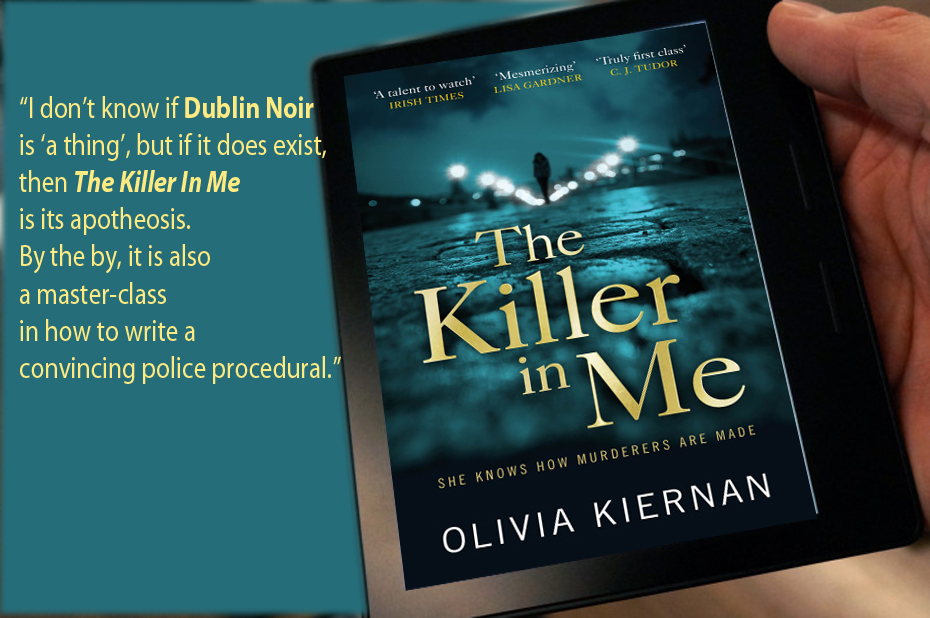

 hief Superintendent Frankie Sheehan is the leader of an elite crime unit of Dublin’s An Garda Síochána, known as The Bureau. She has been asked by her sister in law – who works for a human rights group called Justice Meets Justice – to look over the evidence and paperwork related to a horrific historic crime, where a teenager called Seán Hennessy was convicted of the savage murder of his mother and father, and the attempted murder of his young sister. Now, Hennessy has been released, and he is the latest cause célèbre for JMJ. Sheehan reluctantly agrees, but her attention is quickly diverted to a double murder.
 Two bodies have been found in a church in the well-to-do coastal suburb of Clontarf. The victims are identified as a local woman and her husband, but their deaths seem strangely disconnected. Geraldine Shine has been stabbed, but her husband Alan was strangled, has been dead for much longer, and his corpse shows every sign of having been kept in a freezer.
Sheehan and her colleague Detective Baz Harwood are pulled every which way by a murder investigation which becomes more complicated when another body is found. Conor Sheridan has been shot, again kept in a freezer, but this time displayed at the edge of the beach, up against Clontarf’s sea wall. While looking like a mass of disconnected but tangled threads, the various strands of evidence – the CCTV footage, the forensic data, the human connections – seem to defy the weaver’s comb which will straighten them into a recognisable pattern. When Sheehan gets a glimpse of what it all means, she realises with horror that it links to the Hennessy murders and, indirectly, to her own family.
Despite its grim subject matter, The Killer In Me is a thing of beauty. I have, sadly, never been to Dublin or spent serious time with Irish people, but Olivia Kiernan gives the dialogue, particularly when people are using the vernacular, a gentle lilt.
Kiernan never lets us forget, however what savagery through which, via the eyes of Frankie Sheehan, we are wading. Her immediate boss, Assistant Commissioner Jack Clancy, gives her this sombre warning.
“Be careful with this, Frankie. Sometimes when you look into the mouth of that kind of evil, it’s hard to look away. You think, give it another few moments, your eyes will adjust, you’ll see the bottom of that darkness, understand it. It’s alluring. Addictive. And while you’re standing there rooted to the spot, you’re not noticing the fucking shadow is closing over you and you’re disappearing.”
 I don’t know if Dublin Noir is ‘a thing’, but if it does exist, then The Killer In Me is its apotheosis. By the by, it is also a master-class in how to write a convincing police procedural. Sheehan shares her modus operandi when interviewing a reluctant suspect:
“We rely on a man’s capacity to always think the worst couldn’t happen. That no matter what they tell us, they will be okay. And because humans want to believe that, eventually they do begin to talk. And when they do, a tongue-tied perp can morph into a grand orator.”
 ark, complex, brutal but full of compassion, The Killer In Me is breathtakingly good. It is published by riverrun (a literary imprint of Quercus) and is available now in all formats.


 t takes a very ingenious – not to say devious mind – to fashion a fiction plot which meshes together a whole bagful of disparate elements to make a satisfying whole that challenges the imagination but does not exceed it in possibility. Adam Loxley has done just that in his latest thriller The Artemis File. George Wiggins is Mr Ordinary. He lives in what would have been called, years ago, a bijou residence in the twee Kentish town of Tenterden. He is not Mr Stupid, however. He travels into ‘town’ each day to sit at his desk in Fleet Street where he composes the daily crossword for The Chronicle under his pseudonym Xerxes. Aficionados know that in reality, all that is left of the newspaper industry in Fleet Street are the buildings, and the use of the term to denote popular journalism, but we can forgive Loxley for having the good, old-fashioned Chronicle hanging on by the skin of its teeth when all its fellows have decamped to Wapping or soulless suburbs somewhere off a dual carriageway.
 When George has a rather startling experience in his local pub after a couple of pints of decent beer, the other elements of the story – MI5, the CIA, Russian agents, immaculately dressed but ruthless Whitehall civil servants and, most crucially, the most infamous unsolved incident of the late 20th century – are soon thrown into the mix. Such is George’s conformity, it is easily compromised, and he is blackmailed into writing a crossword, the answers to which are deeply significant to a very select group of individuals who sit at the centres of various spiders’ webs where they tug the strands which control the national security of the great powers.
 eorge Wiggins might have been easily duped and he has few means to fight back, but he recruits an old chum from the Chronicle whose knowledge of the historical events of the 1990s proves key to unraveling the mystery of who wanted the crossword published – and why. While the pair rescue a dusty file from an obscure repository and pore over its contents, elsewhere a much more visceral struggle is playing out. A ruthless MI5 contract ‘fixer’ called Craven is engaged on a courtly dance of death with a former CIA agent, current American operatives and their Russian counterparts.
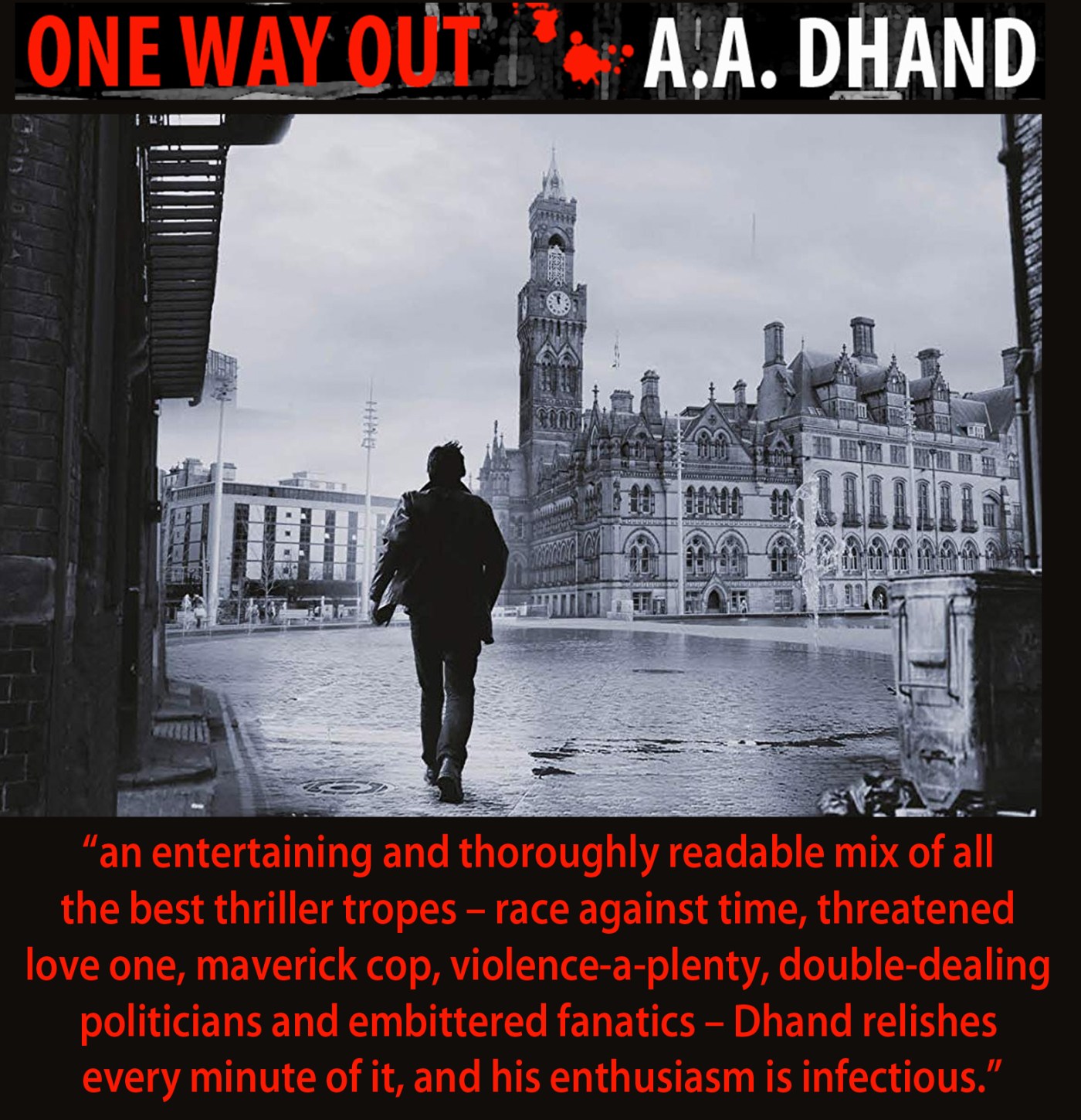

 f fictional coppers need to be idiosyncratic to attract readers, then DI “Harry” Hardeep Singh Virdee ticks all the required boxes and also a good few new ones of his own devising. The Bradford policeman is a Sikh, but has enraged his father and his wider community by doing the unthinkable in marrying a Muslim woman. His brother Ronnie also happens to be a ruthless career criminal.
 The latest novel from AA Dhand is a gripping thriller which goes well beyond the constraints of the conventional police procedural. One Way Out begins with a huge bomb going off in the centre of Bradford. Although there has been sufficient warning to minimise civilian casualties, the perpetrators – an extreme right wing group known as The Patriots – have a further trick up their sleeve. It is a Friday, and with all 105 mosques in the Yorkshire city being full of worshippers, the terrorists announce that they have planted a bomb in one of the mosques, and it will be detonated unless the police track down and hand over the members of a notorious Islamic militant group called Almukhtaroon. The Patriots have pre-empted the obvious evacuation of the mosques by stating that if one single worshipper attempts to leave, the bomb will be detonated.
 hat we then have is an entertaining and thoroughly readable mix of all the best thriller tropes – race against time, threatened love one, maverick cop, violence-a-plenty, double-dealing politicians and embittered fanatics – Dhand relishes every minute of it, and his enthusiasm is infectious.
 Dhand is a Bradford man, born and bred, and he paints a vivid – if occasionally depressing – picture of the results of racial and religious bigotry. While he is justifiably harsh on right-wing extremism, he doesn’t spare the blushes of the Asian community, whether they are warring Muslim factions or Sikhs with more angry pride in their hearts than compassion. I’m not sure I totally bought into the relationship between Virdee and Tariq Islam, but no matter what the plot, suspension of disbelief is what we fiction readers are good at, otherwise we would spend our days reading history books or browsing the Argos catalogue.
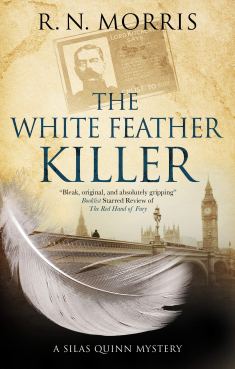 I’m a great fan of historical crime fiction, particularly if it is set in the 19th or 20th centuries, but I will be the first to admit that most such novels tend not to veer towards what I call The Dark Side. Perhaps it’s the necessary wealth of period detail which gets in the way, and while some writers revel in the more lurid aspects of poverty, punishment and general mortality, the genre is usually a long way from noir. That’s absolutely fine. Many noir enthusiasts (noiristes, perhaps?) avoid historical crime in the same way that lovers of a good period yarn aren’t drawn to existential world of shadows cast by flickering neon signs on wet pavements. The latest novel from RN Morris, The White Feather Killer is an exception to my sweeping generalisation, as it is as uncomfortable and haunting a tale as I have read for some time.
 orris takes his time before giving us a dead body, but his drama has some intriguing characters. We met Felix Simpkins, such a mother’s boy that, were he to be realised on the screen, we would have to resurrect Anthony Perkins for the job. His mother is not embalmed in the apple cellar, but an embittered and waspish German widow, a failed concert pianist, a failed wife, and a failed pretty much everything else except in the dubious skill of humiliating her hapless son. Central to the grim narrative is the Cardew family. Baptist Pastor Clement Cardew is the head of the family; his wife Esme knows her place, but his twin children Adam and Eve have a pivotal role in what unfolds. The trope of the hypocritical and venal clergyman is well-worn but still powerful; when we realise the depth of Cardew’s descent into darkness, it is truly chilling.
 Historical novels come and go, and all too many are over-reliant on competent research and authentic period detail, but Morris (right) plays his ace with his brilliant and evocative use of language. Here, Quinn watches, bemused, as a company of army cyclists spin past him:
 uinn has to pursue his enquiries in one of the quieter London suburbs, and makes this wry observation of the world of Mr Pooter – quaintly comic, but about to be shattered by events:


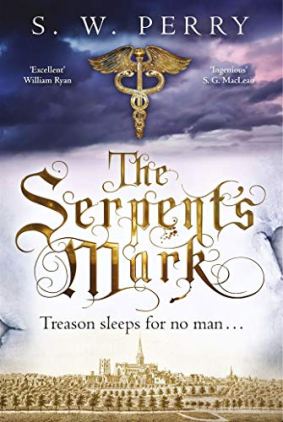 London, 1591. Queen Elizabeth has ruled England for over three decades, but the religious fires lit by her father and then – literally – stoked by the Catholic zealots driven on her half-sister Mary, may just be glowing embers now, but the mutual fear and bitterness between followers of the Pope and members of the English church are only ever a breath away from igniting more conflict. Just a few short miles from England’s eastern coast, war still rages between the rebels of The Seventeen Provinces of The Low Countries and the armies of King Philip of Spain.
 he arrival of a Venetian ship on Bankside brings not only Bianca’s cousin Bruno Barrani but a violent encounter in The Jackdaw which leaves the Venetian near death with a terrible head wound. Shelby ministers to the grievously wounded Italian, but is then summoned to an unwelcome reunion with the saturnine and deeply dangerous Robert Cecil. Shelby is already aware that Samuel, the young son of his former military commander Sir Joshua Wylde is afflicted with The Falling Sickness (epilepsy) and is being tended in rural Gloucestershire by a controversial Swiss doctor, Arcampora. Shelby has already agreed to give Wylde a second opinion, but when Cecil offers him a large sum of money to do exactly the same thing, he welcomes the opportunity to both repay a favour and line his pockets.
 This is a riveting and convincing political thriller that just happens to be set in the sixteenth century. The smells and bells of Elizabethan England are captured in rich and sometime florid prose, while Nicholas and Bianca are perfect protagonists; she, passionate, instinctive and emotionally sensitive; he, brave, resourceful and honest, but with the true Englishman’s reluctance to seize the romantic moment when he should be squeezing it with all his might. SW Perry (right) has clearly done his history homework and he takes us on a fascinating tour through an Elizabethan physic garden, as well as letting us gaze in horror at some of the superstitious nonsense that passed for medicine five centuries ago.
 is a reference to the Rod of Asclepius, which was a staff around which a serpent entwined itself. This Greek symbol has always been associated with healing and medicine, existing even in our time as the badge of the Royal Army Medical Corps. SW Perry’s novel is published by Corvus and

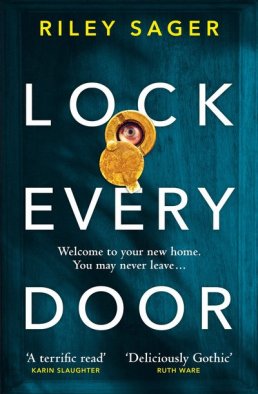 It could be said that fate has not treated Jules Larsen with kindness. Her family disintegrated. Sister Jane mysteriously went missing one night, last seen getting into a black VW Beetle, but never to be seen again. Her mother, literally crippled with cancer and her father, metaphorically so but by unpayable medical bills, perished in a disastrous fire. Jules paid her way through college and graduated with a qualification that secured her a non-job as a gopher and photocopying skivvy in an anonymous New York office. When they decided to ‘rationalise their human resources’ her job was one of the first to go. Ah well, at least Jules had her relationship with sweet, goofy, sexy Andrew, and their shared apartment. Until she came home one time and found lovely Andrew between the legs of some random girl. Andrew is the keyholder, and so adding homelessness to emotional injury, it’s Jules who has to go.
 ules ends up sleeping on the couch of her best college friend, Chloe. Down, definitely, and almost out. Until her daily scan of the situations vacant notices gives her a faint sniff of hope. Someone wants an apartment sitter. It’s not just any old apartment, though. The apartment is in one of New York’s most celebrated buildings – The Bartholomew. Neither as celebrated nor as notorious as The Dakota, The Bartholomew shares spectacular views over Central Park, is built with the same attention to German Gothic details, and is regarded with awe by passers-by as they gaze up at its pediments and gargoyles.
 This is a very clever thriller. Riley Sager (right), as he did in his previous novel

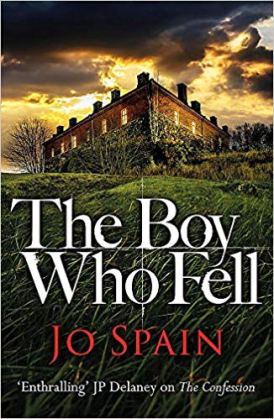 This is a chillingly clever whodunnit shot through with a caustic examination of life among the moneyed classes of contemporary Ireland, particularly Dublin’s nouveau riche and their over-indulged teenage children. Fans of Jo Spain’s DI Tom Reynolds will be overjoyed to see him return for his fifth case, and those who know the author only through her spellbinding standalone novels such as
  Jo Spain is the literary Diva of Deviousness, and while we learn early in the piece that Glenmore House has a bloody history, she waits for some while before reconnecting the earlier slaughter with the death of Luke Connolly. When she does – and Reynolds realises the connection a paragraph or three before we do – the investigation takes on a whole new slant.


 s the immortal Juliet once asked, “What’s in a name?” To her, not very much, as I recall, but it takes a brave novelist – such as Daphne Du Maurier in Rebecca – to keep the narrator and central character anonymous. Jo Baker uses this literary ploy in her latest novel, The Body Lies. Even the title is ambiguous, but the young woman at the centre of this dark domestic thriller is anything but anonymous or sketchily drawn.
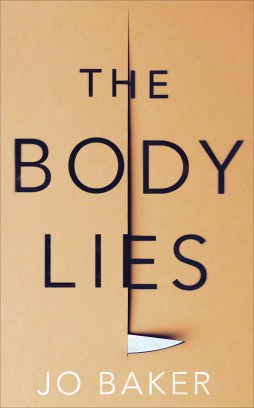 In the absence of a name, what do we know of her? She is a writer who, like so many others in real life, has been published but needs a day job to stay afloat. She is married to a rather dull but worthy London schoolteacher. They have a young son, Sammy and, in an effort to re-establish her identity she makes a successful application for a lecturing job at a university in the north of England. Husband Mark is unwilling to leave his post, and so they agree to live separately but meet up at weekends. At the very beginning of the novel the woman is assaulted by a stranger while she is out jogging: the attack is not physically serious but leaves deep mental scars.
 hen Nicholas and his tutor go beyond the accepted boundaries of student-teacher relationships, the story moves from a wry and sardonic satire on the political and social politics of schools and universities, and takes on a much darker hue. Nicholas disappears, but sends in the weekly updates to his work-in-progress via email – and they are nothing more or less than a blow-by-blow account of his most recent sexual encounter.
 All the familiar tropes of modern British domestic noir kick in, to good effect. We have a stalker, marital infidelity, a woman alone in a remote cottage, the debilitating after effects of recreational drug use, a murder disguised as a suicide and, tellingly, a very scary confrontation on a Wuthering Heights-style moor.


 It is 1965 and we are basking in the slightly faded grandeur of Brighton, on the south coast of England. The town has never quite recovered from its association, more than a century earlier, with the bloated decadence of The Prince Regent, and it shrugs its shoulders at the more recent notoriety bestowed by a certain crime novel brought to life on the big screen in 1947. Brighton has its present-day misdeeds too, and who better to write about it than the intrepid crime reporter for the Evening Chronicle, Colin Crampton?
 inker, by the way, is very much in the John Inman school of caricature luvvies, so those with an over-sensitive approach had better look away now. His pale green shirts, flowery cravats and patronage of certain Brighton nightspots are pure (politically incorrect) comedy.
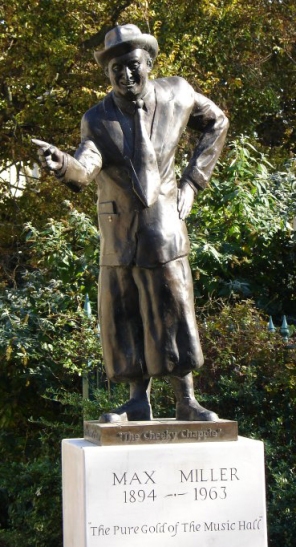 Bernstein’s murder is seen as very much open-and-shut by the Brighton coppers, but Crampton does not believe that Pinker has the mettle to commit physical violence. Instead, his investigation takes him into the rather sad world of stand-up comedians. Today, our stand-up gagsters can become millionaire celebrities, but back in 1965, the old style joke tellers with their catchphrases and patter were becoming a thing of the past, as TV satire was breaking new ground and reaching new audiences. Crampton believes that the murder of Bernstein is connected to the agent’s former association with Max Miller and, crucially, the possession of Miller’s fabled Blue Book, said to contain all of The Cheeky Chappy’s best material – and a few jokes considered too rude for polite company.


 fullybooked2017