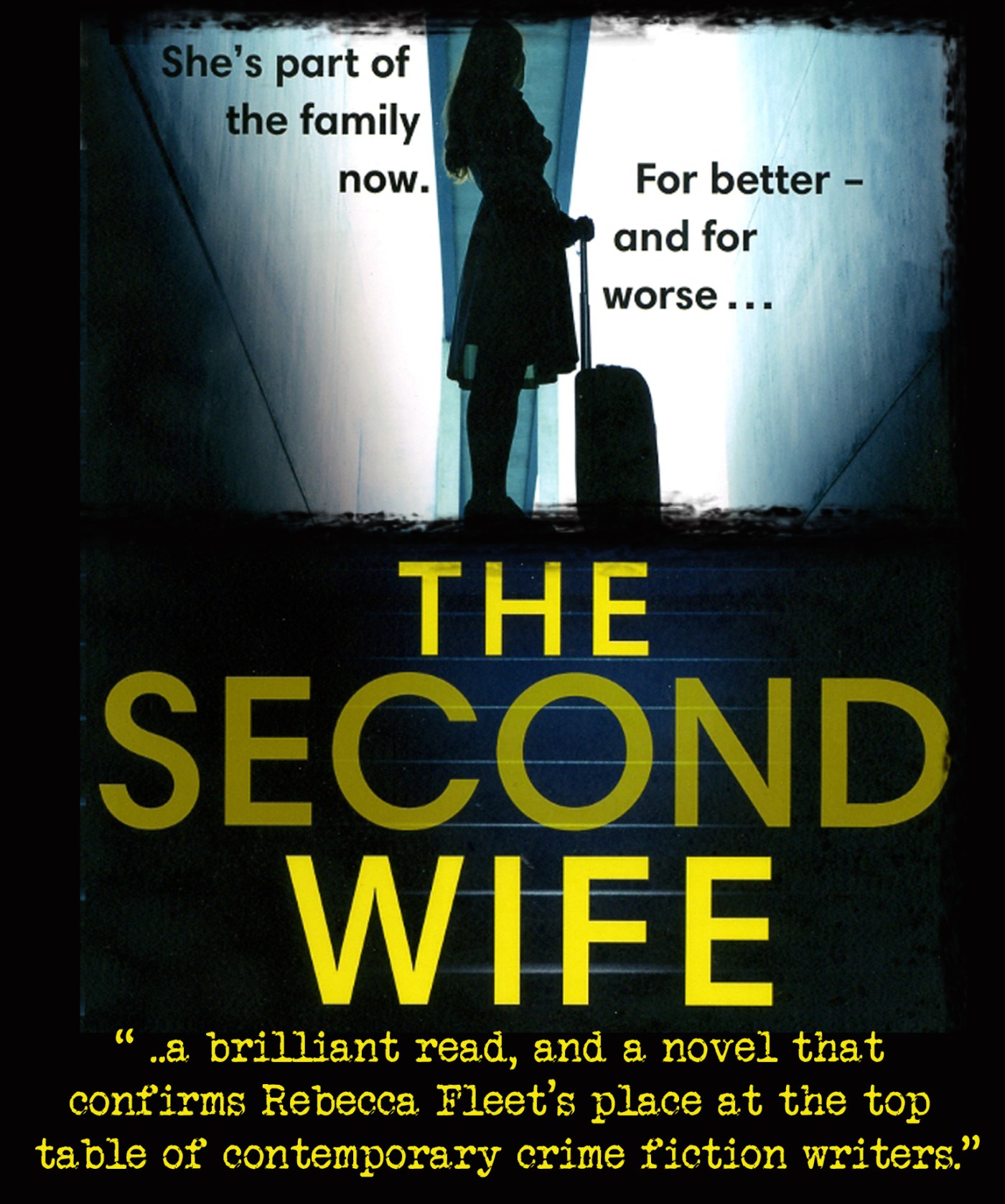

The Second Wife is Rebecca Fleet’s second novel. Her first, The House Swap, was well received and now she takes her skill at writing engaging domestic thrillers to the next stage. I will say at the outset that as much as I was gripped by The Second Wife, I was cursing quietly to myself because it contains a seismic plot shift towards the end which completely demolishes every assumption the reader may have made about what is going on, based on what he or she has been told by the different narrators. But why the curses? Simply because it makes a summary doubly difficult, because no reviewer wants to be known as the person who gave the game away. I loved the book, however, and I want you to love it too, so here goes – treading on eggshells.
 There are three narrative viewpoints; centrally, there is Alex. He is a widower with a teenage daughter, Jade. He works in an advertising agency in Brighton, on England’s south coast. His first wife died from cancer when Jade was just a little girl, but he has remarried. The titular second wife Natalie is one of the storytellers, and she does her best to be a decent ‘second mum’ to Jade, although hormones have started to kick in and Jade is, like every modern teenage girl, obsessed with her social media profile and perceived slights from her step mum.
The novel begins with a serious fire in Alex’s house. Natalie, overcome by the smoke and flames, has been unable to rescue Jade, but the emergency services arrive in time to bring the teenager to safety. Temporarily relocated to a hotel, Alex and Natalie take turns at Jade’s hospital bedside as she slowly recovers from the ordeal. As Jade comes back to life, Alex is both puzzled and horrified at his daughter’s insistence that there was a strange man in the house at the time of the fire. Now, Alex’s disquiet turns to genuine alarm, and Natalie admits to him that she has a disturbing back-story.
 Her estranged sister, Sadie, has led a wayward and self-destructive existence which has forced Natalie to put some distance between herself and her sister, and reinvent herself using a different identity. Sadie’s obsession with a violent criminal has gone disastrously wrong, and Natalie is trying to lead a new life. By this time, Fleet (right) has given Sadie a voice of her own, and we listen to the musings of a sexually promiscuous young woman who has used men like Kleenex, and has a moral compass that barely makes the needle flicker beyond zero on the scale. But she has fallen under the spell of Kaspar, a London club owner who uses women in the same way that Sadie has come to use her queue of suitors.
So, we have the three viewpoints. Timewise, they span almost a decade. All I can say is that one of them – and you have to choose – is telling the mother of all lies. The Second Wife is anxiety-on-a-stick and, although the plot twist left me wondering who on earth I could rely on to tell me the truth, this was a brilliant read, and a novel that confirms Rebecca Fleet’s place at the top table of contemporary crime fiction writers. The Second Wife is published by Doubleday and is out today, 5th March.
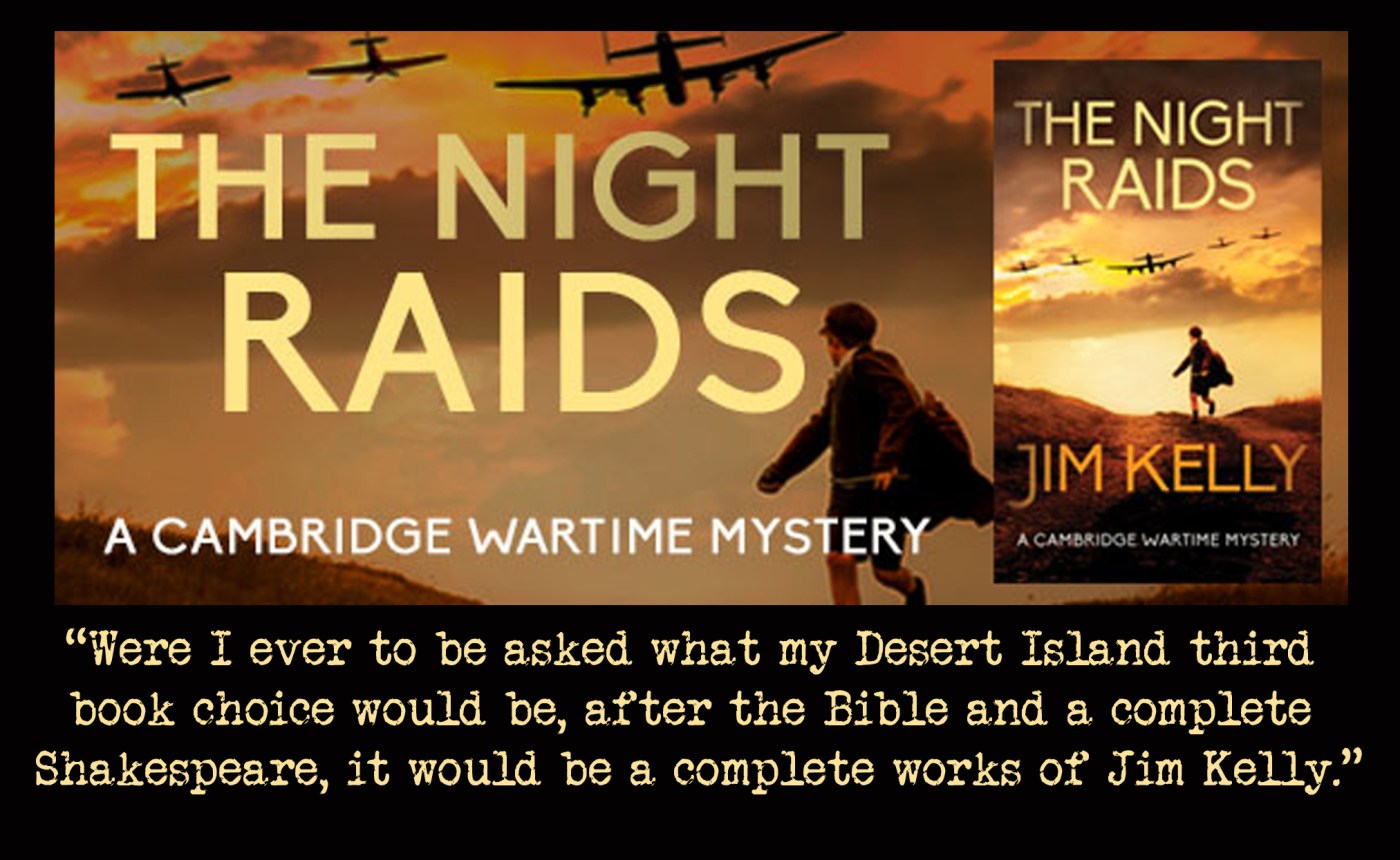
 In Night Raids we see some of the story through the eyes of a crew of a German Heinkel bomber. Their mission is to destroy an essential bridge over the river; the bridge, crucially, carries the railway taking vital men and munitions to the east coast, where invasion is a daily expectation.The bombers come over at night, and have so far failed to destroy the bridge. What they have done, however, is unload some of their bombs on residential areas of the town, and inside one of the terraced houses wrecked by the raid, Brooke finds the body of an elderly woman. Her death is clearly attributable to Hermann Goering’s Luftwaffe, but the fact that her left ring finger and middle finger have been removed with a hacksaw cannot, sadly be laid at the door of the Reichsmarschall.

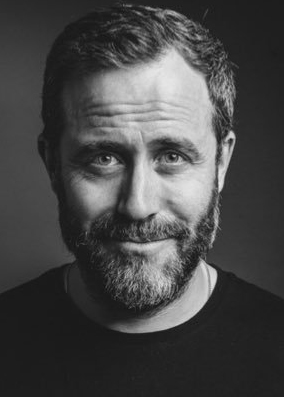 Belfast and its grim sectarian past is the epitome of noir. But, sadly, it is a non-fiction noir, as real events over the past fifty years or so would have been dismissed as preposterous had they been penned by a novelist. Such novelists would have to be writing historical fiction, though – wouldn’t they? Surely the momentous events of the spring of 1998 signaled a slow but irrevocable process of healing across the province? Gary Donnelly (left) has written a blistering debut novel Blood Will Be Born which says otherwise.
 is Belfast minder is to be DC Aoifa McCusker, an ambitious and headstrong young officer widely distrusted by her male colleagues. Even before Sheen and McCusker have the chance to discover how they each like their coffee, author Donnelly introduces us to two of the spectacularly grotesque villains of the story. First up is John Fryer, a brutal republican hitman with too many deaths to his name. Too many? Fryer’s murderous career has been haunted by a grisly mythical beast known as The Moley, who rises up from the primeval bog and is only placated by the shedding of fresh blood. Fryer is contained – for now – in a secure mental hospital.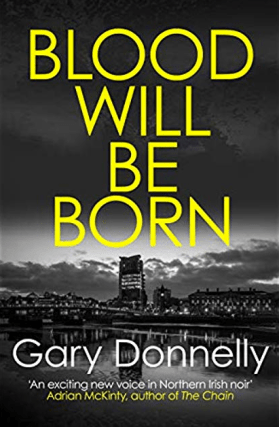
 ryer and Moore, for their own reasons, are determined to set Belfast on fire. Not the triumphalist – but literal and containable – fire of The Loyalist bonfires on the eve of 12th July, but a fire which will lay waste to the fragile peace enjoyed in the divided city. Sheen and McCuskey, with different motives, are desperate to bring down Fryer and Moore.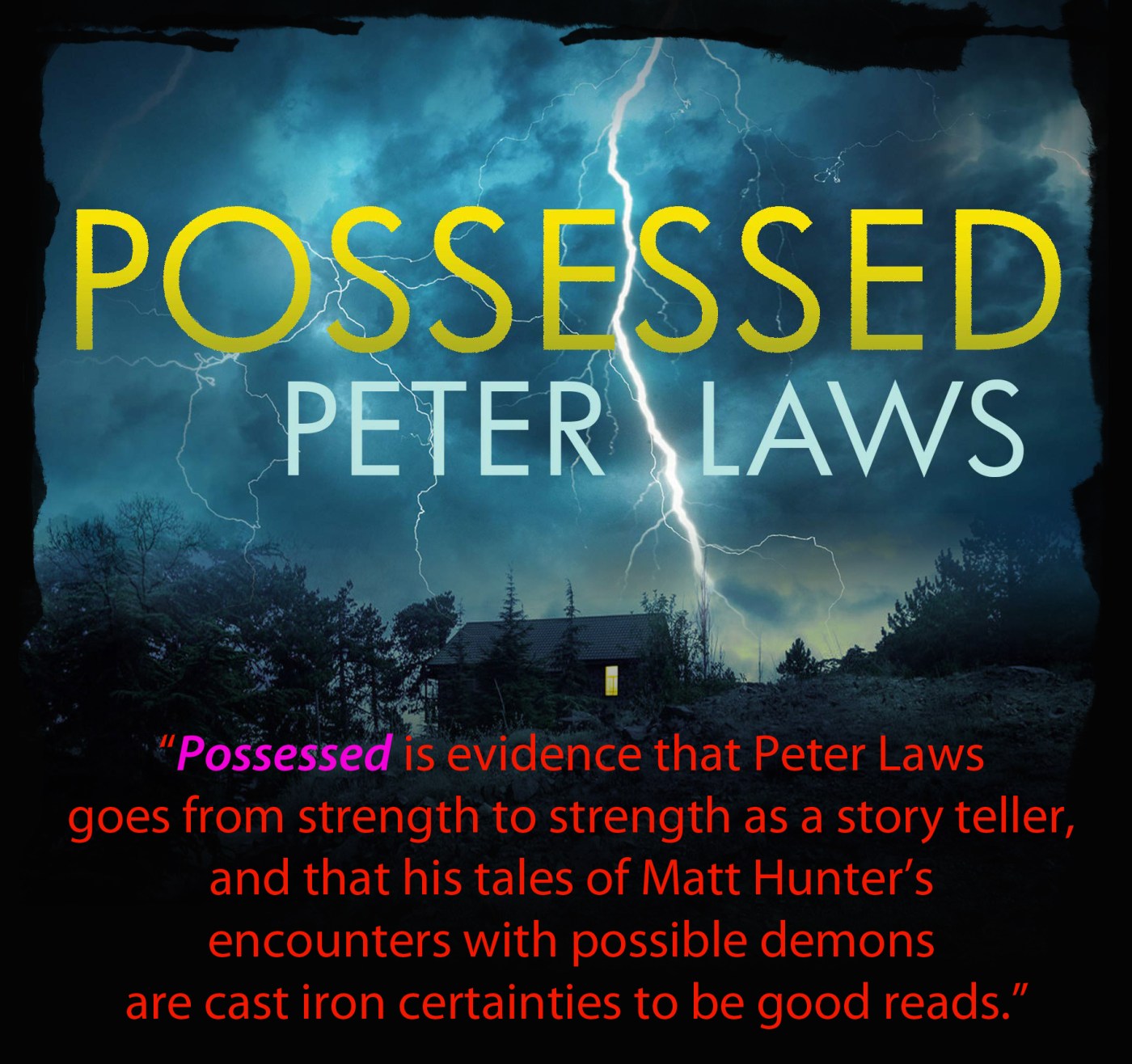
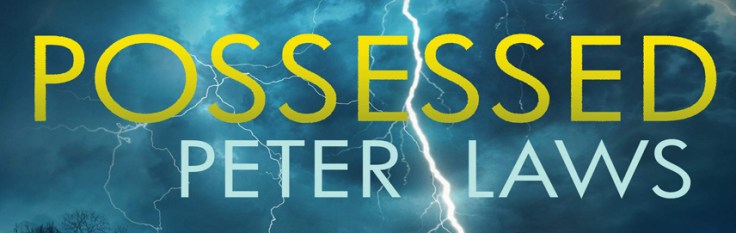
 Peter Laws introduced us to Matt Hunter in Purged (2017) and we learned that he is a former priest whose total loss of faith coincided with tragic personal events. Now, he lectures in the sociology of religion and belief systems, and has a reputation (one which does not sit lightly with him) for being the go-to guy when the police have a case which is ‘not dream’t of in our philosophy’.
 unter discovers that Riley is a devotee of a local church, one which, depending on your view might be termed either ‘charismatic’ or ‘a bunch of eyeball-rollers’. Things take a dramatic turn for the worse when Riley’s wife is discovered, horribly mutilated, in one of the customer chairs of her home hairdressing salon.
 hat happens next is violent, bloody, improbable – but totally gripping. Of course, Matt Hunter survives to return to his delightful wife and children, but not before he is forced to question his firmly-held disbelief in ‘ghoulies and ghosties, and long-leggedy beasties, and things that go bump in the night.’
 Laws (right) doesn’t exactly play it for laughs, but amid the knockabout spookery and Hunter’s own predilection for making wisecracks, there is serious stuff going on. It is worth comparing Matt Hunter with another fictional investigator of strange things – Phil Rickman’s Merrily Watkins. Like the real life Peter Laws, Merrily Watkins is a priest. Like Matt Hunter, merrily doesn’t necessarily believe in the supernatural, but she is totally convinced that some folk do.


 ames Oswald’s Edinburgh copper Tony McLean is something of a fixture in the crime fiction firmament these days, and Bury Them Deep is the tenth in the series. For those readers picking up one of his cases for the first time, a little of his back story might be helpful. He is based in Edinburgh and now, of course, works for Police Scotland. He was (unhappily) educated in English independent schools thanks to his wealthy family, some of whose riches he has inherited, thus making him ‘a man of means’. He lives in an old and impossibly roomy house, left to him by his grandmother. He has a fragile relationship with partner Emma, and it is fair to say that their life together has been punctuated by both drama and tragedy. McLean drives a very plush Alfa Romeo, enjoys an occasional glass of cask-strength single malt whisky and, aside from his instinct for police work, has been known to be susceptible to stimuli and influences that are not, as Hamlet remarked, “dreamt of in your philosophy.” After many successful cases, he is now Detective Chief Inspector McLean, but if his superiors imagine he will settle for a life behind a desk, they are very much mistaken.
 Anya Renfrew is a rather dowdy and dull police civilian worker who seems devoted to her job, which is mastering the many databases which keep investigations fed with information. She has never had a day off in her life, and so when she goes missing it is considered rather unusual. Her mother is a former – and legendary – police superintendent, but Grace Ramsay is now old and infirm, living in a care home. Police are never more active than when investigating actual or possible harm to one of their own, and when McLean searches Anya’s house, what he finds hidden in her wardrobe indicates that Ms Renfrew’s private life was more exotic – and dangerous – than colleagues might have imagined.
 cLean’s professional life already has one big complication. A five-times serial killer called Norman Bale is in a secure mental hospital, thanks to McLean’s diligence and bravery. Now, he asks to speak to McLean, and what he has to say is both shocking and improbable. Are his words just the ramblings of a psychological disturbed killer, or does his suggestion – that Anya Renfrew’s disappearance and the moorland bone-pit are linked to a sinister piece of folklore – have any substance?
 t takes a bloody good writer to mix crime investigation with touches of the supernatural. John Connolly, with his Charlie Parker books is one such, but James Oswald (right) makes it work equally as well. The finale of this novel is as deeply frightening as anything I have read for a long time. Despite the drama, Oswald can use a lighter touch on occasions. There is dark humour in the way McLean sometimes needs to ingratiate himself with Edinburgh’s smart set. At an art gallery opening night he listens politely as two guests discuss one of the objets d’art: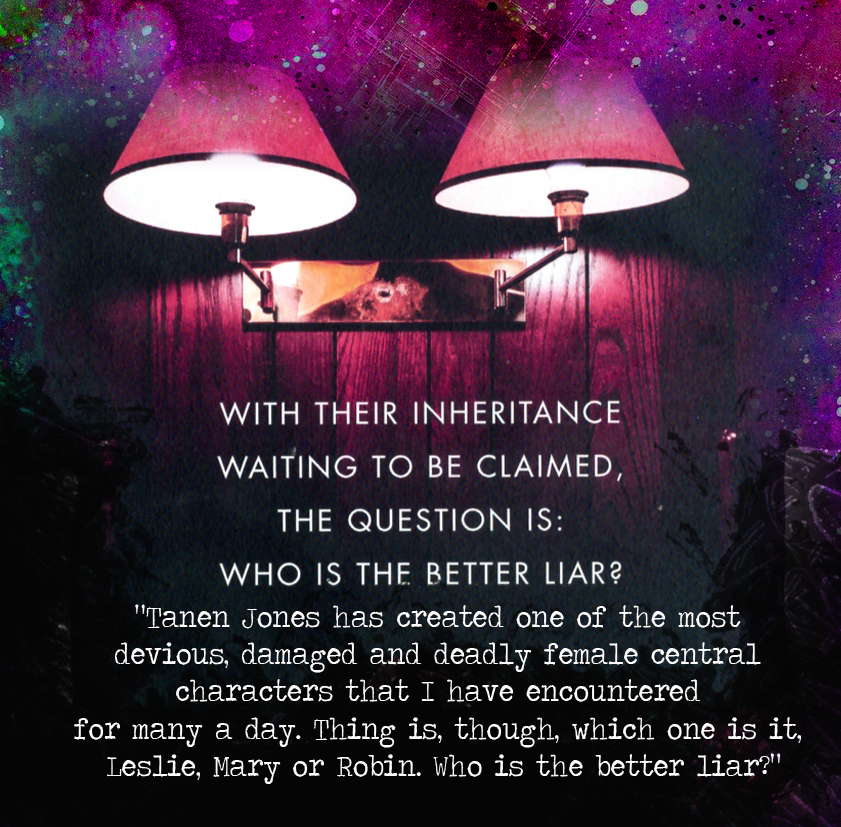

 When their father dies after a long illness, Leslie sets out to find Robin and eventually tracks her down to a seedy apartment block in Las Vegas.One slight problem. Robin is face down on the bed in the cockroach infested room, dead of a drug overdose.
 Alert readers may well figure out what is actually going on well before we get the big reveal, but even if you do, it won’t spoil the enjoyment. Tanen Jones (right) takes a wry look at modern obsessions, including a single mom who earns a living for herself and two little boys by posting stuff on Instagram, the debilitating half life lived by relative strangers messaging each other on social media, and the grim reality of women hooked into relationships with parasitic and abusive men.
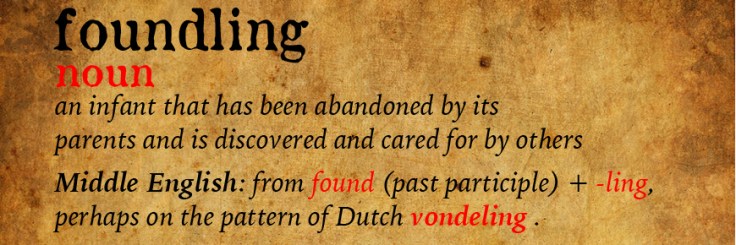
 eing a middle class British father and grandfather, the concept of abandoning a newly born baby is totally beyond my experience of life and (the fault is perhaps mine) my comprehension. The fact is, however, that since Adam had his way with Eve, biology has trumped human intention, and babies have come into the world unloved and unwanted. Thankfully, there have been charitable institutions over the centuries which have done their best to provide some kind of home for foundlings. Abandoning babies is not something consigned to history: modern Germany has its Babyklappe, and Russia its Колыбель надежды – literally hatches – rather like an old fashioned bank deposit box – built into buildings where babies can be left. Back in time, Paris had its Maison de la Couche pour les Enfants Trouvés while in Florence the Ospedale degli Innocenti is one of the gems of early Renaissance architecture. London had its Foundling Hospital, and it is the centre of The Foundling, the new novel by Stacey Halls.
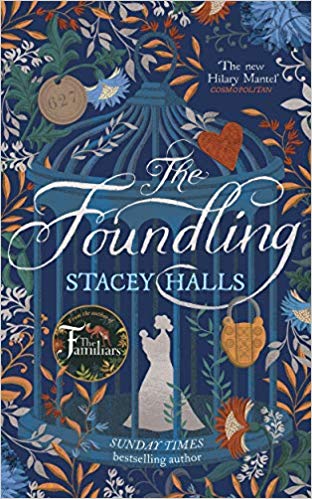 Bess Bright is a Shrimp Girl. Her father gets up at the crack of dawn to buy Essex shrimps from Billingsgate Market, and Bess puts the seafood in the brim of a broad hat and, clutching a tiny tankard to measure them out, she walks the streets of
  elling shrimps from the brim of your hat is not an occupation destined to provide sufficient funds to keep a growing child, and so Bess presents herself and baby Clara at
 ow – and where – Bess finds her missing daughter is for you to discover, but I promise that The Foundling is ingenious, delightful, and the author’s skills as a storyteller are magnetic. The attention to detail and the period authenticity are things to be wondered at, but what elevates this novel above the humdrum is how Stacey Halls conjures up our sheer emotional investment in the characters, each one beautifully observed. Art lovers will recognise the painter – and the title – of the picture below and, were he alive to read it, the great observer of London life would thoroughly approve of The Foundling, which is published by Manilla Press and is out on

 ack in the day, before authors and their publishers trusted me with reviewing novels, I did what the vast majority of the reading public did – I either bought books when I could afford them or I went to the local library. I had a list of authors whose latest works I would grab eagerly, or take my place in the queue of library members who had reserved copies. In no particular order, anything by John Connolly, Jim Kelly, Phil Rickman, Frank Tallis, Philip Kerr, Mark Billingham, Christopher Fowler and Nick Oldham would be like gold dust.
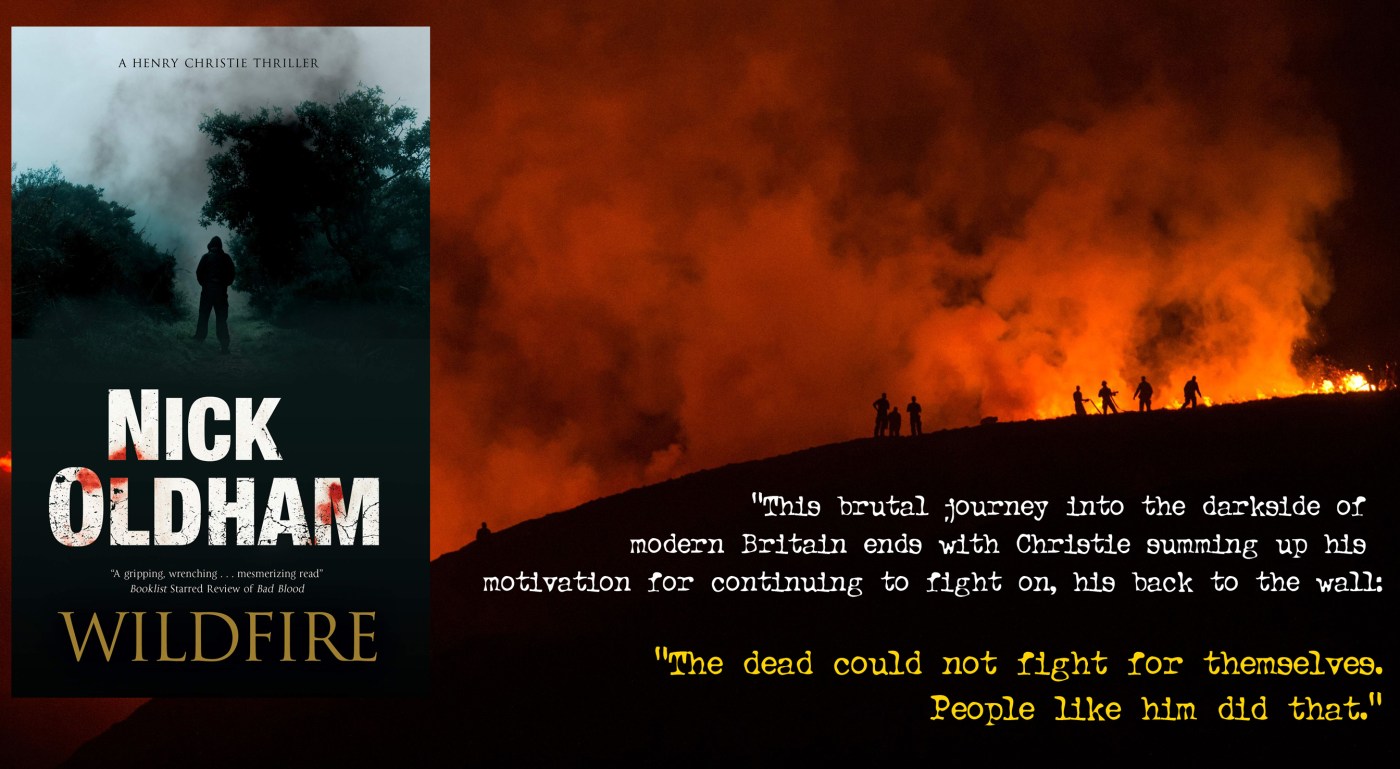
 Oldham’s Henry Christie was a particular favourite, as his adventures mixed excellent police procedure – thanks to Oldham’s career as a copper – a vulnerable and likeable hero, and an unflinching look at the mean and vicious streets of the Blackpool area in England’s north-west. Wildfire is the latest outing for Henry Christie, who has retired from the police and now runs a pleasant village pub set in the Lancashire hills.
 ventually, the wildfires of both kinds are extinguished, at least temporarily, but not before Henry Christie is forced, yet again, to take a long hard look at himself in the mirror, and question if it was all worth the effort.
 his brutal journey into the darkside of modern Britain ends with Christie summing up his motivation for continuing to fight on, his back to the wall:

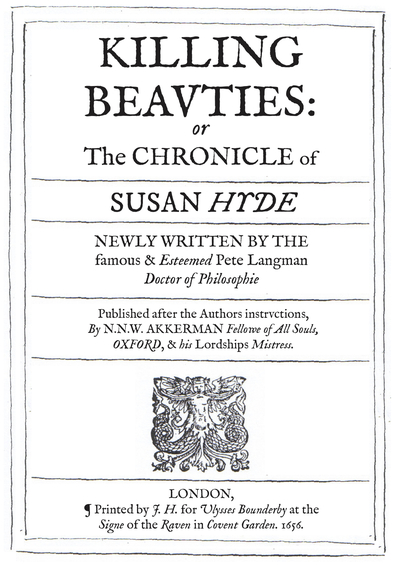
 The idea of the female spy has attracted writers and dramatists over the years with its unbeatable combination of danger and sexual allure. Pete Langman comes to the party with his enjoyable new novel, Killing Beauties set in the England of 1655. Remember those old historical movies that began with a dramatic piece of text scrolling over the opening titles, giving us a lurid and enticing potted background to whatever we were about to watch? The blurb for Killing Beauties might say something like,
  he beautiful woman is Susan Hyde, whose brother Sir Edward Hyde, Earl of Clarendon is principle advisor to the King in exile. With the aid of another young woman, Diane Jennings, Susan – and other members of the secret society known as Les Filles d’Ophelie – work with The Sealed Knot, coordinating underground Royalist activity in England and preparing for a general uprising against the Protectorate. Readers may be aware that the modern version of The Sealed Knot is a popular organisation of English Civil War re-enactors, but their historical namesakes were in deadly earnest, and organised two major rebellions before Charles II was finally crowned in 1661.
 In order to succeed in her mission, Susan must use the deadliest weapon at her disposal – her sexuality. The beneficiary of her attention is none other than John Thurloe himself. Thurloe is a fascinating historical figure, and has featured in several other novels, most notably in the Thomas Challoner series by Susanna Gregory, and in the SG MacLean’s Seeker stories. I reviewed MacLean’s
  ne of the problems facing writers of historical fiction is how to handle dialogue. We know how they wrote to each other in letters, but what were conversations like? Despite one or two of his characters occasionally lapsing into more recent vernacular, Langman negotiates this particular minefield successfully. Killing Beauties is an engaging and well researched piece of costume drama acted out on a turbulent and dangerous stage. It is published by Unbound


