
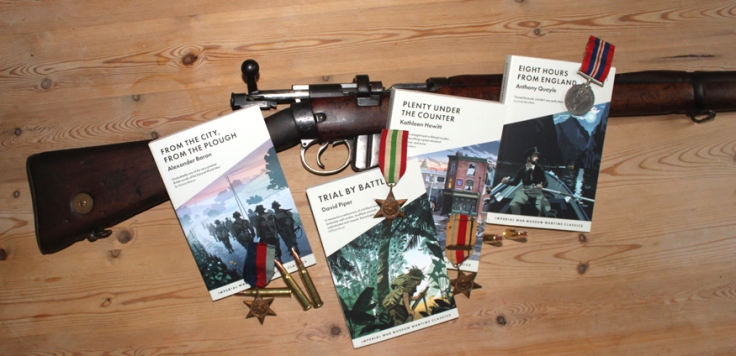
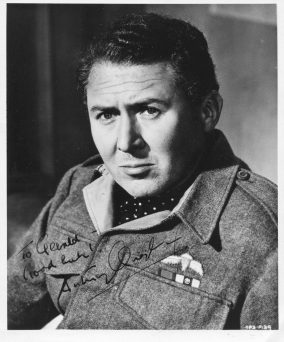
 To many of us who grew up in the 1950s Anthony Quayle was to become one of a celebrated group of theatrical knights, along with Olivier, Gielgud, Richardson and Redgrave. Until recently I had no idea that he was also wrote two novels based on his experiences in WW2. The first of these, Eight Hours From England was first published in 1945 and is the fourth and final reprint in the impressive series from the Imperial War Museum.
Major John Overton, stoically unlucky in love, combines a rather self-sacrificial gesture with a genuine desire to be at ‘the sharp end’ of the war. He chases up casual acquaintances working in the chaotic bureaucracy of London military administration and, rather randomly, finds himself sent out to Albania in the final days of December 1943. The chaotic country – ruled until 1939 by the improbably-named King Zog – had then been annexed by Mussolini’s Italy but after Italy’s surrender to the Allies in the autumn of 1943, German forces had moved in and had a tenuous grip of the country.
The brief of Britain’s SOE – the Special Operations Executive – was to fan the flames of behind-the-lines resistance in occupied countries. Admirer’s of Waugh’s Sword of Honour trilogy will recall that in Unconditional Surrender Guy Crouchback is sent to co-ordinate similar activities in nearby Yugoslavia but, like Crouchback, Overton finds that the situation on the ground is far from straightforward. On the one hand are the Communist partisans, but on the other are the Balli Kombëtar, a fiercely nationalist group who hate the Communists just as much as they hate the Nazis.
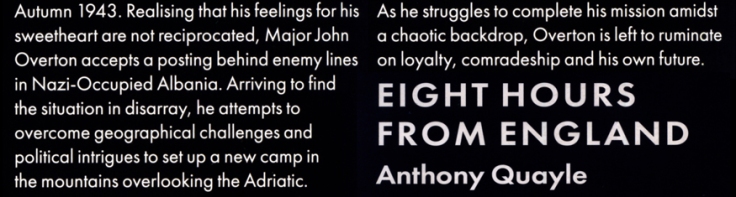
New Year’s day 1944 brings little physical comfort to Overton, but he is determined to make a difference and, above all, wants to take the war to the Germans. In the following weeks and months he meets unexpected obstacles, chief among them being the Albanians themselves. Their character baffles him. He remarks, ruefully.
“The misfortunes of others were the only jokes at which Albanians laughed, the height of comedy being when another man was killed.”
His courage, tenacity and sheer physical resilience are immense, but are sorely tried. Overton’s private thoughts are never far from England:
“I stayed a while longer looking out over the grey Adriatic where in the distance, the island of Corfu was dimly visible between the rain squalls. It was an afternoon on which to recall the hissing of logs in the hearth of an English home and the sound of the muffin-man’s bell in the street outside.”
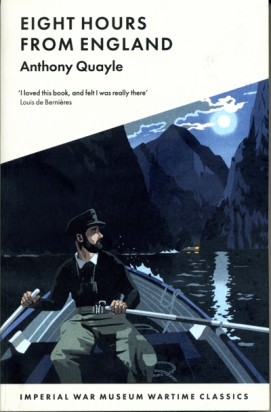 Of the three classic reprints which feature overseas action Eight Hours From England is the bleakest by far. The books by Alexander Baron and David Piper bear solemn witness to the deaths of brave men, sometimes heroic but often simply tragic: the irony is that Overton and his men do not, as far as I can recall, actually fire a shot in anger. No Germans are killed as a result of their efforts; the Allied cause is not advanced by the tiniest fraction; their heartbreaking struggle is not against the swastika and all it stands for, but against a brutally inhospitable terrain, bitter weather and, above all, the distrust, treachery and embedded criminality of many of the Albanians they encounter.
Overton survives, after a fashion, but is close to physical and spiritual breakdown. The heartache which prompted his original gesture is not eased, and the method of his dismissal by the young woman provides a cruel final metaphor:
“I put my hand into my pocket and pulled out what I thought was my handkerchief. But it was not: it was Ann’s letter. The blue writing paper had gone pulpy; the writing had smeared and wriggled across the page. Not a word was now legible.”
Quite early in the book, when Overton reaches Albania to replace the badly wounded former senior officer, the sick man makes a prophetic statement as he is stretchered aboard the boat to take him to safety:
“For a moment Keith did not speak and I thought he had not heard me, then the lips moved and he said slowly, and very clearly:
‘I wish you joy of the damned place.’”
Click on the covers below to read my reviews of the other three IWM classic reprints.
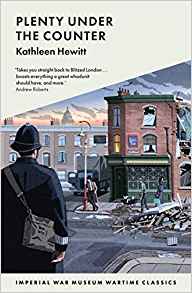
 his 1943 novel by Kathleen Hewitt is the third in the excellent series of Imperial War Museum reprints of wartime classics, but couldn’t be more different from the first two,
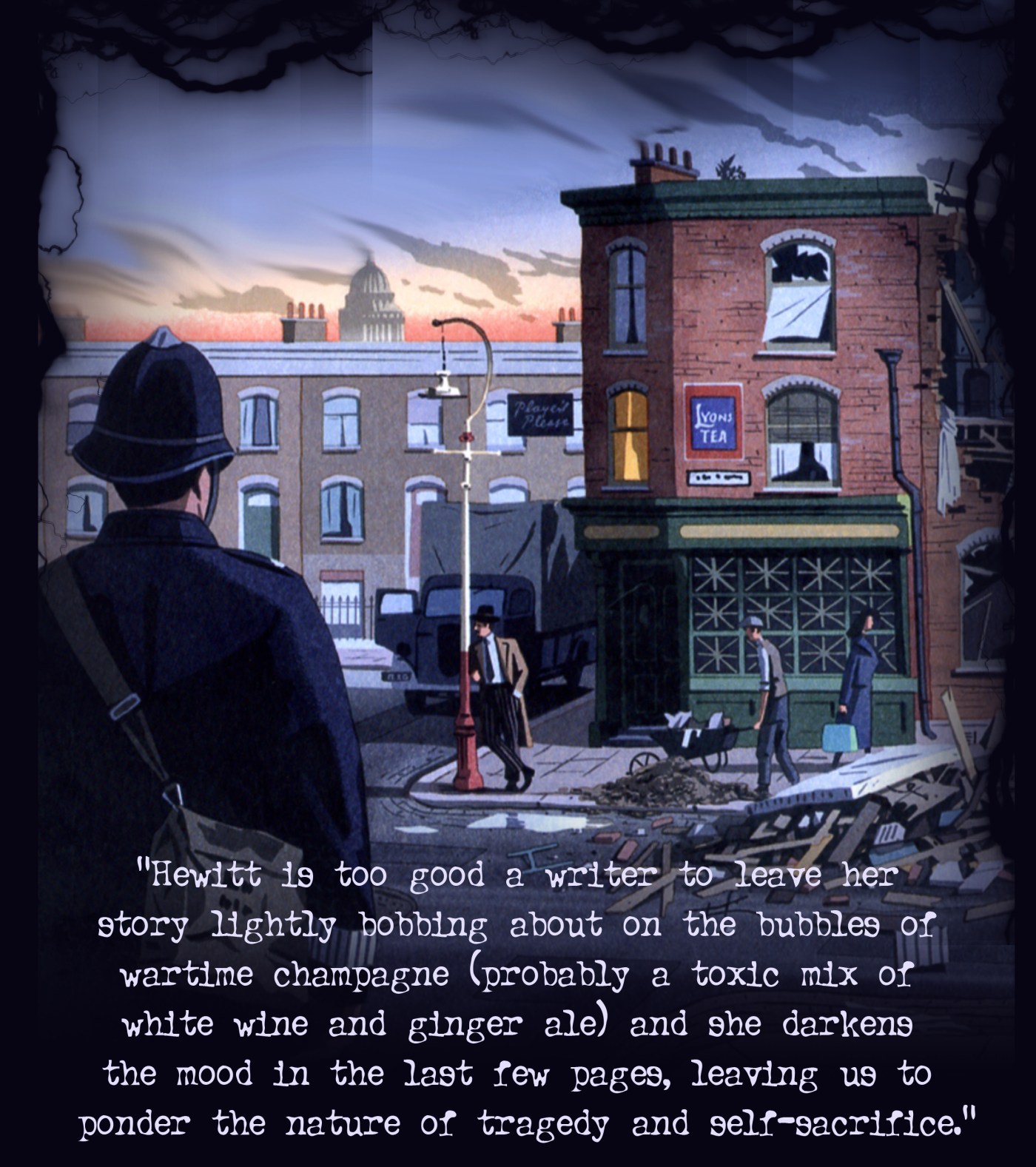
  A jolly murder? Well, of course. Fictional murders can be range from brutal to comic depending on the genre, and although the corpse found in the back garden of Mrs Meake’s lodging house – 15 Terrapin Road – is just as dead as any described by Val McDermid or Michael Connelly, the mood is set by the chief amateur investigator, a breezy and frightfully English RAF pilot called David Heron on recuperation leave from his squadron, and his elegantly witty lady friend Tess. He is from solid county stock:
 eaders will not need a degree in 20th century social history to recognise that the book’s title refers to the methods used by shopkeepers to circumvent the official rationing of food and fancy goods. More sinister is the presence – both in real life and in the book – of criminals who exploit the shortages to make serious money playing the black market and for whom deadly violence is just a way of life.
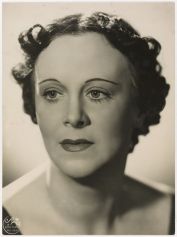 The story rattles along in fine style as the hours tick by before David has to return to the war. He has two pressing needs. One is to buy the special licence which will enable him to marry Tess, and the other is to find the Terrapin Road murderer. Hewitt (right) is too good a writer to leave her story lightly bobbing about on the bubbles of wartime champagne (probably a toxic mix of white wine and ginger ale) and she darkens the mood in the last few pages, leaving us to ponder the nature of tragedy and self-sacrifice.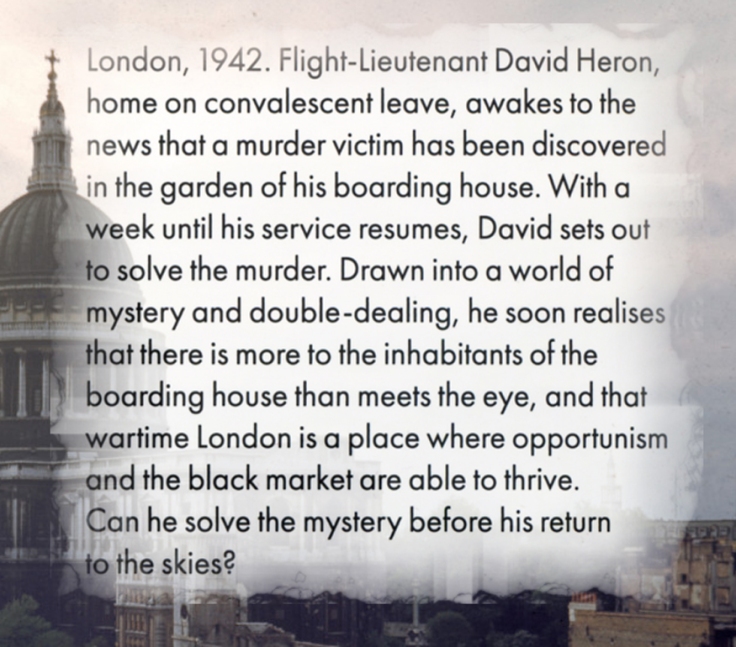
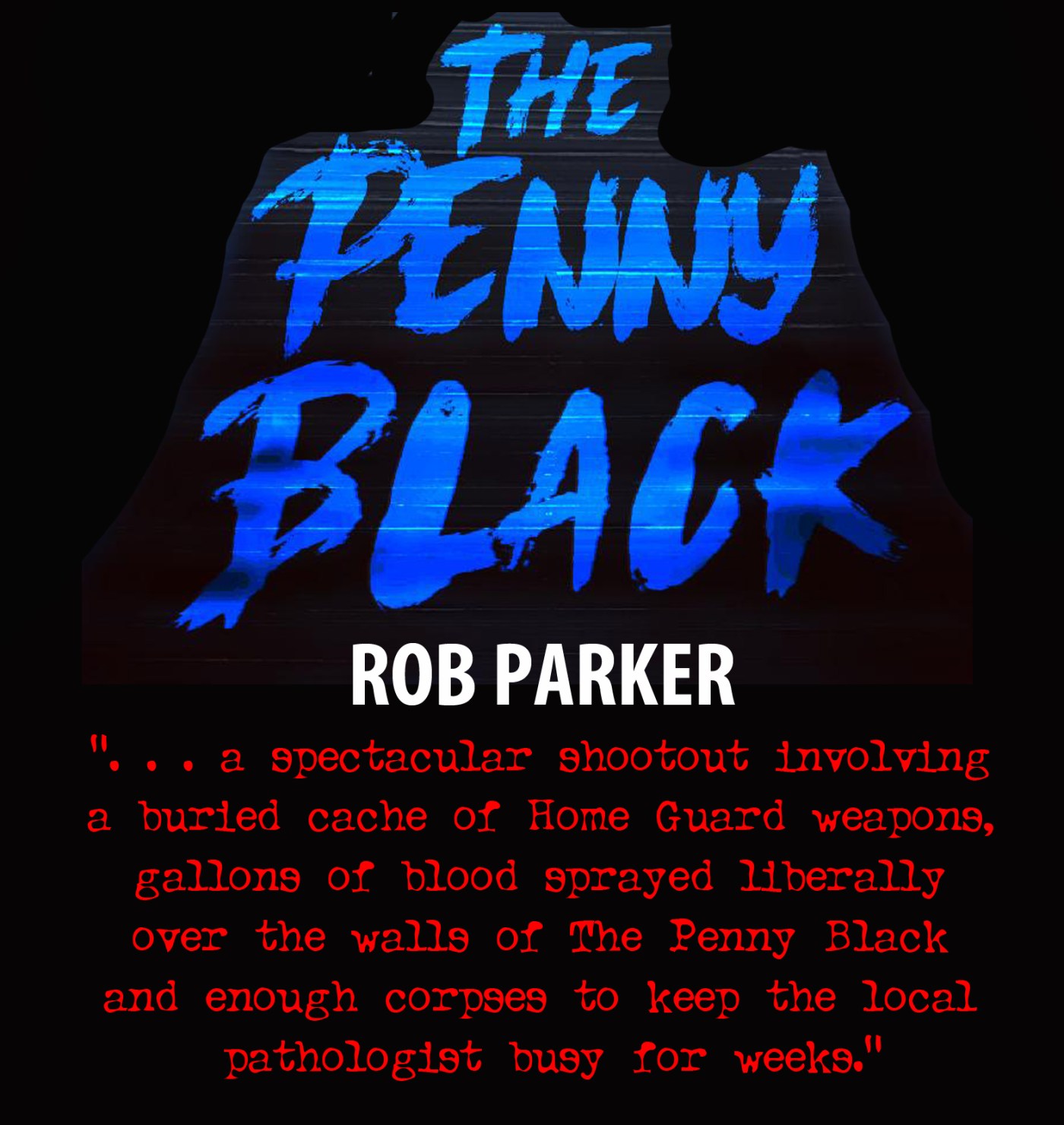

 o, this is not a novel about stamp collecting, and it would be a skillful writer who could turn the rather dry pursuit of philately into a thriller. The Penny Black is a pub – one of three – in the apparently languid and peaceful Norfolk riverside village of Horning. On the river pleasure boats glide, coots skate and squabble while, beneath the ripples, Esox Lucius bides his time, ready to snap up an unwary Roach or two, or perhaps a duckling who has strayed too far from its siblings.
 This riparian idyll is about to suffer a tsunami of turbulence however, partly due to one of its temporary residents. To call Ben Bracken, the creation of author Rob Parker (left), a Wild Card is something of an understatement. In A Wanted Man and Morte Point (
 With the cash needed to pay for a fake passport and drivers’ licence Bracken prepares to bid farewell to Horning, a brutal murder and an encounter with a new enemy puts him – literally – on his back, recuperating in a lonely farmhouse. We learn that Norfolk’s would-be Medellin Cartel are actually dancing to the tune played by a London mobster called Terry “Turn-up” Masters, with whom Bracken has serious history. When Masters and his thugs turn up in Horning at the same time as a government Black Ops unit determined to eliminate Bracken, the scene is set for a spectacular shootout involving a buried cache of Home Guard weapons, gallons of blood sprayed liberally over the walls of The Penny Black and enough corpses to keep the local pathologist busy for weeks.
 ob Parker writes in a full-on style which frequently exceeds the speed limit and sometimes skates dangerously on the thin ice of probability, but he is never less than entertaining. Amid the mayhem, there are some sharp social observations:


 We first met London’s Detective Inspector Jake Porter and Sergeant Nick Styles in Robert Scragg’s debut novel What Falls Between The Cracks (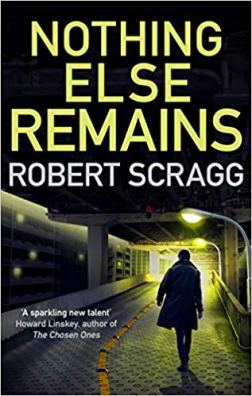
 orter is still haunted by the death of his wife in a hit-and-run accident and, like all good fictional DIs, he is viewed by his bosses – in particular the officious desk jockey Milburn – as mentally suspect. He is forced to go for a series of counselling sessions with the force’s tame psychologist, but after one hurried and fruitless encounter, he becomes totally immersed in a puzzling case which involves an old friend of his, Max Brennan. Brennan has arranged to meet his long-estranged father for the first time, but the older man fails to make the rendezvous. When Brennan’s girlfriend is abducted, he turns to Porter for help.
 eanwhile, Styles has a secret. His wife is expecting their first child and she has grave misgivings about her husband continuing as Porter’s partner, as their business puts them all too often – and quite literally – in the line of fire. Understandably, she recoils at the possibility of raising the child alone with the painful duty, at some point, of explaining to the toddler about the father they never knew. Styles has accepted her demand to transfer to something less dangerous, but as the Brennan Affair ratchets up in intensity, he just can’t seem to find the right moment to break the news to his boss.
 his is a well written and entertaining police procedural with all the necessary tropes of the genre – maverick cop, desk-bound boss, chaotic personal lives, grimy city background and labyrinthine plot. Naturally, Porter finally gets to the bottom of the mystery of the missing businessmen, but this point was reached with a fair few pages left to go, so clearly something else is about to happen. Sure enough, it does, and it is clever plot twist which I certainly didn’t see coming. Robert Scragg may be a relative novice in the crime fiction stakes but, to mangle a metaphor, he casts his red herrings with the ease and accuracy of an expert.

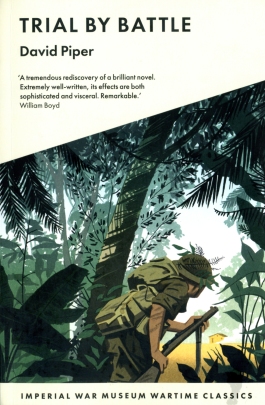
 lan Mart is a bookish, completely unmiitary young man who, fresh from Cadet College, is posted as a Second Lieutenant to an Indian Army Battalion in the autumn of 1941. The Japanese army is on the move, but are still believed to be just swarms of little yellow men who will melt away when faced with troops led by decent British officers. Mart is taken under the wing of Acting Captain Sam Holl:
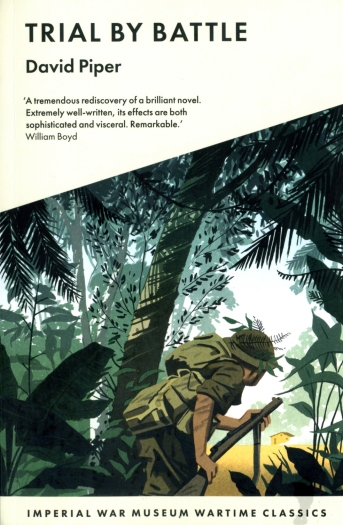 The figure of Sam Holl struck an immediate chord with me, and I wondered momentarily where I had met him before. He is a more warlike version of Guy Crouchback’s brother in arms, Apthorpe. In Men At Arms (1951) and Officers And Gentlemen (1955) Evelyn Waugh gives us a pompous and priggish chap with completely bogus military and social airs and graces. He invites us to scorn Apthorpe and his pretensions while slyly revealing the pathos of Apthorpe’s real identity; probably an orphan, brought up by an elderly aunt; sent to a very minor public school, and packed of, virtually penniless, to serve in some down at heel colonial service. When Apthorpe dies in hospital as a result of Crouchback having smuggled him a bottle of whisky, the comedy turns to tragedy, and our mockery turns to shame-faced guilt.
 espite Alan Mart being our eyes and ears as the real war gets nearer and nearer to the battalion, Holl is, literally and metaphorically, a towering figure. He has the worst aspects of the blinkered British imperialist, but he displays immense physical courage. His bluster, near alcoholism and debased view of native women contrast poignantly with moments of extreme social vulnerability:
 hen Mart and Holl reach Malaya they learn many things, few if any of them to their advantage. The sparkling new radio sets abjectly refuse to work over any distance further than the line of sight and, more disturbing still, the despised little yellow men are resolutely disinclined to scatter at the bark of a British military command. Quite the reverse; they are numerous, well trained, superbly equipped, utterly remorseless and, seemingly, irresistible.
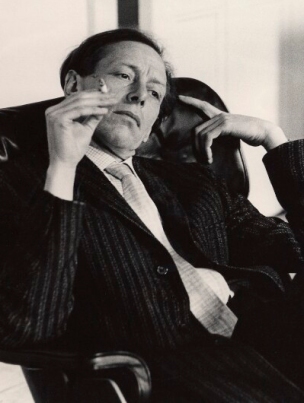 David Piper’s biography is covered comprehensively in the publicity for this series, so suffice it to say he writes of what he knows. I am reminded of the lines from the old hymn;

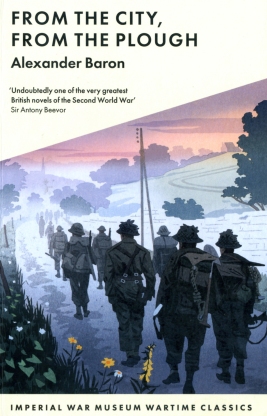
 his 1948 best seller echoes Alexander Baron’s own military career as it follows a battalion of a fictional infantry brigade as they prepare for – and then take part in – D Day in the summer of 1944. The Fifth Wessex is, as the book’s title suggests, made up of a mixture of clumsy red-cheeked farm boys from the chalk uplands, well-read introverts who keep themselves to themselves, streetwise chancers and bewildered lads who are virgins in both bedroom and battlefield. They could be soldiers from earlier wars, and their ancestors might have known Agincourt, Marston Moor, Malplaquet, Talavera, Spion Kop and Arras. Baron has no time for the thinly veiled homo-eroticism of some of the Great War writers. His men can be uncouth, foul-mouthed, brutalised by their social background, yet given to moments of great compassion and charity.
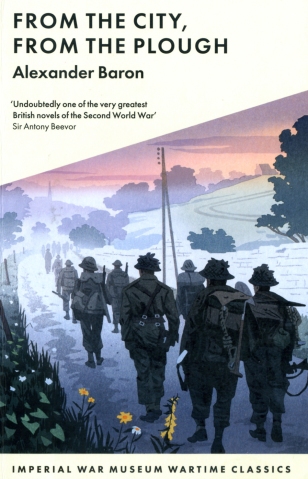 The British officer class have been long the object of scorn in both poetry and prose, but Baron deals with them in a largely sympathetic way. Those leading the Fifth on the ground are decent fellows; people who are only too aware of the frequently uneven struggle between shards of steel and the breasts of brave men. Even the Brigadier, whose plans prove so costly, is well aware of what he asks. He is, however, resolute in the way he shuts down his personal qualms in order to maintain the integrity of the battle plan. The one exception is the odious Major Maddison, a cold and sexually troubled narcissist whose demise is as satisfying as it is inevitable.
 aron writes lyrically about the midsummer grace of the French countryside, its orchards and abundance of wild flowers, some of which grace the helmets and tunics of the passing soldiers, their fragility which will contrast cruelly with the total vulnerability of the crumpled and shattered bodies of the men who wore them. For the driven and exhausted men of the Fifth Wessex, unlike their fathers before them, there is always a new unspoiled hillside, a grove of trees untouched by shellfire, a fresh sunken lane lined with roses and willow herb. For the war in Normandy is a war of movement. A field reeking with the blood of dead horses and cattle is soon left behind, as the Brigadier stabs his finger at the map and finds another bridge, another crossroads and another copse that must be taken.
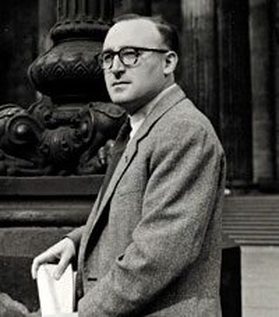 The heroes in From The City, From The Plough come in all shapes and sizes, but there are no winners. Let Alexander Baron (right) have the last word.
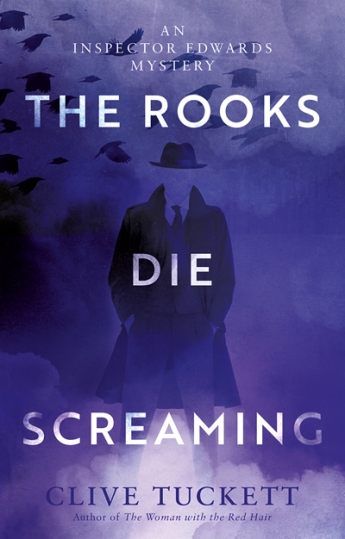 Morag is now Lady Frobisher. Her husband Harry, heir to The Fobisher Estate on the outskirts of Bodmin, is blind, victim of a grenade in the Flanders trenches. In the previous novel, Frobisher Hall was the scene of great torment for Morag, as she fell into the clutches of Morgan Treaves, an insane asylum keeper and his evil nurse. Treaves has disappeared after being disfigured with a broken bottle, wielded my Morag in a life or death struggle.
 That said, The Rooks Die Screaming is inspired escapist reading. It would be unfair to say that Tuckett (right) writes in an anachronistic style. This is much, much better than pastiche, even though there are elements of Conan Doyle, the Golden Age, John Buchan and even touches of Sapper and MR James. So, eventually, to the plot, but we need to know a little more about Cyril Edwards. Like many a fictional detective inspector he is his own man. In another nice cultural reference Tuckett adds a touch of Charters and Caldicott as Edwards explains to the bumptious Standish, a mysterious officer from Military Intelligence;
 tandish orders Edwards to investigate the possibility that Harry Frobisher is one of the Rooks, but one who has betrayed his country. Arriving in Bodmin his first task is to explain to the local police how a corpse found on a train is that of a notorious London contract killer. Tuckett’s Bodmin is full of stock characters, including a stolid police sergeant, an apparently tremulous clergyman and a punctilious but respected solicitor who is privy to all the secrets of the local gentry, but is oh, so discreet. To add to the fun, Frobisher Hall also has its requisite roll call of faithful retainers.


 al McDermid was anxious that over-enthusiastic reviewers and fans might give away the ending of her previous Carol Jordan and Tony Hill novel,
 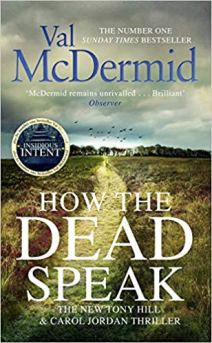 After the events of which we will not speak, Jordan’s Regional Major Incident Team has been disbanded while the woman who was its beating heart and soul keeps her fragile psyche from harm by continuing to renovate her home, a former barn on a heather covered northern hillside. Visitors are few and usually unwelcome, but none more so than Tony Hill’s vindictive and manipulative mother Vanessa who, after inflicting her abrasive personality on her son in a prison visit, coerces Jordan into using her investigative skills to track down a fraudster who has conned her out of a small fortune. Only slightly less welcome is Bronwen Scott, Tony Hill’s solicitor. She also has a job for Jordan, but this time it is to establish grounds for an appeal against a murder conviction handed down to a gay man who, the jury believes, has murdered a rent boy.


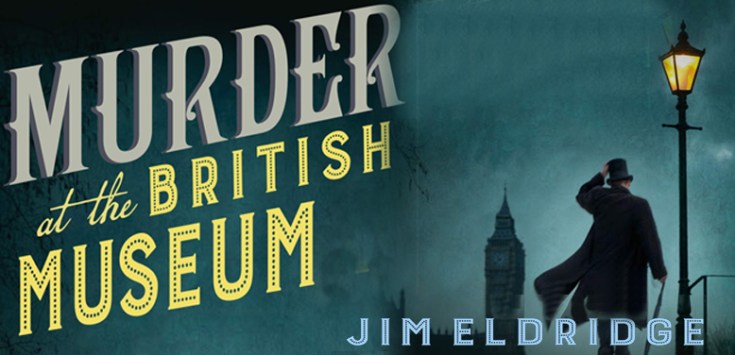
 London. 1894. The British Museum has become a crime scene. A distinguished academic and author has been brutally stabbed to death. Not in the hushed corridors, not in the dusty silence of The Reading Room, and not even in one of the stately exhibition halls, under the stony gaze of Assyrian gods and Greek athletes. No, Professor Lance Pickering has been found in the distinctly less grand cubicle of one of the museum’s … ahem …. conveniences, the door locked from inside, and the unfortunate professor slumped over the porcelain.
 This is a highly readable mystery with two engaging central characters, a convincing late Victorian London setting, and a plot which takes us this way and that before Daniel and Abigail uncover the tragic truth behind the murders. Jim Eldridge (right) is a veteran writer for radio, television and film as well as being the author of historical fiction, children’s novels and educational books. Murder At The British Museum is published by Allison & Busby,


 fullybooked2017