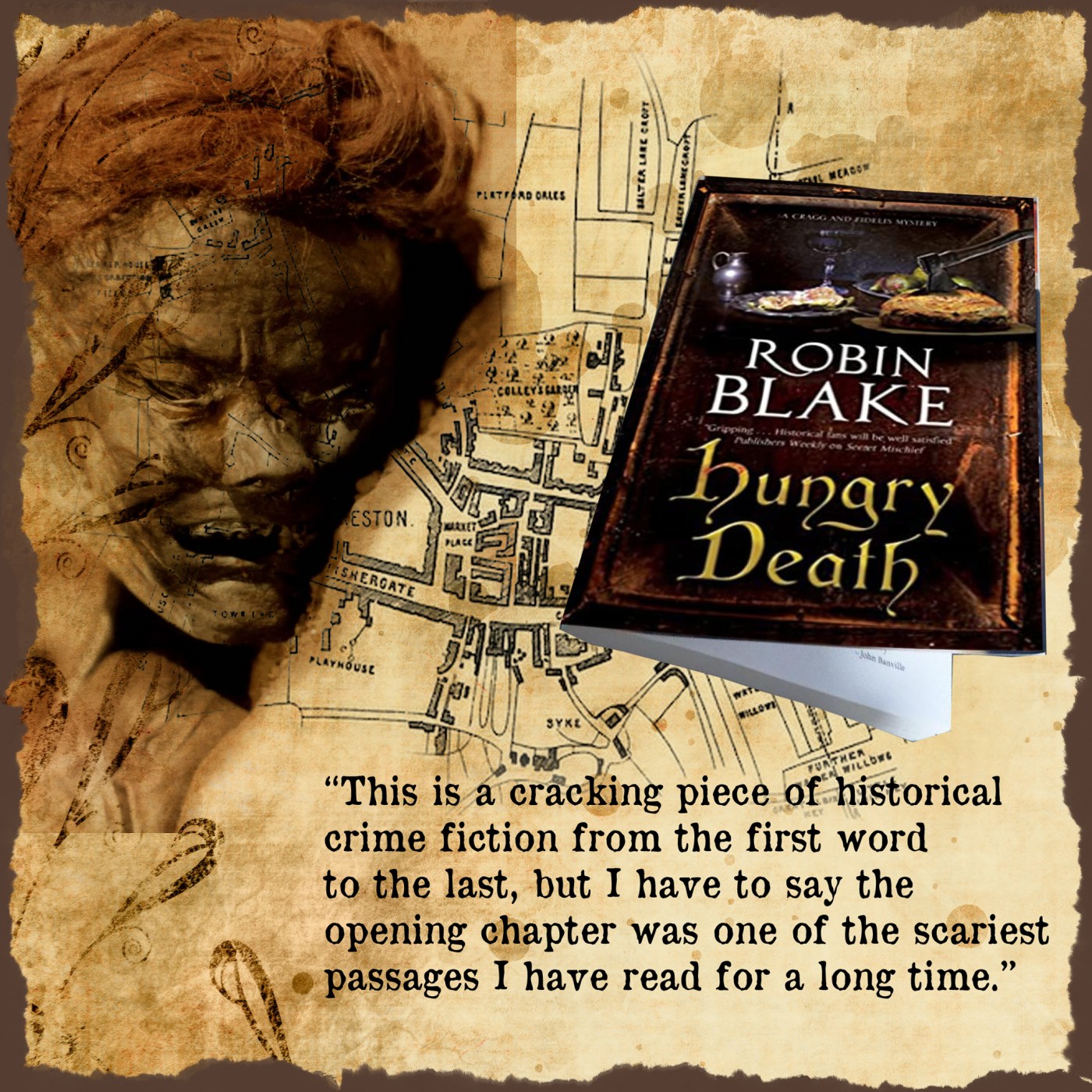
I have become a huge fan of the Cragg and Fidelis books written by Preston-born Robin Blake. They are set in the 1740s in Lancashire, Titus Cragg is the county coroner, and his friend Luke Fidelis is an enterprising and innovative young physician. Hungry Death is the eighth in this excellent series, and to read my reviews of three of the previous books Skin and Bone, Rough Music, and Secret Mischief, click the links.
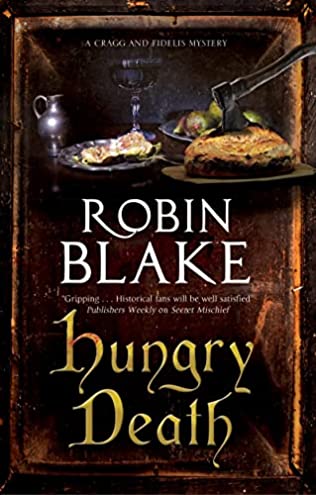 Cragg is instructed to ride out to a lonely moorland farmhouse, and what he finds surpasses any of the previous horrors his calling requires him to confront. He finds an entire family slaughtered, by whose hand he knows not, unless it was the husband of the house, himself hanging by a strap hooked over a beam. To add even more mystery to the grisly tableau, Cragg learns that the KIdd family were members of a bizarre dissenting cult which encourages its members into acts of brazen sexuality. Then, in a seemingly unconnected incident, the gardener at a nearby mansion, trying to improve the drainage under his hothouse, discovers another body. This corpse may have been in the ground for centuries, as it has been partly preserved by the peat in which it was buried. When Fidelis conducts an autopsy, however, he concludes that the body is that of a young woman, and was probably put in the ground within the last decade or so.
Bodies – dead ones – are central to Titus Cragg’s world. A coroner, then and now, must try to be led, hand in hand, by the dead until the circumstances of their demise is revealed. Sometimes, through his investigations and observations, Cragg (helped by the medical eye of Fidelis) can make the dead talk, but the peat-blackened young woman seems to have little to say. Painstaking and shrewd deduction leads Cragg to believe that she was a servant girl once employed at one of the large households in the area. But who? The girls came and went, changed their names through marriage, and the passing years have cast a shroud of fog over the matter.
Regarding the slaughter at the farmhouse, Cragg discovers that the answer lies in the peculiar – and vengeful – nature of the Eatanswillian sect. I believe Robin Blake has used a little historical license here, as the only mention of the word online that I could find is that of the election in the fictional town of Eatanswill (described so satirically in The Pickwick Papers). The resolution of the case hinges on a note pinned to the door of the farmhouse, apparently written in some kind of code. Cragg hopes that deciphering the code will lead him to the perpetrator of the slaughter.
All is resolved, of course, in the final pages, which are framed around the coroner’s inquest into both cases, and Robin Blake gives us a courtroom drama worthy of anything in the distinguished career of Perry Mason or, more recently Micky Haller. This is a cracking piece of historical crime fiction from the first word to the last, but I have to say the opening chapter was one of the most horrific passages I have read for a long time. Hungry Death is published by Severn House and is available now.


 Jimmy Mullen is a former Royal Navy man, but he has fallen on hard times. He served in The Falklands and has recurrent PTSD. He has served a jail term for manslaughter after intervening to stop a girl being slapped around and, until recently, lived out on the streets of Newcastle, among the city’s many homeless. Now, for the first time in years, he has a job – working for a charity – and a proper roof over his head. Author Trevor Wood (left) introduced us to Mullen in
  Gadge becomes the victim of one of these assaults, but when he is woken up from his drunken stupor by the police, he is covered in blood – most of it not his – and in an adjacent alley lies the corpse of man battered to death with something like a baseball bat. And what is Gadge clutching in his hands when the police shake him into consciousness? No prizes for working that one out!

 If you can get your head around the idea, Knox (left) plays himself here and the book is a series of statements, made to a fellow author by a cast of characters who were part of Zoe’s life. Initially, we have her parents, her twin sister, and an array of other young people who were part of her life prior to her disappearance after a night clubbing in Manchester, but as Zoe Nolan is gradually transformed into someone with a huge bag of secrets slung over her shoulder, more voices are added to the account.
 The statements made by the ‘witnesses’ give us an overview – albeit imperfect, given that we don’t know who to trust – of the hours leading up to Zoe’s disappearance, and the months and years which led up to a promising young singer being rejected by the Royal Northern Collegee of Music and having to settle for a less prestigious place at Manchester University.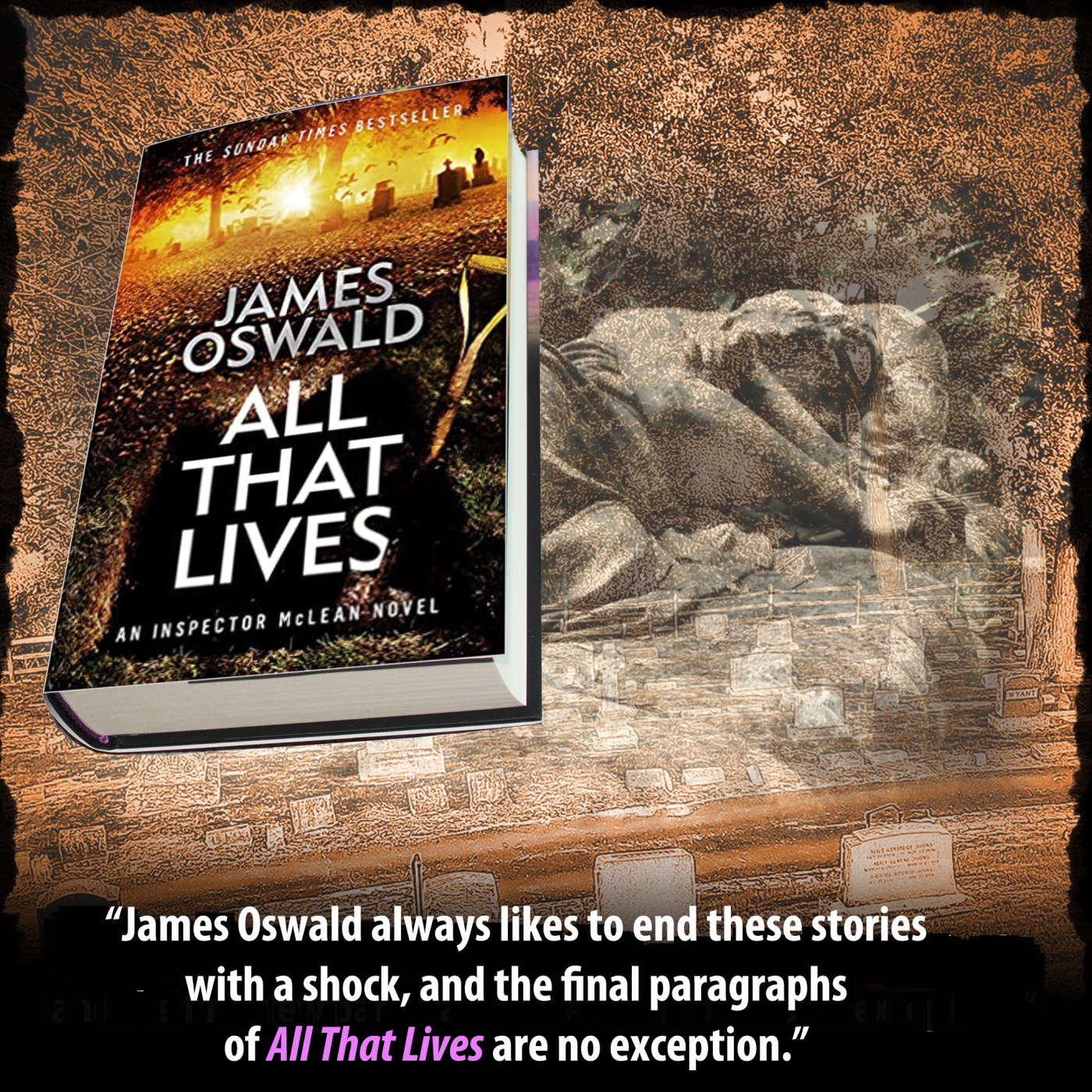

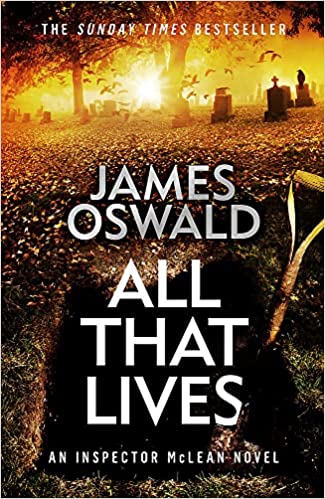 That reminiscence may seem unrelated to a book review, but it is relevant. When reviewing the latest book in a long and successful series it is tempting to think that all prospective readers will be fully up to speed with the quirks and history of the main characters. But that’s not so. Thankfully, people come to books at different times and for different reasons, so a paragraph about Edinburgh copper DI Tony McLean won’t be wasted. If you already know, then just skip ahead.



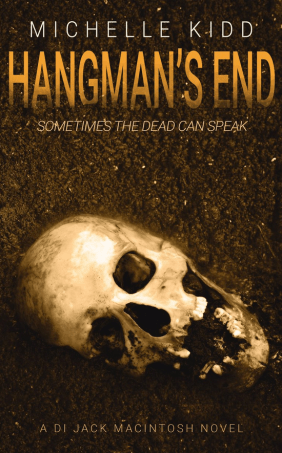 We have the advantage over the police in that we are introduced early on to the man who dropped the suitcase from the bridge into the mud. We are not sure if he is the actual slaughterman, or merely the butcher, but we do learn the whereabouts of the child’s head. The victim is soon identified as Maisie Lancaster, but a visit to her parents’ house brings MacIntosh into a collision with the metaphorical runaway car of one of his previous cases.

 When the cops investigate the house from which the young man ran, they find the second corpse of the morning, with her throat slit. She is – or rather was – Cordi Gannet. She made a decent living producing lifestyle videos for YouTube, full of cod psychology and trite advice about life improvement strategies. Her psychology degree was apparently bought mail-order from an on-line university, and when Alex Delaware gets to the scene with Milo, he remembers that he was once involved in a child custody case where Cordi Gannet was introduced as an expert witness – with disastrous consequences.
 Watching the Delaware-Sturgis partnership work on a case is fascinating. Yes, by my reckoning this is the 37th in the series. No, that’s not a typo. Thirty seven since their debut in When The Bough Breaks (1985). 1985. Blimey. Amongst other ground-breaking events in that year, I read that Playboy stopped stapling its centrefolds, the first episode of Eastenders was broadcast, and Freddie Mercury stole the show at Live Aid. But I digress.

 Chris Nickson’s Leeds is a very different place. In the


 By the autumn of 1944, German forces had been pushed out of France and were being systematically overwhelmed by the Red Army in the east. The allies had control of the Channel coast, but the Germans had effectively wrecked the French ports. Antwerp, however, had been taken more or less intact, and when the Germans had been removed from their strong-points controlling the estuary of the River Scheldt, the Belgian port became a massive conduit for the arrival of men, machines and supplies for the Allies.
 It is one of the great paradoxes of WW2 that on the ground, at least, the Germans had the best guns, the best artillery and the best tanks. The problem was that although the formidable Panzers were easily able to overcome the relatively underpowered Sherman tanks used by the allies, the German vehicles were high maintenance and, some would say, over-engineered. The ubiquitous Shermans were rolling off the production lines in their thousands, while the formidable Tigers and Panthers – when they developed a fault – were fiendishly difficult to repair or cannibalise. Caddick-Adams (right) also reminds us how well-fed and supplied the American GIs were compared with their German foes. In one particularly eloquent passage, he tells us of the utter joy felt by a unit of Volksgrenadiers when they seized a supply of American rations. When their own kitchen unit eventually reached their position, the cooks and their containers of watery stew were given very short shrift.


 fullybooked2017