
Newspapers, television, radio, bloggers – they’re all at it in these dog days between Christmas and New Year. Alert followers will have noticed that Fully Booked has a rather Post-Brexit feel to it, with content dating only from late June 2016. That is, as they say, is another story, but I have been reading and enjoying CriFi all year. Here are my views on the books that made a big impact during 2016. Six categories, and then one final book which, for me, was simply The Best.
BEST DIALOGUE
The Other Side of Silence by Philip Kerr
Kerr has cleverly positioned Bernie Gunther – former Berlin cop, soldier, lover and sometime anti-hero – squarely astride the most eventful years of the 20th century. This enables him to meet a stellar cast of fascinating historical characters, including Eva Peron, Adolf Eichmann, Reinhardt Heydrich, Paul von Hindenberg and now, in his latest saga, the celebrated writer W. Somerset Maugham. It is 1956 and Gunther is working under an assumed name as a concierge at a smart hotel in St Jean Cap Ferrat. As well as recognising that a hotel visitor is a former high ranking Nazi, Gunther discovers a plot to blackmail Somerset Maugham.His meetings with the great man are full of excellent verbal sparring.
“I dislike a man who’s not precise about what he wants to drink,” said Maugham. “You can’t rely on a man who’s vague about his favourite tipple. If he’s not precise about something he’s going to drink then it’s clear he’s not going to be precise about anything.”
 Gunther is something of a ladies’ man, and he usually manages to attract the attention of females, most of whom are either damaged, or damaging, and sometimes both. Here, he makes a night-time visit to an English woman who says that she is anxious to meet Somerset Maugham with a view to writing a biography.
“Oh, I’m glad it’s you, “ she said. “I thought it might be the gardener.”
“At this time of night?”
“Lately he’s been giving me a funny look.”
“Maybe you should let him water the flower beds.”
“I don’t think that’s what he has in mind.”
“The heat we’ve been having? He’s in the wrong job.”
“Did you come here to mow my lawn, or just to talk?”
Despite the smart talk and the wisecracks, there is always something deeply serious going on in the Gunther novels, and in this case it’s the fact that the former Nazi who Gunther recognises at the hotel was responsible for the death of his lover, a young woman who, along with 9,400 others, perished when the troop ship Wilhelm Gustloff was sunk in January 1945. Near the end of the book, Gunther confronts Harold Hennig.
“You’re not the type to kill me, remember?” He was starting to sound scared now. “You said so yourself, Gunther. You’re a decent man. I knew that the first time I saw you.”
“No, I said I wasn’t the type to leave a man to die chained to a radiator, like an abandoned dog. But this is different.” I pointed the gun at him.
“This is for those nine thousand people who died on the Wilhelm Gustloff in January nineteen forty-five. It’s been eleven years in coming, and for them this is an act of vengeance. But for Captain Achim von Frisch, Irmela Louise Schaper and her unborn child – my unborn child – it’s revenge, pure and simple.”
Gunther is a flawed hero, but a beguiling one, and his interactions with the famous and infamous men and women of the century are fascinating on their own, but in this novel, as in all the previous stories, it is Gunther’s speaking voice that brings the man to life. The Other Side of Silence is published by Quercus.

BEST HISTORICAL NOVEL
A Straits Settlement by Brian Stoddart
Superintendent Christian Le Fanu is an English policeman working in Madras. Despite considerable bravery during World War I, he has vowed never to set foot in the land of his birth again. His lover is a woman of mixed race, and he strives to do his job efficiently while treating law abiding Indian people with fairness and respect.
 He is asked to investigate a disappearance and a death. The disappearance is of a minor functionary of the Raj from the country town he helped administer, and the death is that of the son of a powerful – and widely disliked – British entrepreneur and colonialist. Le Fanu’s search for the missing Southlake, and the all-too-dead Hargood takes him far from Madras, and to the exotic Malay island of Penang, where he finds a beguiling mixture of colonial and Chinese culture. He also finds himself in the equally beguiling arms of a beautiful Chinese woman. Unfortunately, she is the daughter of a wealthy merchant who appears to be right at the centre of Le Fanu’s investigations.
Brian Stoddart is a university professor who has studied South Asia extensively, and his knowledge of India and its history is immense. The beauty of his writing, however, is that he shares his learning with the lightest of touches, so that after a chapter or two you’ll feel you know all the steps in the elaborate dance between the British administration and the steadily growing but irresistible forces of Indian nationalism.
The title refers to three British colonies at the time called Straights Settlements – Penang, Malacca and Singapore. Not least of Stoddart’s skills is his ability to weave together different themes to make a beautiful whole. Thus, we have a police procedural, a political thriller, an historical drama, a romance, and an intense portrait of a gifted but very complex man. No-one currently writing manages this with as little fuss and fanfare as Stoddart. A Straits Settlement is published by Crime Wave Press.

BEST PSYCHOLOGICAL THRILLER
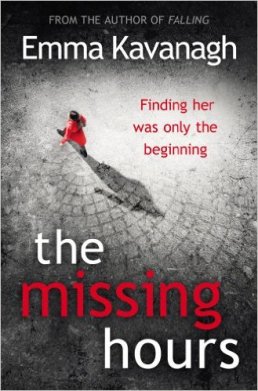
The Missing Hours by Emma Kavanagh
One of the most secretive service industries in the modern world is that of K & R consultants. The initials stand for kidnap and ransom, and the operatives who pit their wits against kidnappers play their cards very close to their collective chests. Emma Kavanagh trained as a psychologist and, after leaving university, started her own business as a psychology consultant, specialising in human performance in extreme situations. For seven years she provided training and consultation for police forces and NATO and military personnel throughout the UK and Europe. Here, in this tense and nerve-tingling novel, she puts all her insights and experience to good use, telling the tale of a woman who disappears, but then mysteriously reappears, but with no recollection of the intervening hours.
Selena Cole is a widow, her husband having been killed while working for The Cole Group. Since his death she has pretty much handed over the running of the group to her sister-in-law, Orla Britten, and her husband Seth. Their centre of operations is the Cole’s elegant period house in a village not far from Hereford. Then, Selena goes missing. One minute she is watching her girls Heather and Tara play on the swings in the playground. The next, she is gone, and a neighbour has gathered up the distressed children, and the police are called.
 The police investigation into Selena’s disappearance is handled by an unusual crime fiction pairing. Finn Hale and Leah Mackay are brother and sister. Finn has leap-frogged his sister in the promotion stakes, despite her evident superiority – evident, that is, to us readers, but not the local constabulary personnel department. Kavanagh plays the relationship between the siblings with the touch of a concert violinist. There are all manner of clever nuances and deft little touches which enhance the narrative.
Kavanagh reveals the inner workings of K & R consultants by letting us browse through the files of The Cole Group in between chapters focusing on one or other of the main characters. The police procedural aspect of the novel is sure-footed and convincing, while the touches of domestic noir work well, despite following a well-trodden path. After all, who has ever read a novel where a detective has a blissfully happy marriage with a fully supportive spouse?
The plot twists come, as they should, at regular intervals, but we see the big reveal with only a few pages to go. By then you will have been totally hooked by the excellent writing, Kavanagh’s well-tuned ear for dialogue and her handling of the intricate plot. The Missing Hours is published by Century.

 My crime / mystery novel,
 I do not write crime as one who has jumped on the current-trend bandwagon. I was raised in a home of The Sweeney and The Bill. On migrating to Australia as a child there was weekly doses of Homicide, Division Four, and Matlock Police. My enjoyment of the genre comes not from wanting to venture into life’s darker side, but from my penchant for solving problems and conundrums. I confess though, that youthful aspirations saw me as a leading criminal lawyer. It transpired that I had neither the aptitude nor attitude to devote seven years to the cause. Ironically, I later devoted just as many years to writing and literary studies!
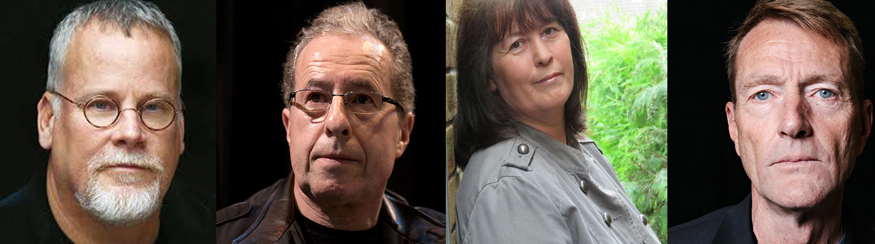
 Some authors save the best for last. Others, like Joseph Heller with Catch 22, produce such a devastatingly good first novel that the rest of their lives are spent trying to better it. Rachel Amphlett has a new novel out – watch out for our review of Scared To Death – but she has taken time out of her hectic schedule to look at a few brilliant ‘first in series’ crime novels.
 Michael Connelly – The Black Echo (Harry Bosch #1)
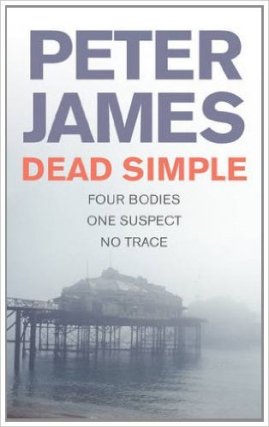 Peter James – Dead Simple (Roy Grace #1)
 Angela Marsons – Silent Scream (Kim Stone #1)



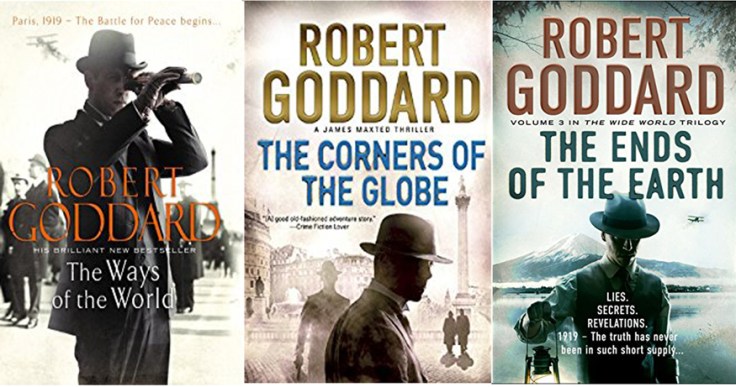
 Robert Ryan, also known as Tom Neale, is an English author, journalist and screenwriter. He has written a host of successful adventure novels and thrillers, but our microscope focuses on his Dr Watson novels. He is not the first writer to exploit the potential of Sherlockiana, nor will he be the last. M J Trow wrote an entertaining series of books featuring the much-maligned Inspector Lestrade, so the earnest, brave, but slightly dim companion to the great Consulting Detective must surely be worth a series of his own. Ryan takes our beloved physician and puts him down amid the carnage of The Great War. Too old to fight, Watson’s medical expertise is still valuable.
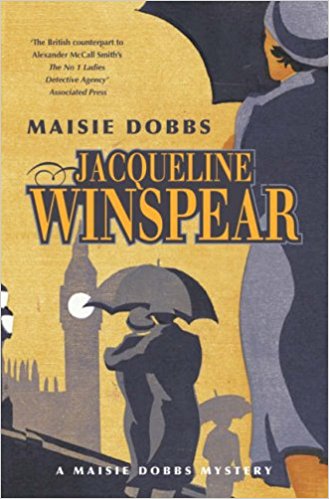 Maisie Dobbs
 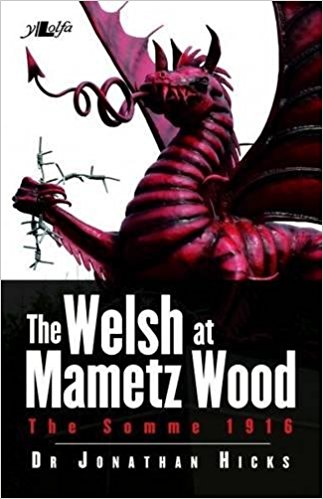 Dr Jonathan Hicks is a Welsh academic with an abiding interest in The Great War, and he has written a graphic and superbly researched history of a battle which was both one of his countrymen’s finest hours, but in terms of loss of life, arguably their darkest. A detailed look at
 By 1916, however, Stringer has several years of crime detection under his belt, but he is sent to France where he survives the carnage of 1st July, and is picked out to supervise the running of ammunition trains carrying vital supplies up to the front line.
  Stringer goes undercover as a railway advisor to investigate, but his contact Captain Boyd is discovered murdered in an abandoned station. No further help will be sent, so Stringer is on his own catching the murderer, and preventing a giant betrayal of the British effort. He has to do so whilst navigating an unfamiliar landscape, avoiding getting caught up in an Arab uprising, fighting off a case of malaria during a sweltering Baghdad summer, and treading a careful path as he investigates members of the officer class.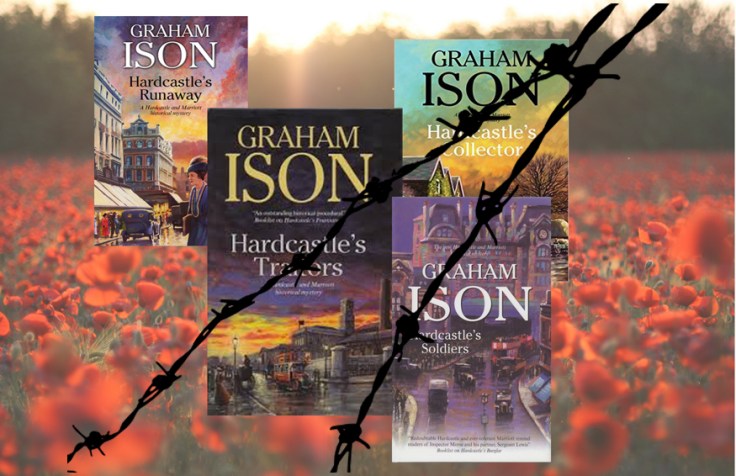


 and a recurring – and malign – character named The Peacemaker looms over proceedings. The books work very well as detective stories, and Perry has years of experience at blending crime with period settings. She has been careful to put each plotline in the context of the big events of each year; No Graves As Yet, for example, sets us down in the elegaic final summer of peace, in an England which was still Edwardian in spirit despite the old King being four years gone; in Shoulder The Sky Reavley searches for the killer of a war correspondent whose honesty made him a marked man, and his quest for answers takes him from one military debacle to another, in this case from Ypres to Gallipoli. Perry writes with great conviction and, as with her other books, mixes intrigue, adventure, high drama and impeccable period detail.
 The First Casualty (2005), saw stand-up comedian Ben Elton continuing a not-altogether-successful foray into the world of serious fiction. He is to be commended for placing a largely unsympathetic character at the centre of his story, but the misadventures of Douglas Kingsley, a career policeman but now a conscientious objector, tend to involve issues such as homosexuality, feminism, pacifism and the Irish Question, which were more on people’s lips at the time of Elton’s TV fame than during the period of WWI itself. Kingsley is thrown in jail because of his stance on the war, and is then abused by criminals who attribute their incarceration to his devotion to duty as a copper. The apparent murder of a rebellious soldier poet (a thinly disguised Siegfried Sassoon) and the sexual misdeeds of his wife Agnes give Kingsley plenty to think about.
 Rennie Airth has written a series of novels featuring a retired policeman and WWI veteran, John Madden. I am giving these an honorary mention, as Madden’s whole approach to life, his attitude towards detection, and his views on criminality are all profoundly influenced by his experience in the trenches, and when Manning is centre stage, his musings frequently recall his wartime experiences. The first of the series is River of Darkness (1999), and the events take place in 1921, when men were still dying of war wounds, and many of the country’s war memorials had still to be dedicated. Madden has returned from the war and is now a top detective with Scotland Yard. He is called down to investigate a savage multiple murder in rural Surrey, and he becomes convinced that the brutality of the killings is linked to events that happened during the war, and that the perpetrator, like Madden himself, has been left with scars that are both physical and mental. You might like to read the Fully Booked review of a later John Madden novel,
  Bess Crawford, who manages to combine the grim task of being a nurse tending to the appalling violence inflicted upon the bodies of young men fighting in the trenches, with a determination to get to the bottom of various mysteries which have more to do with individual human failings than with the inexorable mincing machine of the war. Her investigations are sometimes within sound of German guns, but also nearer home, such as in An Unwilling Accomplice (2014), when she has to accompany a celebrity wounded soldier to Buckingham Palace to receive a gallantry award, only to have him escape his wheelchair and commit a savage murder. The Todds have also invested time and words to bring to life the character of Detective Inspector Ian Rutledge, a man who suspended his police career to fight for King and Country. He returns to the police force after the war, but finds that the blood-soaked years have left a bitter legacy, such as in A Lonely Death (2011), when he is called to investigate a series of killings in a Sussex village, and finds that the deaths are all connected with the wartime service of the victims.
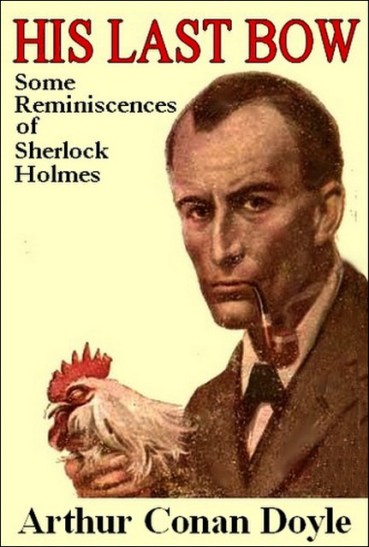 I’ll conclude this first part of the feature with a quick glimpse at a trio of curiosities, where the novel gives a fleeting but significant nod to The Great War. In 1917, Sir Arthur Conan Doyle published a collection of Holmes stories dating back across the first years of the century. In the concluding story His Last Bow: an epilogue of Sherlock Holmes, the great man disposes of a particularly dastardly German spy, and as the story finishes, he says,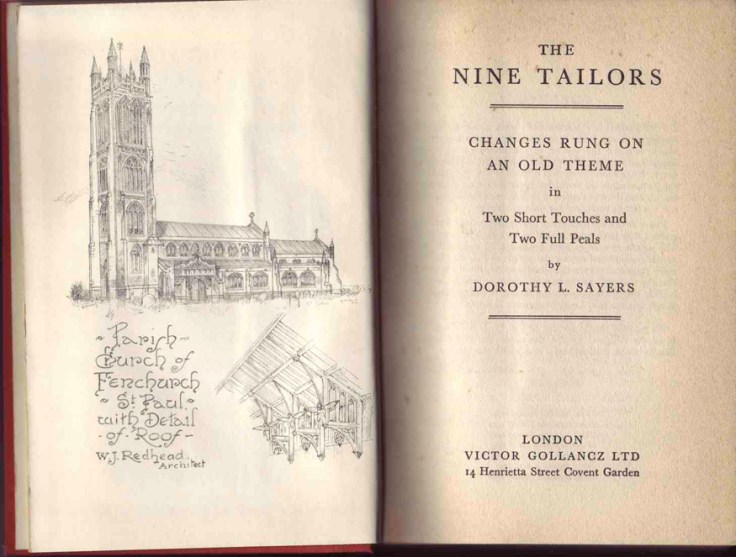
 Anthony Price has written many spy thrillers tinged with elements of military history, and in Other Paths To Glory (1974) he uses abandoned German fortifications deep beneath the French countryside as the central feature of the novel, most of which is set in the present day world of international realpolitik. As the bunkers in the novel are set in the Somme region, it is highly likely that they are modeled on the astonishing engineering of The Schwaben Redoubt, near Thiepval. The Redoubt was one of the most impregnable defences on The Western front, and it cost many thousands of lives before it was finally taken. The book is the fifth in the series featuring Dr David Audley and Colonel Jack Butler,
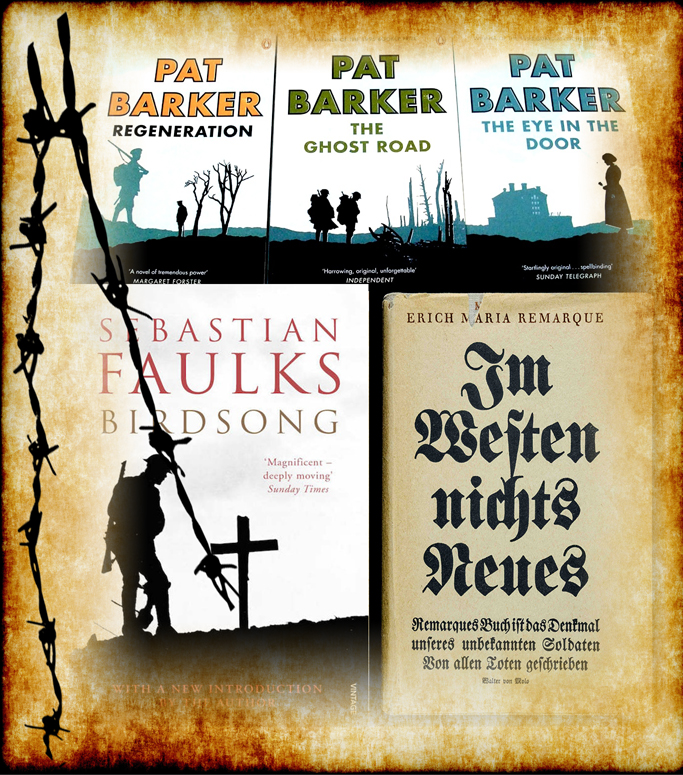
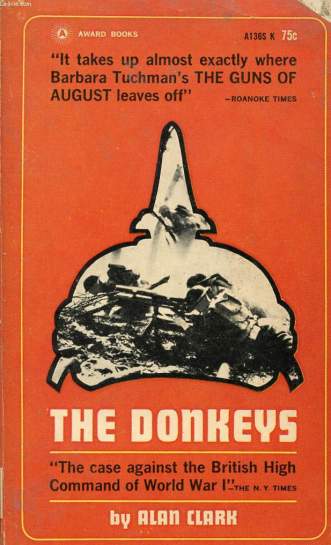 What needs to be held up like a bright lantern in our search for good WWI crime fiction, is the fact that those six years are like no other in British history. They have produced a mythology which is unique in modern memory, and with it a collection of tropes, images, phrases and conventions, all of which find their way into the consciousness of writers and readers. Military historians tell only part of the story: the Alan Clark theory of The Donkeys and the anti-war polemic of the the 1960s and 70s has one version of events; more recent accounts of the war by revisionist historians such as John Terrain and Gary Sheffield tell another tale altogether. In considering books and writers for this feature I have used two criteria. Firstly, there must be crime involved that is distinct from the licensed slaughter of wartime and, secondly, the events of the war must cast their shadows over the narrative either in a contemporary sense or in the form of a social or political legacy.


 fullybooked2017