

 nora Andresson is a distinguished English actress. Perhaps slightly past her youthful allure, she remains a beauty who can pick and choose her projects, and her films are highly thought of. She has three problems clouding her horizon. The first is, as they say, a bastard. She has a brain tumour. It has been treated but she is only too aware that she may have won a battle, but not the war. Problems two and three are related – literally. She is separated from her Swedish husband, but they have a son – a young man called Malo – who is something of a wrong ‘un. The third problem relates to the words “they have a son”. Fact is, she does – her husband doesn’t. Malo’s father is actually a millionaire businessman named Hayden Prentice, and Malo was conceived during a drunken one-nighter just before Enora’s wedding. So why is Harold a problem? Although he is now an honest man, with legitimate investments and business interests, he made his initial fortune as a drug baron.
Although Enora and Prentice (known hereafter as ‘H’) are now reunited after a fashion, the relationship does not extend to the bedroom, and Enora’s current interest is Pavel, an enigmatic scriptwriter. Pavel’s Eastern European allure is rather manufactured, however, as his real name is the more prosaic Paul. What he says about the art of story-telling, however, could equally apply to Graham Hurley’s own magic wand:
“The best stories detach you from real life. You float away down the river of fiction, lie back and enjoy he view. The storyteller’s challenge is to cast a spell, and the longer that spell lasts, the better.”
 he main plot of Sight Unseen hinges around the kidnapping of Malo’s Colombian girlfriend Clemmie. When a ransom demand of a million dollars is received her father, who, like many rich men from that benighted republic, has kidnap insurance, simply hands the case over to the experts. H, however, has other ideas, and decides to do things his way.
 Hayden Prentice is a brilliant creation and is, in many ways, at the centre of the book, as he was when we first met Enora in Curtain Call. Formerly known as Saucy from his initials, he is hewn from the same rich vein of villainy that produced the elemental force that was Bazza McKenzie in Graham Hurley’s brilliant Joe Faraday novels. H is blunt, foul-mouthed but very, very shrewd. Hurley will not be at all perturbed were readers to visualise H rather like the formidable Harold Shand, as portrayed unforgettably by the great Bob Hoskins in The Long Good Friday.
As the ransom deadline passes, with the customary video as proof-of-life, and a hiking up of the cash demand, H is increasingly convinced that Malo is, somehow more involved in the affair than simply being the anxious boyfriend. The insidious and infamous County Lines drug trade raises its ugly head, and H delivers a brief but brilliantly incisive summary of the endgame he sees engulfing the England he once knew:
“You think your own little town is safe? You think those sweet kids of yours won’t ever get in trouble with drugs? Wrong. And you know why? Because something we all took for granted has gone. Families? Mums? Dads? A proper job? Getting up in the morning? Totally bolloxed. No-one has a clue who they are any more, or where they belong, and there isn’t a single politician in the country who can tell them what to do about it.”
H has a country mansion, Flixcombe, not far from the Dorset town of Bridport. Despite its artisan bakeries, galleries and twee delis there is a grim underbelly which involves, inevitably, drugs. A local tells Enora that although the main players are little more than children:
“Nothing frightens these little bastards …. streetwise doesn’t begin to cover it. They think they’re immortal. Remember that.”
he finale is astonishing – a bravura affair which only a fine writer like Graham Hurley could hope to get away with. No spoilers, but it involves a doomed English explorer and an old ballad which once inspired Bob Dylan. Sight Unseen is published by Severn House and is out now.


 t was not until the middle of the nineteenth century that Britain had anything like an organised police force. The Hocus Girl is set well before that time, and even a developing community like Leeds relied largely on local Constables and The Watch – both institutions being badly paid, unsupported and mostly staffed by elderly individuals who would dodder a mile to avoid any form of trouble or confrontation. There were, however, men known as Thieftakers. The title is self-explanatory. They were men who knew how to handle themselves. They were employed privately, and were outside of the rudimentary criminal justice system.
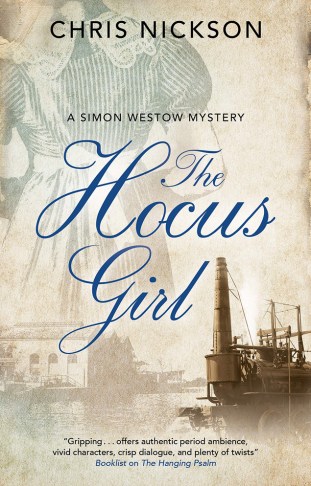 Such a man is Simon Westow. He is paid, cash in hand, to recover stolen goods, by whatever means necessary. His home town of Leeds is changing at an alarming rate as mechanised cloth mills replace the cottage weavers, and send smoke belching into the sky and chemicals into the rivers. We first met Westow in The Hanging Psalm, and there we were also introduced to young woman called Jane. She is a reject, a loner, and she is also prone to what we now call self-harm. She is a girl of the streets, but not in a sexual way; she knows every nook, cranny, and ginnel of the city; as she shrugs herself into her shawl, she can become invisible and anonymous. Her sixth sense for recognising danger and her capacity for violence – usually via a wickedly honed knife – makes her an invaluable ally to Westow. I have spent many enjoyable hours reading the author’s books, and it is my view that Jane is the darkest and most complex character he has created. In many ways The Hocus Girl is all about her.
 he 1820s were a time of great domestic upheaval in Britain. The industrial revolution was in its infancy but was already turning society on its head. The establishment was wary of challenge, and when Davey Ashton, a Leeds man with revolutionary ideas is arrested, Simon Westow – a long time friend – comes to his aid. As Ashton languishes in the filthy cell beneath Leeds Moot Hall, Westow discovers that he is treading new ground – political conspiracy and the work of an agent provocateur.


 fter her success with
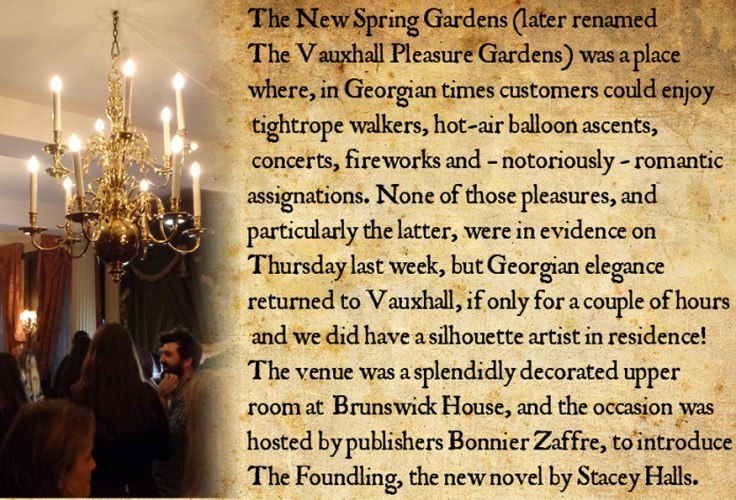
  Zosha Nash (left), formerly Head of Development at The Foundling Museum explained, the care and love bestowed on the children was remarkable, even by modern standards. Their life expectancy exceeded that of many children at the time, and all were taught to read and write. The hospital was also famously associated with Handel, and it was in the chapel that Messiah was performed for the first time in England
 ix years after leaving her, Bess Bright returns to claim her daughter, to be greeting with the shattering news that Clara is no longer there. She has been claimed – just a day after Bess left her – by a woman correctly identifying the child’s token, a piece of scrimshaw, half a heart engraved with letters. The authorities are baffled, but convinced that a major fraud has been perpetrated. Bess’s shock turns to a passionate determination to find Clara.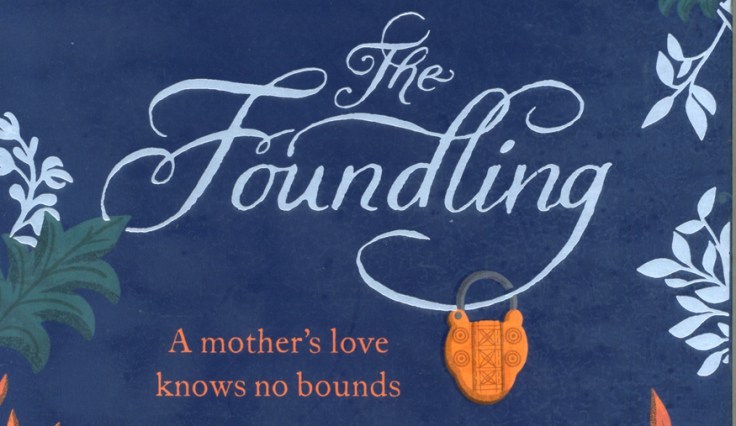


 very so often a book comes along that is so beautifully written and so haunting that a reviewer has to dig deep to even begin to do it justice. Shamus Dust by Janet Roger is one such. The author seems, as they say, to have come from nowhere. No previous books. No hobnobbing on social media. So who is Janet Roger? On her website she says:
 ig mistake. Councillor Drake underestimates Newman’s intelligence and natural scepticism. Our man uncovers a homosexual vice ring, a cabal of opportunists who stand to make millions by rebuilding a shattered city, and an archaeological discovery which could halt their reconstruction bonanza.

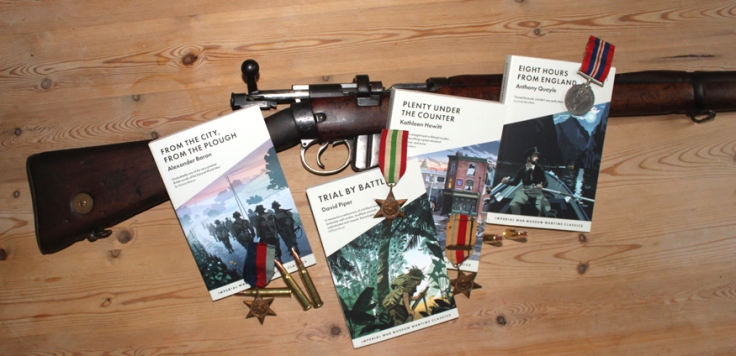
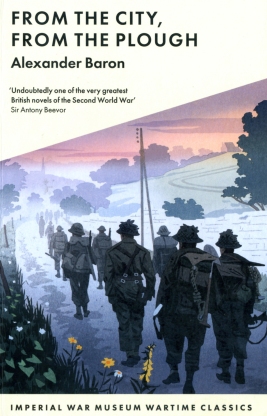
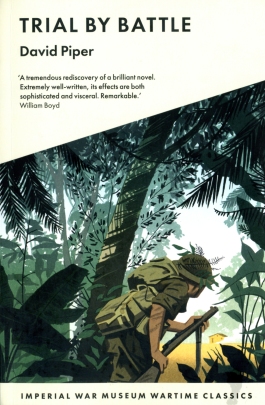
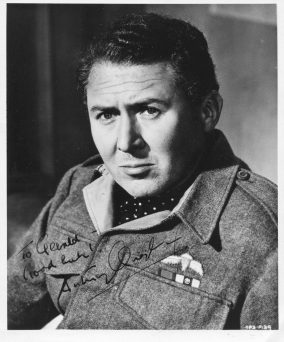 To many of us who grew up in the 1950s Anthony Quayle was to become one of a celebrated group of theatrical knights, along with Olivier, Gielgud, Richardson and Redgrave. Until recently I had no idea that he was also wrote two novels based on his experiences in WW2. The first of these, Eight Hours From England was first published in 1945 and is the fourth and final reprint in the impressive series from the Imperial War Museum.
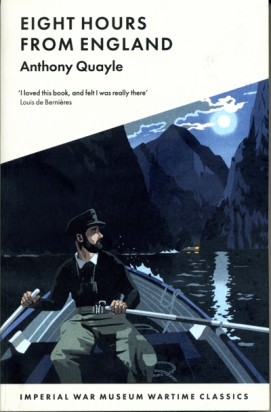 Of the three classic reprints which feature overseas action Eight Hours From England is the bleakest by far. The books by Alexander Baron and David Piper bear solemn witness to the deaths of brave men, sometimes heroic but often simply tragic: the irony is that Overton and his men do not, as far as I can recall, actually fire a shot in anger. No Germans are killed as a result of their efforts; the Allied cause is not advanced by the tiniest fraction; their heartbreaking struggle is not against the swastika and all it stands for, but against a brutally inhospitable terrain, bitter weather and, above all, the distrust, treachery and embedded criminality of many of the Albanians they encounter.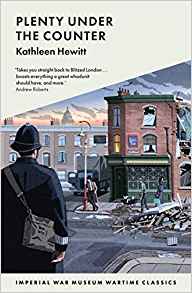
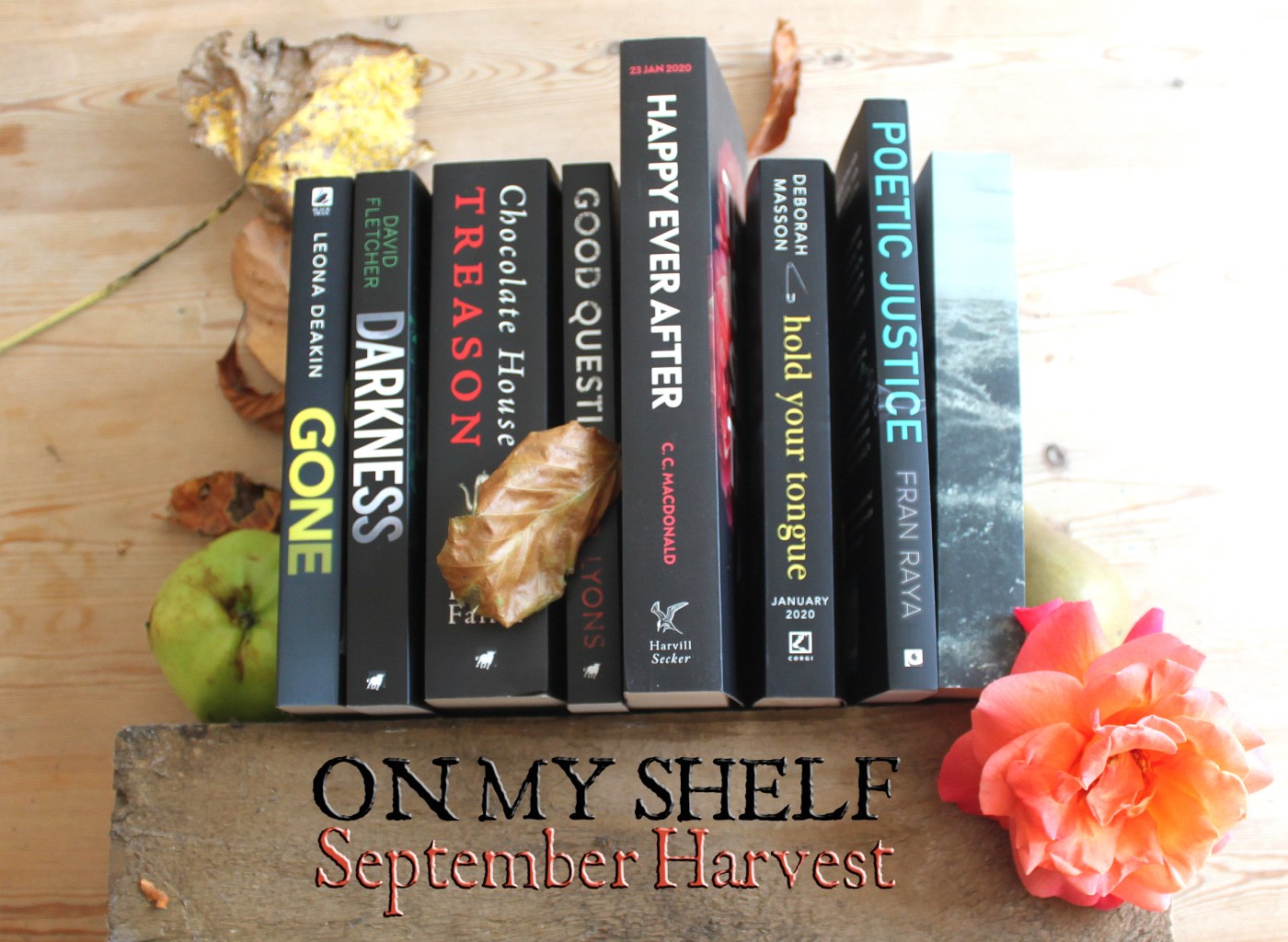

 There is a definite autobiographical seam in the character of Dr Augusta Bloom, who combines the careers of PI and psychologist. The author worked as a psychologist for West Yorkshire Police before writing this, her debut novel. She turns the serial abductor/victim trope on its head as Dr Bloom tries to convince a complacent constabulary that the alleged victims may be more to be feared that the perpetrator. This will be published by Black Swan
  As the enthusiasm for the recent film The Favourite shows, the life of Queen Anne, thought by history to be hitherto unremarkable, has become something of ‘a thing’. Professor David Fairer of Leeds University is an acknowledged expert on the 18th century and, in, particular, its poetry. How fitting then, that his novel is set in the London of 1708 where The Queen herself is subject to scathing sexual innuendo in the gutter press, and the capital seethes with political and criminal unrest. There are, inevitably, casualties and an unlikely trio of investigators seek to solve two murders and prevent a third. This enthralling historical mystery is available now, and is
  We could, once upon a time, refer to Africa as The Dark Continent without invoking the fury of The Woke. Working on the assumption that Africa was ‘darker’ the further you went into it, then the Congo was blacker than black. Conrad’s Heart of Darkness and Greene’s A Burnt-Out Case feasted royally on the remoteness of the Congo, and the consequent imaginings of a land where the moral code was either abandoned or perverted. David Fletcher’s Dan Worthington has suffered loss, heartbreak, and the almost surgical removal of his life spirit. A chance encounter offers him a renaissance and a reawakening, but there is a price to be paid. A flight to Brazzaville takes him to the divided modern Congo, and a sequence of events which will test his resolve to its core. Darkness is also a Matador title and came out in
 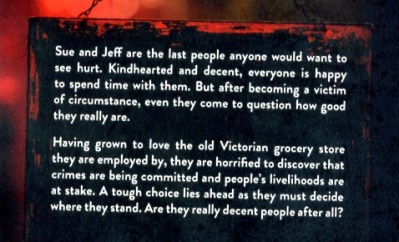 Sue and Jeff work in a grocery store that is something of a throwback. Old fashioned service, the personal touch, quality products – what could possibly go wrong? The pair are amiable, kind-hearted and loved by customers. This apparent Garden of Eden turns inexorably into a wasteland when the pair become involved in a grim criminal conspiracy which is none of their own making. Published by Matador, Good Question is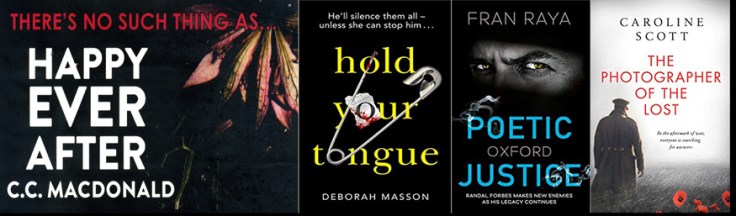
 Fans of comforting and anguish-free crime novels should probably look away now. This debut psychological thriller gnaws away at our anxieties and its mission statement seems to be that no fingernail should remain unbitten. Ostensibly privileged and happily married, Naomi falls both victim of – and pregnant by – an elusive and unscrupulous charmer. His disappearance is one thing, but the threat and menace hanging over her domesticity is something else altogether. Harvill Secker are the publishers here, but you will have to wait until
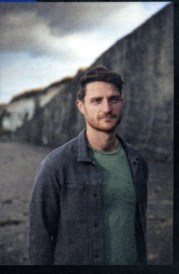
  Eve Hunter elbows her way into the crowded room containing fictional British Detective Inspectors, but she has a reputation to save, and a serial killer to catch. Deborah Masson (left) comes from The Granite City of Aberdeen, which is totally fitting as this, her debut novel, is as dark, flint-hard and gritty as her home town. Hold Your Tongue is due on the shelves on
  Randall Forbes has a powerful gift – or is it a curse? He is endowed with telepathy, which gives him formidable abilities as well as huge responsibilities. Set against the warm limestone and dreaming spires of Oxford, Jan Raya’s novel is a breathtaking account of how Randall Forbes challenges and frustrates the police, while sticking to his own code of conduct – slightly warpd though it may be. Musician and writer? Jan Raya is not alone, as fans of the band Fun Loving Crime Writers will testify! Fran Raya’s novel is out on 28th September and is published by
  The only obvious crime here is the disastrous waste of a generation of young lives on the killing fields of France and Flanders, but Caroline Scott’s novel explores the emotional wasteland of England in the 1920s, where countless women sought some kind of solace after the death of their fathers, husbands and brothers. The photographing of grave-sites and cemeteries was something of a huge commercial opportunity, as so many relatives were ill-equipped to make the journey across the channel to be reunited with their lost loved ones. Widowed Edie has resigned herself to mourning for husband Francis, but a random photograph sparks a search which may end in joyful reunion or shattered hopes. This book is an elegy to loss, heartbreak and the death of a generation. Out on 31st October,
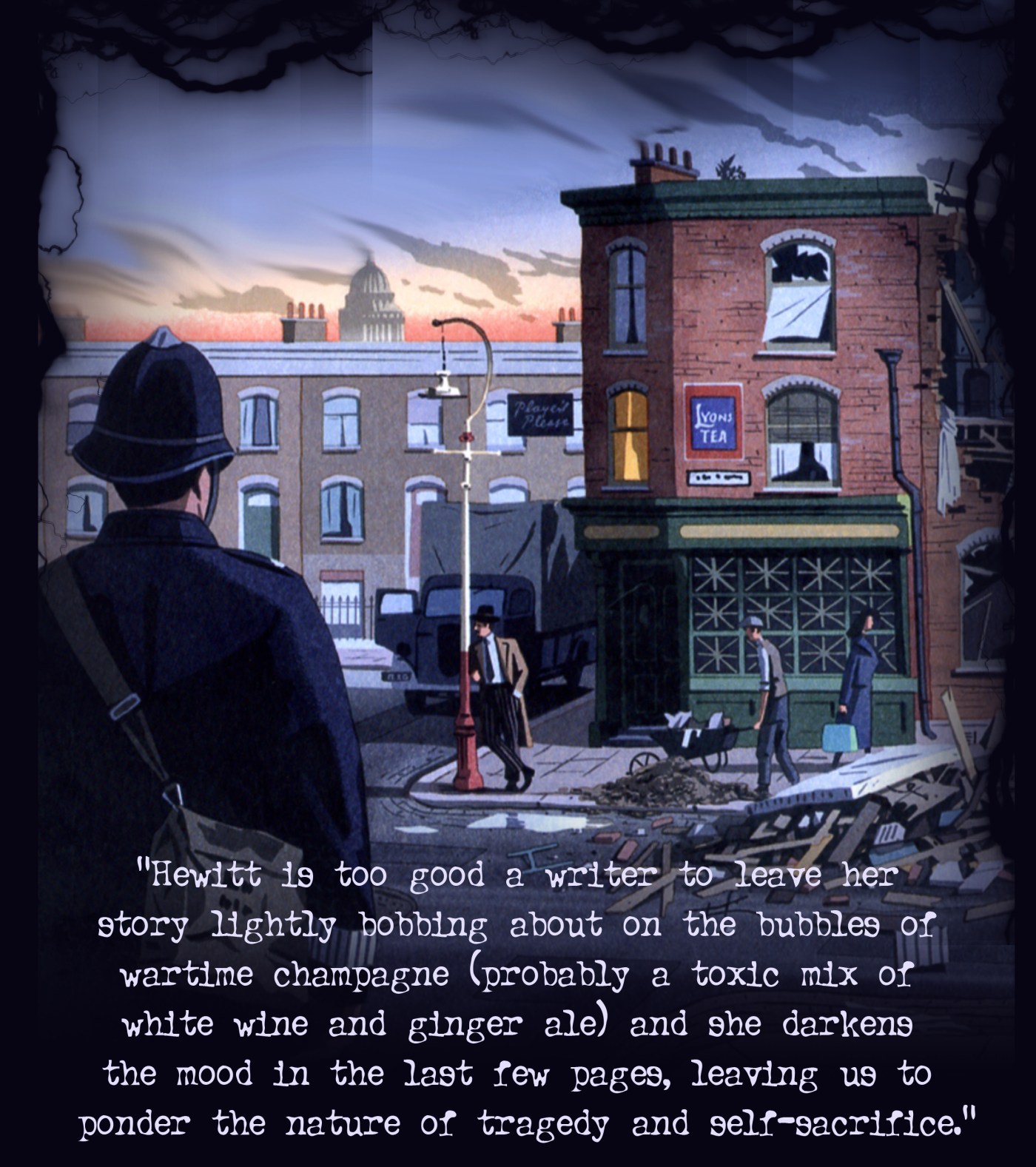
 A jolly murder? Well, of course. Fictional murders can be range from brutal to comic depending on the genre, and although the corpse found in the back garden of Mrs Meake’s lodging house – 15 Terrapin Road – is just as dead as any described by Val McDermid or Michael Connelly, the mood is set by the chief amateur investigator, a breezy and frightfully English RAF pilot called David Heron on recuperation leave from his squadron, and his elegantly witty lady friend Tess. He is from solid county stock:
 eaders will not need a degree in 20th century social history to recognise that the book’s title refers to the methods used by shopkeepers to circumvent the official rationing of food and fancy goods. More sinister is the presence – both in real life and in the book – of criminals who exploit the shortages to make serious money playing the black market and for whom deadly violence is just a way of life.
 The story rattles along in fine style as the hours tick by before David has to return to the war. He has two pressing needs. One is to buy the special licence which will enable him to marry Tess, and the other is to find the Terrapin Road murderer. Hewitt (right) is too good a writer to leave her story lightly bobbing about on the bubbles of wartime champagne (probably a toxic mix of white wine and ginger ale) and she darkens the mood in the last few pages, leaving us to ponder the nature of tragedy and self-sacrifice.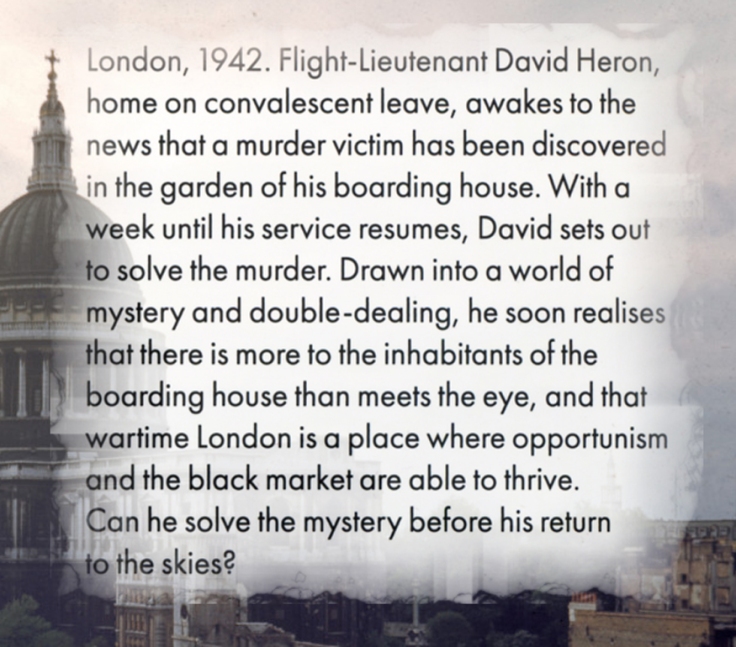

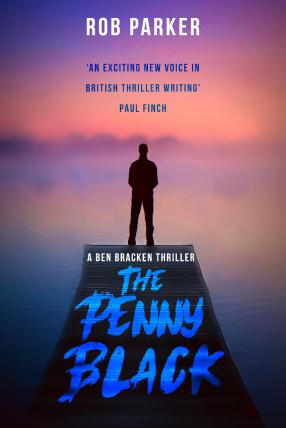
 o, this is not a novel about stamp collecting, and it would be a skillful writer who could turn the rather dry pursuit of philately into a thriller. The Penny Black is a pub – one of three – in the apparently languid and peaceful Norfolk riverside village of Horning. On the river pleasure boats glide, coots skate and squabble while, beneath the ripples, Esox Lucius bides his time, ready to snap up an unwary Roach or two, or perhaps a duckling who has strayed too far from its siblings.
 This riparian idyll is about to suffer a tsunami of turbulence however, partly due to one of its temporary residents. To call Ben Bracken, the creation of author Rob Parker (left), a Wild Card is something of an understatement. In A Wanted Man and Morte Point (
 With the cash needed to pay for a fake passport and drivers’ licence Bracken prepares to bid farewell to Horning, a brutal murder and an encounter with a new enemy puts him – literally – on his back, recuperating in a lonely farmhouse. We learn that Norfolk’s would-be Medellin Cartel are actually dancing to the tune played by a London mobster called Terry “Turn-up” Masters, with whom Bracken has serious history. When Masters and his thugs turn up in Horning at the same time as a government Black Ops unit determined to eliminate Bracken, the scene is set for a spectacular shootout involving a buried cache of Home Guard weapons, gallons of blood sprayed liberally over the walls of The Penny Black and enough corpses to keep the local pathologist busy for weeks.
 ob Parker writes in a full-on style which frequently exceeds the speed limit and sometimes skates dangerously on the thin ice of probability, but he is never less than entertaining. Amid the mayhem, there are some sharp social observations:


 fullybooked2017