
PART TWO
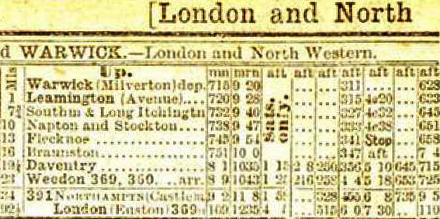
The story so far. It is May, 1905, and 21 year-old Maida Warner, who had been working as a domestic servant for Mr and Mrs Patterson on Rugby Road, has been sent home to her parents in Stockton, after a mysterious medical emergency. Maida has taken the train from Milverton Station and once they are sure she has gone, John and Lizzie Patterson go up to the girl’s room. Let the newspaper report take up the narrative:
“In the bedroom, Mr Patterson found Maida Warner’s tin traveling trunk. It was strapped up, and appeared the same as when she first came to the house with it. There was also parcel of clothes on the top of the box, and on opening it he saw that which aroused his suspicions still further. He took up the tin box to see how heavy it was, and he found it heavier than he expected. On opening he found a lot of underclothing, and moving these he discovered a parcel, wrapped up in an apron and tied with string. He left the parcel on the floor. and from what saw he went and called Mrs. Moffat, a neighbour, and told her of his suspicions. Patterson asked her to examine the parcel and, with his wife, left the room. When Mrs Moffat returned downstairs she informed them that she had found a dead baby.”
Mary Moffat lived with her husband at Cliff Cottage, next door to the Pattersons, and her testimony at a later court hearing chills the blood, even today.
“I went into the servant’s bedroom. Mrs. Patterson pointed out a parcel to me, which I examined. It contained soiled linen, and evidence that a child had been born. I then examined the contents of the tin box. and found a fish basket, tied with string. Cutting the string, I found a parcel fastened with a safety pin and tied round with a necktie. This I also cut, and on unwrapping the parcel saw the body of a child. It was quite blue in the face, but I did not notice whether anything was tied round the neck. I thought the body looked as it had been washed.”
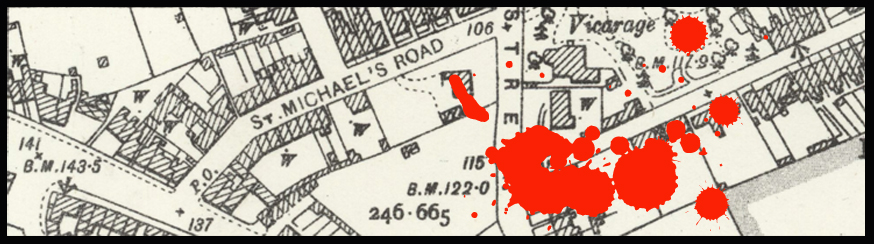
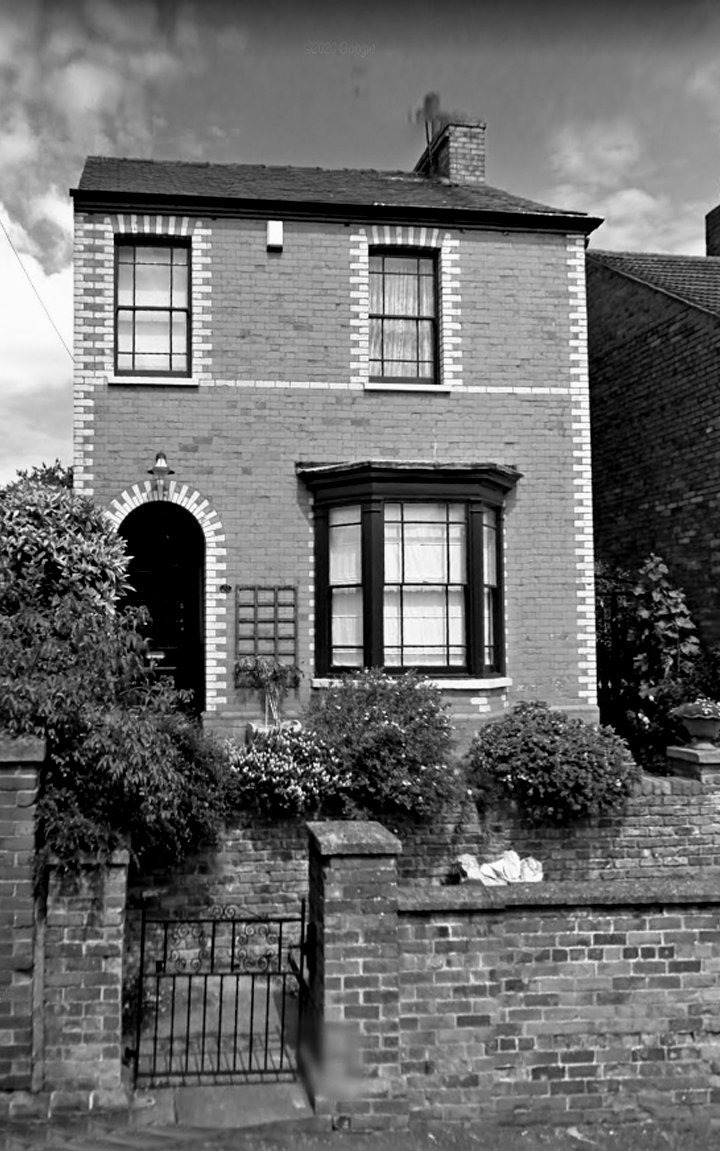
In a state of shock, Patterson sent for the police. Detective-Sergeant Matthews arrived and went into the back bedroom, and there saw two bundles as described by John Patterson and Mary Moffat. The second bundle contained the body of a male child, wrapped in towels and apron. Matthews removed the body to the mortuary, where Dr Rice made a post-mortem examination. The next day, accompanied by Chief Constable Earnshaw, Matthews went to Stockton and saw the girl, Maida Warner, at her father’s house in Elm Row (below).
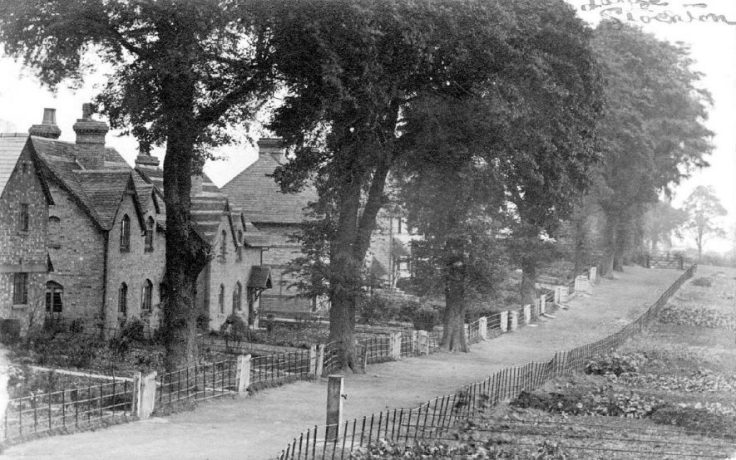
He took her to Leamington Police Station, and, after cautioning her, charged her with the wilful murder of the male child on or about May 31st. She replied, “I am innocent of that.” When he saw her first at Stockton she was walking about, and he did not notice anything unusual about her. Warner was subsequently removed to the Warneford Hospital, and from there to the Infirmary at Warwick Gaol.
Dr. Rice’s post mortem report to the Coroner at the inquest into the baby’s death makes for grim reading:
“On the evening of June 3rd I saw the body of the child at the mortuary. I made a post-mortem examination on Sunday, and found that it was a male child, fairly well developed, weighing 51bs. 6oz. On Saturday I had come to the conclusion that the child had lived, but had been dead one or two days. I found a string tied three times round the neck, and firmly knotted at the end of the second round, and again at the end the third round. The child’s face was livid, the tongue protruding, and the fingers clenched. The body was wrapped in an apron which was marked M. Warner.
I made the post-mortem in company with Dr. Ross. Decomposition was just beginning. There were two small punctures of the skin on the left of the stomach, such might have been caused a large pin, but they did not penetrate deeplv. The brain was healthy, but congested, and there was good deal of blood under the scalp, which was the natural process of child birth. The heart was healthy and the lungs inflated. I am of the opinion that the child was healthy child, at, or near, full time, that it had lived and breathed freely. The cause death suffocation by strangulation, which might have been caused the cord round the infant’s neck. The child was alive when this constriction was put round it. It was impossible to say that the child was wholly born, at the time it was done.”
THE FINAL PART WILL BE AVAILABLE
AT 6.00pm ON MONDAY 1st MARCH




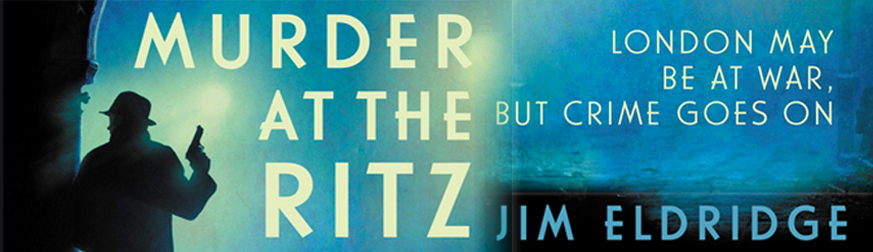
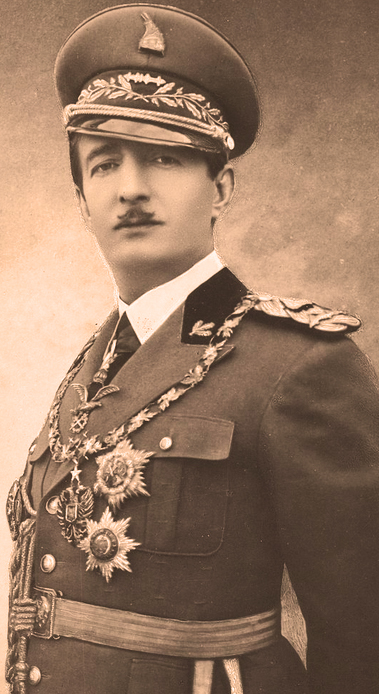 Any novel which features – in no particular order – Commander Ian Fleming, King Zog of Albania, a dodgy lawyer called Pentangle Underhill, and a Detective Chief Inspector named The Hon. Edgar Walter Septimus Saxe-Coburg promises to be a great deal of fun, and Murder At The Ritz by Jim Eldridge didn’t disappoint. It is set in London in August 1940, and Ahmet Muhtar Zogolli, better known as King Zog of Albania (left) has been smuggled out of his homeland after its invasion by Mussolini’s Italy, and he has now taken over the entire third floor of London’s Ritz Hotel, complete with various retainers and bodyguards – as well as a tidy sum in gold bullion.
  Back to the story, and when a corpse is discovered in one of the King’s suites, Coburg is called in to investigate. The attempt to relieve the Albanian monarch of his treasure sparks off a turf war between two London gangs who, rather like the Krays and the Richardsons in the 1960s, occupy territories ‘norf’ and ‘sarf’ of the river. After several more dead bodies and an entertaining sub-plot featuring Coburg’s romance with Rosa Weeks, a beautiful and talented young singer, there is a dramatic finale involving a shoot-out near the Russian Embassy. This is a highly enjoyable book that occupies the same territory as John Lawton’s


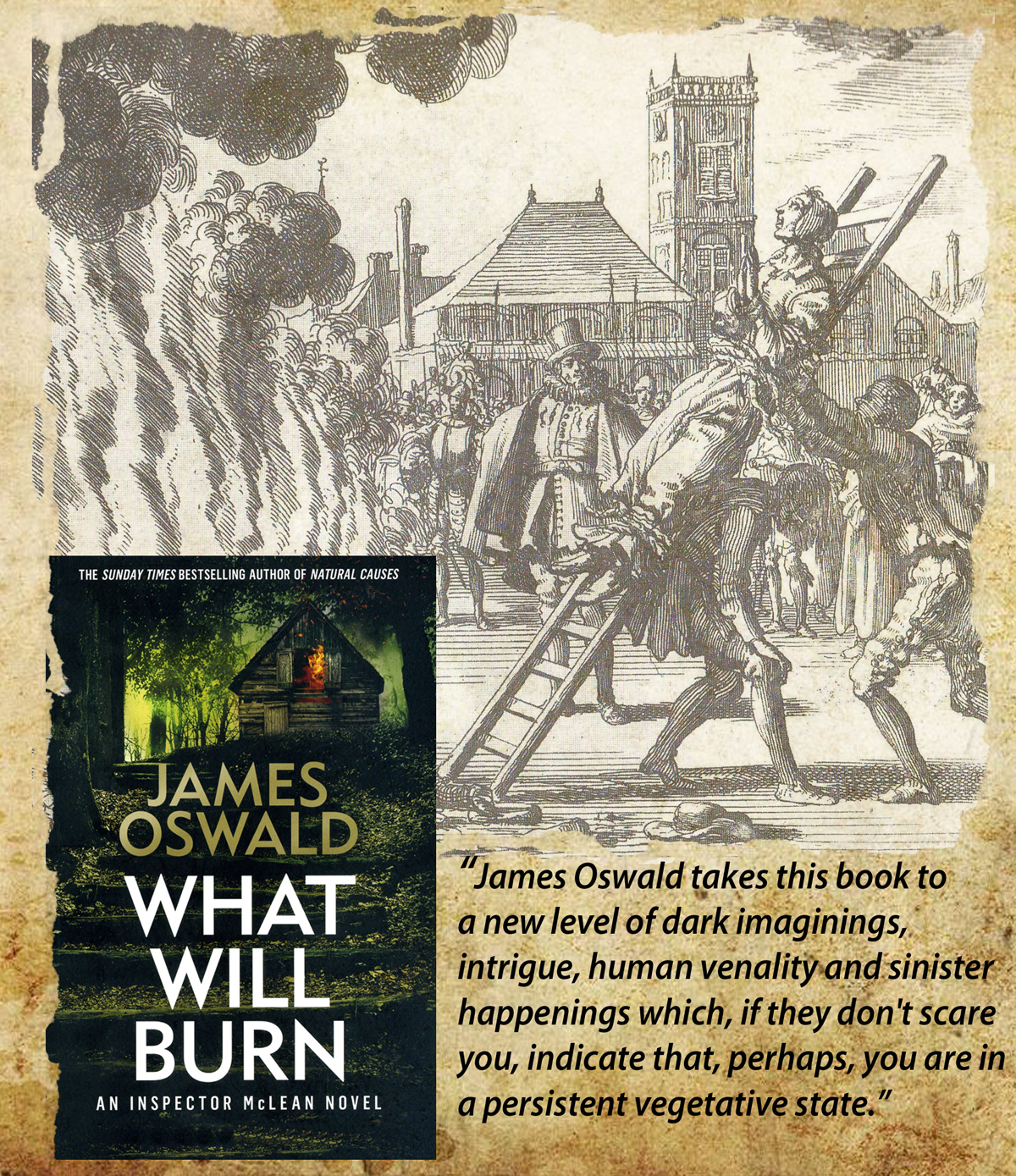




 When the body count starts to rise, Elin’s professional training kicks in and, after phoning the local police for permission, she takes charge of the investigation. With no access to forensic support or police databases, she has to make do with what she has – basically her own instincts as a copper. She suspects that whatever is motivating the killer lies in the history of the hotel. Sarah Pearse (right) exploits the conventions of the locked-down/cut-off-from-the-outside-world thriller for all she is worth, and we have hidden passage ways, disused tunnels, murderers in sinister masks, and the general sense that most of the key figures in the plot are hiding secrets of one sort or another.





 Fans of dark domestic drama should love this. The ‘good man’ in question is Thomas Martin. He was the perfect family man, husband, father son and brother. He had a dream job and a lovely home. But when disaster strikes, and dreadful suffering is inflicted on those he loves, he is forced to conduct the most forensic examination of his own personality, motivation and actions. Ani Katz is a writer, photographer and teacher. She was born and raised on the south shore of Long Island, and holds a MFA in photography from Columbia College, Chicago, and a BA from Yale. She lives in Brooklyn. A Good Man is published by Windmill/Penguin Random House. It came out in hardback in January last year and the paperback will be out on
  I reviewed – and loved – an earlier Heidi Perks novel back in 2019, when
  Jo Spain is, in my opinion, one of the most gifted writers we have. She is based in Dublin, and not content with creating a hugely popular police procedural series featuring Detective Tom Reynolds, she writes scripts and screenplays for television and cinema, and also managed to write superb standalone thrillers. The Perfect Lie belongs to the latter category, but moves the action from Ireland to America’s east coast. Erin Kennedy lives in Newport, Long Island with her detective husband Danny. Her idyllic life turns into a nightmare when he jumps to his death from their fourth-floor apartment.


 fullybooked2017