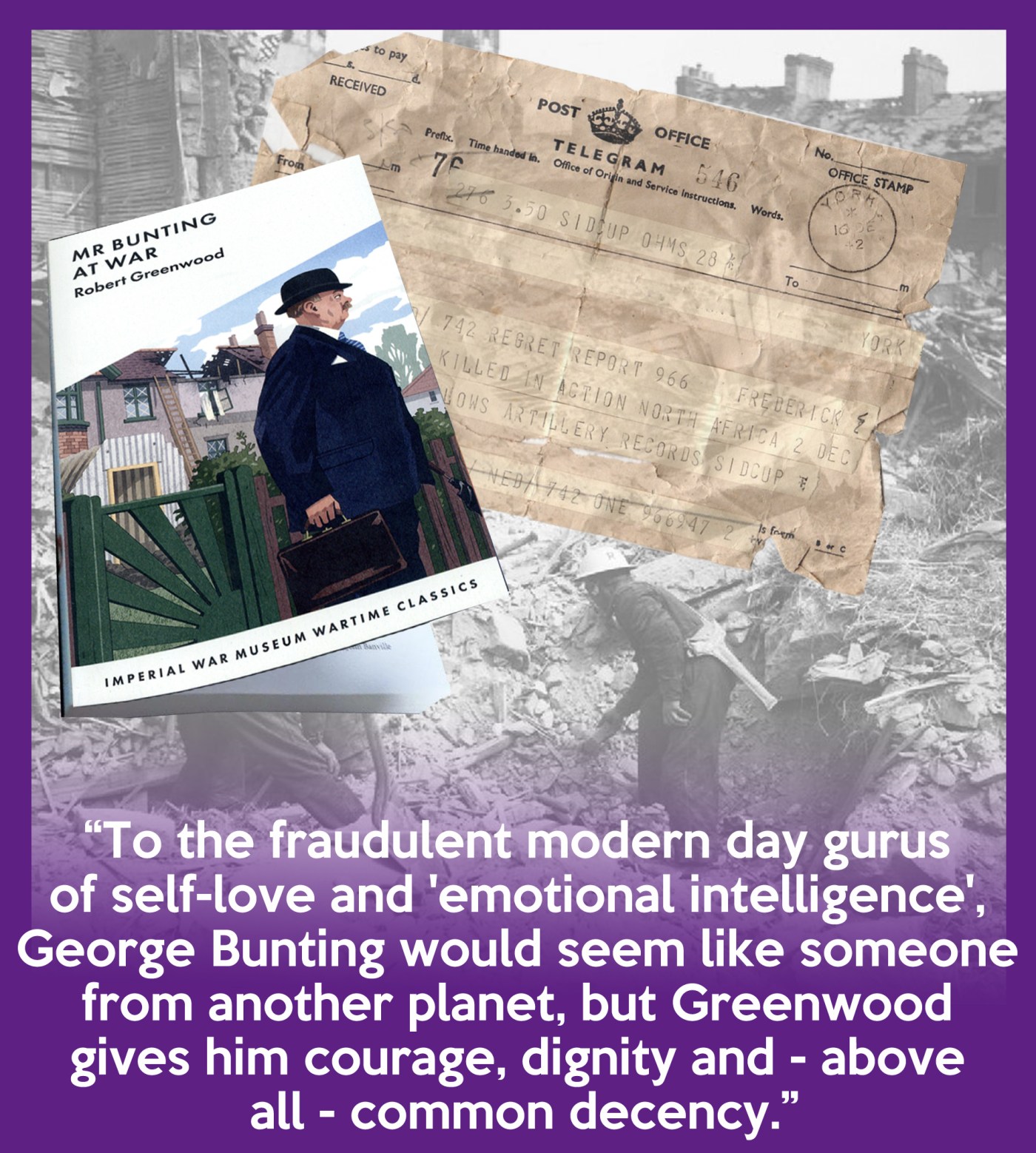

This is another in the superb series of republished novels set in the Second World War. As author Wiliiam Boyd remarked:
“If poetry was the supreme literary form of the First World War the, as if in riposte, in the Second World War, the English novel comes of age. This wonderful series is an exemplary reminder of that fact.”
Robert Greenwood introduced Mr Bunting to the world in the book of the same title, published in 1940. He is something of a ‘stuffed shirt’, but entirely without malice, and he lives with his family in Essex, but within commuting distance of his work at an ironmongers in London. This is set in 1941, with London under siege from the skies, but by the end of the book the strategically unimportant district where the Buntings live is feeling the full wrath of the Luftwaffe.
George Bunting and his wife Mary have three grown up children, Chris, Ernest and Julie. Chris is, it could be said, George’s favourite son. He is practical, endlessly optimistic and cheerful, while Ernest is more introspective – and a gifted pianist. Both young men are trying hard to make a go of their respective careers, while Julie is something of a dreamer, and looking for suitable work.
The day to day world that Robert Greenwood describes would have been completely familiar to thousands of readers in 1941. So many elements of life then, however, are almost unimaginable to us now: the sheer terror of being under regular attack from the skies, the dread of receiving a telegram from the armed forces, the privations and shortages of food and the heavy hand of a wartime government laid on every aspect of normal life.
I was initially tempted to compare Mr Bunting with another gentleman from an earlier generation, Charles Pooter. Mr Pooter (the creation of George and Weedon Grossmith in Diary of A Nobody) lived closer to ‘town’, in Holloway. His house was called The Laurels, while Mr Bunting lives at Laburnum Villa. While the Grossmiths wanted us to laugh at Mr Pooter, Robert Greenwood takes a very different approach. He invites us, perhaps, to smile and raise an eyebrow at Mr Bunting’s rigid view of the world and his own place in it, but he never mocks. Bunting is a man of simple pleasures:
“There was nothing Mr Bunting liked better than to escape from the war and listen to his wife and daughter-in-law discuss the technicality of ‘turning the heel’ or report on experiments with recipes recommended by the Ministry of Food. To sit placidly smoking and listening to these discussions was to realise one had a home and a wife who was a jewel. If there was anything better in life, Mr Bunting wanted to know what it was.”
Through Mr Bunting, as he travels into London each day on his morning train, we see the carnage being wrought on the city. As he walks from the station to Brockleys, things almost become too much for him:
“Through the devastation he walked, stepping over hoses, skirting the edge of craters, threading his way past grimed and bloodshot firemen, single-mindedly pursuing his own particular business. There were gruesome sights, too, sensed rather than seen, tarpaulins stretched over what he knew were human forms. Once, a lock of a girl’s hair fluttered brightly as the wind ruffled her crude shroud. He bit his lip, and looked away.”
In George Bunting, Robert Greenwood created a character who is ordinary in the extreme, socially gauche, but from a generation of people who simply ‘got on with things’ when the darker side of life – in this case, a world war – threatened to overwhelm them. When tragedy strikes the family, he is devastated, but breaking down is simply something that was ‘not on’ in those days. To the fraudulent modern day gurus of self-love and ’emotional intelligence’, George Bunting would seem like someone from another planet, but Greenwood gives him courage, dignity and – above all – common decency. Mr Bunting at War is an Imperial War Museum Classic, and will be out on 21st April.
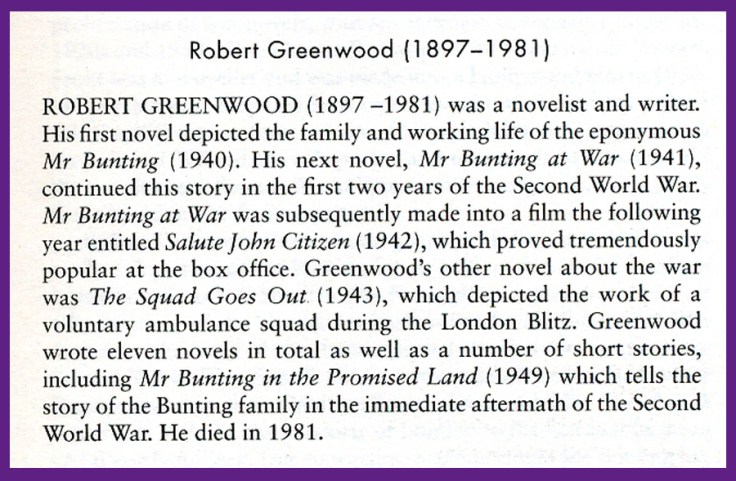
For reviews of other IWM Classics, click the link below.


 We are left to imagine what he looks like. He never uses violence as a matter of habit, but his inner rage fuels a temper which can destroy those who are unwise enough to provoke him. Why is he so bitter, so angry, so disgusted? Of himself, he says: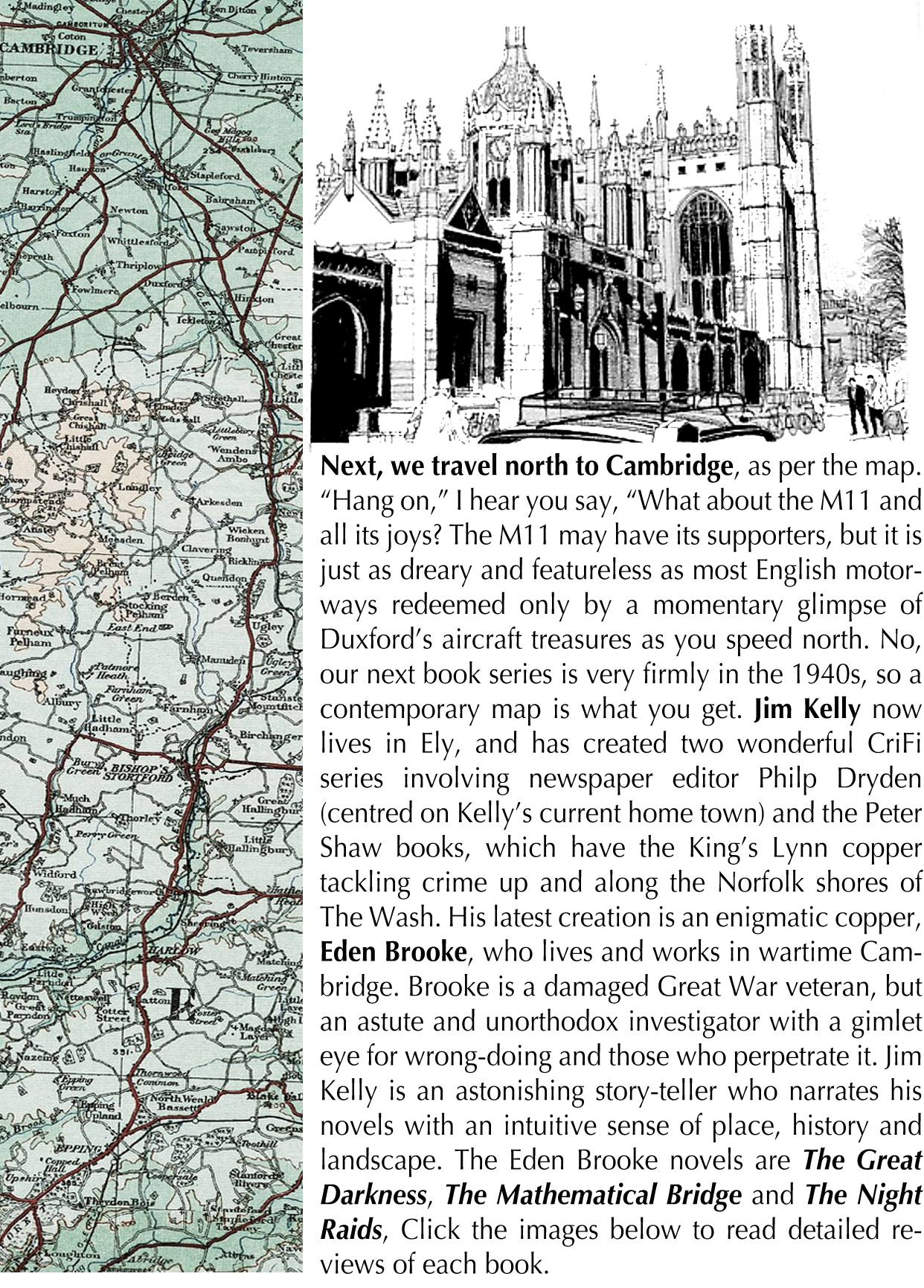


 This prelude takes place in 1942

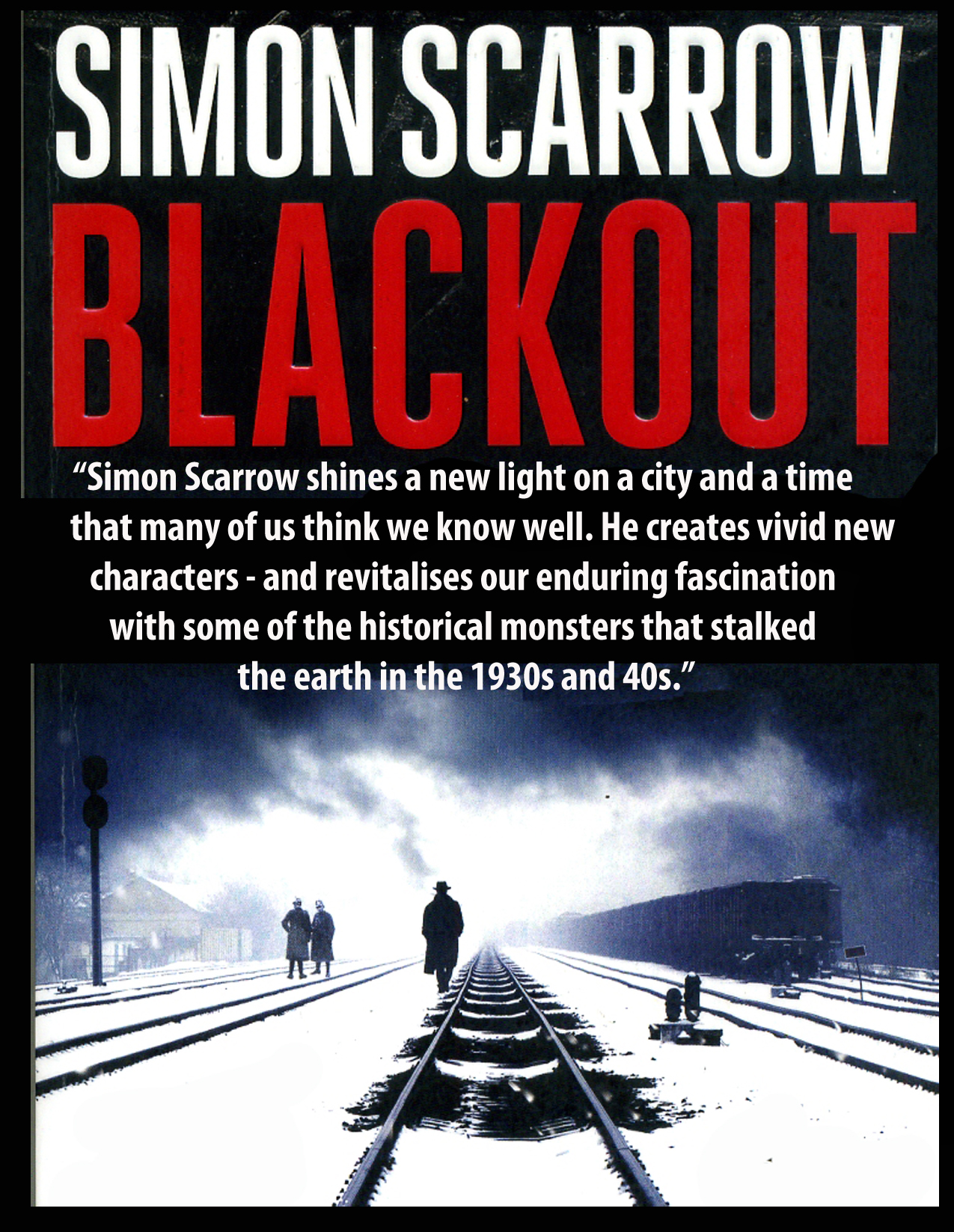

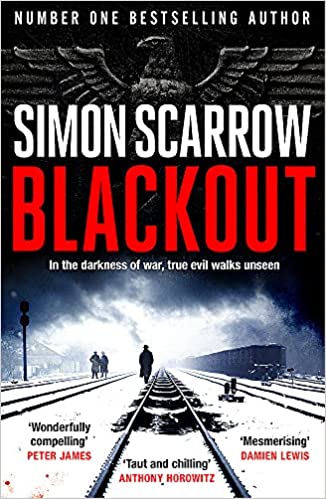 December 1939. Berlin. The snow lies deep and crisp and even, and Kriminalpolizei Inspector Horst Shenke is summoned to the Reich Security Main Office to meet Oberführer Heinrich Müller, a protege of Reinhardt Heydrich and recently appointed head of the Gestapo. Müller has a tricky problem in the shape of a former film star, Gerda Korzeny. Her husband is a lawyer and Nazi Party member who specialises in redrafting potentially awkward pieces of existing legislation in favour of the Party. And now Gerda is dead. Found by a railway track with awful head wounds. She had also been brutally raped. But what does this have to do with Heinrich Müller? His problem is that Gerda Korzeny was known to be having an affair with Oberst Karl Dorner, an officer in the Abwehr, Germany’s military intelligence organisation, and the Gestapo man wants the matter dealt with quickly and discreetly.
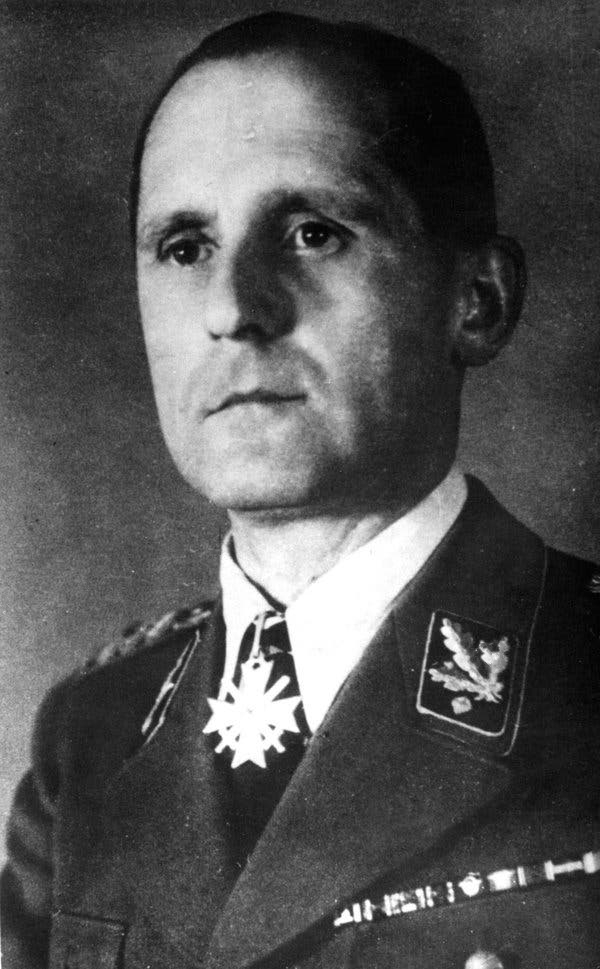 Oberführer Müller, (right) in an attempt to keep tracks on what Schenke is doing, sends a young Gestapo officer called Liebvitz to shadow the Kripo officer, and that allows us to meet a rather unusual fellow. These days, we would probably say he has Asperger’s Syndrome, as he takes everything literally, has no sense of humour and a formidable eye for detail. He is also a crack shot, and this skill serves both Schenke and the department well by the end of the book.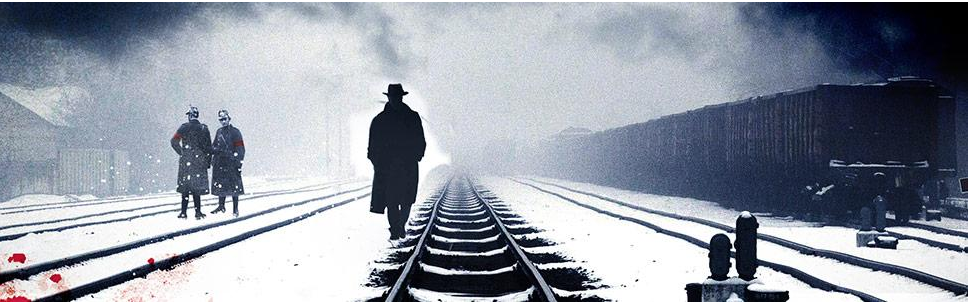


 Years later

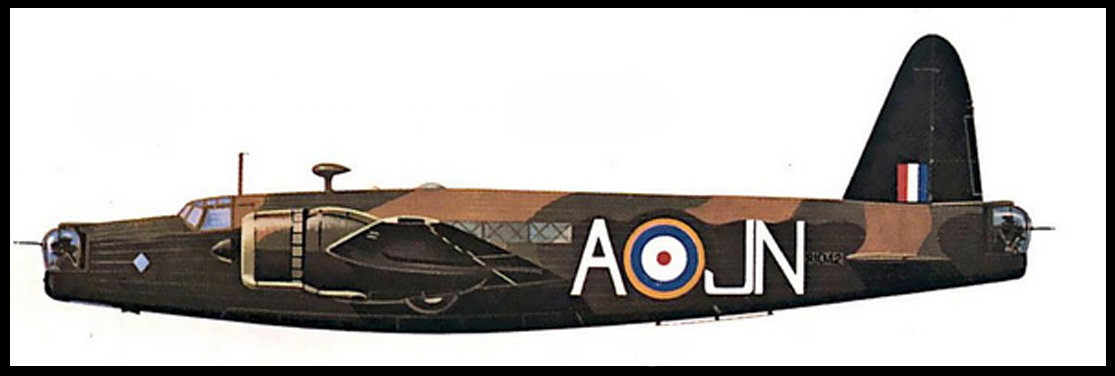





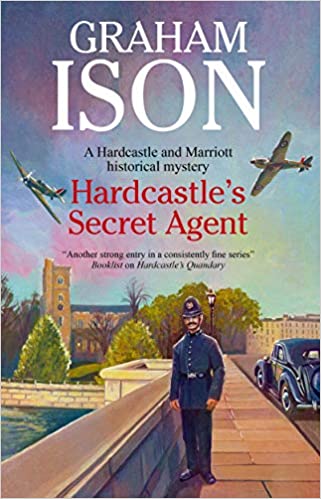 We are, as ever, in London, but it is 1940. The Phony War is over, and the Luftwaffe are targetting industrial sites they believe to be involved in making parts for military aircraft. When several important employees of one such factory are burgled – clearly by an expert – but with nothing other than trinkets stolen, Hardcastle believes he may be on the track of a German spy on the look-out for plans, blueprints or important military information. Hardcastle has to deal with The Special Branch, but finds them about as co-operative as they were with his father a couple of decades earlier. This has a certain tinge of irony, as part of the author’s distinguished police career was spent as a Special Branch Operative.

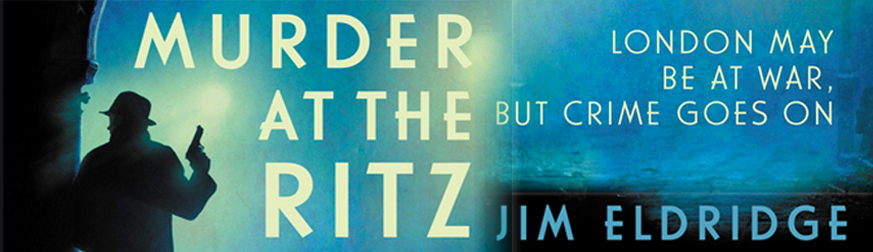
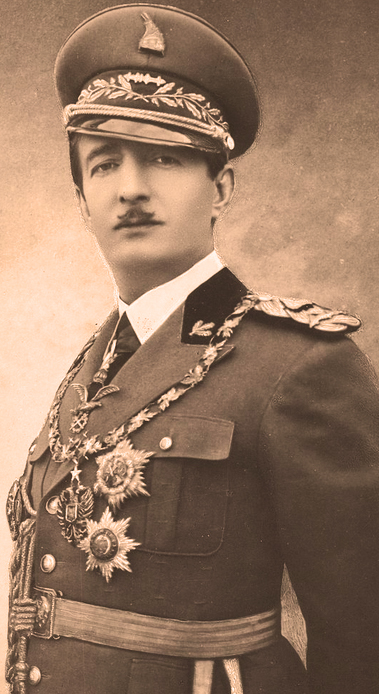 Any novel which features – in no particular order – Commander Ian Fleming, King Zog of Albania, a dodgy lawyer called Pentangle Underhill, and a Detective Chief Inspector named The Hon. Edgar Walter Septimus Saxe-Coburg promises to be a great deal of fun, and Murder At The Ritz by Jim Eldridge didn’t disappoint. It is set in London in August 1940, and Ahmet Muhtar Zogolli, better known as King Zog of Albania (left) has been smuggled out of his homeland after its invasion by Mussolini’s Italy, and he has now taken over the entire third floor of London’s Ritz Hotel, complete with various retainers and bodyguards – as well as a tidy sum in gold bullion.
  Back to the story, and when a corpse is discovered in one of the King’s suites, Coburg is called in to investigate. The attempt to relieve the Albanian monarch of his treasure sparks off a turf war between two London gangs who, rather like the Krays and the Richardsons in the 1960s, occupy territories ‘norf’ and ‘sarf’ of the river. After several more dead bodies and an entertaining sub-plot featuring Coburg’s romance with Rosa Weeks, a beautiful and talented young singer, there is a dramatic finale involving a shoot-out near the Russian Embassy. This is a highly enjoyable book that occupies the same territory as John Lawton’s


TO ALL THE LIVING . . . Between the covers
This is the latest in the series of excellent reprints from the Imperial War Museum. They have ‘rediscovered’ novels written about WW2, mostly by people who experienced the conflict either home or away. Previous books can be referenced by clicking this link.
We are, then, immediately into the dangerous territory of judging creative artists because of their politics, which never ends well, whether it involves the Nazis ‘cancelling’ Mahler because he was Jewish or more recent critics shying away from Wagner because he was anti-semitic and, allegedly, admired by senior figures in the Third Reich. The longer debate is for another time and another place, but it is an inescapable fact that many great creative people, if not downright bastards, were deeply unpleasant and misguided. To name but a few, I don’t think I would have wanted to list Caravaggio, Paul Gauguin, Evelyn Waugh, Eric Gill or Patricia Highsmith among my best friends, but I would be mortified not to be able to experience the art they made.

So, could Monica Felton write a good story, away from hymning the praises of KIm Il Sung and his murderous regime? To All The Living (1945) is a lengthy account of life in a British munitions factory during WW2, and is principally centred around Griselda Green, a well educated young woman who has decided to do her bit for the country. To quickly answer my own question, the answer is a simple, “Yes, she could.”
Another question could be, “Does she preach?“ That, to my mind, is the unforgivable sin of any novelist with strong political convictions. Writers such as Dickens and Hardy had an agenda, certainly, but they subtly inserted this between the lines of great story-telling. Felton is no Dickens or Hardy, but she casts a wry glance at the preposterous bureaucracy that ran through the British war effort like the veins in blue cheese. She highlights the endless paperwork, the countless minions who supervised the completion of the bumf, and the men and women – usually elevated from being section heads in the equivalent of a provincial department store – who ruled over the whole thing in a ruthlessly delineated hierarchy.
Amid the satire and exaggerated portraits of provincial ‘jobsworths’ there are darker moments, such as the descriptions of rampant misogyny, genuine poverty among the working classes, and the very real chance that the women who filled shells and crafted munitions – day in, day out – were in danger of being poisoned by the substances they handled. The determination of the factory managers to keep these problems hidden is chillingly described. These were rotten times for many people in Britain, but if Monica Felton believed that things were being done differently in North Korea or the USSR, then I am afraid she was sadly deluded.
The social observation and political polemic is shot through with several touches or romance, some tragedy, and the mystery of who Griselda Green really is. What is a poised, educated and well-spoken young woman doing among the down-to-earth working class girls filling shells and priming fuzes?
My only major criticism of this book is that it’s perhaps 100 pages too long. The many acerbic, perceptive and quotable passages – mostly Felton’s views on the more nonsensical aspects of British society – tend to fizz around like shooting stars in an otherwise dull grey sky.
Is it worth reading? Yes, of course, but you must be prepared for many pages of Ms Felton being on communist party message interspersed with passages of genuinely fine writing. To All The Living is published by the Imperial War Museum, and is out now.