

A bit of back story. Myron Bolitar (read my review of an earlier book in the series HERE) is a New York sports agent who, before a career-ending knee injury, was a top basketball player. One of his bitterest rivals on the court – and in romance – was Greg Downing. Bolitar went on to become his agent, but not before impregnating Downing’s soon-to-be wife Emily, a young woman they had fought over. The resultant child, Jeremy, now a serving soldier, was brought up to be the Downings’ son. Citing psychological problems, Downing retired from sport, and went to the Far East to “find himself”. He never returned, but his death was announced, and his ashes returned to the USA. Bolitar, being a decent man and putting past grievances to one side, gave the eulogy at his memorial service.
Understandably, Bolitar’s jaw drops when two FBI agents enter his office, and tell him that Downing’s DNA has been found at a recent murder scene. We know from the very start of the book that someone is very good at committing murder and putting someone else in the frame by acquiring their DNA via, say, a hairbrush or a used tissue, and leaving it at the scene of the crime. To say more would be to spoil the fun, but all I will say is that readers should not make assumptions. Across New York and its suburbs, people are looking at serious jail time for crimes we know they didn’t commit but, strangely, as well as irrefutable forensic traces, the suspects have motive, too. Like the young woman who worked a building contract with her father, for a big developer. When that developer simply refused to pay them, citing shoddy workmanship, was she finally driven to desperation, borrowed her father’s rifle and shot the crooked developer dead?
Many fictional American investigators have a brutal sidekick who can be relied upon to dish out extreme violence from time to time. Robert B Parker’s Spenser had Hawk, John Connolly’s Charlie Parker has Louis, and Myron Bolitar has Windsor Horne Lockwood III, a billionaire playboy who loves guns – and using them. Here, he rescues Bolitar from having a toe removed by mobsters, and plays an important part at the end of the book. The relationship between Win and Myron is complex. Win is borderline psychotic, and he does things which, in his mind, are for the good, while knowing full well that Myron would not conscience such behaviour. He doesn’t utter the words, but he is thinking, “I will do this so you don’t have to.”
The plot becomes more complex page by page, and I trust it is not a spoiler to say that Greg Downing is very much alive and well. What neither Bolitar, Win, Emily, Jeremy nor we readers know is why Downing faked his death and – most importantly – with whom. The FBI involvement develops far beyond the two agents we met at the beginning of the novel, and heads right to the core leadership of the agency, but all the while, the pieces of the puzzle stubbornly refuse to fit together, until Coben creates a tense and violent conclusion played out – of all places – under the gloomy Gothic shadow of the Dakota Building on the edge of Central Park, while a busker does his unknowingly ironic stuff with John Lennon’s Imagine.
The book is trademark Harlen Coben – razor sharp East Coast dialogue, relentlessly entertaining, witty, and with enough violence to keep noir fans satisfied. The back cover blurb describes the author as a ‘Global Entertainment Brand.’ I am a bit old fashioned, and would much rather think of him as an immensely talented writer. Think Twice is published by Century and will be out on 23rd May.
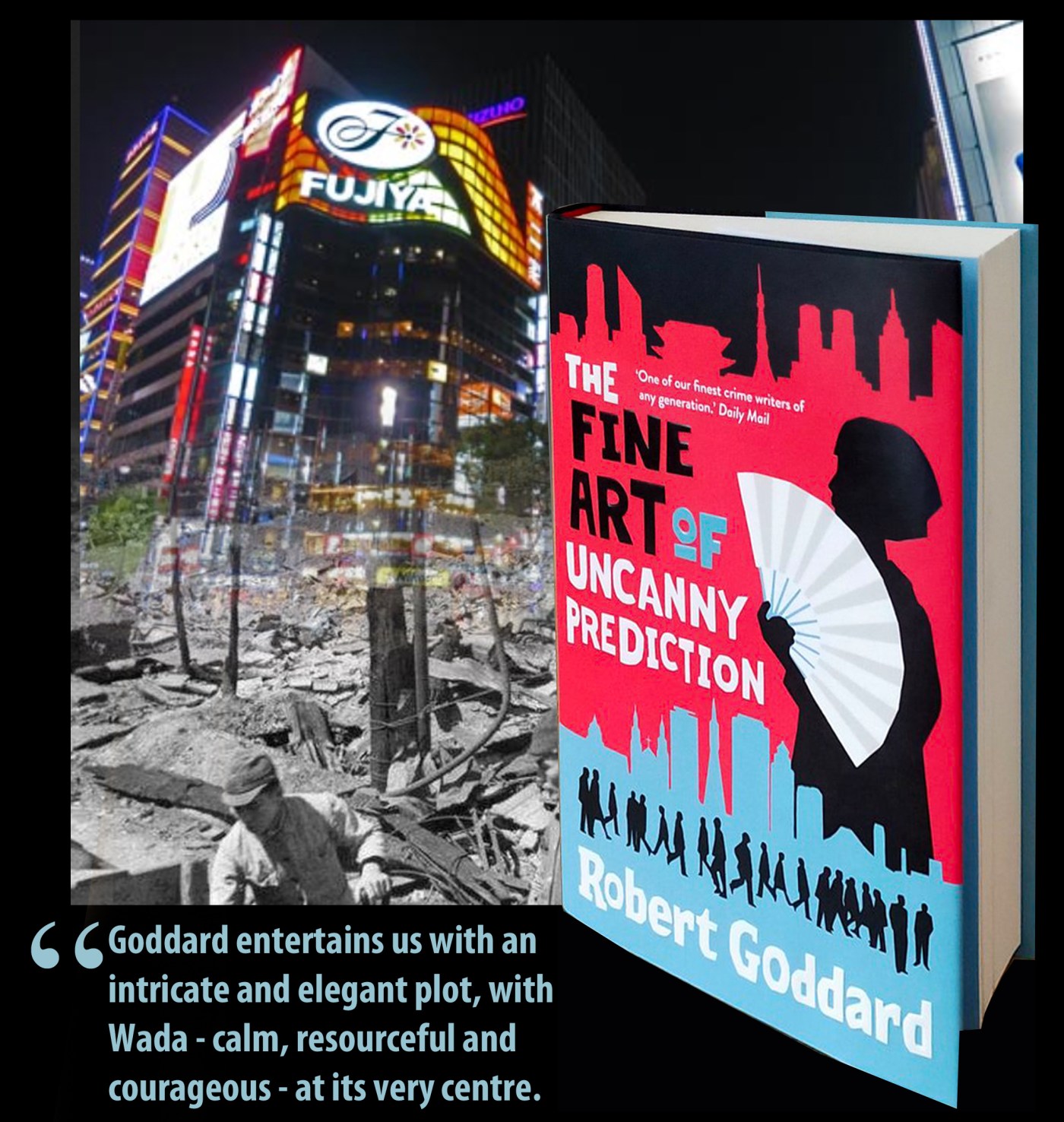

 I must confess to not having read anything by Robert Goddard (left) for a few years. Back in the day I enjoyed his James Maxted trilogy, which comprised The Ways of the World (2013), The Corners of the Globe (2014) and The Ends of The Earth (2015), which focused on a young former RAF pilot and his involvement in the political fallout in Europe after the Versailles Conference ended in 1920. I reviewed his standalone novel







 For those new to this wonderful series, here’s the back story. Enora Andressen is an actress in her early forties. She has won fame, if not fortune, by starring in what used to be known as ‘art films’ – often European produced and of a literary nature. She has a twenty-something son, Malo, the product of a one-night-fling with a former drug boss, Harold ‘H’ Prentice. ‘H’ and Enora have become reunited, after a fashion, but it is not a sexual relationship. In the previous novel, ‘H’ is stricken with Covid, and barely survives. That story is told in



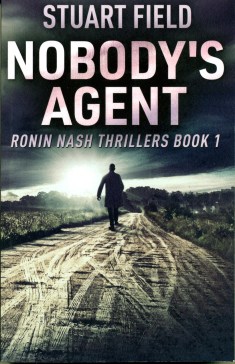 Central character Ronin Nash is a Scot who found himself in America, did a spell in the armed forces, and then worked as an FBI agent. When he is sidelined as a scapegoat in a kidnap case which went tragically wrong, he retreats to a lakeside log cabin hideaway, but is recruited by his former boss to join a new outfit, the Inter-agency Investigation Bureau. He is sent to the small town of Finchley in upstate New York to find out the investigate the discovery of three dead bodies in an abandoned mine just outside the town.
  We learn pretty quickly that something is not quite right in Finchley, but Nash spots this, and realises he is being played. He is smart enough to let the players assume he is ignorant of what is going on and the only question in his mind is just how many of the Sheriff’s Department – and other significant townsfolk – are in on the secret.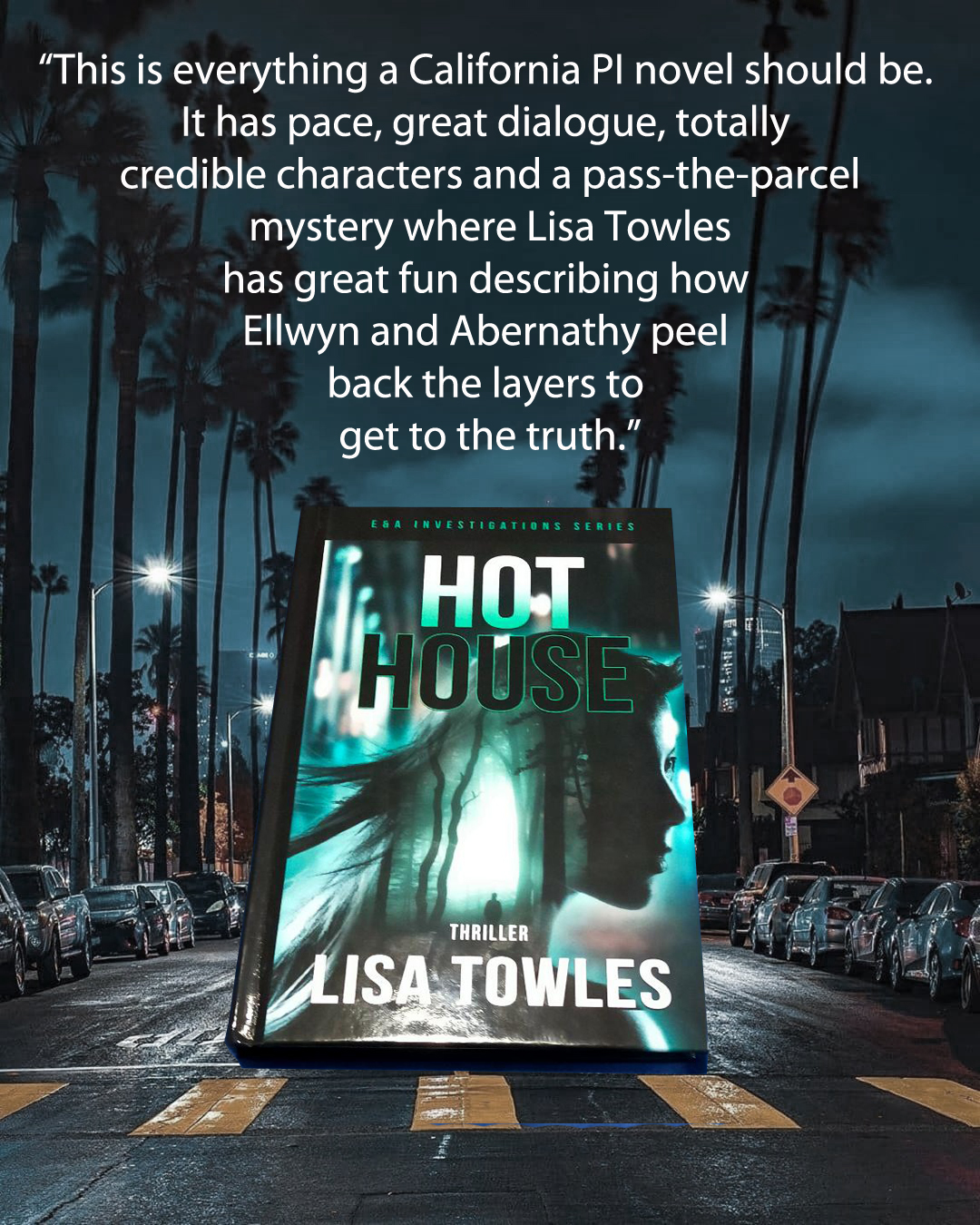

 That is just a quick sample of the whip-crack dialogue in the book, which fizzles and sparks like electricity across terminals. Very soon Mari and Derek realise that the blackmailed judge is also connected to the unsolved murder of a French duel-passport student, Sophie Michaud, and the fate of two women journalists who investigated the case, one of whom is dead and the other missing.
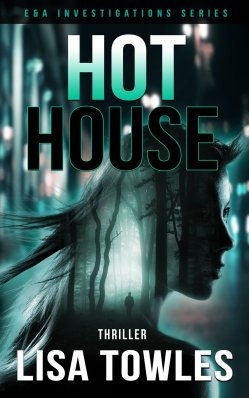
 In the end, the blackmailer of the judge is located, and the killer of Sophie/Sasha is brought to justice, but with literally the last sentence, Lisa Towles poses another puzzle which will presumably be addressed in the next book. Hot House is everything a California PI novel should be. It has pace, great dialogue, totally credible characters and a pass-the-parcel mystery where Lisa Towles (right) has great fun describing how Ellwyn and Abernathy peel back the layers to get to the truth. Sure, the pair might not yet stand shoulder to shoulder with Marlowe, Spade and Archer, or even more modern characters like Bosch and Cole, but they have arrived, and something tells me they are here to stay.


 fullybooked2017